
What is in that fog? Something wicked this way comes.
I’ve often used this blog to rail against horror movies where filmmakers have spent a ton of money on CGI and making a top-notch movie, and yet the most exciting aspect of the movie is the trailer. I’ve even done lists of what you should and shouldn’t do when making a horror movie (for that post, please refer here: https://ramiungarthewriter.wordpress.com/2012/07/11/what-not-to-do-when-making-a-horror-movie/). Now I think I’ve identified two more factors in horror films that could separate a good scare from a boring waste of $6.50. Those factors are build-up and mystery.
For the first one, I’d like to call attention to the beter films in the Friday the 13th franchise versus the remake, the latter of hich I never get tired of ripping for how really bad it was. In the better films, the filmmakers had a way with building suspense that terrified audiences and made them want more at the same time. The best way to illustrate this technique, if you ask me (and I’m assuming you are, you’re reading this blog post after all), is through stream-of-consciousness from the POV of a moviegoer:
“Oh, she’s going out to that shed. Will Jason kill her there? She’s in and the light’s on. She bends over–I can’t see what’s behind her! Oh, Jason’s not there. Good. Oh, she’s bending over again! I can’t see behind her! Oh, Jason’s not there. Oh, how many lightbulbs does she need? Oh, Jason’s still not there. Okay, she’s heading back to the house. Will Jason get her now? Opening the door…OMG! What was that? Oh, it was just the cat. God, I feel as silly as the actress in that close-up–OMG there’s a machete poking out her front! She’s being lifted up! Yikes it’s Jason! AAAH!”

Somedays his writers do great with him. Other days…you know. All depends on how the suspense is added to the story.
You see there? Through visual dynamics and waiting until the least expected moment, they get the tension really high, make us think that we’ve seen everything to get scared of, and then WHAM! They scare us when we least expect it. In the better Friday the 13th films, this technique would scare the bejeezus out of people, and made the films famous and box-office smashes. Now contrast this with the reaction of me when I watched the remake:
“Okay, the naked chick with the bump on the head is hidden under the dock on the bad side of the lake. Jason’s probably seen her. She’s so dead. He’s on the dock. She’s looking up like he might get her. He steps away from her. Machete through the roof of her head! We see her bare breasts. She’s dead and in the water. Wow, so scary. NOT!”
No surprises in that film. We knew when a character was going to die, and there was no build-up of suspense to make us terrified. There was a reason that fans and critics hated that film. The only reason it did well was because people went hoping that the reviews were just by people who were overly critical and hard to please.
This is why it’s important to get a feel for building suspense like in the better of the Friday the 13th films. it makes the movies that much better, and if you’re really good at it you can keep it going throughout an entire film and even afterwards without letting the suspense and terror abate. And if you do become good at it, you can hopefully become someone in the horror movie industry.
Another aspect of making horor movies that can make a horror movie great is mystery. To illustrate that, I’d like to use The Amityville Horror and its remake (I love showing how bad remakes can be. Maybe people will learn something from it). In the original Amityville Horror, we never get a sense of what exactly is haunting the house. We see flies and hear masculine voices shouting “GET OUT” at priests. Things move on their own, and anyone of a religious nature gets horribly sick near the house. We know the little girl is playing with an imaginary friend named Jodie, who somehow locks the babysitter in a closet (that’s scary as it is), and there’s a room painted red under the basement stairs that causes the very-spiritual family friend to go into hysterics and scream “It’s the gateway to hell!” Later, the male lead sees a pig with glowing eyes in the window, which we assume tells him to kill his family, and later the same guy falls through the stairs into the hidden room and falls through the floor of that into a pit of blood.

Beware this room: its darkness is only rivaled by so little we know about it.
But do we really understand what’s haunting the house? NO! We know that the murder of the preivious residents of the house were killed by their crazy son, but we’re not sure if they’re causing the haunting or if they’re just one small piece of the puzzle. We also hear something of a satanic preacher living on that land many years ago, but it’s not assumed that he’s behind it in any way. At the end of the movie, we’re left thinking: “Oh mygod, I’m so scared! What was with that house? What was in it? And where did all that blood come from? And the pig in the window…what the f*** was with the pig in the window!” You see how awesome the amount of mystery in that movie makes it?
Contrast that with the remake, which is utilizing the whole mythology from all the films based on The Amityville Horror. Right away, we’re made very aware of what’s causing everything. Messages through TV, little ghost girls that manifest themselves in front of everyone and are held by mysterious arms against the ceiling. Messages in blood on the mirror…need I go on? There’s no mystery, except for a supposed-to-be startling revelation about the satanic preacher. At the end, we understand too well what’s causing the haunting, and we’re left very not scared. The mystery of the first film made it awesome, while the lack of mystery stripped the second film of any scariness.
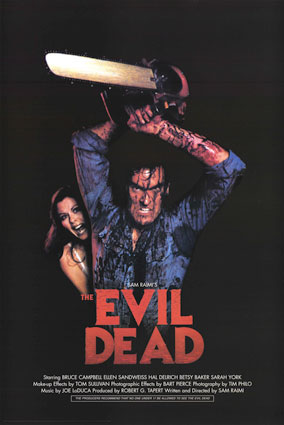
At least that’s what’s happening with this film.
Is that all that is needed to make a scary film? Heck no! A lot goes into scaring anyone with anything, be it a story, a movie, or even a silly prank for Halloween or April Fool’s Day (I speak from personal experience on all but one of these). But these two factors–a build-up of suspense and an air of ever-present mystery–can create a terrifying experience that leaves those doing the experiencing chilled for the rest of the night. So keep these factors in mind when creating your own story (and it doesn’t necessarily need to be a scary story). You might end up creating a wonderful work of art that’ll be remade in thirty years by a high-powered team of filmmakers and debated about by fans in chat rooms for years to come.
 Rami Ungar The Writer