
“We must make certain this Declaration of Independence is well-written and professional, since we’re submitting it to the King of England. Oh, and Mr. Hancock, please make your signature a little smaller this time.”
Today, I was asked what it would take to make an excellent submission to a magazine like The Writing Disorder. My first thought was, “They’re asking me for advice? I’m so flattered; usually I’m the one asking for the advice!” So I gave a reply back, giving a few tidbits of advice, but I also told this person I’d write up a post that gave some more tips and advice for submitting to magazines. So Anthony, here’s the post that I promised.
I write down these tips because they’ve been helpful to me in the past. I don’t know if others who read this, especially more experienced writers, will also find this helpful, but if anyone does, that makes me very happy. Also, I will try to stay away from sounding preachy or making it seem like I have all the answers and the reader does not. If I fail in this task, please let me know so I can feel embarassed about it.
Here are my tips for making a successful submission to a magazine:
1. Write, then edit. The basic thing to do is write a good piece of literature, whether it be fiction, creative non-fiction, or poetry. This is the most basic step and without it you can’t do anything else. How to write I won’t get into; all I’ll say is that it takes years of practicing writing and a whole ton of reading to get good at. Editing is also important; you can compare it to finding a geode, and refining the crystals inside so that they’d look nice as pieces of jewelry. It also helps to space some time between writing and editing a draft; I usually wait a couple of weeks or a month to edit a story, because then I can look at it with fresh eyes.
2. Find an appropriate magazine. As you can imagine, there are a plethora of magazines out there for budding and aspiring writers to submit to, especially on the internet. Before submitting though, make sure that the magazine is the right fit for you and your story. For example, a magazine may be a fantasy magazine, but they may be looking for a specific type of fantasy, such as children’s fairy tales involving creatures living alongside people in urban and suburban settings. If you send them a Lord of the Rings-esque adventure story, they won’t publish it and you’ll wonder what they didn’t like about it.
Most magazine websites have guidelines posted on their sites about what they’re looking for in submissions, so read those carefully before submitting. You can also read the guidelines first and then write a story that is meant to comform to those guidelines; I’ve done that before, and have had very surprising results with those sorts of stories.
3. Format professionally. This goes beyond having a nice-looking font and the correct sort of margin-space, though that is important. You want to make a magazine look at your story and say, “This looks so professional; the author must be an experienced writing.” I do this by creating a header before I even start the story: I begin by indicating my first page’s header is different from the other pages’ headers. I then put the words “Word Count” followed by a colon in the top left corner, before skipping to the next line and putting my contact information on the right side of the header. I then exit out of the header and skip down until I’m about a third of the way down from the page before putting the title of my story. On the next page, I re-open the header, write my last name, then a comma and put the page number.
After I finish the story, I put the word count for the entire story on the first page in the header after “Word Count:”. This tends to look good to editors, and has served me well in the past.
If you’re asked to send along a brief bio or even a photo, those can be a little more relaxed. Just tell people what you think they ought to know about you, and then put it down. As for the photo, try and take a photo that gives people an impression of who you really are, but remember, this will be in a magazine, possibly forver, so don’t take any photos you’ll regret.
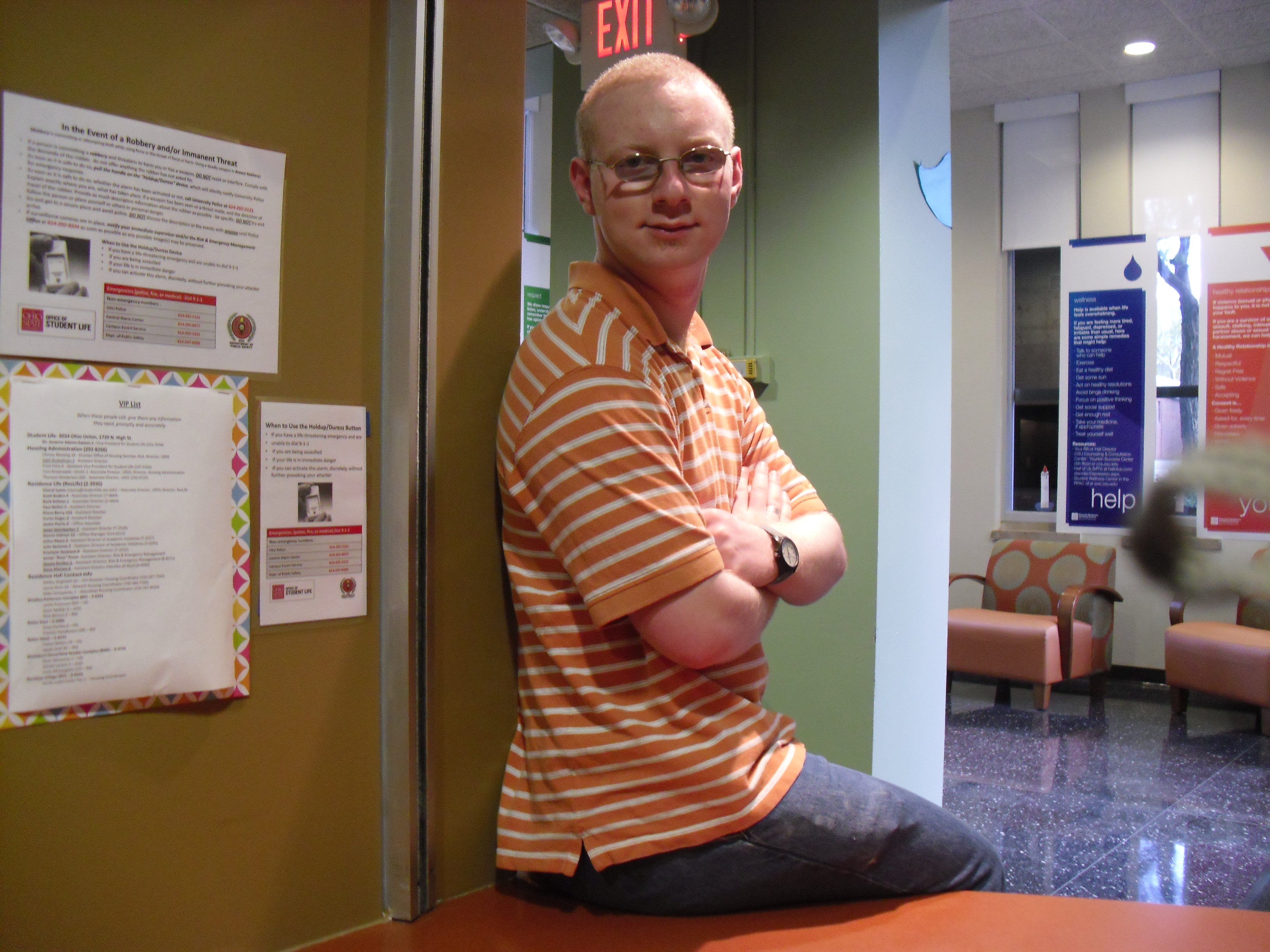
A photo of me at my dorm, and one of severl I had taken of me. I think it gives a cool, writer look, but that’s up for interpretation.
4. Write a good query letter. I cannot stress enough the importance of a good query letter, which is essentially the letter you send the editor saying you are submitting a story for their consideration. It’s basically your first impression, and if your query letter sucks, the editor won’t even look at your story. There are plenty of books and websites that can give you pointers on writing excellent query letters, but I won’t mention them here; I’ll just say, you should write a query letter as if you’re writing what you believe will be the most important work of your life.
5. Expect long waits. Magazine websites and their editors will say they can get back to you on a story within a certain amount of time, but often they’ll be behind schedule on their work, so if the time they say they’ll get back to you passes by and you don’t hear from them, write a letter or email to them. If they don’t respond, write them again until they do. I’ve gotten a few acceptances and plenty of rejections from writing editors, but I’ve gotten them faster than if I’d kept my mouth shut.
6. Don’t give up. If one magazine rejects you, don’t take it that your story is worthless. Take another look at it, edit where you see there could be improvement, and then send it somewhere else. You never know what might happen. After all, that’s how my short story “Ripple” got published, and I despaired for a while that it would ever find a home.
That’s all I can think of at the moment. If you have any questions or need clarification, let me know. I also would like to take this oppurtunity to reccommend “The Short Story & Novel Writer’s Market”, an annual publication from Writer’s Digest that has all these tips and more, shows you how to write a query letter, and most importantly, has a catalog of agencies, magazines, and publishers you can submit your work to. I’ve found it a wonderful resource, and highly recommend it to anyone who wants to find places to submit their work.
All for now. Write to you later.
 Rami Ungar The Writer
1. Not preachy at all! 2. You look very writer-y and serious in that picture, good one. And 3. The don’t give up suggestion is one I would second and third. Keep reminding us of that one Rami!
Thanks for the feedback Karmi! Always appreciating it. By the way, how’s the writing on the book coming? It’s number 6 or 7 now, isn’t it?
Nice haircut–your father… Good blog post too!
Thanks Abba, and guess what? You made my 200th comment on this site! You get the knowledge that I was going for the jarhead look.