Posts Tagged ‘Jewish people’

My menorah tonight on the eighth night of Hanukkah. The holiday for celebrating miracles and fighting against erasure.

As I’m writing this, it’s the eighth and final night of Hanukkah. And this Hanukkah has been different from all other Hanukkahs before.

If you weren’t aware, on Sunday, December 14, a menorah lighting ceremony was held at Bondi Beach in Sydney, Australia, only to be interrupted by two gunmen, a father and son. They killed eighteen people before the father was taken down by a nearby bystander and then shot by police. The father is now dead, and the son is now in critical condition and under arrest.

I first found out when I woke up that Sunday morning. I turned on my phone, and there was a message in the family group chat from my dad. He and my stepmom have been in Australia since before Hanukkah, and they were just in Sydney a couple of days before. They assured us they were fine, and that they were in a different part of the country when it happened. I went and looked up what happened. My first reaction was horror, followed by relief that my dad and stepmom were okay, and then more horror.

I spent the rest of the day in something of a slump.

Within a day, however, my feelings had changed. I was angry, but also, I was defiant. Because I remembered something important about the holiday of Hanukkah: why we celebrate it in the first place.

For those unaware, the events that inspired Hanukkah occurred about one or two centuries before Jesus walked the Earth. The land of Judea was ruled over by Seleucid Empire, and the Seleucid ruler suddenly decided the Jews had to leave their religion and worship the Greek gods. Instead of complying, the Jews started a guerilla rebellion so that their religion and way of life wouldn’t be erased.

A war against erasure.

The Triumph of Judas Maccabeus by Peter Paul Rubens

The attack on August 14th was an act of erasure. The attackers were terrorists seeking to cow Jews and drive us into hiding, or make us too afraid to practice our religion. And while the only thing that’s been confirmed about their motives is that they pledged allegiance to the Islamic State, there’s a strong possibility they were also motivated by antisemitism masquerading as anti-Zionism. Just like the Seleucid Empire years ago, they were trying to destroy who we are by destroying lives and shedding blood.

They won’t succeed. Over the past week, I’ve heard from many Jews who won’t let themselves to be erased. I’ve seen posts about celebrating Hanukkah, Jewish identity, and explaining what Zionism is go viral online, including a few of mine.* I’ve read of world leaders and normal people issuing their condolences and support for the Jewish people and even the State of Israel (though they still criticize Netanyahu’s government, which I totally agree with). I’ve heard from so many non-Jewish friends who have checked in on me and let me know they’re thinking of me.

And I’ve felt a renewed pride in Jewish identity and culture. Not just from myself, but from others. Like this incident, as horrible as it is, has galvanized us. Made us think, “No, we don’t care how loud the anti-Semites and those who want Israel destroyed are! We will continue to exist! We will be Jewish! And if people want to destroy us or the country that was created for us, they can try. We’ll fight back.”

It’s the last night of Hanukkah. Tomorrow at sunset, the holiday will end. But the holiday which started with such tragedy is ending with Jews embracing who they are and shouting it loudly to the world. And we will go forward not being afraid. We will stay vigilant and we will still keep security at our institutions, but we will not be afraid.

We are Jewish. We are proud. And we are not going away. Photo by cottonbro studio on Pexels.com

Like the Maccabees who fought against the Seleucid Empire, we will fight to keep from being erased. And next year, we will light the menorah with renewed pride, love, and determination. Maybe even on Bondi Beach, just to show how not scared we are. And if anyone tries to stop us?

Well, screw them. We fought a war to keep from being erased once. And while I doubt we’ll need to fight another one, we’re more than willing to fight if we need too. Have no doubt about that!

*I may talk about what Zionism is in a future post, but to put the philosophy simply, it’s the belief that the Jews should have a nation of their own where they can exist, defend themselves, and determine their own fate. Preferably, that land should be in the Holy Land of Israel, also called Zion, where the Jews have had a continuing presence since centuries before Jesus existed, and continue to have a presence today.

It’s not a genocidal neo-Nazi death cult, which makes absolutely no sense (Nazis hate Jews!). That’s all, and I’m not taking and questions or criticism at this time, thank you very much. Like I said, that might be another post.
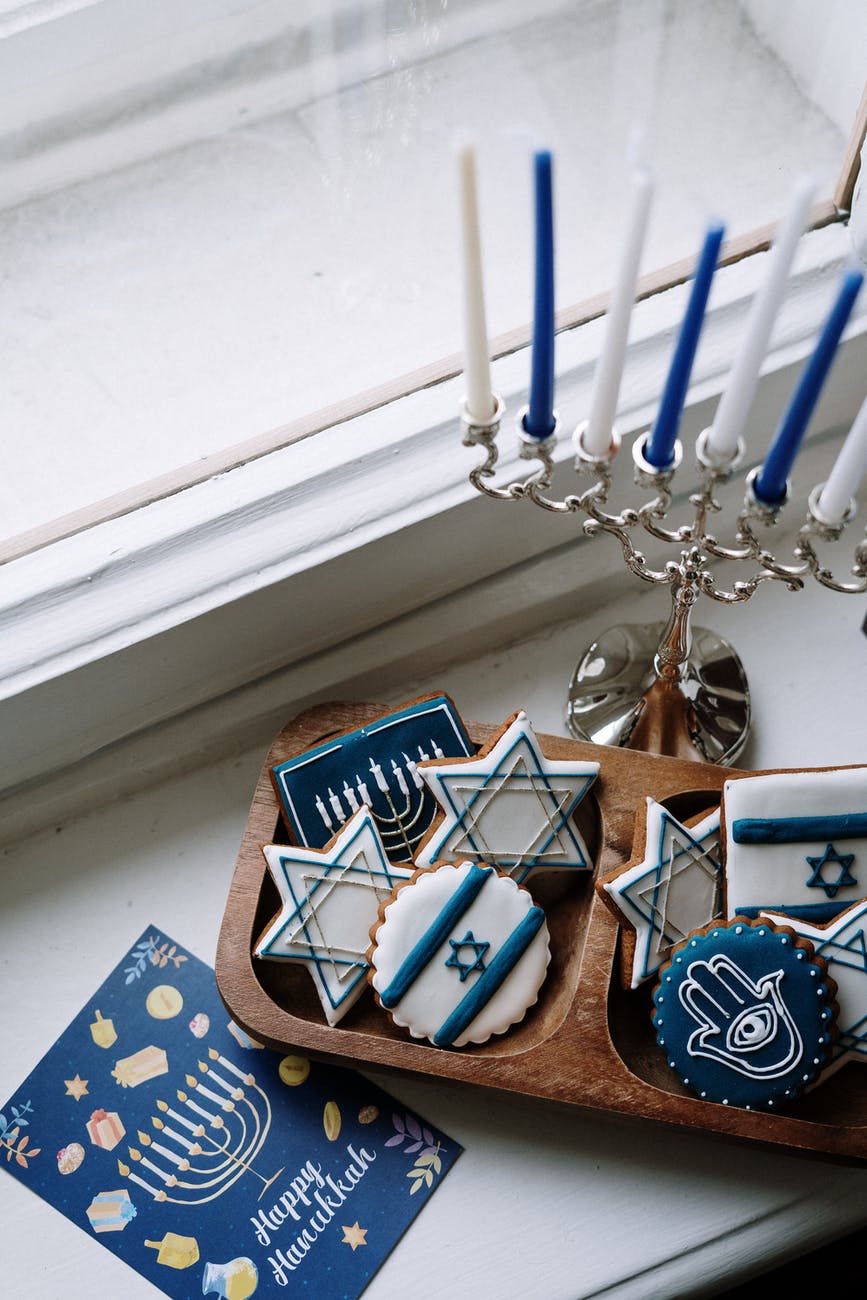
Photo by cottonbro on Pexels.com

I was watching the movie adaptation of My Best Friend’s Exorcism with my sister the other day. And, right before they’re about to do the exorcism, the exorcist asks the main character if she’s been baptized. And the main character, a high school senior at a Catholic school, taking catechism classes and attending evangelical events at school, says in a deadpan voice, “I’m Jewish.”

My sister and I, as well as her roommates (it was movie night at her place), burst out laughing, because it was great comedic timing. Plus, it wasn’t something about the character that was in the book, so I hadn’t seen it coming. But looking back on it now, I can’t help but feel like it’s the latest example of an issue of Jewish portrayal in media.

I said in a previous post that I might be talking about problems of portrayal I see in media, thanks to the panel I was on last month. And I’ve noticed that portrayal of Jews in the media–at least the media I’ve been consuming–has been problematic. This is because, generally speaking, I have noticed Jews tend to be portrayed in one of three different groups:

  • The religious types. They’re Orthodox, with black coats and beards. At least one of the men is a rabbi, and if the story is speculative in nature, Kabbalah shows up somewhere. I’m not too upset about this portrayal, because I have seen some good and nuanced portrayals of this group since Fiddler of the Roof. I’ve even used it myself. Still, it’s done A LOT.
  • The barely-Jewish portrayal. They say they’re Jewish, but the characters eat bacon, have barely any connection to their ancestry, and their religious affiliation is only used as a joke or a quirk of their character. Examples include Howard Wolowitz from The Big Bang Theory, Rachel Berry from Glee, and, most recently, Abby Rivers in My Best Friend’s Exorcism. There are Jews like this, but it’s nuts that this is the biggest alternative to the religious types I see in media.
  • Jewish equals some weird behavior or stereotype. The fact that they’re Jewish usually translates to some silly behavior or conglomeration of behavior or traits that defines their entire character and is equated with their Jewishness. Maybe they’re clownish wimpy goofs that are always going “Oy vey” and speaking in funny voices, like Krusty the Clown in The Simpsons or Mort Goldman in Family Guy. Or they’re hypochondriacs, like Stan Uris in IT. Usually satirical, but sometimes it’s meant to be taken seriously or realistic, like in IT.*
Ziva David. So far, the most unique portrayal of Jew I’ve come across.

Honestly, the only character I’ve seen buck this trend is Ziva David from NCIS, a former Mossad agent from Israel who was tough, somewhat religious, and very connected to her Jewish heritage and faith. When I watched NCIS, I absolutely loved her, and was so sad when she left the series for good. That was a great and different portrayal of a Jew on media. (As for her being portrayed by a Catholic actress…well, she’s still a great character.)

But that’s the only one. And honestly, I think that’s a damn shame. There are so many different kinds of Jews out there: Jews who are religious but enjoy listening to the Ramones and going out for drinks and bowling with friends; non-religious Jews who are connected to their heritage and use it to make art; Jews who are both Israeli, Jewish, and Arab (just read about him yesterday in an article a friend sent to me); and the disabled Jewish horror writer who lights Shabbat candles on Friday night and keeps kosher while also seeing plays on Saturday afternoons or getting tattoos of Tarot cards all over his body.

Me, if you couldn’t tell.

This is why I’m not just writing an increasing amount of Jewish characters in my work, but also a wider variety of Jewish characters. There’s the married and heavily connected Jewish gay couple in “The Red Bursts,” one of the stories in Hannah and Other Stories; the rabbi, his less-religious but still Jewish best friend and his secular daughter in “The House on Lafayette Square” in Symphony for Walpurgis; and in The Shape of Evil, a Jewish teen on the spectrum (who’s only partially based on me). And I hope to write many, many more.

It may be only a drop in the water. But mentioning those stereotypes at StokerCon did make one or two writers consider how they were writing their Jewish characters. Perhaps mentioning them here, and writing all those characters, might cause some positive ripples. Which, in these scary times, would be most welcome.

I very much prefer this version of Stan than the one in the book.

*In all honestly, I hate Stan Uris. At least Stan in the book. I love King and I love IT. Hell, I’m a horror writer because of them both. But Stan was barely connected to his Jewishness, except in how it made him different, and he was more defined by his clean-freak nature and his almost worshipful adherence to logic and a normal world. In fact, it’s stated in the book that Stan’s suicide was because he wanted to “stay clean,” rather than get “dirty” and jump into a world completely outside of normal. I hated that.

This is why I prefer Stan’s portrayal in the movies. In the first movie, he’s the son of a rabbi studying for his bar mitzvah (I can relate) and, while being religious and connected to his heritage, is still pretty much a normal kid. And as an adult, his suicide is portrayed as him ensuring that the others are able to defeat It. A true sacrifice for the greater good. No wonder I prefer that version.