
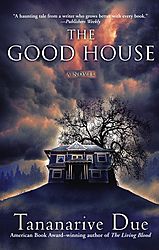
Having read The Good House before, I knew I was in for a good time (see my review here). But I was not prepared for Tananarive Due’s latest novel. After starting it, I learned the book was based not only on the Dozier School for Boys, a reform school in Florida where numerous atrocities were committed against the kids there, but on a relative she had who died at the school. And even after learning that, I still wasn’t prepared for what was to come.
Set in Florida in 1950, The Reformatory follows twelve-year-old Robert Stevens (named after her relative) and his older sister, Gloria. After kicking a white boy who makes advances on Gloria, young Robert finds himself sent to the Gracetown School for Boys, a reform school where the boys are under threat by both the spirits haunting the campus after years of mysterious deaths, and the Warden Haddock, a terrifying personage with a sadistic streak. When Haddock learns Robert can see the ghosts on campus, he forces the kid to help him catch the spirits. Meanwhile, Gloria attempts to find a way to free her brother from the horrible reformatory, setting them both on a path that will change them forever.
Man, this book was a rough read! Due does not skimp on the human horror the characters face, whether that be the horrible things Robert faces at the reformatory at the hands of the adults and the other kids, or the racism Gloria faces trying to get her brother out of that place (not to mention the utterly disgusting advances Lyle McCormick makes on Gloria in the novel), it feels all too real. Not to mention kind of timely!
Speaking of feeling real, the worldbuilding is amazing! Gracetown, the location of the reformatory and most of the other events of the book, as well as the people in the book, feel extremely real. I noticed that with The Good House, but Due is great with character development, and setting can be as much a character as the characters! I also loved how Gracetown apparently has this reputation as a place where children are able to interact with spirits and lose the ability as they grow older. That’s a pretty cool idea, and Due uses it to flesh out the spirit world of Gracetown and the reformatory so well.
I think the one thing I didn’t like was that I feel we only scratched the surface of the Gracetown School for Boys. I know that might sound masochistic, considering what we saw was pretty horrific, but we only saw a fraction of the school grounds, of life at the school, and the sordid history there. And as much as that would’ve scarred my psyche, I would’ve like to see all that explored more.
Maybe an anthology based around the Gracetown School for Boys? They’re doing one for The Stand, after all. I can dream.
All in all, though, The Reformatory by Tananarive Due is a soul-shaking journey of abuse, racism, and the darkness of humankind that, at times, I had to take a break from, I was that shook. On a scale of 1 to 5, I give it a 4.5 out of 5. I feel like I get why this book was talked about so much when it came out last year, and I wish I’d read it sooner. And if you haven’t read it yet, you should go and read it, too.
Or listen to it. The audiobook is fantastic!
 Rami Ungar The Writer