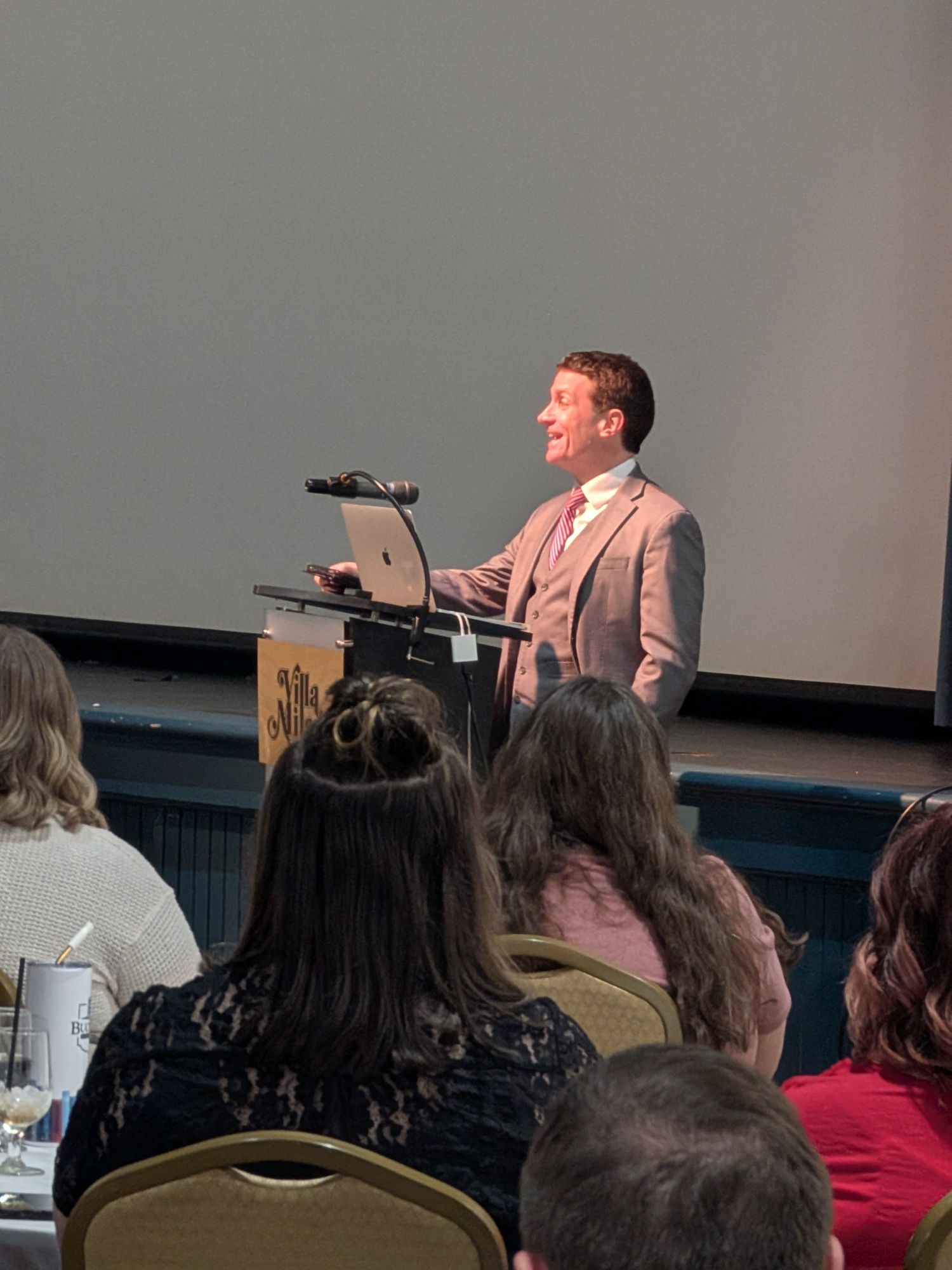
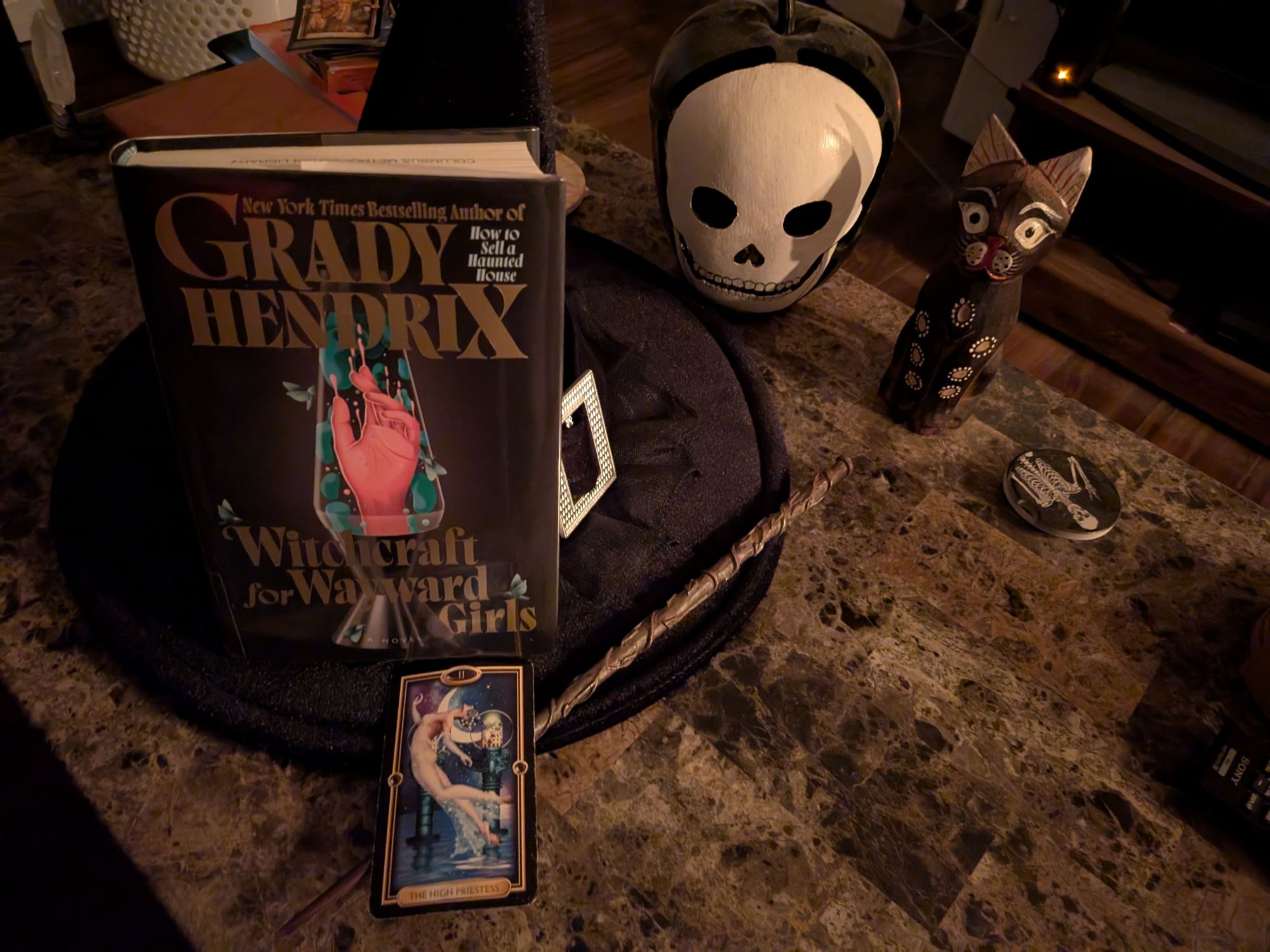
Recently, I went to see Grady Hendrix, author of Witchcraft for Wayward Girls and My Best Friend’s Exorcism, speak here in Columbus. It was an exciting event: the venue was an event space usually reserved for wedding receptions and the like, but it was packed, with possibly around 500 people inside the space! I was lucky just to find a table with a good vantage point.
And I’m glad I did: at 7 PM, Hendrix came out and spent the next hour using humor and a PowerPoint slideshow to tell us the history of witches as he saw it, as well as depictions of witches through history. It was hysterical! He made us laugh as he went through some of the ridiculous and not-so-ridiculous stuff that happened in witch trials, the plots of the wild books throughout the years revolving around witches, and why we keep having these witch scares. And I had a great seat to see it all.
It was an amazing night, and I could go on and on about it, but what I want to focus on is just how Hendrix, and other authors, use humor in their work.
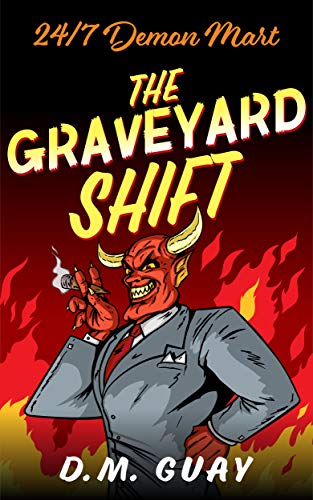
I’ve written on this subject before, but horror and humor often go hand-in-hand, much to the surprise of some non-horror fans. You can see this quite prominently not just from Hendrix’s talk, but from his work, which is normally as funny as it is scary (Witchcraft is a rare exception, but then again, it doesn’t have much to laugh about). Not to mention, there’s a whole subgenre of horror called “horror comedy,” which is pretty self-explanatory. Some prominent examples include Clown in a Cornfield by Adam Cesare, where humor adds plenty to the slasher novel’s plot, and my friend D.M. Guay’s “24/7 Demon Mart” series, about a guy who works at a convenience mart with a talking cockroach for a manager and a portal to Hell in the beer cooler.
And if you’ve seen a production of the musical Sweeney Todd (and I guess maybe the movie version), you’ll notice that despite the dark subject matter, there is plenty of humor. Hell, the musical’s most famous song is full of cannibalism puns! It’s almost sad how the movies cuts out most of those jokes.
Why is humor such a big part of horror at times? Well, part of it is for alleviating tension in the story, especially for non-horror fans who may not like stories that are so dark. But I think another part of it is that we need humor. Laughter is the best medicine, as they say, and it can help alleviate dark situations by shining a light on them. In fact, if you think about how horror is therapeutic for some readers (like me), the humor aspect really can pair well with the cathartic aspects of horror.
It also explains how a room of approximately 500 people could laugh so hard about stuff like witch trials, where people got murdered for bullshit reasons.
And it can’t be understated how helpful humor is in getting people to like each other. I certainly found myself liking Hendrix after an hour of his jokes.
Makes me wish I could put more humor into my own work. I love to laugh and joke around, but that doesn’t usually extend to my stories, where the stories I write are usually quite serious. Humor tends to pop up by accident or just evolves organically when I write it. In The Pure World Comes, for example, protagonist Shirley is practical and at times slightly condescending or sardonic, so humor kind of evolved naturally around her. And there’s a naughty joke appears in The Shape of Evil, but that’s because I’ve been in similar moments and made similar jokes.
Still, my style of writing tends to work for me. People like my stories for what they are, and I won’t force humor in when it doesn’t suit the story. And plenty of writers write amazing stories that have endured through time without a laugh. Who’s to say I have to add a laugh to join their ranks?
All that being said, if I find a place to put a bit of humor into one of my stories, and it doesn’t work against said story, I might add it. After all, a little laughter never killed anybody…as far as we know.
And in the meantime, I think I’ll just keep using humor as I have all my life: in my interactions with others, when appropriate and hopefully to great applause.
Do you use humor in the stories you write? Have you noticed any rules to writing humor or humorous passages? And what is your favorite horror story with comedic elements?
 Rami Ungar The Writer