Archive for the ‘Writing’ Category

Oh, happy first day of Septhember! The Buckeyes are preparing to kick Miami of Ohio’s butt, the sun is shining, and a certain little short story got published! The web address for Mobius Magazine is down below. Once you get to the website, you’ll find my short story on the left under fiction. I hope you enjoy reading it.

This story was inspired by the Kony 2012 video that came out back in April, and you can definitely see the influence there. The story itself may have taken me a week to write, but I credit the fact that I had great inspiration behind it that it didn’t take longer.

Please feel free to tell me what you think of the story. Did you like it? Hate it? Was there a particular part that stuck with you? Did you think a certain character may have been a racist caricature of some ethnic group or another? Whatever your thoughts, please leave me a comment and let me know.

So, without further ado, here’s the address for Mobius Magazine. Hope you like what you read.

http://mobiusmagazine.com/

Some Thoughts On Voice

Posted: August 31, 2012 in Reflections, Writing
Tags:

As the days wind down and the exact day when my short story Aasif, being published by Mobius Magazine, draws nearer and nearer, I can’t help but think of what a friend of mine said to me in a conversation last week:

I can’t remember how we got onto the topic, but my friend told me he’d been on my blog and that he thought that I’d become famous. When I said, “Really?”, he said, “Yeah, you write with such confidence. I think you’ll make a great author.”

I was so happy that he’d logged onto my blog (it always warms your heart when you find out a friend’s been on your blog and has thoughts on it, doesn’t it?), that I didn’t think to tell him that the voice I use as a blogger, and the voice I use when telling a story, are two very different things. By voice, of course, I’m talking about writing style, word choice, the sort of things that scholars analyze years after a famous writer’s death and look for in order to make sure it is a genuine work by said author.

I’ve had time to think on my two voices (and that makes me think of split personalities for some reason, but whatever), and here’s what I’ve thought up: my voice for my blog Rami Ungar the Writer is more laid-back. If you were to actually meet me and speak with me, you’d get something like the way I write on my blog when I speak. In my short stories and my novels (which I’m still marketing to publishers and agents, so be patient, all you who want to read them), I write it differently: my tone is more subdued, and I’ll admit, sometimes I think my description of action is a little sloppy. I do think though, that I can describe a scene with a few choice phrases, something that I see as a plus, and I tend to think my character’s thought processes tend to mirror real-life thought processes.

Of course, I’m the only one who’s read my work and my blog, so I’m probably not the best person to ask about my own voice. Perhaps you all, you readers who will find out where and when my short story is published and read it for yourselves, will do a better job telling me about my own voice. Again, just sharing my own opinions and thoughts, so disagree if you wish to.

What’s your opinion on your voice? Do you have one?

And do you have an opinion on mine?

“We must make certain this Declaration of Independence is well-written and professional, since we’re submitting it to the King of England. Oh, and Mr. Hancock, please make your signature a little smaller this time.”

Today, I was asked what it would take to make an excellent submission to a magazine like The Writing Disorder. My first thought was, “They’re asking me for advice? I’m so flattered; usually I’m the one asking for the advice!” So I gave a reply back, giving a few tidbits of advice, but I also told this person I’d write up a post that gave some more tips and advice for submitting to magazines. So Anthony, here’s the post that I promised.

I write down these tips because they’ve been helpful to me in the past. I don’t know if others who read this, especially more experienced writers, will also find this helpful, but if anyone does, that makes me very happy. Also, I will try to stay away from sounding preachy or making it seem like I have all the answers and the reader does not. If I fail in this task, please let me know so I can feel embarassed about it.

Here are my tips for making a successful submission to a magazine:

1. Write, then edit. The basic thing to do is write a good piece of literature, whether it be fiction, creative non-fiction, or poetry. This is the most basic step and without it you can’t do anything else. How to write I won’t get into; all I’ll say is that it takes years of practicing writing and a whole ton of reading to get good at. Editing is also important; you can compare it to finding a geode, and refining the crystals inside so that they’d look nice as pieces of jewelry. It also helps to space some time between writing and editing a draft; I usually wait a couple of weeks or a month to edit a story, because then I can look at it with fresh eyes.

2. Find an appropriate magazine. As you can imagine, there are a plethora of magazines out there for budding and aspiring writers to submit to, especially on the internet. Before submitting though, make sure that the magazine is the right fit for you and your story. For example, a magazine may be a fantasy magazine, but they may be looking for a specific type of fantasy, such as children’s fairy tales involving creatures living alongside people in urban and suburban settings. If you send them a Lord of the Rings-esque adventure story, they won’t publish it and you’ll wonder what they didn’t like about it.

Most magazine websites have guidelines posted on their sites about what they’re looking for in submissions, so read those carefully before submitting. You can also read the guidelines first and then write a story that is meant to comform to those guidelines; I’ve done that before, and have had very surprising results with those sorts of stories.

3. Format professionally. This goes beyond having a nice-looking font and the correct sort of margin-space, though that is important. You want to make a magazine look at your story and say, “This looks so professional; the author must be an experienced writing.” I do this by creating a header before I even start the story: I begin by indicating my first page’s header is different from the other pages’ headers. I then put the words “Word Count” followed by a colon in the top left corner, before skipping to the next line and putting my contact information on the right side of the header. I then exit out of the header and skip down until I’m about a third of the way down from the page before putting the title of my story. On the next page, I re-open the header, write my last name, then a comma and put the page number.

After I finish the story, I put the word count for the entire story on the first page in the header after “Word Count:”. This tends to look good to editors, and has served me well in the past.

If you’re asked to send along a brief bio or even a photo, those can be a little more relaxed. Just tell people what you think they ought to know about you, and then put it down. As for the photo, try and take a photo that gives people an impression of who you really are, but remember, this will be in a magazine, possibly forver, so don’t take any photos you’ll regret.
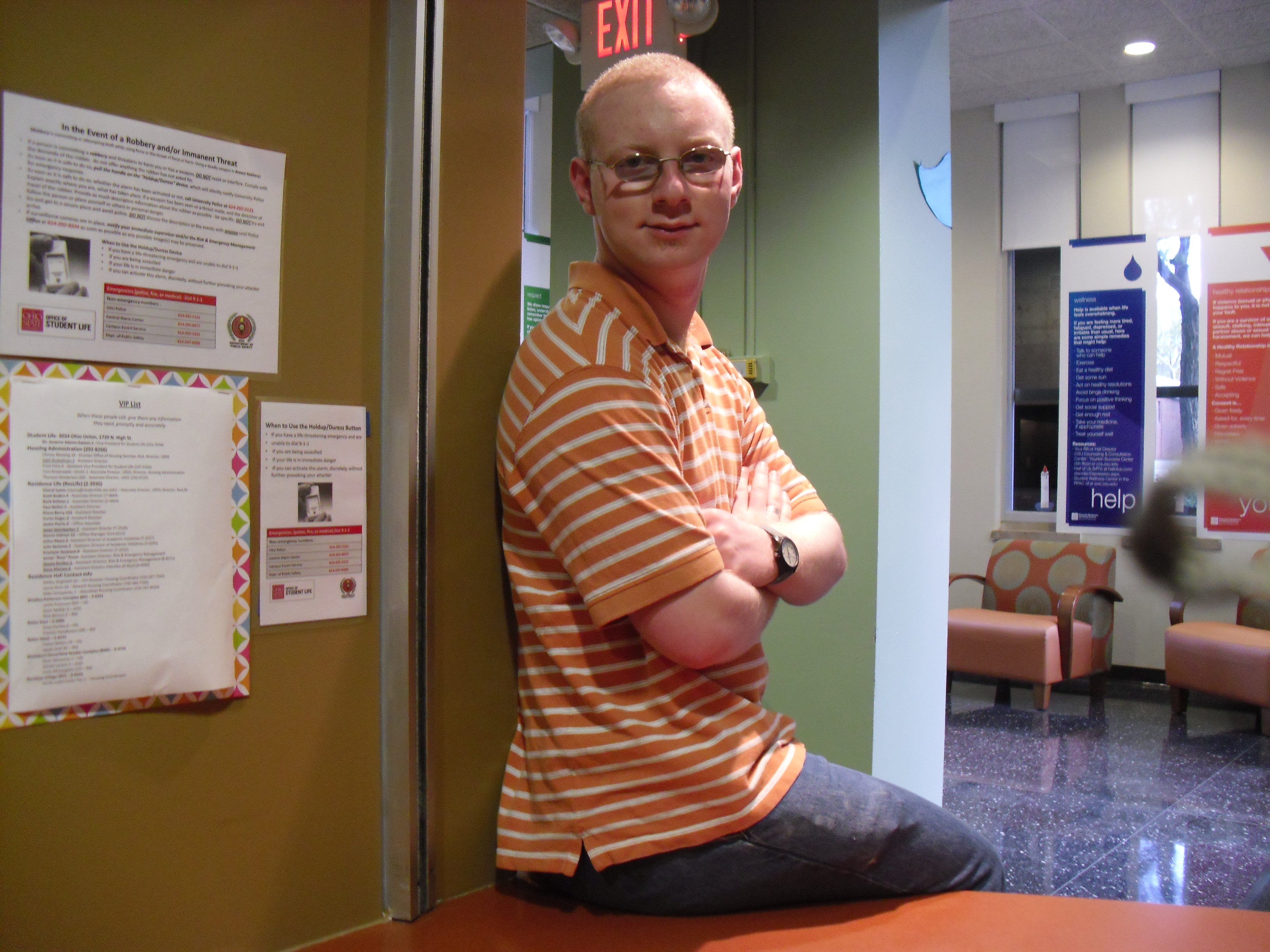
A photo of me at my dorm, and one of severl I had taken of me. I think it gives a cool, writer look, but that’s up for interpretation.

4. Write a good query letter. I cannot stress enough the importance of a good query letter, which is essentially the letter you send the editor saying you are submitting a story for their consideration. It’s basically your first impression, and if your query letter sucks, the editor won’t even look at your story. There are plenty of books and websites that can give you pointers on writing excellent query letters, but I won’t mention them here; I’ll just say, you should write a query letter as if you’re writing what you believe will be the most important work of your life.

5. Expect long waits. Magazine websites and their editors will say they can get back to you on a story within a certain amount of time, but often they’ll be behind schedule on their work, so if the time they say they’ll get back to you passes by and you don’t hear from them, write a letter or email to them. If they don’t respond, write them again until they do. I’ve gotten a few acceptances and plenty of rejections from writing editors, but I’ve gotten them faster than if I’d kept my mouth shut.

6. Don’t give up. If one magazine rejects you, don’t take it that your story is worthless. Take another look at it, edit where you see there could be improvement, and then send it somewhere else. You never know what might happen. After all, that’s how my short story “Ripple” got published, and I despaired for a while that it would ever find a home.

That’s all I can think of at the moment. If you have any questions or need clarification, let me know. I also would like to take this oppurtunity to reccommend “The Short Story & Novel Writer’s Market”, an annual publication from Writer’s Digest that has all these tips and more, shows you how to write a query letter, and most importantly, has a catalog of agencies, magazines, and publishers you can submit your work to. I’ve found it a wonderful resource, and highly recommend it to anyone who wants to find places to submit their work.

All for now. Write to you later.
Okay, so I’m logging onto my computer with the aim of getting alittle homework done before lunch. But what do I find out? That a short story I wrote last year, “The Street Urchin’s Gift” is going to be published by The Writing Disorder next June, sometime around my birthday. Can I just say one thing? Awesome!

The Writing Disorder is an online magazine that caters to a wide variety of interests, including poetry, fiction, art and reviews, and does everything from literary to genre. I found them while looking for a magazine to send “The Street Urchin’s Gift”, and thought they’d make a great match, and I sent it in. It took a while for them to get back to me, but it was well worth it: today I got the email, and you cannot imagine how excited I am!

“The Street Urchin’s Gift” started out as a story I wanted to write for another magazine, one that dealt with Victorian and Edwardian England and liked scary stories. The story itself centers around making an impossible choice when neither one benefits you, and the moral problems of that. When I found out the magazine I had in mind went defunct, I decided that “The Street Urchin’s Gift” deserved another chance. Seeing that I decided right off the bat to go with the Writing Disorder, I’m very happy with the choice I made.

I would like to thank The Writing Disorder for accepting my submission and will try to send a little business your way. In fact, here’s a start: if any of you have a short story or poem that you’d like to see published, here’s the link to the website of The Writing Disorder. Hopefully it’ll be a match for your work.

http://thewritingdisorder.com/

This is very similar to what I saw this evening. Rock on, dude!

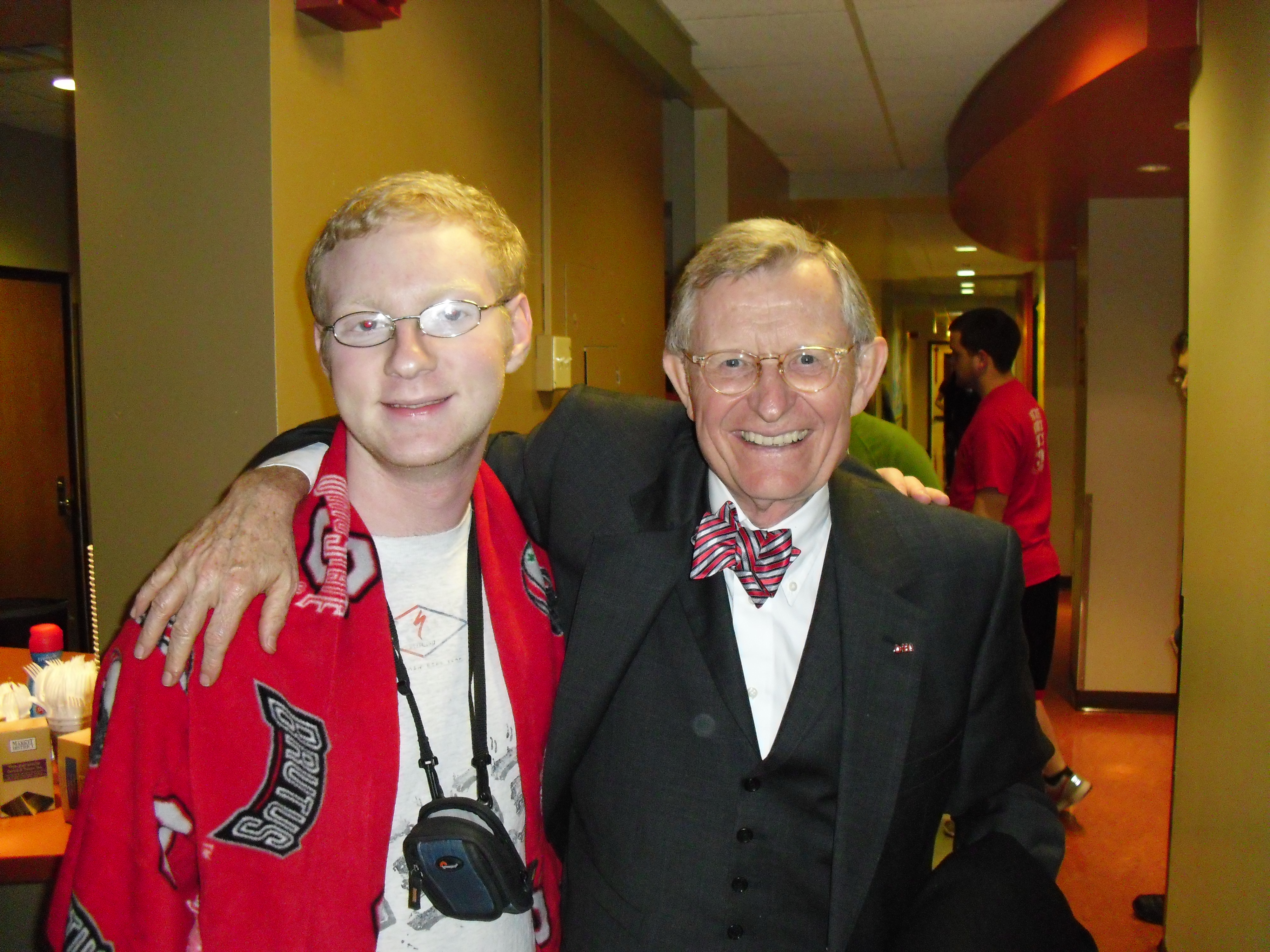
Okay, this evening I went clubbing (and by the time you read this it’ll probably not be evening anymore, but whatever). It’s not something I do often; outside of weddings or bar/bat mitzvahs, I rarely go out and party, and as I’m only 19 I never drink while doing it. Last year I even got invited to a frat party, but instead decided to go to a late-night pancake buffet at my dorm (which paid off; I met OSU’s President E. Gordon Gee, who decided to make a surprise visit, and I have the photographic evidence to prove it too). But I felt like doing something different tonight; heck, SNL”s not going to be back for another couple weeks, and I didn’t have anything better to do, so I went clubbing.

See, I told you I had the proof; way cooler than a frat party. O-H!

The club I went to, Rio, is close to my dorm and allows anyone 18 and older in. Lucky for me too, because what a night it was: the music was crazy loud, the laser light show was crazy, the DJs knew how to remix popular music (I swear, Gotye sounds so awesome with an electronic beat), and I even saw a few friends there who went to the same high school as me.

But what was most awesome about Rio? I’ll tell you: the fact that I got inspired and had an idea for both a short story and a poem, which just goes to show that if you distract your mind with something, you’ll come up with something great (and there’s a clip from The Big Bang Theory of Sheldon waiting tables on YouTube that proves it; I would’ve embedded it here, but the embedding was disabled). The short story I’ll use for my Creative Writing with a Literary Bent course (not the title of the class, but you get the idea), as all the other ideas I had for that class suck. The poem, which came to me while watching the lasers interact with the smoke coming from the stage, I think I’ll see if I can get it into a magazine.

And of course, if anything gets published, I’ll make sure to let you know. Now, I’d like to write some more about clubbing, and another post about something someone said to me recently and what I thought of it, but it’s past two in the morning and I’ve got to get up later for a meditation course, so go find that Big Bang Theory clip and have a lovely morning coffee (if you’re like me, you drink something to wake up in the morning while surfing the net, in my case tea).

Believable Stories

Posted: August 22, 2012 in Reflections, Writing
Tags: , ,

Today for my homework from my creative writing class, I had to read some analyses on story-writing, and one of the topics brought up was that one cannot tell a story that is not believable, and if the story isn’t believable, it’s your own fault. This made me think of three things: one, it made me think of several examples of stories I’ve read where the stories have not made any sense to me because some aspect of the story was utter nonsense. Another was my favorite line of advice about creating fantastic worlds: “You can’t go and say, ‘I’m going to write a story where everybody has guns but nobody uses them.’ Under what circumstances could such a world exist?”

And most importantly, it made me think of a story that I’ve struggled with over the past couple of years, a story about a school shooting. I’ve had plenty of problems with creating a story under five-thousand words involving a bunch of bullied teens lashing out against their oppressors but later regretting it. The latest incarnation of the story, titled “Frye Day”, I thought I might have actually fixed that problem. But did I? Nope; a friend of mine looked it over and said the ending just didn’t mesh with him. Funny, the ending is always the part where the meshing has the most trouble meshing right.

I’ll probably return again to this story, and end up rewriting the entire thing to work, though I won’t do it for a while. However, as much as I like the idea behind the story–that violence doesn’t solve problems, especially violent problems such as intense bullying–I keep thinking to myself that while although I know it’s making me a better writer if I create a story every now and then that just doesn’t seem believable, I always think to myself that I’ve failed somehow, like my textbook says I did, in writing this story that couldn’t possibly happen. I’m sorry, I seem to be rambling in that last sentence, did I lose anyone there?

Anyway, I strive to make a story people think is believable, and it would make me feel better if you’ve struggled with this problem too. Let me know.

Every character we meet in a story has a backstory, even if it’s not always elaborated on at first. Voldemort has a history, though we don’t get the full grasp of it until around the sixth book or so of Harry Potter. Han Solo had an entire career and a few debts to Jabba the Hutt before he and Chewbacca met Luke and Obi-Wan, though we only find out about it in the Expanded Universe. And before Alex Cross battled his first psychopath, he had lived in Virginia, grown up in DC, and gone to college to study psychology and psychiatry. Heck, James Bond probably has a full history, though I’m not sure if Ian Fleming ever went into great detail about it.

This evening I wrapped up a major part of the Snake’s history, and how he went from a regular–okay, not-so-much regular, but still relatively regular compared to what he became–teen into a serial killer who hunts members of a certain powerful mafia family. It was probably the longest chapter yet in Snake (which is saying something, seeing as thrillers have very short chapters), and I had a lot of fun writing it and exploring the Snake’s disturbed psyche. I’ll probably go over it again before I move onto the next chapter, but it’s still a chapter that’s very important to the story and a chapter that, if all my dreams ever come true, will be reviewed by future generations as a memorable scene in the development of the Snake.

Now that I think about it, the Snake’s modus operandi was the first thing that I created for the Snake and his backstory, including why he’s kiling (which is the major driving force of the plot, if truth be told), came afterwards. At first he was nothing more than the archetypal bloodthirsty killer, but when I gave him backstory he seemed almost like a character that, while most people would condemn his actions if he were a real person, would identify with him on an emotional level. Maybe that’s why I enjoyed writing his character so much, and why I think as people read more and more about the Snake and the mystery of his is peeled away, they may come to enjoy the character more.

That’s the hope anyway.

For my fellow writers out there, how do you develop character backstory? Do you create the character first and then create a history to match? Do you think the backstory influences the character, or the character decides the backstory? And what sort of backstories do you like to create? Let me know if you don’t mind sharing.

Rape.

This one word can send terror through a person’s system. In some ways it is worse than murder, for after the deed is done, the victim still suffers horribly from the experience, sometimes for life. 1 in 5 women on college campuses will be the victim of a sexual assault, and every year 32,o00 rape victims are impregnated by friends, boyfriends, husbands, acquaintances, stalkers, fathers, brothers, total strangers, coworkers, you name it. Rape is the perversion of sexual intercourse, turning something beautiful and great into a nightmare, a travesty of psychological anguish. Our culture is fascinated by it as we are repulsed by it, as can be seen by the enduring popularity of Law & Order: Special Vitctims Unit, and by the constant stories in the media of rapists and their victims.

Earlier this week, Representative Todd Akin, a Republican running for a Senate seat in Missouri, said that “legitimate rape” victims “rarely get pregnant”. Immediately, this caused a firestorm: Mitt Romney immediately distanced himself from Akin, saying that victims of rape should be able to get abortions; President Obama was quoted as saying “rape is rape” and that “men should not be making decisions about women’s health”; and across the nation, thousands of rape victims railed against Akin, questioning him and his definiton of rape.

Personally, I find Mr. Akin’s comments to be very upsetting. Although the number of adult male rape victims are still relatively low (yes, they do exist, and there may be more victims than reported due to fears that men will lose their “masculinity” if it becomes known they were raped), men should know that rape is a horrible thing, it cannot be classified as “legitimate” or “illegitimate”, and any type or rape can get a girl pregnant. As a politician, Mr. Akin should be doubly aware of this fact.

I’ve taken a Women and Gender Studies course, I’ve watched shows and read novels where women have been brutally raped, and in my novel Reborn City, my main character Zahara comes very close to being raped herself. Every time I think of rape, every time I read or watch a scene involving a rape, and the one time I wrote about Zahara’s near rape, I could almost feel the terror, the shock of being violated, the urge to end the pain and the constant fear that it could happen again. It is a powerful, mind-numbing force, and it cannot be taken lightly under any circumstances.

I hope Mr. Akin and others learn that rape is not something to be talked about like it can be classified or screened for authenticity, but an act that destroys lives as surely as murder destroys lives, and for women who become pregnant from rape, carrying that child to term can be an ordeal only imaginable, like a cancer that eventually morphs into a constant reminder of one person’s cruelty to another. To Mr. Akin, I feel sorry that you do not understand the tragedy of rape and hope you learn about it, because rape and the pregnancices that can result are very serious matters. And to women everywhere: if, God forbid, you should be raped, I hope Mr. Akin’s comments do not stop you from getting the help you need, and especially if you become pregnant because of your rape.

And if you are worried you are alone in the world because of what you went through, know this: you have at least one friend here with you. I may be hidden by the anonymous Internet, but I’m here for you across the blogosphere.

Oroboros, or the snake that eats its own tail, a symbol for immortality. Has no bearing on this story, but it’s still darn cool. And look, it spins!

You know how you’re not supposed to hitchhike or pick up hitchhikers because you might encounter a crazy person or a dangerous runaway convict doing so? You also know how in the original Texas Chainsaw Massacre they had a scene that illustrated very well why you shouldn’t pick up hitchhikers or hitchhike yourself?

I like to comapre this chapter to everything in the previous paragraph, except instead of hitchhikers it’s pulling over to help a motorist in distress. Roman Veretti, the latest member of the Camerlengo Mafia group to become the object of the Snake’s desire to kill, is on the road when he sees a guy on the side of the road. What happens next may make you consider never helping a motorist ever again (and if you knew what happened to the guy, you wouldn’t want to help any motorist even if it was your twin brother!).

Oh, I’m also considering adding a few scenes where the Camerlengo family has to deal with the instability caused by the Snake’s murders: other families are taking territory and killing members of the Camerlengos. But I guess that’s the fallout when a serial killer shows just how easily a formerly-invincible family becomes not-so-invincible. The only problem though is placement: where best do these chapters go if I add them? Probably after Roman Veretti meets his fate; that’s when the Snake shows just how hard he is to stop.

Well, I’ve rambled on long enough. Here’s Chapter 21 as promised; enjoy and please do not hesitate to tell me what you think.

~~~~~~~~~~~~~~~~~~~~~~~~~~~~~~~~~~~~~~~~~~~~~~~~~~~~~~~~~~~~~~~~~~~~~~~~~~~~~~~~~~~~~~~~~~~~~~~

Roman Veretti was whistling as he turned off the main road and onto the scenic route to Connecticut. The sun was shining, the view was beautiful, the minivan was warm and toasty, the XM radio was playing some of Roman’s favorite jazz and big band songs, “A Gal in Kalamazoo” and “What a Wonderful World”, among others, and there were no other cars on this secret route Roman loved so much.

Best of all, taking the scenic route meant another hour until Roman got to Connecticut, a place Roman wouldn’t have even considered visiting if his wife hadn’t insisted they go and visit her parents that weekend. It wasn’t as if they were bad people—Roman thought that Lizzy’s father was a hilarious storyteller and philosopher—but the house smelled heavily of cleaning products, and Lizzy’s mother always found some way or another to suggest that Roman was a poor choice of husband for her daughter and that Lizzy could do better without actually coming out and saying it. In truth, Roman preferred making sure the prostitutes under his watch made enough money for him rather than spending an entire weekend smelling dish soap and hearing criticisms about his paycheck.

 Just wait till I get off pimp duty and get into a real position in the family. Roman thought, drumming his fingers along the steering wheel as he listened to the music. Mr. Camerlengo’s getting to be real fond of me, and I’m sure that once this whole serial killer thing blows over, I’ll be able to get a job with money enough to shut up that old bat.

Up ahead on the road Roman noticed a car pulled over, its hood up and the lights blinking. The driver was waving his arms in the air, trying to signal Roman as he approached. For a moment Roman considered driving on, but the possibility a few more minutes away from Lizzy’s mother excited him enough that he turned on his turn signal and pulled over to the side of the road next to the car. The driver of the car ran up to Roman as Roman turned off the engine and stepped out of the minivan.

“You saved me!” said the driver, a young man who looked unremarkable save for a pair of brilliant blue eyes. “I can’t tell what’s up with my car and my cell has no signal. Do you think you can help me?”

“Let me see the car.” said Roman. “My dad was a mechanic, so I used to help him out all the time.”

“Well, isn’t that a stroke of luck!” said the driver. “She’s right over there. I figured that son of a bitch was conning me when he sold me this piece of crap.”

“We’ll see about that.” said Roman, sidling on over to the open hood. Peeking in, he examined the engine. To Roman’s confusion, the engine looked brand-new, and nothing he could see indicated any maintenance issues or repair needs.

“I don’t see any problems with the engine.” said Roman, ducking his head out from under the hood. “What’d you say was wrong with it—?”

WHAM!

There was a bright flash of light and Roman felt a sharp pain in the side of his head. He staggered, his hand pressed to his temple, before he staggered and fell over. The last thing he saw was the driver putting on a strange-looking mask before Roman closed his eyes and the world fell away.

Snake Ch. 20

Posted: August 15, 2012 in Novel, Progress Report, Writing
Tags: , , ,

Well, I finished chapter twenty of Snake, and let me tell you, it was different writing this chapter than previous chapters. For one thing, I had started writing the chapter with a scene of Angela Murtz, my forensic psychologist/federal investigator (you might remember her from a previous post in which she was included in an exerpt) interviews the mistress of the latest victim, Thomas Luiso.

I had this whole interview set up, created how Murtz gained the woman’s trust, and even had an emotional revelation that Mr. Luiso wasn’t all his mistress thought he was. But as I was writing that, I thought to myself, Hey wait a minute, what exactly does this add to the story? I can some up all this information that’s needed in a few words, and can have another character fill Murtz in. So I went back and deleted the whole interview and instead skipped ahead to where Murtz goes upstairs with her partner, Blake Harnist, to check out Luiso’s body. If you ask me, I made the right decision; the chapter looks better without the interview with Murtz and Luiso’s mistress.

I also realized that in the chapters featuring Murtz and Harnist, four in total, three have been from Murtz’s POV, while only 1 has been from Harnist’s POV. I think I’ll change that for the next chapter featuring the duo and have the reader see things from Harnist’s POV. It only seems fair, since the characters are partners and work together to stop the Snake.

Now, I wasn’t able to do a Lucky 7 meme, because page 77 of the story only has 5 lines on it. However, I’m pretty sure the next chapter, which has the Snake himself in it, doesn’t reveal too much about the character, so I’ll include as much of that as I can. Hope you like that.

See you next post.