Posts Tagged ‘films’

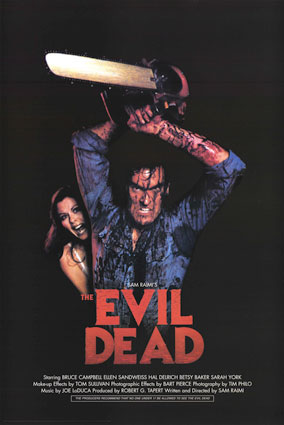
I swear, it’s so hard to find a good scary movie that doesn’t rely on obscene amounts of gore these days. However, the remake/sequel of 1981’s The Evil Dead does do the original justice, even with the amount of gore involved. Throughout the film we see both homages to the original, and we see it made anew with much better special effects (which apparently never relied on CGI, though at times I find that really hard to believe, especially during that first scene and the scene with the meat cutter). Plus there’s a bit more substance to this film in terms of character motivations and what-not, but like I said, just a bit.

For those of you not familiar with the original film, these films revolve around a magic book that summons sleeping demons that possess human bodies in order to resurrect something much worse. As five teens get possessed and become bloody and disgusting, it’s up to the one normal dude (or gal, in this case) to kill them all to save their souls. The original films were DIYers, so they didn’t have much in the way of special effects and they were simplistic in nature. However the odd camera angles and filming techniques were what made this indie project a classic, spawning sequels, comic books, video games, and now a new line of films meant to bring the old and the new films together.

I warn you, if you’re not easily scared, you may only receive minimum scares to satisfy your morbid self. If you scare easily though, you will not be disappointed by this film. I would’ve preferred a lot less gore and more focus on building suspense and causing terror, but what’re you going to do, except either not see the film or show the world how you make a scary film?

On the whole, I’ll give this film a 3.6 out of 5. Not bad, but still room for improvement.

I’ve been wanting to post about this since Thursday, but like I said in my last post…I’ve been busy.

Now, some people think that this’ll just be a remake with nothing new to add to the story of Carrie White. I’d like to disagree (though I do acknowledge their point). I think the trailer offers plenty of room to say otherwise. We can see Chloe Grace Moretz as Carrie disagreeing with her mother, something that Carrie doesn’t usually do without her psychic powers. Not to mention that Carrie might use her powers to…have a little fun. I mean, look at her smile when she manipulates the flag! That’s a girl who knows she going to go a little bad and have a wild time with her powers.

Plus Carrie’s mother does some head-banging  early in the commercial, an indication that we may see just how crazy she is. And the special effects…should…be…AWESOME! I mean, look at the trailer. This is more than just lifting stuff, this is causing the whole house to go crazy with your power.

Don’t believe me? Watch the trailer, you’ll see. I cannot wait till October.

What is in that fog? Something wicked this way comes.

I’ve often used this blog to rail against horror movies where filmmakers have spent a ton of money on CGI and making a top-notch movie, and yet the most exciting aspect of the movie is the trailer. I’ve even done lists of what you should and shouldn’t do when making a horror movie (for that post, please refer here: https://ramiungarthewriter.wordpress.com/2012/07/11/what-not-to-do-when-making-a-horror-movie/). Now I think I’ve identified two more factors in horror films that could separate a good scare from a boring waste of $6.50. Those factors are build-up and mystery.

For the first one, I’d like to call attention to the beter films in the Friday the 13th franchise versus the remake, the latter of hich I never get tired of ripping for how really bad it was. In the better films, the filmmakers had a way with building suspense that terrified audiences and made them want more at the same time. The best way to illustrate this technique, if you ask me (and I’m assuming you are, you’re reading this blog post after all), is through stream-of-consciousness from the POV of a moviegoer:

“Oh, she’s going out to that shed. Will Jason kill her there? She’s in and the light’s on. She bends over–I can’t see what’s behind her! Oh, Jason’s not there. Good. Oh, she’s bending over again! I can’t see behind her! Oh, Jason’s not there. Oh, how many lightbulbs does she need? Oh, Jason’s still not there. Okay, she’s heading back to the house. Will Jason get her now? Opening the door…OMG! What was that? Oh, it was just the cat. God, I feel as silly as the actress in that close-up–OMG there’s a machete poking out her front! She’s being lifted up! Yikes it’s Jason! AAAH!”

Somedays his writers do great with him. Other days…you know. All depends on how the suspense is added to the story.

You see there? Through visual dynamics and waiting until the least expected moment, they get the tension really high, make us think that we’ve seen everything to get scared of, and then WHAM! They scare us when we least expect it. In the better Friday the 13th films, this technique would scare the bejeezus out of people, and made the films famous and box-office smashes. Now contrast this with the reaction of me when I watched the remake:

“Okay, the naked chick with the bump on the head is hidden under the dock on the bad side of the lake. Jason’s probably seen her. She’s so dead. He’s on the dock. She’s looking up like he might get her. He steps away from her. Machete through the roof of her head! We see her bare breasts. She’s dead and in the water. Wow, so scary. NOT!”

No surprises in that film. We knew when a character was going to die, and there was no build-up of suspense to make us terrified. There was a reason that fans and critics hated that film. The only reason it did well was because people went hoping that the reviews were just by people who were overly critical and hard to please.

This is why it’s important to get a feel for building suspense like in the better of the Friday the 13th films. it makes the movies that much better, and if you’re really good at it you can keep it going throughout an entire film and even afterwards without letting the suspense and terror abate. And if you do become good at it, you can hopefully become someone in the horror movie industry.

Another aspect of making horor movies that can make a horror movie great is mystery. To illustrate that, I’d like to use The Amityville Horror and its remake (I love showing how bad remakes can be. Maybe people will learn something from it). In the original Amityville Horror, we never get a sense of what exactly is haunting the house. We see flies and hear masculine voices shouting “GET OUT” at priests. Things move on their own, and anyone of a religious nature gets horribly sick near the house. We know the little girl is playing with an imaginary friend named Jodie, who somehow locks the babysitter in a closet (that’s scary as it is), and there’s a room painted red under the basement stairs that causes the very-spiritual family friend to go into hysterics and scream “It’s the gateway to hell!” Later, the male lead sees a pig with glowing eyes in the window, which we assume tells him to kill his family, and later the same guy falls through the stairs into the hidden room and falls through the floor of that into a pit of blood.

Beware this room: its darkness is only rivaled by so little we know about it.

But do we really understand what’s haunting the house? NO! We know that the murder of the preivious residents of the house were killed by their crazy son, but we’re not sure if they’re causing the haunting or if they’re just one small piece of the puzzle. We also hear something of a satanic preacher living on that land many years ago, but it’s not assumed that he’s behind it in any way. At the end of the movie, we’re left thinking: “Oh mygod, I’m so scared! What was with that house? What was in it? And where did all that blood come from? And the pig in the window…what the f*** was with the pig in the window!” You see how awesome the amount of mystery in that movie makes it?

Contrast that with the remake, which is utilizing the whole mythology from all the films based on The Amityville Horror. Right away, we’re made very aware of what’s causing everything. Messages through TV, little ghost girls that manifest themselves in front of everyone and are held by mysterious arms against the ceiling. Messages in blood on the mirror…need I go on? There’s no mystery, except for a supposed-to-be startling revelation about the satanic preacher. At the end, we understand too well what’s causing the haunting, and we’re left very not scared. The mystery of the first film made it awesome, while the lack of mystery stripped the second film of any scariness.

At least that’s what’s happening with this film.

Is that all that is needed to make a scary film? Heck no! A lot goes into scaring anyone with anything, be it a story, a movie, or even a silly prank for Halloween or April Fool’s Day (I speak from personal experience on all but one of these). But these two factors–a build-up of suspense and an air of ever-present mystery–can create a terrifying experience that leaves those doing the experiencing chilled for the rest of the night. So keep these factors in mind when creating your own story (and it doesn’t necessarily need to be a scary story). You might end up creating a wonderful work of art that’ll be remade in thirty years by a high-powered team of filmmakers and debated about by fans in chat rooms for years to come.

This morning I woke up with a memory and an idea: I remembered one time I let a friend of mine, whom I knew would not steal any of my ideas, look at the list of ideas for novels and other assorted creative endeavors. This was midway through high school and I’d probably just started the first draft of Reborn City. He sent it back to me with one note: Interesting.  A lot of ideas using magic here.

That was several years ago, like I said, and that Ideas List couldn’t have had more than 15 ideas on it at the time. Now it’s at 51 ideas and counting, and I thought I’d take inventory again. I went over the ideas, and I found some interesting numbers here. I share them with you now because they give insight into not only the sort of stories I like to write and create, but also gives an idea of who I am, and what my imagination gives birth to.

I’ll list these ideas, occasionally giving some information on why I gave these stats, and then I’ll tell you what I think of all these sorts of story ideas. You’re welcome to draw your own conclusions as well and tell me what you think. Also, please excuse the randomness of some of these stats. I listed them as they came to me. Also be aware that several of these ideas cross over with each other in terms of elements, such as serial killers crossing over with demons, science gone wrong featuring monsters, and so on and so forth.

Number of stories dealing with the supernatural: 29
–Number with ghosts: 6
–Number with monsters/demons: 26
–Number with magic: 24
–Number featuring God(s): 9

Trust me, plenty of stories featuring this sort of creepy stuff.

Number of science fiction stories: 9
–Number with science gone wrong as the main theme/driving force: 7

Number of crime/thriller stories: 17

Number featuring human antagonists: 33
–Number featuring serial killers/rapists/etc.: 25

Number of stories with strong female protagonists: 25

Number of ideas that aren’t for novels: 13
–Number of films: 3
–Number of TV shows: 2
–Number of comic books/mangas: 7
–Number of video games: 1

Number of ideas that are suitable for younger audiences: 1

As I said, I’d provide a little feedback on some of the numbers listed above. The first I’d like to draw your attention to is that most of my science-fiction ideas feature science gone wrong. Why? Maybe it’s got something to do with the fact that I sometimes wonder that our society, which is getting more technologically dependent with every passing day is going to find itself in a lot of trouble because of how much we rely on our technology. Although none of these stories feature Terminator-like elements, where the tech actually rises up to get us, I do think the stories do illustrate just how dangerous technology can be if we let it be the center of our existences, and shows just how paranoid I am about that happening. It may also explain why I always wait to try out new technology and social media until everybody else is using it. Makes it safer, I guess, at least in my strange mind.

Also, why did I emphasize stories with strong female protagonists? Because even in the year 2013, there are many novels/TV shows/movies/whatever where the female characters just fill a postition, often times to draw in male readers. And there are plenty of times when the female characters could be replaced by male characters and there wouldn’t be much change to the overall story. Imagine for one second that Hermione Granger from Harry Potter was a boy. How much would it change? The Ron/Hermione subplot would be taken out, but beyond that, there’d still be a smarty-pants character helping Harry figure out important stuff that’ll save his life later. Perhaps the readership, particularly the female readership, would be less, but it might still be a popular story.

Imagine how different this story would be if Katniss were a normal girl or if she were even a bad-ass boy? Not too fun to think about, is it?

So I write a lot of stories where female protagonists are like Katniss Everdeen: they’re indispensable to the plot. Change their gender or make them more meek or in a more traditional role, and you have by far a much less interesting story. Katniss is so popular not because she has two dreamy guys after her affections, but because she’s a kick-ass female with sharp-shooting skills and the determination to fight against a very corrupt system. All without showing off her boobs and butt as well. She’s something female readers want to be, and something male readers can fall for because of how different she is. So many of my female characters become like that, indispensable and not allowed to change or they would change the story for the worse.

By the way, I think that part of me that likes those characters might be due to my childhood, where I had a lot of women and girls around me all the time and where I had a lot of strong female role models in my life, including but not limited to my mother. In addition, a lot of the shows I watched when I was younger involved strong female main characters, most notably Sailor Moon (not afraid to put that out there, by the way). It’s no wonder i have so many strong female characters.

And finally, there’s the fact that one of my ideas is suitable for children. Unusual for a horror writer, right? But I recently discovered some of the old cartoons I used to watch when I was younger, and one of them I relly enjoyed watching again. I hope someday to reboot that as a movie, if I should ever have the money, power and influence to be able to do that. So I list it there, with the hope that I can someday be able to create a fun little movie reboot with jokes for both kids and adults and a plot that’ll draw in any viewer.

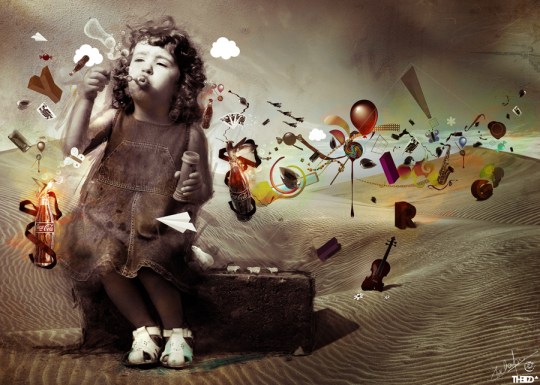
I sometimes think my subconscious looks a little something like this. Eerie to behold, right?

So what does all this say about me? Well, without the actual list it’s difficult to pull up any sort of psychological profile about me. But I think it does give you an idea of what sort of stories I’ll put out in the future, and what you can expect from some of them. So either you are either very psyched to read my work or you’ll never pick up a Rami Ungar book as long as you live. Either way, it gives you some idea of who I am and what I like to write. And I think that’s what I want people to get from this post.

Got any questions? Feel free to ask, and I’ll make up an answer as best I can.

Review: Olympus Has Fallen

Posted: March 23, 2013 in Review
Tags: , ,

More and more I find myself disagreeing with Entertainment Weekly‘s reviews. I might stop reading them altogether, but along with being entertaining (obviously) and occasionally I agree with them.

Not this time though: Olympus Has Fallen is a thrill-a-minute, and comes with all the gunfire and explosions of an action film for guys, with a lot more substance to it. The ever-impressive Gerard Butler plays Secret Service agent Mike Banning, who must go into the White House and save Aaron Eckhart’s President Asher from being killed by North Korean terrorists with a much darker intention than simply destroying one of the symbols of the nation. With surprises around every corner, you’ll be left on the edge of your seat as you watch this film and the evil plan of the North Koreans unfold. Also, watch Morgan Freeman’s character. In every role he plays, he’s just the bomb (and I don’t mean literally in the case of this film).

For anyone in need of a good break from reality, or afraid of Kim Jong-Un playing with his daddy’s toys, I seriously recommend this film, which I give a 4.2 out of 5.

We’ve been done one way for too long. Ugh!

In 1968, George A. Romero introuduced the concept of a zombie apocalypse created through a pandemic illness in his famous movie Night of the Living Dead. Although the term “zombie” was never used in the movie itself but was applied by fans who saw similarities between the flesh-eating undead of the film and the zombies of mythology, the idea stuck, and has grown over the years until every zombie novel, movie, and television series out ther either involves a zombie-creating virus or the cause of the zombie pandemic is not explained.

Although I have been horrified and fascinated by this type of zombie like any other type of horror fan, I also feel it’s being overdone in this day and age. It’s like vampires–the market’s too saturated with the same old drivel under different names and different faces. It’s enough to make you get out your stake and you automatic weapon.

It also makes me wonder, does anyone care about the original zombie? And by that, I don’t mean a zombie whose body is so rotted that there’s barely any rotted skin left on the corpse. I mean the zombie that wasn’t created via science gone wrong, but by magic gone right. Remember that zombie? The result of a voodoo curse? Yeah, that was actually a thing, based on actual Vodun mythology, and there were several famous zombie novels and a few films based on that kind of zombie well before Romero came along with Night of the Living Dead. One of the first novels about the supernatural zombie was The Magic Island by William Seabrook in 1929, which is believed to be the first timethe word “zombie” entered our lexicon. Then in 1932, Bela Lugosi starred in the Victor Halperin horror film White Zombie, which permanently cemented the word “zombie” in the English language.

Poster for “I Walked With A Zombie” in 1943

Other films that have included the supernatural type of zombie is 1943’s I Walked With A Zombie and 1988’s The Serpent and the Rainbow, but not much else. The most recent entry into supernatural zombie lore is Drums, a four-issue comic book series that ran in 2011. Unfortunately, almost all of these examples are very old and might not appeal to the SFX and CGI-addicted audiences today. And the series Drums has had mized reviews, with the first issue getting strong reviews but some thinking that by the end of the series, it seems to be “laid out like a bad SyFy movie”. That’s quite the insult right there.

So can there be an original take on the supernatural zombie that doesn’t suck? I should hope so. At the very least I have an idea for such a story that I’ve been saving for a very long time, and I may write it one of these days. However, that might not be for a couple of years, so that leaves plenty of time for other storytellers out there to steal my idea come up with something on their own that doesn’t suck or seem like the same old story retold in a new way.

What would such a movie or novel look like? I’m not sure, but I do know that sort of story carries with it different intricacies and challenges. For example, how does one become a zombie, and can it be transferred to the living? If so, how is it transferred? Can there be a Frankenstein’s monster-twist in the story? How do you defeat a corpse infused with supernatural power, if guns or machetes aren’t enough? Do these zombies need a food source, or is magic enough? And can creating a zombie through magic cause other strange things to occur, whether intended or not? And if other strange things occur, what will they be?

A traditional zombie in a cornfield. Freaky in profile, right?

You see how many questions a storyteller has to wrestle with in creating this sort of story? It’s very different from a virus-type zombie story. And I hope somebody realizes it someday and sees the possibilities and potential in such a story. Whether that’ll be my zombie story or someone else’s zombie story, I hope somebody does. I’d pay good money for that sort of story given a modern take, especially if it’s well done.

Would you like to see a zombie story using supernatural zombies? What kind of story do you think it’d be?

I don’t know why Entertainment Weekly gave this movie a C grade. This is by far the best movie I’ve seen in a long while.

In Ox, The Great and Powerful, director Sam Raimi and actor James Franco, both of Spider-Man fame, bring to us a magnificent world full of texture, color, and superb actors following a wonderful–and sometimes tragic–plotline written by David Lindsay-Abaire and Mitchell Kapner. At the beginning of the movie, we see Franco as Oscar Diggs–or “Oz” as he prefers to be called–as a carnival magician who is extremely selfish and often confronted by the limits and strains life has put on him. However, when he ends up in a hot air balloon in the middle of a tornado (sound familiar, anyone?), he prays to God and says he can change. Whether or not God has anything to do with it, Oz does change, in fits and starts, towards being a better man, one that we find ourselves rooting for in the end.

As the film progresses, we also see an evolution in one of the witches (I won’t say who, it’ll be a surprise), who turns from a plucky, lovestruck girl into a familiar green beast. Also, be prepared for plenty of surprises and reminders (such as the Wicked Witch does have a sister–that part always escapes my memory), and don’t expect to guess the plot except for stuff that will lead to (obviously) the sequel (you know what that stuff is without me telling you, and if you don’t read the original Oz books). There was only one part of the movie that I could guess what was going to happen, and only near when it happened, so be prepared to be wowed.

The only thing I had qualms against in this movie was that in the back there was a family who didn’t use their movie theater voices. Only when I went “Shush!” did they realize that they were being loud. Honestly, does anyone follow movie theatre ettiquette anymore? Please comment if you turn off your cell phones before a movie, just to reassure me.

There’s no one actor who was by far the best actor, each was convincing and endearing to me, though the Little China Girl, voiced by Joey King, definitely showed a lot of depth and personality and sincerely touched my heart. And Michele Williams as Glinda was everything I expected of the character and then some. Franco definitely made the con artist wizard more than annoying, as some critics have alleged, and Mila Kunis broke my heart as much as hers broke too (watch the movie, you’ll understand).

And the SFX! Wowee, they were something. The scenery is so amazingly real for CGI, and the flying baboons will make you want to flinch in terror! Plus the special effects on the witches and their magics are excellent examples of movie magic. Plus the Little China Girl is so cute! I want to pick her up and take her home with me!

For all that up there, I give Oz, The Great and Powerful a 4.5 out 5. This will definitely be a film to remember, just like the movie and book that this film is a somewhat-loose prequel to. I hope you enjoy it as much as I did.

Suspension of disbelief is when we disregard the unreality of a story and dive into the story anyway. For example, we ignore the fact that you can’t bring a corpse back to life with lightning and funky-looking machines, or we let it by that animals don’t wear clothes when we’re forced to watch The Great Mouse Detective with our younger family members, or I ignore that there are so many people in the cult in The Following that there’s no way that sort of cult could exist in reality, no matter how charismatic a serial killer Joe Carroll may be.

So many sick people follow him, even he has trouble believing it sometimes.

We need suspension of disbelief to enjoy some of the more strange of fiction, and sometimes to even get through the craziness of life. We’re pretty good about this as kids, when most of the shows we watch are cartoons with all sorts of improbable things going on.

But why do I mention all this? Most of the people who read this blog are well aware of suspension of disbelief and what it is, especially the writers who read this blog. Well, sometimes our suspension of disbelief cannot help us with a story, especially when we become adults and sometimes prefer our entertainment a little closer to reality.

But even for those of us who are still able to do suspension of belief like when we were kids, we occasionally find a story that we can’t get past the craziness in. For example, one of the problems I had with Mockingjay, the final book in the Hunger Games trilogy, was that after Katniss (spoiler alert!) killed President Coin for the murder of Prim, she wasn’t prosecuted or killed or thrown in the loony bin or held up as a hero by those who opposed both Coin and Snow. No, she was held in a room for several days and then dumped in District 12 for the rest of her life, with the only punishment being that she have counseling sessions on the phone for the rest of her life. If this were Egypt, China, Venezuala, Ukraine, or the United States (especially the United States!), any of the stuff I listed except what actually happened to Katniss would’ve happened. What makes Panem so different that the murder of the national leader gets you dumped in a coal-mining town that’s literally rebuilding itself from the ashes? Explain it to me, please!

“My country? Well, we’re hungry…and once a year 23 people die on national tV…and…that’s it.”

Another problem I had with the whole trilogy is that Panem had no character besides that of the Games and a capitol that oppressed the districts. Seriously, was that all there was to Panem? We only got brief looks into any sort of a national culture, with some district culture mixed in. And yet most culture is centered around the Games and the Victory Tour during the off-season. Is there anything else to Panem? There is so many questions left unanswered. Plus, what about the economy? It seemed the economy all depended on the Games and the oppressed districts. And did anyone in the Capital actually work, or did they all just party and do things related to the Games? I only know Panem as a nation of oppression and murder, and for Collins’ purposes, that’s all she really needs. But I have trouble believing that Panem could actually exist, especially when most of the nation is defined by oppression and a sick obsession with reality TV and the television in general.

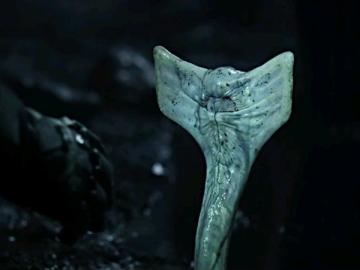
I also have problems with other stories. I have a lot of trouble believing that Superman’s biggest problem in life is his love triangle with Lois Lane and himself (thank God it looks like Man of Steel might deal with that), or that a biologist might shy away from some skeletons of dead Ubermen but be attracted to a strange-looking cobra-worm in Prometheus. I’ve grown disillusioned with some Bond films because the villain’s super evil plan involves flooding the Earth or using diamonds as a laser beam or living in a space-station that nobody noticed until Bond pointed it out (you know I’m right). Why does Anakin go to the Dark Side just because he’s in love? Shouldn’t there be more darkness in him besides a fear of loss? And why in some fantasy films they can only get rid of a monster by sealing it away but hundreds of years later the very same magic used to seal the monster is suddenly able to kill it without any major innovation being mentioned?

I know I seem to be tearing into some very beloved stories, but I have to say, some of this boggles my already messed-up mind. Is there something I’m missing here? Or maybe the story is missing something and I and some others are angry enough or nitpicky enough or something else enough to point it all out.

I bit that guy because he didn’t like the skeletons but for some reason wanted to pet me.

It’s probably why when I write a story and there’s a chance it may get crazy or overly complicated, I try and have something to make it easy to understand and believable. I dumped a whole idea for Reborn City‘s sequel just because I thought it might be disbelieved by more than a few readers. I went through a lot of parts of Snake before I wrote and even while I was writing it just to make sure there was nothing that could be too hard to believe. And with the bajillion stories in my head, I often tinker with them in my inmagination for years just to see if there’s something that could be pointed out as too weird to happen (believe me, even in speculative fiction that’s a lot).

What do you have trouble believing, even in beloved stories that everyone else is cool with? And do those things make you examine your work differently?

You might want to wait till it comes out on DVD.

(The following post contains many spoilers, so consider yourself warned!)

I went to this film expecting to be wowed…and left seeing why the reviewer from Entertainment Weekly gave this film a C. Honestly, doesn’t anyone care about making good sequels? Let alone making a good movie? Apparently not.

In this sequel, Bruce Willis reprises his role as John McClane, who goes to Moscow to meet his son Jack Jr., a CIA agent who’s gotten himself in jail all with the express purpose of liberating a political prisoner with some national security secrets that could jeopardize a corrupt politician’s corrupt career. Along the way, we get the requisite amount of explosions and public destruction, but very little in terms of plot–unless you count a trip to Chernobyl, Ukraine plot!

We do see some interesting bits. There are some betrayals and cool reveals, there’s a death scene that harks back to the first movie with a new twist, and Willis gets to make some of his trademark zingers. However, Jai Courtney is so one-dimensional as Jack Jr, you find yourself wishing for Justin Long as Matt Farrell from the fourth film. Indeed, you could switch Courtney for Long in this film and get a much more interesting film. That, and if you add about forty minutes and a revenge plot involving nuclear missiles after the main villain gets scissored in half! Oh, and the car chase that happens right after Willis arrives in Moscow without any time to prepare us for what’s about to happen? It’s so like the DC car chase from the last film, you feel like you’re watching the fourth film for the third time!

After all this, I left the theater feeling disappointed. I hope they don’t make a sixth film, because I’m not sure I could take it if they made another! For all the reasons listed above, I give Die Hard 5 a 2.8 out of 5, and unofficially rename it A Good Day to See A Different Movie or Go to Redbox.

Occasionally, I have to devote a post to some hardcore horror subjects, and today I’ve got something I’d like to discuss: serial killers on TV. It used to be that serial killers were relegated to the worlds of novels, and films and they stayed there. Why wwas this? Well, novels had long ago ceased to be scandalous, and a novel was only called to be banned if there was something very extreme about it (such as the gratuitous and very kinky sex of Fifty Shades of Gray, or the popularity and messages seen or percieved in Harry Potter). A serial killer or two in a thriller novel wasn’t so bad, especially since there was always a detective or two there to hunt the freak and his mommy issues down (because until recently, it’s always been mommy issues; damn you pop psychology!). As for movies, they may be decried for their violence and sex, but those sorts of horror movies are restricted to adults mostly, and it is difficult for a kid to get in to watch them. Even with videos and DVDs, not a lot of parents show their kids serial killer films, afraid their kid might become the next James Holmes, Eric Harris, or Adam Lanza.

If a serial killer did show up on TV, usually it was in a crime show, and only just for one episode (two, if it was an episode arc meant to draw out something special from a character). There were never any shows about serial killers, the movies that featured them were heavily edited for sexual content and swearing before airing (never mind being fitted so that the end on the :00 or the :30), and otherwise they weren’t a part of the wasteland that is television. Why is that?

I think it might be due to that TV, unlike the movies, is open to everybody with a TV and a remote, so it would suck if a kid whose favorite game is fairy princess sees Michael Myers stab two teens who’ve just been copulating. Also, TV shows are marketed to get the most viewers, unlike movies, which are marketed to get the most money from moviegoers. Yes, there is a difference: movie studios get a portion of the sales from movie theaters when people see their movies, while television studios get profits when companies pay to have their ads air during the commercial breaks of popular shows. Since a broad variety of people watch TV in general, unlike a single movie, so the shows are marketed to get the most people watching in order to get the most ad fees.

Horror only appeals to a small number of the TV-watching population, and serial killers appeal to only part of the horror fan community. With that in mind, horror doesn’t often get airtime, let alone serial killers. When horror does make an appearance, usually it’s during Halloween or it’s an element of a crime or drama show (examples are Grimm or SVU).

But for reasons I’m not sure about, serial killers are appearing on TV these days, with their own shows or being a huge part of other shows. I think it might have something to do with a resurgence of serious horror on TV. We’ve got Walking Dead on A&E, American Horror Story on FX, and Supernatural on CW, serious horror shows without any of the comedy associated with earlier horror shows like Buffy the Vampire Slayer or the girl-bonding themes of Charmed. No, this is serious horror with traditional tropes like angry spirits, demons, and zombies, and the critics and the viewers are eating it up like candy. I guess it was only a matter of time before serial killers started getting their fair share of airtime, and there’s been some pretty good sharing there:

There’s the Bloody Face character(s) of American Horror Story: Asylum, who’ve been bringing the terror to the TV screen; the cancelled J.J. Abrams show Alcatraz had several serial killer characters throughout the series; and The Following, a crime thriller about a serial killer with a following of killers he manipulates from his jail cell, is enjoying strong ratings on FOX. Plus there’s more: A&E is developing a prequel-that’s-not-a-prequel of the famous 1960 thriller movie Psycho called Bates Motel; and on NBC, there is a much talked about adaptation of the first Hannibal Lecter novel Red Dragon called Hannibal, that I am looking forward to with a vengeance.

So there are several shows featuring serial killers, some on the major networks such as FOX and NBC, and perhaps more will be made in the future. As a huge fan of serial killers (the fictional ones; I don’t condone killing outside of fiction) and a guy who penned a novel about one, I can’t complain about that. Thoguh don’t expect me to watch the Psycho prequel unless the reviews are phenomenal, because with a story like Psycho where the sort of psychosis that Norman Bates has isn’t even clearly defined, it’s going to be difficult to create a show based on how that psychosis developed and keep it interesting. Now if there was a show about Jason Voorhees between his supposed death and when he started killing…no, that’d still be difficult to sell to me.

Also, I would like to clarify some comments I made on this post. Although I said that parents don’t usually show serial killer-themed media to thier kids so they don’t become killers themselves, and that TV shows try not to traumatize kids for that same purpose, I don’t believe that violent movies/TV shows/videogames produce killers. Although there are studies that link excessive video game playing and violent behavior and stuff like that, there is no proof that these violent shows, movies, and games produce actual killers. And if there is any study that shows a correlation, feel free to show me, but I would like to remind you all that correlation doesn’t mean causation; I’ve taken two or three classes that have emphasized that point. Besides, the killers I listed above all had documented mental disorders, and there’s no study yet that show a correlation between movies/TV shows/video games and mental disorders.

And while we’re on the subject, mental disorder doesn’t necessarily mean dangerous. That’s very rare, and it usually doesn’t get to the level of violence we’ve seen in recent months when it is dangerous.

Now that I’ve said all this, I’d like to say good night.