Posts Tagged ‘Grady Hendrix’

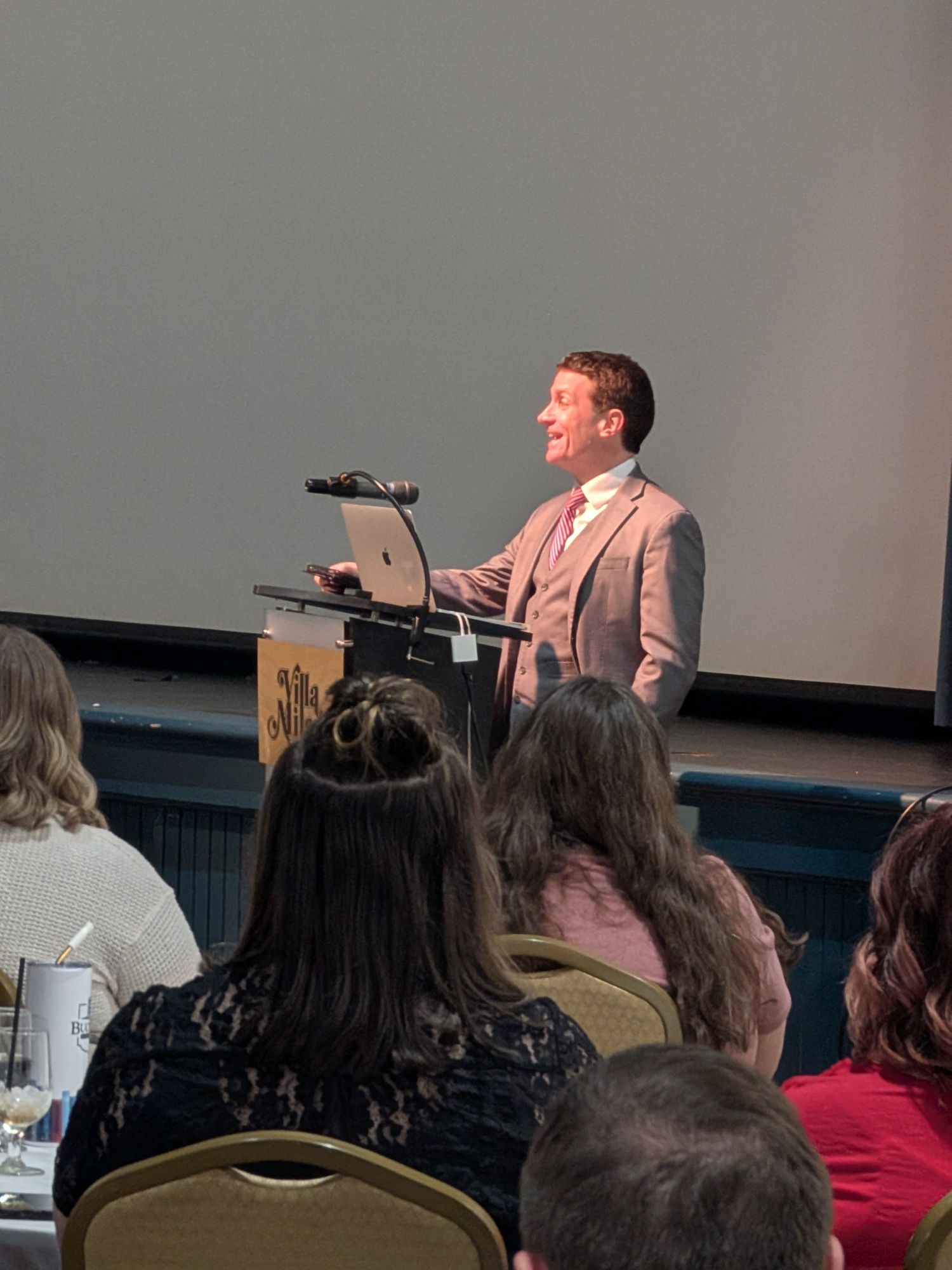
Grady Hendrix telling us about the history of witches and having us in stitches.

Recently, I went to see Grady Hendrix, author of Witchcraft for Wayward Girls and My Best Friend’s Exorcism, speak here in Columbus. It was an exciting event: the venue was an event space usually reserved for wedding receptions and the like, but it was packed, with possibly around 500 people inside the space! I was lucky just to find a table with a good vantage point.

And I’m glad I did: at 7 PM, Hendrix came out and spent the next hour using humor and a PowerPoint slideshow to tell us the history of witches as he saw it, as well as depictions of witches through history. It was hysterical! He made us laugh as he went through some of the ridiculous and not-so-ridiculous stuff that happened in witch trials, the plots of the wild books throughout the years revolving around witches, and why we keep having these witch scares. And I had a great seat to see it all.

It was an amazing night, and I could go on and on about it, but what I want to focus on is just how Hendrix, and other authors, use humor in their work.

I’ve written on this subject before, but horror and humor often go hand-in-hand, much to the surprise of some non-horror fans. You can see this quite prominently not just from Hendrix’s talk, but from his work, which is normally as funny as it is scary (Witchcraft is a rare exception, but then again, it doesn’t have much to laugh about). Not to mention, there’s a whole subgenre of horror called “horror comedy,” which is pretty self-explanatory. Some prominent examples include Clown in a Cornfield by Adam Cesare, where humor adds plenty to the slasher novel’s plot, and my friend D.M. Guay’s “24/7 Demon Mart” series, about a guy who works at a convenience mart with a talking cockroach for a manager and a portal to Hell in the beer cooler.
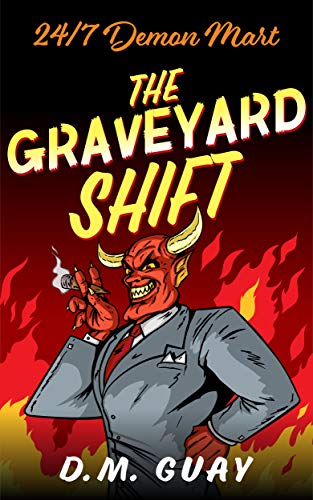
My friend D.M. Guay’s book. The series has quite a lot of followers.

And if you’ve seen a production of the musical Sweeney Todd (and I guess maybe the movie version), you’ll notice that despite the dark subject matter, there is plenty of humor. Hell, the musical’s most famous song is full of cannibalism puns! It’s almost sad how the movies cuts out most of those jokes.

Why is humor such a big part of horror at times? Well, part of it is for alleviating tension in the story, especially for non-horror fans who may not like stories that are so dark. But I think another part of it is that we need humor. Laughter is the best medicine, as they say, and it can help alleviate dark situations by shining a light on them. In fact, if you think about how horror is therapeutic for some readers (like me), the humor aspect really can pair well with the cathartic aspects of horror.

It also explains how a room of approximately 500 people could laugh so hard about stuff like witch trials, where people got murdered for bullshit reasons.

And it can’t be understated how helpful humor is in getting people to like each other. I certainly found myself liking Hendrix after an hour of his jokes.

Makes me wish I could put more humor into my own work. I love to laugh and joke around, but that doesn’t usually extend to my stories, where the stories I write are usually quite serious. Humor tends to pop up by accident or just evolves organically when I write it. In The Pure World Comes, for example, protagonist Shirley is practical and at times slightly condescending or sardonic, so humor kind of evolved naturally around her. And there’s a naughty joke appears in The Shape of Evil, but that’s because I’ve been in similar moments and made similar jokes.

Still, my style of writing tends to work for me. People like my stories for what they are, and I won’t force humor in when it doesn’t suit the story. And plenty of writers write amazing stories that have endured through time without a laugh. Who’s to say I have to add a laugh to join their ranks?
All that being said, if I find a place to put a bit of humor into one of my stories, and it doesn’t work against said story, I might add it. After all, a little laughter never killed anybody…as far as we know.

And in the meantime, I think I’ll just keep using humor as I have all my life: in my interactions with others, when appropriate and hopefully to great applause.

Do you use humor in the stories you write? Have you noticed any rules to writing humor or humorous passages? And what is your favorite horror story with comedic elements?
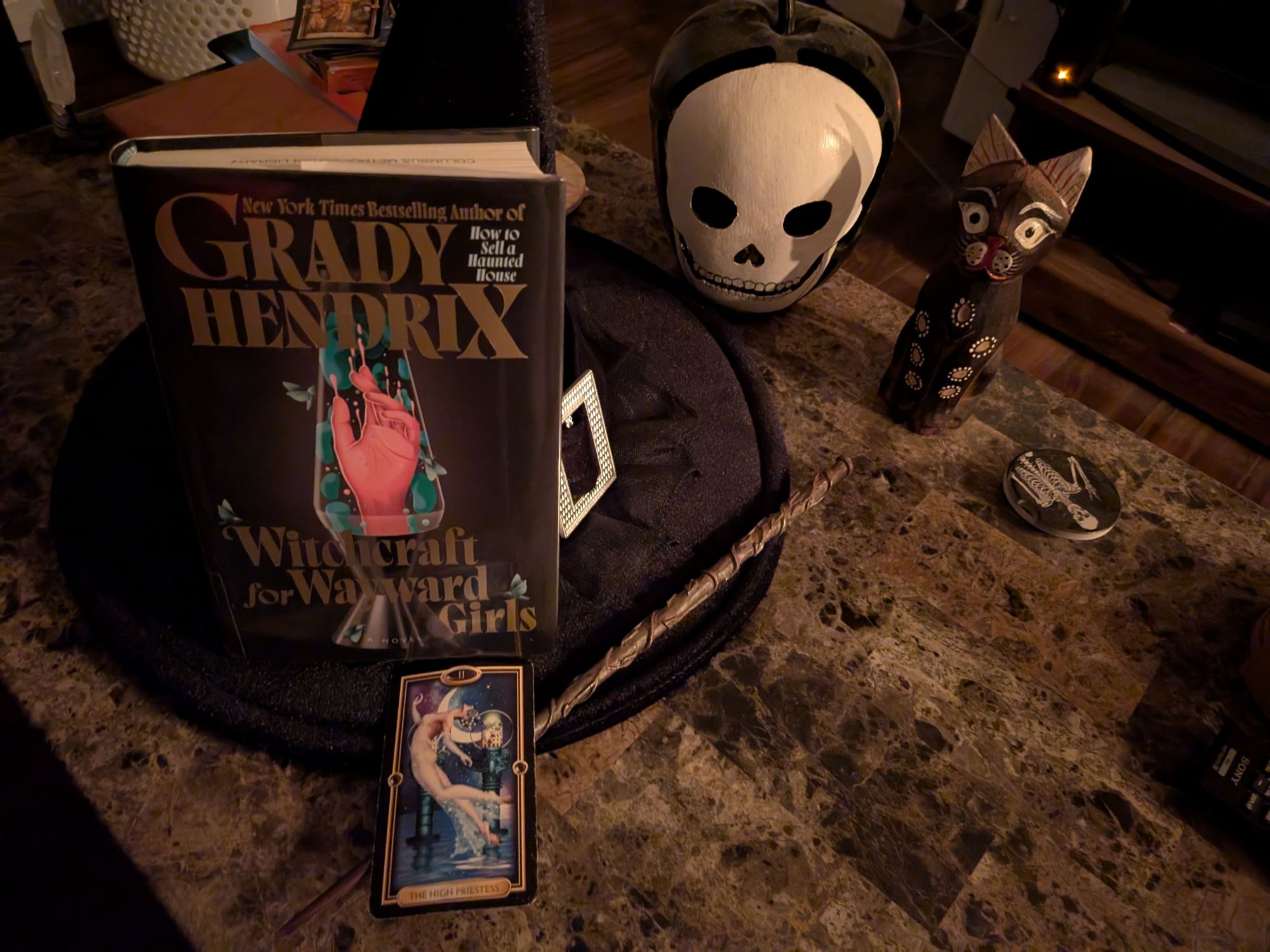
The photo I took the day I got my copy from the library. Can you tell I was excited?

We’re only five weeks into 2025, but I may have already found my favorite new book of the year. In fact, at times I got so deep into this book, I had dreams about it! You don’t know how special a treat that was for me.

Set in 1970, Witchcraft for Wayward Girls follows four girls sent to Wellwood House, a home for unwed mothers in Florida: Fern, a young high schooler who wants her old life back; Rose, a rebellious hippie with a bit of a mean streak and a bit of a nice streak; Zinnia, a young musician who plans to marry her baby’s father; and Holly, whose youth and silence hides a dark and terrible secret. Hidden away from the world like shameful secrets and repeatedly told that they are at fault for their condition and that the only good thing they can do now is give up their babies for adoption to a loving couple, the girls seek any way to take back a little control over their lives and bodies. When a mysterious librarian hands them a book that’s full of actual magic, they think they’ve found their solution. But when it comes to magic, everything comes at a price. And the price they have to pay may be bigger than any of them can pay.

So, if it wasn’t clear from the first paragraph, I freaking loved this book! For one thing, the horror is palpable from the first couple of chapters. Not from the witches, but from the people. Through Fern’s eyes, we see how everyone blames her, including herself, for getting pregnant outside of marriage, even though it takes two to tango. From what I’ve been told, that really was the attitude towards unwed mothers back then, and Hendrix does a great job bringing it to life throughout the story, as well as the callous cruelty the girls face as unwed mothers, even after they’ve given birth.

I also really liked the witches of the story. They’re not exactly old school wicked witches, but they’re not entirely good witches or granola-crunching Wiccans, either. They’re their own thing, a group of women with access to power and who are trying to ensure the continuation of their way of life and their freedom, and they’re willing to get their hands dirty to do so.

To list out all the colorful characters would keep us here too long, but some of my favorites included hippie Rose, who grew on me as the story went on and whose experiences midway through the book broke my heart; Hagar, the cantankerous cook at the Wellwood House, who does try to help the girls, if rather reluctantly; Zinnia, who has more sense than most of the other characters in the book; and Fern, who really does learn something from her experience.

All these elements come together into a fantastic story where I struggled to guess what would happen next and was surprised more than a few times by certain developments. It really was amazing.

Hendrix admits in the acknowledgments that he’s probably the last person to be writing a book where nearly every character is pregnant, but given how phenomenal of a job he did, I think we can forgive him. I can’t think of a single flaw in this story, it was just that good. On a scale of 1 to 5, I’m giving Witchcraft for Wayward Girls by Grady Hendrix a full 5. Grab a copy, put on an appropriately witchy playlist (I hope “Abracadabra” by Lady Gaga is on that playlist), and settle down for a read.

Trust me, this is one you don’t want to miss.

Two posts in one day. My Followers of Fear, you either did something very good in your past life or very bad. Either way, I finished Grady Hendrix’s latest novel on audio book today, so I’m going to review it here.

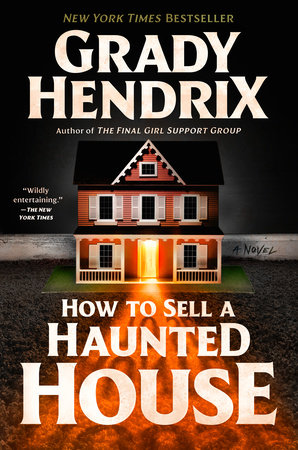
How to Sell a Haunted House follows Louise Joyner, a mother of a five-year-old who has a complicated relationship with her family. When her parents die unexpectedly, she flies from San Francisco to Charleston to take care of their estate and put them to rest. However, things are complicated by her younger brother Mark, whose lifestyle and choices puts him in conflict with Louise from day one. As the two argue like children and try to get the estate settled, they soon find that something malevolent is alive within their childhood home. And unless they get their shit together, it may claim not just the both of them, but Louise’s little girl.

The amazing thing about Grady Hendrix is that he can take a concept that sounds ridiculous on paper and write a whole novel out of it that’s both darkly comic and quite terrifying. From an IKEA knockoff built on the grounds of a former prison, to a teenage girl becoming possessed in 1980s-saturated Charleston, he just makes it work. And it’s no different here. Honestly, I found myself laughing quite a bit listening to Mark and Louise act like me and my sisters at our worst times ten. And as you get further in and see just how dysfunctional this family is, you find yourself glad you’re not part of the same family.*

And when you figure out who/what is going to be the main antagonist of the story, you find yourself laughing…only to see how terrifying said antagonist is. And as you see episodes from Louise and Mark’s childhoods and adulthoods that formed them as people, you see elements as these moments come back to literally haunt them in their parents’ homes. It’s freaky, and there were actually times I found myself wincing or shuddering as I listened to these moments.

And underneath all the darkness and comedy, you get some great themes about the effects of generational trauma on family and family dynamics, about learning to deal with death (and explain it to children), and what family actually is. It’s heavy stuff.

I do have some problems with the book, however. I did see a certain twist regarding the antagonist very early on, and I’m sure I’m not the only one. I also thought the resolution of the climax could have been a bit darker and might have ended too sweetly. And I would have liked to see Mark and Louise explore and resolve their issues a bit more. I feel like during the last third of the book, a lot of stuff was skipped over so the novel could reach its end.

But all in all, How to Sell a Haunted House is another awesome release from Grady Hendrix, whom I’m sure will only continue to grow in stature as a storyteller. On a scale of 1 to 5, I award his latest outing a 4.2 out of 5. It’s funny, creepy, and an all-around thrilling story. Grab a copy, settle down, and get ready to either feel grateful for your own family or feel like you’re reading about your relatives (it’s either one or the other, for better or for worse).

That’s all for now, my Followers of Fear. Until next time (which will be sometime before the week is done), good night and pleasant nightmares.

*I actually texted my own sisters to let them know how much I loved them and was glad we got along despite our childhood rivalries and disagreements. They were touched, as well as concerned about me because I was sending that text. Anyway, that’s how I reacted to this family’s malfunction.

(WARNING: Light spoilers ahead. You’ve been warned)

I’ve heard this book mentioned so many times in one of my Facebook groups. And when I heard earlier this year that a movie adaptation being made, I knew I would read it eventually. I downloaded the audio book from Audible and started listening over ParaPsyCon weekend. And I can see why it’s been mentioned so much.

Also, don’t let the goofy, Goosebumps-esque title fool you. This is a straight up horror story.

My Best Friend’s Exorcism chronicles the friendship of Abby Rivers and Gretchen Lang, two girls of very different backgrounds growing up in the 1980s. During their sophomore year, after a night of partying, Gretchen’s personality and health takes a change. Abby, frightened and confused, worries about what is happening to her best friend. Is it drugs? Mental illness? Or something else? Something very evil and dark? Something that has a dark purpose for Gretchen, and for everyone else.

Damn! What a horror novel! And definitely up there with Stranger Things when it comes to decent 80s nostalgia stories.

The strongest point of this novel is definitely the relationship between Abby and Gretchen. You see how it first formed during Abby’s tenth birthday party, the ups-and-downs of the early teen years, and finally into high school, when both girls are at the height of popularity but also at their closest. Like it says in the opening, they are friends when the word can draw blood. And even before anything scary happens, the strong phrases and emotional writing centered around their relationship is enough to engross the reader.

And that helps pack a huge punch when things start getting dark. You feel Abby’s concern as she notices Gretchen’s condition change and deteriorate. And as things continue to get worse, you really start to worry. Not just for Gretchen, but for Abby, who becomes almost obsessed with Gretchen’s condition.

Speaking of which, you’re just as confused as you are worried for Gretchen. There’s a lot of ambiguity around what’s causing all these changes, and it doesn’t really get resolved until close to the end of the book. Even when it starts throwing clues about what actually causes the change, there’s enough red herrings left to confuse you.

The scares are decent, as well. There are plenty of scenes that made me cringe while listening. Scarier than the horror, however, is the terror of growing up and of interacting with others. Abby learns throughout the novel just how difficult the real world is, as well as how little help adults can be. And then, during a particularly bad section of the novel, Abby finds herself socially isolated and it’s hard to listen to. Even curmudgeons hate to be isolated from the rest of the world, so it’s hard for Abby. And for us, the reader.

I also liked how the novel approached the topic of exorcism and divine power. It was a nice twist on an old trope, and not just for being outside the Roman Catholic tradition (do you know how rare that is in and of itself?).

And as for 80s references, they are everywhere and they are neither excessive nor done tastelessly.

If there are a few things I can criticize, I thought the opening chapter was a bit of a fake out. And then there were some things about the denouement I wish had been different.

Still, I did enjoy this novel. On a scale of 1 to 5, My Best Friend’s Exorcism by Grady Hendrix earns a solid 5. A dark and heart wrenching slow burn which will get you right in the feels, as well as the 80s nostalgia. I look forward to seeing how the movie adapts the novel, as well as reading Grady Hendrix’s other work (I just acquired his original novel Horrorstor). And in the meantime, I hope you’ll give it a read as well.

That’s all for now, my Followers of Fear. If nothing occurs between now and Friday, I’ll be back with a review of the next Conjuring film (lot of exorcism-themed stuff lately, isn’t there?). So until next time, pleasant nightmares!