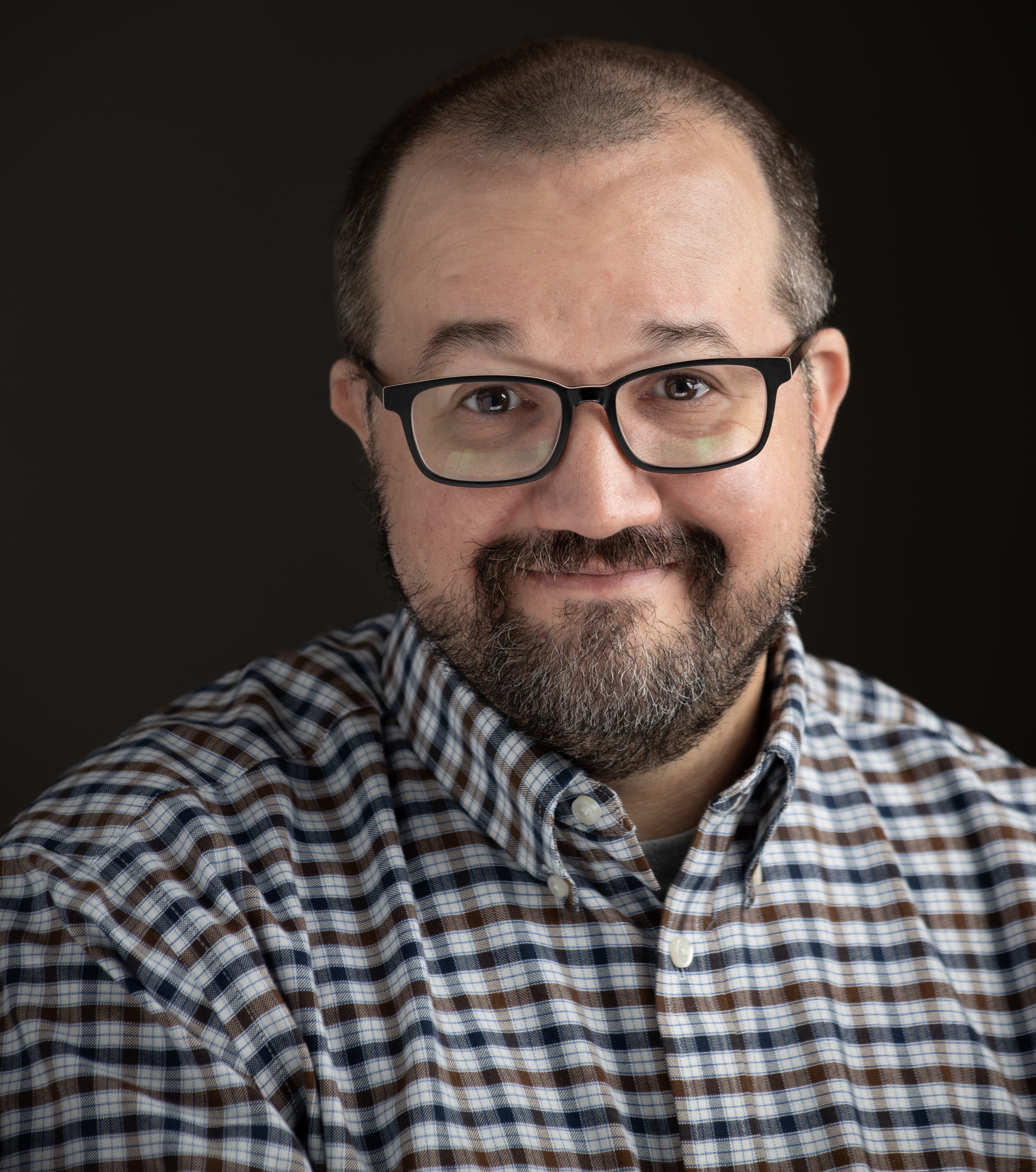
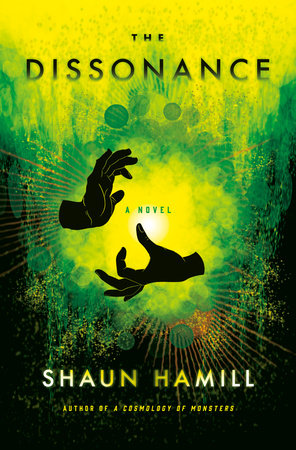
Some of you may remember prior to COVID a rather unusual novel called A Cosmology of Monsters, about a family in the business of haunted attractions and the entities that seem to haunt them through the generations (see my review here). You may also remember my interview with the author, Shaun Hamill (which you can read here). Well, Shaun’s got a new novel called The Dissonance coming out soon, and I got him to sit down with me to discuss the new book and what went into writing it.
So, without further ado, let’s do an interview!
Rami Ungar: Welcome back to the blog, Shaun. Can you tell us what you’ve been up to in the past five years since Cosmology came out?
Shaun Hamill: Like everyone else, I’ve had a crazy few years! I’ve moved from Alabama to Texas (and then moved three more times to different living situations in the last 3 years). I haven’t written as much as I would have liked, but I managed to write The Dissonance, and I have just turned in another novel I can’t talk about yet.
RU: Tell us about The Dissonance. What’s it about, and what inspired it?
SH: The Dissonance is a dark fantasy novel (with a dash of horror), about a type of magic that feeds on negative emotions: pain, depression, and the like. The only people who can use it are usually “broken” in some way—traumatized or mentally ill or the like. The story focuses on a group of friends who discover this power as teenagers, and how it shapes their lives in good and bad ways. It was inspired during COVID, when I couldn’t see any of my friends in person. I missed them terribly, so I wrote a novel about friendship.
RU: Can you tell us a bit more about the novel’s themes and influences?
SH; As previously mentioned, friendship is a huge theme of The Dissonance. So is trauma, and pain, and regret. It was influenced mainly by Susanna Clarke’s Jonathan Strange & Mr. Norrell and Lev Grossman’s The Magicians. Some reviewers are also comparing the novel to IT (it deals with a group of friends and has a split timeline between their adolescent and adult lives), so that’s in the mix, too!
RU: Nothing wrong about being compared to IT, especially when it’s favorable. So, do you think your writing style has changed at all since Cosmology?
SH: I’m not sure. When I started The Dissonance, I set out to write a more accessible book, with characters who were a little easier to love and root for. I also wanted there to be more action and excitement. Whether that means a change in style? I couldn’t say. Maybe I’ve gotten a little less pretentious? I’ll be curious to see what readers of Cosmology think.
RU: I’ll be sure to let you know. Now, I’ve noticed based on Cosmology and on the description for The Dissonance, but you seem to have a thing for cosmic horror. Can you tell us your thoughts on cosmic horror and what about it you like?
SH: Yeah, I’m a cosmic horror nerd for sure. I think it stems from growing up religious (although I’m not a believer anymore). I was always fascinated by the awe and wonder that came with believing in something bigger than myself, and when I discovered cosmic horror (relatively late, in my early 30s), I found something more in tune with my personal feelings about the universe: a dark wonder, and the sense that reality is bigger and more complex and strange than any of us can ever comprehend. The best we can hope for in this life is a peek behind the curtain. Weird fiction is all about that curtain.
RU: It also seems this book will be delving quite a bit into witchcraft and the occult. Do you have experience with magic and witchcraft, or did you do a bunch of research and then make up the rest?
SH: I have an ex who practiced a bit of witchcraft. I’ve partaken in a couple of rituals (which I found as boring as church), and have spent my fair share of time in wiccan shops, browsing books of spells and baskets full of crystals and whatnot. In The Dissonance I employ a little bit of that knowledge, but mostly stick to made-up stuff, where I get to make the rules. My novel doesn’t discount the idea that pagan beliefs are valid, but it doesn’t engage with them much, either.
RU: Changing gears a bit, in our last interview, you mentioned at one point cutting down Cosmology from 250,000 words to about 100,00. Did you have to do something similar with The Dissonance?
SH: Actually, it’s the opposite! I worked hard to turn in a draft of The Dissonance at about 100,000 words. When my editor bought the book, she encouraged me to open up the world and story, and we ended up adding almost 50,000 words to the novel. Just like the cuts were appropriate for Cosmology, I think the additions ended up helping The Dissonance. The early drafts of the novel were very fast-paced—a little too fast. We needed to slow down (just a little) and give the characters time to breathe and feel between the action beats. We needed to show them having fun in addition to getting into trouble. The resulting novel is almost 50% longer than Cosmology but I have yet to hear anyone complain about the word count, so I think we got it right!
RU: Before we wrap up, are you working on anything new and spooky right now? And do you have any exciting future plans?
SH: I just turned in my third novel (which I can’t really talk about yet). It’s definitely on the spooky end of the spectrum. I’m also in talks for a fourth book (which I also can’t talk about), and have given my agent outlines for two possible other novels. So I’m going to be quite busy for the next few years! Hopefully I’ll be publishing more than once every half-decade from now on.
RU: Final question: what are some horror stories you’ve read recently that you’ve enjoyed?
SH: I loved Rachel Harrison’s latest novel, Black Sheep, and Clay McCloud Chapman’s What Kind of Mother. I’m really excited for Gabino Iglesias’s House of Bone and Rain. I haven’t been reading as much horror recently (because of the fantasy edge of The Dissonance, that’s been most of my reading), but I need to get back into it!
RU: I hope you do! It’s an amazing genre, after all. And thank you again for joining us once more.
If you’re interested in checking out The Dissonance, it comes out July 23, 2024 and is available for preorder from most retailers. And if you want to follow Shaun Hamill, you can follow him using the links listed below.
I hope you’re as excited as I am to read this book, my Followers of Fear. And until next time, good night and pleasant nightmares!

 Rami Ungar The Writer