Posts Tagged ‘The Stand’

Having read The Good House before, I knew I was in for a good time (see my review here). But I was not prepared for Tananarive Due’s latest novel. After starting it, I learned the book was based not only on the Dozier School for Boys, a reform school in Florida where numerous atrocities were committed against the kids there, but on a relative she had who died at the school. And even after learning that, I still wasn’t prepared for what was to come.

Set in Florida in 1950, The Reformatory follows twelve-year-old Robert Stevens (named after her relative) and his older sister, Gloria. After kicking a white boy who makes advances on Gloria, young Robert finds himself sent to the Gracetown School for Boys, a reform school where the boys are under threat by both the spirits haunting the campus after years of mysterious deaths, and the Warden Haddock, a terrifying personage with a sadistic streak. When Haddock learns Robert can see the ghosts on campus, he forces the kid to help him catch the spirits. Meanwhile, Gloria attempts to find a way to free her brother from the horrible reformatory, setting them both on a path that will change them forever.

Man, this book was a rough read! Due does not skimp on the human horror the characters face, whether that be the horrible things Robert faces at the reformatory at the hands of the adults and the other kids, or the racism Gloria faces trying to get her brother out of that place (not to mention the utterly disgusting advances Lyle McCormick makes on Gloria in the novel), it feels all too real. Not to mention kind of timely!

Speaking of feeling real, the worldbuilding is amazing! Gracetown, the location of the reformatory and most of the other events of the book, as well as the people in the book, feel extremely real. I noticed that with The Good House, but Due is great with character development, and setting can be as much a character as the characters! I also loved how Gracetown apparently has this reputation as a place where children are able to interact with spirits and lose the ability as they grow older. That’s a pretty cool idea, and Due uses it to flesh out the spirit world of Gracetown and the reformatory so well.

I think the one thing I didn’t like was that I feel we only scratched the surface of the Gracetown School for Boys. I know that might sound masochistic, considering what we saw was pretty horrific, but we only saw a fraction of the school grounds, of life at the school, and the sordid history there. And as much as that would’ve scarred my psyche, I would’ve like to see all that explored more.

Maybe an anthology based around the Gracetown School for Boys? They’re doing one for The Stand, after all. I can dream.

All in all, though, The Reformatory by Tananarive Due is a soul-shaking journey of abuse, racism, and the darkness of humankind that, at times, I had to take a break from, I was that shook. On a scale of 1 to 5, I give it a 4.5 out of 5. I feel like I get why this book was talked about so much when it came out last year, and I wish I’d read it sooner. And if you haven’t read it yet, you should go and read it, too.

Or listen to it. The audiobook is fantastic!
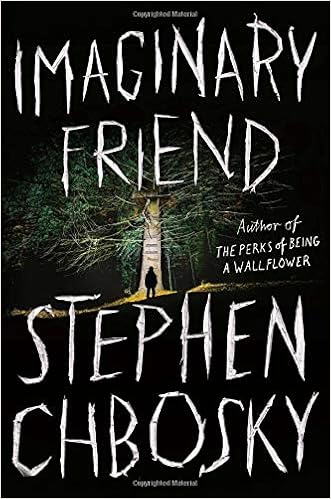
Over the past couple of months, people in the horror-themed Facebook groups I belong to have been raving about this particular book. I looked it up and it sounded up my alley, so when I had an Audible credit, I downloaded the audio book. But before I started it, I found out the book was written by the same guy who wrote the novel The Perks of Being a Wallflower, as well as wrote/directed its movie adaptation. Really? Isn’t that a sweet, YA rom-com? How do you jump from that to horror? (looks up what that book is really about.) Oh. That’s pretty dark. Yeah, I can see how the dude transitioned to horror.

Imaginary Friend follows Kate Reese and her son Christopher as they leave Kate’s abusive boyfriend and move to a small town in Pennsylvania. However, soon after they move there, Christopher disappears in the woods near his school. He reappears a week later, unable to remember what happened to him, except being led out of the woods and back to civilization by someone called “The Nice Man.” While Kate is happy to have her son back, and things start to improve after he returns, Christopher has changed. He’s smarter now, unable to sleep, and suffers from headaches a lot. And he’s in contact with the Nice Man, an invisible being who instructs him to build a treehouse in the woods he disappeared in, and to do it before Christmas. If he doesn’t, something bad will happen. To the town, to his mother, and to him.

This one was hard to put down. I normally only listen to audio books while at work, but the story was so intriguing and out there that I listened to it while checking email and cooking dinner. Imaginary Friend feels a lot like Stephen King novels like It or Needful Things, these huge stories based around weird concepts that are both scary and hard to put down. I mean, you got a kid who goes missing in the woods, and then when he comes back, has to build a treehouse to save the world from the Apocalypse. And that’s just what I feel I can tell you without spoiling too much.

I also have to give Chbosky credit: I had a hard time predicting what was going to happen as we got further into the story. Every little piece of the puzzle had the potential to surprise me, and quite a few did. During the “darkest hour” of the book, when things are at their most pessimistic, you felt the misery and the tension as the situation deteriorated. And that climax! Woo-boy, that was epic. Like, the final battle of an Avengers movie epic.

Not only that, but the characters are very well-developed. Also like some of King’s books, especially earlier ones, just about every character is well-developed. I felt like I’d known some of these characters my whole life, from Kate and Christopher Reese to the two or three old ladies suddenly regaining their faculties after years of dementia.

I do have one major gripe about the book: as the story goes further on, the novel takes on an…evangelistic air. It’s not like the Left Behind books, where it’s trying to get people to become born-again, but the story leans more in that direction than in the direction of The Stand or Supernatural. I don’t think the goal is to convert me: rather, I think Chbosky is using his Catholic upbringing to give the story a particular authenticity and philosophy other non-evangelistic Ultimate-Good-versus-Ultimate-Evil stories don’t have. There are some interesting ideas on the nature of guilt, our relationship to God, and how to find different kinds of salvation presented in the story.

Still, there were times when I was like, “Dude, scale it back a bit. I’m starting to get how people feel when I start ranking villains in horror, and they’re not horror fans.” That’s happened before, and it’s gotten awkward.

On the whole though, Imaginary Friend by Stephen Chbosky is an engrossing horror novel that’s weird in the best of ways and full of terror and twists. On a scale of 1 to 5, I’ll give it a 4.4. Pick it up and see for yourself. You’ll never look at treehouses and deer the same way again, but you’ll have a hell of a ride thanks to it.

The Stand, by Stephen King, adopted into a comic book form by Marvel Studios

I’ve always been a huge fan of Stephen King. You could say I want to inherit that throne someday, be a successor to the current King of Horror (that’s the goal at least; first stop, publishing a novel). And I’ve always loved The Stand. In addition to being one of King’s longest works, in my opinion it’s one of his best. You think you know the familiar old story: virus breaks out, kills off 99% of the population, the survivors struggle. However, Kiing weaves into it from very early on themes of war and the battle between good and evil, with survivors taking sides as a Cold-War-threatening-to-heat-up appears on the stage that is the now-dead USA. It’s an amazing story, and I recommend you all read it, especially the extended edition, which has all the stuff King was forced to cut out of the original edition due to budget costs. I also liked the TV miniseries adaptation, even if the ending was very different from the novel. The cast was phenomenal, especially the guy who played the villain Randall Flagg. So when I heard that Marvel was making a comic book version, I scooped it up without hesitation. And I was not disappointed: combining lines from the actual text with art and action, the comic book version was thrilling, especially its more dark, world-ending scenes filled with corpses and broken buildings. I thought the artwork made some of the character’s hairstyles look a little too frizzy for my tastes, but I still very much enjoyed it. It’s too bad they couldn’t put more of the original story into the comic book, but I’m sure that they had only a few hundred pages to work with and had to be choosy. Either way, I think they did a good job of adapting an amazing story. After reading the final volume today, I had to write a review of it. I give this work, a 4.6 out of 10. Good job Marvel, now how about an adaptation of It? Just leave out that one scene where the characters make love in the sewers and I’m sure we’ll be fine.