Posts Tagged ‘anime’

anxiety

What is the trouble with psychological horror? Actually, there’s not much trouble to it. It’s just very hard to do well.

What do I mean by this? Well, let’s look at the definition of psychological horror: “a subgenre of horror fiction, film, and video games (as a narrative) which relies on the characters’ fears and emotional instability to build tension”, according to Wikipedia (I know you’re not supposed to rely on that site for information, but I couldn’t find a better website for a definition). It’s a sub-genre that, rather than relying on a traditional monster that’s out front and center for all to see, the monster is restricted to quick glimpses and shadows. If there’s a monster at all: sometimes the true villain is a character’s own brain, their fear, distrust, paranoia, suspicion, isolation.

I’ve used psychological horror before, particularly in the stories in my collection The Quiet Game (which if you haven’t read, I wish you would) and in the short story “Buried Alive”, which was published in the Strange Portals anthology last year (again, I wish you would read it). And I’ve come to the decision that while it isn’t as difficult as physics or writing comedy, it is walking a very fine line. Almost like a tightrope. And if you fall off, you can wind up veering either into the realm of the comedic with how obvious that it’s all in the character’s head, or it’s just so confusing that you find yourself losing patience with the story.

Let me give some examples (and it’s my blog, so you have to let me give some examples): have you read “Buried Alive”? I’ll keep the spoilers to a minimum for those who haven’t, but like I said above, I use quite a lot of psychological horror in that story, and for the most part, I think that I use it well (so do most of the readers I hear from on this one). For the rest, though…it’s pretty obvious that the circumstances of the main character are taking a toll on her mental state. I don’t think it gets to the point of comedic, but it is obvious, and the point of psychological horror is to make you guess whether it’s all in their heads or if it’s real or…who knows?

Perfect Blue. Trippy, has its moments, but also has its problems.

On the opposite end of the spectrum, there’s the anime film Perfect Blue, based on a novel that I wish was available here in the States. The film is about a singer-turned-actress who starts to confuse reality and fiction when her first acting job takes a turn for the traumatic. It’s a good story, but it’s not a perfect story. There’s a good section of the movie where they spend time trying to confuse both the protagonist and the viewer, and it gets a little difficult to not only what’s going on, it gets difficult to pay attention or be patient with the movie. While I admire the visuals of the movie, and I get what they were going for by showing what the protagonist is going through mentally, and I recommend checking it out if you’re interested, psychological horror shouldn’t get so strange or trippy that the reader gets frustrated with or loses interest in the story.

A great example of a psychological horror story though, manages to toe the line very easily and keeps you guessing as to what’s real or what’s mental delusion. A good contemporary example of this is The Babadook. If you read my review of that movie last year, you’ll remember that I noted that the movie kept you guessing as to whether the film’s protagonists were dealing with an actual monster or a shared psychosis, and I eventually settled on a bit of both because…I’m mostly human, and humans need to categorize things to make sense of the world. And I still say that I don’t know for sure which it is, and that’s one mark of the film’s greatness. You’re never quite sure what’s real and what’s in the heads of the characters, it stays interesting throughout, and it never gets to the point of ridiculous or obvious. All told, it’s great psychological horror.
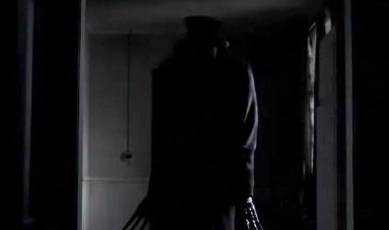
This movie will surely get you on so many different levels. I’m getting chills just thinking of it.

So how do you psychological horror well? How do you toe that line?

Well, I’m definitely no expert on the subject. I usually deal in traditional horror, the monster is out front and is usually either some twisted form of human or a creature not easily defined by our standards. I dabble in psychological horror, usually making it part of a bigger story. But I can try, and I think–beyond reading/viewing as much psychological horror as possible, both good and bad, and practicing like you want to get to Carnegie Hall, of course–I’d suggest trying to write a story where you’re not sure what’s really happening. Create a scenario where strange things start happening to your character or characters, and you can’t tell what’s real or what’s just in the minds of your characters. Keep it interesting, don’t get too ridiculous or obvious, and just see where the story goes. If you can do that but still be unsure for most of the story of what’s real or not, then it’s likely your reader will be the same and want to know more.

Another marker of psychological horror is that there’s usually a twist somewhere along the way, and if it’s good it’ll change how you view the entire story (a great example is the Korean film A Tale of Two Sisters and its American remake The Uninvited). Characters are also often driven or plagued by powerful internal battles: am I doing the right thing? Is this right or wrong? Are they really out to get me? It doesn’t have to be full-blown persecution belief or fear of some unknown. It can be something as simple as a growing suspicion that something’s off or that our desires are actually evil. Again, A Tale of Two Sisters is a great example of the former.

Not a fan of the movie, but even I admit it shows Jack’s breakdown very well.

And finally, psychological horror is often not the main focus of a story, but part of a bigger story. Take a look at The Shining by Stephen King. Obviously that hotel is actually haunted, and the kid and the cook are both psychic. But a good deal of the story deals with Jack Torrance trying to sort out what’s going on for himself. Is he just dealing with a powerful desire to get wasted again? Is he going insane? Is the hotel playing tricks on his mind? There are scenes where you really can’t tell, and that’s part of the terror. Part, but not the whole thing. After all, there’s all the stuff the hotel is doing to them, right?

Unless Jack, Danny, and the cook are all sharing some sort of shared delusion, or folie a trois, in which case…wow. New conspiracy theory right there.

In any case, it’s something to experiment with yourself. And for me to experiment with more often. Just try and see what happens…or does it happen? You’ll never know until you try.

How do you feel about psychological horror? Do you have any good examples in film or literature you’d recomend? What are some tips for effectively writing in the subgenre?

I just recently finished the second draft of “Gynoid”, a sci-fi love story novelette. During that time, I thought a lot about romance in fiction. Have you noticed that it’s everywhere? In fiction, you find a lot of time devoted to find your one true love, and in real life, you find people not just actively looking for their one true love(s), but even measuring themselves by fictional couples! Our music is rife with love songs or how love is betrayed (the so-called “Song of Songs” in the Bible is one huge erotic love song), and if you go back in time, some of our oldest stories involve love and lovers.

Heck, it’s in a lot of my fiction too! And I write fiction where “love” is more likely intense adrenaline and a shared peril being mistaken for attraction. Snake has a love story that’s central to its plot, Reborn City has a bit of romance in it here and there, and..well, you saw the description for “Gynoid” above.

But rather than speculate on why romance and finding it is such a big thing (I think we can all guess at the answer, right?), I think I’m going to share some of the trade secrets I’ve gleaned over the years from other writers and from my own romantic experience, both writing it and from experiencing it (do not ask me which I have more of. I wouldn’t want to upset anyone) on writing romance in your stories. Why? No particular reason, it’s just on my mind and in my stories so much I feel like talking about it. And I know I might not be the most qualified person to talk about the subject–I know I’m not a romance writer–but I know a bit, and since when has not being an expert ever stopped anyone from talking about anything? (*cough* climate change deniers in Congress *cough*)

So let’s begin on my tips for including romance in your stories:

  1. Give the characters personalities, make them fully-rounded and three-dimensional. I feel like often times some of our most celebrated romances involve people who are just good-looking nice folk and not much else. Romeo and Juliet were a sad emo guy with a thing for teenagers and Juliet was a teenager, Cosette and whatever her guy’s name was were good-looking and nice but they weren’t much else, and Katniss Everdeen…okay, Katniss was at least well-rounded. You knew who she was, what her problems were, what she stood for, and what she was willing to do to overcome those problems. Her love interests, on the other hand, just seemed there so as to add something to the story that the story might have done fine without. I mean, Gale is just handsome and angry with the Capitol, and I can’t tell what Peeta is besides sweet. One minute he’s skillful enough to manipulate the hearts of the whole Capitol, the next he’s too naive to tell that Katniss is using him for survival. Make him one or the other! Seriously, if you’re going to bother putting love interests in the story, I’m going to need a reason to ship either of them besides their attractiveness and professions of love.
    And that brings me to my next point:

    It took a long time, but these two became a wonder couple.

  2. What’s the reason they fall for each other? Please don’t say, “Oh, they’re good-looking”, it’s got to be more than that…or heroin-flavored blood. Take one of my favorite anime of all time, Sailor Moon (yeah, I’m a huge fan of that even so many years on. Moonies forever!): all of the main characters are good-looking. So why does Sailor Moon end up with the male lead, especially when in every adaptation of the story they start out fighting and disliking each other and in some he’s already seeing someone else? Leaving aside backstory exposition, I think they just grow comfortable with each other over time. They realize they can be honest with each other and that their faults are just part of who they are. Cute parts too. And it helps when they find out each other’s secret identities, which shows how courageous and reliable they are to one another, to the point they make a pretty good partnership, in love and in combat.
    Another example I’d like to use is Captain America and Peggy Carver in the Marvel Cinematic Universe (which is my only reference point, I was never much of an American comic books reader for some reason). Heck, at the beginning of their relationship, Cap’s a scrawny guy who doesn’t seem like much of a hero, while Agent Carter is…well, Agent Carter. What forms the basis of their relationship is that Carter likes that Cap wants to help out despite all the barriers facing him, and his sweet and loyal personality, while Cap likes that she’s a unique and confident woman who doesn’t need a man and who also doesn’t look down on him for not being tall and buff. Over time and numerous battles, their relationship grows closer and they fall in love, which ultimately doesn’t end well but I’m sure that if things had gone differently, it would have been a different story.
    Speaking of which, here’s point 2a. Shared experiences, especially combat experiences, can bring a relationship closer. Unless of course you and your supposed lover work really horribly together, in which case fighting will just highlight it and you’ll fall apart at the seams.
  3. There is no point where the relationship becomes perfect. Work is involved. If there’s one thing I’ve learned about relationships in the real world, they’re always a work in progress. Why? Because we’re all works in progress, so our relationships are too. There’s going to be rough times, where the characters struggle or worry that something or someone will come along and the good thing they have going will be ruined. Back to Sailor Moon for a second. Fans agree that the heroine and her man are a strong and stable couple (though whether or not it’s a good coupling, I find people disagree on the subject more than you’d think), but they do have to work at it. Besides enemies that threaten to pull them apart for whatever reason, they have the normal couple troubles: people who seem like better matches coming along, occasional misunderstandings, an unexpected child. Heck, they even broke up for a time during the anime’s second season. Just goes to show that even great couples have ups and downs.
    And the best part is, you can extend these meetings, character explorations, falling-in-love scenes, and ups and downs over several books. In fact, half of the fun of the TV show Scandal is watching the heroine Olivia have an on-again, off-again relationship with the (married) President of the United States. You never know how that one is going to work out. And as long as you can keep it going, the more you get to explore these characters and their relationships (provided fans don’t start to get bored, of course).
    And now that we’ve discussed what makes for a relationship, let’s discuss some content.
  4. Sex is not always necessary. Yeah, I know we live in a hyper-sexualized society where everything has a sexy component to it, and I know I included a steamy sex scene in Snake, but seriously, sex isn’t always necessary. In fact, some people prefer romance stories without anything racier than a kiss or two. There’s actually an entire sub-genre of romance like that, it’s called sweet romance, where the characters don’t have sexual relations before marriage (or commitment too, maybe) and it has a big and loyal following. Besides, some authors aren’t comfortable with sex scenes. I know I wasn’t at first, though I later got more comfortable with them. So if you don’t want to do one, there’s no law saying you have to.

    Love the relationship dynamics of this show!

  5. Also, you don’t have to just have one person love only one other. I know there are a couple of Buffy fans reading this blog. One of the best parts of that show is the characters had many different relationships over the 7 seasons. Buffy herself had three major relationships over the course of the series.  The writers could’ve had her with Angel, her first love, through the whole series, but they allowed her, Angel, and many others to explore other relationships and really mature through that. Same with Teen Wolf, which had two main characters being “meant to be forever and ever”, but gradually changed things up over time. So if you want to, you can have characters wait a long time and go through several relationships before finding the right person.
    Especially with love triangles. I hear there are quite a few series out there where a good dose of fun is trying to find out who the main character will end up with in the end, especially when there’s two really great, fleshed-out characters to choose from (though usually from what I hear it’s whoever the protagonist meets first).
    And this brings me to my final point.
  6. Don’t do it because everyone else is. And no, that’s not a drug PSA (though you shouldn’t do those either. Not even weed, that stuff will mess with your system). Yeah, you see people putting all these different things in their stories–love quadrangles, the other man or woman, unexpected pregnancies, even some sexual exploration. Only put those in your story if you feel they’re what the story needs, not what others say you should put in or what others are putting into their stories. Believe me, that’s how I avoided something really unnecessary romance-related stuff in Reborn City, and that worked out great for me.

I’m going to end it right here, but I have to say, there’s a lot more that I could include in this post. Suffice to say, there are a lot of intricacies to writing romance and love stories (point number 7, a romance has a happy ending, a love story doesn’t have to. Learned that a romance writer friend of mine), and you learn these things over time. But hey, in the end they can lead to some really great stories, and maybe melt a heart or two while you’re at it.

What romance writing tips do you have? Do you feel romance is important to your stories or not so much?