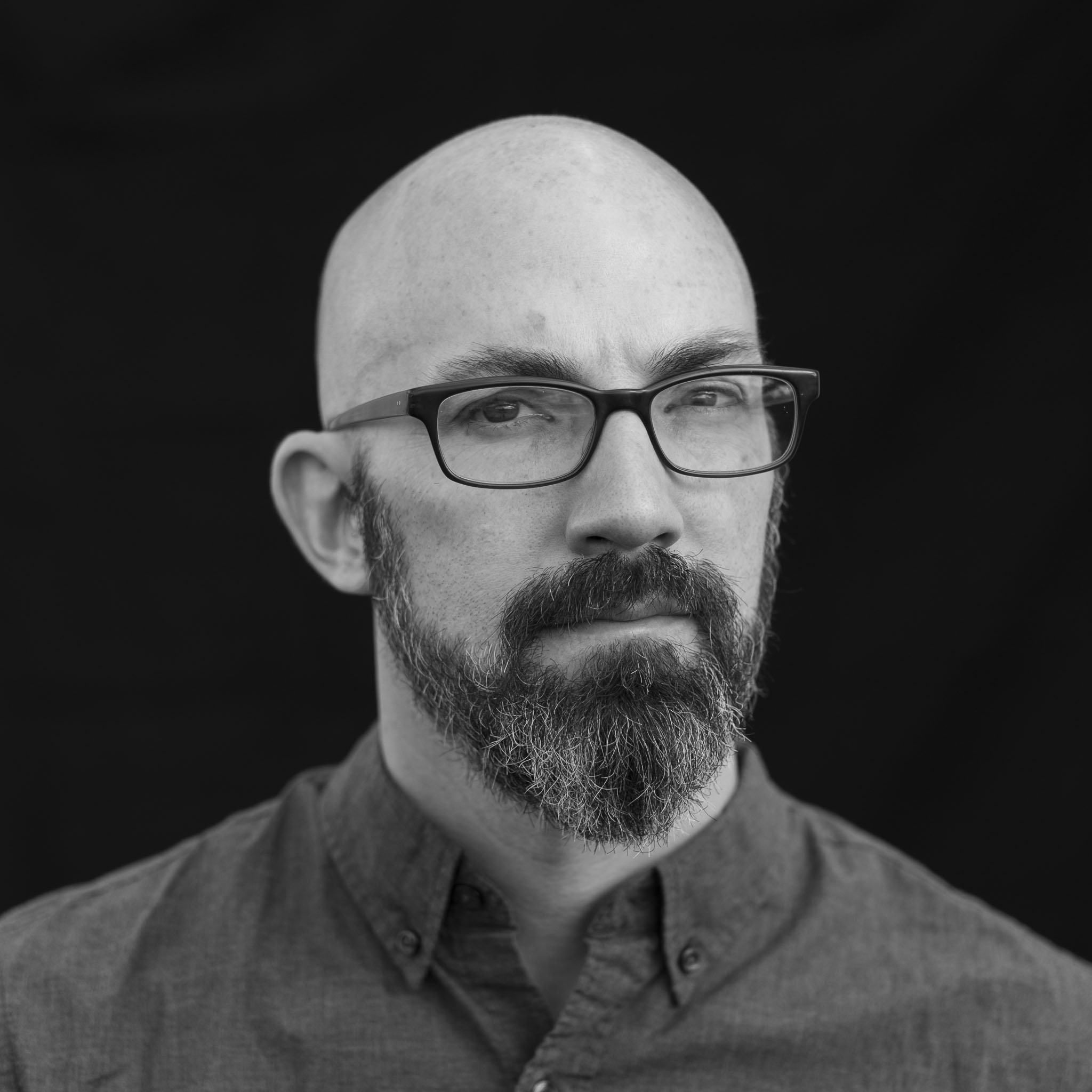
Posts Tagged ‘Clay McLeod Chapman’

“This book is perfect for your conservative relatives. Especially at Thanksgiving.” This is the description I got of Wake Up and Open Your Eyes by Clay McLeod Chapman, a satirical horror novel about a demonic apocalypse. With a description like that, I was intrigued. And this past Thanksgiving, I started the audio book.

To which I say, “Woo-boy? What did I get myself into?”

Wake Up and Open Your Eyes starts with Noah Fairchild, who goes from his home in Brooklyn to check on his estranged parents after his mother leaves a strange, conspiracy-filled message in his voicemail and then doesn’t pick up. When he gets down there, he finds his parents seemingly brainwashed into dementia by their conservative news shows. However, it’s actually the beginning of the apocalypse. And the demons are possessing people through their devices. And what they choose to consume through their devices.

As I said, this is a satirical horror novel, so there are plenty of funny moments that made me laugh out loud. One of the main sources of possession is a parody of Fox News, and it’s so thinly disguised, you can tell immediately which anchor is getting made fun of. In the final third of the novel, the story is actually narrated by a fictional version of a real life news anchor, only he’s a hallucination living in a character’s head to help them process these events!* And even in the apocalypse, people are posting videos to YouTube, Instagram, and TikTok, as if they need to share their most intimate moments to make them real.

However, this is a horror novel, and it gets horrifying! The demon-possessed do some seriously fucked up shit when they take over people, and a lot of it is described in excruciating detail. The amount of body horror and gross out elements even borders on extreme horror, so it can be uncomfortable at times (I just barely tolerated it).

Still, it is hard to put down. While at first I could only listen to it in small doses, over time I got so hooked, I listened whenever I could. And the ending, while some may hate it, is definitely quite fitting for such a bleak horror novel.

On a scale of 1 to 5, I’m giving Wake Up and Open Your Eyes by Clay McLeod Chapman a 4.5. It’s bleak, horrifying, and pokes plenty of fun at a nation/world/species that is willing to give up its thinking faculties and let a talking head on a screen do the thinking for you (not just conservatives; liberals and everyone else, too). If you have a strong stomach and are at all interested, give it a read. You may never be able to look at cable news, wellness gurus, or even “Baby Shark” the same ever again, but it might just be worth it.

*And can I say, I find it so bold to put real, living figures in your stories, using their real names? I’ve read a few stories like this, such as Shoeless Joe featuring JD Salinger, or a story by Jonathan Maberry where Kevin Hart and Kelly Clarkson, among others, make an appearance. And ever time, I marvel. I know it’s kind of allowed if they’re a public figure and it’s either parody or their fictional selves are acting in a way that would correlate with their real selves. But still, it’s not something I would consider doing (especially when I put real figures in my stories as a form of punishment for real life bad acts). I would be too worried about getting sued!

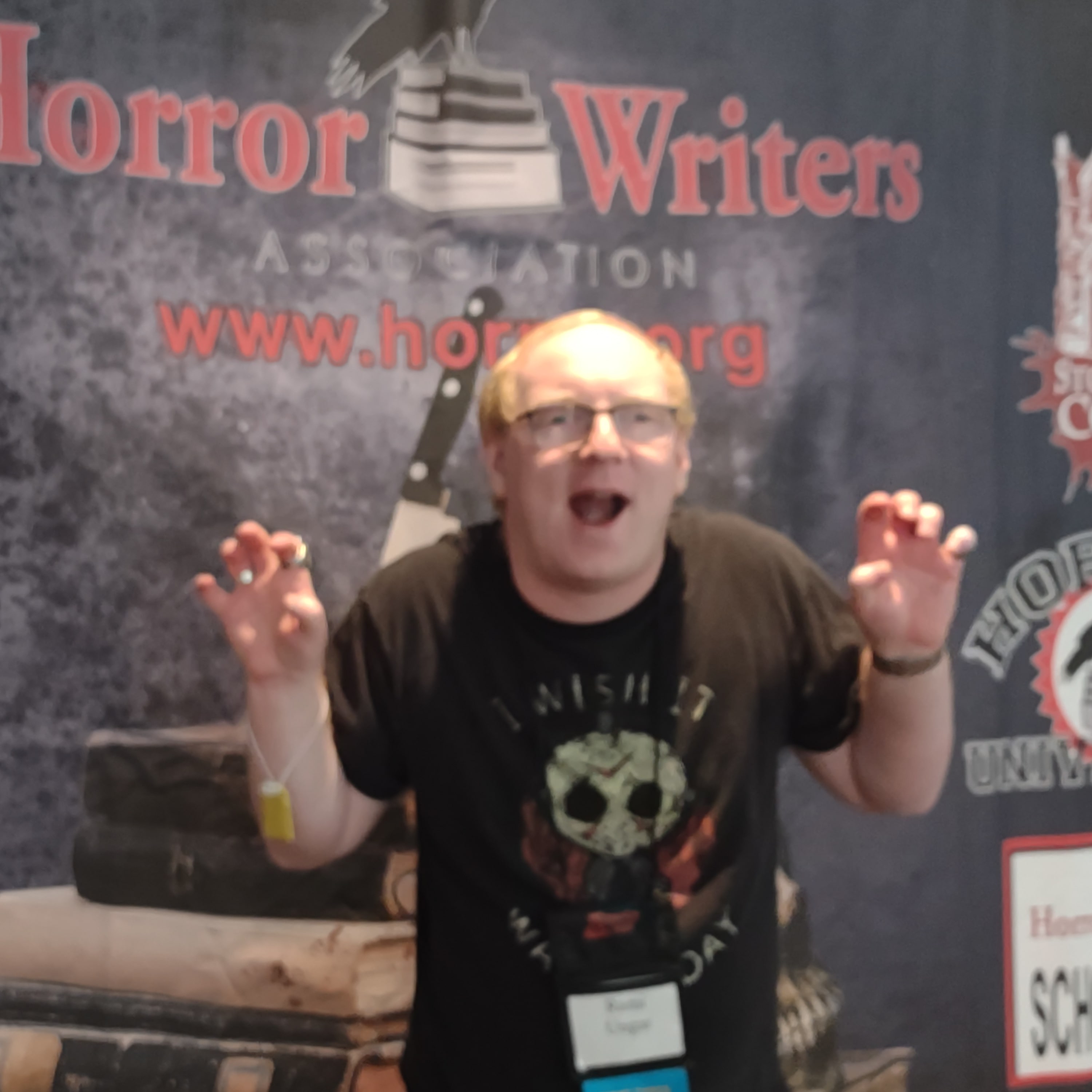
Me being silly in front of a big poster.

I’m back, Followers of Fear! And let me tell you, I had the best time at Stoker Con, the biggest convention for the horror writing community in the world! Four days spent with my comrades in the Horror Writers Association discussing all things horror and enjoying all things macabre. Honestly, it was one of the best experiences I’ve ever had!

And it was in Pittsburgh, which despite how difficult it is to drive in, was the home of George A. Romero, so his presence was felt throughout the convention. Hell, the city has kind of embraced Romero as sort of a patron saint, and the George A. Romero Foundation was even a sponsor for the con, so that made it extra special.

But back to the con. Honestly, how can I describe it to you? I guess I could go over the things that made it memorable to me while also supplying photos here and there. Yeah, that works, so let’s go for it.

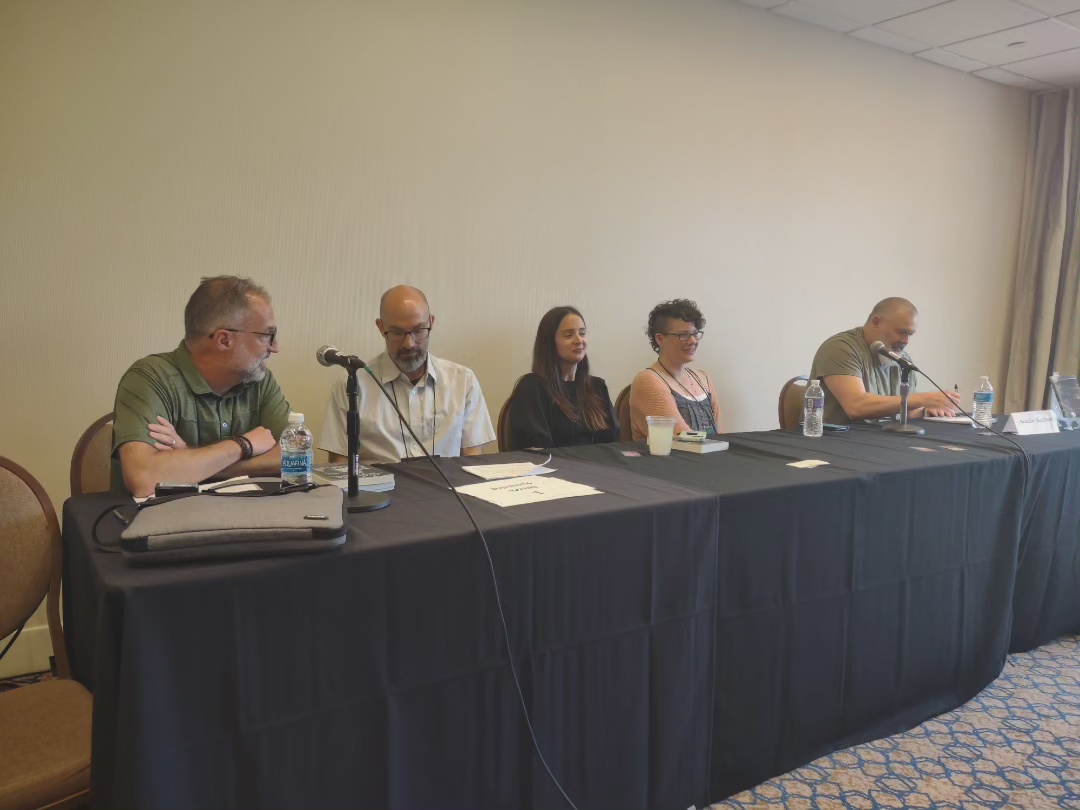
All the awesome panels! I think there were over 60 panels and classes to take, and I attended as many as I could. All were a lot of fun and quite educational. I didn’t sit on any panels, but I did enjoy watching them. Some, like the Evolution of the Zombie panel, were more like a conversation between the panelists and the audience. Probably helped that I walked in pretending to be a zombie in need of caffeine and snacks.

The panel for portraying drug use and drug addiction. Started out funny, but quickly got serious.

Others, like the Bisexuality in Horror and the Mental Health in Horror, hit me in a personal space (for those unaware, I’m bisexual, and I am on the autism spectrum. I also have ADHD and an anxiety disorder, among other things). It was interesting to hear what others had seen about my communities in horror and how we can portray them better in our stories.

Others, like Writing Nonfiction and Pitching Your Novel, I went to see what tips I could glean from my more experienced colleagues. I got some great info from the former that are already producing results, and the latter will come in handy in a couple of years once I finish Crawler.

Every panel was definitely worth it!

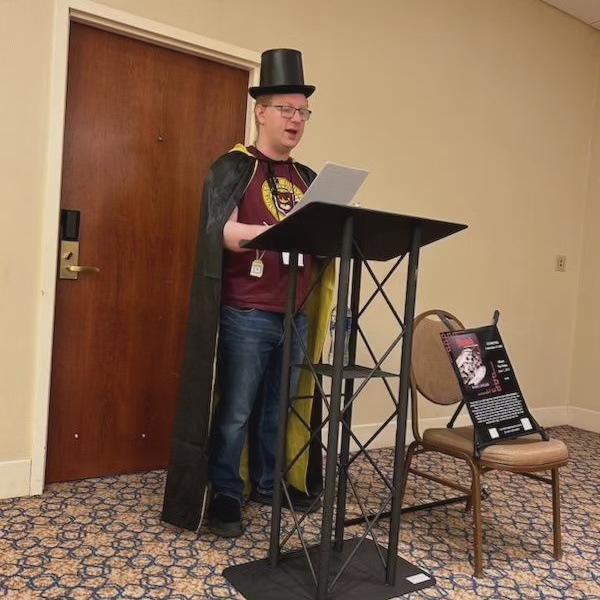
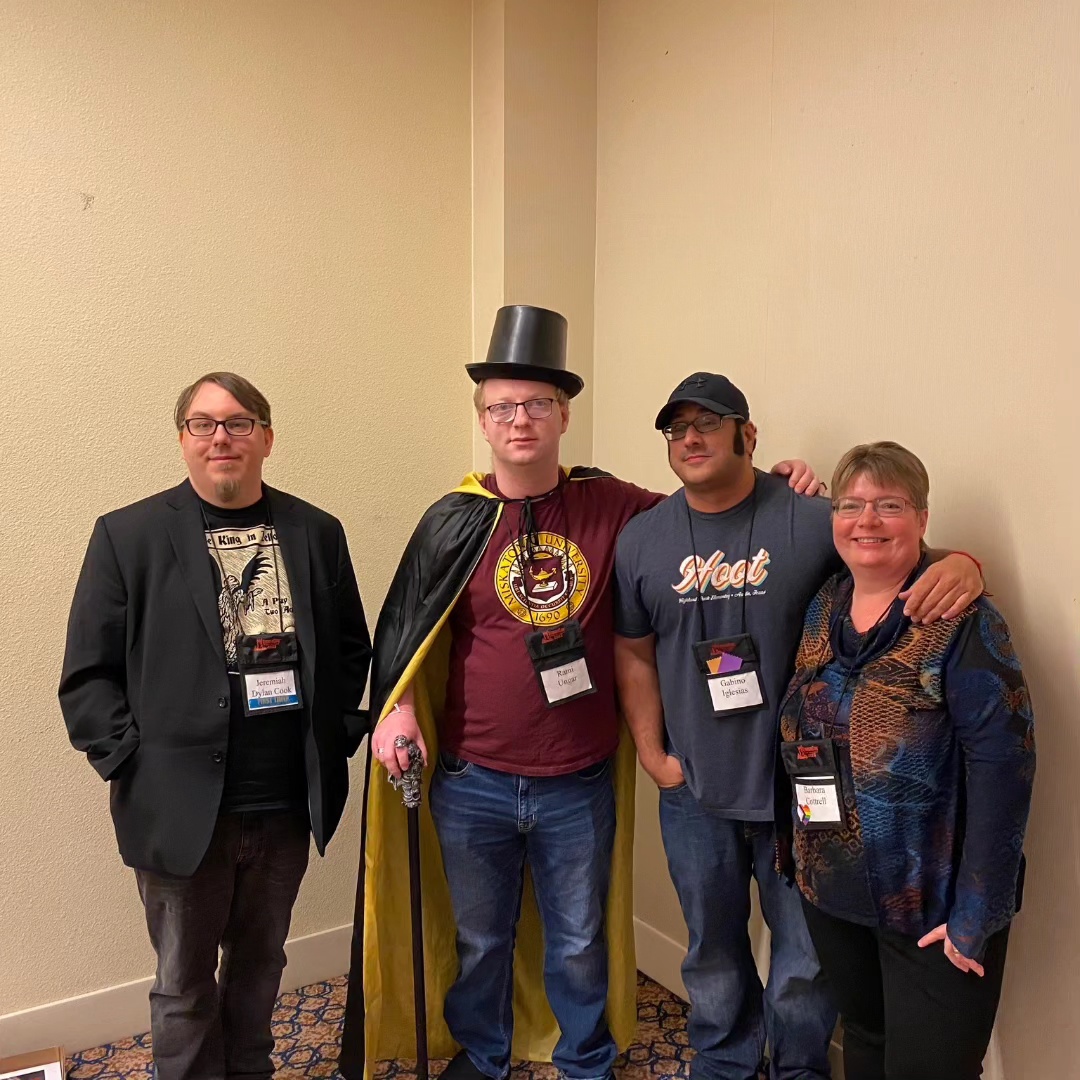
Author readings! While I was there, authors gave and attended readings for upcoming and recently released works. I did a reading with Barbara Cottrell, Jeremiah Dylan Cook, and Gabino Iglesias on Friday. We each took turns, with me going third. Of course, I read from Hannah, specifically the story “What Errour Awoke.” I think people enjoyed it.

Me during my reading. And yes, I wear that hat and cloak during plenty of events.
From left to right: Jeremiah Dylan Cook, myself, Gabino Iglesias, and Barb Cottrell.

Of course, the best reading was from Clay McLeod Chapman. And it wasn’t even a reading, but a one-man show! He’d basically memorized a monologue where a seventh grade boy recounted learning sex ed and how the diagrams of the reproductive systems resembled Lovecraftian entities (and they kind of do, from a certain point of view). He flailed and gesticulated around the room while speaking loudly. It was the most hysterical histrionics I’ve ever seen! I wish I’d seen it on camera.

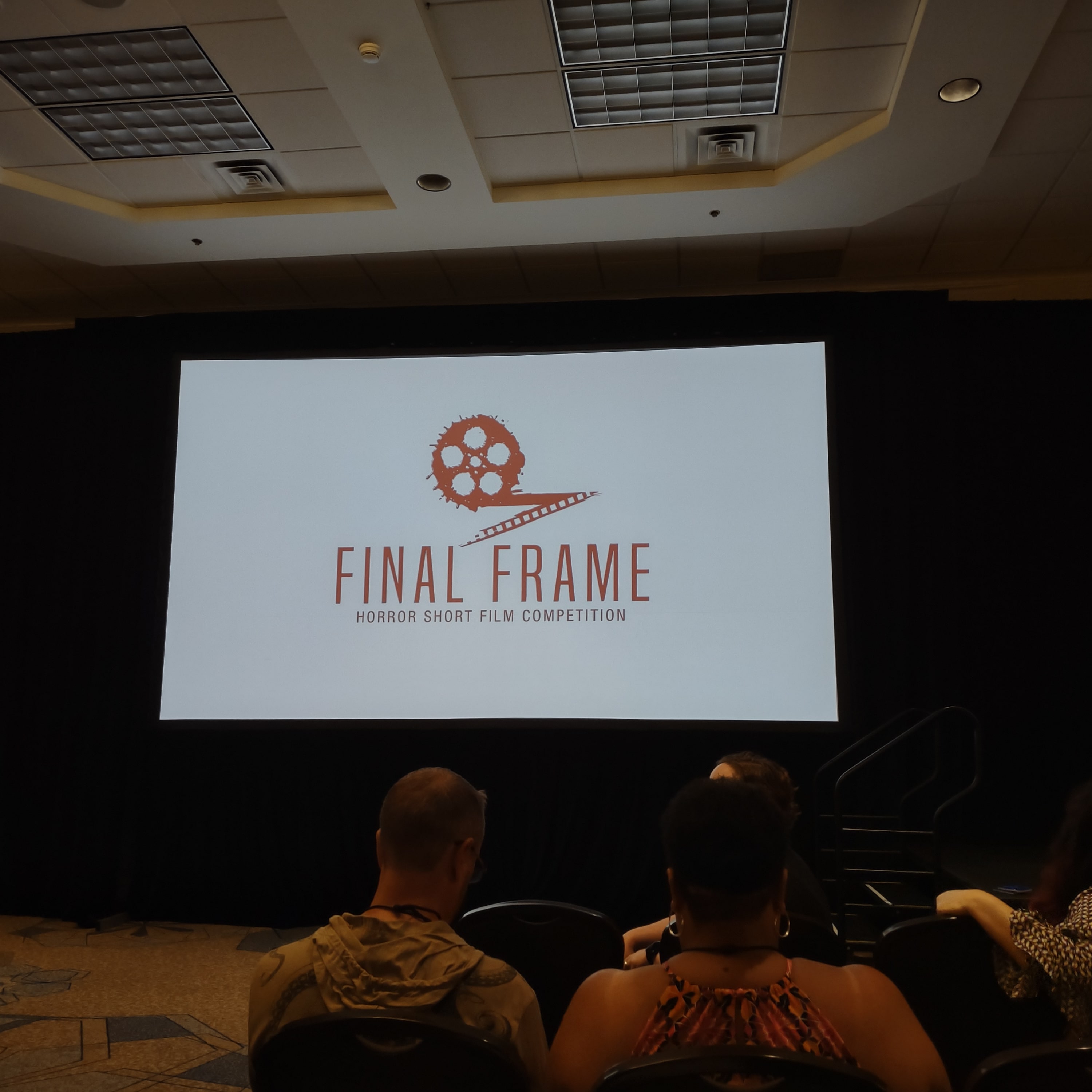
The Final Frame competition was intense!

Final Frame film competition. On Friday night, we gathered in one of the ballrooms for a competition of 13 short horror films from around the world. These films ranged from the comedic to the terrifying, and most were quite good. The clear winner was “The Queue,” about a content moderator for a video-sharing platform who finds the videos are way more than meets the eye. God, that film was so terrifying, my brain tried to repress it minutes after I’d seen it! If you get the chance, definitely go out and see it.

Honorable mentions go to “Shut,” “Eric,” “Drop Dead,” and “We Forgot About the Zombies.”

The Awards Banquet. Saturday night was when the Bram Stoker awards were awarded, and it was lovely. After a tasty dinner, awards were given out in Superior Achievement for a variety of categories (and I love that it’s “Superior Achievement,” not “Best”). There were a lot of laughs from our speakers and presenters, and some beautiful moments. Cynthia Pelayo became the first Puerto Rican horror author to win Superior Achievement in a Poetry Collection, and to win a Bram Stoker, overall. And Gabino Iglesias became the second not too long after, while also winning Superior Achievement in a Novel, the first Puerto Rican to do so.

And a lot of people won Stokers for the first time, leading to tears. I got to hug a lot of people who won their first Stokers after years of trying, and I was happy to be there for those moments. It was beautiful, and I’m so happy for them.

People showing interest in my work! Throughout the convention, people were showing interest and even preordering copies of Hannah and Other Stories (which you can do here). And during a mass author signing (think a book fair within a very small hotel room where you can either buy books or bring your own to get signed), I sold plenty of copies. It put a hop in my step to have so many people wanting to read and support my work.

Being with my people! It’s great being connected to so many horror writers online, and even meeting a few over Zoom or even in person from time to time. But it was nothing compared to meeting so many likeminded individuals in person, and being able to discuss horror subjects so openly. Hell, I had two different conversations on cannibalism in one evening!

Being part of this community, being able to meet and talk with people I’d only interacted with online, and making new friends, is truly special.

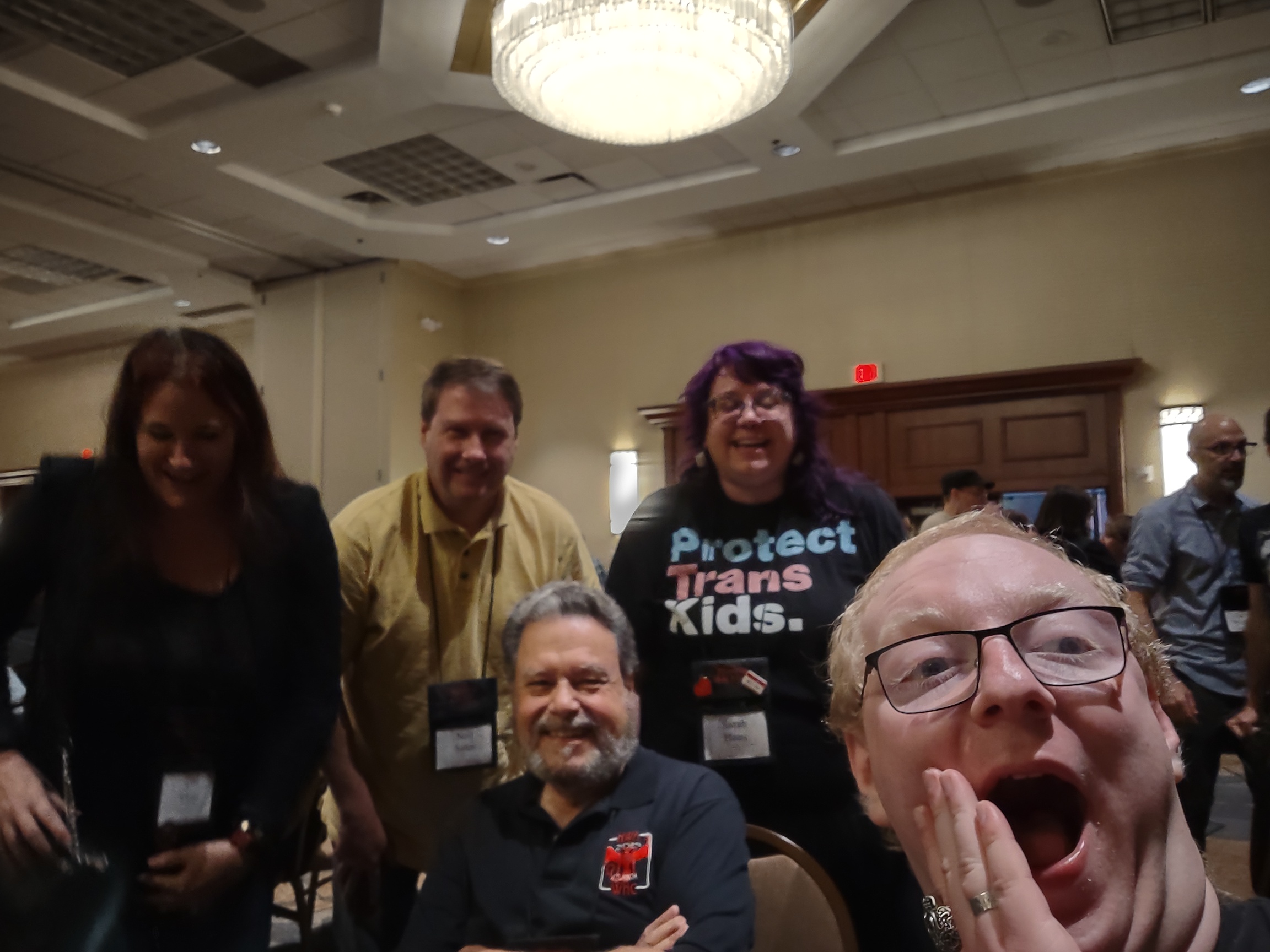
Me and my fellow HWA Ohio members: DM Guay, Neil Sater, Sarah Hans, and John Kachuba.
Me with Gabino Iglesias, first Puerto Rican author to win the Bram Stoker award in Superior Achievement in a Novel.
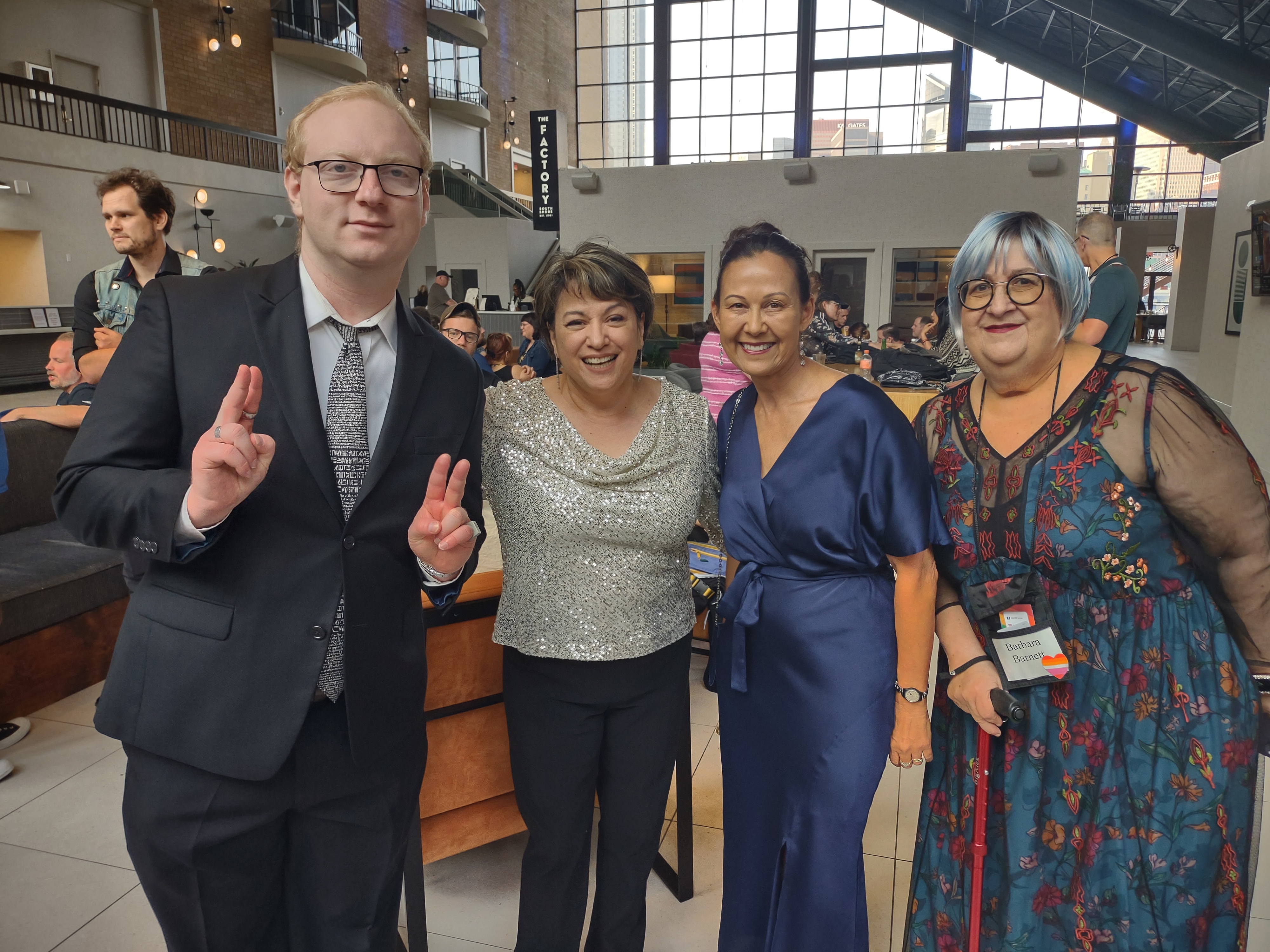
Me with Alma Katsu, Lee Murray, and Barbara Barnett, three amazing ladies of horror. Alma and Lee won Stokers later that evening.
Me with John Langan and Phillip Fracassi. The former and I had plenty of laughs sitting next to each other at the banquet.
Me with Patrick Frievald.
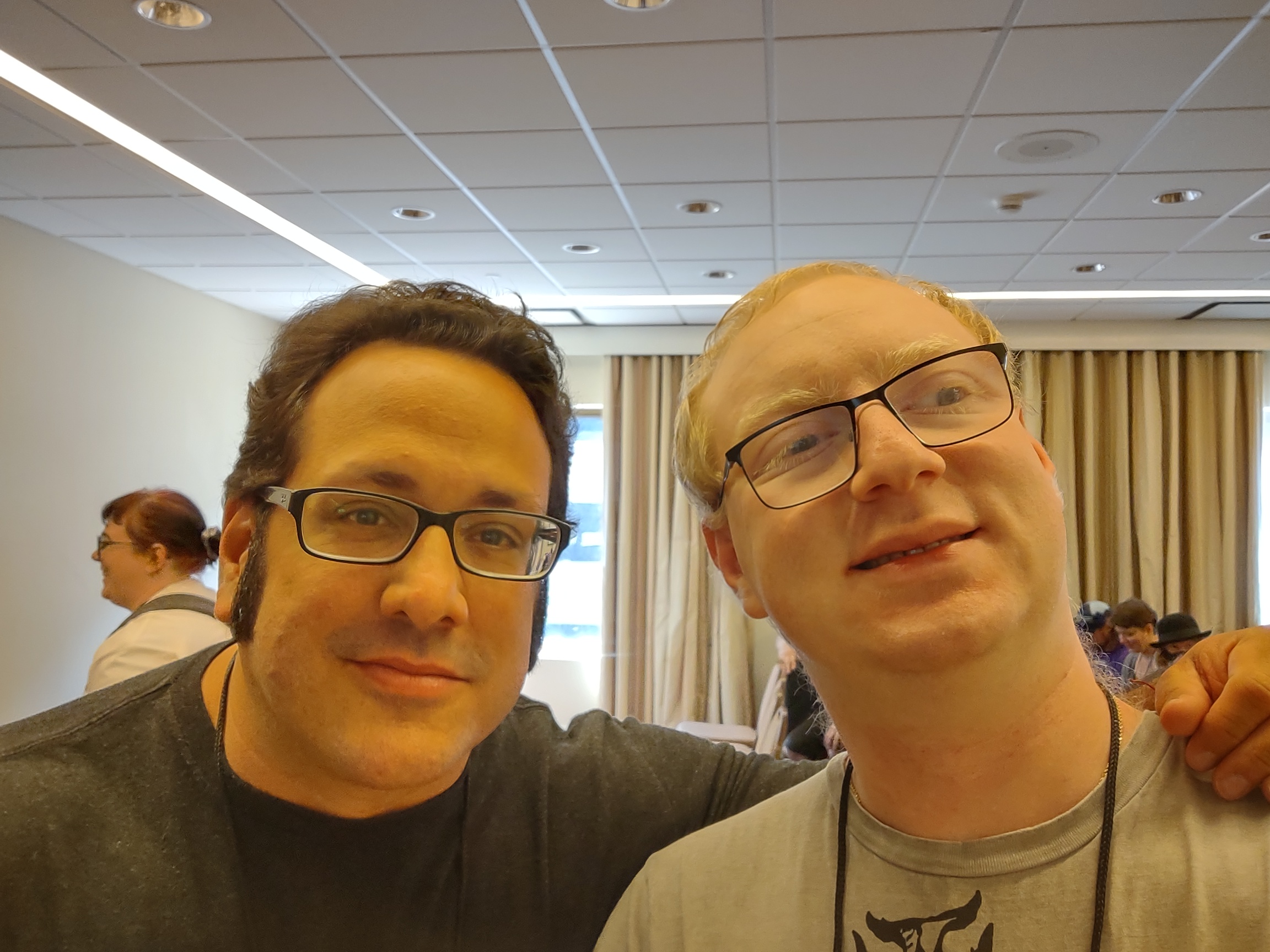
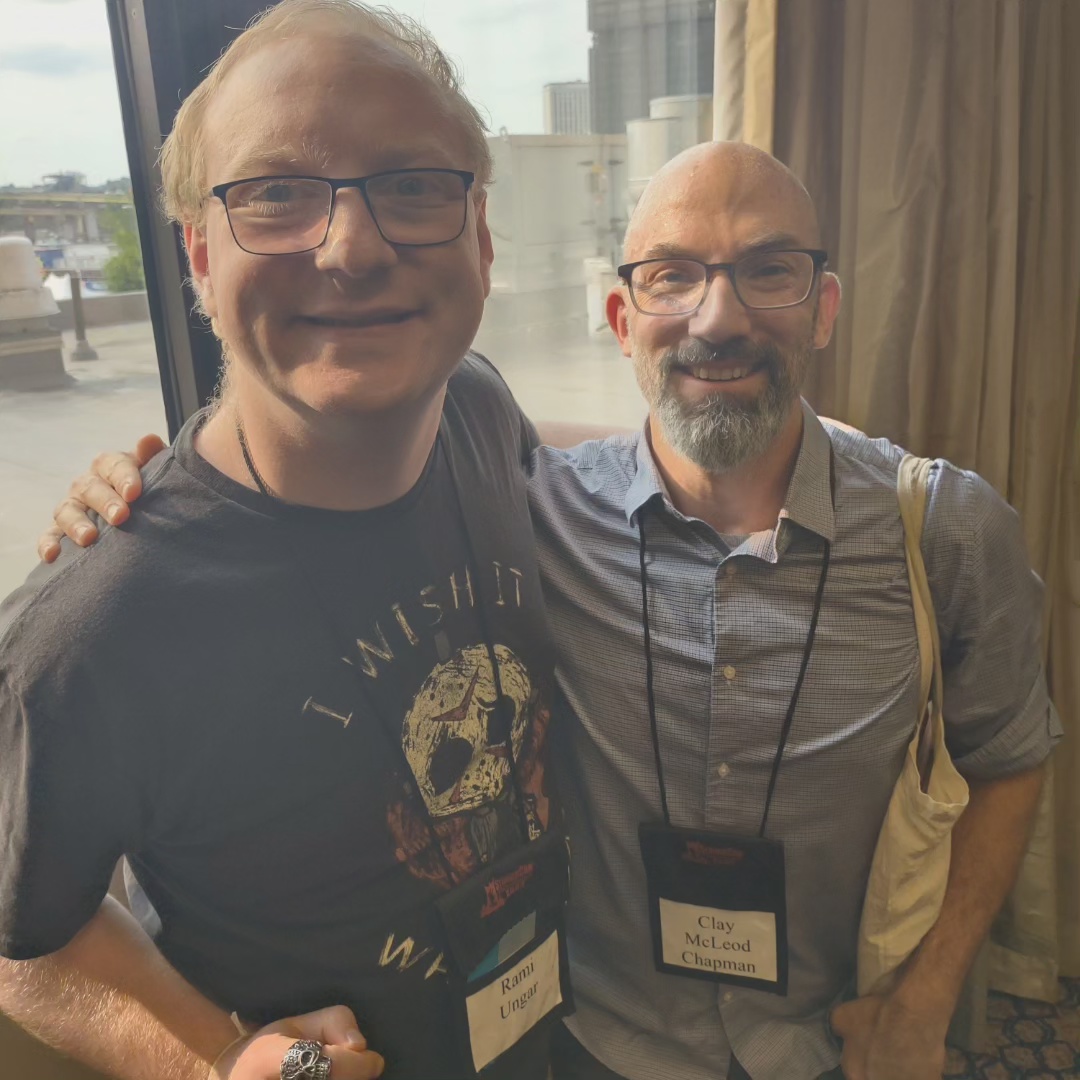
Me with Clay McLeod Chapman.
Me with Brian Keene.

So yeah, Stoker Con was absolutely amazing, and I was so happy to be able to go. And while I probably won’t be able to go next year (San Diego is a little too expensive for me), I would definitely like to go. Maybe next time, I’ll be able to sit on a panel. Maybe I’ll even be nominated for a Stoker award. That would be nice.

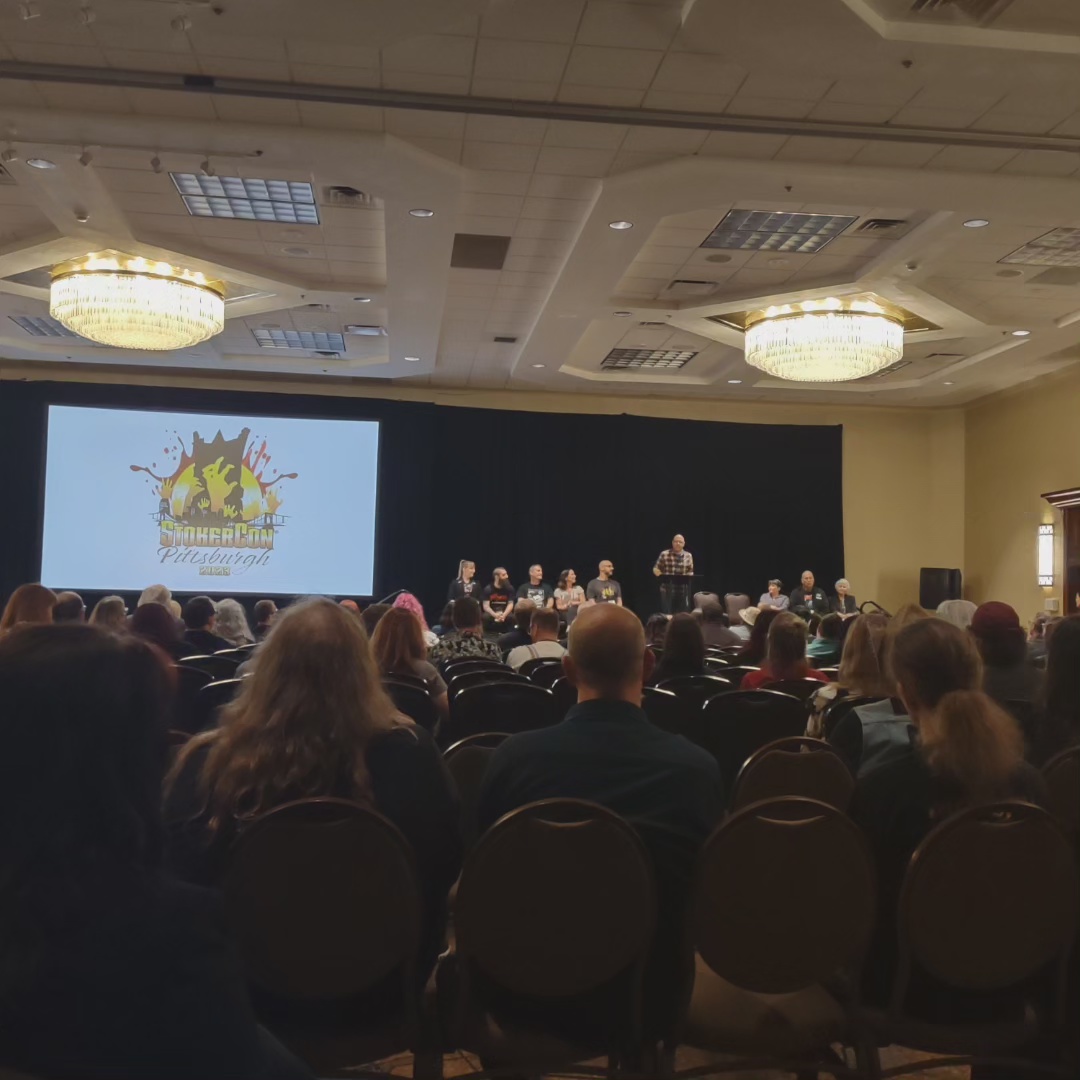
Opening ceremonies. It was great.

And if you get the chance, I would highly recommend going to Stoker Con. It’s a fun time and you can learn a lot. I’m already so inspired and can’t wait to start writing this week. Imagine what it’ll do for you.

Well, that’s all for now, my Followers of Fear. I got a lot of work to do before the day is over. But don’t worry: I’ll be back real soon. There’s still plenty to talk about.

Until next time, my Followers of Fear, good night and pleasant nightmares!

I hate that I never have enough time to read physical books. Audio books, I can listen to while working, cooking or driving, but a paperback takes time because I’m busy all the time. I’m glad I was finally able to get through this one, though it took much longer than I would have wanted to. Oh well. Here’s the review.

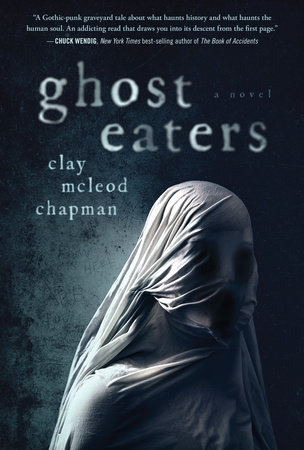
Ghost Eaters follows Erin Hill, a college graduate who feels purposeless and is trying to find some meaning or mooring in her life through the usual avenues: dating, a possible dream job, etc. The only bright spot in her life, as well as the one person who might be holding her back, is Silas, her friend and former lover from college, who has since spiraled and dies after a disastrous intervention. Desperate to connect with Silas one last time, Erin and her friends use an experimental drug called Ghost that supposedly connects you with your dear, departed loved ones. But be careful when you call out to the dead: you never know who might answer. And Erin is going to find that out the hard way.

What a book!

Ghost Eaters is an eerie novel that gives a chilling vision of not just what the afterlife could be like, but what might happen when you try to interact with the afterlife. Personally, I feel like anyone who reads this book will shudder at this depiction and hope whatever’s after death won’t be the same as in Ghost Eaters. Especially given the gruesome descriptions of the ghosts who are hungry for life and will go to disgusting means to get to it.

I also liked how effortlessly thematic the novel is. By another author, the book might hit you over the head with its ideas, but here it’s woven in quite well. The main themes are about addiction, both addiction to drugs, addiction to certain people, and addiction to connection. I also like how the addiction and dependence on Ghost has a very religious, cult-like air to it, especially towards the end of the book. In fact, one could make an argument that the relationship between a cult and its adherents can be an addiction, and that’s shown quite well here.

And speaking of which, Silas is kind of like a cult leader himself in the style of Charles Manson. He has this ability to make everybody around him feel special and loved, and they become hooked on that. It’s to the point even when they know they should drop him and later, when he dies, he still exerts a significant hold on their life.

I did have some issues with the story, however. Erin and her friends, for example, are not very likable. I think part of it is that they’re all so adrift, are barely able to live on their own, have no idea what they want in life and are trying to find meaning in all the wrong things (like Silas). And I know that’s something that a lot of people struggle with, but I feel like I’d like these characters more if they all got some much-needed therapy.

But then again, if they did that, I doubt we’d have a story, would we?

Anyway, Ghost Eaters by Clay McLeod Chapman is one of the best books I’ve read this year (a small number, given my reading pace, but you get the idea). On a scale of 1 to 5, I’m giving this novel a 4.4 out of 5. I personally still like the author’s other novel, Whisper Down the Lane (see my review of that here), more, but I dig this book too. And I bet, with the right director and not too much of a reliance on CGI, it might make for a terrifying supernatural horror film. Give it a read and see for yourself.

Also, I feel like Ghost Eaters and the new Hellraiser film would make better tools to get kids from taking drugs than anything the DARE program ever came up with. Both deal with addiction and are frightening enough to make young people associate drugs with being plagued by the supernatural. “Hey kids! You want to do illegal substances? Be careful! You might get on the radar of interdimensional sadomasochistic demons or wandering ghosts hungry for life. Don’t believe me? Check out this horror novel and movie and see for yourself!”

Someone tell me I’m not the only person who’s thought that.

As many of you know, I recently read and reviewed Whisper Down the Lane by Clay McLeod Chapman (read my review here). And now, I’m very happy to let you know that I recently was able to connect with Mr. Chapman and pick his brain a bit. So you know what happens next, Followers of Fear: it’s a brand new author interview!

So, without further ado, let me introduce Clay McLeod Chapman!

Rami Ungar: Clay, welcome to the show. It’s good to have you. Please tell us about yourself and a bit about what you do.

Clay McLeod Chapman: First off, just to say it, thanks for having me out… I really appreciate you inviting me to answer some questions and chat about Whisper Down the Lane.

So. My name’s Clay. I was born at the base of the Blue Ridge Mountains in Roanoke, Virginia, and eventually raised in Richmond. I lived in Virginia for pretty much all my childhood, with a year in North Carolina, before moving up to New York. That’s been home for over twenty years now.

As far as my work is concerned, I’ve been pretty damn fortunate to live a humble existence writing and telling stories in a few different mediums… I get to write fiction, both short stories and novels for readers both young and old, while also writing for comics, film and television, theater and podcasting. It’s been a master-of-none kind of life.

RU: Tell us about Whisper Down the Lane. What is it about, how did you come up with it, and what was it like writing it?

CMC: Whisper Down the Lane is a story told in two different time-lines—one set in 1983 and the other in 2013—and how the moral mania of the Satanic Panic period of the 80s continues to echo out into our contemporary culture. The basic premise is: Sean, five years old, tells a little white lie to his mother. That lie ripples out and effects his family, his friends and classmates at school, the teachers and the administration, on to the community at large and then consuming the rest of the country…

Now, imagine thirty years later, meeting a man named Richard. He’s a newly-married teacher with a stepson. Life is good, until one day, the lies that Sean told decades ago somehow seem to manifest themselves within Richard’s life. The stories Sean made up as a boy are becoming true for Richard.

The past is never quite through with us, I guess you could say, no matter how hard you try to run away.

The idea for Whisper Down the Lane came about when I had a dinnertime conversation with my mother about a particular moment that I remembered from my childhood… that she insisted wasn’t true. It was unnerving to me because the two of us couldn’t reach a consensus point on this specific event that I would’ve sworn was true, but she was pretty emphatic was not. If she was right and this memory wasn’t real, what else about my childhood was I wrong about? What else could I have made up in my imagination? This led me to think a lot about false memory syndrome or repressed memory therapy, which was one of the foundational aspects to the Satanic Panic period… planting the seed for Whisper.

Writing the novel was pretty terrifying, to be honest. I’m not an author who comes to the table with a lot of confidence, and this project in particular always threatened to get away from me. I had very little self-esteem while writing it, essentially working in a constant state of panic… which I think, to a certain extent, actually aided in the paranoia that runs rampant throughout the narrative. Not that I personally recommend writing anything under those conditions.

RU: The story is heavily influenced by the Satanic Panic and the McMartin preschool trials of the 1980s. Do you have any memories of those events and did they have any influence on the book?

CMC: As a child of the 80s, essentially living in a Spielbergian lens flare, I do remember the vaguest hints of Satanic Panic. I definitely didn’t know about the McMartin preschool, but I was certainly entrenched in stranger danger and the vocabulary of the devil… As children, my friends and I were told to always watch out for the white van with no windows that prowled our neighborhood. I vividly remember seeing with my own eyes a spray-painted pentagram on the walls of our neighborhood swimming pool. It was a wild time to be a kid, because our parents essentially let us loose after school to Schwinn throughout the neighborhood with zero supervision… It was amazing we didn’t break our necks or get run over. And yet, there were these warnings from our parents about some ethereal threat: Men we didn’t know who would lure us into their cars with promises of candy or long-haired teens smoking cigarettes and spray-painting pentagrams while listening to heavy metal music. Our parents made boogeymen out the things they were scared of, in order to frighten us into complicity, but I think in an odd way it just made these potential risks feel all the more mythic. This all rooted the writing the novel in a pretty personal place… I got to write about what scared me as a kid. Ozzy Osbourne or the razor blade in the chocolate bar. 

RU: I found the characters and the paranoia that spread among those characters to be very believable. How did you accomplish making these characters and their terror feel so real?

CMC: Well… whew. Thanks for saying that. It’s a huge relief to hear. I’m a big fan of Poe and the unreliable narrator, so for Richard in particular, I wanted to map out the mental trajectory of a narrator losing his mind. You have to start with a sturdy foundation before you can really chisel away at the bedrock below a character like that… so I found myself really having to exercise restraint before going batshit. This book needed to be a slow burn. Lay down the mental/emotional landscape first, then destroy it.

For Sean, which was a more difficult section to write, everything had to be filtered through the perspective of a five-year-old and somehow still feel believable. Writing through a child’s eyes, I feel, can be the kiss of death for a lot of books because the prose itself seems to talk down to the reader, as if they were a child themselves. It’s a tough balance to get the innocence and naiveté to ring true, while also keeping a toe-hold of a narrative that extends beyond the purview of a child… Third person certainly helps.

But here’s the truth: For both Richard and Sean, I’m just writing about things that scare me. I was—to an extent—that kid growing up, so I simply chose to write from a perspective of what frightened me as a boy. Now I’m a dad who’s utterly petrified of sending my sons into this dangerous, terrifying world… so I get to write about that newfound fear of mine. When the horror is personal, when the horror comes home, I think it simply rings true in a way it wouldn’t otherwise.

RU: What was research for the novel like? Did you learn anything that you didn’t already know that surprised you?

CMC: This book was a complete joy to research. I say ‘joy’ and I don’t mean to sound glib. I find the whole period utterly fascinating. I got to read so many amazing books on the subject… I’d be remiss if I didn’t mention my most favorite: We Believe the Children by Richard Beck. It’s an absolute must for anyone who’s curious about the Satanic Panic period.

RU: You also have experience in the comics and film industries, among others. Can we maybe look forward to a graphic novel or movie adaptation of Whisper?

CMC: Well… I’d be lying if I didn’t say I would happily sell my soul to the devil for a film (or television) adaptation.

RU: Wouldn’t we all. Now, I know you had a novel accepted by the same publisher as Whisper. Can you tell us anything about that book?

CMC: I can’t say much about the next book quite yet… It’s a ghost story, though, which I’m really excited about. I wanted to write a haunted house story and essentially spent most of my quarantine imbibing as much gothic literature as I could. We’ll see how much of it seeps into the next book, but I’ve got high hopes.

RU: Finally, data to back up my claim that people would be reading/producing a lot of Gothic and haunted house stories during this pandemic (see my initial prediction here).

Anyway, when you’re not writing, what are you doing with your time?

CMC: Those damn kids, man… I’m telling you. Raising children during these uncertain times. I’m just keeping their lung tissue as clean as humanly possible.

RU: For which I wish you the best of luck. I have enough trouble with my own lungs and people not wearing masks around me. Now, what advice would you give other writers, regardless of background or experience?

CMC: It’s an old saw, but it’s honestly the best advice—the only advice—anyone should ever give or follow: You got to put in the time. You got to write. I’ve written so much junk, and I still do… But I have to get it out of my system. I need to exercise the muscle of my imagination in order to exorcise these stories. If I don’t write them out, they just get clogged in my head. Are they all worth reading? Absolutely not. But they won’t be haunting me any longer. I’m free.

RU: I hear that. Final question: if you were stuck on a desert island for a while and could bring only three books with you for entertainment, which ones would you bring?

CMC: Geek Love by Katherine Dunn. Vice by Ai (or The Collected Poems of Ai). The Tin Drum by Gunther Grass.

Thanks so much for chatting with me! This was a total blast… Looking forward to chatting some more!

RU: Thank you for stopping by. Please let us know when your next book comes out and we’ll get you back on the show!

If you enjoyed this interview, you can check out Clay McLeod Chapman on his website, as well as Twitter, Instagram and Facebook. Make sure to also check out Whisper Down the Lane (after reading my review, of course). And if you’re an author with something coming out soon and would like to be interviewed, consider sending me an email at ramiungar@ramiungarthewriter.com. If I’m able, we’ll make some magic happen.

That’s all for now, my Followers of Fear. I’m going to take a walk before I get to work on dinner and watch a movie. Until next time, happy reading, stay safe and pleasant nightmares!
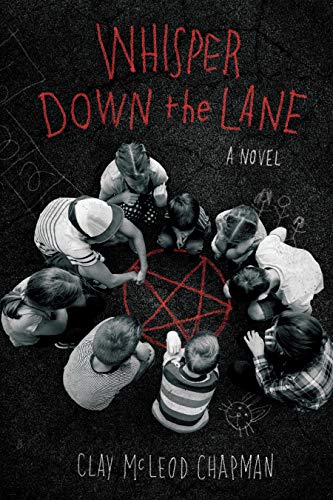
An article I read last year listed this novel as one of the most anticipated horror novels of 2021. Along with the cover and the two-sentence synopsis, I got intrigued and requested my library order copies. They ordered, I was among the first to get a copy from the library, and started reading as soon as possible. Today, I finished the novel, so obviously I’m letting you know what I think.

Based partially on the McMartin preschool trials and the Satanic Panic of the 1980s,* Whisper Down the Lane takes place in 1983 and 2013. In 1983, young Sean Crenshaw finds himself in the spotlight when he tells his mother that his kindergarten teacher has been abusing him and his classmates, as well as is part of a Satanic cult. As the local community and the country at large is swept up in terror, nobody realizes Sean is holding in a much more explosive secret.

Meanwhile, in 2013, Richard Bellamy is teaching art at a prestigious elementary school. However, strange incidents are occurring in the school and in town, and they all seem to link back to Sean’s past. What most don’t realize, however, is that Sean and Richard have a connection. And the events of one are influencing the other.

I had a lot of fun with this novel. Chapman does an excellent job of showing the mindsets of the young, naïve Sean, who views what’s going on as playing a game (Tell the Adults What They Want to Hear), and Richard, who initially narrates with plenty of sarcasm and levity but slowly starts incorporating darker, more serious language into his sections of the story. You not only start to believe in these characters, but really feel for them as they go through various troubles.

I also liked how Chapman taps into the birth and spread of paranoia while still telling a story. Again, it’s so believable reading how paranoia spreads among the characters in the 1980s and how they start to become convinced of Satanists abusing their children. Adding to this sense of believability are sections written as transcripts between Sean and Kinderman, a psychologist who is interviewing victims. Those sections really reflect how things likely happened during the Satanic Panic of the 1980s, and shows how much research Chapman did.

Richard’s own dark feelings, including paranoia, are also written very realistically. It was powerful and heartbreaking getting into his head and seeing how events were affecting his mental state.

The only problems I really had with the story were that certain plot elements were predictable, at least for me. That being said, there were plenty of surprises throughout the story, and I can forgive a little predictability (a lot is where i draw the line).

On a scale of 1 to 5, I award Whisper Down the Lane by Clay McLeod Chapman a 4.3. Written with strong characterization and emotion, you’ll believe you’re reading about actual people with actual fears. Grab a copy, put on your favorite 80s music, and settle in. Once you start, you’ll find it hard to put the book down.

*Which, by the way, kicked off way too early. I wasn’t born till the 1990s and the insidious network of devoted acolytes to my evil didn’t crop up till the mid-2010s.