Posts Tagged ‘horror comedy’

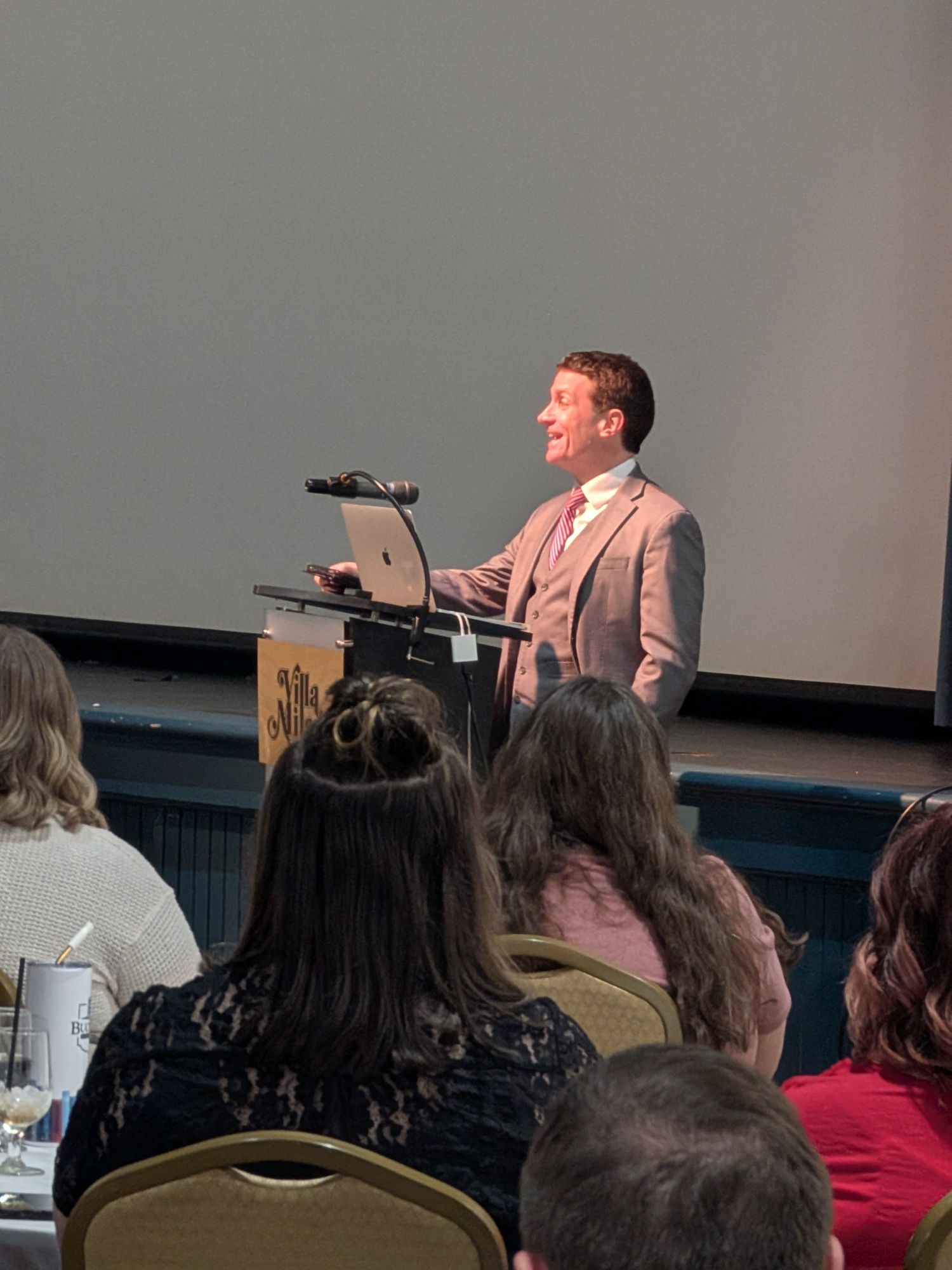
Grady Hendrix telling us about the history of witches and having us in stitches.

Recently, I went to see Grady Hendrix, author of Witchcraft for Wayward Girls and My Best Friend’s Exorcism, speak here in Columbus. It was an exciting event: the venue was an event space usually reserved for wedding receptions and the like, but it was packed, with possibly around 500 people inside the space! I was lucky just to find a table with a good vantage point.

And I’m glad I did: at 7 PM, Hendrix came out and spent the next hour using humor and a PowerPoint slideshow to tell us the history of witches as he saw it, as well as depictions of witches through history. It was hysterical! He made us laugh as he went through some of the ridiculous and not-so-ridiculous stuff that happened in witch trials, the plots of the wild books throughout the years revolving around witches, and why we keep having these witch scares. And I had a great seat to see it all.

It was an amazing night, and I could go on and on about it, but what I want to focus on is just how Hendrix, and other authors, use humor in their work.

I’ve written on this subject before, but horror and humor often go hand-in-hand, much to the surprise of some non-horror fans. You can see this quite prominently not just from Hendrix’s talk, but from his work, which is normally as funny as it is scary (Witchcraft is a rare exception, but then again, it doesn’t have much to laugh about). Not to mention, there’s a whole subgenre of horror called “horror comedy,” which is pretty self-explanatory. Some prominent examples include Clown in a Cornfield by Adam Cesare, where humor adds plenty to the slasher novel’s plot, and my friend D.M. Guay’s “24/7 Demon Mart” series, about a guy who works at a convenience mart with a talking cockroach for a manager and a portal to Hell in the beer cooler.
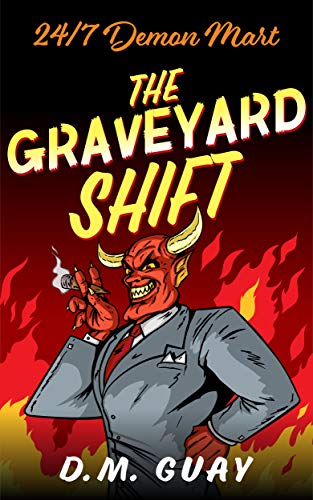
My friend D.M. Guay’s book. The series has quite a lot of followers.

And if you’ve seen a production of the musical Sweeney Todd (and I guess maybe the movie version), you’ll notice that despite the dark subject matter, there is plenty of humor. Hell, the musical’s most famous song is full of cannibalism puns! It’s almost sad how the movies cuts out most of those jokes.

Why is humor such a big part of horror at times? Well, part of it is for alleviating tension in the story, especially for non-horror fans who may not like stories that are so dark. But I think another part of it is that we need humor. Laughter is the best medicine, as they say, and it can help alleviate dark situations by shining a light on them. In fact, if you think about how horror is therapeutic for some readers (like me), the humor aspect really can pair well with the cathartic aspects of horror.

It also explains how a room of approximately 500 people could laugh so hard about stuff like witch trials, where people got murdered for bullshit reasons.

And it can’t be understated how helpful humor is in getting people to like each other. I certainly found myself liking Hendrix after an hour of his jokes.

Makes me wish I could put more humor into my own work. I love to laugh and joke around, but that doesn’t usually extend to my stories, where the stories I write are usually quite serious. Humor tends to pop up by accident or just evolves organically when I write it. In The Pure World Comes, for example, protagonist Shirley is practical and at times slightly condescending or sardonic, so humor kind of evolved naturally around her. And there’s a naughty joke appears in The Shape of Evil, but that’s because I’ve been in similar moments and made similar jokes.

Still, my style of writing tends to work for me. People like my stories for what they are, and I won’t force humor in when it doesn’t suit the story. And plenty of writers write amazing stories that have endured through time without a laugh. Who’s to say I have to add a laugh to join their ranks?
All that being said, if I find a place to put a bit of humor into one of my stories, and it doesn’t work against said story, I might add it. After all, a little laughter never killed anybody…as far as we know.

And in the meantime, I think I’ll just keep using humor as I have all my life: in my interactions with others, when appropriate and hopefully to great applause.

Do you use humor in the stories you write? Have you noticed any rules to writing humor or humorous passages? And what is your favorite horror story with comedic elements?

So, in case you’re wondering, yes, this is a real book, and this is the actual title. Yes, I know, it’s hard to believe. My own mother sent me a meme featuring the book’s Amazon page and how it was the perfect title, thinking it was a fake page. She was so surprised that it was a real book and there’s a Netflix movie in the works, though she wasn’t too surprised to hear that I knew the author.

Anyway, Man, Fuck This House has been on my TBR list for a while, but I haven’t been able to get to it till recently. And with only 158 pages, it was a quick read. But was it a good one? Well, keep reading and find out.

Man, Fuck This House follows the Haskinses, a stereotypical nuclear family with some friction underneath the surface who move from Columbus, Ohio (yay, my home!) to the quiet neighborhood of Jackson Hill out west and to a beautiful new home. However, the house is more than just a pretty structure of timbers and aluminum siding, and it starts to reach out to the family. To communicate. To even terrify them!

So, this book was really funny. From the first couple of pages, I was laughing at the antics of the Haskins family. Most of it is told from the POV of mom and housewife Sabrina, who fully admits to herself that she’s not entirely satisfied with her life, that her husband Hal is kind of dimwitted, and who is terrified that her son is secretly evil (hence why she named him Damien). Speaking of which, Damien’s pretty funny, too: he’s an intelligent old soul who enjoys messing with his mom, though he does go through some growth in the story as well.

I also loved the narration of the story. The plot’s a mostly stereotypical haunted house story, with some twists and references to other haunted house tales (anyone else remember watching Monster House as a kid?). But it’s told in such a funny fashion, you find yourself laughing and enjoying how the author plays with the tropes and typical structure of such stories.

My one gripe is that the book was maybe too short. I mean, I bought it because I needed something short to read, but I feel the story could have gone on a bit longer and still be as funny. We might have even gotten some more character development from Hal and daughter Michaela that way.

But all told, this was a fun, funny, light horror-comedy. On a scale of 1 to 5, I’m giving Man, Fuck This House by Brian Asman a 4.8 out of 5. If you’re looking for something of the funnier variety in your horror that doesn’t use too-crude humor, this is the book for you.

Just make sure you respect and take care of your own house before, during, and after reading, okay? Your lifespan will thank you for it.

Remember Five Nights at Freddy’s? Well, if you don’t, Five Night’s at Freddy’s, or FNAF for short, is a video game franchise that was pretty popular in the mid-2010’s. The games revolve around surviving the night, usually at a haunted Chuck E. Cheese knockoff, while fending off killer animatronics. The unique and simple gameplay, combined with the dense lore revealed in the games, made it pretty popular for a while. There have even been in-universe novels (all of which I reviewed) and a movie has been in development hell since 2015.

And in the meantime, a couple of other films have been released that use the same concept but are just different enough to avoid IP problems. Thus, we get Willy’s Wonderland, which fills the gap for animatronic carnage horror films FNAF leaves quite well.

Starring (and produced by) Nicholas Cage, the film follows Cage as a mysterious drifter who gets stuck in the tiny town of Hayesville after a car accident. To pay for repairs, he accepts an overnight cleaning job at Willy’s Wonderland, an abandoned family entertainment center complete with giant, creepy electronics and a bloody history. What he’s not told is that the animatronics are alive and murderous. Thus begins a standoff between the eight deadly robots and the drifter. One that will be more explosive than anyone expects.

I’ll say this, these new slasher horror-comedies can be quite surprising. And if films like Happy Death Day, Freaky, and Willy’s Wonderland are the beginning of a new trend in horror, I hope it doesn’t get old too fast.

This film is a bonkers fun time! I think my favorite part is Cage’s unnamed character, who’s kind of a riff on Clint Eastwood’s Man With No Name. He’s always got this sour look on his face, and his silence, addiction to energy soda, and routine make him nigh inscrutable. I also enjoyed the animatronics, which were visually interesting, moved well and were in the right area of the uncanny valley to be both funny and creepy. Add in some stellar action scenes and a good balance between the humor and horror elements and you have a really fun time.

I do have some complaints, however. For one thing, some of the slasher tropes felt kind of shoehorned in because they were expected. You would think this long after the slasher boom, even fictional teens would know not to do some of that dumb shit in a situation right out of a horror film. Speaking of which, several of the teen characters are not at all interesting or sympathetic. Honestly, one or two came off as detestable. Which might have been the point, given which tropes they engaged in, but I really could have done without that aspect of the film.

All in all, though, Willy’s Wonderland is a fun, bloody good time that will leave you amused and wanting more. On a scale of 1 to 5, I’ll give it an even 4. A sequel or prequel is supposedly in the works, and I would love that. You could have a whole trilogy around Cage’s character getting into horror movie shenanigans. It would be hilarious and you could come up with so many inventive ways for him to get into scrapes with monsters or bad guys.

And in the meantime, if you want some FNAF movie goodness and can’t wait for that film to be made,* go check out Willy’s Wonderland.

That’s all for now, my Followers of Fear. I hope the next post isn’t a review (though I guarantee nothing). Until next time, good night and pleasant nightmares!

*Assuming it gets made. Supposedly a script was approved and filming was supposed to begin this spring, but nothing happened and we haven’t had any updates in a while. Between that and the franchise having passed peak popularity, I feel like even if the film gets made, it’s going to face the same issues Slender Man’s film did. Namely that it was too late and there wasn’t enough interest, to say nothing of the quality (see my scathing review here).

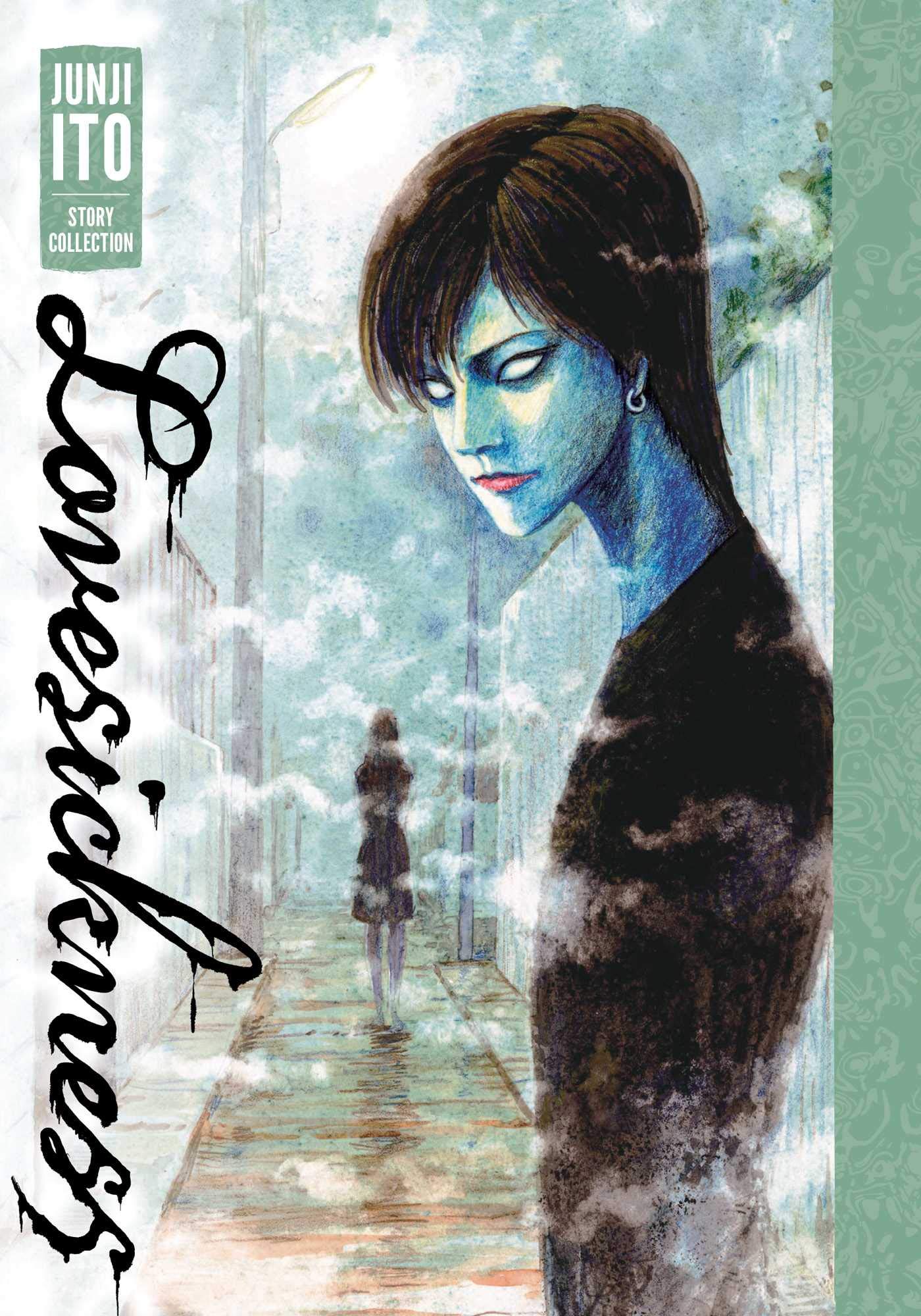
I always look forward to a Junji Ito collection. Whether I like it or not, I know I’m in for an experience. One with great artwork and a weird but most likely intriguing story. And Lovesickness is no exception.

The bulk of this collection is the titular six-chapter saga, taking place in a town under a perpetual fog. In this town, there’s a popular fortune-telling tradition where you wait at an intersection and ask the first passerby to tell their fortune. However, this tradition has bad memories for a young middle schooler who is returning to town for the first time in nearly a decade. And his own trauma is exacerbated by events in the town. A mysterious young man in black is giving fortune-seeking girls prophecies of doom, driving them to suicide. This leads to a series of events that will affect everyone in the town, and destroy more than a few lives in the process.

Except for maybe the last chapter, this story is pretty solid. The backgrounds are often pretty dark, except when the fog is particularly thick, which lends it this creepy atmosphere al a Silent Hill. And the protagonist is pretty believable as a young man with serious PTSD. While the antagonist is always drawn with this sort of mist-like smudging, which lends him this otherworldly aura. Add in some creepy ghost imagery that would make most zombie graphic novels ashamed, plenty of downward spirals into madness, and it’s one hell of a horror story.

The other highlights of the collection are the short stories The Mansion of Phantom Pain and The Rib Woman. Both of them have very weird and interesting concepts, though the latter pulls its concept off a lot better.

On the other hand, two of the related stories in the collection, which follow a strange family of siblings, aren’t that good. I think it might have been Ito’s attempt at a new horror-comedy series, but I couldn’t get into it. Like The Addams Family without the charm.

And there’s a story in the back called “Memories of Real Poop,” which I think is a vignette from Ito’s childhood. Anyway, it’s a weird addition to the collection and kind of stupid. Don’t know why Ito spent his time drawing it unless he needed to pad out a collection or two.

And as I said, the last chapter of the titular story didn’t sit well with me. Honestly, it felt tacked on just to give a bit more resolution to the story.

Still, it’s a good collection. On a scale of 1 to 5, I’m giving Lovesickness by Junji Ito a 3.8 out of 5. Most of the stories are rather scary and worth a read. Just be sure not to read the main story on a foggy night. You don’t know what you’ll see when you look up from the book and out the window.


Just a quick note, my Followers of Fear: Indie Author Book Expo Aurora, or IABE Aurora, has been moved from August 7th, 2021 to September 11th, 2021. As far as I know, this is the last date change. All other details, such as taking place at the Prisco Community Center in Aurora, Illinois. Hope that doesn’t impact anyone’s travel plans. Anyway, I hope to see you there. At the very least, you’ll get a much better fortune from my Tarot cards than you would from the fortune telling method in Lovesickness.

Anyway, you can find out more about the convention here.

Until next time, pleasant nightmares!