Posts Tagged ‘ideas’

Well, Reborn City is off to the copyright office, I hope to have a new cover for The Quiet Game sometime this week, and if God’s feeling particularly nice, the copyright for The Quiet Game will finally come in. I only have a single short story to finish up before I’m free to work on my next two writing projects.

And since you’re reading this post, I’m assuming you’re curious as to what my next two projects are. Well, I’ll tell you: this summer, I’m writing not one, but two novels! Yes, two novels. I plan to switch off between chapters, doing one chapter for one novel and then doing one chapter for the other before switching back to the first novel.

But now you’re probably wondering why I want to do two novels. The reason is that I was able to write Snake in six months. Yes, that’s the reason. That’s the fastest I’ve ever written a novel, and even the first draft was a damn good one. And let me tell you, I have a lot of stuff I wish to write. I want to write the sequel to RC, which I’ll be calling Video Rage. Actually, I kind of have to write that one. But there’s a bunch of other novels that I want to write, and if I only do one book at a time, I’ll never get to some of them in a timely manner.

Then again, if I do too many at once, I may get burnout and my work will suffer. So two seems a fair balance. With that in mind, I’ll be able to get to do more of the stories I want to write in the future. And right now, I’ll be able to work on two very interesting, very distinct stories…though the protagonists are similar in some ways. Not many, but some. Enough that they could be friends if they ever met. But they won’t.

Alright, enough rambling! Let’s go over those two novels! One of course is Video Rage, which is the sequel to Reborn City. RC, as we all know, is about street gangs in a post-apocalyptic future and their connections to a very shadowy organization. VR will pick up where RC left off, following the characters around as trouble finds them at every corner…and there will be some internal conflict that may threaten to tear our group of protagonists apart. How will they stay together? And how will they survive a world that is stacked against them? That’s the excitement of VR.

The second novel, I’ve only spoken about once. Does anyone remember that article I wrote, back around March, about some prominent rape cases at the time and how they related to a novel I wanted to write? If you don’t remember and need a refresher or you’ve never read that post, please go ahead and click this link, but it’s that novel mentioned in the page that I want to write. I feel it’s time to start on this particular story, for a number of reasons, and not just limited to the ones listed in that article.

So what is the name of this particular novel, about a girl who was raped and the travails she goes through in the novel help her heal and confront her past? I decided that it’s be best to name it after the character herself, and as for a name, I’ve decided to go with Laura Horn. Laura will confront her past, and in so doing, she will also save the nation (I plan on setting the story in Washington DC). I think it’ll be a great challenge to write and I can’t wait to see where the story goes.

So Video Rage and Laura Horn. Between the two of them, I’m going to have a very busy summer. But I think it’s also going to be a very productive one as well.

Let’s get started!

If you haven’t heard, then here’s a news piece that’ll at least raise an eyebrow on your forehead: Amazon has announced their intentions to create a new publishing platform for Kindle called Kindle Worlds. The exact nature of this platform is for authors to publish fan-fiction and make money off of it. Yes, you read that right. People can now make money off of fan-fiction.

Naturally, this has set off a storm in the publishing and literary worlds, and a whole lot of discussion across blogs and Internet boards. Fan fiction is, by definition, fans of franchises making up their own stories based on these franchises and display it online or in writing groups for all to see. For many years, fan-fiction, or fanfics for short, have been hidden in the Internet closet. But with this announcement, fanfic writers can now post their stories–some trying to stay true to the original franchises they are based on, some showing unexplored romantic connections between characters, and some of those downright erotic in nature–on the Internet and make money on them.

Of course, there are a few catches. There’s no exact date as to when this platform will be available, and at this moment only certain franchises–The Vampire Diaries, Pretty Little Liars, etc.–are confirmed as allowing their work to be used by Kindle Worlds. In other words, unless the creators give the okay, you can’t publish a short story or novel based on a franchise unless the franchise owners are okay with it. The ones that are confirmed as allowed are franchises with already-large fan bases who write their work regularly in secret and in the Internet version of public. In addition, the owner of the original franchise gets a cut of the money, so they stand to gain too.

However, many authors are seething. Anne Rice is famous for being against fanfics of her work, and the same goes with George R.R. Martin (sorry GoT fans). I’m of this camp, simply because I feel that my stories and the characters within are like my babies, and I don’t want people taking my baby away and telling it what it should or shouldn’t do like it was theirs.

Yeah, he’s not allowing fanfic of his work. I’m not surprised.

Other authors however, have outwardly allowed fanfics of their work. Sci-fi franchises such as Star Trek and Star Wars have always had fanfics, the former at one point having an official fanfic magazine, and the latter creating a specific set of guidelines for fanfics based on the galaxy far, far away. JK Rowling was quoted as saying she was “flattered” that people wanted to write stories based on Harry Potter, while Stephanie Meyer has set up links from her website to fanfic websites where Twilight-esque works are featured.

There are arguments for both camps that each have valid points. For the sake of this post, I’m going to list a few points from both camps. For the pro-fanfic group, here is why they say fanfics are okay:

1. Fanfics encourage reading and writing and imagination. In this digital age when attention spans are short and people are reading less, fanfics allow people to return to reading and writing by giving them the opportunity to read and write things they already love, be it books, TV shows, or movies. If this is encouraging people to guess at what might happen if so-and-so happens to such-and-such character and they read about it or write it down, why should it be discouraged?
2. Good stories can evolve from fanfics. The famous (or infamous) 50 Shades of Grey started out as a BDSM Twilight fanfic. If such a crazy bestseller can result from fanfic, why can’t a best-selling YA series result from a kid in Omaha doing a Naruto fanfic, or a woman in Cardiff create a new type of espionage novel when she has James Bond take on villains with codenames based on The Wizard of Oz, or a new literary novel that has reviewers crying at the end arise from a teen in Johannesburg imagining himself having conversations with Captain Kirk, Darth Vader, and the Doctor and then writing them down?
3. Fanfics could be good source ideas. It is entirely possible–particularly for TV shows with ever-changing storylines and characters–that fanfics could be a source for new material. Perhaps fanfic writers will one day be commissioned to write scripts for new episodes based on a story they wrote when they were exploring a new possibility for a character in their favorite franchise. It could happen.

And now for the opposing camp:

1. Legally, this could be a crime. Many writers don’t approve of fanfics, and in the United States, you can sue a fanfic writer if they created a fanfic based on your work without permission, and the fanfic writer could pay dearly for it. And since most fanfics don’t constitute as fully original works or parodies, they can find themselves at the mercy of a very angry novelist or screenplay writer, especially if the fanfics were sold for money.
2. Fanfics may discourage writers from doing original work. There may be plenty of talent among fanfic writers, but if they spend too much time creating fanfics, how can they achieve their full potential by creating original stories? We may have the next Faulkner, Paolini, or Sparks on our hands, but they may be too busy writing stories based on Scandal or Harry Potter or Friday the 13th to create an original work. Heck, they may be too scared to do an original work, thinking no one will like a story with original characters or that fanfics are the best they can do.
3. Fanfics may create false expectations. You hear of shippers, those people who are rooting for two characters to get together on a show or in a series and talk about it online and write fanfics about it. What if by reading those fanfics, you come only to expect that somehow, some way or another, those characters will be in the relationship by the end of the show? And what if the creators of those characters have other plans? We’ve heard of how some fans were angry about how Charlaine Harris’s final Sookie Stackhouse novel ended and threatened her for it, and years ago when Books 6 and 7 of Harry Potter came out, Harry-Hermione shippers complained that JK Rowling had willfully ignored them or shot them down, particularly in that one scene with the locket Horcrux and Ron holding the Sword of Gryffindor. It’s entirely possible this could happen if fanfics become mainstream.

To do fanfics, or not to do fanfics? That is my question for you right now.

As the debate rages, we may see more and more authors joining the Kindle Worlds platform. Or we may see a retraction, as certain authors launch campaigns against Kindle Words (could happen, you know). I certainly know that I don’t want people making fanfics out of my work, but I can’t speak for other authors.

How do you feel about fanfics? Would you allow fanfics based on your work?

In the article I wrote that was published last weekend (you can read it here if you like), I mentioned that chapters and scenes don’t always mean the same thing. Some scenes take up several chapters, while sometimes several chapters are needed for one scene. This got me thinking on the different types of chapters I’ve seen over the years and doing an examination of these sorts of chapters. Hence the post you are currently reading.

I’ve divided the chapter types into three categories. Note that the names are my own creation and if there’s a proper name for these chapter types, then they’ve escaped me. Also, feel free to add any criticism or any fourth type of chapter that I may have missed or I am unaware of by leaving a comment, and I will gladly write a second post.

The Harry Potter chapter

When I wrote Reborn City, I used this chapter format. This type of chapter I first encountered when I read the HP books, so I’ve always associated the type with Harry Potter. However it is by far the most common type of chapter out there, mostly because it is easy to write and can encompass many events within itself, such as when Mr. Dursley has a very odd day, followed by his nephew being left on his porch in the first chapter of Sorcerer’s Stone. And changes of scene within the chapter are very easy to do, as they can be accomplished by a large space between the ends and beginning of sections or a series of asterisks (I prefer using ~~~ though). When I outline this sort of chapter, it usually looks like this:

Chapter 1: Rami Ungar sits down in front of his computer. He has published several novels, but has written nothing new lately and can’t even be inspired by his trusty list of ideas. He decides to write a story about a man haunted by a muse for no reason but to write something, and when he wakes up, he finds said muse on his couch, telling him to continue to write so that she can take form in this world.

Yes, that sounds like a recent movie, but I’d probably put a more sinister twist on it.

The Alex Cross chapter

This is the chapter format I used when writing Snake. I first encountered this format when I read The Da Vinci Code, but I’ve come to associate it with the Alex Cross books since then. In this format, a scene can take up several chapters, each likely very short, and is usually best utilized in the form of a thriller or other fast-paced novel, due to the short chapters heightening the tension before stopping and leaving the tension to continue in the next chapter. When I outline this sort of chapter, it might look like this:

Chapter 1: Rami Ungar wakes up when he hears a noise in the living room. He goes down to investigate with a baseball bat, but when he looks into the mirror hanging on the study door, he sees someone behind him.
Chapter 2: Rami turns around but sees no one there. He looks back in the mirror and sees no one there. He goes back to his room when he hears someone calling his name. He goes into the kitchen and sees a face peering out of the television beckoning for him to come closer.
Chapter 3: The face in the TV tells Rami she will be his muse from now on and will bring him fortune. Rami is stunned.
Chapter 4: Rami accepts the muse’s help and she tells him his name: Melly. Rami thinks it’s a nickname and wonders what it could stand for.

I could actually use this idea if I’m smart and change some names. Don’t steal it!

The Mark Chadbourn chapter

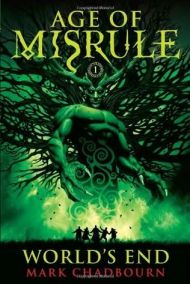
I have yet to use this sort of chapter, but I’m sure I will at some point in the future. This type isn’t named after any sort of literary character, but is named after the fantasy author Mark Chadbourn, who used this style of chapter with his series of nine fantasy books starting with World’s End and ending with Destroyer of Worlds. This format is unique, because it uses chapters, but each chapter is like a section of the story, and it has numbered sub-sections. I find this helpful for novels where there are a lot of different characters and plotlines to follow and you want to switch between characters and plotlines as dramatically as possible without being cheesy. When outlining this sort of story, it usually looks like this:

Chapter 1: Muse Makes Contact
           I: Rami Ungar wakes up and finds a ghostly woman in his room. She calls to him before she disappears.
           II: A witch has a prophetic dream of danger to come and summons her familiar. The witch, whose names is Azzie, tells her familiar Collos to head to Columbus Ohio and investigate an author by the name of Rami Ungar.
           III: Rami goes to work and then to classes, but sees the same ghostly woman everywhere he goes. Also, he feels like he’s being followed…and is then attacked by a man with a knife.

It goes on like that, if you get my drift, and can have any number of subsections. It’s a tough sort of format to pull off, but it works best with stories like this with multiple narratives, and can leave the author the option of working with many different characters at once.

As I’ve demonstrated here, there are many different types of chapters, and probably some that I’m not even aware of. Whatever one you use though, if you use one because you’re comfortable with it or you switch it up depending on the story, it’s probably because you know the story best and therefore you know what sort of chapter is needed. And if you can give your story what is needed, including chapter, then that is one mark of a great author.

Every author wants to write a great story, one that’ll be remembered for years and years after the author has passed on from this life. It’s the reason why so many of us spend years bettering ourselves, polishing ourselves and learning from as many experts in the field as we can so we can be great at our craft.

But what about writing great lines? Every author also has a desire as the person who coined a phrase like “To be or not to be”, or “Luke, I am your father”, or “When you play the game of thrones, it’s either you win or you die” (That last one I had to find through Google to get the quote right). How do you create a line that will be remembered throughout all time and be dissected in high school and college classrooms for generations to come?

I wish I could offer a trick to creating a great line that’ll stand out in your work. Unfortunately, none exists that I know of. In my experience, the most famous lines happen through accident and luck. Take Stephen King’s The Shining, arguably one of his best novels. The term Redrum has become a part of our social consciousness and is often used for creepy (or sometimes comedic) effect. I bet when King created the term though, he was just looking for something scary and strange, a device to add another layer of menace and mystery to the Overlook Hotel. I also bet that when the novel (and later the movie) became a success, King was very surprised by how popular the term Redrum was becoming.

Or how about “Live long and prosper”? Leonard Nimoy, who played Spock, was drawing on his Jewish roots, as that phrase and accompanying hand symbol were used by the priests in the days of the Holy Temple to bless the nation of Israel. When they were looking for an iconic catchphrase and symbol for the Vulcan character, Nimoy suggested, “How about ‘Live long and prosper’?” It stuck, and thanks to the show’s sometimes mind-boggling fandom, the phrase entered into our culture.

(By the way, that story has been a beloved tale among Jews for decades ever since the show began, and we still get plenty of oppurtunities to tell it and sometimes educate non-Jews about its Biblical significance. L’chaim!)

I guess the best way I can say for someone to create an excellent line is to just write as great a story as you can, and hopefully someday, just by writing a great story, you’ll pen or type out a sentence or phrase or piece of dialogue that’ll really catch the reader’s eyes and resound in their consciousness. Basically, keep doing what you’re doing as a writer and someday a great line may be born.

What’s your take on creating great lines? And what constitutes as a great line in the first place?

Last night I edited two short stories whose editing phases were long overdue because I was busy finishing up Snake. Today I turned to the problem of finishing “Vile”, the short story that I began over the semester but got stuck on. Earlier while hanging out at the library, I was looking over the first page and I thought to myself, How did I write this? It’s terrible. When I considered why it was so bad, I realized it had a lot to do with what I had been trying to accomplish with this story.

When I first came up with the story, about a man who comes back to life through the wonders of cryogenics, I’d set out to write a science-fiction story that was deep and philosophical and reflective, like Star Trek fans often claim the original series was and like a lot of science fiction can be. Despite my best efforts, I’ve never been much of a trekkie, and I apparently can’t write a deeply philosophical story with a sci-fi background, no matter how much I try. And believe me, I’ve tried.

Take a look at Reborn City, for example. It’s a science fiction novel, but it has moral-filled and philosophical themes. Those came later though. I never intended all the morality and philosophy to get in there in the beginning. It just got in there during the planning-and-writing process. The moral of this: I can get deep…but I need a great adventure or horror story to get deep in.

Which is why when I read “Vile”, I wondered to myself, how can I make this a good story without getting stuck again? I went back to the basic idea behind the story: a guy is brought back to life through the power of science, but things don’t go well afterwards. So how can I proceed? I thought about it…and then an idea came to me. I’d been struggling with another story about a demonic possession gone wrong. Could I combine the two? Indeed, I found a way to do so.

So now I’ve got a story I’m pretty sure I won’t get stuck on and be able to finish it. I just need to write it. In fact, I’m going to go do that right now. I’ll see what comes up. Hopefully it’ll be a terrifying sci-fi story with the deep themes I wanted, but the themes don’t clog the writing process.

There are only so many names in the world. We rarely think about it, but there are only so many names in the world. And as writers, we generally use a lot of these names. Some people will use certain names more than once (Stephen King seems to have a fondness for characters named Jack, and uses a variety of last names so that it doesn’t seem like he’s using the same character every time). There’s nothing wrong with that, just as there’s nothing wrong with not using certain names (I think the names “Jack” or “John” are too commonly used, so I rarely use them, and there’s a certain girl’s name that I’m saving because if I ever have a daughter I want her to have it).

However, as it occasionally happens, there are certain names that our friends share, or that random people we meet on the street have. You could write a novel about a guy named Jason Colbert and then some guy will come up to you and say his name is Jason Colbert. This is the reason why the page in the novel that has the copyright info on it says “All names, places and groups are fictional and any resemblance to real people are coincidential” or something like that.

And as I know from personal experience, it’s important to disclose that. Whenever I decide to name a character a certain name and I have a friend who has a similar name, I make sure to let them know the character is not based on them. Here’s why:

1. You might inflate someone’s head. A few posts back I wrote about some of my early attempts at writing (you can read that post here). One of those attempts, a vampire novel called Mahiro, starred a vampire/vampire hunter named Daniel Axton. And one day I let slip to a friend of mine this character’s name. This friend’s name was Danny L. (I dare not disclose last names for the sake of privacy)

My friend thought that this meant I’d name the character after him, and the idea was only furthered when I mentioned the character also had brown hair. From then on, whenever the topic came up, he insisted that the character was named after him even though that this was far from the truth and that they had different last names. Good thing the vampire craze reached its peak midway through the second draft, or I may have tried to publish the novel and further inflate my friend’s ego.

2. It could get awkward. I’ve mentioned before that the female protagonist of my novel Snake is named Allison. Well, I have two friends named Allison. And although the Allison of my creation is very different from the Allisons I’m friends with, I made sure to let them know there was no resemblance between them. After all, if they read the novel and see some of the things my character gets into, it could lead to awkward conversations and lead to problems in my relationships to them if they thought the character was based on either of them. I mean, there’s a sex scene in that novel. Guess who’s in it. You can see why I would want to tell them there’s no resemblance or relationship between the fictional Allison and the real ones.

3. Angry lectures on “my character”. You ever get people asking you to put them in your novel? I used to, but I stopped doing that a long time ago. Why? I took some liberties with the characters, and my friends were upset about those liberties. After reading pieces of the manuscript they would tell me they didn’t think a character based on them would act that way or would say such a thing or “why is my character a ginger?” or “why did you kill my character off?” Even if I don’t base characters on my friends anymore, I make sure to tell anyone with a similar sounding name there’s no connection just to avoid these little lectures.

4. Someone may try to capitalize on the name. I don’t think anyone I know are particularly greedy or untrustworthy. I generally keep good company. However if someone came to me for money as payment for using “their name” in the novel, I’d tell them there was no relationship. Heck, during the writing phases I’d let them know this. It’s not that I don’t trust them, it’s just that if the novel does well, the scent of money may bring about something dark and usually kept locked away. It’s just better to nip that in the bud than let it blossom.

So that’s why I disclose to people if there is or isn’t a connection to a character in a story. It’s just safer that way and stops any weird situations from rising up. And it’s pretty handy too.

Though someday I may create a character after someone whom I really don’t like just to spite or satire them. But only if they really annoy me (which means my sisters better watch out if they know what’s good for them).

Do you disclose to friends/family whether or not there’s a connection between them and a character you created? What happens when you do?

Lately there have been a lot of modern-day reimaginings of famous franchises. Superhero movies such as the Nolan Batman films or Man of Steel, James Bond for the past three films, the Star Trek franchise’s prequels, the remake of the Hawaii Five-O TV series, and Doctor Who’s revived series. All of them have been rebooted for the modern era in some way or another. And why not, says movie and television producers and executives. These franchises have strong fan followings, they are mainstream, and they’ve enjoyed huge success in the past.

Horror however, has not been as lucky. Horror is not mainstream, the chances of making a success with any horror film is hit-or-miss, especially if you think it’s easy to scare people (it’s not, but that’s a post for another time), and even franchises with strong followings don’t get these sort of reboots because of the image of the horror fan is so negative (creepy teenatgers and adults in basements who like porn and playing the Peeping Tom and are just waiting for an excuse to imitate the killers on screen). Who wants to cater to that sort of audience?

And when there have been modern-day reboots, they’ve either been really bad (check out the remakes for Friday the 13th, Black Christmas, or Prom Night for examples), or they’ve been good but are often compared negatively with the original (Dawn of the Dead, Nightmare on Elm Street) or are ruined by really bad sequels (Rob Zombie’s Halloween II). As a result, there hasn’t been a lot of rebooting for horror.

Until recently that is.

Over the past couple of years, some successful horror franchises, such as Evil Dead and Texas Chainsaw Massacre, have been rebooted with sequel/remakes taking place in modern times, and famous films such as Carrie have even been remade for the modern audience and modern world, with talks about Cujo, Gremlins and Van Helsing also getting the modern-day remake treatment also occurring (though I debate the wisdom of doing that with VH, seeing as the Hugh Jackman original was awesome).

Not only that, but with TV executives finally tapping into the horror fanbase with shows like American Horror Story, The Walking Dead, and The Following, there have been a few reboots for TV as well. During the summers, Teen Wolf acts like a modern-day Buffy the Vampire Slayer with monsters, magic, fighting, romance, and humor, and late season premieres such as Hannibal on NBC and Bates Motel on A&E have been holding steady ratings since their premieres as they bring fresh life to the legends of Hannibal Lecter and Norman Bates respectively. And more is on the way, with NBC doing a Dracula reimagining for the fall and other projects based on Hellraiser and Leprechaun on the way as execs start looking to reel in the horror junkies.

Why so many modern-day reimaginings? In terms of TV shows, I think TV execs are finally becoming more comfortable with horror itself and with taking risks on shows that appeal to horror fans. And as many horror fans are watching these shows and raving or debating or criticizing them on social media websites, these same execs are finding more and more ways to appeal to these horror fans. And if that means they must remake a few famous stories and franchises, why not? As long as it does well.

As for movies, I tend to think those movies are usually remade and rebooted by fans of the original franchises who see where those who came before had gone wrong or could’ve done more to improve the overall story, so they try and fix what has been done before. For example, the TCM franchise’s sequel got bloodier and more ridiculous with each movie, so the filmmakers tried to go back to the roots of the story and start from there with TCM 3D. As for Evil Dead, those movies were unnerving even with the really bad special effects. Imagine what could happen with better SFX, said the filmmakers.

Regardless of the reasons though, I think this is a good time for these sort of remakes, and there’s plenty of material for it. Here are some suggestions I have for modern-day reimaginings:

Frankenstein–With the rate of technology these days and the amount of zombie-based works being released these days, I say it’s high-time we have a Frankenstein remake. This could work either as a movie, or better yet as a TV series that could expand beyond the original novel and go in all sorts of directions in terms of story and character development. And who says the monster has to be ugly? We could have a halfway decent-looking monster to draw in the female viewers (I’d certainly go that route).
The Phantom of the Opera–I’m not talking about the musical, but the original novel. The story itself, which I read in high school, hints at several hidden, magical creatures and beings living with the Phantom underneath the Paris opera house. Imagine a drama set around the Phantom and the other inhabitants of the opera house trying to interact with the opera house. And imagine if it was set in modern times, when we are so sure of science conquering over the mysterious and superstitious. Sounds like fun, right?
Labyrinth–How many of you remember the 80’s Muppet-filled musical-comedy starring David Bowie as the goblin king? Imagine if it was remade as a serious story with CGI and animatronics and no musical numbers. That could work very well, especially if we delved more into Jareth’s history and his motivations and showed the goblin’s darker sides.
Tale of the Body Thief–Anne Rice’s fourth book in the Vampire Chronicles was recently optioned for a movie, but the movie never materialized due to differences between the movie studios involved. I wouldn’t mind seeing that movie made. Would you?
Willard–This famous 1971 film about killer rats spawned quite the legacy, including the sequel Ben and its famous theme song by Michael Jackson, several films about killer animals (including Jaws), and a 2003 remake. Imagine what would happen if that movie could be remade today?

Whatever the future holds, I hope it has some pretty good reimaginings of famous works, and plenty of people willing to make and to watch them.

What would you like to see remade and set in the modern world?

The second post I wish to finish tonight (assuming SNL doesn’t distract me too much) was inspired by both my dad and my friend and author Pat Bertram (you can read her blog here). I was talking to my father earlier this evening and we had an interesting conversation. He walked into the living room while I was sprawled out on the couch reading a graphic novel and told me he still had his mother’s phone number, the number belonging to my Savta, may her memory be blessed, in his phone even though she died several years ago.

(Savta, for those of you who don’t know, is Hebrew for “grandmother”, and is what I called my paternal grandmother from the time I was young.)

At first I thought he was going to ask me for advice about whether or not to erase the number. But then he asked me what would happen if he called that number…and Savta actually picked up the phone.

I grasped the idea pretty quickly that my father, ever supportive of my dream to become a horror writer, was trying to give me an idea for a short story. I also figured out pretty quickly that my dad had given me an excellent idea for a short story…but Stephen King had already done a similar idea. Well, when I told my dad that, he looked a little disappointed, to the point of crestfallen. I wasn’t sure if he was sad that King had gotten there first or that I had rejected his idea for a short story. Whatever the case though, I tried to let him know I wasn’t rejecting his idea or that it was useless. On the contrary, even if I couldn’t write a story based entirely off of that idea, it was likely to appear in a short story or a novel of mine someday. The idea of the dead picking up the phone would probably swim around in my subconscious for a while before finding itself in a story I could actually use. In fact as I was talking about it, I realized there was a story that the dead calling would work perfectly in and told him so.

Of course, being me I told him in a way like this: “Oh, that could go in that story…yeah, definitely there…uh-huh…definitely could work there.” That and the hand motions I used probably confused my dad and made him want to move the conversation in another direction. But even if I can’t use his idea for a short story, it’ll still probably appear somewhere else, and that would mean my dad contributed something to my creative process.

My friend Pat Bertram recently did a post where she remarked how some writers will give up time with their families to devote to their writing, and how she advised doing the exact opposite of that. Speaking from personal experience, Pat said that she found every moment she spent with her late husband important and stimulating and a boost to her writing (and I am so sorry if I am misquoting you in any way, shape, or form Pat).

It’s moments like the one illustrated above that makes me agree with Pat. Family and friends, whether or not they drive you up the wall, are important and you should spend as much time as you can with them. Because when you make it as a writer, you want these people to be behind you and support you. And in cases like this, they really give you some awesome ideas to incorporate into your work.

This is the first of two posts I plan to write this evening. This one was inspired by my younger sister, who asked me how many stories I’d thought about in my head yesterday as I was helping prepare dinner. Now I’ve mentioned my Ideas list on this blog before, a document on my flash drive that contains a little over fifty different ideas for novels, movies, TV shows, mangas, and even a video game. I keep this list because my memory is amazing on some things but remarkably poor on others (but doesn’t everyone have that problem?). However at various times throughout each day I’m thinking about one or more of these stories and trying to work out various plot points and scenes, even if I won’t write these stories for a long while.

I answered my sister truthfully, “About three or four.” One of them was my science fiction novel Reborn City, which is in its final draft and less than ten chapters away from completion (thank you, Matthew Williams, for your diligence on this project). The other, my thriller Snake, is in the middle of its third draft, and when I had the chance yesterday, I was able to edit a few more chapters. The other two was a possible novel about an assassin with multiple personalities, and a story influenced partially by Sleeping Beauty (by the way, I call stories I write based off of fairy tales and other well-known stories, of which I have many ideas for, “Fractured Fairy Tales Untold”. Catchy title. A prize goes to the first person who gets where I got the title for this category from).

Anyway, my sister’s latest dream of what she’ll do when she’s an adult is to write, though I think she’s more into fantasy and I’m not sure how deep her devotion is or if this is just one of those passing fancies all kids seem to go through, even during the teen years. She claims she has twenty ideas going through her head each day, which I take to be exaggeration and possibly the hubris all starting writers have when they find they can string a few sentences together to make the bare bones of a story. But the conversation got me thinking, and I’ve been wanting to write this post since then, because there are a lot of writers out there who have a ton of ideas running through their heads and I think it’s a good topic to explore.

Every writer wants to be known for something they’ve written. Some have just the one work and want that to be well known, while others want to be prolific and have lots of famous stories. I think the former dream of just publishing their manuscript, while the latter dream of being the next Stephen King or Ernest Hemingway or Ezra Pound. I also believe the latter tend to have many different ideas brewing at any one time in their head. After all, if they want to be known for a large body of work, they have to have a lot of it in their heads already, right? These authors are always working on something, and they often spend great amounts of time just working on a story, whether by writing or by daydreaming. Not to mention, they also have new ideas coming into their heads, so when they do get a new idea they may spend hours, days, weeks, months, or sometimes years plotting and planning before they start to write it.

Of course, with so much in their head, it’s doubtful they’ll run out of ideas at any point. Or more precisely, it’s in doubt that they’ll finish even a tenth of all the work they’d like to do. I personally view this to my advantage, as it means that I’ll have multiple objects every time I start a new project. Should I start the next volume of a series? Should I work on a new series? How about a stand-alone? Which one? A Fractured Fairy Tale Untold? A psychological thriller? Something with the potential of a sequel should it do well? A science fiction novel with thought-provoking social themes? The options are endless!

Other writers may not have the same view of having many ideas as I do. They may think its better just to focus on the one idea, or perhaps they try to write as much as possible so they can get as much out as they can while they’re still breathing. Or, if your name is James Patterson and you have tons of money on hand, you hire co-writers to work with you so you can get out nine books a year (yes, I’m still a little sore over this, though I thought Alex Cross, Run was one of the better books in the series lately). It’s different for every author.

But like I said, I like having multiple ideas to focus on at any one time. It gives me something to do, and I think as time goes on, like wine, these stories get better with age. And even if I don’t write everything on that Ideas list, even if every manga isn’t serialized, every movie made or every TV show has a pilot filmed, I can still say that I gave it my all while I was writing and that’s enough for me.

Do you have multiple ideas in your noggin? What’s your view on having all these ideas?

“Film is powerful and powerful is film. Hover on the TV and silver screen. Mwha ha ha ha!”

We’ve had the vampires, cool, collected, tortured, ferocious and merciless while elegant and noble. With so many Twilight knock-offs, they’re out the door, though a few want to stick around.

Ladies and gentlemen, possibly the new face of supernatural fiction, played by Sheri Moon Zombie (Rob Zombie often includes his wife in his work. I bet it does wonders for their marriage).

We have zombies at the moment, metaphors for the numbing effects of society on man and creepy cannibals without brains (fast or slow depends on which adaptation you’re watching/reading). Not sure if this fad is peaked yet, but I think you could make an argument for affirmative and negative on this.

And werewolves, with Teen Wolf and The Wolf Gift rocking critics and bringing in the money, might still get their own fad (I’m hopeful they will, anyway). And why not? They can go from calm, human, and even meek to large, ferocious, and virile in a space of seconds and then back again. There’s something magnetic about that.

However quickly beating the werewolves to the popularity stage and joining the zombies are some ladies I didn’t see coming: witches. Double double, boil and trouble.

With Oz, The Great and Powerful making millions at the box office, a reboot of Sleeping Beauty based around Maleficent by Disney coming out next year, the Rob Zombie movie Lords of Salem starring his brilliant wife Sheri Moon Zombie coming out this coming this weekend, plus a whole slew of other works that I can’t list here and more that I don’t even know about, it’s safe to say that witches are getting their own turn in the supernatural spotlight.

Why witches? it can’t be the Harry Potter fandom looking for something to keep them occupied now that there are no more books or movies, is it? I seriously doubt it. In fact, I think it’s the idea of a woman taking power and fighting back against the cruel world with a tool all her own. Witches–or Wiccans, as they were first called–were seen as mediators between the physical world and and the spiritual worlds, making them objects of both admiration and fear. With the later demonisation of Wiccans, witches gained an official position of being for good or evil. And in the past hundred years, witches have taken a center status in the scale of good and evil, with the evil including the Evil Queen, The Wicked Witch of the West, and Maleficent, while the good include Glinda, Hermione, and Willow Rosenberg (that’s a Buffy the Vampire Slayer reference if you didn’t get it).

Until now, portrayals of witches has been somewhat sporadic. But I think now, with the women’s rights movement gaining a new prominence in our world and women showing men that yes, they can do many of the same things that men can do and sometimes even better, studios and authors are using witches to portray women in roles of leadership and power and able to do things that some say only men should do, including saving the free world, and are not usually desperate for love, though they don’t mind companionship in their lives. It’s a stunning archetype compared to women in zombie or vampire films, who are often damsels in need of saving and often only become warriors after a lot of prodding and are constantly looking for love.

I’m looking forward to seeing more of this in the future.

So what can we expect? Perhaps a resurgence in older works centering around witches, like The Wizard of Oz and perhaps Anne Rice’s Lives of the Mayfair Wtiches trilogy. There might be a wave of magic-centric books with female protagonists (I know I’ve got one tucked away that I might pull out one of these days), plus movies and TV shows that remind us of Once Upon a Time while they try to be better than that show. And of course, as with vampires and zombies, there will be the detractors and parodies that always acoompany fads in fiction with this.

It’ll be interesting to see what materializes in the next couple of years if this fad takes hold, won’t it?

And as for my own stories about witches (and there are a couple, though only one features a magic that can be used only by women under normal circumstances), I’ll probably wait for a while. I don’t like to follow fads in fiction, which is why I haven’t written a zombie novel yet or released my previous vampire novel (which I’ll rewrite at some point in the future, I’m sure). But hey, look on the bright side: when I do write these stories, you won’t have to worry about my stories being the same as everyone else’s.

Do you think witches will be the new zombies or vampires? How do you feel about that?