Posts Tagged ‘ideas’

I’ve seen two comedians live at Ohio State these past two weeks, plus one episode of Saturday Night Live. One of those comics was Max Brooks, author of The Zombie Survival Guide and World War Z. When he came to Ohio State, he talked about how he put the former of those two books in the humor section. Why? Because people will think it was funny, but as they start reading it, they’ll realize it’s a serious guide to suriving zombies and what not to do during a zombie apocalypse, even if it seems obvious. And he did it all by presenting his work as a stand-up comedy show.

Max Brooks uses comedy to get works about us sold. How weird is that?

People tell me I’m a funny guy.

Or that sometimes I tell good jokes.

Okay, they tell me I can tell a good joke every now and then.

Occasionally.

Once in a blue moon.

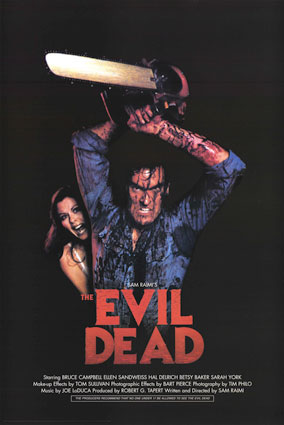
The point is, I’ve seen enough stand-up comedy to know how to do it myself. Occasionally I’ve even done my act in front of friends and fellow dorm residents. Usually I get some laughs, and that encourages me. In fact, last night I invited a few friends to my room and put on a show for them based on my own angry sarcasm and my experiences writing horror and how troublesome selling indie horror can be.

Did they laugh? Yes! They laughed, and offered me some good advice that I proceeded to act upon. The result: plenty of laughs.

Could this be the key to selling my work? Through laughter.

So I’m thinking, if I can’t use the horror persona of a creepy but brilliant writer to sell my work, why not be a disgruntled comedian on a stage? It could work.

So this summer I’ll practice, and then I’ll take the stage. Maybe I’ll even get a few laughs and some sales, especially if I use YouTube. One can hope, at the very least.

What do you think? Do you think comedy can help me with my writing?

Happy Birthday to the true home of the Jewish people. May you last for ages to come.

Oh, and before I forget…Happy Israeli Independence Day. The State of Israel was founded 65 years ago today, becoming a beacon of hope for Jews everywhere. It is also one fo the most prosperous, green, technologically advanced and democratic nations in the Middle East (and in Israel, you can say otherwise without getting jailed for it) and I hope it lasts for another 65 years or longer. Happy Birthday, Israel. You’re doing great these days.

I know what you’re thinking: He got another award? But that’s not the case. You see, I made up my own award! I thought it’d be interesting if I created my own Internet meme and saw how far I went. Hence, the Black Dragon Award, an award for any author who has written any form of fiction that’s got something scary in it.

So here are the rules for the Black Dragon Award:

1. You must have written something scary or featuring something scary in the past year. (This can range from being a simple murder mystery to a full-on zombie novel with a wizard and serial killers mixed in for variety). Note that whatever work you’ve created will be the subject of several of the questions below.

2. You must thank the person who nominated you and then link back to their  blog.

3. You must answer the 10 questions below on your own blog post.

4. Finally, you must nominate at least 5 other authors for the award and then notify them of it.

Okay, time for the questions. Enjoy:

1. What is the premise of the novel you’ve written? My novel Snake, which I spent half of 2012 writing, is about a serial killer hunting down members of a certain Mafia family in New York. Why is he doing this is for the reader to discover as they read. It’s pretty scary.

2. How long did it take you to write it? I spent six months from June to December 2012 working on Snake. It was a lot of fun, but I’m still on the editing phase, and that can be a pain in the ass sometimes. I’m about to start on the third draft (God help me) and I’m going to be adding a lot of material for character history and character development. It’s going to be hard work.

3. Which character(s) are you most like? I think I’m most like the Snake (he’s somewhat based on me, after all). But at times I wish I was like the female lead, Allison. She’s a tough girl, but she’s got her nice side to her. I can’t help but fall for her.

4. What’s the scariest thing you’ve read/seen lately? Honestly, it was that ghost I saw the other night. That was freaky! I wish I could show what I saw to the Ghost Adventures crew.

5. What’s something you’re reluctant to write about? I’m not sure. Perhaps rape scenes. Those are tough, and they really touch a chord that even veteran writers don’t want to touch. If I ever do write a rape scene though, it’ll probably be for the purpose of showing the horrors of rape and the attitudes around it.

6. If you could take characters from other works and insert them into an original story of your own design, who would you take and what would you have them do? I’d like to take Dr. Hannibal Lecter and Jason Voorhees and have them become reluctant allies. I’d probably kill off Clarice Starling early, though (I prefer Will Graham to Clarice Starling). Hey, that’d be the impetus for the events of the story. Jason could fall in love with Starling, and when she dies, Lecter and Jason could go on a revenge-fueled killing spree. That’d be interesting…and fun to write.

7. Do you envision a sequel to your novel? I’d like to write a sequel for Snake, but not for a long while. I like to take breaks when I’m working on a series, put some time between each book in the series. It’s good for my noggin that way.

8. What first got you into writing? And what got you writing scary subject matter? I think Harry Potter got me into writing, but it was Stephen King and Anne Rice who got me into writing scary stuff. I think my mother was happy that I loved those writers so much (we read a lot of the same things) but I think my dad was (and still is) probably worried about some of the subjects I write about.

9. What scares you personally? Spiders. Not the tiny ones, but the ones where you can make out the details on their faces. Close-ups of spider faces I saw back in 4th grade gave me nightmares for ages.

10. What are your future plans? Finish editing Snake, release my collection of short stories The Quiet Game: Five Tales To Chill Your Bones, and also finish editing and release Reborn City. After that, I’d like to work on RC‘s sequel, if you don’t mind.

Okay, and now for the nominees:

1. Stories by Williams.

2. A Portia Adams adventure

3. nightmirrors

4. Pat Bertram’s Blog

5. self-publish bible

Let’s hope this award takes off–with your help, anyway. Congratulations to the winners and good luck with your own posts.

I had a bit of a revelation last night, but I haven’t been able to share it until now. So without further ado, here’s my revelation:

Last night I was watching the second episode of the new TV series Hannibal, which for those of you who don’t know is a prequel to the Hannibal Lecter novel Red Dragon. As I watching it I was seeing all these little things they were doing to develop the characters that the author of Red Dragon, Thomas Harris, hadn’t done when he originally wrote the novel. It struck me then that I had committed a grevious error in my own serial killer thriller, Snake: I hadn’t gone into any sort of character development whatsoever.

I hadn’t gone into the pasts of any of the characters, only focusing on the events of the story and what immediately precipitated those events. I had not gone into any detail on why the Snake was so twisted, why the female lead was so defiant and spunky, why the villain was who he was, none of that! I’d left it all up to the imaginati0n of the reader, but now I realize that might’ve been a mistake. I mean, the reasons why we emotionally invest in characters is that we want to know them, not just what they do in a story.

So I’m going to go over the manuscript one more time and see where I can add in more character development. Perhaps then I know it’ll be ready for publication. Heck, my beta reader’s on board with it, so why not?

I’ll let you know how things go after the third draft is done. Hopefully it’ll all go well.

I woke up yesterday morning and was filled with memories of some of my old attempts at writing, the first fiction stories I ever wrote, and how they shaped and defined me over the years, and how I got to this point in my writing.. I wanted to write a post about them, but with all that was going on yesterday, I didn’t have the time. Well, better now than never, right?

The first time I tried to write anything, I must’ve been five or six, eight at the most. I had just seen Harry Potter and the Philosopher’s Stone for the first time and then read the book, which was infinitely better. My mind was blown, and I could only think to myself, “I want to write something like that”. So I did, creating a similar story to HP1 except with the genders of the characters switched (even then, I had a thing for strong female leads, I guess). I called this obvious copyright violation Amanda Robinson, I gave her a cat instead of an owl, and I planned that the cat was a prince in cat form who would be my main character’s love interest at the end of the book, but beyond that same basic plot as HP1. I didn’t finish this work, either because I had the good sense to stop before I got sued or because at that point in my life I couldn’t keep my focus on any one project for very long. But it did spark my interest in writing, which only grew as time went by.

My next major project was a pirate adventure story called Bane Nycroft and the Maelstrom Pirates (I’m not sure if this one was inspired in any way by Pirates of the Caribbean, but it’s a possibility). That story featured a lycanthropic teenage pirate with a stolen Navy ship, leading a band of fellow orphans on the high seas and stealing from rich government banks and fighting monsters and demons. Along the way the pirate picks up a rebellious princess and they discover an island where all sorts of strange and magical creatures reside, and eventually they take on a prince who’s actually a demon in disguise. This one went through several rewrites, each rewrite growing more supernatural as time went by. Eventually I lost interest, but more than Amanda Robinson, Bane Nycroft gave me a taste of what professional fiction writing was like.

After that came the Davis trilogy, a couple of vampire novels that were inspired by the movie Van Helsing. In those novels, which fused a lot of the Buffy mythology to Van Helsing and my own twisted imagination, a teenager commits suicide after seeing his crush with her boyfriend. The teenager makes a deal with the Devil to become a vampire and take over the world and make the girl his vampiric bride. The girl, on her way to becoming a vampire, must band with her boyfriend, her older brother, and her best friend, who happens to be a witch, to stop this horrible vampire from turning the world into permanent darkness. I actually got to the third book with this one, but at that time the slow realization that nobody would want to publish such a confusing story that ripped off so many works came over me. Plus as I got further along the story got more and more sexualized, which sort of corresponded with where I was at that point in my teenage years.

I wasn’t entirely finished with the vampire mythology though, and almost immediately afterward I began work on Mahiro, which in my opinion had the first inklings of the style of writing I have today. In it a teenage boy travels to an alternate universe inhabited by vampires. While there, he is found by Mahiro, the queen of vampires, who takes a liking to him and turns him into a vampire. But before she can finish the ritual and take his soul, he escapes and finds the human resistance, where he assembles a team of crack fighters to help him take on Mahiro and perhaps find a cure for vampirism. At the same time, he must deal with a romantic triangle, being drawn both to his girlfriend, whom he left on the other side of a dimensional portal, and an equipment tech with some terrific sharp-shooting skills. It was promising, but at that point Twilight was hugely popular and was gaining more fans everyday. As a consequence the number of vampire books out there was astronomical, and I didn’t want to compete with that. With that in mind, I shelved Mahiro until a time I could bring out the characters again and rewrite the story. Until then, no vampires for me.

There was also a poorly-researched caveman story and a Frankenstein-esque horror story I wrote in between Bane Nycroft and the Davis trilogy, plus some attempts at zombie literature. Other than that, those were the main works that preceded the creation of Reborn City, which I’ve stuck with up until now and I’m happy to say will be published as soon as the beta reading period is over, I can create a cover, format the whole darn thing, and get a copyright.

Over the years, I’ve written a lot. My writing style’s changed drastically since I started writing fiction, and I’ve incorporated new elements to my work with every author I’ve read and every experience I’ve gone through. I wonder what the kid who sat in front of the old Windows 97 computer hen-pecking out a Harry Potter rip-off would say if he saw me now and what my writing’s like (probably “Why aren’t you living in a mansion yet?”). I hope to continue to grow in my writing and to create awesome and scary works. And perhaps, unlike my previous work, the characters will be college students or even full adults instead of teenagers. That’d be a break from the past!

What is in that fog? Something wicked this way comes.

I’ve often used this blog to rail against horror movies where filmmakers have spent a ton of money on CGI and making a top-notch movie, and yet the most exciting aspect of the movie is the trailer. I’ve even done lists of what you should and shouldn’t do when making a horror movie (for that post, please refer here: https://ramiungarthewriter.wordpress.com/2012/07/11/what-not-to-do-when-making-a-horror-movie/). Now I think I’ve identified two more factors in horror films that could separate a good scare from a boring waste of $6.50. Those factors are build-up and mystery.

For the first one, I’d like to call attention to the beter films in the Friday the 13th franchise versus the remake, the latter of hich I never get tired of ripping for how really bad it was. In the better films, the filmmakers had a way with building suspense that terrified audiences and made them want more at the same time. The best way to illustrate this technique, if you ask me (and I’m assuming you are, you’re reading this blog post after all), is through stream-of-consciousness from the POV of a moviegoer:

“Oh, she’s going out to that shed. Will Jason kill her there? She’s in and the light’s on. She bends over–I can’t see what’s behind her! Oh, Jason’s not there. Good. Oh, she’s bending over again! I can’t see behind her! Oh, Jason’s not there. Oh, how many lightbulbs does she need? Oh, Jason’s still not there. Okay, she’s heading back to the house. Will Jason get her now? Opening the door…OMG! What was that? Oh, it was just the cat. God, I feel as silly as the actress in that close-up–OMG there’s a machete poking out her front! She’s being lifted up! Yikes it’s Jason! AAAH!”

Somedays his writers do great with him. Other days…you know. All depends on how the suspense is added to the story.

You see there? Through visual dynamics and waiting until the least expected moment, they get the tension really high, make us think that we’ve seen everything to get scared of, and then WHAM! They scare us when we least expect it. In the better Friday the 13th films, this technique would scare the bejeezus out of people, and made the films famous and box-office smashes. Now contrast this with the reaction of me when I watched the remake:

“Okay, the naked chick with the bump on the head is hidden under the dock on the bad side of the lake. Jason’s probably seen her. She’s so dead. He’s on the dock. She’s looking up like he might get her. He steps away from her. Machete through the roof of her head! We see her bare breasts. She’s dead and in the water. Wow, so scary. NOT!”

No surprises in that film. We knew when a character was going to die, and there was no build-up of suspense to make us terrified. There was a reason that fans and critics hated that film. The only reason it did well was because people went hoping that the reviews were just by people who were overly critical and hard to please.

This is why it’s important to get a feel for building suspense like in the better of the Friday the 13th films. it makes the movies that much better, and if you’re really good at it you can keep it going throughout an entire film and even afterwards without letting the suspense and terror abate. And if you do become good at it, you can hopefully become someone in the horror movie industry.

Another aspect of making horor movies that can make a horror movie great is mystery. To illustrate that, I’d like to use The Amityville Horror and its remake (I love showing how bad remakes can be. Maybe people will learn something from it). In the original Amityville Horror, we never get a sense of what exactly is haunting the house. We see flies and hear masculine voices shouting “GET OUT” at priests. Things move on their own, and anyone of a religious nature gets horribly sick near the house. We know the little girl is playing with an imaginary friend named Jodie, who somehow locks the babysitter in a closet (that’s scary as it is), and there’s a room painted red under the basement stairs that causes the very-spiritual family friend to go into hysterics and scream “It’s the gateway to hell!” Later, the male lead sees a pig with glowing eyes in the window, which we assume tells him to kill his family, and later the same guy falls through the stairs into the hidden room and falls through the floor of that into a pit of blood.

Beware this room: its darkness is only rivaled by so little we know about it.

But do we really understand what’s haunting the house? NO! We know that the murder of the preivious residents of the house were killed by their crazy son, but we’re not sure if they’re causing the haunting or if they’re just one small piece of the puzzle. We also hear something of a satanic preacher living on that land many years ago, but it’s not assumed that he’s behind it in any way. At the end of the movie, we’re left thinking: “Oh mygod, I’m so scared! What was with that house? What was in it? And where did all that blood come from? And the pig in the window…what the f*** was with the pig in the window!” You see how awesome the amount of mystery in that movie makes it?

Contrast that with the remake, which is utilizing the whole mythology from all the films based on The Amityville Horror. Right away, we’re made very aware of what’s causing everything. Messages through TV, little ghost girls that manifest themselves in front of everyone and are held by mysterious arms against the ceiling. Messages in blood on the mirror…need I go on? There’s no mystery, except for a supposed-to-be startling revelation about the satanic preacher. At the end, we understand too well what’s causing the haunting, and we’re left very not scared. The mystery of the first film made it awesome, while the lack of mystery stripped the second film of any scariness.

At least that’s what’s happening with this film.

Is that all that is needed to make a scary film? Heck no! A lot goes into scaring anyone with anything, be it a story, a movie, or even a silly prank for Halloween or April Fool’s Day (I speak from personal experience on all but one of these). But these two factors–a build-up of suspense and an air of ever-present mystery–can create a terrifying experience that leaves those doing the experiencing chilled for the rest of the night. So keep these factors in mind when creating your own story (and it doesn’t necessarily need to be a scary story). You might end up creating a wonderful work of art that’ll be remade in thirty years by a high-powered team of filmmakers and debated about by fans in chat rooms for years to come.

This morning I woke up with a memory and an idea: I remembered one time I let a friend of mine, whom I knew would not steal any of my ideas, look at the list of ideas for novels and other assorted creative endeavors. This was midway through high school and I’d probably just started the first draft of Reborn City. He sent it back to me with one note: Interesting.  A lot of ideas using magic here.

That was several years ago, like I said, and that Ideas List couldn’t have had more than 15 ideas on it at the time. Now it’s at 51 ideas and counting, and I thought I’d take inventory again. I went over the ideas, and I found some interesting numbers here. I share them with you now because they give insight into not only the sort of stories I like to write and create, but also gives an idea of who I am, and what my imagination gives birth to.

I’ll list these ideas, occasionally giving some information on why I gave these stats, and then I’ll tell you what I think of all these sorts of story ideas. You’re welcome to draw your own conclusions as well and tell me what you think. Also, please excuse the randomness of some of these stats. I listed them as they came to me. Also be aware that several of these ideas cross over with each other in terms of elements, such as serial killers crossing over with demons, science gone wrong featuring monsters, and so on and so forth.

Number of stories dealing with the supernatural: 29
–Number with ghosts: 6
–Number with monsters/demons: 26
–Number with magic: 24
–Number featuring God(s): 9

Trust me, plenty of stories featuring this sort of creepy stuff.

Number of science fiction stories: 9
–Number with science gone wrong as the main theme/driving force: 7

Number of crime/thriller stories: 17

Number featuring human antagonists: 33
–Number featuring serial killers/rapists/etc.: 25

Number of stories with strong female protagonists: 25

Number of ideas that aren’t for novels: 13
–Number of films: 3
–Number of TV shows: 2
–Number of comic books/mangas: 7
–Number of video games: 1

Number of ideas that are suitable for younger audiences: 1

As I said, I’d provide a little feedback on some of the numbers listed above. The first I’d like to draw your attention to is that most of my science-fiction ideas feature science gone wrong. Why? Maybe it’s got something to do with the fact that I sometimes wonder that our society, which is getting more technologically dependent with every passing day is going to find itself in a lot of trouble because of how much we rely on our technology. Although none of these stories feature Terminator-like elements, where the tech actually rises up to get us, I do think the stories do illustrate just how dangerous technology can be if we let it be the center of our existences, and shows just how paranoid I am about that happening. It may also explain why I always wait to try out new technology and social media until everybody else is using it. Makes it safer, I guess, at least in my strange mind.

Also, why did I emphasize stories with strong female protagonists? Because even in the year 2013, there are many novels/TV shows/movies/whatever where the female characters just fill a postition, often times to draw in male readers. And there are plenty of times when the female characters could be replaced by male characters and there wouldn’t be much change to the overall story. Imagine for one second that Hermione Granger from Harry Potter was a boy. How much would it change? The Ron/Hermione subplot would be taken out, but beyond that, there’d still be a smarty-pants character helping Harry figure out important stuff that’ll save his life later. Perhaps the readership, particularly the female readership, would be less, but it might still be a popular story.

Imagine how different this story would be if Katniss were a normal girl or if she were even a bad-ass boy? Not too fun to think about, is it?

So I write a lot of stories where female protagonists are like Katniss Everdeen: they’re indispensable to the plot. Change their gender or make them more meek or in a more traditional role, and you have by far a much less interesting story. Katniss is so popular not because she has two dreamy guys after her affections, but because she’s a kick-ass female with sharp-shooting skills and the determination to fight against a very corrupt system. All without showing off her boobs and butt as well. She’s something female readers want to be, and something male readers can fall for because of how different she is. So many of my female characters become like that, indispensable and not allowed to change or they would change the story for the worse.

By the way, I think that part of me that likes those characters might be due to my childhood, where I had a lot of women and girls around me all the time and where I had a lot of strong female role models in my life, including but not limited to my mother. In addition, a lot of the shows I watched when I was younger involved strong female main characters, most notably Sailor Moon (not afraid to put that out there, by the way). It’s no wonder i have so many strong female characters.

And finally, there’s the fact that one of my ideas is suitable for children. Unusual for a horror writer, right? But I recently discovered some of the old cartoons I used to watch when I was younger, and one of them I relly enjoyed watching again. I hope someday to reboot that as a movie, if I should ever have the money, power and influence to be able to do that. So I list it there, with the hope that I can someday be able to create a fun little movie reboot with jokes for both kids and adults and a plot that’ll draw in any viewer.

I sometimes think my subconscious looks a little something like this. Eerie to behold, right?

So what does all this say about me? Well, without the actual list it’s difficult to pull up any sort of psychological profile about me. But I think it does give you an idea of what sort of stories I’ll put out in the future, and what you can expect from some of them. So either you are either very psyched to read my work or you’ll never pick up a Rami Ungar book as long as you live. Either way, it gives you some idea of who I am and what I like to write. And I think that’s what I want people to get from this post.

Got any questions? Feel free to ask, and I’ll make up an answer as best I can.

I’ve got a document called “Ideas” on my flash drive. The document is a list of ideas, mostly for novels, but there are about three films, a couple of TV shows, about four manga/comic book series (including one starring my superhero alter-ego Judgment), and even a video game. Tonight I added three new ideas to that least, officially bringing me up to fifty ideas. Yes, fifty ideas, none of them gray (yes, I went there). Although some of these ideas might actually depend on making enough connections to make a film or a TV show or whatever, some of them have already been brought into being (think Reborn City and Snake).

As I came up with Idea #49 last night, which is a novel based in Bolivia and featuring one very mentally unstable teenager, I realized something important: most of my work is not inspired by events in my life, but by the work of others. Reborn City was inspired by thinking of films featuring street gangs while listening to rap music, with the sci-fi elements added in while I had a snack at a Dairy Queen. Snake came from watching Taken and being totally rocked by it and later making the action hero into a serial killer. The series I plan to make my magnum opus when I write it is inspired by Schindler’s List and my favorite anime, taking some aspects of both and meshing them together with magic and steampunk. Idea #49 came to me after reading Hannibal and then letting my mind wander to Stepehn King’s Misery, with a South American setting mixed in after the idea came to me. All this and more, inspired by the work of others.

Is that a bad thing though, that I’m mostly inspired y others? Absolutely not! Just because “Art Imitates Life” is a famous adage doesn’t mean all artists have to abide by it. In fact, my favorite painting at the Columbus Museum of Art is a modern retelling of an old Dutch portrait. Every time I’m there (which isn’t often, but when it does happen) I have to see that painting or I don’t feel like my time was worth the trip. Plenty of movies, both good and bad, were inspired by the space craze that resulted after Star Wars came out. Books like Wicked and Alice I Have Been were based on The Wizard of Oz and Alice in Wonderland. And let’s not forget that there would be no Friday the 13th, Nightmare on Elm Street or other famous slashers if Halloween hadn’t started the slasher boom in 1980 (some of you may wish it hadn’t, but let me thanks the producers of that film for creating an influential genre in horror).

But all that aside, it’s important to remember that every artist gets inspired differently. Some take the events in their life and use it to create a work of genius. Others, like me, see or read or hear those works and come up with their own works thanks to a little inspiration from the works they’ve seen or read or heard. Others try to answer a question with their work, such as “Is humanity worthy of living?” or “Why do I feel this way and can I figure it out if I write it in a fictional context?” And some are just inspired by a quick kiss on the lips, a reminder from their lover that they are the most important person to them, and a shared cup of coffee and eggs in the kitchen…and I am not sure where I am getting this scenario. It could happen, though.

So writers, artists, musicians, actors, whatevers–create however you want, whatever your inspiration. Each one of us works in a different way, and we should be inspired by the way that works best for us. After all, isn’t that how the best art is created?

What inspires you? And do you have any memorable moments of inspiration?

Please let me know.

I was watching a movie recently and at one point near the end, a literature teacher is teaching her class that there is only one plot in any work of fiction: “Who am I?” And when I logged onto the Internet a little while ago, I read a blog post by my friend and fellow author Pat Bertram (see here:http://ptbertram.wordpress.com/2013/03/21/where-my-books-originated/) where she stated that at the core of every one of her novels, plus her memoir on grief, the central theme was “Who are we?” This all happened within a 48-hour period, so I definitely started thinking hard about these questions. Do all stories of fiction have just one plot to them, which can be summed up in “Who am I?” or “Who are we?”

Well, a lot of novels do have this question as a theme throughout the story. Plenty of coming-of-age novels are about children and teenagers finding themselves and learning just who they are, or becoming individuals, or finding their place in this chaotic universe. Heck, my own science-fiction novel Reborn City has plenty of identity themes in it, especially for Zahara and for the Hydras as a whole.

But at the same time, I’m not so sure that all stories are about “Who am I?” Look at some classic novels like “A Tale of Two Cities” by Charles Dickens. I hated that novel, but I do know that the central story was about one character nearly getting his head chopped off because of a family relation’s crime. I don’t think the whole “Who am I?” question figured much, especially when one character kept trying to keep his head on his shoulders. And recently I read Henry James’s “Daisy Miller” for class. That had nothing to do with “Who am I?” It was an unidentified narrator telling us about a story he heard (with details and all) about a guy trying to court a naive young girl who spends too much time with men and gets slandered in society for it.

Of course if you would rather me use a modern example, how about “Daughter of Time” by Josephine Tey? That whole novel was about figuring out an actual conspiracy in history, not about the main character’s identity as a cop or anything. Or what about any of the Hannibal Lecter books? Those are about one agent trying to catch a serial-killing criminal while Hannibal gets in their heads.

Sure, one can make an argument that each one of those examples has someone trying to find themselves, whether they know it or not (Richard III certainly didn’t know in “Daughter of Time” that people were helping him clear his name, a form of finding themselves). But those arguments sometimes seem very circuitous to me, at least when I go through them in my messed-up head. And do they necessarily prove those stories are about “Who am I?” or “Who are we?” I’m not sure, but if you can make an argument that doesn’t seem long and circuitous, then by all means, go ahead. I’d love to hear it.

Still, I don’t think you can sum up all fiction in one sentence or one question. And as for my friend Pat Bertram, that’s just the sort of stories she writes. I write some that are like that and some that are definitely not like that (Snake comes to mind for the latter). So like many things in the writing world, it all depends on the author and their particular stories and preferences.

What’s your view? Are all stories under a particular question, or do they fall under different questions and themes and beliefs?

To many, rape is just this: a hand reaching out of inescapable waters, but with no one to grasp it.

Over the past two days, I’ve read about four or five stories online about the Steubensville rape trial (for those of you unfamiliar, two teens from a small town in my state sexually assaulted a 16-year-old girl while she was intoxicated and unconscious, urinated on her, and then posted the damning proof of it on Facebook). The two teens who committed the act were found guilty yesterday and sentenced to juvenile detention centers till they were 21. What upset me though, and what has upset many people as well, was not only that the poor girl was sexually assaulted, but the defense attorneys for the case tried to twist the concept of consent out of order by saying that since the girl was intoxicated, she never really said “no”; that there may have been a cover-up by the local high school, whose football team these boys belonged to and which is a source of pride among the local community; that those who witnessed the crime and were responsible for the photos on Facebook were not charged (though that might change pretty quickly, according to the Ohio AG); and that some of the coverage of the trial, which has gained nationwide attention through the Facebook posts, were actually in favor of the two boys charged.

The two rapists in question. They have no one to blame but themselves.

Yes, in favor. ABC News first reported the case not too long ago by saying the boys “took liberty” with the girl, which is definitely a new one if ever I’ve heard one. And yesterday, CNN seemed only able to lament the fact that these boys had promising futures stolen from them, that they could’ve made names for themselves at Ohio State and then in the NFL, that now they have to register as sex offenders, possibly for the rest of their lives. Underneath the spoken words, the silent implication: that the “good boys” weren’t to blame, but the victim for getting drunk and presenting an all-too-appealing oppurtunity for these boys to have a little bit of fun.

The same day, a story broke out about another gang-rape in India, where a camping couple from Switzerland were attacked, beaten, the wife raped, and then robbed. Arrests were made hours afterward (a record for India), but some public officials have blamed the couple for camping in that area. More victim blaming? I guess after the initial outrage of the bus gang-rape, some people still don’t know when to shut their yaps.

As an ardent supporter of women’s rights and of human rights, I’m abhorred, appalled, and disgusted. This victim blaming turns every woman out there who is the object of unwanted sexual advances into sex toys and shames them into being quiet, tells them they should accept what they get or they will be the ones at fault, that they will be scrutinized for their clothes and behavior and will be called sluts forevermore. Meanwhile, men can wear whatever and drink whatever and screw around as much as they want, and they’ll rarely be called a “man-whore”. This double standard mystifies me as much as it makes me ashamed to be a man. Yes, ashamed! I’m ashamed that my sex gets away with so much while the other half of the species is put down and turned into objects so much.

It also makes me think of a novel I plan to write in the future. I first came up with it by thinking to myself, “What’s the worst event that could happen to a singular person and then use whatever happens to them in the story to help them at least begin to heal?” Being so influenced by Law & Order: SVU (for better or for worse), my mind went right to rape. Only the victim can feel that terror and trauma that comes from rape, they often suffer in silence, and when they do come out, they are often at the recieving end of brutal victim-blaming and stigmas and questions about what they experienced that are never about clarifying the events as they happened. It fit what I was looking for to a tee.

At first though, I considered changing what that tragedy would be for this character. I mean, even I have my limits for what I’ll write, and that’s a lot for a horror writer. But I decided to stick with rape, though at the time I wasn’t sure why. But when I see articles in the news about victims of rape being blamed for what happened to them, even just subliminally, I’m reminded of why I kept rape as that character’s tragedy. Just like Reborn City has themes of the evils and lies of Islamaphobia, this novel of mine and this character can be a way to encourage women to come out about their attacks, to show men that rape, under any circumstances, is rape and their own fault, and perhaps a wake-up call for many readers that rape is a problem and our attitude towards it needs a major change.

I’m not sure if I’ll write an actual rape scene when I do end up writing this novel, but I do know that when I do write this novel, I’ll be channeling my rage, my disdain and my disgust for rape and rapists into it. Perhaps some will feel this underlying rage and learn something from it, like rape is never the victim’s fault. Or that the rapist is the only one to blame. Or there are no circumstances where rape is okay.

Savannah Dietrich was raped last year, but spoke out on Twitter and named her rapists when she felt the plea deal they got wasn’t enough. Sadly, she was nearly charged with contempt of court for naming her rapists.

And perhaps then, the world will change for the better. Because you know what? I shouldn’t have to be writing about this! I shouldn’t have to be telling people on my blog that I find rape and the double standards surrounding it disgusting, or that I plan to channel my rage over this insanity into a novel! I shouldn’t have to check my email and then see that another girl was raped, or that someone in an important position insinuated that the victim had no one to blame but herself. I shouldn’t have to, and neither should anyone!

But we live in the sort of world where all this happens on an all-too regular basis. And you know what? I’m not going to stop raging about it until it does stop, until change does happen, until that novel’s heroine is able to break free of her chains and start the move towards healing. Because I know the world should not be in this state, and I see a moral and an ethical duty to try and make it better. If what I write here does end up helping someone, then that’s great. In the meantime though, I have a lot of work to do, and I’m getting started right now.

For the victims who are blamed. For those who live in fear. And for those I can help before it’s too late, and this dark culture gets them into the wrong mindset.

What about you?

Well, I’ve been a busy little blogger today. This makes for the fourth post on this lovely Sunday, and the third in so many hours. But this last post for March 17th is one that I’m especially eager to share with you. Since I’m finished editing Old Sid and I’m not working on any novels except to get them ready for publication, I’ve got some short story writing to do. And this next short story is a strange but rather compelling one. When I told my dad about it over dinner, he was nodding like, “Yeah, that I can see as pretty interesting”. Now that was a motivator.

How many of you have heard of the death-barrier? For those of you who haven’t, this refers to what keeps us from becoming immortal, the inevitability of death. Everyday we hear about advancements that are meant to keep this barrier at bay, but every now and then we hear about people trying to remove the barrier altogether, essentially granting immortality. And not only that, but there has been talk of bringing back the dead.

Yes, bringing back the dead. Not through corpse bits and lightning though, but by regrowing healthy tissue and restimulating the brain to reanimate the dead. If you do your research, you’ll be able to find companies that will cryonically freeze your corpse after you die so that when this barrier is no longer an issue, you can be brought back to life…for a hefty donation to scientific research. Yeah, sounds a little like it’s out of a sci-fi novel, but it’s true. And if you’re interested, there’s a Castle episode where the whole plot of the story revolves around a murdered doctor whose body was cryonically frozen. It’s a ton of fun.

Assuming you could resuscitate the dead, what would happen? How would a revived person react? Would they enjoy being back? Or would they feel that being brought back was unnatural?

This is my short story. I plan to follow around someone who has died and been brought back and how they react to the world. It should be interesting and very challenging to write. I’m not sure what I’ll call it, but it’ll be interesting to see what results from it. I’ll let you know when I finish it. Wish me luck, especially with coming up with an appropriate title!

Have a good night, everybody.