Archive for the ‘Journalism’ Category

There have been a spate of articles, petitions, and organizations and groups popping up lately, all with one purpose in mind: to expose the evil of people who bully authors and others online, leaving hurtful reviews and comments all for the sake of their own cruel pleasure. I thought I’d add my two cents in and write an article about what one should do if exposed to this sort of harassment from “Internet trolls”, as they’ve come to be called.

If you head over to Self-Published Authors Helping Other Authors, you’ll be able to read my article When Trolls Attack! which has some very good tips on what to do if, God forbid, you are exposed to that sort of bullying. And if you have been exposed to any trolling on the Internet, I hope things are better now. And if they aren’t, I hope that maybe some foo these tips might be of service.

And if you’re a self-published author, I highly recommend taking the time to look through this site. Self-Published Authors Helping Other Authors is full of many helpful articles that are designed to make self-publishing not only cheap, but easy and fun. I’m proud to be one of the writers on the blog, and the others are very amazing writers whom I admire for their work and dedication.

And speaking of Self-Published Authors Helping Other Authors, I thin I mentioned the other day that I wrote five articles coming out in the next couple of weeks on that site before I leave for my study-abroad trip. The first article, Doing An Excerpt, came out last Tuesday if I remember correctly. Today’s article is the second one. On the 22nd we have Creating Character Names. On the 27th we have Creating an Acknowledgements Section. And finally on May 1st we have What Makes A Strong Character? All good stuff, and I can’t wait to share it with you all.

That’s all for now. I’ve homework to do, so I’m going to go and do it. If I get a chance, I’ll write another post later. Until then, have a good day, my Followers of Fear!

I decided that before I left for my study-abroad trip and got nearly zero-writing done, I’d write several articles for Self-Published Authors Helping Other Authors. God knows I have enough ideas for articles. This is the first, Doing an Excerpt, with some helpful tips on picking passages from your latest work to use as excerpts on blogs, in contests, and in the back of your latest released book (there’s something I should try!).

Please take your time and explore Self-Pub Authors. It’s a really helpful website and it’s got articles from several different authors, myself included, on how to do self-publishing for little to no cost. And if you find the articles helpful, feel free to subscribe. We’ve got articles coming out all the time, so there’s never an end to the useful information you can read.

All for now. I’ve got an appointment in a bit, so I’ll get ready for that. Have a nice day, my Followers of Fear.

You know, I think it is appalling when that there is such a huge gap between the wealthy and the poor in this country. And depending on which side you find yourself on, you can find that your treatment varies considerably. And you know what? It sucks.

Just today, I found this article about a man who molested his children and was convicted of it. How much jail time is he serving? None, actually. Why, you may be screaming at your computer? Look:

A Delaware man convicted of raping his three-year-old daughter only faced probation after a state Superior Court judge ruled he “will not fare well” in prison.

In her decision, Judge Jan Jurden suggested Robert H. Richards IV would benefit more from treatment. Richards, who was charged with fourth-degree rape in 2009, is an unemployed heir living off his trust fund. The light sentence has only became public as the result of a subsequent lawsuit filed by his ex-wife, which charges that he penetrated his daughter with his fingers while masturbating, and subsequently assaulted his son as well.

Richards is the great grandson of du Pont family patriarch Irenee du Pont, a chemical baron.

Okay, first off, nobody is supposed to fare well in jail. It’s meant to be miserable on purpose. The whole point is that people will be persuaded not to commit crimes after serving a prison sentence. And sending this guy to a sex offenders rehab program isn’t going to change him or protect his and other people’s children, which is what child molestation laws are for. Instead, Mr. Richards has been taught that with money and a high-powered legal team, you can get away with the worst and get a slap on the wrist. And I wonder, would the judge give this same sort of sentence to another man? One that might be middle class or lower? Maybe even had a public defense lawyer? I seriously doubt it.

This comes only a few months after the case of the “affluenza teenager”, a teenager named Ethan Couch who was driving drunk and killed four people. Normally you’d expect jail time for this example of vehicular manslaughter, but the psychologist called by the defense said that Couch had been so coddled and spoiled by his parents that it had led to irresponsibility, a pseud0-condition of pop psychology known as affluenza. Couch is being ordered to go to a $450K/year rehab facility to attend alcohol and drug rehab and to remain on probation for the foreseeable future.

Maybe I’m no lawyer, but I know there are plenty of kids who are probably just as coddled or not coddled at all and who don’t go doing what Couch did. And there are plenty of people across the nation who have been Couch’s age and in similar situations, or have been charged with crimes of greater or lesser nature. They’ve been given lengthy prison sentences. Do they get psychologists saying that they have conditions that were directly related to the actions they undertook? I don’t think so.

And you know what the biggest difference between Couch and these teens I just mentioned? The latter group are often from poorer backgrounds and are often black, which in our fractured legal system puts them at a greater disadvantage.

Now contrast this with the case of Shanesha Taylor, a homeless mother who is facing jail time for leaving her children in her car while going to a job interview:

A homeless single mother in Arizona who struggled to make ends meet is in jail after she allegedly left her children in her car while she went on a job interview.

Shanesha Taylor was arrested on felony child abuse charges after Scottsdale police discovered her two kids, aged 2 years old and 6 months old, in a locked car.

Scottsdale police responded after a witness reported a child crying from inside a Dodge Durango parked at an office complex on March 20. Police said that two children were left alone in the car with the engine off and the windows slightly cracked. The car was left parked in the sun and all the doors were closed.

AZFamily reports that the kids had already been in the car for 30 minutes when police arrived. Police said 35-year-old Taylor returned from her job interview about 45 minutes after officers came to the scene. She said she didn’t have anyone else to care for the kids while she was on an interview at an insurance company.

“She was upset. This is a sad situation all around. She said she was homeless. She needed the job,” Scottsdale Police Sergeant Mark Clark told KPHO. “Obviously not getting the job. So it’s just a sad situation.”

Yes, it’s a sad situation! Our system constantly rewards the rich and punishes the poor. Ms. Taylor didn’t want to leave her kids in the car, but what choice did she have? She’s living out of her car! She can’t afford childcare. Yes, what she did put her children in danger, but I bet that if she had a choice her kids would be in a preschool watched over by licensed early childhood educators while she went to that interview. Now she’s facing jail time for wanting to provide food and maybe a better shelter for her kids.

Luckily there are good people out there who are raising money for Ms. Taylor’s legal defense, and they’ve already received three times the original goal. But that doesn’t change the fact that Ms. Taylor is living in terrible conditions, that unless there’s some serious intervention her kids will most likely live in a similar situation and be told by others that if they actually applied themselves and tried to pull themselves up by their bootstraps instead of living lives of crime or mooching off the system they could live a way better life. I’m calling BS here, because it’s definitely not that simple. If that was the case, every person who watched me and my sisters growing up while our parents worked would be living in nice suburbs and sending their own kids to wonderful schools with college opportunities (last I checked, that wasn’t the case).

I seriously hope that one of Ms. Taylor’s supporters gives her a job after she is hopefully exonerated, because otherwise she’ll be back to where she started. And I hope the whole nation takes a look at our legal system, because as these and so many other cases have pointed out, our legal system is broken. People who should go to jail are set free or get very light sentences while those who just need a helping hand are sent to jail and vilified before they even get there.

This is what we need to do to our justice system.

This isn’t America. It shouldn’t be America. And while it is America, we can’t call this nation a true land of opportunity or equality. So what we need to do is change it. Make the laws apply to everyone, and not cut deals or give rulings that reward people who are likely to re-offend. Also, childcare should not be so expensive! There has to be options for women like Ms. Taylor, and the lack of options is disturbing, because it led directly to this situation.

And unless we act, things will never change.

Does anyone here ever use taglines for their novels? I do occasionally (I created one not too long ago for Snake: “How far will you go for love and revenge?”), and they really are fascinating marketing tools. Sometimes they even become more than what their creators intended, and become part of our collective pop culture.

For my twelfth article on Self-Published Authors Helping Other Authors, I decided to write on taglines and how to create your own. It’s a quick read, but I think the tips are very informative, and I spice it up with my own weird brand of humor in and around the article. If you’d like, please check it out by following this link.

And if you’re a self-published author, you should definitely take time to peruse Self-Pub Authors and see the articles we have there. The blog is written by other self-published authors and has articles on many, many different subjects involved in DIY writing, editing, publishing, and marketing. You never know what article might give you the gem you need to create, publish, or market a wonderful story.

That’s all for now. I’m heading for bed. You have a good night, my Followers of Fear.

becket

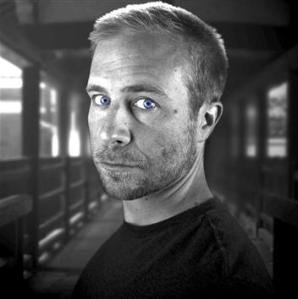
Today’s interview is with indie author Becket, whose books include The Blood Vivicanti series and the Key The Steampunk Vampire Girl books, including the recently released The Tower Tomb of Time. When not writing, Becket works for author Anne Rice and is supplementing his education with a degree in psychology.

I had the chance to email Becket and learn a little bit about him, his books, and what it’s like to work for Anne Rice. It was definitely an enjoyable correspondence.

RU: So Becket, you’ve had quite the interesting life, working as an author, working for an author, and at one point you were a Benedictine monk. Makes me curious about what else you’ve done, so could you give us a brief history of yourself?

Becket: I entered the seminary when I was 21 because I wanted to deepen my relationship with God as well as be a minister of hope, faith, and love. I spent three years in the seminary, during which time I also finished my BA in music composition. Then in the summer of 2000, I entered a Benedictine monastery, St. Joseph Abbey in Covington, LA. The spiritual charisma of the monastic life appealed to my personality type. The monks lived a very silent life, guided by two principals of work and prayer. During my first year in the monastery, Anne Rice requested a harpsichord for a book signing in New Orleans. We monks had a very nice one; and the abbot asked me to deliver it because of my musical background – I had studied the instrument in college, along with several others. That was when Anne and I first met. We developed an email rapport over the next few years while I was earning my MA in theology. When I completed my degree in 2005, I decided that it was time for me to re-enter lay life and, needing a job, I emailed Anne, asking her fi she had a job on her staff for a former monk with a few degrees. She replied with a job offer. I’ve been with Anne ever since, studying the craft of writing under her guidance while also earning an MS in psychology.

RU: What is it like, working for Anne Rice? Besides the amount of jealousy you must receive from fans including myself, I mean.

Becket: What is it like, working for Anne Rice?

Working for Anne Rice is like working for a childhood hero. I first read Anne’s books when I was a teen. Being a lonely adolescent, an outsider, Anne’s words spoke to me powerfully – because her words have a wonderful way of showing empathy for the outsider/reader. Many days she and I talk about literature and the book publishing business. It is a continual learning experience. Every day I learn something helpful and significant about my writing, about the publishing of my own books, about my own capacity for problem-solving, about many things. But every day is a new experience because every day I’m presented with a new challenge. Before I started working for Anne, I had never used Photoshop. So to assist her as best as I could, I learned many new skills, such as photography, shooting video, proper lighting, sound engineering, etc. I also learned several programs in the Adobe Creative Suite, namely Photoshop, Illustrator, and even Premier Pro and After Effects. Most of those programs I use every day, whether it is creating an app for Anne, or posting an image, or editing a video for Youtube. And today all those programs have helped me greatly in my own work; they are invaluable book publishing tools. A successful indie author cannot live on Word alone.

RU: Tell me about it. iMovie and Photoshop have been great tools in the past for me. Now, you’re new book is the latest adventure for your character Key the Steampunk Vampire Girl. Tell us about her and the new book.

Becket: Key’s new adventure picks up where the last book left off: Key has just escaped from the Dungeon of Despair. Yet unlike the last book, which takes place over the course of 250 years, the course of this book happens in a single night. Key gets to do what she has not done in over two centuries: She gets to explore the City of the Dead. She rides a Hobbeetle, she meets the Worm King, she visits the Grave of the Grim Goblin, whose not as grim or dead as some people might think, and she does so much more! Ultimately she finds herself at the Tower Tomb of Time, which allows her to visit the moment when she was first made a vampire. She discovers the mystery behind her mom and dad’s disappearance, as well as the reason she was taken to the City of the Dead in the first place. In other words, The Tower Tomb of Time explores questions that were raised in The Dungeon of Despair.

RU: Some people would hesitate to write a vampire novel these days when most people associate vampires with Twilight. What made you decide to write about vampires?

Becket: Before there was Twilight, there was Anne Rice. She was ground breaking (and indeed she still is) in the sense that she made the vampire a Byronic hero – someone whom we could easily identify with. Moreover, being a vampire isn’t the story of Key the Steampunk Vampire Girl – which is fundamentally the case with Bella, the heroine of Twilight. Bella actively seeks to become a blood drinker. Key, on the other fang, like Anne’s Louis or Lestat, never wanted to be a vampire at all. Becoming what she is happened to her, and then lots more terrible things happened to her, and so she has to make the best of her situation. That kind of narrative ambience is what I strove to create when I wrote Key. I hope readers will associate with her story and say to himself or herself, “I know how she feels being in the Dungeon of Despair, or confronting the Worm King, or revisiting a past that was hitherto forsaken.” Additionally, I hope readers would also feel inspired by Key’s successes and victories over personal demons. Key’s story is a coming of age story.

RU: What is your writing process like for you?

Becket: Generally my process begins with an idea, which usually comes to me while I’m writing another book. I write down that idea, and if it stays with me for some time, I will jot down notes about potential plot development, prose style, themes, and so on. When I finish one novel, I immediately begin another; there is no waiting for me. I write every day. It is a routine. And the routine for starting new novels is grounded in two goals: (1) the long-term goal of my book, and (2) the short-term goal of my daily writing. My long-term goal is the size of the book that I want to write, and I generally determine that by comparing it with other books. For instance, I know that Alice’s Adventures in Wonderland is about 25,000 words. So if I am seeking to create a children’s story, such as Key the Steampunk Vampire Girl, I will make the long-term goal of my first draft comparable to 25,000 words. My short-term goal is the amount of words that I will write in a day. On average my goal is at least 1000 words a day; usually I write more, often twice as much; and some times I write fewer words. The point isn’t perfection: It’s progress. As long as I am writing, I am coming closer to the completion of a book.

RU: I admire your tenacity. Now what are some tips you might have for other self-published authors, such as myself, on writing and getting your work out there?

Becket: The beauty of indie-publishing is in the word “indie” – independent. This is a quintessential word to keep in mind because, if a writer gets embroiled in the industry of professional book publishing, that writer would lose some degree of control. The writer would usually not be able to control, for instance, interior or exterior formatting. In other words, you would probably have little to say in the creation of your book jacket. I can’t tell you how many times I have heard professionally published authors complain about their book jacket, how it does not look like the story they told. Other authors have complained about the struggle they have with their editor or copy editor, how important words will be edited out, or how sometimes sentences or pages completely rewritten. There are some authors who want to be controlled like that. And that is good! Great books have been written with the help of excellent editors. But finding such an editor is like finding love in your life: It usually happens when you least expect it. Being an indie-author means controlling every element of your work. I like this, not micro-managing, but being purposeful and meaningful with every element that I produce.

RU: I love that independence too. It’s gone well for me. So what’s next for you, Becket?

Becket: The Blood Vivicanti Parts 5 and 6 will come in March and April. And after that, I will be publishing a book titled, The Door to Heaven, which is about a boy whose life is changed forever when he encounters an old man’s face on the doorknob to the Door to Heaven.

RU: That “Door To Heaven” sounds very Stephen King-ish. Last question: If you were stranded on a desert island and could only take three books with you, which books would you take?

Becket: Well, I am a man of faith and prayer, so I would probably take the ESV Bible (because I like that translation), The Imitation of Christ, and a book of blank pages, so that my mind could fill it up with my own stories.

RU: I love it when authors say they want to bring a blank notebook with them. Shows their true writing spirit, in some ways. Well, thanks for joining us, Becket, and best of luck to you.

If you’d like to find out more about Becket or check out some of his books, you can check out his website, his Facebook page, Twitter feed, and get personally autographed copies from the Changing Hands Bookstore.

Our next scheduled interview is March 31st with author and dear friend Angela Misri, who will be talking about her debut novel Jewel of the Thames. So get excited for that!

I just published my latest post on the blog Self-Published Authors Helping Other Authors. Today’s article is called Stuck For An Idea?, which explores osme of the methods and techniques I use when I can’t think of anything to write about. It’s based on a lot of personal experience, but I think a lot of authors might get something out of it. If you’re interested, please go check it out.

And if you’re an author who’s already self-published or considering self-publishing, please check out the rest of Self-Published Authors Helping Other Authors. It’s written by a variety of authors, myself included, who are dedicated to writing articles to help other authors out in writing and publishing in the indie market. I certainly find it helpful, and I recommend it every time I get the chance. And if you find the blog helpful, please subscribe to posts. You’ll learn tons, and what you learn may help catapult your writing and your career to new levels.

Good luck and enjoy!

This morning I published my first article of 2014 on Self-Published Authors Helping Other Authors, a website I write for that aims to help self-published authors make the most of their options and succeed in self-publishing. It’s also my tenth article for the website, which I’m very happy about.

The article is called Some Tips For WattPad Users, and it’s about–you guessed it–using WattPad. I promise, I’ll leave the topic of the website alone for a while after this post. Well, I did say that if any of our readers on that blog had any tips about using WattPad, I’d publish those in a follow-up article, but…well, after that article. I think I’ve been going on a Wattpad obsession lately, and it’s been showing through on this blog. I hope it hasn’t annoyed anyone. At least not too much.

Anyway, the article is about some general tips for utilizing WattPad, so if you have an account or are thinking of getting an account, please check out the article. And if you’re a self-published author or you’re considering self-publishing, I highly recommend Self-Published Authors Helping Other Authors. It’s a wonderful website with many articles on just about every subject you can think of devoted to self-publishing and it’s run by a variety of authors, myself included, who are devoted to their craft and love helping others out.

All for now. Have a great day, my Followers of Fear.

Normally I don’t wade into censorship debates, but this story caught my eye and I thought it would make for interesting discussion. Now, a lot of authors, especially self-published authors, have noticed that in the past couple of years there’s been an explosion in demand for erotica titles, and many self-published authors are making a lot of money by writing these works, which sometimes involve violent encounters between the characters. And lately there’s been a rising trend in what is known as cryptozoological erotica, which is sexual encounters between humans and legendary beasts such as Bigfoot and others (I know, right?). The example used in the story I’ve linked to is Virginia Wade’s Bigfoot series, which has been downloaded and read by enough people to make me wonder whether I should at least dabble in the erotica genre.

However, authors of these and other erotic works have been finding their works taken off the digital bookshelves by Amazon and other sites as of late:

In October, the online news site The Kernel published an incendiary story called “An Epidemic of Filth,” claiming that online bookstores like Amazon, Barnes & Noble, WHSmith, and others were selling self-published ebooks that featured “rape fantasies, incest porn and graphic descriptions of bestiality and child abuse.” The story ignited a media firestorm in the U.K, with major news outlets like the Daily Mail, The Guardian, and the BBC reporting on the “sales of sick ebooks.” Some U.K.-based ebook retailers responded with public apologies, and WHSmith went so far as to shut down its website altogether, releasing a statement saying that it would reopen “once all self-published eBooks have been removed and we are totally sure that there are no offending titles available.” The response in the U.S. was somewhat more muted, but most of the retailers mentioned in the piece, including Amazon and Barnes & Noble, began quietly pulling hundreds of titles from their online shelves — an event Kobo coo Michael Tamblyn referred to last month as “erotica-gate.” 

The crackdown was meant to target the obvious offenders — ebooks like “Daddy’s Birthday Gang Bang” and others that fetishized incest and rape — but in their fervor to course-correct, the online bookstores started deleting, according to The Digital Reader blog, “not just the questionable erotica but [also]…. any e-books that might even hint at violating cultural norms.” That included crypto-porn. Wade’s sexy Sasquatch, not unlike the elusive hominid beast of legend, vanished without a trace.

Now, there’s been a lot of talk about censorship such as this over the past couple of months. Authors of a lot of works that have been taken down have accused Amazon of not taking a good look at their works and using very vague criteria such as the titles of the books to judge whether or not they are offensive. Amazon’s wording of its policy as to what constitutes “offensive” doesn’t seem to help its case: “What we deem offensive is probably what you would expect.” Giving that people generally have different expectations on what is considered offensive, there’s been a lot of cries that Amazon is only answering to the expectations of a certain segment of its customers. And by having to modify titles or edit their work to be acceptable to these vague standards, they are losing customers and revenue. As one author complained:

Author Emerald Ice (a pen name) — who lives in southern Illinois with her husband, a Catholic high school teacher — is less concerned about offending Amazon browsers than being overlooked by potential paying customers. The first three books in her Alien Sex Slave Series — “Alien Love Slave,” “The Sex Arena,” and “Alien Sex Cove”— were runaway hits, she says. At least until Amazon pulled them from distribution and requested changes, once again citing content guidelines. That’s how “Alien Sex Slave” became “Sidney’s Alien Escapades.” “I hate it,” she admits of the new title. “I came up with it because I was in a panic about the books disappearing.” Her sales have since plummeted, and she isn’t surprised. “If I was a reader searching for hot alien sex books, I wouldn’t look twice at something called ‘Sidney’s Alien Escapades.'”

On the other hand, Amazon and other bookstores like it are private businesses. They can decide what items to have on their shelves and what items they want nothing to do with, especially if a large enough percent of their customers threaten to boycott the site if they hold items deemed “offensive” by whatever criteria these people use. So if Amazon deems a work or works unacceptable and uses no other reason than it threatens their own revenues, then that’s their choice, and there’s not much an author can do to fight back (unless you start a humungous letter writing campaign with a lot of your close author friends and a ton of fans, but that might be difficult to pull off).

Now, my own views on censorship is if a creative work isn’t blatantly encouraging hatred, violence, or other despicable deeds or beliefs, then it should at least be considered as a work allowed to be sold, distributed and enjoyed like any other work. And as much as I don’t like to speak badly about Amazon (mostly because it’s where most of my sales and reviews come from),  I have to admit that they should take a deeper look at their work in order to decide what is offensive and maybe revise their content policy to something that’s not so vague. At the same time, I should advise authors to be careful that the work they write might not be accidentally encouraging rape, incest, or other objectionable acts or could be misconstrued as encouraging those acts. I’m not trying to stifle your creative work, but it might avoid some grief later on if you make sure that someone can’t point to a particular passage of your work and show that it is terribly objectionable.

If you have anything to add to the discussion, please let me know. What do you think constitutes as an “objectionable work”? And do you think what Amazon and other booksellers is doing is justified, or are they overstepping their bounds or being unfair in their attempts to filter out unacceptable works?

Also, that comment I made about dabbling in erotica, in case any of you were wondering: I don’t know how I’d feel about writing an erotica story. If I did though, I’d be honest about it if I decided to publish it, even if I published it under a pen name. Anne Rice did that, and if she can do it, why can’t I? Besides the fact that she’s a huge force in the world of writing and I’m still trying to claw my way up, I mean.

I’ve written another article for Self-Published Authors Helping Other Authors, and once again I’m sharing it with you guys here. The post is called Creating A Great Antagonist, and as you can tell from the title, it’s about creating great antagonists for stories of all kinds (though in the article I kind of focus on high fantasy stories).

If you have a moment, please go check it out. And if you’re a self-published author or you’re interested in self-publishing, please check out and subscribe to the blog. There’s a mountain of good advice on self-publishing, written by authors such as myself and others such as Ruth Ann Nordin, Joleene Naylor, Janet Syas Nitsick, and Stephanie Beman.

I hope you enjoy reading, and if you have any thoughts leave us a comment. We’re always happy for feedback.

Today I logged onto the Huffington Post to check the latest in the news, and I saw a story where a white supremacist found out on a talk show that he’s only 86% white. The rest is 14% sub-Saharan African, which is apparently home to some of the darkest-skinned people on the planet. If I’ve done this correctly, I’ve embedded a video from NewsBreaker onto this post. If not, here’s a link to the article itself.

Shocking, right? And kind of funny, too. According to Cobb, even one drop of black clood makes you black. So sadly, he wouldn’t be allowed in his own “enclave”, were it to actually be set up.

But as much as this Cobb guy and other people who proclaim the (insert race here) race is superior, I’ve got news for them. I’ve learned something recently in my sociology class that I thought was mind-blowing. Apparently “race” as we understand it is a social construction, not a biological thing. It’s something we create in our minds to help us humans categorize, because apparently we love categorizing things.

In biology though, there’s actually little difference between humans of different races. There’s more differences between two penguins of the same species than there are between a black guy and a white guy. And the more scientists look for a biological basis about race, the more they find evidence to the contrary. Even things like melanin content, which determines skin color, and differences in susceptibility to certain diseases, something documented in the various races we’ve created, are determined by a number of traits that all humans share and could occur in people around the world at any time.

Even more mind-boggling is that definitions of race aren’t static: in Brazil, there are around 500 different races, while in the US there are about four or five. And races can changed. Someone from Mexico could be Spanish or Native American, and nobody could see the difference. President Obama could consider himself white if he wanted to, considering his parentage, but he’s black by choice. And not only are the races we define ourselves by subject to change where you go, the traits associated with races can change too:

He not only broke records, he broke down erroneous beliefs.

Before the 1936 Olympics, Americans assumed that because blacks, Native Americans, and Chinese mostly lived in poverty, they were degenerate and inferior in both mind and body (these beliefs never took into account socioeconomic situation, lack of education, or discrimination, even when statisticians published “findings” supporting these beliefs). However, after Jesse Owens took home the gold, race enthusiasts changed their beliefs in order to jibe with Owens’ success at the Olympics. They changed their attitudes to say that because African-Americans had been physically honed for strength and speed while in slavery, their physical abilities were superior, while their brains were inferior to the white man’s brain. I don’t know if Neil deGrasse Tyson plays sports, but that last part is definitely false, and it just shows how fluid beliefs about race are. And just as not all whites are smart or athletically superior, neither are all blacks, Asians, or Native Americans either of those or anything else. Everybody’s different, even as we’re all the same.

And finally, even on the genetic level there’s little to differentiate us from people of different races. If I were to get my blood typed and compare it to others in a worldwide database (and I’m actually looking into doing that, by the way), statistically speaking I’d be just as genetically similar to a Yoruban man as I would be to a Japanese woman or a child in the Amazonian rainforests. So on almost every level, race is not actually biological, but really just a product of our minds.

Reborn City

So why am I writing all this, besides to make fun of the Cobbs guy’s beliefs and possibly blow a few minds? Because all this relates in a strange way to my novel Reborn City. When I wrote the novel back in high school, I still thought there was at least a small basis to differences to races, and that reflects in the novel, where most of the gangs are divided up by race. I didn’t even factor in that there are different subgroups in races, like instead of just all Hispanic/Latino, there are Mexican, Cuban, Dominican, Nicaraguan, etc. I just knew I wanted to include a racially-diverse cast of characters and at the same time show how races work together would always win out over races fighting against each other.

Too bad I find out all this mind-boggling information after the book comes out, right? But now that I’m better armed, I’ll try to be a little smarter about it all. I’ll still include a racially diverse cast, but I won’t write it with the belief that races are homogenous or static or anything. I’ll just have people with very diverse backgrounds and that won’t even be a huge factor in the works I write, but instead just something interesting about my writing style.

However, that doesn’t mean one should ignore race because it doesn’t to exist, or because race shouldn’t matter. The fact is, people still see race as an actual, biological thing, and the belief is the basis of a lot of problems, controversies and discussions in the United States and the greater world. Ignoring it would be like ignoring your health in the hope you won’t get sick; it just won’t work. Instead, one should acknowledge race as a social construction, try to see through it, and if possible help others see through it.

That’s my opinion, anyway. You can agree or disagree as you like.

I’ll try and write a post tomorrow if I can. Until then, good night everybody!