Archive for the ‘Reflections’ Category

The Names Coincidence

Posted: September 18, 2012 in Reflections, Writing
Tags:

I wrote a post not too long ago about the strange coincidence of how the main character of my short story, “Aasif”, has a name that means “apologies” or “forgiveness”. And for those of us who have blogs on WordPress, we might’ve seen the article from Kimberly Packard, “What’s In A Name?” on Freshly Pressed, where she discusses the importance of the names we give characters in our stories (link’s right here if you haven’t read it yet: http://kimberlypackard.wordpress.com/2012/09/18/whats-in-a-name/).

And just now, I found out the name of the main character of the short story I’m writing for my fiction class, Renee, is French for “rebirth” or “born again”, which makes odd sense for a girl trying to establish a new identity for herself after being kept prisoner in a basement most of her young life. I just chose the name because I’ve always thought the name “Renee” carried with it a connotation of strength, like “I don’t care what happens to me, I’m going to get through it!”

I also just checked the name of my main character Zahara Bakur from my novel Reborn City: Bakur is from Abu Bakr, father-in-law to the Prophet Muhammad, one of Muhammad’s earliest followers, and according to the Sunni tradition, the first caliph after Muhammad’s death. I already knew all that from my research into Islam, but I was happy to learn that Zahara’s name means “shining” in Arabic. It makes sense, as Zahara is the main character, and she does “shine” the way for some of the other main characters throughout the Reborn City trilogy. But still, I had no idea when I named her that her name would be so suitable to her!

It’s just weird to me, how I choose these characters’ names based on some aspect or other of the name, and yet there’s a whole other meaning to the same names that I didn’t know about. I’m almost tempted to start looking through every other character I’ve created in the past couple of years just to see if any names have any cool significance I’m not aware of.

But for now, I’m just going to hold off. My short story’s gotten to a good stopping point, at least for this evening, so maybe tomorrow I can wrap it up. In the mean time though, anyone got any funny or interesting stories about characters they’ve given names to and the significance behind those names? I’d love to know.

I said a while back that while partying at a club near campus, I came up with an idea for a story that I could write for my creative writing class. Well, it’s been several weeks since then, and I’m still working on that short story. But let me tell you, it’s changed since the original idea popped into my head. It started out as a story about a girl who thinks she might be from the nineteenth century growing up in the twentieth century and being confused about her identity; then it lost the part where she actually was from the nineteenth century; and now the story, which was originally in first person, is now…well, it’s still first-person, but it’s the main character addressing someone else in the room with her.

There have also been minor changes along the way, things that do not really affect the story as much as these other changes have, but even as I’m trying to finish up the first draft, I’m finding myself amazed that a story still in the writing stages is changing so much. It started out as literary with a touch of supernatural strangeness, but the supernatural strangeness has been cut out and there’s just a literary story that’s unlike anything I’ve ever written before, mostly because I do not really care for literary with notable exceptions.

This makes me wonder about other stories I admire, and if they underwent huge changes in the midst of being written. I know Japanese manga and anime may have many plot changes as the story progresses, but that’s mostly because manga and anime for the most part are influenced by reader and viewer popularity, so a story arc might be added, changed, or cut out altogether in order to bring up the popularity of the story.

But did J.K. Rowling, who made me want to be a writer in the first place, make certain characters more or less prominent than she originally intended, or did Stephen King want to make Randall Flagg the leader of a whole cadre of demonic villains in The Stand? Did Thomas Harris originally intend for the Red Dragon to be a singer with a dark past instead of a sufferer of a cleft palate with a history of abuse and violence? And did George Lucas originally intend something more steampunk than regular science fiction when he first concieved Star Wars?

In actuality, other stories I’ve written in the past underwent huge changes (Ripple had a different ending in the first draft and Zahara Bakur of Reborn City was one of several main characters before she became the main character in my mind). But the scale of the short story I’m working on now (it’s title, for now, is Doll’s Game) is something I’ve never encountered before, so I’m wondering what this will lead to later. Is more change in store for me? Will I ever get a finished first draft? And what else do I have to discover about this story, what hidden tricks will I uncover next while writing it?

Tell me about your experiences. Did a story you wrote change a lot during the writing process? And how so? And did you like this change? Please tell me, I love to hear from others, especially those with more experience than me.

I have an assignment for my creative-writing class: to write a short story and then turn it in at the end of the semester. For the past couple of weeks, I’ve been writing about an orphan girl who finds out she’s not who she thought she was (and for those of you who think it’s a short story I started writing in May that I thought of during meditation, this is a different story, the one I thought of while out at a club one night). For a while now, it’s been slow-going, mostly because it’s less horror/sci-fi/fantasy and more along the lines of literary writing, which I’m not too fond of.

However, today I had an idea of where the plot would go, and what the actions taken by this girl and the places she would go could symbolically mean. Like that, I felt my writer’s block dissolve, the story forming for me in my head. So throughout the day, I’ve been working on this story, passing the minimum number of words required and getting well beyond.

Other stories I am working on that have been plot problems, I’ve been thinking of ways to improve them, and today I thought of ways to fix those too. One story, one involving a psychic girl who’s life is very unlike Carrie’s, I got an idea from an acquaintance on how to make the plot better, involving the girl leaving her home for the first time in her entire life. It should be an interesting story.

And another story, involving a school shooting, I’ve been working with on and off throughout the years. However, the story never gets any better. Today, I saw how it could be fixed. It’ll be a radical change for the story, but it might just work for the better.

Even after publishing a few short stories, I’m still learning about the importance of plot, among other things. Hopefully someday, I’ll be able to teach others the things I have learned. But for now, I’ve got a girl in a short story who is not psychic in the least who needs to realize her life needs a radical change. Talk to you later.

The 9/11 memorial, a tribute to all that was lost…and all that we can build from the ashes.

Many people say they remember where they were when 9/11 happened. I wish I did; I was in the third grade, had a short attention span, and didn’t think of much beyond my own life. Now I see so much more now than when I was eight years old. I see the tragedy of that day, I see the lives lost, and I see that a lot of what this country goes through each day can be traced back to nineteen men who carried out a terrible plan concieved and approved by a man whom the world is better off without.

I like to think some progress has been made since that horrific day. Islamaphobia has been combatted with information of the peaceful nature of actual Islam and with dialogue between Muslims and other groups; our law enforcement and defense agencies are better at dealing with terrorism of all kinds and on all levels; a memorial to those lost has been built, and much of Ground Zero is coming back as well; and with the threat of terrorism recognized, more and more cell leaders are being brought to justice with the passing of time.

However, there’s still much to be done: Islamaphobia, although diminished, still rears its ugly head in this country, and usually finds a medium such as the internet or the news to do it; conspiracy theorists cause endless heartbreak to families and friends of victims by saying that the government, not terrorists, were responsible for 9/11; there has been bickering of a political nature on everything between a new mosque and the 9/11 museum, and sometimes this bickering divides so much it seriously hurts Americans; there are still terrorists out there who hate America and kill for the sake of killing; and there are still those who will find no solace since they lost their loved ones.

Friends, blog readers, countrymen, I ask you to mark this day. Remember it, what has been, what hasn’t been done yet, and what we can do to make sure it gets done. Remember, every single person on this planet has the power to change the world, so take advantage of that ability, and try to remember this day when you go out to change the world.

Have a nice day.

Now, you’re probably thinking, “Rami’s a college student at Ohio State. What’s so important that he wants to share it with us?” If you’re not thinking that, then I’m sorry for trying to read your mind and failing miserably at it.

But back on subject: I was talking with a friend of mine and I told him my short story, Aasif (which, if you have not read, can be found at this web address: http://mobiusmagazine.com/ ) was published over the weekend. Since my friend was right by a computer, I told him the web address and gave him the name of the story.

Now my friend, who is Muslim, saw the title and said, “Did you know that ‘Aasif’ means ‘sorry’ or ‘apologies’ in Arabic?”

No, I did not. Most likely, I got the name from Aasif Mandvi, the Indian-American correspondent from The Daily Show with Jon Stewart, not caring what the name meant. But strangely that name, “Aasif”, makes sense for the character, given what happens to Aasif (and if you still haven’t read the story even though I posted the link above, read it now because there’s a spoiler alert after I close these parentheses): Aasif has to kill a child. Not only that, it’s a child he knows, and the possibility of facing the child’s parents after what he’s done grieves him horribly. He’s also worried because right afterward he killed the warlord Marda’ar, and he wonders if that will have reprecussions on him and his soul.

Now, I won’t get into whether or not Aasif’s problems have solutions; I will say though that I think that everyone has done something horrible, something we wish we could take back, and like Aasif, there’s no way we can. In a way, we can emphasize with Aasif because we’ve all been in his situation before.

Any thoughts on this? Oh, and if you’ve read the story, thanks for your patronage!

It seems only lately we as an American people have begun to realize that bullying is more than just something all people have to go through while in school. It’s a problem, one that should be a crime punishable by law, and if left untreated, it can lead to depression, suicide, and in some extreme cases, violence. The subject of bullying is one I’m all too familiar with: in third grade I was bullied horribly in the form of nasty and ridiculous rumors that my classmates ate up, and eventually I just said they were true in the hope they would shut up and leave me alone (they didn’t). In fourth grade I changed schools, but a few kids thought I’d make a great target for teasing. Boy, did they realize just how wrong they were when little fourth-grade me decided to fight them off!

Why do I mention this story? Because in a strange way, Carrie White from Stephen King’s Carrie is very similar to me. Although my home life was much better than Carrie’s, I was in elementary school, I didn’t have psychic powers, and I belonged to a different religion (among other things), Carrie and I both faced daily torture in the form of bullying, and we both wanted revenge, to lash out and take control of an uncontrollable situation. And in the end we both did, though my lashing out was bloodless and had better results than Carrie’s did.

I hope that when people see any version of Carrie–the 1976 film, the 2002 TV remake, or the new version due out in spring 2013–or if they read the novel, they realize just how horrible bullying is. It’s not just something kids do, and it doesn’t toughen anyone up. It’s a form of abuse and harassment, and if schools are any good at taking care of their students, they will crack down on bullying. If I had my way, I’d require schools across the nation to either show a version of Carrie to the students–ratings and nudity be damned, they see that stuff at home already, so why not show it at school with some moral lessons attached–or make it required reading in middle school. Yes, that early! And I’d include the ABC Family film Cyberbully to further get the point across!

So if you plan on seeing or reading Carrie anytime soon, I suggest you keep in mind what the story of Carrie White can teach us about accepting those different than us. Thanks for reading.

The cover of the original Carrie novel. Oh, does this bring back some fond memories.

In case you haven’t heard, MGM and Screen Gems are doing a remake of that wonderful debut novel of His Highness Stephen King, Carrie. I feel a strange connection with that novel, not just because I’m a huge fan of King, but because I was bullied when I was a kid, so I know what it’s like to want to lash out (and sometimes actually lash out) at the bullies who hurt you. So you can tell I’m super-excited that Carrie‘s getting a third chance at the screen, big or small.

I’d like to devote two posts to Carrie. One will be on what I hope the filmmakers will do with the novel, in comparison to what others have done with the novel. The second post, which I will write in the morning or afternoon, will deal with what I hope people will get from a new film adaptation of Carrie. And trust me, what I’m thinking of, is probably different than what you’re thinking of; they are two very different subjects.

Theatrical poster for the wonderful 1976 film.

Alright, the first film, the one that’s famous, starred Sissy Spaceck as Carrie, and Piper Laurie as Margaret White. Spaceck was very believable as Carrie, though a tad prettier than I expected, while Laurie was freaky as hell as Mrs. White (honestly, I’m soooo glad my mother, who’s a rabbi, is not like her!). The prom scene seemed not as scary as I’d hoped, though that may be because I’m a Generation Y-er, which means I’m used to special effects and whatnot. And of course, Chris Hargensen was a total bitch. 4.2 out of 5, if I had to review it.

The second film, a made-for-TV movie, could’ve done a lot better. Angela Bettis not only looked like a real Carrie, she embodied the role to the point I believed that girl was Carrie. Patricia Clarkson, on the other hand, did not intimidate, but then again what do you expect: the woman was passive, and wore colors other than black. Not scary in the least. The music for that film also was better suited for a Hallmark Channel white-women romantic drama centered around family life, not a Stephen King-based horror movie. There were high points though: not all the characters were Caucasion, and Sue Snell was even African-American, so kudos for diversity, which I think should be looked for in every movie, especially horror with its nearly-always white victims. And the special effects, while not exactly state-of-the-art enough to look very real, were done in such a way that during the prom scene, I had a huge grin on my face from glee. Once again, freaky as hell.

Poster for the flop of a TV remake.

Like I said however, the TV remake could’ve been better, barely getting a 2.9 on my review scale.

Now what I hope from the new movie: we’ve learned by now that Chloe Grace Moretz, the little girl with a punch from Kick-Ass, is playing Carrie, while Julianne Moore, who I’ve seen in a couple of films but never really taken note of till now, is playing Margaret White. Now, as I’m not that familiar with Moore’s work, I’m going to decline to specualte on her in the role and hope she plays a good crazy woman. As for Moretz though…well, she’s a very pretty fifteen-year-old. The make-up artists are going to have to work hard to make her look plain. I’m also a little surprised that they didn’t include an actress who’s maybe a little chubbier so as to be more in-line with the book, but hey, if Moretz can seel it, I won’t complain.

As for special effects…let no expense be spared. This is a movie about a psychic girl with a ton of issues, and the one thing the TV remake did right was make that prom scene scary to behold. So this time around, I hope they can top that: students screaming, flames burning students while scoreboards fall into water to electrocute other students, and Carrie standing in the middle of it all, a melding of the Queen of Hearts and the Red Queen, silently chopping off heads.

Promotional image for the new movie. So far, I like what I’m seeing.


Was that a great metaphor or what?

Two other things I’d like to see: one would be more of a stand-off near the end between Chris Hargensen and Carrie. It just seems a little anti-climactic that Chris and Billy always see Carrie on the road and then get killed while accelerating at her. Can’t Carrie have a few seconds to say, “Very funny, bitch” or something before crushing them? Or maybe just a stare to say, “Our eyes are locked. Here’s my revenge”?

I’d also like to see the inclusion of the subplot featuring Sue’s pregnancy. So far, that hasn’t made it to the films, but I would love to see it happen in this one. After all, it plays a big part near the end of the novel, especially since this is a story centered around blood. Blood starts it, blood is at the climax, and blood should symbolically end it.

By now I’m thinking my words won’t affect the script, but hey, I can hope, right? Let’s see what happens.

Tune in at some point tomorrow; I’m planning on doing some thoughts on the subjects of Carrie and bullying, all before I go to see a movie at the theater near campus.

Bye.

Some Thoughts On Voice

Posted: August 31, 2012 in Reflections, Writing
Tags:

As the days wind down and the exact day when my short story Aasif, being published by Mobius Magazine, draws nearer and nearer, I can’t help but think of what a friend of mine said to me in a conversation last week:

I can’t remember how we got onto the topic, but my friend told me he’d been on my blog and that he thought that I’d become famous. When I said, “Really?”, he said, “Yeah, you write with such confidence. I think you’ll make a great author.”

I was so happy that he’d logged onto my blog (it always warms your heart when you find out a friend’s been on your blog and has thoughts on it, doesn’t it?), that I didn’t think to tell him that the voice I use as a blogger, and the voice I use when telling a story, are two very different things. By voice, of course, I’m talking about writing style, word choice, the sort of things that scholars analyze years after a famous writer’s death and look for in order to make sure it is a genuine work by said author.

I’ve had time to think on my two voices (and that makes me think of split personalities for some reason, but whatever), and here’s what I’ve thought up: my voice for my blog Rami Ungar the Writer is more laid-back. If you were to actually meet me and speak with me, you’d get something like the way I write on my blog when I speak. In my short stories and my novels (which I’m still marketing to publishers and agents, so be patient, all you who want to read them), I write it differently: my tone is more subdued, and I’ll admit, sometimes I think my description of action is a little sloppy. I do think though, that I can describe a scene with a few choice phrases, something that I see as a plus, and I tend to think my character’s thought processes tend to mirror real-life thought processes.

Of course, I’m the only one who’s read my work and my blog, so I’m probably not the best person to ask about my own voice. Perhaps you all, you readers who will find out where and when my short story is published and read it for yourselves, will do a better job telling me about my own voice. Again, just sharing my own opinions and thoughts, so disagree if you wish to.

What’s your opinion on your voice? Do you have one?

And do you have an opinion on mine?

“We must make certain this Declaration of Independence is well-written and professional, since we’re submitting it to the King of England. Oh, and Mr. Hancock, please make your signature a little smaller this time.”

Today, I was asked what it would take to make an excellent submission to a magazine like The Writing Disorder. My first thought was, “They’re asking me for advice? I’m so flattered; usually I’m the one asking for the advice!” So I gave a reply back, giving a few tidbits of advice, but I also told this person I’d write up a post that gave some more tips and advice for submitting to magazines. So Anthony, here’s the post that I promised.

I write down these tips because they’ve been helpful to me in the past. I don’t know if others who read this, especially more experienced writers, will also find this helpful, but if anyone does, that makes me very happy. Also, I will try to stay away from sounding preachy or making it seem like I have all the answers and the reader does not. If I fail in this task, please let me know so I can feel embarassed about it.

Here are my tips for making a successful submission to a magazine:

1. Write, then edit. The basic thing to do is write a good piece of literature, whether it be fiction, creative non-fiction, or poetry. This is the most basic step and without it you can’t do anything else. How to write I won’t get into; all I’ll say is that it takes years of practicing writing and a whole ton of reading to get good at. Editing is also important; you can compare it to finding a geode, and refining the crystals inside so that they’d look nice as pieces of jewelry. It also helps to space some time between writing and editing a draft; I usually wait a couple of weeks or a month to edit a story, because then I can look at it with fresh eyes.

2. Find an appropriate magazine. As you can imagine, there are a plethora of magazines out there for budding and aspiring writers to submit to, especially on the internet. Before submitting though, make sure that the magazine is the right fit for you and your story. For example, a magazine may be a fantasy magazine, but they may be looking for a specific type of fantasy, such as children’s fairy tales involving creatures living alongside people in urban and suburban settings. If you send them a Lord of the Rings-esque adventure story, they won’t publish it and you’ll wonder what they didn’t like about it.

Most magazine websites have guidelines posted on their sites about what they’re looking for in submissions, so read those carefully before submitting. You can also read the guidelines first and then write a story that is meant to comform to those guidelines; I’ve done that before, and have had very surprising results with those sorts of stories.

3. Format professionally. This goes beyond having a nice-looking font and the correct sort of margin-space, though that is important. You want to make a magazine look at your story and say, “This looks so professional; the author must be an experienced writing.” I do this by creating a header before I even start the story: I begin by indicating my first page’s header is different from the other pages’ headers. I then put the words “Word Count” followed by a colon in the top left corner, before skipping to the next line and putting my contact information on the right side of the header. I then exit out of the header and skip down until I’m about a third of the way down from the page before putting the title of my story. On the next page, I re-open the header, write my last name, then a comma and put the page number.

After I finish the story, I put the word count for the entire story on the first page in the header after “Word Count:”. This tends to look good to editors, and has served me well in the past.

If you’re asked to send along a brief bio or even a photo, those can be a little more relaxed. Just tell people what you think they ought to know about you, and then put it down. As for the photo, try and take a photo that gives people an impression of who you really are, but remember, this will be in a magazine, possibly forver, so don’t take any photos you’ll regret.
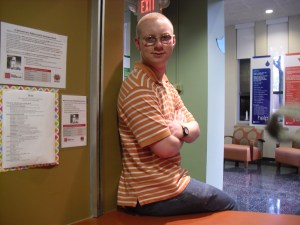
A photo of me at my dorm, and one of severl I had taken of me. I think it gives a cool, writer look, but that’s up for interpretation.

4. Write a good query letter. I cannot stress enough the importance of a good query letter, which is essentially the letter you send the editor saying you are submitting a story for their consideration. It’s basically your first impression, and if your query letter sucks, the editor won’t even look at your story. There are plenty of books and websites that can give you pointers on writing excellent query letters, but I won’t mention them here; I’ll just say, you should write a query letter as if you’re writing what you believe will be the most important work of your life.

5. Expect long waits. Magazine websites and their editors will say they can get back to you on a story within a certain amount of time, but often they’ll be behind schedule on their work, so if the time they say they’ll get back to you passes by and you don’t hear from them, write a letter or email to them. If they don’t respond, write them again until they do. I’ve gotten a few acceptances and plenty of rejections from writing editors, but I’ve gotten them faster than if I’d kept my mouth shut.

6. Don’t give up. If one magazine rejects you, don’t take it that your story is worthless. Take another look at it, edit where you see there could be improvement, and then send it somewhere else. You never know what might happen. After all, that’s how my short story “Ripple” got published, and I despaired for a while that it would ever find a home.

That’s all I can think of at the moment. If you have any questions or need clarification, let me know. I also would like to take this oppurtunity to reccommend “The Short Story & Novel Writer’s Market”, an annual publication from Writer’s Digest that has all these tips and more, shows you how to write a query letter, and most importantly, has a catalog of agencies, magazines, and publishers you can submit your work to. I’ve found it a wonderful resource, and highly recommend it to anyone who wants to find places to submit their work.

All for now. Write to you later.

Believable Stories

Posted: August 22, 2012 in Reflections, Writing
Tags: , ,

Today for my homework from my creative writing class, I had to read some analyses on story-writing, and one of the topics brought up was that one cannot tell a story that is not believable, and if the story isn’t believable, it’s your own fault. This made me think of three things: one, it made me think of several examples of stories I’ve read where the stories have not made any sense to me because some aspect of the story was utter nonsense. Another was my favorite line of advice about creating fantastic worlds: “You can’t go and say, ‘I’m going to write a story where everybody has guns but nobody uses them.’ Under what circumstances could such a world exist?”

And most importantly, it made me think of a story that I’ve struggled with over the past couple of years, a story about a school shooting. I’ve had plenty of problems with creating a story under five-thousand words involving a bunch of bullied teens lashing out against their oppressors but later regretting it. The latest incarnation of the story, titled “Frye Day”, I thought I might have actually fixed that problem. But did I? Nope; a friend of mine looked it over and said the ending just didn’t mesh with him. Funny, the ending is always the part where the meshing has the most trouble meshing right.

I’ll probably return again to this story, and end up rewriting the entire thing to work, though I won’t do it for a while. However, as much as I like the idea behind the story–that violence doesn’t solve problems, especially violent problems such as intense bullying–I keep thinking to myself that while although I know it’s making me a better writer if I create a story every now and then that just doesn’t seem believable, I always think to myself that I’ve failed somehow, like my textbook says I did, in writing this story that couldn’t possibly happen. I’m sorry, I seem to be rambling in that last sentence, did I lose anyone there?

Anyway, I strive to make a story people think is believable, and it would make me feel better if you’ve struggled with this problem too. Let me know.