AI is everywhere these days. And unfortunately, it’s making inroads into the creative industries.
In September, the organization behind National Novel Writing Month announced they would allow participants to use AI programs to write their novels for them (you can see my post about that here). Then HarperCollins, following some academic presses, announced it would be offering some of its non-fiction titles to Microsoft for training their language-learning models (LLMs), AKA the same programs that “write” fiction for people, provided the author consents. And earlier this week, Bookseller reported that AI publishing company Spine would be using AI to publish up to 8000 titles a year, while also charging authors $5000 to use their programs to proofread, publish, and distribute books. You can read both articles on this subject here and here.
This is only confirming many creatives’ worst fears about how AI may be used by companies to make money. After all, you don’t have to pay a program for their work, which means the company keeps all the profit. This could potentially make it harder for creatives to make a living or even a side hustle by writing, making art, editing, make music, or a hundred other things. And after the writers and actors guilds fought so hard last year to keep AI from cutting in on their work!
Now, I’m not necessarily against AI. I think AI has plenty of useful applications. For example, Google’s AlphaFold program is apparently predicting proteins and coming up with new ways to treat some of our worst diseases. And I think many people would be happy if AI made certain aspects of life, such as cleaning our homes, easier. (God knows I would love it if a program could clean my bathtub, rather than me.) However, I don’t think AI should be in the entertainment business!
For one thing, there’s the issue that often, the literature and art used to train the programs is used without the creator’s permission. I’ve heard from plenty of creators who found out their work was being used without permission, which they considered theft (and I can’t disagree). And it’s not just authors and artists dealing with this; some voice actors are actually suing a company for using their voices without their permission (you can watch a news report about it here).
Then there’s the problem with AI trying to create literature or art. It doesn’t actually create anything new. Unlike humans, who can learn from other creators and then learn to subvert tropes or play with ideas to try new things, AI programs can only look for patterns and then apply those patterns. It’s essentially paint-by-the-numbers. And it’s hardly perfect. In fact, it rarely is!
I’ve played around with AI (if I’m going to criticize it, I might as well). This includes writing programs. And they’re difficult to keep on track. You’re constantly having to get the writing back on track because the program forgets something it wrote before. And from what I’ve seen, the language is hardly that deep. It’s pretty barebones. No inner monologues about character feelings or philosophical discussions in-text about the nature of good and evil, love, death, etc. It can get the actions and maybe the conversations, but it can’t do anything like Stephen King’s musings on goings-on in the Lot in Salem’s Lot, or the Savage Garden in the Vampire Chronicles.
AI art is worse, including WordPress’s new AI art generator. (Yeah, that’s a thing now.) I played around with it recently, and while it is fun, it’s still problematic. Sometimes, you get some good stuff, like this image of Batman taking a kid trick-or-treating (something I could see happening in the right comic storyline).

But then you get this Spider-Man art I made.
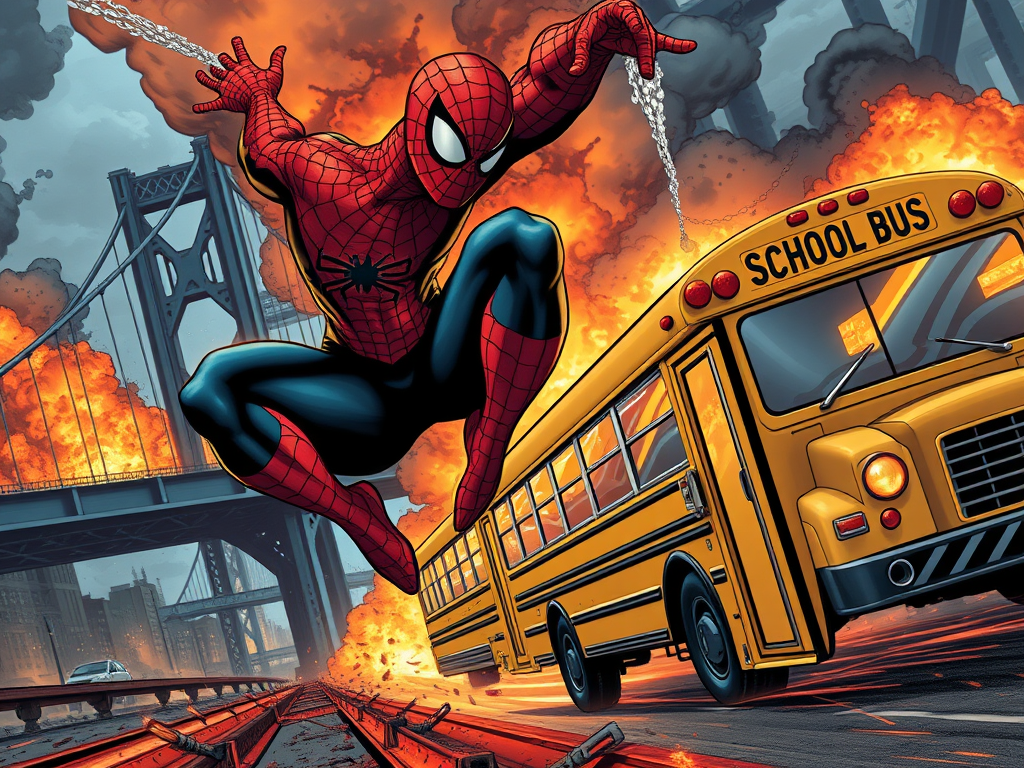
Don’t see the problems? Spider-Man’s spider symbol looks more like a stain on his top, his neck looks like it was twisted around a hundred and eighty degrees, the webbing looks more like chains than webbing (and on the left arm is coming out of the wrong place), and the bus has an extra twenty feet on it that’s being kept up by magic.
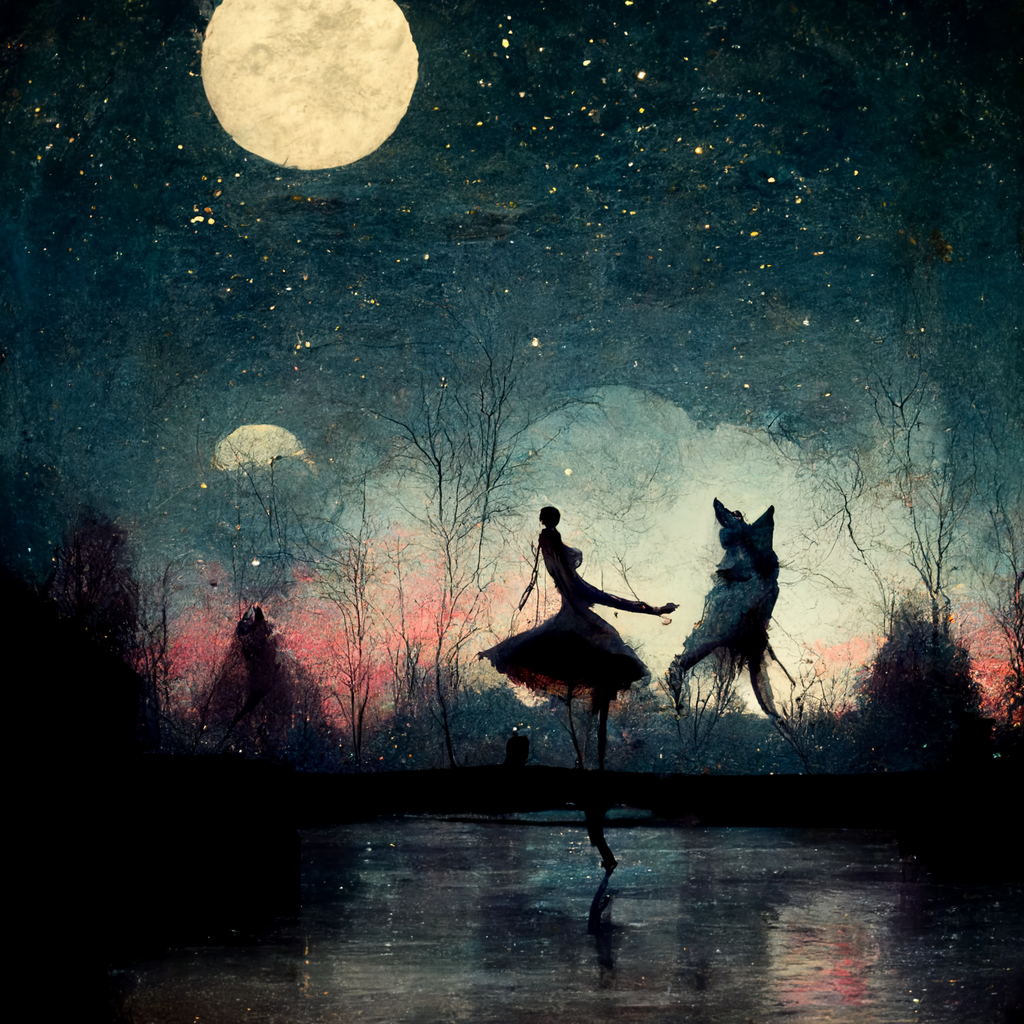
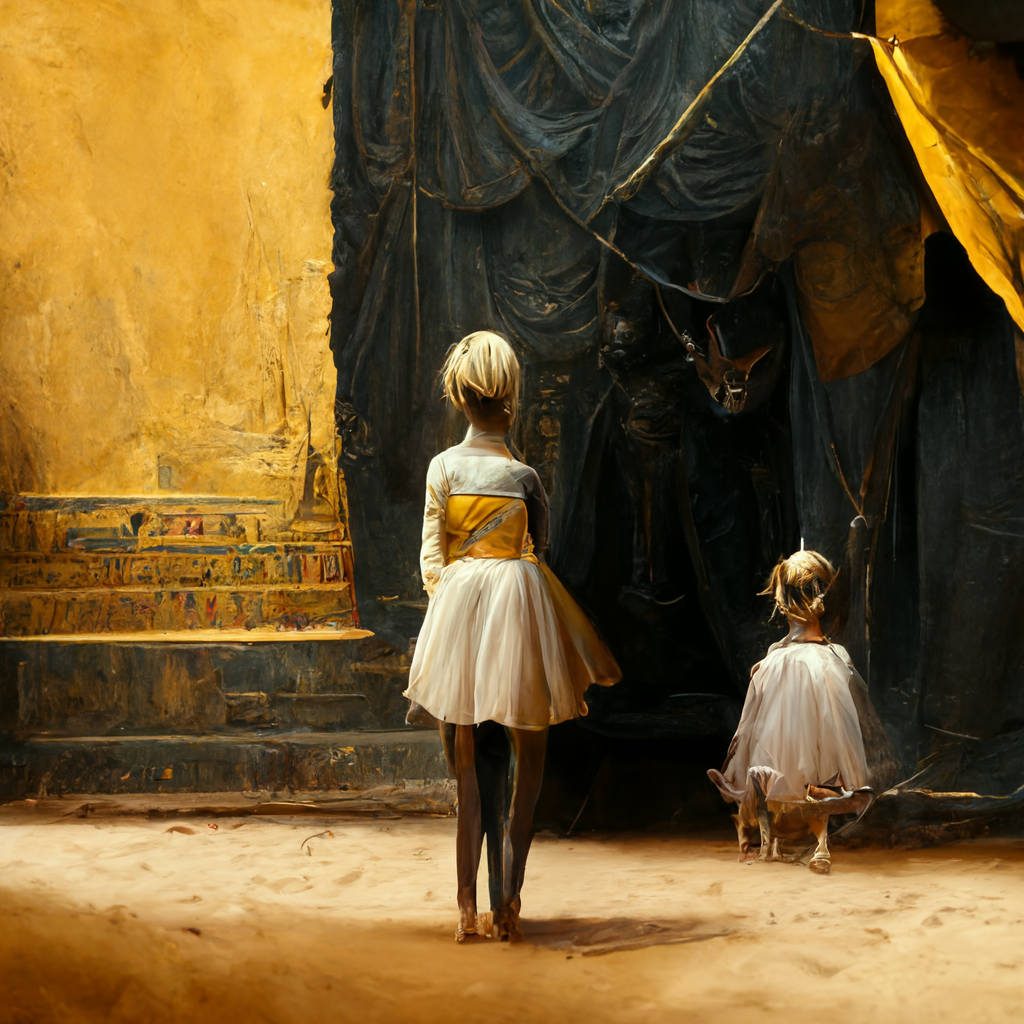
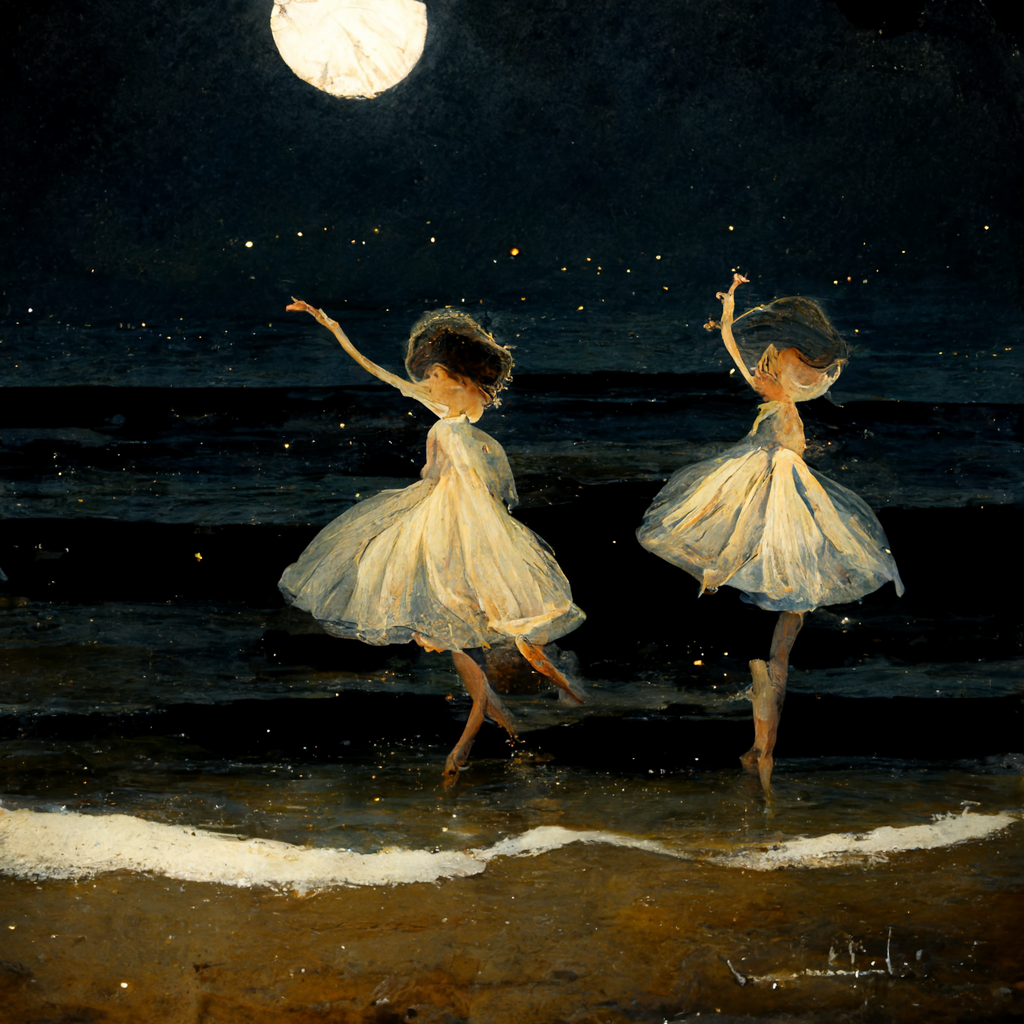
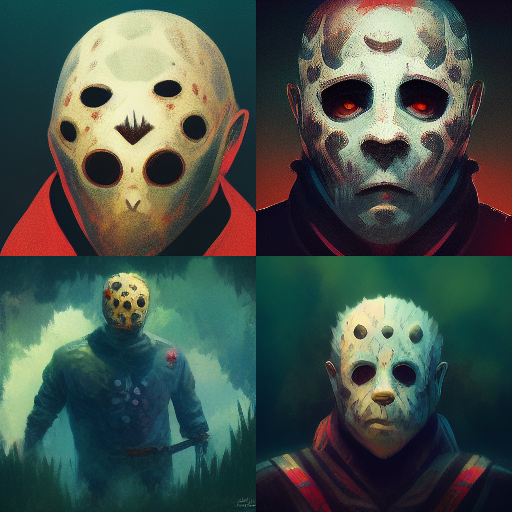
And that’s just one example. I did a bunch of ballet-themed pictures because AI-generated ballet art shows the issues with AI programs about fifty percent of the time (and I like ballet). Half the time, the dancers had extra limbs or missing limbs. And sometimes, the program couldn’t properly reproduce something I input into the prompt. Look at this picture of Jason Voorhees, Michael Myers and Leatherface skipping through a field.
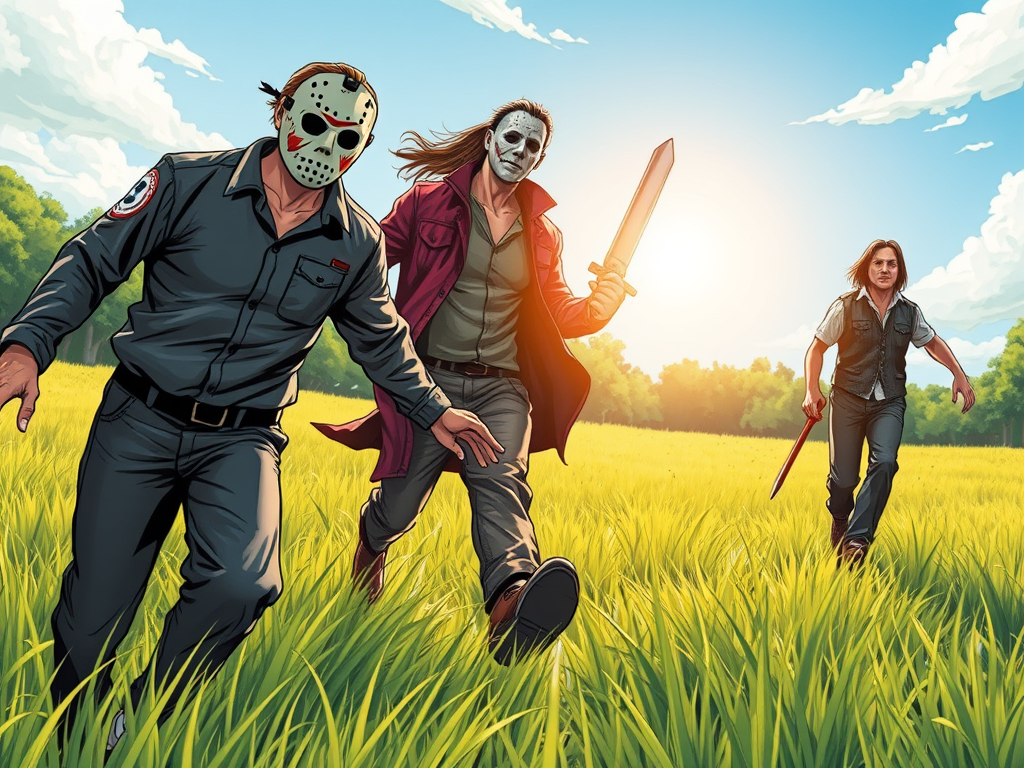
Yeah, that’s not what I was going for. Jason is wearing Michael’s boilersuit, and the other two look like a masked warrior wearing weird make-up holding a sword and…I don’t know. A random guy with a machete? I tried this prompt four different times, and not one got close to what I was looking for.
So, to reiterate, while companies are going all in on AI in the hope that it can make them a profit, they’re working with programs that are flawed, can only copy, and sometimes rely on stealing to get trained. All while threatening the livelihoods of authors and artists.
Well, the good news is, while AI is making leaps and bounds, it may eventually implode. In one scenario, AI will eventually begin to copy itself, flaws and all, leading to the programs producing increasingly subpar creations. In another, such as this video seems to suggest, the facilities needed to store data for AI programs will start to consume tons of water and electricity. Water and electricity that, more often than not, comes from the same sources as regular people’s water and electricity. That competition will eventually move in favor of people unless a compromise or solution presents itself, and may eventually lead to limitations on AI facilities.
Still, it’s a fucking pain that the real creators have to compete with ones and zeros to prove we’re the superior creators. Hell, sometimes we have to go on strike to get the message across! In addition, some creators don’t seem to see the issue. I spoke recently to a creator who didn’t see what the big deal was and even welcomed the challenge from AI. Let me tell you, she was exhausting.
So, what can we do? Well, if you work with publishers, check with them on their AI policies. I asked both the ones I’ve worked with, and one’s already gotten back to me with a definite No. Just simply ask what their policy is on AI-generated material is, so it doesn’t sound accusatory. You can also reach out to your elected representatives and ask them to support legislation that protects creatives over programming.
You should also support creators who don’t use AI. Buy their book and artwork, leave reviews online, and make sure to let people know that those you support don’t use AI. (For the record, no AI beyond spellcheck is used in my work.)
And, as always, make your voices heard. If we aren’t silent, people will notice. And if they notice, they may be swayed to help us.













 Rami Ungar The Writer