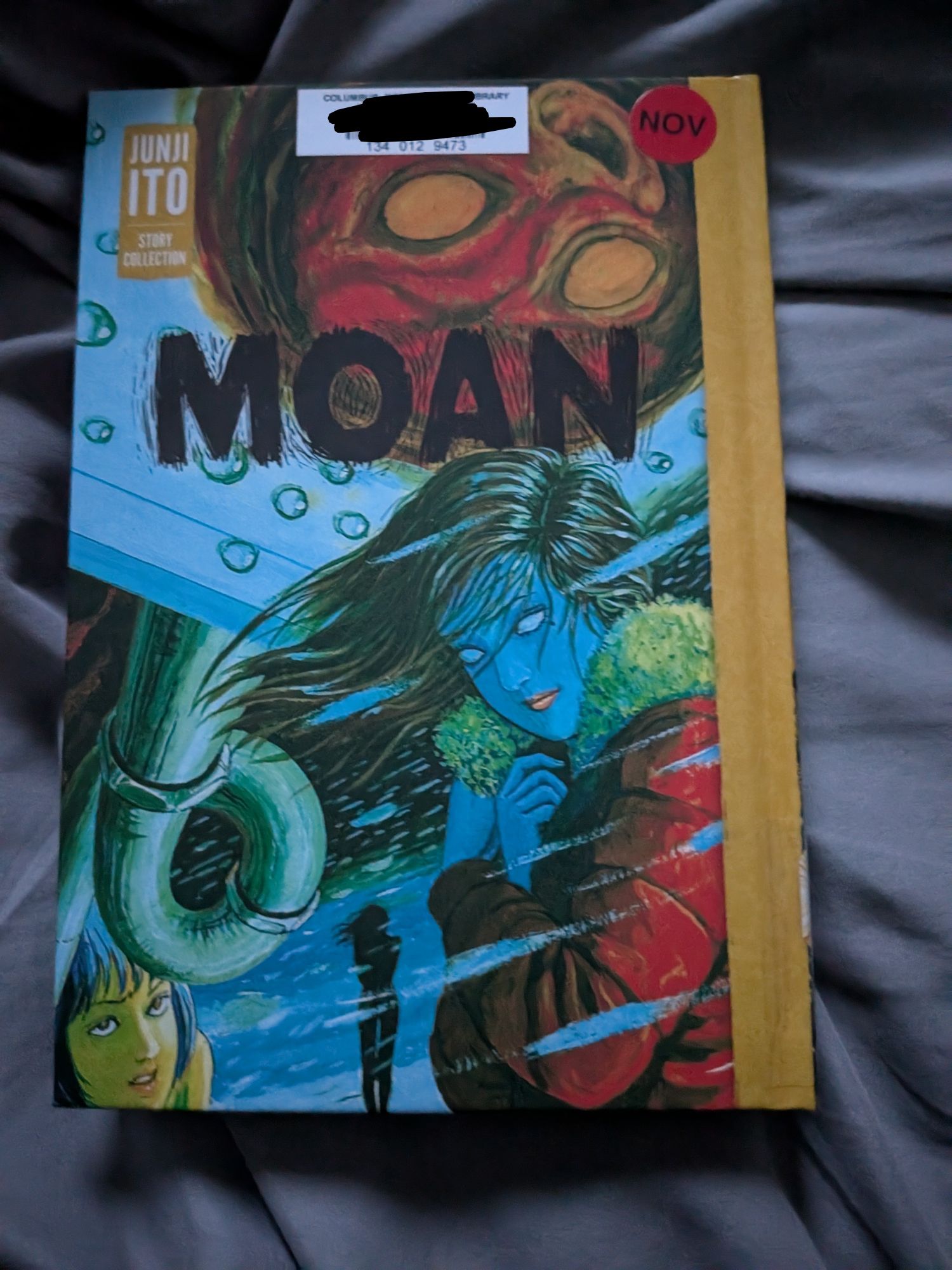
Junji Ito collections, with the exceptions of masterpieces like Remina or Uzumaki, usually rate a 3.8 out of 5 from me. There’s usually some good ones, but the bad ones can really bring down the score of the collection. And with Ito himself admitting in his last collection that as more time goes on, the more he’s scraping the bottom of the imagination barrel, I was braced for a collection full of duds.
In Moan, Ito-sensei gives us four stories of around 60 pages or so, and two shorter ones of about 10-15. And what do you know? This time around, the majority of the stories worked for me.
The first story, “Supernatural Transfer Student,” is fun and imaginative. A small town high school gets a new transfer student, who immediately joins the Supernatural Studies club, which has some possibly-real, possibly-fake psychics. Suddenly, the town is full of weird phenomena right up the club’s alley, and the new kid might be causing it. It’s visually enjoyable and escalates nicely, so I enjoyed it.
The titular story, “Moan,” is about a family whose mother is obsessed with cleanliness to the point of neurotic. When a murder occurs in their home, things start getting weird and a moaning noise comes out of the pipes. Is it the spirit of the murder victim? Or is something else going on here? There’s a sense of claustrophobia and spiraling madness in this story, and the climax is very terrifying. The story ends a bit too abruptly to me, but I attribute that to manga publishers having a limited page count (still would have liked ten more pages to give the story a proper ending). Other than that, the story is chef’s kiss levels of good.
“Blood Orb Grove” is a tale of vampirism that has an interesting twist on the lore of vampires. It’s good, but there’s a bit too much talking and needless info-dumping in the climax. Meanwhile, “Flesh-Colored Mystery” is a great and imaginative story about how much someone’s beauty standards can mess up the lives of others around them. It’s visually creepy and the themes of beauty and abuse really resonate. Perhaps the ending for this one is also a bit too abrupt, but I still enjoyed it.
The fifth story, “Near Miss,” is very short and unimaginative, and is honestly the low point of the collection. However, the last story, “Under the Ground,” makes up for it with an engaging story that has a predictable, but still very well done, twist at the end.
All in all, I really liked Junji Ito’s Moan. On a scale of 1 to 5, I’m giving it a 4.5, much higher than the usual score. There’s some great stories here, and they’re all done with Ito-sensei’s iconic art style. Hell, some like “Moan” or “Blood Orb Grove” might make for great movies, so long as they were live action (at this point, I’m convinced you can’t make a good animated Junji Ito adaptation). Just avoid the fifth story in the collection, and you won’t regret reading it.
You know the drill: Junji Ito releases a new collection in the States; I read it; I review it. And in his latest collection, The Liminal Zone 2, Ito-sensei once again gives us four stories that try to toe the line between the world of human-caused horror and the more supernatural kind. (Plus the complicated relationships between fathers and sons, now that I think about it.)
You may recall, but I was not impressed with half of the stories in the first Liminal Zone (see my full review here). And, as Ito-sensei himself says in the afterword of Liminal Zone 2, he feels he’s having fewer ideas for stories every year. Can what ideas he has work for me this time?
For the most part, yes.
The first story, “Demon King of Dust,” follows a young boy living in what remains of a hot springs inn with his increasingly unstable father and two servants. The father is paranoid about dust, claiming it’s part of a terrible demon that rules over the abandoned resort town where the inn is located. It’s a very freaky story, where every couple of pages reveals more and more strange and disturbing imagery and truths. I love how it just escalates and how you’re left guessing how much is real or how much is in the father’s head.
The second story, “Village of Ether,” is about four college students returning to the small town one of them grew up in, and where a pair of scientists were supposedly developing perpetual motion machines (machines that lack an external power source and are considered impossible by mainstream scientists). However, the town is very changed from when the one student was a kid, and the only remaining scientist is hiding secrets that are about to come to the surface. Again, the art here is imaginative and terrifying, especially the “automaton servants,” and it just keeps getting freakier up until the end, which I would define as “explosive.”
The third story, “The Strange Hikizuri Siblings, Chapter 3: Uncle Ketanosuke,” is the latest venture in the Hikizuri siblings, six strange and dysfunctional siblings who have appeared in previous, increasingly supernatural stories (don’t worry, you don’t have to have read the previous stories to enjoy this one). In this tale, a girl named Hotaru senses a strange aura from the Hikizuri family home and ends up staying with the siblings in the hope that it may explain why she’s always felt a heavy weight upon her soul from early childhood. Be careful what you wish for, because the truth is as freaky as these siblings, and I bet a live-action film on just this one tale would be both hilarious and creepy!
The fourth and final story, however, is the weakest of the bunch. “The Shells of Manjunuma” is about a young man living in an area where the local turtles and crows are considered evil and cursed, and the turtles’ belly plates can predict who will die under mysterious circumstances. Ito-sensei himself all but admits in the afterword that he was really scraping the bottom of the barrel with this one, and it shows. The story feels pretty pointless, which only detracts from some of the very gruesome art.
But all in all, this is a much better collection of Ito-sensei’s work. Whereas The Liminal Zone earned a 2.5 out of 5, I’m awarding The Liminal Zone 2 a 3.8 out of 5. Plenty of great storytelling and scary imagery to match! Just skip the last story and you’ll be sufficiently creeped out.
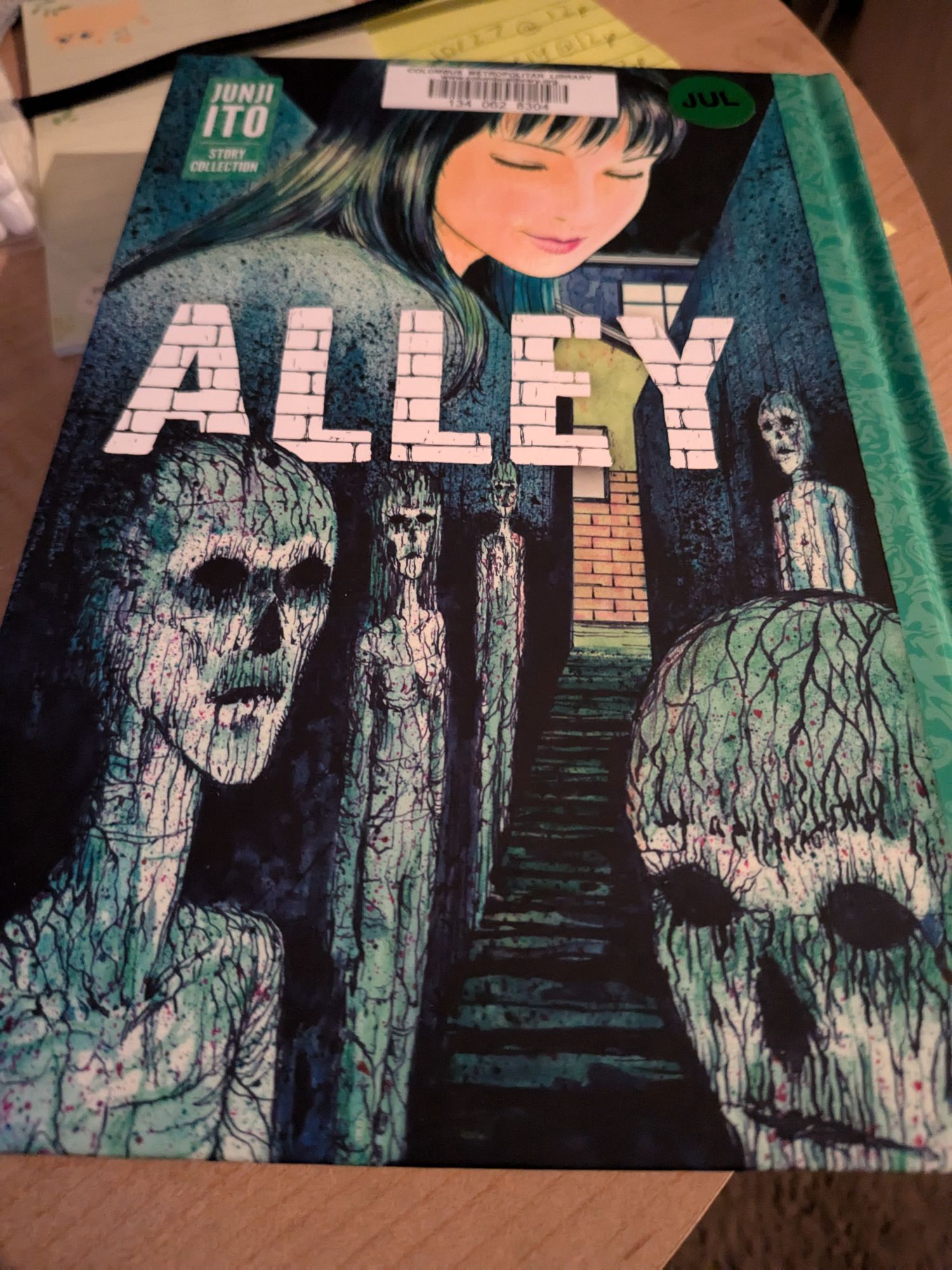
So, I just heard that Fangoria Entertainment is going to make a whole bunch of movies based on Junji Ito’s work. They mainly will adapt stories from his collection Smashed, but I hope Remina or Madonna get adaptations as well, as they are great stories (see my reviews for Remina and The Liminal Zone, respectively). In the meantime, a new collection of Junji Ito stories got translated, so I’m here to review it.
As I say, Junji Ito can be hit or miss with me, but this one was entertaining enough.
My favorite story was probably “Town of No Roads,” which follows a teen girl who goes to live with her aunt after her parents and brothers react the wrong way to a stalker breaking into her room. As if that’s not stressful enough, her aunt’s home has been swallowed up by a giant structure where nobody has any privacy. It’s weird, but you really start to empathize with the main character and the themes of the necessity for privacy really do resonate.
Other stories really struck a chord with me, which was nice. “”The Ward” is a creepy body horror story about several women in a hospital ward who start acting funny, while “Blessing” is a tragic love story with a great twist in the end. “Mold” just grossed me out (as a homeowner, I felt the main character’s pain, especially when it comes to cleaning one’s home). And “Descent” was a weird but engrossing story with a great hook and a mysterious resolution.
Of the rest, they were mostly decent. The titular story, “Alley,” has a great idea, but I feel like there’s too much exposition, which is followed by an ending that could have been a few pages longer. “The Inn” has a great idea and some terrifying art, though the ending kind of puttered out on me, and “Smoker’s Club” has a great idea about tobacco and smoking that would put anyone off cigarettes, though it also could have used more pages for its story. And “Memory” has a great story, though not enough scary art for me (it still would make a great movie).
The only bad story was “Ice Cream Bus,” which other than a reminder about why stranger danger exists, wasn’t much better than its animated Netflix adaptation.
Overall, I think I would give Alley by Junji Ito a 3.8 out of 5. There’s some decent horror in there, so if you’re looking to get into his work, this might be a good choice for your second or third read of his (I recommend picking between Remina, Uzumaki and Tombs for your first and second reads).
That’s all for now, my Followers of Fear. Until next time, good night and pleasant nightmares!
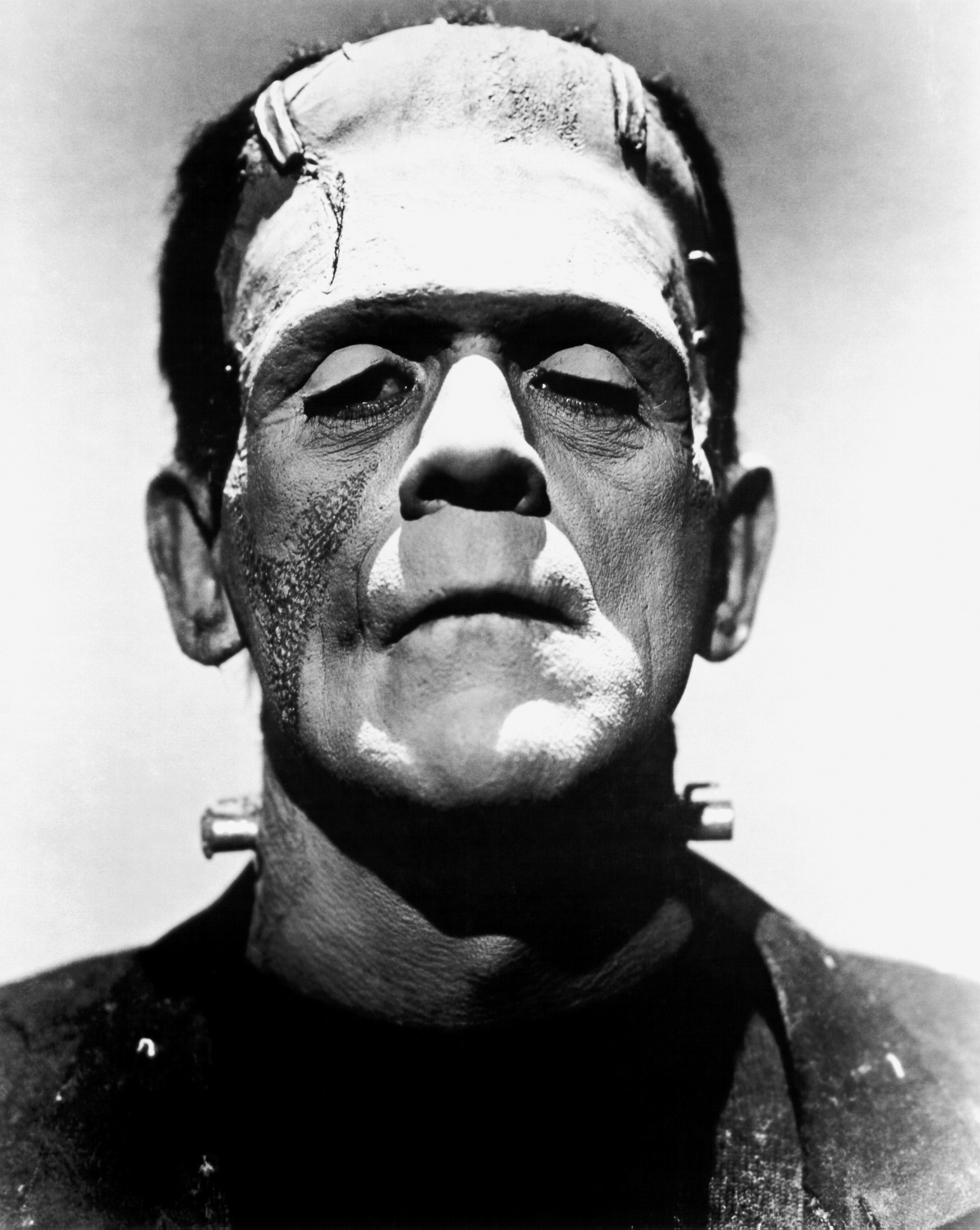
Obviously, horror often centers around the monsters. Saying that is like saying in economics, it’s often about the supply and demand. But still, it needs to be stated. Whether they be demons from Hell, ghosts haunting an old house, a serial killer stalking a young woman during a holiday, a collection of corpse parts stitched together and brought to life through high levels of electricity, or ancient entities from the stars whose forms are difficult to describe, horror is often about the monsters.
And as horror creators, it’s up to us to make each monster we create different from all who came before.
Let’s face it, the people who consume our work expect a little variety (unless you’re working on a series like Supernatural or the Sookie Stackhouse books, in which case your readers would hope there would be some internal consistency in the monster design from episode to episode and season to season). They don’t want the same story every time, and neither do we. So, we write new stories and try to make them distinct from previous works.
Same goes with the monsters we design. Unless we have a special reason for doing so, like a series, it’s important to make our monsters different from story to story. Sure, there may be common characteristics. HP Lovecraft’s monsters were always covered in tentacles and eyes and gloopy fluids (when he could describe them), but you could tell Cthulhu from Yog-Sothoth from Azathoth. And in James Wan’s more supernatural horror movies, the ghosts and demons do share some characteristics, but how they work in the Conjuring franchise is different from how they work in the Insidious franchise.
But the point is, you do have to try to ensure the monsters don’t closely resemble one another too much from story to story. Otherwise, you have people confusing what happened in one story with what happened in another story and being like, “Can you blame me? They’re so similar, they just kind of blend in after a while!”
I was reminded of that this weekend while working on the climax of a killer fairy story (yes, that’s what I’m writing, and it’s probably going to be a novella when it’s done). I was making great progress yesterday, heading towards the climax, and then I realized that the monster the protagonist encounters during this scene resembles one appearing in a different novella. Thus, I had to redesign the monster for the killer fairy story, which I only finalized today.
So, how do you ensure that your monsters are different every time? For the first time in forever on this blog, here are some tips:
Look to mythology for inspiration. Mythologies from around the world are rife with monsters. You have the Hekatonkeries and Typhon from Greek mythology; the Jorogumo and the Onryo from Japan; the Chupacabra from Latin America; and more (did you know some Amazon tribes believe in furry cyclops creatures that protect the forest?). If you look deeply enough, and keep it varied, you’ll find all sorts of interesting monsters you can use in your stories. Just be careful that you don’t do anything that might be considered exploitative or offensive by certain cultures. Nobody needs that kind of bad karma.
Draw from the works of your favorite authors. I’m not saying copy your favorite authors, because that’s plagiarism and is generally frowned upon. But look at the monsters in your favorite novels. What about that monster scared for you? Draw on that and see if you can create something terrifying.
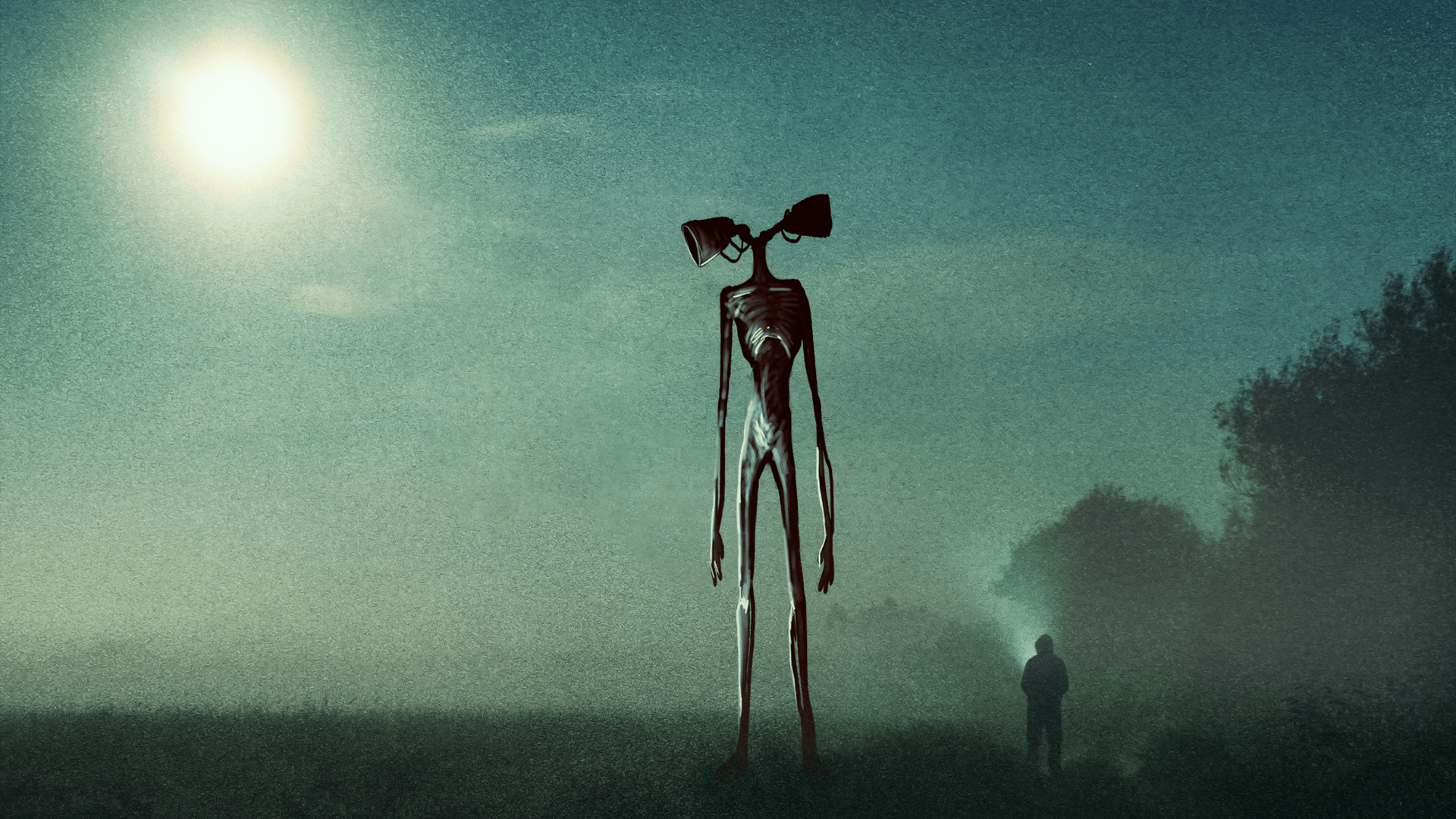
Take something ordinary and make it scary. This is something I see a lot more in horror fiction these days, where writers find a way to make something ordinary and make it terrifying. If you are familiar with the works of Junji Ito and Bentley Little, you know what I’m talking about. Uzumaki by Junji Ito makes spiral shapes terrifying, and I never thought a resort could be scary until I read Little’s Resort. And what about Siren Head, a giant humanoid with two giant megaphones full of teeth for a head? I wonder where that came from?
Look to your own fears and anxieties. Plenty of times, it’s easy to draw on those to create a monster. Have a phobia around rats, snakes, spiders, lightning, death, or your grandfather? Maybe something you remember from childhood struck you as creepy but no one else seemed to think so, like a character in a children’s movie or a toy you were given at Christmas? Use that to form something new and horrifying. You’d be surprised how often that works.
Keep track of your monsters. Nobody knows your stories better than you do, and that includes the monsters. If you’re having trouble coming up with a good monster, look what you’ve come up with before. Go through them like a catalog. Perhaps seeing what came before will help you come up with something new that you’ll enjoy writing.
Siren Head is a great example of taking something ordinary and turning it horrifying.
Coming up with new monsters each and every time isn’t easy, even if you work in multiple genres and subgenres. Still, as creators, it’s our job, and it can be a lot of fun. And when you hear people praising your monsters for how clever the idea is or how terrifying they are to think about, it makes the work worth it.
And hey, don’t get bummed if one monster is too similar to another and you only realize after the fact. The antagonist in The Library Policeman by Stephen King bears some similarities to It, but they’re both still great stories. So, it happens. Nothing to get worked up over.
That’s all for now, my Followers of Fear. Good night, pleasant nightmares, and RUN! THERE’S SOMETHING RESEMBLING A MURDER HORNET AND THE SIZE OF A SMALL DOG BEHIND YOU!!!
What are your tips for coming up with monsters for your stories? Let’s discuss in the comments below.
You know the drill: new Ito comes out, I read it, I write a review.
Mimi’s Tales of Terror follows Mimi, a college student who has a bad habit of encountering supernatural or strange phenomena in the course of her everyday life. The stories are adapted from Shin Mimibukuro, which from what I’ve been able to gather is some sort of anthology of urban legends and spooky stories that may or may not be connected to a series of movies and TV specials. In this volume, Ito takes those random tales and centers them around one girl, who should honestly learn how to be like the Winchesters of Supernatural.
Anyway, Ito’s work can go either way for me. Some of it is awesome, some of it is terrible, and a lot of it is average. Where did Mimi fall? I’d say above average.
Granted, the first three stories are definitely below average. Two of those stories are only a few pages long, so you wonder why they’re included or not fleshed out more. The third, about a woman in black whose height seems to change every time she leaves her apartment, had a good premise but ultimately left me unfulfilled and disappointed.
However, the rest were quite spooky. In one, Mimi moves to an apartment building next to a graveyard and witnesses some stuff that I found a little unsettling. In another, a little girl clings to her because a strange phantom follows her around and leaves ash everywhere. And then, after she and her boyfriend have a fight, Mimi joins a friend in a secret basement with a red spot on the wall that changes appearance over time. It’s all quite freaky and showcases Ito’s love of strange and macabre.
I also got a kick out of Mimi and her friends’ speech patterns. They’re written like they have American southern accents, which probably means they’re from the Kansai area of Japan. (I wouldn’t call it the Japanese equivalent of the south, even if it is in the southern part of the country, but generally people from the Kansai area in anime and manga are given southern accents when the work is brought to North America to differentiate them from folks who speak with a more Tokyo-ish/General American pattern.)
The most unsettling tale, however, is an extra at the end of the volume called “Monster Prop.” In this story, a young woman working for a haunted attraction tries to recreate a scary experience she had as a kid as a prop for the haunted house. However, doing so has some unintended and unforeseen consequences. It’s truly freaky stuff.
On a scale of 1 to 5, I would give Mimi’s Tales of Terror a 3.8 out of 5. If you avoid the stories that are under six pages and the one with the woman in black, you’ll probably enjoy the old school psychological horror vibe of the volume. Give it a shot and see what you think.
I’ve heard certain stories and writers described as weird fiction and weird fiction writers. I’ve also heard of New Weird, which refers to writers whose work is representative of a new wave of weird fiction. And I can think of examples of fiction that is described as “weird fiction.” Yet, I still find myself wondering from time to time, “How do you define weird fiction?”
Most people I’ve talked to–and I’ve talked to many–say “I know it when I see it” when it comes to weird fiction.* However, being a non-human entity and having a very loose definition of “normal” in a world that seems to defy anyone’s definition of normal, that still isn’t enough for me. And I know HP Lovecraft and the Cthulhu Mythos is considered weird fiction, but is that because it involves tentacled monsters?
As usually happens when these sort of questions bug me to no end, I do research. And after talking to a lot of people, reading some articles, and watching a few YouTube videos on the subject, I think I’ve finally come to some conclusions.
For one thing, “weird fiction” isn’t a specific genre like literary, romance, sci-fi or horror fiction. Rather, it’s a designation given to stories and writers who take traditional concepts within their genre and then find some way to turn them on their head and make them weird. Lovecraft and his friends’ fiction was called “weird horror” because it featured ancient cosmic beings with lots of tentacles instead of ghosts, werewolves and vampires. And today, you can call Junji Ito “new weird” because his work features women with their tongues being replaced by snails and their heads becoming the shells, or towns cursed by the concept of a spiral.
And this can apply to all sorts of other genres and kinds of stories. Magical realism, cryptozoological erotica, bizarro fiction, they can all be considered weird. And you can add weird to any sort of story. For example, perhaps you can write a romance story where the couple is actually a single person and their reflection. Or weird Western, where cowboys ride into a wilderness resembling that melting clock painting by Salvador Dali.
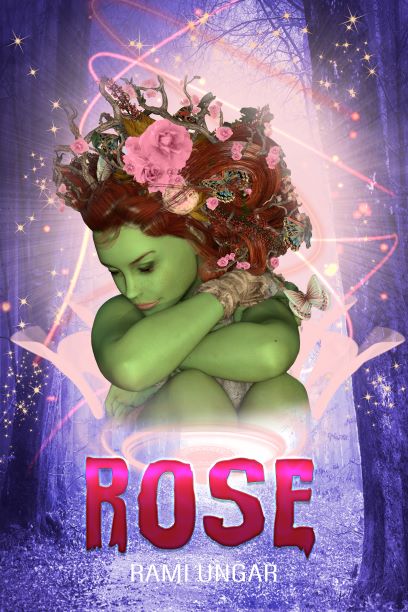
And now that I think about it, my own novel Rose could be considered weird fiction. I mean, I usually categorize it as “fantasy horror” or “paranormal fiction,” but it’s about a young woman turned into a plant/human hybrid (and that’s just the start of her problems). If that’s not weird, then I’m a sea lion (and I’m not).
Apparently, Rose could be considered “weird fiction.” I never realized.
So, how does one write weird fiction? Well, I don’t think anyone sets out to write exclusively weird stories. I think they’re just trying to create something original and that leads to going down a weird route. That being said, if you want to write something weird, here are a few things you can try to make it weird:
Disrupt the real. Weird fiction comes from being weird, so it helps if your story breaks either the characters’ or the readers’ sense of reality. In terms of the latter, you could modify the world in some way so that something weird by our standards is considered normal in the world of the story. One example I can think of is a story I once read where imaginary friends were real entities and an accepted part of the human life cycle, similar to losing your baby teeth or going through puberty. In terms of the former, write the story in a way where you and the characters share a similar reality, but then that definition of real goes out the window in a big way. Think Alice falling down the rabbit hole into Wonderland, or perhaps Little Red Riding Hood’s trip to her grandmother’s house becomes Lovecraftian and surreal.
Tentacles and cosmic elements. It’s a little stereotypical, but as I said, much of what made Lovecraft’s stories weird were the tentacles and the other elements that became the foundation of cosmic horror. So, if it works, why not use it?
Ask “what if I added this?” Plenty of times, we writers create our own stories by encountering another story and thinking of what we would add if we were the ones writing it. Just do the same thing, but think in terms of strange things you can add. And not just to other stories, but to just daily situations. What if you added surrealism to a religious matchmaking search, or if there was some visible way to instantly identify someone as having committed a crime? Thinking along those lines could allow you to write a weird fiction story.
Defy genre. While genres are categories we created, they do play a big role in writing and publishing. If you can write a story that doesn’t fit any particular genre but has elements of several, especially fantasy, sci-fi, and horror, it could be considered weird. There’s a bit more to it, but that can be a clear indicator of weird fiction.
Other than that, the only thing I can recommend is read plenty of weird stories and practice writing them. And while writing weird fiction isn’t exactly necessary for any writer, it can be a lot of fun and lead to some memorable stories. Hell, it may help you write more mainstream fiction. So, why not? Go ahead and get weird with it!
What tips do you have for writing weird fiction? Do you have any favorite stories that are considered weird?
*Fun fact: that phrase was coined by US Supreme Court Justice Potter Stewart in 1964 in his opinion on the case Jacobellis v. Ohio regarding a definition for obscenity, specifically hard-core pornography. The more you know.
Thanks for reading, everyone. It was a long article, but I wanted to get it out before I tried to intentionally write a weird fiction story (usually it happens by accident). I hope you enjoyed a post without a mention of Hannah (which, now that I think about it, has a weird story or two as well).
Anyway, I’ll be back soon enough. There’s some exciting stuff happening this week, after all. So, until next time, my Followers of Fear, good night and pleasant nightmares!
You know the drill. Junji Ito, currently the biggest name in horror manga right now, released a new collection of short manga in North America. I got my hands on a copy from the library, read it, and now I’m reviewing it.
In Tombs, Ito brings together some old and some new stories to terrify us. From a town where tombstones show up wherever someone dies, to a strange neighbor who calls to a young man at night and a town where everyone appears to be anemic, there’s something for everyone in this collection. And all of it is guaranteed to stick in your mind.
This was probably the most solid collection of Ito’s shorts that I’ve read. Not a bad one among the group. Obviously, Ito’s art is always well-done and extremely evocative, with every line made to scare the ever-living daylights to you. And the ideas of these stories are all very inventive. I often found myself envying some of the ideas he had to come up with these stories, my favorites being the titular story “Tombs,” as well as “The Bloody Story of Shirosuna.” The former story is the one I mentioned where tombstones show up whenever someone dies, while the latter is the one about the town being anemic.
Close runner-ups were “Floaters,” a story where people’s inner thoughts manifest physically as these little hairballs that float in the air and speak your thoughts when you touch them, and “Bronze Statue,” which follows an old woman’s obsession with her youth and commemorating it in bronze.
It was also great to finally read “The Window Next Door,” which I’ve only heard about and have never read (I didn’t want to read it illegally online). That particular story has some of the most disgusting and off-putting art I’ve seen from Ito, all without using blood or gore.
The only issue I really had with the collection was that the story “Clubhouse,” which is a ghost story with a fun and clever concept, ended a bit too abruptly for my tastes. I honestly felt like it could have had a better resolution if it had a few more pages. That being said, the story is still pretty awesome as it is.
All in all, Tombs by Junji Ito is a great collection with some amazing and creepy stories worth reading. On a scale of 1 to 5, I’m going to give it an even 5, a top score. Definitely go out and read a copy if you can get your hands on it. Hell, I might buy myself a copy to own if the opportunity presents itself. It’s that good.
Also, I think “The Bloody Story of Shirosuna” would make a great live-action movie. Can someone please get on it? And yes, please do live action, not anime. I’ve sort of given up on anime adapting Junji Ito well (two series have been really sub-par and the Uzumaki adaptation has been delayed forever, so what does that tell you?). And don’t make an American version of it, I’m sure that would ruin it by adding all the wrong elements to make it more local. But yes, please make a live-action adaptation of it.
Alright, that’s all for now, my Followers of Fear. Until next time, good night and pleasant nightmares!
The following review features mention of suicide. If you or someone you know is feeling suicidal or considering suicide, please contact the National Suicide Prevention Hotline by dialing 988 in the United States. Other nations have similar hotlines set up and they are just a Google search away, so please make that call if dark thoughts are plaguing you. Thank you.
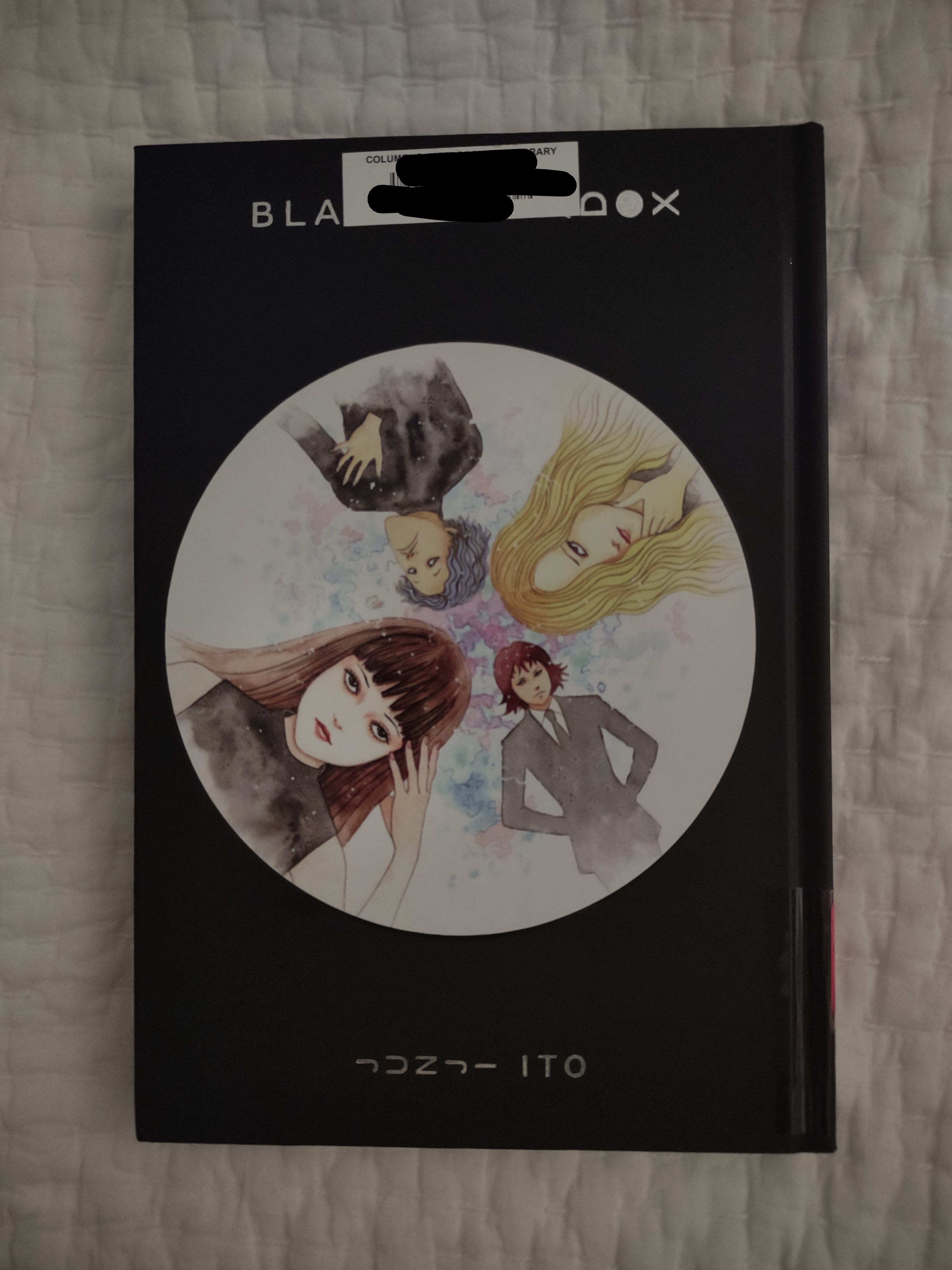
Black Paradox follows four individuals who meet on an online suicide message board. However, almost immediately odd events derail their plans, most notably the discovery that one of their members has a portal in their belly to another dimension and keeps vomiting up precious gems (yes, you read that right). However, the gems contain a dark secret, and their discovery in our world set events into motion that will affect not just the four protagonists, but the entirety of humanity.
I would say that the word that describes this short series is “inventive.” Almost immediately, weird stuff happens and it is generally very freaky. The gems, later called “paradonite,” are also an inventive touch, as well as what they do. I haven’t seen much horror around gemstones unless it’s like a haunted/cursed necklace or something. Plus there’s a robot in there, doppelgangers, and quite a few other things that will surprise you. The paradonite itself is an interesting object, as it has a few surprises associated with it.
The art is also quality. Ito being Ito, you know he’s going to put a lot of effort into his work to create an evocative and at times unsettling illustration. It’s especially effective with sequences of body horror, which are rife throughout this book.
However, it does feel like at times Ito was making it up as he went along, and not in a good way. There are certain threads that are left dangling at the end of the series, and while in horror it’s okay to sometimes leave certain questions unanswered, especially with Ito’s work, it didn’t work too well this time around. Also, I don’t think the topic of suicide was handled as delicately as it could have been. At times, as events unfold, it’s almost brushed off and forgotten as inconsequential.
Also, there’s a four-page bonus story at the end that’s kind of included as a joke. It’s not very good. I’m not sure why it was included.
Despite all that, however, I would call Black Paradox quintessential Ito and worth a read. I struggled on what score to give this one, but I kept coming back to 3.8 out of 5, so I’ll go with that. If you are looking for a strange and surprising horror manga, I would recommend Black Paradox (though Uzumaki and Remina are still leagues better).
That’s all for now, my Followers of Fear. It’s been a hell of a month, but a good month nonetheless. I hope December is just as good and that we all have a stress-free time during the last 34 days and three-or-so hours of 2022. Until next time, pleasant nightmares!
In his latest collection, Junji Ito contains four short horror manga for us to enjoy. Surprisingly, none of them are named “The Liminal Zone,” which is unusual for his collections.
That’s it. That’s the summary of the book.
So, as you all know, Ito-sensei’s work can be really hit-or-miss with me. Some of it, like Remina or Uzumaki, are masterpieces and I feel should be read by horror lovers everywhere. Others, like Smashed or Fragment of Horror, didn’t make that big an impact on me (though I think one of the short stories in the latter inspired one of the stories that’ll be in Hannah). This collection, for the most part, was a miss.
The first story, Weeping Woman Way, is about a couple who come across a professional mourner, affecting the woman in the couple. It is kind of eerie, but it kind of fell flat with me. Too much exposition and not enough focus on the horror, which I feel is a trend with the lesser of Ito’s stories.
The second, Madonna, was my favorite. Taking Catholic veneration of Jesus’s mother Mary to new extremes, the story takes place at an all-girls school where the principal’s wife dresses up as the Virgin Mary. As new student Maria Amano notices weird things occurring at the school, and the attentions of the principal and his wife become more than creepy, she finds herself wrapped up in a terrifying plot centered around the belief that the Virgin Mary will reincarnate one day.
As a cult story, I rather liked it and how it took Mary worship in a rather disturbing direction. I also like how Ito-sensei explored feminist themes in the story, like how many of the female characters equate acting passive and devoted to their god–the principal–to acting like Mary. Even the main character acts very passively and only takes action when her own life is threatened.
The one flaw with the story was that I would have liked a slightly different ending, but overall it’s easily the best story in the collection. I would love to see how a live-action horror adaptation would handle the story. It would likely be an improvement over that other horror movie about twisted Marian veneration that came out last year.
The third story, The Spirit Flow of Aokigahara, is Ito’s take on the famous “Suicide Forest” of Aokigahara, and I did not think it was possible to find a story on that subject I would hate more than 2016’s The Forest (see my review here). A terminally ill man and his girlfriend head to the forest to commit suicide and find a mysterious phenomenon involving ghosts and a mysterious cave. I really have no idea what was up with this story. It just seemed like Ito was throwing darts at a board and trying to see what plot points he could hit.
Though I do appreciate that it made fun of that idiot YouTuber who actually posted footage of a dead body on his channel by having another YouTuber experience something sanity ending.
The final story, Slumber, wasn’t half-bad. A guy believes that he’s been going out and killing people after he goes to sleep. It’s a decent psychological thriller with a nice twist. Plus, the art is especially gruesome.
All in all, this is one of Ito-sensei’s lesser collections, though there is material to enjoy. On a scale of 1 to 5, I’m going to give The Liminal Zone a 2.5 out of 5. If there was more or better material inside, the grade would have been better, but it is what it is. Read for Madonna and Slumber, but skip over the other two.
That’s all for now, my Followers of Fear. I’ll have some more posts out next week, believe me. So until next time, good night and pleasant nightmares!
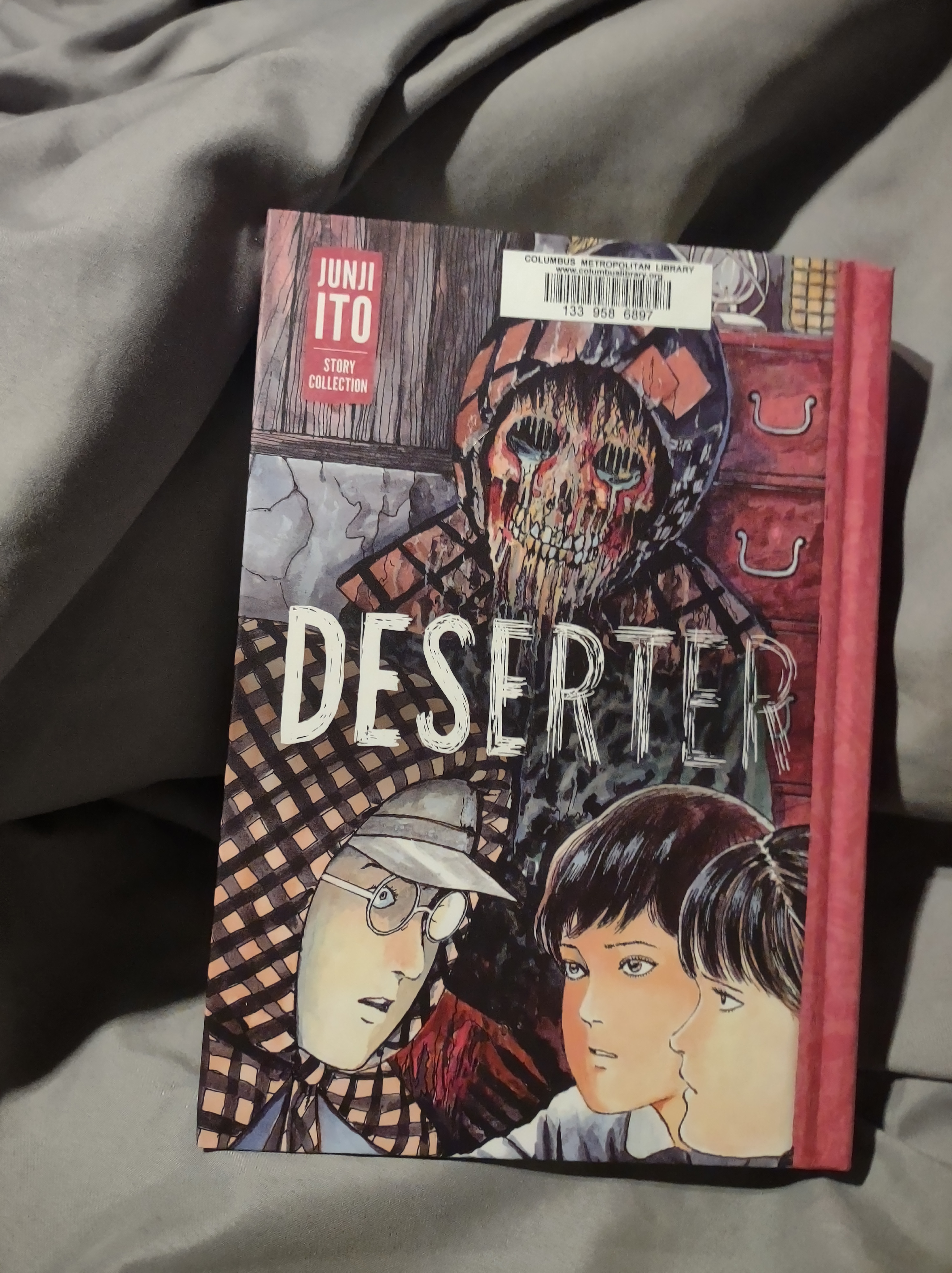
As many of you know, I’m a big fan of manga author Junji Ito. While sometimes his stories can be hit-or-miss with me, there’s no denying the man has a distinctive style that aims to bring out the full horror of whatever story he’s drawing. And his latest release in North America is Deserter, a collection of some of his early works dating back all the way to the late 80’s. You can bet I was curious. What was Junji Ito, the author and illustrator behind such terrifying stories as Uzumaki and Remina like during his early days? I was determined to find out.
Now, as I said, this is a collection of the author’s early works, and with just one exception, the stories are presented in the order they were chronologically published in. And that really gives you a clue on Ito’s evolution as an artist and storyteller. For example, the artwork is a lot rougher and feels more rushed in the earlier stories in the collection. You can see more of a reliance on thicker brushes and the characters are a bit more sketch-like. Ito’s famous for purportedly spending up to ten hours a day on a page with pen and paper, making his artwork as dark as possible. If I had to guess, this would be from the days he couldn’t afford to do that, or wasn’t yet at that stage, and that explains the roughness we see.
The stories in the earlier sections are also pretty rough around the edges. The first, “Bio House,” feels shocking for shock’s sake and has a rather slap-dash kind of plot, while “Where the Sandman Lives” makes little sense. Others, such as “Face Thief” and “The Devil’s Logic” have good concepts behind them but the payoff is either a rushed conclusion or a story that feels like its potential wasn’t fully reached.
It’s not that they’re bad, they were good enough to be published. They just remind me of some of my earliest horror writings, when I was realizing you needed more than a monster to tell a horror story but I didn’t yet have the tools to write a truly scary story. That’s how those stories feel to me.
However, once you get to the last five stories, you can see Ito really gaining experience and the stories improving in quality. “A Father’s Love” still is a little rough in the art department at times, but it has a compelling stories and characters you really feel for (ooh, I shipped those two young kids!). “Village of the Siren” is a bit long-winded, but it has a really cool idea and the artwork to match. “Bullied,” which is a famous story of Ito’s that I’ve been waiting to get to America, is a terrifying story of karma and psychological trauma built around childhood guilt. And the titular story, “Deserter,” is a meditation that asks, “Who is really doing the haunting? Who is really trapped in a haunted house?” I was in awe of that one.
Overall, I’m conflicted on what score to give the collection. On quality alone, I’d give it a 3.3 out of 5. However, the value of the book and how it shows Ito’s evolution is a 4 out of 5. I’ll meet it halfway and award Deserter by Junji Ito a 3.6. If you’re new to Junji Ito, I wouldn’t advise checking this one out till you’ve read some more of his work, particularly Uzumaki or Remina. However, if you’re already familiar and want to consume more of his work, I would totally recommend it just to see how the author evolved and to read those last five stories.
That’s all for now, my Followers of Fear. Life is crazier than the Joker right now, but I’m hoping have some good news in the near future. Either that or you’ll hear about my attempts to open the gates of Hell just so I can get some peace and relaxation.
Until next time, my Followers of Fear, good night and pleasant nightmares.




 Rami Ungar The Writer