Posts Tagged ‘reflections’

I’m going to share with you a story that’s been developing all this weekend, and has had me pretty steamed off every time I think about it. I had one of my blog posts plagiarized. Yes, plagiarized. Someone took one of my blog posts and tried to pass it off as my own work. Anyone who creates something, puts their heart and soul into it, and gives it to the world fears that someone will try to take advantage of their work for reasons we can’t understand. And it happened to me.

I found out about it because I left links to other blogs and blog posts in my post. Whenever someone on WordPress gets their blog or their blog post linked to another blog or blog post, they get a funny little comment in their comment box that shows how the link was used. You know, it looks like this:

[…blah blah blah, this was the link, blah blah blah, are you smiling reading this right now?…]

One of the links in a recent blog post I wrote linked to another post on my blog. So when someone decided to copy and paste the text and pictures from my blog onto a post of their own, they inadvertently pasted in a link to my blog and I was alerted that someone had left a link in the form of one of those comments. I followed the link to the blog of the person who had used the link to my blog, and imagined how surprised and then angry I was that someone was trying to pass off my work as theirs. Because there was the blog post in its entirety, against a green background and with the author’s name at the bottom of the post, trying to suggest he wrote it.

I looked up Word Press’s policy on this and I sent a warning to this guy, whose name and blog I will not mention because A) he doesn’t deserve getting mentioned and B) I’d like to think he’ll learn from this lesson, so a public shaming won’t be very conducive to that. It was suggested by WordPress that I leave a comment asking him to take down the post. I did so, but I never heard back. So I told the DCMA, the authorities who monitor WordPress blogs for this sort of stuff. They were on it and within a day they’d taken down the post and notified me.

I checked the blog for the last time to see if my stolen post was still there. It wasn’t. And I felt such a well of happiness, like all that simmering anger had been swept away.

I’m telling you, plagiarism is a nasty thing to happen to you. But the good news is that I was able to handle it in a mature way, that the guy made no money off of it (which would mean his troubles would be far from over if he had made money off my work), and that now I can put it all behind me. And if, God forbid, any of you get plagiarized, you can  fight back. Not just for blog posts, but for any work you create (helps to get a copyright for things you intend to make a profit off of, by the way).

But right now, I’m glad this business is behind me and I won’t have to deal with it again, at least not any time soon. And for anyone who’s been plagiarized before, you have my sympathy and my understanding. It’s horrible when it happens, but we can fight back. And we become stronger when we do.

Writing is a mostly mechanical exercise, making practiced movements with a pen and paper or seeking the correct key on a keyboard. And putting those words together is part of the higher mental powers given to the human species through millions of years of evolution. But the act of imagination, the power it gives us to bring those words together into a coherent narrative and even tell stories with those words, to me that it is transcendent of all the abilities we’ve garnered from evolution. To me, it’s almost a gift of the soul.

I keep three separate lists on my flash drive. One list has short summaries and blurbs of novels, films, TV shows, comic books, and even video games I’d like to write. I’m up to sixty-one ideas at the moment. The second list gives short descriptions of short stories I plan to write (seventeen at the moment). And the third list has subjects for articles I can write for Self-Published Authors Helping Other Authors (great blog, by the way. Totally recommend it). That’s a total of eighty-eight ideas, and all of them are possible through my imagination. Heck, I wouldn’t have any of the ideas for stories I write if it wasn’t for imagination.

And imagination is influenced by so many things. Everyday life influences imagination, allows it to be transformed into stories. I read an article about efforts to stop forced marriages with metal spoons and I got an idea for a short story from that. When I went to my science fiction class, I had an idea for a novella that I had to blog about almost immediately (see this post for the actual article). Speaking to some friends about the recent death of an actor to suicide, I thought of an idea for a crime novel. When the lights in the Super Dome went out early this year, I got an idea from that too.

And not just events in life fuel the imagination. When I read or watch TV or a movie, I get ideas from them too. Just today, a book I’m in the middle of reading gave me an idea for a short story taking place in Jerusalem. Watching a favorite episode of Doctor Who the other day, I had an idea for a six-book series featuring Agatha Christie (Whovians, I bet you can guess which episode that is). I even have an idea for a movie to bring back a TV franchise I used to love as a kid. And how many fairy tales and childrens books have I taken and turned into new stories that boggle the mind and scare the soul? All this is possible through these works’ influences on my imagination, and my imagination’s influence on me.

Imagination. It is the ability to absorb events or old ideas and–pardon the adjective used–regurgitate it into a new form. It is the application of ideas and concepts in a new light, in a new way. It’s the churning of our subconscious, which spits out, like in a Greco-Roman Creation myth, something new and fabulous and beautiful. It is a force that I contemplate, that I look at and wonder about its complexity.

And perhaps one day I’ll write a story about its impact…oh wait. I’ve already got one or two ideas based on that! Never mind.

The point is, the imagination is something that is such a benefit to the act of writing, the act of living, that without it life would be so much less beautiful and powerful and amazing. It’s given me a ton of ideas, and I hope it’ll give me some more in the future. Because if my imagination can allow me to create a large body of work to leave me behind, even if I don’t get famous off of it all, I’ll feel like I’ve left behind an amazing legacy for the world.

Though if I can get famous I won’t complain.

What’s your view on the imagination and its impact on writing and on life?

Nice to meet you.

I finally sat down this evening, after finishing a whole lot of biology homework, and I watched the movie Warm Bodies. It’s amazing when people can take a tired, old plot and make it seem fresh and new. If you don’t get what I’m talking about, just see the movie. You’ll get it.

But it put me in mind of a zombie story I’ve written myself. Well, it’s not exactly a zombie story. Zombie-like or zombie-ish. If I call it a zombie story, it seems like it gets categorized into a larger body of work that people see as overused these days…and increasingly getting as dumb as its main antagonist. But my short story, “Buried Alive”, actually features some zombie-story elements. And even though I’m satisfied with the ending, I feel…I feel like the story could continue after it finished. And, I realized, I kind of wanted it to continue.

Just one problem: I don’t want to make a bleeding novel out of this story. I’ve got enough on my plate without another novel at this point.

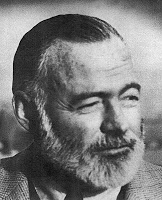
Looks like Sean Connery in the League of Extraordinary Gentlemen.

But then I thought of an old high school memory: in some of my English classes, particularly the AP courses I took when I was an upperclassman, we read a lot of Ernest Hemingway. My teacher just had this thing for Ernest Hemingway. Don’t know why. I didn’t particularly care for him, but we read quite a bit of him. Indian Camp, I think we read twice in my four years of high school.

And I remember, there was a character in many of Hemingway’s stories, a guy by the name of Nick Adams. This guy appeared everywhere, sometimes a kid, sometimes a teenager, sometimes an adult. I once asked my teacher about this guy, and he replied that Nick Adams appeared in plenty of Hemingway’s stories. Two dozen, to be exact. What made Nick Adams so appealing to Hemingway? He was supposedly based on a lot of Hemingway’s personal experiences, so maybe that had a lot to do with it.

In any case, I thought, “Why can’t this short story be my Nick Adams?” It would be short stories I write every now and then, featuring the same world and the same protagonist, all originating from “Buried Alive”. I could even release them in a collection someday, far, far in the future. Who knows what could happen?

In any case, I’ll see what I come up with when I have the time and the energy to write some short stories. There are definitely possibilities here for a series of interconnected stories.

Have you ever written a short story and wished you could write a sequel/spin-off/related story to it? What happened?

Today we had a rather interesting discussion in my Science Fiction and Fantasy class (for those of you new to the blog, yes there’s such a thing. Apparently Ohio State’s English Department has been studying the foundations of nerd culture since 2007. And possibly there’s a grad student in the Sociology Department who’s studying the actual people of nerd culture, but that’s an investigation for another time). Anyway, we were talking about the differences between heroes in science fiction stories from pre-WWII and the stories written after WWII.

In the pre-WWII stories, the heroes were always larger than life, able to overcome evil and fight off any villain with ease. In a sense, they were Supermen without superpowers, and they still won every battle, got the girl, saved the world, and were home in time for tea. Some great examples were John Carter of Mars from the Barsoom novels by Edgar Rice Burroughs and Freder from the movie Metropolis.

But then you have World War II. There you see death camps, POW marches, bombings, jungle warfare, beaches that run red with blood, mortars and claymores and bullets, racism and nationalism, beheadings, and several other bits of Hell made incarnate. Those who came back from the war were given a darker outlook on the world, and those whose talents were more geared to the written word and who in turn enjoyed a little space travel incorporated that new world view into their work. The best examples I can give you of the sort of hero that became popular after WWII are Barton from the short story The Cold Equations and Han Solo from Star Wars. They are not Supermen. They are simply men. They have problems, conflicts, flaws. Barton is haunted by what his job requires him to do when he finds a stowaway on his ship. Solo is looking out for himself and his ship and nobody else, though the Expanded Universe of Star Wars says that he’s like that because his lover died leaving him cynical and jaded. And then he met Jabba the Hutt.

The point is people liked these characters. A lot. They’ve been around since then in some way or another. Look around at science fiction and fantasy stories today. Harry Potter admits he’d be lost without his friends, and as Hermione is fond of pointing out, he’s useless with girls. Katniss Everdeen is troubled by her feelings for both Peeta and Gale and her memories of the Hunger Games, and is only in the situations she’s in so that she can protect her sister and stay alive, in that order…though she does love a little revenge every now and then. Max de Costa from Elysium is trying to be a better man, but with his life on the line he becomes the definition of a survivalist, willing to do anything to live. And Buffy Summers from Buffy the Vampire Slayer has a host of issues that inhibit her life, especially in season six of the series. Jeez, that season was psychologically dark!

And it’s not just science fiction. Other genres of speculative fiction have these sorts of character. My own fiction has these sort of flawed characters:

Zahara Bakur (Reborn City): low self-esteem and a sometimes overwhelming timidity and fear of violence.

Rip (Reborn City): recovering drug addict with image issues.

Snake (Snake): highly disturbed serial killer due to abusive childhood.

Laura Horn (Laura Horn): pathological shyness, social anxiety and general anxiety due to sexual assault.

Why are these characters so popular when they are so far from perfect? I think it has something to do with the fact that’s what they are: imperfect, They care deeply and try hard, but occasionally they fail and they fall and the consequences are terrible. To the readers, that makes them real. We don’t want to read about infallible heroes, because we know all too well that they don’t exist. We want heroes who are a little more like us. They depend on people, they hurt, they need a good smack occasionally to see that what they’re doing is hurting both themselves and their loved ones. We’ve all been in positions like that to some degree in our lives. And that makes these characters relatable to us, and our problems, even if they don’t involve magic or spaceships or fighting in an arena with other young kids.

Not only that, but these protagonists tend to grow in the story. They tend to become better than what they were before. And I don’t mean better warriors or fighters or healers or wizards or whatnot. I mean better people. They learn what’s really important in life, or how to express their love for others, or they come back as true leaders who put the lives and interests of those who depend on them first. In other words, the sort of people we want to be.

I personally prefer using these characters with their flaws and warts and troubles. I used to be more into characters that were impervious, Granted, I was a kid at the time, and all my favorite TV, movie, and book heroes seemed impervious to me. But I’m older now, smarter, wiser, and a bit more aware that the world doesn’t usually produce such heroes. So I like to use the heroes with problems, with something that’s keeping them back. Along with the conflict of the story, it gives me something to grapple with and for the characters to grapple with as they fight onwards. After all, a story is not just getting from Point A to Point B, it’s also about letting the characters grow and become better people.

“I’m not even perfect, and I’m bloody brilliant in all my forms.”

Now are these sorts of characters here to stay? I’m tempted to say yes, at least for the meantime. If you look at the latest movies, TV shows, novels, and comic books, the main characters all have problems of some sort that makes life difficult for them. Watching them grow, take on these problems, and overcome them is part of the appeal of the story. And I certainly plan to use these flawed characters in the future, as do other writers I know. So yes, it’s quite possible these flawed protagonists will be staying for quite a while.

How do you feel about flawed characters? And are there any that you particularly like above all others?

If you see a pun in that title, you’ll realize it’s one of THE worst puns in existence. I’m not even sure why I made it.

Earlier today I had an idea for a story that I’m tentatively calling “Rose”. I’m not going to get into details about it, though I will say that flowers and plants do play a big role in the story, if the title didn’t give it away, and when I write it I’ll probably listen to a lot of songs about obsessive love and stalkers. I somehow came up with it while sitting in my Science Fiction and Fantasy class today (I’ll probably be able to recall the thought process behind it better at a later date, because it’s a bit of a mystery now), and I wrote it down when I got home today.

Now at first I thought it would make a great short story. But then…I realized that this story would be longer than your average short story. Then I thought, “Perhaps it could be some weird, creepy novel.” But that was too long. So I thought to myself, “How about a novella?”

Now, I’ve never had any definite opinions on novellas. I’ve only read a few in my entire lifetime, most of them by Stephen King (anyone familiar with “N.” or “Everything’s Eventual”, by any chance?). I’d never considered writing one before. Short stories, which are the foundations for a career in fiction writing, are hard enough to write for me, and novels are my true passion. Why would I have time for a novella, that strange middle-ground between the art of short stories that is sometimes so elusive for me and the novel that is my freedom and passion?

But when I thought of this story, it somehow clicked that a novella format would be best. I wouldn’t have to struggle to extend the story, and I wouldn’t have to pack it into a neat little package. The story would fit in the format of a novella. And from there I formed my first real opinion on novellas: they are perfect for those stories that can’t fit into the format of a short story but would suffer as a novel.

I’m not exactly sure when I’ll write this novella–though I have an idea or two–but I look forward to writing it, like I look forward to writing all the stories I come up with. Until then, I’ll probably churn this one in the bowels of my imagination until I have a better idea of the story I’d like to write with it. After all, my stories are usually a bit better when I’ve given them a little time to mature in my imagination.

Oh, fun fact before I finish this post: this novella is the 60th idea for a story I’ve had, not counting short stories or articles I’ve written. With the amount of ideas I have, I’ll at the very least never run out of ideas for stories to write, and at the very best I’ll be very prolific. Either way, it’s good news.

Some philosophers and psychologists will say that memory is what makes us who we are, and it’d be hard to say they’re wrong. The retention of past experiences plays a great deal in shaping our personalities, our sense of selves, and how we interpret and react to the world around us. As I’m writing Laura Horn, one of the novels I’m working on at the moment, I’m beginning to understand this concept of memory and what it has over us.

My protagonist and titular character Laura Horn is a victim of sexual assault. Her dark experiences have never been dealt with and she’s still affected by not only the experience of what she went through, but by the memories she has of the assault.

I think for most people, good memories tend to sleep below the surface of our consciousness, always there but not at the forefront of our thoughts until we need them. For example, someone could be driving down a road they hadn’t traveled down in a long time could remember the last time they travelled down the road, maybe with a lover or someone they really liked and what they did that day. Immediately they may feel happy. less stressed, or more excited about their life and their day as the memory returns to the sea of our consciousnesses.

Bad memories though, tend to act like monsters. Fresh memories or those that were formed relatively recent, tend to be worse. They latch onto your consciousness with their teeth and claws, reminding you of their presence, of dark experiences and horrible mistakes, and they never let go, upsetting your day and causing you terror, anger, anxiety, and other negative emotions.

I have more than a few memories I would rather forget, and this is reflected in the way I write Laura’s interactions with her memories. Whenever her memories surface,  she tries to push them away and berates herself for bringing those memories forward in the first place. I feel the same way whenever my bad memories surface, though I learned that instead of pushing them away and berating myself over them, I’ve learned it’s just much healthier to accept the memories as they are and not get too upset over them.

Like I said, Laura hasn’t dealt with her experiences and her memories of those experiences, let alone how to healthily deal with her memories. Because of this, she’s still very stuck in the state of mind she had when she was attacked. She’s terrified of the world around her and most of the people in it. She wishes for the past to change and to return to a happier time, even though she knows this will never happen. Her life is dark and she is terribly unhappy.

I’m hoping as time goes on and I continue writing, I hope I can help Laura move past her experiences to a happier state. To me, this story is more like Laura telling me what her story is about rather than me making up events as I go along, so I’m hoping as time moves along, our collaboration on her tail will yield some positive results.

Until such a time, I have to examine how Laura interacts with her memories of her assault and how those memories be affected as she gets ever closer to the main events of the story, which will change her life forever. And maybe, while doing so, I’ll come to understand my own life and experiences, especially the bad ones, a little bit better.

At Ohio State, the two professors in the English department who are published and celebrated authors (at least locally celebrated) are literary authors. In the two fiction workshops I took last year, the focus was on literary writing. As my undergraduate advisor tells me, “Ohio State is mostly about literary.” And whenever genre is brought up, I hear a lot about how it’s not OSU’s thing, or there’s more of a focus on literary fiction, or that there are no professors who write genre fiction among the staff.

As a genre writer, particularly one of horror, I have to disagree with this. Yes, literary fiction is more focus on character development and on character-driven stories than genre. I am willing to admit that. However, I find it somewhat hypocritical that contemporary genre fiction isn’t worth examination and study in the English department. Yes, there’s a couple of classes that examine science fiction and fantasy, or famous monsters from literature, or YA fiction (I’m taking that first one this semester). But that’s not an acceptance of genre fiction. Ohio State still doesn’t accept genre fiction, at least not any within the past fifty years.

Personally I find that strange, considering how much genre fiction is used in required courses and in general scholarship. I mean, look at it: Shakespeare’s Hamlet and Macbeth are examined in classes all the time. If those were written today, they’d be classified as psychological thrillers with supernatural elements. And A Midsummer Night’s Dream and The Tempest would most likely be fantasy stories.

Ever read Beowulf? That’s in early British fiction courses all the time, and it is fantasy if ever I’ve seen fantasy. Rip van Winkle? Definitely a ghost story, seeing as Captain Hudson came back and put the titular character to sleep for twenty years. Edgar Allen Poe and H.P. Lovecraft? Horror writers and, at least in the case of the former, mystery writers. Frankenstein? The first modern science fiction novel. Dracula, anyone? It’s the basis for the modern vampire legend. Ever read Fahrenheit 451, or 1984, or Atlas Shrugged? They may be philosophical and full of character development, but they are certainly dystopia stories!

So why not contemporary genre fiction, if all this older genre fiction is worthy of attention? Perhaps because it’s popular, or maybe because some of its authors’ fame may not last a hundred years after their death. Maybe the stories haven’t had as much of an influence on literature as others have. Who knows?

But to exclude modern genre fiction just seems wrong. After all, the majority of people see literary fiction as boring or too elite. If English Studies is supposed to examine the English language, how it is used and how it affects the common man, and how it should be used, shouldn’t genre fiction be given as much consideration as literary fiction? Because honestly, genre fiction can have as much an effect on English literature as literary fiction, and sometimes even more.

So don’t exclude it. Include it, with all your academic heart and soul. You may find something there that is worth studying and makes including genre fiction more than worthwhile.

Catalyst: like a line of dominoes.

According to Wiktionary.org, a catalyst is, when used in literature, “an inciting incident which that sets the successive conflict into motion.” In other words, fiction, which is reliant on a conflict of some sort for the story to occur, cannot exist without the catalyst that starts it all.

I’ve been thinking about the catalyst for a while now, and I’ve come to believe that the catalyst is actually a pretty interesting and underappreciated element in fiction writing. Imagine what would happen if Katniss Everdeen had never volunteered to take her sister’s place in the 74th Annual Hunger Games and instead of Peeta, Gale had gone to the Capitol? There would be no story. Katniss would somehow go on with her life after a period of depression, and maybe even still get together with Peeta at some point, but would anyone really want to read that? That single catalyst, Katniss volunteering to save her sister and Peeta being selected to go with her to the Capitol, is what makes the story interesting, that draws us in and makes us want to see how events unfold.

And the catalyst for a story can take many forms. It’s usually the first thing you learn in writing any story. In a romance story, it’s usually boy and girl meet for the first time. In a mystery, it’s the occurence of a crime that needs to be solved. In stories like The Adventures of Huckleberry Finn or The Hobbit, where a journey is prevalent in the story, it’s that inciting incident that causes the need to go on a journey that gets things going. In a zombie novel, the catalyst is (obviously) the appearance of zombies.

You look at any story, you’ll identify a catalyst. Heck, my own stories all rely on the catalyst. In my WIP Laura Horn, the catalyst is the titular character recieving a particular item that causes her to be the target of a government conspiracy. In Snake, the loss of something important to the main character is what causes him to beocme the Snake. And in Reborn City, events that happen to the founders of the Hydras about a year and a half before the story even starts serve as the catalyst.

And speaking of RC‘s catalyst occuring a year and a half before the story starts, you can find plenty of stories where the catalyst to the story occurs a long time before the story starts. For example, for years Harry Potter fans couldn’t identify why Voldemort wanted to kill Harry, thus causing the whole story that would be Harry’s life, but after Book Five, they realized the catalyst for all of Harry’s life was Professor Trelawney’s prophecy being leaked to Voldemort, thus setting his sights on killing Harry.

“Freud was half-right: the causes of all problems are mothers and prophecies.”

Of course if you want to get technical with it, the story began in 1925 when Voldemort’s mother used love potion on Tom Riddle Sr, leading to their elopement, Voldemort’s conception, and his birth. But I digress. The point is, a story can rely on events that occurred years, decades, or in some cases centuries before the start of the actual story to act as the catalyst (I’m thinking of The Lord of the Rings trilogy when I say centuries, by the way). It’s actually a little mind-boggling, if you think about it.

So what more can be said about literary catalysts? Probably a lot more than I could probably come up with, especailly in a blog post. But to finish this post, I’d like to say that without the catalyst, the fictional stories we love so much, despise so much, debate so much, examine so much, and write fanfics to so much, just wouldn’t exist, and I think our world would be a lot less interesting to be in.

The other day I was daydreaming, brainstorming, and reflecting on a number of subjects (one of the lovely things about me is that my head is in the clouds about half the time). During this particular brainstorming session, I thought up an idea for a novel where half the story is set in an insane asylum. As I wrote the idea down, i thought to myself, “Asylums are great places to set a horror story”.

And that’s when my head exploded with an idea for a blog post. And after the mess was partially cleaned up, I started thinking of all the reasons why someone would want to use an asylum for the setting of a story, especially a horror story. I realized that asylums can add many layers and aspects to a single story in terms of character development, plot points, build-up and suspense, and a variety of other reasons.

I will try to list as many of these aspects and layers as possible in this post without boring you. If I help anyone come up with an idea for a story, then I’m happy to be of service.

Okay, reasons why an asylum is a great location for a story. Here we go:

(The following post will use the terms “asylum” and “mental hosptials” or “mental wards” interchangeably. We apologize for any confusion regarding this flexibility.)

American Horror Story: Asylum’s own Briarcliff Manor. You go in…but you never come out.

1. It’s closed off to the outside world. Asylums and mental hospitals–heck, even menal wards–are like their own little words. No one can get out without express permission from someone in power or without a daring escape plan involving car chases, guns, and possibly a hidden underground tunnel from when the asylum was a TB hospital. Within the hospital itself, there is a set life that cannot be interrupted by outside forces. It’s a little claustrophobic, if you think about it. Especially when it’s a ward that occupies only one-fifth of a hospital floor.
And the intimacy of such a space–everyone’s problems, neuroses, delusions, paranoias–are apparent in such a small space. The amount of openness and lack of privacy can increase the sense of claustrophobia, almost filling up the area of the asylum with its glaring lack of privacy. Talk about terrifying!

2. Everybody who’s there has something. I hesitate to use the words “crazy” or “insane”, because labels can be damaging. But you get the idea. Everyone put in an asylum has some sort of problem that needs addressing through a combination of drugs and talk-therapy.  It can be difficult to live in such an environment, whether or not you actually are suffering from a mental illness (both have been known to happen). And if weird stuff like demons or magic or whatever starts appearing around you, you can’t be sure if you’re really seeing what you’re seeing, if this is a result of your own mental illness, or if you’re being influenced by someone else’s delusions. It can get pretty freaky, which adds to the terror and mystery.

3. The people in authority aren’t always good or wise. This is true on many points. Sometimes guards and orderlies can be overly rough with patients or take certain liberties with them that can be downright illegal. Doctors may believe that someone is sick when they are not (there have been studies that show that if a normal person went into an asylum complaining of voices, they would be instantly committed and nothing they could do to convince people they were sane afterwards worked, passed off as stubbornness or as a result of the illness). And there have been cases when doctors, management, and owners of asylums have deliberately mistreated patients in order to make the most money from the states and the family of those committed. It’s very sick, but unfortunately all these and more have been known to happen.

The voices in your head. Do they confuse you…or help you?

4. Underfunding can make things difficult. There have been state hospitals for the mentally ill and for those with physical and mental disabilities in the past and today that, due to underfunding, have seriously hurt the people those facilities are trying to protect. There was a hospital in Pennsylvania for the mentally and physically disabled, where they had maybe two nurses for two hundred patients, and believe me there was a lot more patients than that. Because the nurses, bless them for the work they did and with so little pay or help or compensation, were so busy cleaning and getting food to these patients, they never had the time to help some of the younger patients with basic activities, such as learning how to walk. Instead, some of them just stayed in bed 24/7, until they died or became adults.
And that’s just the tip of the iceberg! Imagine how those sorts of problems could shape someone forced to live or work in such a place.

5. Perfect place to do a little reflection. If you want to get your head shrunk at an asylum, then by all means do so. Despite the problems with asylums then and now, they are founded with the purpose to help people sort their problems. I’m pretty sure the movie It’s Kind of a Funny Story was about a kid who used a mental ward to help sort through his problems and combat his depression. Who’s to say your character can’t do the same while s/he has been committed? Surely they could use a little character development while they’re locked up with all the time in the world to examine their minds.

That’s really all I have at this point. If I think of any others, I’ll do a second post. Until then, happy brainstorming. Don’t come up with anything that might cause a mess later.

I may or may not have mentioned it before, but I’m a fan of The Daily Show with Jon Stewart (or these days, The Daily Show with John Oliver, seeing as Jon Stewart is in the Middle East directing a drama). The show makes digesting politics a bit easier for me, the way they lampoon everything that’s happening in our broken political system. No subject is safe or free from exploration, and that can sometimes lead to some very interesting epiphanies on our society in general.

Last night I had one of those epiphanies. The show’s two women correspondents (and considering that every correspondent has at least a dozen different correspondent titles, from tax reform to royal family to fishing and wildlife to weird news, they really are the women correspondents for the show), Samantha Bee and Jessica Williams, did a segment on how people are afraid to talk about race and racism in this country, and how far we are from eliminating it. If I am successful, the video should appear below. If not, I apologize and I advise you to follow this link.

Although very funny, this video shows some incredibly thought-provoking things. For one thing, those who don’t experience racism on a day-to-day racism in New York–those with white privilege, in other words–feel that because of President Obama and other factors, racism is on its way to being eliminated. However those who experience racism on a daily basis–the members of the black panel–have a much more cynical view. And why shouldn’t they? They face discrimination, profiling, problems getting good jobs, and utter cluelessness on the parts of certain members of the white panel. I mean talking about race exacerbates the problem? Black people should be interested in your fashion-related job?

First off, does talking about the things in your life that can cause you depression exacerbate the problem? Therapists don’t believe so, and they’d advise you to discuss it rather than not talk about it. And as for black people not being interested in your job despite the job being fashion, does it seem a little stereotypical that you think that they should be? I mean, there’s more to white people than the clothes they wear, so why can’t it be the same for minorities.

And like the one panelist said, this affects more than just black people. Hispanics face the stop-and-frisk policy too, and crooked police will use this policy to intimidate, hurt, and deport Hispanics unfairly and on bulls**t charges. Muslims, particularly Arab Muslims, face a constant PR campaign to let the world know that only a tiny minority of Muslims actually have radical leanings, let alone terrorist ties or inclinations. And in many areas of the country, the LGBT community has to struggle not just for marriage rights, but for the right to housing, jobs, insurance, security, and other rights that their straight neighbors taking for granted.

And finally, to the fashionista in the white panel, even if an issue doesn’t affect you, you should still take part in it! Why? Because it’s the right thing to do. I’m pretty sure that the genocide in Eastern Europe during the 1940s didn’t affect mainstream Americans, but still it became a part of the war effort to stop Germany. And for a more modern example, though the tsunami in Indonesia, the earthquakes in Haiti and Japan, and the ongoing genocide in Darfur (yes, it’s still happening, and rapes over in that area have skyrocketed with it), we still intervene, even though it doesn’t directly affect us. Why? Because we have a moral imperative to do so.

So even if you’re not directly affected by the plight of minorities because of your race, your religion, your nationality, your ethnicity, your gender, your sexual orientation, or any other factor, you should still try to help. Otherwise, when you’re affected by an issue and nobody’s speaking up for you, you’ll feel pretty ashamed that you didn’t do a single thing to help others out in their time of need.

So let’s start that discussion about race. Here’s a start: racism is still a long way from being eliminated in the United States, no matter what race you belong to or where you’re from. What is something you can do in your community to fight against racism and foster equality?