Posts Tagged ‘weird fiction’

It’s that time again. I have a lot going on, so I thought I would list it now right now. Besides, it’s a good excuse to slip in some reminders about things.

So, without further ado, here’s what’s going on in my crazy life. Enjoy!
Hannah and Other Stories
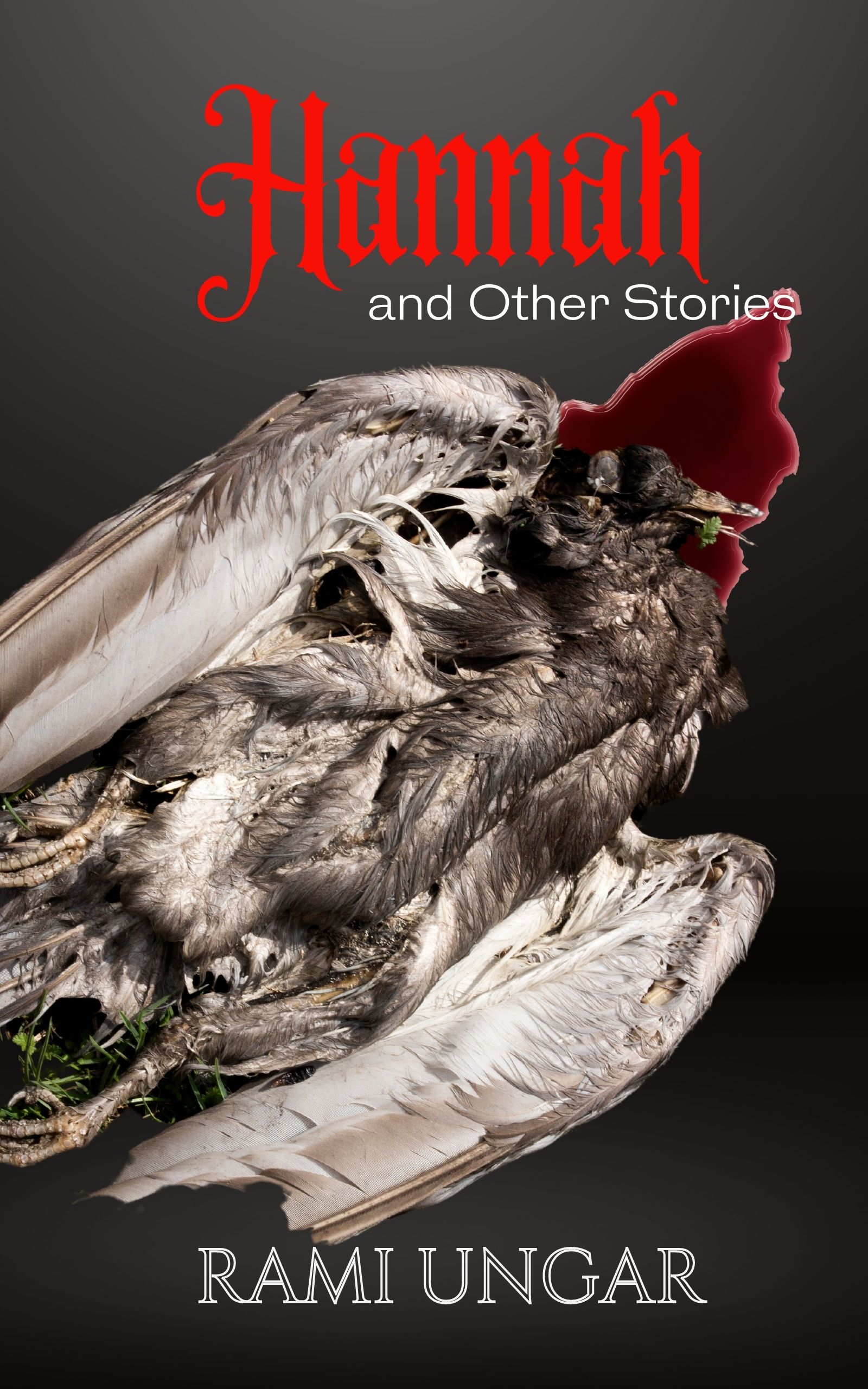
As you are no doubt aware, my new collection Hannah and Other Stories is on its way. It contains tales of ghosts, budding serial killers, and carnivorous horses, among other things, and it’ll be out on September 23rd, while currently available for preorder.

Before we get there, however, there’s a bit more work to do. BSC Publishing Group will be sending me the notes for the last draft any day now, at which point I will quickly edit it. We will then send out the eARCs to the ARC readers, who will hopefully read it and provide some helpful blurbs and reviews that will make people want to read Hannah more.

In addition, I’m doing everything I can to make sure this book is successful. I’ve already been booked for a couple of podcasts and shows, some of which I will list below, and I’ll likely be scheduled for more once the eARC is ready. I’m also posting short videos on my YouTube channel about the inspiration behind some of the stories in Hannah, as well as a candlelit reading of an excerpt from one of the stories. I plan to post more videos and excerpts as time allows.

With any luck, these and more avenues I’m pursuing will allow Hannah and Other Stories to be successful once it’s released. It would be amazing if that were to happen.

Speaking of which, if you would like to preorder a copy of Hannah, you can do so here. And you can read an excerpt here. I hope you check them out, because it’s a fucking great collection. Not something horror fans will want to miss.

The Quiet Game: Five Tales to Chill Your Bones
As I’ve said before, The Quiet Game, my first collection and first published book, will pass its ten-year release anniversary next Monday, July 17th, 2023. Obviously, I plan to do a blog post and a YouTube video, as well as other social media posts, to mark the occasion. I’m even doing a giveaway: if you preorder a copy of Hannah and email me letting me know you did before Friday the 14th, you could win a signed copy of The Quiet Game.

My email is ramiungar@ramiungarthewriter.com. I’ll hopefully announce the winner on the 17th. I hope you all take a chance to enter.

Short Fiction
I’ve some good news on this front. I recently wrote a weird fiction short story that I think has potential. And very soon, I’ll be writing a grimdark story for an anthology. I was actually invited to submit a story to this anthology, so I’m very excited to start on the story. And once it’s done, I plan to have it edited and submitted as soon as possible. Same with the weird fiction story.

After that, I have a bunch of short stories, novelettes, and novellas to work on. I want to finish rewriting the ending of “They Sleep Within the Rock,” AKA the story where I put neo-Nazis through hell. I also have to edit “It Changes You,” AKA the Backrooms story before shopping it around, and rewrite/heavily edit “The Underground Kings” and “Forever Young,” two short stories I think have a bunch of potential.

All of them, I feel, have a chance of being published somewhere. And after they’re worked on…

Crawler
For those of you who are unaware, Crawler is a mummy novel I started writing last year. I got about seven or eight chapters in, but then stuff with Hannah started to heat up, and I had to put it on the back burner. And then I took it off the burner and onto a trivet. I’d like to get it back on the stove again by the end of the year. It may not be the biggest new thing in horror, but I would like to get it done.

Fingers crossed that happens.

Upcoming Events
Here are some of the things I’ve got going on in the near future that I think you may be interested in. Hell, maybe you’ll have an opportunity to stop by for some of them:

  • This coming weekend, Saturday, July 15 and Sunday, July 16, I’ll be joining HWA Ohio at the Columbus Book Festival in downtown Columbus. It’s an amazing festival to support local authors, organizations and groups. If any of you are in Columbus this weekend, please feel free to stop by. There’s entertainment for all ages, and I would love to see you.
  • The weekend afterwards, on July 22 and July 23, I’ll be at the Dayton Convention Center in Dayton, OH for the Gem City Comic Con. I’ll be selling books and reading Tarot cards there, so please stop by if you can. I believe if you go to their website, you should still be able to get tickets.
  • On August 10, I’ll be joining some members of the New York HWA chapter for their podcast, Galactic Terrors. It’ll be broadcast live on Facebook and YouTube before becoming available as a podcast. I’ll be reading from Hannah and maybe answering some questions from those listening in. Further details, such as links and who else will be on the show, will be provided as we get closer. I’ll be sure to post those details as soon as we get them, so hopefully you can attend.
  • On September 9 and 10, I’ll be with HWA Ohio at Mystics & Marvels at the Franklin County Fairgrounds in Hilliard, Ohio. At this event last year, HWA Ohio really cleaned up, and I almost sold out! I’m looking forward to returning this year, and I hope more people come by. Including you!

And there will be more events as time goes on, especially with Hannah releasing in September. I’ll be sure to let you know about them as soon as they’re confirmed!


That’s all for now, my Followers of Fear. If anything else comes up, or there’s something I really want to talk about, I’ll be sure to let you know on this or any of my other platforms (which now includes the Threads app as rami_ungar_writer). Until then, however, good night and pleasant nightmares!
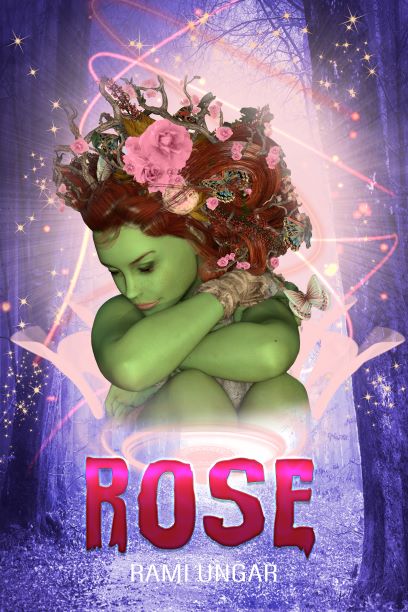
Photo by Niko MonDu00ec on Pexels.com

I’ve heard certain stories and writers described as weird fiction and weird fiction writers. I’ve also heard of New Weird, which refers to writers whose work is representative of a new wave of weird fiction. And I can think of examples of fiction that is described as “weird fiction.” Yet, I still find myself wondering from time to time, “How do you define weird fiction?”

Most people I’ve talked to–and I’ve talked to many–say “I know it when I see it” when it comes to weird fiction.* However, being a non-human entity and having a very loose definition of “normal” in a world that seems to defy anyone’s definition of normal, that still isn’t enough for me. And I know HP Lovecraft and the Cthulhu Mythos is considered weird fiction, but is that because it involves tentacled monsters?

As usually happens when these sort of questions bug me to no end, I do research. And after talking to a lot of people, reading some articles, and watching a few YouTube videos on the subject, I think I’ve finally come to some conclusions.

For one thing, “weird fiction” isn’t a specific genre like literary, romance, sci-fi or horror fiction. Rather, it’s a designation given to stories and writers who take traditional concepts within their genre and then find some way to turn them on their head and make them weird. Lovecraft and his friends’ fiction was called “weird horror” because it featured ancient cosmic beings with lots of tentacles instead of ghosts, werewolves and vampires. And today, you can call Junji Ito “new weird” because his work features women with their tongues being replaced by snails and their heads becoming the shells, or towns cursed by the concept of a spiral.

And this can apply to all sorts of other genres and kinds of stories. Magical realism, cryptozoological erotica, bizarro fiction, they can all be considered weird. And you can add weird to any sort of story. For example, perhaps you can write a romance story where the couple is actually a single person and their reflection. Or weird Western, where cowboys ride into a wilderness resembling that melting clock painting by Salvador Dali.

And now that I think about it, my own novel Rose could be considered weird fiction. I mean, I usually categorize it as “fantasy horror” or “paranormal fiction,” but it’s about a young woman turned into a plant/human hybrid (and that’s just the start of her problems). If that’s not weird, then I’m a sea lion (and I’m not).

Apparently, Rose could be considered “weird fiction.” I never realized.

So, how does one write weird fiction? Well, I don’t think anyone sets out to write exclusively weird stories. I think they’re just trying to create something original and that leads to going down a weird route. That being said, if you want to write something weird, here are a few things you can try to make it weird:

  • Disrupt the real. Weird fiction comes from being weird, so it helps if your story breaks either the characters’ or the readers’ sense of reality. In terms of the latter, you could modify the world in some way so that something weird by our standards is considered normal in the world of the story. One example I can think of is a story I once read where imaginary friends were real entities and an accepted part of the human life cycle, similar to losing your baby teeth or going through puberty.
    In terms of the former, write the story in a way where you and the characters share a similar reality, but then that definition of real goes out the window in a big way. Think Alice falling down the rabbit hole into Wonderland, or perhaps Little Red Riding Hood’s trip to her grandmother’s house becomes Lovecraftian and surreal.
  • Tentacles and cosmic elements. It’s a little stereotypical, but as I said, much of what made Lovecraft’s stories weird were the tentacles and the other elements that became the foundation of cosmic horror. So, if it works, why not use it?
  • Ask “what if I added this?” Plenty of times, we writers create our own stories by encountering another story and thinking of what we would add if we were the ones writing it. Just do the same thing, but think in terms of strange things you can add. And not just to other stories, but to just daily situations. What if you added surrealism to a religious matchmaking search, or if there was some visible way to instantly identify someone as having committed a crime? Thinking along those lines could allow you to write a weird fiction story.
  • Defy genre. While genres are categories we created, they do play a big role in writing and publishing. If you can write a story that doesn’t fit any particular genre but has elements of several, especially fantasy, sci-fi, and horror, it could be considered weird. There’s a bit more to it, but that can be a clear indicator of weird fiction.

Other than that, the only thing I can recommend is read plenty of weird stories and practice writing them. And while writing weird fiction isn’t exactly necessary for any writer, it can be a lot of fun and lead to some memorable stories. Hell, it may help you write more mainstream fiction. So, why not? Go ahead and get weird with it!

What tips do you have for writing weird fiction? Do you have any favorite stories that are considered weird?

*Fun fact: that phrase was coined by US Supreme Court Justice Potter Stewart in 1964 in his opinion on the case Jacobellis v. Ohio regarding a definition for obscenity, specifically hard-core pornography. The more you know.


Thanks for reading, everyone. It was a long article, but I wanted to get it out before I tried to intentionally write a weird fiction story (usually it happens by accident). I hope you enjoyed a post without a mention of Hannah (which, now that I think about it, has a weird story or two as well).

Anyway, I’ll be back soon enough. There’s some exciting stuff happening this week, after all. So, until next time, my Followers of Fear, good night and pleasant nightmares!

(WARNING: The following post discusses some recent movies that not everyone has seen yet. I’ve tried to avoid spoilers, but if you’d rather see these movies without knowing anything, then stop reading now and come back later. You’ve been warned.)

It’s no secret that I’m an eccentric, and I channel that eccentricity into my fiction all the time. I mean, my most popular novel is about a young woman who’s turned into a plant/human hybrid. If that’s not an example of weird fiction, then I’m a high school girl in an anime. And I’m not!

Skinamarink’s poster displayed outside my usual movie theater.

With all that expertise, I can say with certainty that there is plenty of room in fiction, especially in horror fiction, for weird. The novel House of Leaves by Mark Z. Danielewski, is a prime example of this. It’s a story about a documentary about a recounting of one family’s experience living in a home that has a giant labyrinth hidden inside it. The novel is full of footnotes, some of which have footnotes, as well as pages with only a few lines of text, or the text laid out in an odd manner, forcing the reader to hold the book at weird angles. From what I’m told, it makes for an experience both agoraphobic and claustrophobic.*

No wonder that book has an enduring relevance among horror readers, despite the author and some readers seeing it more as a love story than a horror story.

All that being said, there is both a good way to make a story weird and a bad way to make a story weird. Especially in the horror genre.

Some of you may have heard of the new Canadian horror movie Skinamarink. The movie revolves around two children who wake up one night to find that their father, as well as the doors and windows to their home, have mysteriously vanished. There’s been a lot of talk about the film online, with some loving it and others reviling it. I went to see it on Friday, knowing that one way or another, I would get a weird experience.

Well, I did get that weird experience. It’s filmed in a way meant to evoke a child’s perspective and reflect their nightmares, with the majority of shots focused on hallways, things high overhead or on the television in the den. Anything but the characters themselves. The entire film is also filtered to look like a home movie from the 80s or 90s, and the use of effects is minimal and mostly reliant on practical effects. A lot of the dialogue is told in whispers, so subtitles are used throughout the film. There’s no music, and plenty of surreal moments throughout the film, especially near the end.

That being said, everyone in my theater, including me, hated it. I even spoke to someone who was in the theater with me afterwards, and he told me he fell asleep during the film. I can see why: except for a few effective jumpscares, there was nothing to actually unsettle the viewer or keep them tense or focused, let alone scare them.

Since seeing the film, I’ve been characterizing it like someone took the cursed videotape from The Ring and tried to make it into a feature film, but took out what made that video so scary in the first place.

Now, I’m not saying anyone who enjoyed Skinamarink or found it scary is wrong or bad. The wonderful thing about horror is how subjective it is and how there are many different niches to suit every fan. Nor am I shitting on the director for the choices he made. I reserve that for the Friday the 13th remake and its creators, because that film is trash that gets everything good about the franchise wrong. Most of the people involved in it should get a good kick in the pants!

No, what I’m saying is that the weird is emphasized at the expense of the horror. Online, Skinamarink is characterized as “an experimental horror film” and that feels like an apt way of putting things. From the way the film is shot, to the use of subtitles and the story (flimsy as it is), you can tell that it’s all been an experiment by the director to conjure up a unique viewing experience. And in that respect, his experiment was a success. However, in terms of creating an effective horror film, the experiment was a bust.

Hatching is, in my humble opinion, a great example of weird horror done well.

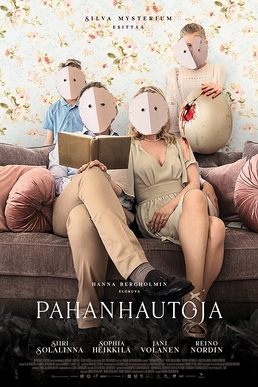
Now, compare that to another recent horror film, Finland’s Pahanhautoja, or Hatching. The film follows a girl who finds an egg in the forest and incubates it, only to end up the caretaker of a large bird/dinosaur monster that she calls Alli. Yeah, that’s weird, especially when you see the ugly-ass creature, which is brought to life mainly with practical effects and puppetry. But it also helps to tell a story about a very repressed girl who is struggling as part of a toxic family dynamic and being ruled by a narcissistic, social media-obsessed mother. Rather than overtaking the story, the weird aspects help drive the story and explore its deeper themes.

And that’s where the big difference between Skinamarink and Hatching is. The former’s weird aspects overtake the film and drown out the horror, while the latter’s weird aspects help out the horror and the story in order to be told more effectively.

To summarize, when telling a story of the weird variety, it’s important to remember that you’re telling a story first and foremost. Thus, while you can add as many weird elements as you want, if they overwhelm the story you’re trying to tell, you risk alienating rather than engaging your audience. And that’s something every storyteller wants to avoid. Including eccentrics like me.

*It’s on my TBR list, but that list is long and I only have so much reading time. Thus, it’s going to have to wait a while till I get to it.


Just a reminder, my Followers of Fear: this coming weekend I’ll be at ConFusion at the Sheration Detroit Novi in Detrot, Michigan. This is a big science fiction and fantasy convention that’ll be held from Friday, January 20th to Sunday, January 22nd. I’ll be there selling books and doing Tarot readings, so if you’re in the area, feel free to stop by and say hi. I’d be more than happy to see you.

You can find out more information about the convention by checking out its website here.

That’s all for now, my Followers of Fear. Until next time, good night and pleasant nightmares.

So, I’m sick again. I didn’t want to be sick today, especially because I had some things I wanted to do today during and after work. Now, the only things I can really do is binge-watch anime and write. Thankfully, I didn’t let my lazy side take over too much and finished Chapter Fifteen of Toyland, putting me halfway through the first draft.

So if you’re not aware, Toyland is my latest novel, and started out as my project for National Novel Writing Month. It’s a Gothic novel about a boarding school haunted by a ghost obsessed with a children’s book. Or at least, that’s what it’s supposed to be. As predicted, it’s going from a Gothic horror story into weird territory the farther in I get. Not sure if that’s a good thing or bad at this juncture, but I’m sure if it’s bad, I can fix it in subsequent drafts.

As I was saying, I’m halfway through Toyland. Chapter-wise, anyway: I’m fifteen out of thirty (it was twenty-nine, but I split Chapter Thirteen in two for better narrative flow). So I think I’m still on track to finish the book by the end of January. Maybe a little longer if things get crazy between now and January 31st. Always a possibility when you’re trying to be an adult in today’s insane world.

I’m rambling, aren’t I? Blame it on the sickness.

Anyway, as of the completion of Chapter Fifteen, Toyland is 46,776 words long (for context, the first Harry Potter novel is seventy-seven thousand words or so). So my prediction that this first draft will be eighty-thousand or more words seems to be spot-on so far. I hope by the time it’s over, it’ll be a good first draft. Bonkers, but good too.

But until then, it’s time to call it a night. I’m going to work tomorrow, come heck or high water. Until next time, Followers of Fear, pleasant nightmares!

The audiobook cover for Rose. Available now from Audible and Amazon.

Oh, one last thing before I forget. As you know, the audio book for my previous novel, Rose, was just released Tuesday. It’s the Kafkaesque horror story of a young woman named Rose Taggert who wakes up in a greenhouse with no memory of how she got there or why. Soon after, her life and her body undergoes a strange transformation. One that can’t be undone.

You can check it out by using the links below. Available in e-book, paperback and, of course, audio book.

Rose: Amazon US, Amazon UK, Amazon Canada, Audible