Archive for the ‘Novel’ Category

On Wednesday, I created the cover for Reborn City out of a photograph and Photoshop. Problem was, I wasn’t completely satisfied with it. So, after much thought and encouragement from the ever-helpful Matt Williams, I turned to CreateSpace. If you don’t know what CreateSpace is, it’s a program through Amazon that you can use to self-publish ebooks, paperbacks, and all sorts of wonderful things. I’d never considered using CreateSpace because I heard it costs money, but I learned that only some services do, while others are very DIY and free-of-charge. And I like those options.

Now check out the old cover:

RC cover

Now check out the new one:

Reborn City

Same photograph, better picture. Sure, there’s no graffiti-esque writing, but this looks better, more professional. And maybe someday, if God is good to me, I can create the cover of my dreams with a later edition.

And guess what? CreateSpace also does print-on-demand paperbacks for no cost to the author, just a small percentage of royalties. Do you know what that means? It means all my books can be someday turned into ebooks and paperback editions! All you have to do is order them from Amazon!

And of course I’ll try to do this with The Quiet Game, get the cover to be customized so that it stays the cover. That’s one I can be satisfied with, I just hope I can get it onto the editions. I hope you’re as happy as I am! If I can, I’ll get the cover loaded up tomorrow, along with sending RC to the copyright office. It’s going to be fantastic!

Expect Reborn City November 1, people, and The Quiet Game this summer whenever that gosh-darn copyright is processed. Ooh, I’m so excited. Hope you’re excited with me!

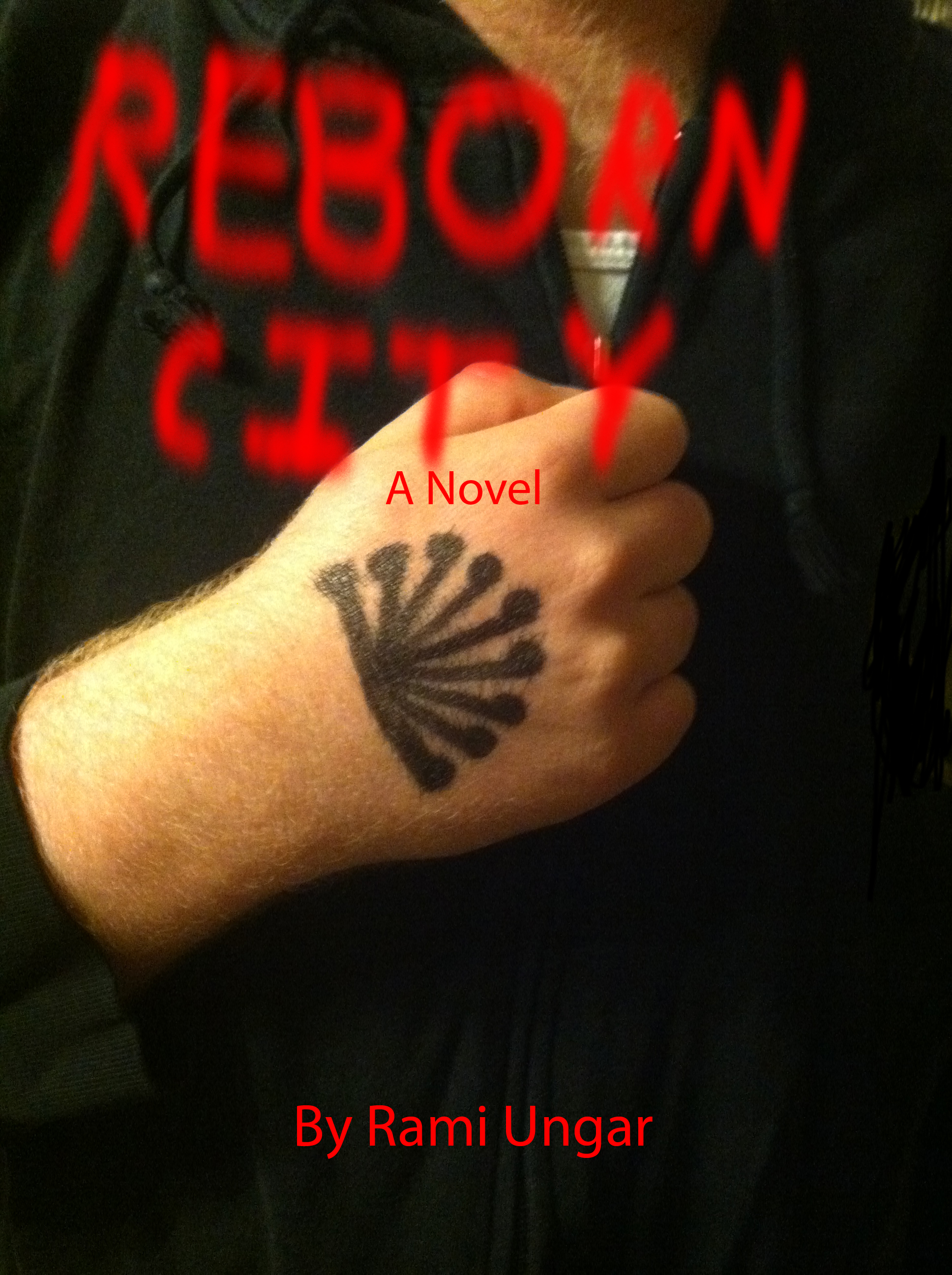
Ladies and gentle-bloggers. I would like you to see the cover to my science fiction novel Reborn City. Behold:

RC cover

Pretty neat, isn’t it? I had trouble getting the photo onto Photoshop at first, but eventually I got it on with some help. The rest was simple as pie. Once again, I used a photo as the basis for the cover. This time around, the photo was of my hand, with the Hydra symbol inked on (not like tattoo ink. My sister used a Sharpie). The cool thing is, readers will think the hand on the title belongs to male lead Rip, and they wouldn’t be far off, seeing as I intended it to be Rip’s hand. The title was meant to mimic spray paint, as that’s what would be used in Reborn City to mark walls.

Although not what I had exactly in mind (when is it ever?), I think this is a pretty good cover and I hope to create more like it in the future.

I’d like to thank my sister Adi for creating the symbol on my hand and for sending me the photo from her phone. It’s a good piece of work, and it’s going to end up on the “Books by Rami Ungar” page.

What do you think of the cover?

Oh, I am feeling good tonight, ladies and gentle-bloggers! After going at it for hours on end with only a few breaks to eat, use the bathroom, and working with my sister to create the base to the cover, Reborn City is done! It’s been a crazy and long process for this novel to reach this stage, begun in 2009 and finished right before I graduated high school, but I’m happy we’ve reached this stage.

I’d like to thank my sister Adi Ungar, who helped me with the cover (I’ll unveil it tomorrow after I’ve worked on it a little, God-willing), Matthew Williams for his tireless editing and tolerance to my semicolons and prodding (you’ll get part of that prize, I assure you Matt), and to all those who have supported me over the years and given me advice and encouragement.

Starting tomorrow, the easy parts of the publication process begins: I’ll write a dedication, a note to the readers, a letter of acknowledgement. Then I’ll format the novel so that it’s easy to read on e-reader. After that I’ll get the cover done and send it all to the copyright office, giving me plenty of time till November, when RC hit’s the digital stands. During the waiting period, I’ll create a book trailer, do interviews, create a Facebook page, spread the word, and get people excited. Oh, and The Quiet Game will be coming out during that time, so I’ll do some work on getting that out as well.

I’ll also decide what I want to write in the meantime (though I have a pretty good idea of what I’ll be writing at the moment). I’m looking forward to moving on and writing something new, I can tell you that much.

Wish me luck. I can promise exciting things from here on out, ladies and gentle-bloggers.

Ladies and gentle-bloggers (I so have to patent that term), I have wonderful news.  My friend and fellow author Matt Williams (you can check out his work here) has sent me the final chapters of Reborn City, my science-fiction novel. He has also sent me his praise and some great feedback, so I can’t wait to get to work.

In fact, I’m going to get to work now. I’ve got 5 or 6 chapters to edit still, and then RC will be done. Then I will be able to write a dedication and an acknowledgements page, create the cover myself (I already have an idea for what I want the cover to look like), format the chapters for e-reader, and send it off to the copyright office. At this rate, I’ll be ready for publication by November, which is my ultimate goal. I can even create a book trailer for RC in that time. It’ll be great.

Thanks to Matthew Williams for looking through each chapter and giving me plenty of great feedback. I hope you’ll consider looking at RC‘s sequel, Video Rage, when I’m ready for beta readers to look at that. And thanks to everyone who’s been supporting me since I first began to write RC back in high school. I cannot wait to finally hand it to you and let you read it.

Just pay me a $2.99 download fee first so that I can afford to buy groceries, okay?

Off to edit now. Wish me luck!

In the article I wrote that was published last weekend (you can read it here if you like), I mentioned that chapters and scenes don’t always mean the same thing. Some scenes take up several chapters, while sometimes several chapters are needed for one scene. This got me thinking on the different types of chapters I’ve seen over the years and doing an examination of these sorts of chapters. Hence the post you are currently reading.

I’ve divided the chapter types into three categories. Note that the names are my own creation and if there’s a proper name for these chapter types, then they’ve escaped me. Also, feel free to add any criticism or any fourth type of chapter that I may have missed or I am unaware of by leaving a comment, and I will gladly write a second post.

The Harry Potter chapter

When I wrote Reborn City, I used this chapter format. This type of chapter I first encountered when I read the HP books, so I’ve always associated the type with Harry Potter. However it is by far the most common type of chapter out there, mostly because it is easy to write and can encompass many events within itself, such as when Mr. Dursley has a very odd day, followed by his nephew being left on his porch in the first chapter of Sorcerer’s Stone. And changes of scene within the chapter are very easy to do, as they can be accomplished by a large space between the ends and beginning of sections or a series of asterisks (I prefer using ~~~ though). When I outline this sort of chapter, it usually looks like this:

Chapter 1: Rami Ungar sits down in front of his computer. He has published several novels, but has written nothing new lately and can’t even be inspired by his trusty list of ideas. He decides to write a story about a man haunted by a muse for no reason but to write something, and when he wakes up, he finds said muse on his couch, telling him to continue to write so that she can take form in this world.

Yes, that sounds like a recent movie, but I’d probably put a more sinister twist on it.

The Alex Cross chapter

This is the chapter format I used when writing Snake. I first encountered this format when I read The Da Vinci Code, but I’ve come to associate it with the Alex Cross books since then. In this format, a scene can take up several chapters, each likely very short, and is usually best utilized in the form of a thriller or other fast-paced novel, due to the short chapters heightening the tension before stopping and leaving the tension to continue in the next chapter. When I outline this sort of chapter, it might look like this:

Chapter 1: Rami Ungar wakes up when he hears a noise in the living room. He goes down to investigate with a baseball bat, but when he looks into the mirror hanging on the study door, he sees someone behind him.
Chapter 2: Rami turns around but sees no one there. He looks back in the mirror and sees no one there. He goes back to his room when he hears someone calling his name. He goes into the kitchen and sees a face peering out of the television beckoning for him to come closer.
Chapter 3: The face in the TV tells Rami she will be his muse from now on and will bring him fortune. Rami is stunned.
Chapter 4: Rami accepts the muse’s help and she tells him his name: Melly. Rami thinks it’s a nickname and wonders what it could stand for.

I could actually use this idea if I’m smart and change some names. Don’t steal it!

The Mark Chadbourn chapter
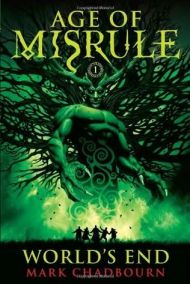
I have yet to use this sort of chapter, but I’m sure I will at some point in the future. This type isn’t named after any sort of literary character, but is named after the fantasy author Mark Chadbourn, who used this style of chapter with his series of nine fantasy books starting with World’s End and ending with Destroyer of Worlds. This format is unique, because it uses chapters, but each chapter is like a section of the story, and it has numbered sub-sections. I find this helpful for novels where there are a lot of different characters and plotlines to follow and you want to switch between characters and plotlines as dramatically as possible without being cheesy. When outlining this sort of story, it usually looks like this:

Chapter 1: Muse Makes Contact
           I: Rami Ungar wakes up and finds a ghostly woman in his room. She calls to him before she disappears.
           II: A witch has a prophetic dream of danger to come and summons her familiar. The witch, whose names is Azzie, tells her familiar Collos to head to Columbus Ohio and investigate an author by the name of Rami Ungar.
           III: Rami goes to work and then to classes, but sees the same ghostly woman everywhere he goes. Also, he feels like he’s being followed…and is then attacked by a man with a knife.

It goes on like that, if you get my drift, and can have any number of subsections. It’s a tough sort of format to pull off, but it works best with stories like this with multiple narratives, and can leave the author the option of working with many different characters at once.

As I’ve demonstrated here, there are many different types of chapters, and probably some that I’m not even aware of. Whatever one you use though, if you use one because you’re comfortable with it or you switch it up depending on the story, it’s probably because you know the story best and therefore you know what sort of chapter is needed. And if you can give your story what is needed, including chapter, then that is one mark of a great author.

Every author wants to write a great story, one that’ll be remembered for years and years after the author has passed on from this life. It’s the reason why so many of us spend years bettering ourselves, polishing ourselves and learning from as many experts in the field as we can so we can be great at our craft.

But what about writing great lines? Every author also has a desire as the person who coined a phrase like “To be or not to be”, or “Luke, I am your father”, or “When you play the game of thrones, it’s either you win or you die” (That last one I had to find through Google to get the quote right). How do you create a line that will be remembered throughout all time and be dissected in high school and college classrooms for generations to come?

I wish I could offer a trick to creating a great line that’ll stand out in your work. Unfortunately, none exists that I know of. In my experience, the most famous lines happen through accident and luck. Take Stephen King’s The Shining, arguably one of his best novels. The term Redrum has become a part of our social consciousness and is often used for creepy (or sometimes comedic) effect. I bet when King created the term though, he was just looking for something scary and strange, a device to add another layer of menace and mystery to the Overlook Hotel. I also bet that when the novel (and later the movie) became a success, King was very surprised by how popular the term Redrum was becoming.

Or how about “Live long and prosper”? Leonard Nimoy, who played Spock, was drawing on his Jewish roots, as that phrase and accompanying hand symbol were used by the priests in the days of the Holy Temple to bless the nation of Israel. When they were looking for an iconic catchphrase and symbol for the Vulcan character, Nimoy suggested, “How about ‘Live long and prosper’?” It stuck, and thanks to the show’s sometimes mind-boggling fandom, the phrase entered into our culture.

(By the way, that story has been a beloved tale among Jews for decades ever since the show began, and we still get plenty of oppurtunities to tell it and sometimes educate non-Jews about its Biblical significance. L’chaim!)

I guess the best way I can say for someone to create an excellent line is to just write as great a story as you can, and hopefully someday, just by writing a great story, you’ll pen or type out a sentence or phrase or piece of dialogue that’ll really catch the reader’s eyes and resound in their consciousness. Basically, keep doing what you’re doing as a writer and someday a great line may be born.

What’s your take on creating great lines? And what constitutes as a great line in the first place?

Creepy, is it not? Even if it is a cartoon.

Oh, I’m feeling good. I took the last twenty chapters (all less than ten pages, let me remind you) and edited them. I think I ended up increasing Snake‘s word count by about six-thousand or so words, but all in all the entire book will be around three-hundred and fifty pages once I format it for publication (so don’t go running off afraid to read my thriller novel. If you’re going to run away, be it for the content and not for the page count).

I like this draft. I ended up doing a lot of character development and explaining some things that I realized did not make a lot of sense. I also gave my characters more character history, and even added two full chapters. I think I also cut out some of the unnecessary words and what not, made the plot run a bit smoother.

All in all, it’s a good draft. I’m not sure if at this point I want to send it to the presses, do another draft, or if I want to send it to a beta reader again. In any case, I’ll think about it over the next few months as I take a break from the Snake and his blood-filled world. In the meantime, I’ve got two short stories to edit, one to finish writing a first draft for, and two to research. Plus my good friend and fellow author Matthew Williams is almost done reading my science fiction novel Reborn City, which means I can get ready to send it to the copyright office.

All that can wait till tomorrow though. I plan on celebrating finishing the third draft with a marathon of Doctor Who and Torchwood. Good night and thanks for all the support!

daisy-cover

I just went over the number of downloads on “Daisy”, the promotional short story I published for The Quiet Game: Five Tales To Chill Your Bones. Guess what? The number of downloads has passed 100 (107 to be exact)! Thank you all for downloading and for reading. I hope you continue to read and to download, and if you feel so inclined, please write a review online or spread the word among your friends. It means a lot to me if you do.

And while I have you, I’d like to let you know that on the page listing my books, I’ve added Reborn City and Snake to the list, along with projected publication dates. Take a look for descriptions and for projected dates.

As of this evening, I’m only fifteen chapters away from finishing the third draft of my thriller novel Snake. Boy, it’s been a lot of work. I added two chapters, and I cut out a bunch of words and I added a lot more words than I deleted because it was necessary…and I’m starting to worry that it’ll be so long nobody will want to read it. It’s already kind of scary. If it’s long too, will anyone want to read it?

I hope. And I also hope to get this draft done by the end of this coming Memorial Day Weekend. Because once I’m done, I’d like to work on other projects before I decide if I need another draft or if I should go straight to the presses. I want to edit a couple of short stories that have been waiting for their next drafts. I want to finish “Vile”, the short story about coming back from the dead that I had some writer’s block on when I last looked at it. And I want to write a short story that’ll be a homage to Edgar Allen Poe’s “The Premature Burial” (and yes, I love  The Following despite how crazy its story can get). And yes, I want to put out The Quiet Game and get ready for when it’s time to put out Reborn City.

But I do like how this draft of Snake has turned out. With every draft my story is a bit more polished, what the characters do makes more sense. I added a lot of character development and I fixed some things that I’m pretty sure some fanatic will nitpick to death on the Internet. And I’m sure that if I do another draft, give my story to a beta reader, or just send it to the presses, I can at least say this story turned out much better this draft.

So whether or not you like books up to 400 pages, I hope this book finds its niche and a group of fans…and hopefully not any mentally unstable fans. Until that time though, I’m going to finish this draft and keep working on my writing. Wish me luck.

I include the “by Max Brooks” part to distinguish this review I will eventually do on the movie (both will probably get a ton of traffic once the movie comes out, I bet). Also, I know I keep saying that I like to put a week’s distance between reviews and it’s only been a few days since I did the review for The Great Gatsby, but this was such a phenomenal novel, what could I do?

As a History major studying the Holocaust and World War II, I read a lot of memoirs by survivors and soldiers alike. As I read Max Brooks’s zombie apocalypse novel, one of the things I was struck by was that it sounded so much like a Holocaust memoir, it was uncanny. And I don’t mean in terms of content–it’s a zombie apocalypse novel, after all–but in terms of how haunted the voices of the characters are. Each section of the novel is a different person’s experience during “The Great Panic” and the war against the living dead, ranging from Chinese to Russian to Chinese to American to South African to Middle Eastern to English and everything in-between. The horrors and haunted tales of each survivor, which are all assembled by a nameless interviewer (Max Brooks in a world that he created, playing the role of reporter, perhaps?) into a single collection of tales, will keep you reading for hours after you should’ve gone to bed.

That’s kind of what happened to me: I was reading late last night, finished the book, and then went to bed. I had the craziest dream afterwards where I lived through my own zombie apocalypse. Just one problem: I didn’t find out what happened to the woman I met in my dream and the baby we were having together! I felt like Dorothy wanting to get back to Oz! Cursed alarm, waking me up in the thick of the battle.

Anyway, another thing I noticed about World War Z was that Brooks thinks of several things that we don’t. I’m not going into detail, but let’s just say that he considers everything from the disadvantages of conventional warfare on zombies, to survival plans foolish and wise, to how the public would react to zombies, and how other people would react to those reactions. It’s so detailed and so well thought-out, you think you’re reading something that actually happened. I’ve read memoirs and history books that have the same level of detail, and it’s crazy how real it all seems. Like Stephen King’s The Stand trying to pass for nonfiction, it feels that real.

A very engrossing read, 5 out of 5 definitely and deserved. I wonder how the movie, which will probably take more liberties than any other book-to-movie adaptation in the history of moviemaking (with the possible exception of Priest), will compare.

Oh, funny story while I have your attention: on Tuesday night, Jews everywhere started Shavuot, one of our more important holidays. During Shavuot, it’s traditional on the first night to have a long study session that lasts late into the night. The study session I attended was divided into two parts, the first consisting of different classes we could take. I took the one on bikkur cholim, which is the commandment to visit the sick but also implies praying and caring for the sick. Near the end of the session and after some lively discussion about the effects of biblical and modern-day quarantine, I asked about bikkur cholim and zombie plagues. The instructor’s answer: “Throw bikkur cholim out the window, and run for your life!” Sounds sensible, doesn’t it?