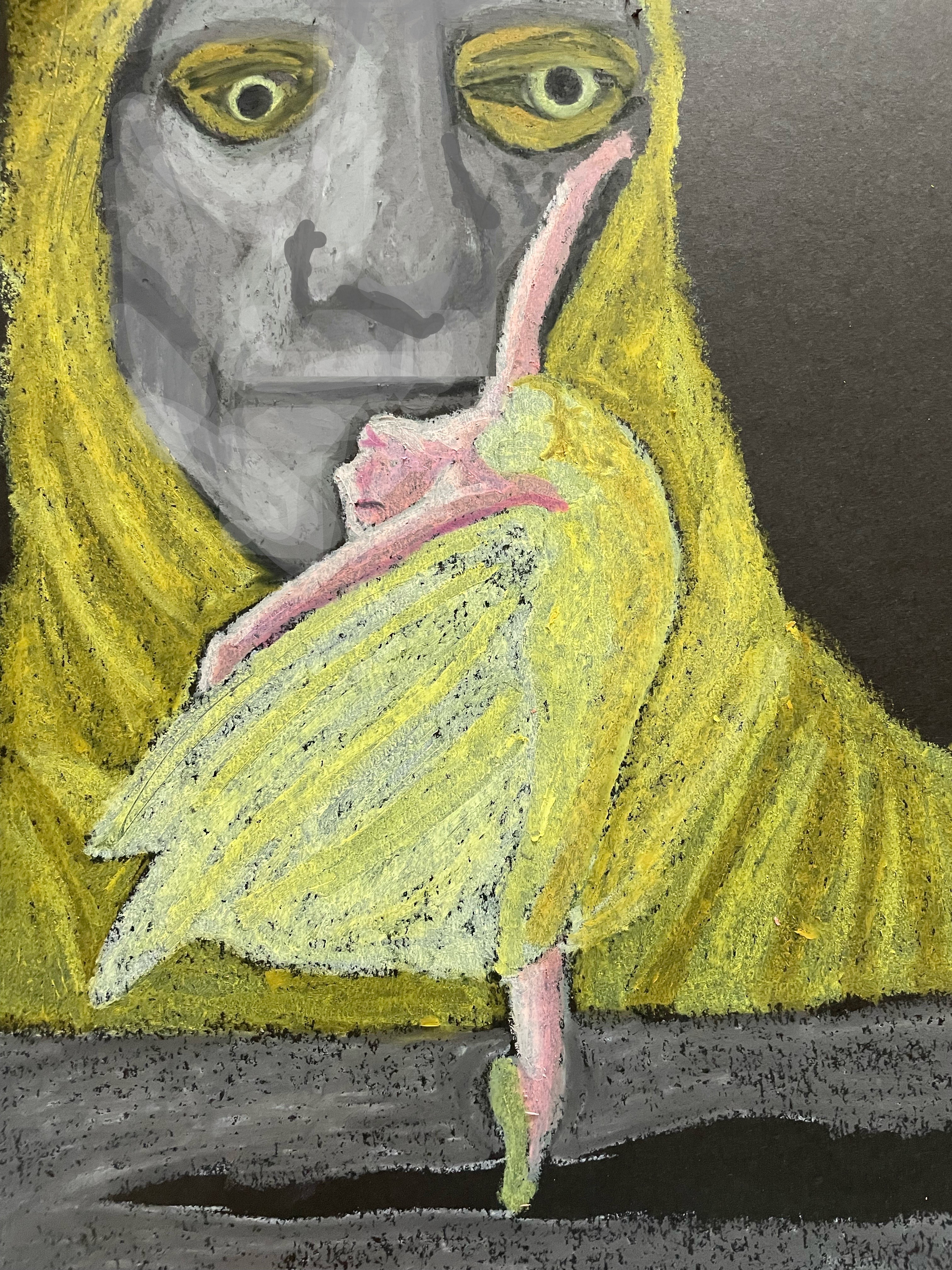
Saint Walpurga, an 8th-century saint who fought witches and whose feast day has inspired plenty of imaginations and plenty of fear.
You may have heard of Walpurgis Night, or a similar name, and wondered what it is, why it gives you such a chill, and how the heck you pronounce that name? With this blog post, I hope to answer a few of those questions.
First, the name. It’s pronounced “Wall-per-giss,” with the hard “g” sound, like “Garfield.” Important to get that out of the way first and foremost.
Second, what is this day? Simply put, it’s the feast day of Saint Walpurga (her name is also pronounced with a hard “g”), an eighth-century saint who was renowned for defeating pests, rabies, and witchcraft. Walpurgis Night, also known as Walpurgisnacht, Saint Walpurgis Eve, May Day, and Witches Night, is celebrated on her feast day, which begins on the evening of April 30th and continues through May 1st.
Celebrations for Walpurgis Night may include bonfires, doing various activities to ward off witches, and visiting Saint Walpurga’s tomb in Eichstatt.
Oh, and that part about witches? Yeah, Walpurgis Night is also believed in many places to be a night when witches meet for their semiannual sabbats. This is why it’s also known as Witches Night. Why? No idea, but I like to think witches either set their celebration day on Walpurga’s night in an act of defiance, or the Church put her feast day on the same date as when witches gather in hopes of weakening and fighting back against them.
And while its prevalence has fluctuated and changed over the years, Walpurgis Night’s influence has remained. It’s no coincidence that the Church of Satan was founded on Walpurgis Night 1966, and the very-separate Satanic Temple considers this day a solemn day to mourn the loss of witches, both real and accused, to superstition. In the movie Fantasia, the final sequence, Night on Bald Mountain, is explicitly stated to take place on Walpurgis Night, and in the anime Puella Magi Madoka Magica, Walpurgisnacht is the name of the most powerful witch in the show’s universe.
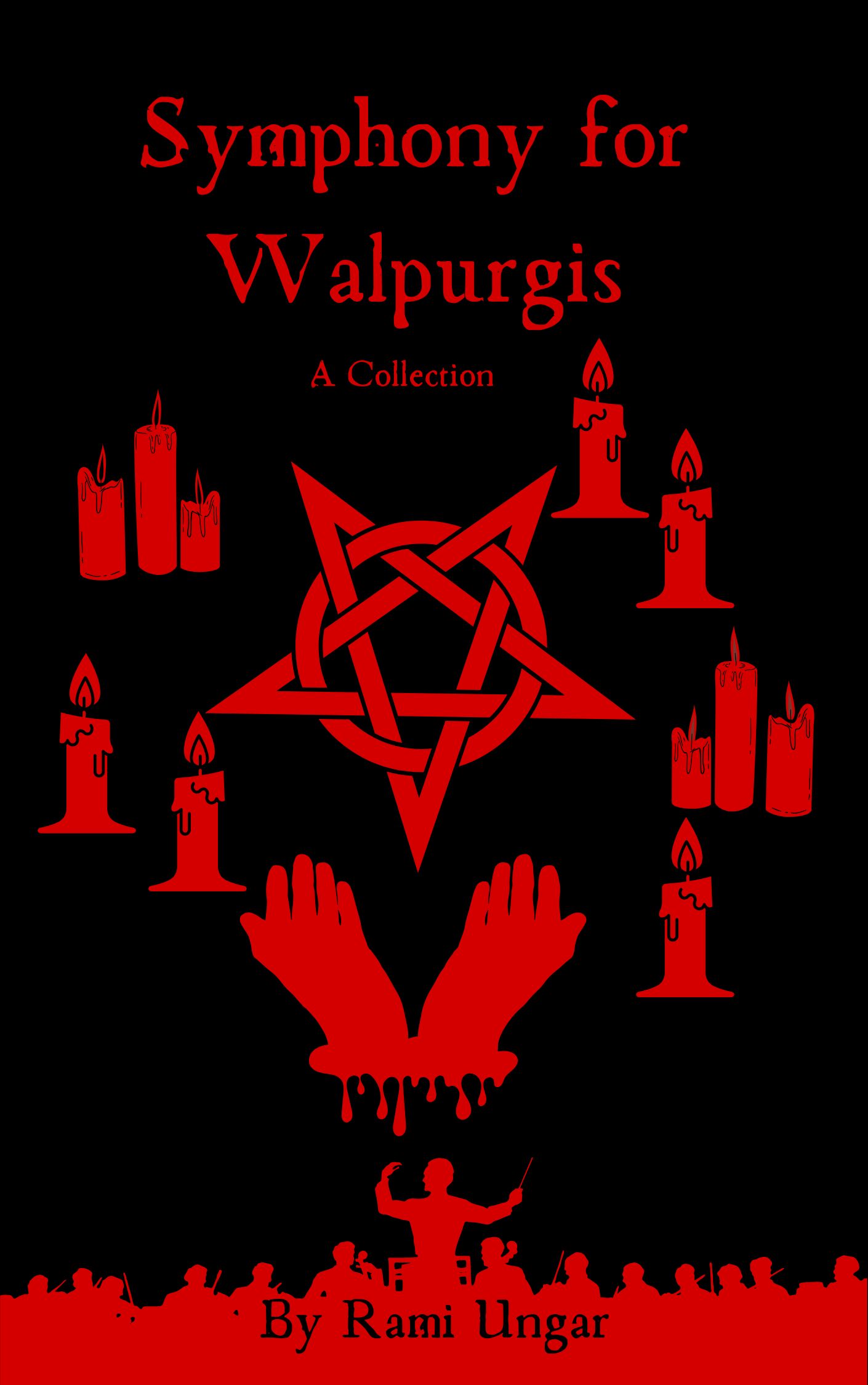
And now, the holiday is the inspiration for my latest collection, Symphony for Walpurgis, which I planned from the beginning to release around the end of April/early May. When I remembered a certain holiday occurred right around that timeframe…well, you can see why I did what I did.
And now we’re two months away from the release of Symphony for Walpurgis. This is my newest collection, containing stories of cryptids, malevolent spirits, and even a Jewish exorcism. If you’re interested, you can click on the links below to preorder or, if you click on the Goodreads page, read Walpurgis‘s first couple of reviews. Yes, there’s already a few reviews. Isn’t that awesome?
And if you do end up preordering the book and reading it, I hope you’ll leave a review. Positive or negative, I love reader feedback, and it helps me and other readers in the long run.
And with that explanation, that’s all for now, my Followers of Fear. I hope you found this explanation helpful and are now interested in reading Symphony for Walpurgis. I, meanwhile, will do everything in the next two months to get more people interested in reading it. So, until next time, good night, pleasant nightmares, and happy countdown to Walpurgis Night/Witches Night. I hope you’ll celebrate with me when the time comes.
You may have seen some news reports that Jack the Ripper’s identity has been solved. A lot of those reports include mentions of DNA evidence, which gives the claim an air of legitimacy. However, that raises the question: has Jack the Ripper’s identity been found? And if so, who is it?
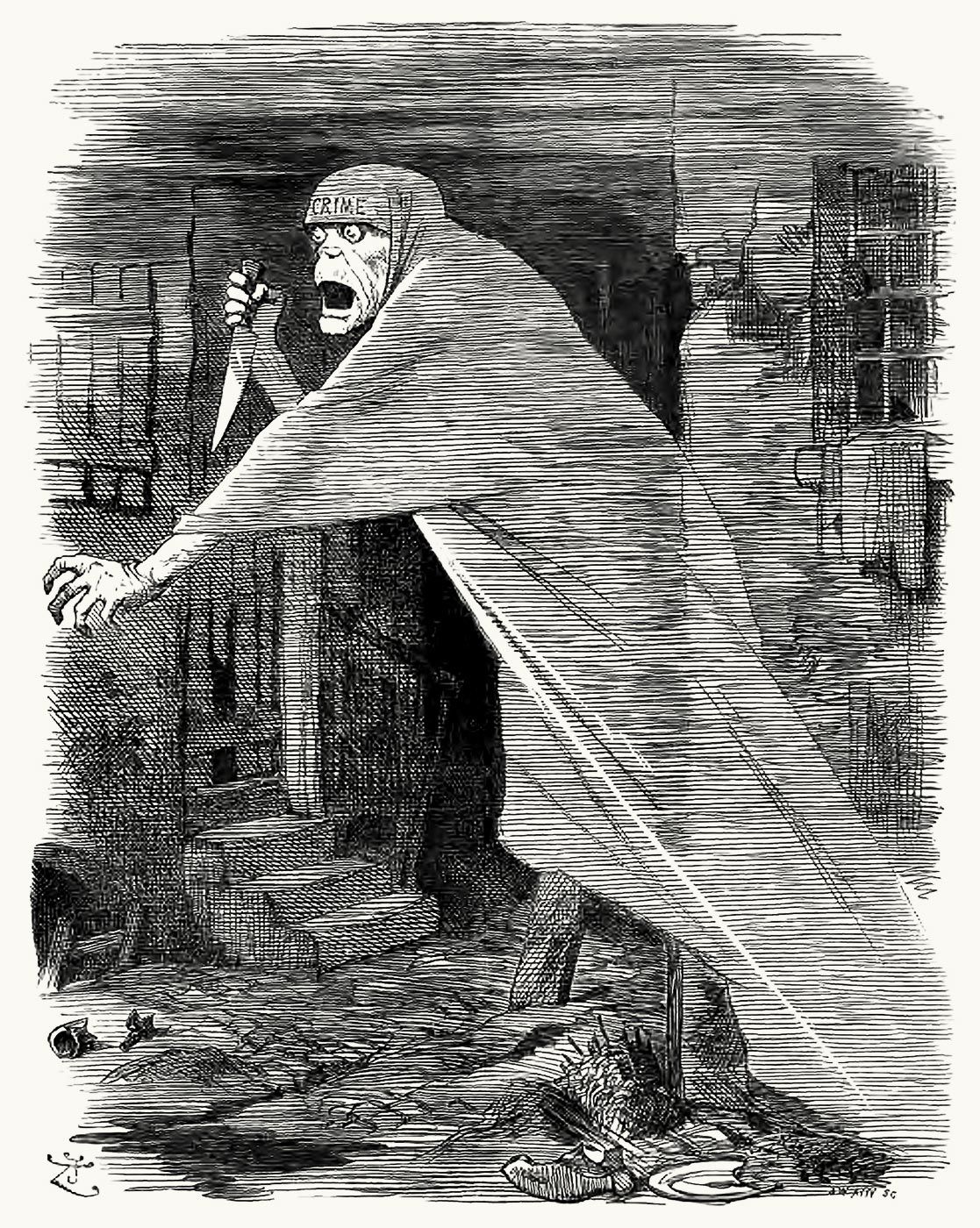
First, for those of you who don’t know (thought at this point, I’d be surprised if you didn’t know), Jack the Ripper is the name given to a serial killer who murdered five women in London’s Whitechapel and Spitalfields neighborhoods in 1888, though it’s possible many more died. The women killed by the Ripper were supposedly prostitutes, though in recent years, doubt has been cast on that (check out The Five by Hallie Rubenhold for more on that).
As for the killer’s name, it comes from a letter sent to a local newspaper supposedly by the killer where the “killer” identifies himself as such. Jack, however, was never caught, leading to over a century of speculation as to whom the killer is.
As to this latest news story, historian Russell Edwards has claimed that DNA found on a shawl supposedly belonging to Catherine Eddowes, one of the Ripper’s victims, matches both Eddowes’ living descendants, as well as DNA belonging to descendants of the older brother of Aaron Kosminski, one of the top Ripper suspects. Based on this, Edwards believes that Aaron Kosminski was the Ripper, beyond the shadow of a doubt.
This leads to the question: was Kosminski really Jack the Ripper?
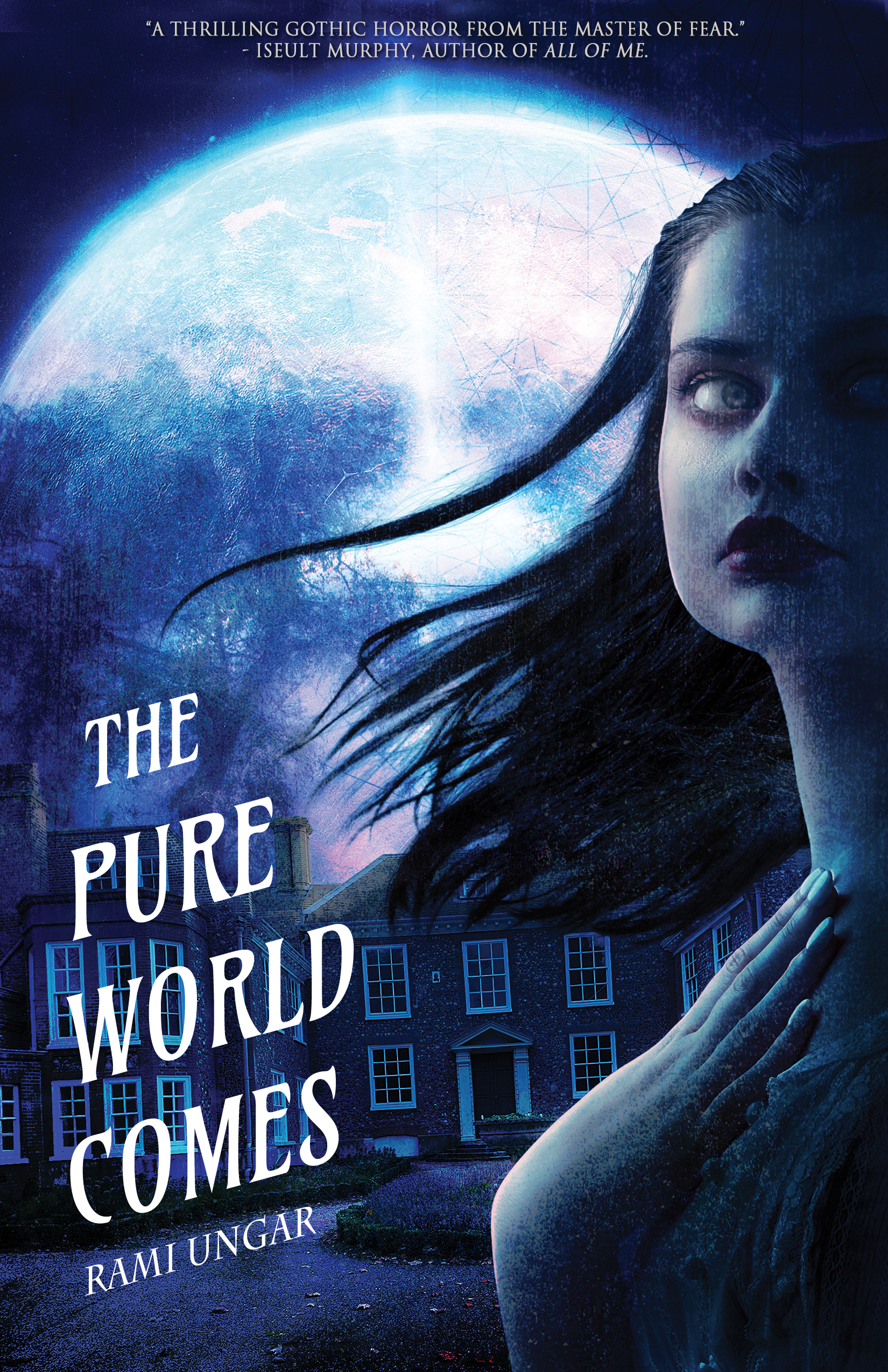
Honestly, I have my doubts. This isn’t because I have my own suspect I believe was the Ripper (though I do believe it was this person to the point I made him a character in my Victorian Gothic novel The Pure World Comes). It’s just that there are some serious problems with Edwards’ claims, and I shall try to go over all of them here.
First, who was Aaron Kosminski? He was a Polish Jewish immigrant who worked as a barber/hairdresser in Whitechapel in 1888 and who was one of the original suspects of being the Ripper owing to a violent mental disorder. He was committed to an asylum a few years later and died in custody in 1919. To this day, he’s still one of the most popular picks for the Ripper’s true identity.
The DNA evidence is way more problematic than it appears at first glance.
First, there’s the DNA. While this method is a lot more reliable than other methods of forensic crime solving (you would not believe how unreliable fingerprinting actually is), DNA isn’t infallible. In fact, DNA is subject to contamination, incomplete samples, and degradation over time. It would take incredible luck for both samples to remain intact and uncontaminated enough so that they could be used to match with the victim and suspect’s descendants.
But sure, let’s say the DNA found on the shawl, which Edwards bought from an auction house and which passed through a few hands before then, really did have enough intact DNA for the scientists to do their work. While Eddowes’ DNA probably came from bloodstains, the DNA linked to Kosminski was mitochondrial DNA from semen. Mitochondrial DNA is a lot smaller than regular DNA found in cell nuclei and isn’t as handy in identifying people as is regular DNA. (See this YouTube video where a DNA expert explains it much better than I ever could).
Also, semen being present on the shawl only proves that someone had sexual contact with Eddowes (if it was her shawl). As I said, whether the Ripper’s victims did or did not engage in sex work regularly has been called into question in recent years, but whatever the truth, it doesn’t prove that Kosminski killed her. All it really says that he may have had some sort of sexual contact with her.
All of these factors might be why the study in which Edwards makes his claims hasn’t been published in a peer-reviewed journal, and that’s a problem. “Peer-reviewed” means that the experiments and the results can be reliably replicated, and the fact that no peer-reviewed journal has published Edwards’ study is concerning.
The identify of the Ripper, to put it simply, is still an open question.
Finally, there’s the issue of whether Aaron Kosminski was actually the suspect the police were referring to! You see, Kosminski’s name came to prominence because the name “Kosminski” was mentioned in police memos and in the diaries of investigators from the original case, and that eventually led to the identification of Aaron Kosminski. However, these same policemen may have been referring to one Nathan Kaminsky, also known as Aaron or David Cohen, another Polish Jew with mental issues and a violent personality and who was held in the same asylum as Kosminski before his death in 1889. The police may have confused one man for another, and the asylum may have named him Aaron Cohen because Kaminsky or Kosminski was too difficult to spell or understand. Whatever the case, we can’t be sure which man the police were referring to, given the similarities and lack of reliable records.
So perhaps Aaron Kosminski did have a sexual encounter with Catherine Eddowes, but Nathan Kaminsky was the real Ripper. Or maybe he wasn’t. There’s no way to tell.
And that’s the main problem. Even if the DNA results aren’t problematic, there’s no way to know 100% for sure who Jack the Ripper was without a time machine. I’m sure we would all love to put to bed who the Ripper was, even if our personal choice of suspect was wrong. But it’ll take a lot more than sketchy DNA results to do so. And, like many infamous cold cases, it may never be truly solved.
Thanks for reading through my rant on this subject, Followers of Fear. I just really disliked how many publications were taking Edwards’ announcement like the gospel. Hopefully this put the whole matter into perspective for some of you.
If you’re at all curious whom I think is the Ripper, you can find out by reading The Pure World Comes. As I said, I included him as a character in the novel, and I included some of the historical knowledge I found on the guy in the story. Plus, it’s a great Victorian Gothic horror novel, if I do say so myself. I’ll leave links below if you’re curious. And be sure to leave a review if you read it!
I also highly recommend if you’re curious to check out The Five: The Untold Lives of the Women Killed by Jack the Ripper by Hallie Rubenhold. Ms. Rubenhold does an excellent job exploring both the lives of the five canonical Ripper victims and the contemporary attitudes that may have unfairly led to them being labeled prostitutes. Reading it made me look at the Ripper case in a whole new light and helped me ultimately come to whom I believe the Ripper is. (See my article on it here.)
That’s all for now, my Followers of Fear. Until next time, good night and pleasant nightmares!
I’m lucky enough that I rarely get writer’s block. Occasionally I have a bad night where I can’t get the words on the page, but actually being unable to write? Thanks to a combination of lots of inspiration and lots of motivation, no. In fact, I think I can count the number of times I’ve gotten writer’s block on one hand.
And recently, that number increased by one.
I’ve mentioned before that I’m working on a witchy Halloween story that is the most Halloween thing I’ve ever written. And I’ve been enjoying working on it. However, last week, I noticed that the words weren’t coming like they should be. I was having problems getting the words down, and it was increasing slowly but surely with every writing session.
No doubt about it, writer’s block was settling in.
Thankfully, I have a method that always helps me get over writer’s block.
Now, if you look around the Internet long enough, you’ll find hundreds of different methods for getting over writer’s block. They range from finding a different time or place to write, or doing freewriting and brainstorming, to therapy and mindfulness meditation. I’ve got nothing against those other methods. If one of them works for you, good for you. This is just the one that works for me. And if you as a writer find it helpful, then great.
So what do I do? Well, I edit. Sort of. I go back to the beginning of the story and go over the material I’ve written. Try to see where the writer’s block started and why. Is it a problem with the plot? Is it a mental issue? By going through the story, I hope to find out and find a solution.
And that’s what I did. And it worked. Without getting into too many details, I realized that it was a mental issue regarding whether or not I was crossing a certain line. A line that I wasn’t sure I wanted to cross in a story. It had nothing to do with the story itself, just me worrying about something. And, as I went through the story, looked at what I’d written, where I wanted the story to go, and other writers who had written similar subject matter, I realized I was worrying about nothing. I’d just made up a problem in my head for some dumb reason.
Anyway, now that the non-issue is resolved, I’m able to get back to writing this witchy story. Will it be any good? Hard to say. I like to think it has potential. For now, though, I’m just aiming to finish the first draft and have fun along the way.
And if writer’s block pops up on this or any other story in the future, I’ll know how to deal with it before it gives me too much trouble.
Do you ever deal with writer’s block? Do you have a favorite method to get over it? What is it?
One more thing, my Followers of Fear: I’ll be at Akronomicon in Akron, Ohio on Saturday, February 1st, 2025 at the Emidio & Sons Expo Center. It looks to be a fun little horror con, and I’ll be there selling books and doing Tarot readings. If you want to stop by, you can purchase tickets off the convention’s Facebook page.
And if you can’t stop by, if you want to support me, or you’re just looking for a good story that’s preferably of the scary variety, you can check out any of my books. From plant/human hybrids and strange gods to Mafia-hunting serial killers and Jewish exorcisms, I’ve got something scary and weird for every horror fan. I even have some free stuff and an Arthurian short story, so why not check it out on my books page?
And if you like what you read, please leave a review online somewhere. Positive or negative, I love reader feedback, and it helps me and other readers out in the long run.
Until next time, my Followers of Fear, good night and pleasant nightmares!
Oh happy day! Not only is Symphony for Walpurgis is now available on Apple Books (see my last post), but I just got my first acceptance of the year today! God, if only I had ice cream and beer on hand, I would be partying right now!
Maybe I’ll get some when I go to see Peter Pan’s Neverland Nightmare tomorrow…
Anyway, I’m sure you’re all curious to know what’s been accepted for publication. Well, it’s an essay, and it’s going to appear in Trollbreath Magazine, a speculative fiction magazine that publishes a wide variety of fiction, poetry, and non-fiction. They’re rather new, but they already seem to be doing well, and I’m excited to be able to help set the tone for the non-fiction pieces they publish in the future.
You can learn more about, get back issues of, and support Trollbreath Magazine by visiting their website here.
As for the essay they’re publishing, it’s “Being in the Fallout: Options to Take When Your Heroes Reveal a Dark Side.” Inspired by the allegations against Neil Gaiman last year (and which I make reference to in the essay), I look at some of the paths fans can take when their idols turn out to have really disgusting views or have committed horrible acts. The Gaiman allegations really upset me in particular, and wondering how I should treat him and his work in the wake of that inspired me to write the essay.
So, between now and March 1st, when Trollbreath’s spring issue comes out, we’ll edit the essay to make sure it’s up to snuff. I’m looking forward to the creative process and to seeing it in the final product.
You know, despite current events being a total shit show, things have been going mostly well for me. Especially in the writing department! I’ve been making strides in both writing new stories and getting Symphony for Walpurgis in people’s hands. Plus, one of the sensitivity readers for The Shape of Evil has been sending me updates every now and then, and from what they said, they like it so far.
And now this. My first acceptance of the year! All within the first two weeks of 2025. What’s going to happen with the other 50? Actually, don’t tell me. I want to find out for myself. Still, it makes me think that if I keep working hard, things will keep working out for me this year. Who knows? By this time next year, I could be on my way to writing full time.
But in the meantime, I would like to thank Trollbreath Magazine for accepting my essay for publication, and I want to thank my critique group for giving me feedback on my essay. I literally couldn’t have done it without any of you.
Now, if anyone needs me, I’ll be reading before heading to bed. Until next time, good night and pleasant nightmares.
As many of you know, I read Tarot cards. In fact, I try to do one reading a day, with rare breaks (such as being out of town or just a very busy day). They offer great advice and are possibly capable of forecasting the future. Earlier this week, I asked the cards, “What do I need to know this year for my writing?” This is the result I got using a five card spread.
Now, for those of you who don’t read Tarot, here’s what the cards say: while there’s a potential I’ll face disappointment along the way, if I work hard, my efforts will lead to successful gains, ultimately leading to smooth sailing for the year. The reading also mentioned previous financial successes I’ve had (in 2024, I had a small but not insignificant profit on my writing business, which was welcome), further cementing the cards’ accuracy.
This reading really lit a fire under me, because it wasn’t a prediction. It was a reminder: that only if you put in an effort and work past any rejections, will you have the possibility of things working out for you. And that’s honestly true of trying to be a writer in general. You do face a ton of obstacles, and every writer will face rejection. Even the biggest names have gotten rejected numerous names (Stephen King famously impaled his rejection letters on a railroad spike). But by continuing to give it your all, you can achieve extraordinary things.
I’ve seen this play out in real life just in the days since I did that reading. Instead of waiting for good things to come to me, I’ve gone out to make my own luck, and it’s led to results. I’ve had a few new preorders of my next book, Symphony for Walpurgis (more on that later), added a whole lot to the story I’m working on, got accepted for the Big Ohio Book Con just a little while after applying for it, and just yesterday, I found two sensitivity readers from the trans community who can give me feedback on The Shape of Evil.
Effort pays off.
So, I’ll keep putting in that effort. So that Symphony for Walpurgis and, when it’s ready to be re-released, Hannah and Other Stories, are successful when they’re available. So that The Shape of Evil lands an agent or a publisher. So that all the events I attend are successful. So that any other stories I write and edit this year can find homes as well. And, at the end of 2025, I’ll be that much closer to being able to write full time.
And if you’re reading this, you put in that effort, too. We’re not competition, after all. Authors support other authors. And yes, you will feel frustration. You will suffer rejection and disappointment. But if you push past all that, you can achieve amazing things. Like having several books out and a dedicated fanbase with a fun nickname (whazzup, Followers of Fear?).
Who knows? Maybe if you keep going, things will be smooth sailing for you, too. I know I’m going to work hard so that can be the case for me. And I can’t wait to see what pans out.
Speaking of Symphony for Walpurgis, this new collection of mine contains cryptids, malevolent spirits, and a Jewish exorcism, among other things. It’s releasing May 1st, and it’s already available to preorder as an ebook from Amazon and Kobo, with paperback versions and more stores to be added later on. If you’re at all interested, why not preorder a copy? All you have to do is click the links below, and you’ll have bought your ticket for the Symphony.
The detective arrives at the crime scene and finds the body is nearly identical to another murder. A soldier is walking through a swamp, when they are warned by their sergeant that mines are buried underfoot. The bride leaves her groom at the altar, looking to find herself after years of being told what she should do with her life. The singer comes across Robert Johnson’s guitar, thought to be long lost, and finds there’s more than just history attached to it.
All of these could be the beginning of a story that starts in media res.
Latin for “in the middle of things,” a story that begins in media res is one that starts midway through the plot, rather than at the beginning. And believe it or not, a lot of stories start like this. Hell, you’re probably familiar with most of them. The Star Wars movies arguably all start in media res, as they all start when a conflict is well underway. The novel Gone Girl begins with the protagonist’s wife being discovered missing. Wicked, from novel to musical to movie adaptation (love those last two) always start with the Wicked Witch being a well known figure and with several events implied as having happened and being common knowledge.
That last example brings up something important: how do these stories start in the middle when there’s who knows how much backstory we’ve missed? Often, this is accomplished through dialogue, flashbacks, and exposition. Flashbacks are especially popular, with the majority of Wicked being flashbacks, and the Deadpool films using flashbacks to explain why the film starts off with Wade Wilson getting into some insane shit.
And in horror, in media res is also quite popular. From the classics like Dracula, Frankenstein and Jekyll & Hyde to modern entries like Firestarter and Nightmare on Elm Street. Many of my own stories also start this way: Rose begins with Rose Taggert waking up in a greenhouse with no memory of how she got there or of the past two years, “Queen Alice” begins with my main character Joshua Blumfield already giving his report on the urban legend, and “The Dedication of the High Priestess” begins with Annie Hummel going to a gallery after already serving as a model for three paintings.
Why do horror authors, as well as authors in other genres, begin their stories this way? Well, one thing is the immediate hook. Take Nightmare on Elm Street: it starts with Freddy crafting his claws and then chasing after a teenage girl, only to wake up right on time. We’re immediately left wondering what happened and why, and that keeps our interest.
This oil painting by friend and colleague Iseult Murphy is based on “The Dedication of the High Priestess.” The story is an excellent example of a story starting in media res.
It also makes for great suspense. Take Nightmare again: we’ve already witnessed what Freddy’s capable of in the first scene, and so we wonder what else he can do. Would that have happened if we started with Freddy’s first murders and then getting killed by the parents? That opening violence builds up our expectations and keeps us enthralled.
Finally, you manage to get through a lot of exposition writing this way. Take Gone Girl, for example. Gillian Flynn could have started the story with Nick and Amy meeting, getting married, and the fracturing of their relationship before Amy’s disappearance, but would that have been as fun? It’s more interesting and suspenseful to read about the disappearance and then see how their relationship developed.
Another great example would be my story “The Dedication of the High Priestess” (spoilers for a story that came out in 2022). As I said, that story starts with my protagonist Annie already having modeled for a famous artist. She then goes through the gallery, which then causes her to be caught up in the King in Yellow’s plot to come to Earth. I could have started with Annie taking ballet classes, being scouted for the painter’s new series, doing the modeling gigs, and then going to the gallery, but that would have taken a lot of time and pages, and a lot of effort to keep readers interested. Starting with the gallery showing, using dialogue and exposition to explain how we got to this start, and then getting straight to the horror was very effective.
So, there’s a lot of reasons to use in media res to start a story, no matter the genre. It won’t work with all stories (looking at you The Hogfather, Die Hard, and Kill Creek), but if it works with your story, and you can do all the backstory parts without any issue, I see no reason not to use it. After all, I use it all the time. And look at me now!
Thanks for reading, my Followers of Fear. I’m about to start a new story, and it starts so in media res, some readers might need to read the start again. I thought about starting it from earlier in the events of the story, what I would normally reserve for flashbacks or exposition, but it felt like it would take too long and take up too much of a word count. Thinking about it and weighing my options made me want to write this blog post.
And now, if you need me, I’ll be busy writing what may be the most Halloween-y story I’ve written to date. Until next time, good night and pleasant nightmares!
AI is everywhere these days. And unfortunately, it’s making inroads into the creative industries.
In September, the organization behind National Novel Writing Month announced they would allow participants to use AI programs to write their novels for them (you can see my post about that here). Then HarperCollins, following some academic presses, announced it would be offering some of its non-fiction titles to Microsoft for training their language-learning models (LLMs), AKA the same programs that “write” fiction for people, provided the author consents. And earlier this week, Bookseller reported that AI publishing company Spine would be using AI to publish up to 8000 titles a year, while also charging authors $5000 to use their programs to proofread, publish, and distribute books. You can read both articles on this subject here and here.
This is only confirming many creatives’ worst fears about how AI may be used by companies to make money. After all, you don’t have to pay a program for their work, which means the company keeps all the profit. This could potentially make it harder for creatives to make a living or even a side hustle by writing, making art, editing, make music, or a hundred other things. And after the writers and actors guilds fought so hard last year to keep AI from cutting in on their work!
Now, I’m not necessarily against AI. I think AI has plenty of useful applications. For example, Google’s AlphaFold program is apparently predicting proteins and coming up with new ways to treat some of our worst diseases. And I think many people would be happy if AI made certain aspects of life, such as cleaning our homes, easier. (God knows I would love it if a program could clean my bathtub, rather than me.) However, I don’t think AI should be in the entertainment business!
For one thing, there’s the issue that often, the literature and art used to train the programs is used without the creator’s permission. I’ve heard from plenty of creators who found out their work was being used without permission, which they considered theft (and I can’t disagree). And it’s not just authors and artists dealing with this; some voice actors are actually suing a company for using their voices without their permission (you can watch a news report about it here).
Then there’s the problem with AI trying to create literature or art. It doesn’t actually create anything new. Unlike humans, who can learn from other creators and then learn to subvert tropes or play with ideas to try new things, AI programs can only look for patterns and then apply those patterns. It’s essentially paint-by-the-numbers. And it’s hardly perfect. In fact, it rarely is!
I’ve played around with AI (if I’m going to criticize it, I might as well). This includes writing programs. And they’re difficult to keep on track. You’re constantly having to get the writing back on track because the program forgets something it wrote before. And from what I’ve seen, the language is hardly that deep. It’s pretty barebones. No inner monologues about character feelings or philosophical discussions in-text about the nature of good and evil, love, death, etc. It can get the actions and maybe the conversations, but it can’t do anything like Stephen King’s musings on goings-on in the Lot in Salem’s Lot, or the Savage Garden in the Vampire Chronicles.
AI art is worse, including WordPress’s new AI art generator. (Yeah, that’s a thing now.) I played around with it recently, and while it is fun, it’s still problematic. Sometimes, you get some good stuff, like this image of Batman taking a kid trick-or-treating (something I could see happening in the right comic storyline).
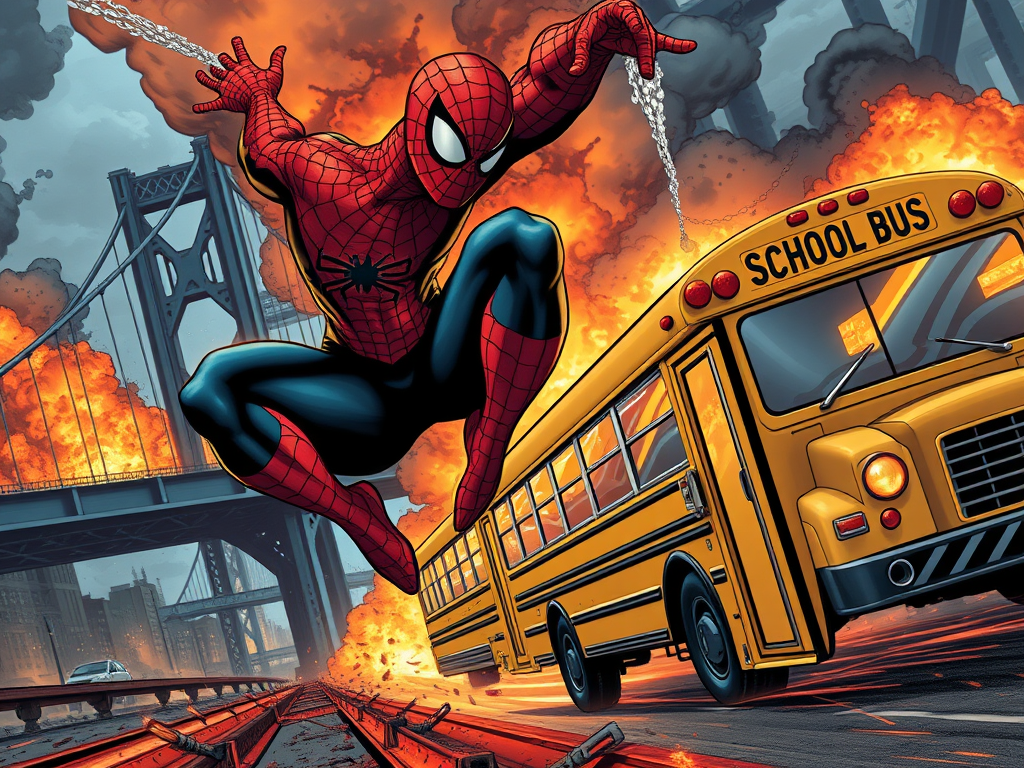
But then you get this Spider-Man art I made.
Don’t see the problems? Spider-Man’s spider symbol looks more like a stain on his top, his neck looks like it was twisted around a hundred and eighty degrees, the webbing looks more like chains than webbing (and on the left arm is coming out of the wrong place), and the bus has an extra twenty feet on it that’s being kept up by magic.
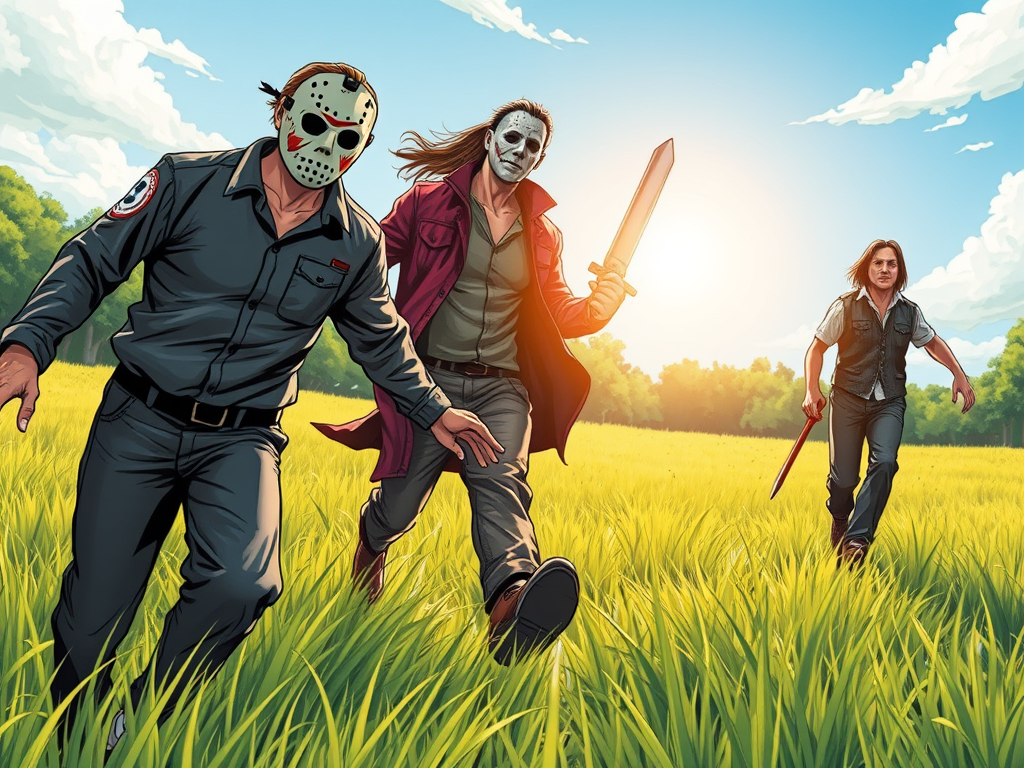
And that’s just one example. I did a bunch of ballet-themed pictures because AI-generated ballet art shows the issues with AI programs about fifty percent of the time (and I like ballet). Half the time, the dancers had extra limbs or missing limbs. And sometimes, the program couldn’t properly reproduce something I input into the prompt. Look at this picture of Jason Voorhees, Michael Myers and Leatherface skipping through a field.
Yeah, that’s not what I was going for. Jason is wearing Michael’s boilersuit, and the other two look like a masked warrior wearing weird make-up holding a sword and…I don’t know. A random guy with a machete? I tried this prompt four different times, and not one got close to what I was looking for.
So, to reiterate, while companies are going all in on AI in the hope that it can make them a profit, they’re working with programs that are flawed, can only copy, and sometimes rely on stealing to get trained. All while threatening the livelihoods of authors and artists.
Well, the good news is, while AI is making leaps and bounds, it may eventually implode. In one scenario, AI will eventually begin to copy itself, flaws and all, leading to the programs producing increasingly subpar creations. In another, such as this video seems to suggest, the facilities needed to store data for AI programs will start to consume tons of water and electricity. Water and electricity that, more often than not, comes from the same sources as regular people’s water and electricity. That competition will eventually move in favor of people unless a compromise or solution presents itself, and may eventually lead to limitations on AI facilities.
Still, it’s a fucking pain that the real creators have to compete with ones and zeros to prove we’re the superior creators. Hell, sometimes we have to go on strike to get the message across! In addition, some creators don’t seem to see the issue. I spoke recently to a creator who didn’t see what the big deal was and even welcomed the challenge from AI. Let me tell you, she was exhausting.
So, what can we do? Well, if you work with publishers, check with them on their AI policies. I asked both the ones I’ve worked with, and one’s already gotten back to me with a definite No. Just simply ask what their policy is on AI-generated material is, so it doesn’t sound accusatory. You can also reach out to your elected representatives and ask them to support legislation that protects creatives over programming.
You should also support creators who don’t use AI. Buy their book and artwork, leave reviews online, and make sure to let people know that those you support don’t use AI. (For the record, no AI beyond spellcheck is used in my work.)
And, as always, make your voices heard. If we aren’t silent, people will notice. And if they notice, they may be swayed to help us.
Every year, I do this post. Every year, you guys seem to like it. I imagine it’s because I make sure to get good graphics for it. Anyway, with only 36 days and a few hours left in 2024 (yeah, where did this year go?), it’s time for my annual assessment of the year and what I hope will happen in the coming year.
And let’s start by being honest: 2024 was a shitty year.
Yeah, I had hoped roaring at it like a tiger would make the year too scared to fuck with me, but I think it either got mad at me or my roar had no effect. Either way, this year sucked. The war in Ukraine continues on, with no sign of an end anytime soon; the war in the Middle East continues, and that’s not likely to end anytime soon soon, either; the 2024 presidential election ended in a way most people in the world feared it would; riots occurred in England in response to a stabbing in Southport; several countries experienced unrests, coups, and God only knows what else; hurricanes pounded the US and other nations mercilessly; prices have continued to rise on necessities like food, gas, and housing; and do I need to go on?
Overall, a rough year.
Granted, there were some nice things that happened this year. From July till earlier this month, I felt intense hope for the future of our nation thanks to a certain leader whom I hope we haven’t seen the last of. And the solar eclipse, as well as the northern lights being seen farther south than usual, was cool (I only saw one of those, but still cool). But all in all, it was a really shitty year.
On a personal level, yeah, 2024 was also quite shitty at times. The return to the office three days a week at my workplace had a ripple effect which caused my office’s workload to triple, leaving us stressed and struggling to stay on top of it. As a result, several times my performance suffered, which has had far-reaching consequences. I was unable to get Hannah and Other Stories into paperback, which was a major goal for me this year, and because of the economy and some other factors, I did not do as well at certain events as I expected. I was diagnosed with diabetes in August, which was a huge upset for me and has required me to make major adjustments to my lifestyle (don’t worry, I’m doing okay, but it still sucks); and it looks like my trip to Israel is in jeopardy because every airline is cancelling flights into the country due to the war (God forbid I get to visit my people’s homeland!).
Yeah, it’s been bad. I had to actually start attending therapy due to the huge amount of crap and stress I’ve been through this year. And I doubt I’m the only one.
Life was rough, but at least I got some good writing done this year.
Still, there were some highlights, and I try to focus on them:
I wrote some of the best stuff I’ve ever written this year, including a new novel, The Shape of Evil, which I plan to pitch at StokerCon next year; my first adaptation, a radio play of “Hannah” from Hannah and Other Stories, was released on Halloween (you can check that out here); my short story, “White Leaves” was released on the same day on the Tales to Terrify podcast (you can listen to that here); and despite underperforming at certain events, I did very well at others, and will probably make a profit this year instead of a loss.
Also, I started work on a new collection, and I plan to put it out in spring next year. More to come on that later.
Outside of writing, my health has improved thanks to all the changes I’ve made in my lifestyle; I’m still in a well-paying job that allows me to cover my expenses (and hopefully I’ll stay in the job or something similar until I’m able to write full time); I was able to do some traveling and even visited a few haunted locations; I had a couple of vacations over the year that were really restful and relaxing; my sister got married, and we got to do a little celebrating with her and the new in-laws; I got two new, really awesome tattoos; and I might still be able to travel to the Holy Land later this year.
So yeah, shit year, but I still have things to be thankful for (and right before Thanksgiving, too).
And what will happen in 2025? Well, like I said, I plan to release another collection and pitch The Shape of Evil to agents and editors at StokerCon (expect me to start editing later this week); hopefully I’ll get some more stories written and published, and maybe even (finally!) get back to writing my mummy novel Crawler; I’ll be seeing some amazing Broadway shows and a few ballets; hopefully I’ll get closer to writing full time; I plan to get another tattoo in the spring; and maybe I’ll do some more traveling. I do want to go back to Vegas or New Orleans again, if I can afford them, or even go abroad.
And I expect I’ll be resisting certain things from our incoming government, but sadly, life can’t be trouble free.
In any case, I hope 2025 comes with the resolution of certain world conflicts, and that any new troubles are mild compared to what they’ve been these past few years.
How was your 2024? And what are you hoping or expecting for 2025? Let’s discuss in the comments below.
One more thing, my Followers of Fear: as you know, the holiday season is upon us. And if you’re looking for some good horror to read, or you’re looking for a gift for that horror-loving friend in your life, why not try some of my books? From plant/human hybrids and strange gods to Mafia-hunting serial killers and carnivorous horses, I have something for every horror fan. I’ll leave a button below so you can check out my bibliography.
And if you like what you read, please leave a review online so I know what you thought. Positive or negative, I love reader feedback, and it helps other readers, as well.
And until next time, my Followers of Fear, good night and pleasant nightmares.
I am not a woman. I have never been a woman. And, unless reincarnation is a thing, I probably never will be one.
However, I do write from the point of view of or stories centering around women and girls quite a bit. And while I’ve been told a few times I do the female point of view well, I would never call myself an expert. No matter how often I spend time around the many women in my family (it’s a lot), or how many times I read or watch stories about women (even if they’re by women creators), that’s never going to change.
So, when I’m writing or editing a story, occasionally I’ll think to myself, “Hold up. Could this be problematic or offensive?” This actually happened the other night, with a story focusing on an actress, and I found myself wondering if some of what I was working on might be upsetting to some readers.
In that moment, I’m glad for the existence of sensitivity readers.
If you’re unaware, sensitivity readers are readers who review a work of literature for offensive content, like stereotypes or bias. They’ve been controversial, as some feel that sensitivity readers stifle artistic license or are trying to be moral gatekeepers, and a few have been employed to go over books by Ian Fleming and Roald Dahl, thus changing the books from their original contexts. But in situations like this, where I want to tell a specific kind of story but I don’t want to accidentally offend someone by including something that I may not even realize it’s offensive, sensitivity readers are a godsend.
(I also work in a job where the goal is to foster diversity and inclusion and to combat prejudice, so maybe my views on sensitivity readers, as well as my goals in using their services, are a bit different from other writers.)
So, that story I mentioned earlier? It’s with sensitivity readers now. Two women, both of whom are writers and one of whom is already familiar with my work, agreed to help me make sure this story is as good as it can be. And I’m sure they’re going to give me some excellent feedback once they’re done with it. Feedback which will ensure this story makes it out into the world someday.
And when I finish the second draft of The Shape of Evil, AKA the story about the 3D printer from Hell, I’ll employ the services of a sensitivity reader and use their feedback to improve the story before I pitch it to agents and publishers. After all, the main character is non-binary, and while I am in the LGBT community, I am not trans. So, I will need someone from that community, preferably someone who is non-binary, who can look at the story, tell me what I did right, what I got wrong, and what I can do to improve.
After all, I want to deliver the best stories possible, and I’m aware that I have my blind spots. What better way to make sure I do the first part than by having someone who can help me with the second part?
Do you use sensitivity readers? What has your experience been like?
That’s all for now, my Followers of Fear. I’m off to bed and to get some rest before the weekend. And until next time, good night and pleasant nightmares.
In recent days and across my social media, as well as on my blog, the number of people following me has grown by leaps and bounds. Why is that? I have my theories, but this post isn’t about theories. Instead, it’s to better introduce myself to my new Followers of Fear, as I like to call the people following me and supporting my writing career.
And since I’m a horror writer, obviously I’m doing thirteen items to get to know me better.
So, without further ado, here’s what will hopefully be a fun introduction to yours truly. And who knows? Perhaps some of my long-time Followers of Fear might learn something that’ll surprise them. It’s happened before!
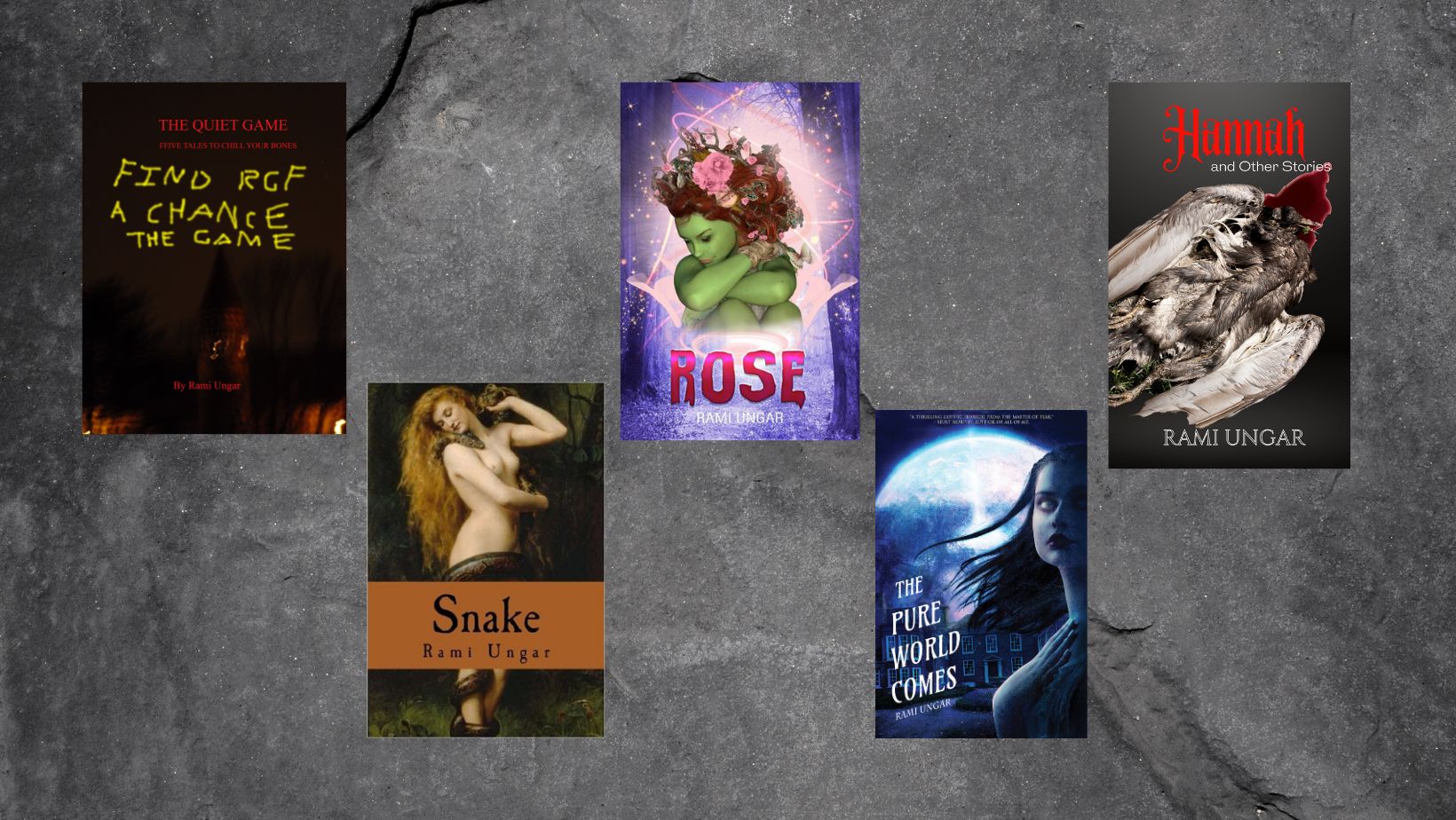
I’m a writer of horror and dark fantasy with five books under my belt. I’ve been writing since I was a kid, and in college, I started self-publishing books. My first book was a collection called The Quiet Game: Five Tales to Chill Your Bones, which came out in 2013. The next year, I published a slasher novel called Snake about a serial killer hunting mobsters in New York City (think John Wick, Taken and Friday the 13th got smashed into a novel). Both did okay, and continue to get readers today.
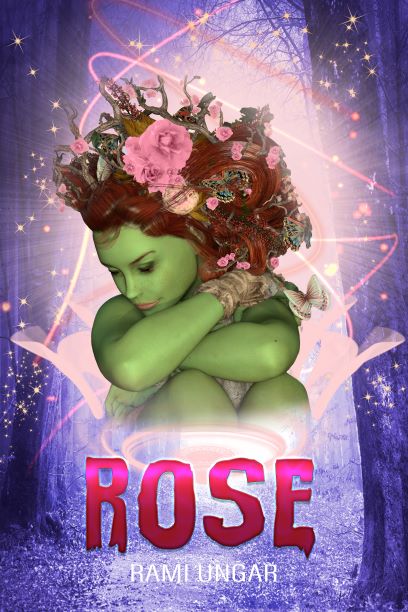
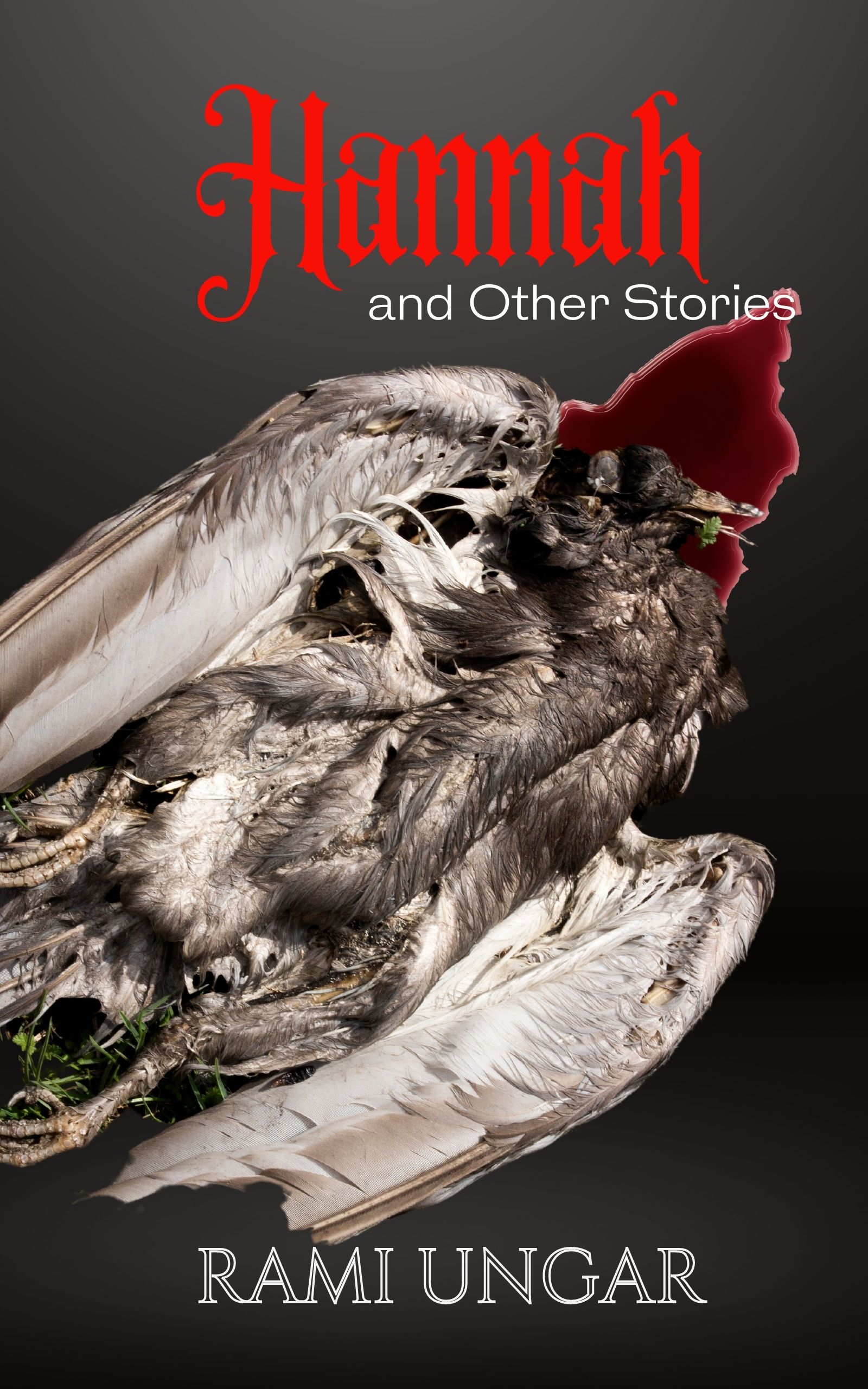
Five years later, I published my first novel with a publisher. Rose was released by Castrum Press in summer 2019, and followed a young woman turned into a plant/human hybrid (and that’s just the start of her problems). I followed Rose in 2021 with The Pure World Comes, a Victorian Gothic horror novel about a maid who goes to work for a mad scientist. And last year, in 2023, I published my second collection, Hannah and Other Stories, which was released by BSC Publishing Group.
That’s all five of my books out now. I’m proud of all of them and all I’ve managed to do with them over the years. And I plan to put out more in the years to come.
All five of my currently available books. I love them and am so proud of them (and their awesome covers).
I’m Jewish, queer, and have disabilities. Growing up, my life has been an interesting ride, to say the least. Not only did I grow up in a fairly religious Jewish household, but both my father and mother are rabbis. I went to a Jewish day school for most of my youth, learning Hebrew and Judaic subjects for half the day and then learning normal stuff the rest of the day. I also went to synagogue nearly every week, and attended Jewish teen and college groups until I graduated.
To this day, I still practice a lot of the religious practices I grew up with and feel a strong connection with my faith and heritage.
I’m also bisexual. I figured that out in college, and came out about half a year after I came to that realization. Probably took me that long to get comfortable with it because, even surrounded by accepting people and LGBT family members, I still worried about being persecuted. However, I did come out and it was all good, which was reassuring. And then some years later, I realized I was also aromantic (if you’re unfamiliar, it means I can’t feel romantic desire or attraction). Which, looking back, felt pretty obvious, considering I didn’t care about having a relationship all my life. But when I realized it, it was still a bit of a revelation.
And finally, I’m on the spectrum. Have been my whole life. I also have ADHD, a form of albinism, an anxiety disorder, and most recently, diabetes. Yeah, that last one was only diagnosed a couple of months ago, and it sucks! To say the least, it was a shock for me and I miss not being able to eat sweets or have a drink as much as I used to. But, on the bright side, I’ve improved my health by leaps and bounds since finding out, and I plan to keep it that way. Too much to do in my life, after all.
And as I’ve gotten older, I’ve made it a goal to increase representation of these three groups, as well as their intersections, in my fiction. So far, I’m meeting that goal, and hope to release some of those stories soon.
My writing influences. My major influence is, without a doubt, Stephen King. I read IT as a preteen and it was a formative moment in my life! That whole summer, I was transported to Derry, Maine and, when I finished that book at summer camp, I knew what kind of books I would write for the rest of my life.
I’m also majorly influenced by the ideas of HP Lovecraft and the subgenre of cosmic horror, as well as Anne Rice and a ton of anime and manga. All those creators and stories have led me to writing some really insane stories, such as Rose, which I mentioned above, or “Fuseli’s Horses,” one of the stories in Hannah, which is about carnivorous horses.
But I’m not complaining. People seem to like my work, after all.
I love going to the movies and to the theater. It’s rare that a month goes by without me going to see a movie. Usually it’s a horror film or a new superhero film, but I sometimes go see comedies, fantasy and sci-fi films, and anime films getting theatrical releases. I just love going to the movies! I didn’t get to go as much as I wanted when I was growing up, so starting in college, I went as often as possible. And I still do.
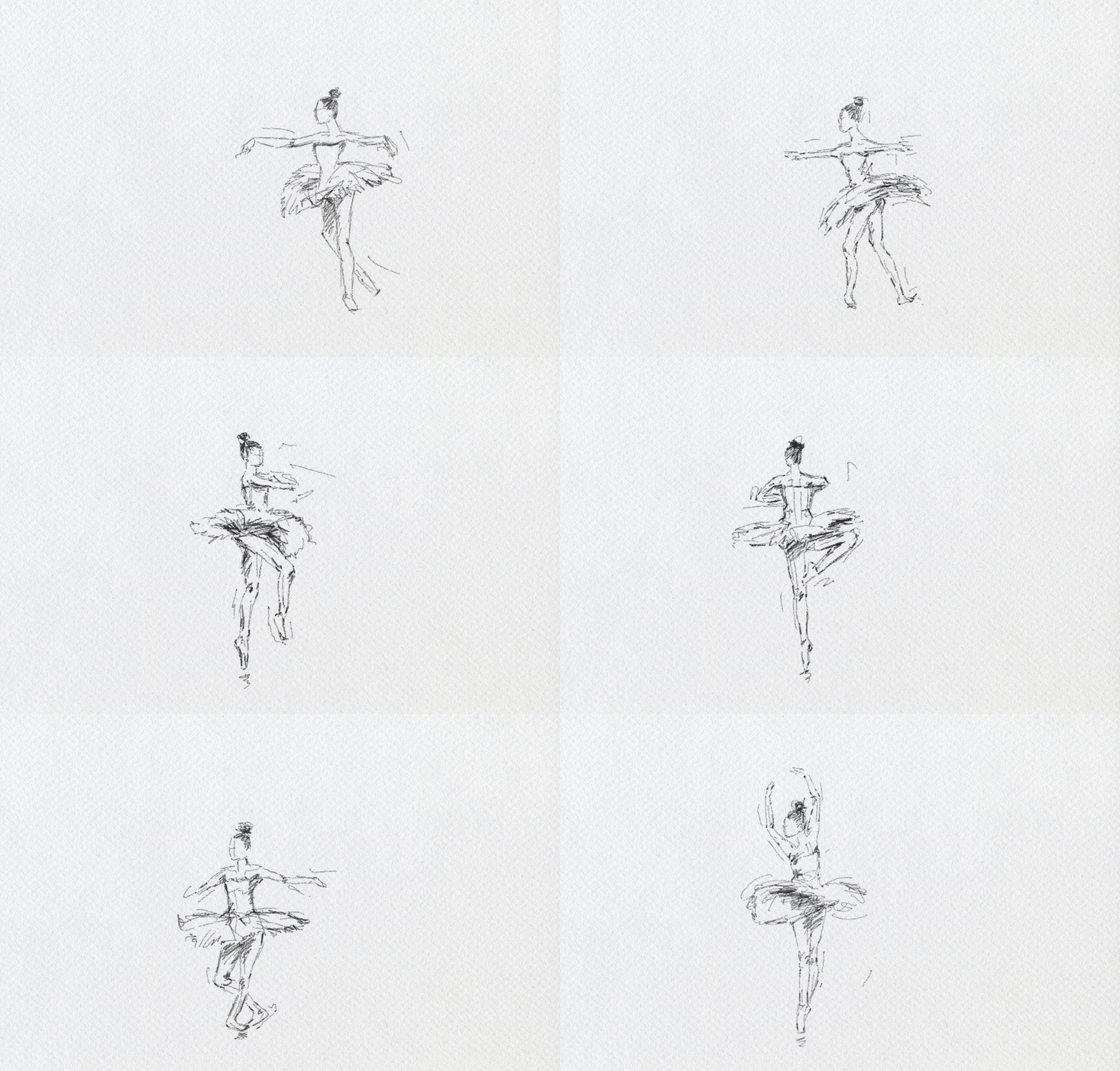
Most people are surprised to learn I like ballet. Then they see how much it appears in my stories.
And now that I have a decent day job, I also go to the ballet and to touring Broadway shows. My interest in ballet started probably in college, and as a working adult, I got really into it. It’s gotten to the point where I’m kind of obsessed and look for ways to insert ballet and dancers into the stories I write! And as for Broadway shows, I think Disney movies as a kid primed me to be a fan of those, though the breadth and depth of musicals out there is far wider than Disney can think up, as it turns out.
Now, I have subscriptions to both the local ballet company and to touring Broadway shows that stop in Columbus. And I have to say, I think I would be just as psyched for one of my stories to be adapted into a ballet or Broadway show as I would be for a movie. Maybe even more.
I have several tattoos. To be precise, I have a chest tattoo of a tiger with a blue Star of David, a full back tattoo of one of my favorite ideas from the horror genre, a wrist tattoo referencing some of my favorite anime, and a Tarot card on my right leg that’s about halfway done. However, while I have my tattoos, I don’t normally share photos of them. That’s partially because I just don’t feel the need to. My tattoos are for me to express myself and to have my body reflect who I am. So, their existence on my body is enough for me.
Still, they’re awesome. And I plan to get more as time and money allows.
My most popular work is Rose. I’ve been publishing for over a decade now, but none of my work has done as well critically or commercially as Rose. And I think I know why: it’s the unusual story of a woman turned into a plant/human hybrid. Very weird, very Kafkaesque, and very fantasy horror. Add in that it’s a short but twisty read with Japanese folklore and mythology mixed in, and it’s not surprising that that book does so well.
Plus, you gotta love that cover.
Anyway, if you would like to check out Rose, you can check out its page HERE. I hope you like it if you read it.
I go ghost hunting at least once a year. I’ve been lucky to go to several different locations to ghost hunt. From famous places like the Ohio State Reformatory in Mansfield, OH and the Lizzie Borden Bed & Breakfast in Fall River, MA, to lesser known locations such as the Anchorage Mansion in Marietta, OH and the Bellaire House in Bellaire, OH, with the hope to visit and revisit many, many more.
Also, I try my best to get my investigations on YouTube and upload them to YouTube. So, if you would like to check out my ghost hunting videos, you can check out my channel HERE. They’re spooky good!
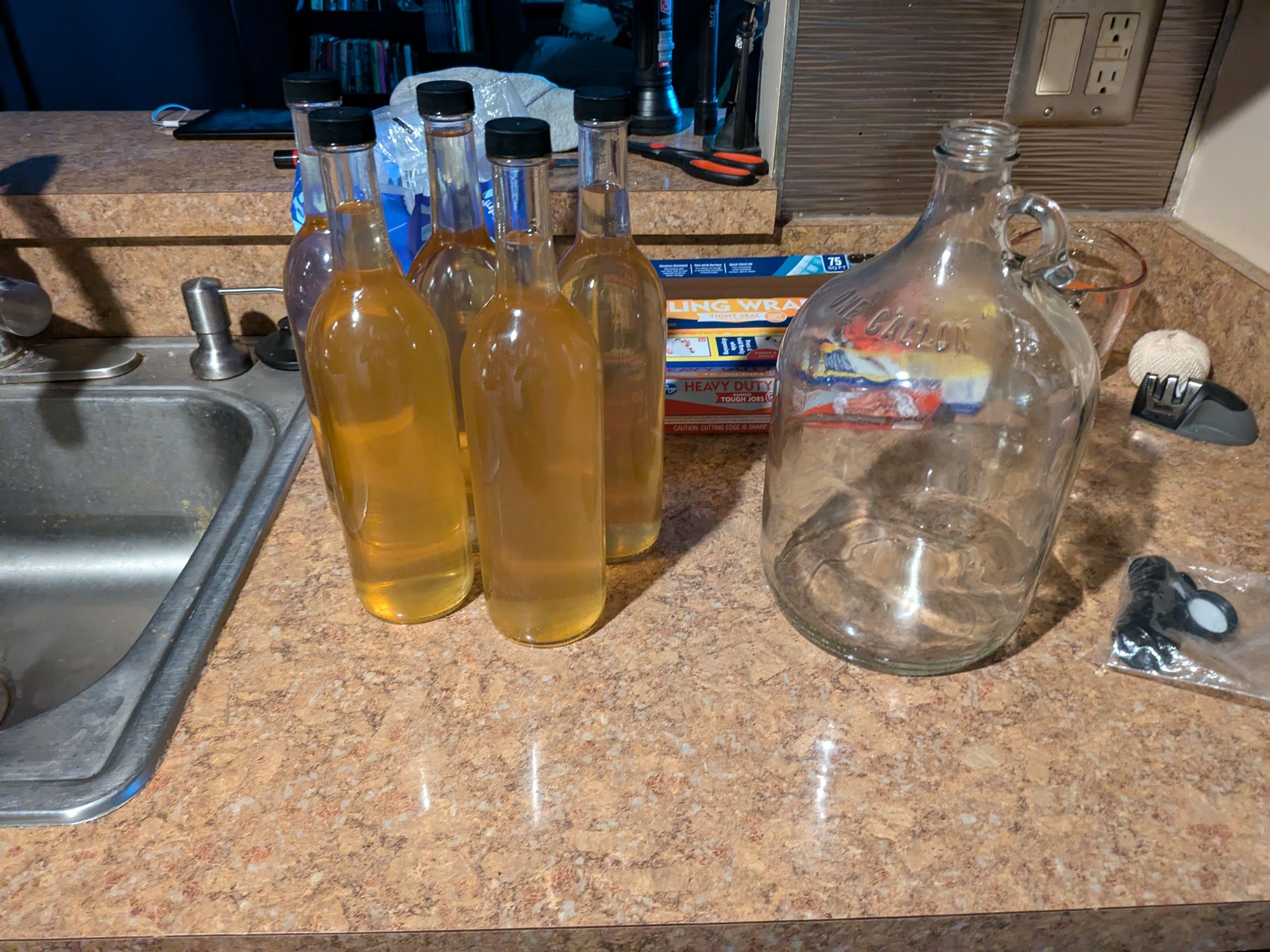
I make my own wine. Most people don’t realize that you can brew your own alcohol at home, but it is, and there are plenty of people of doing it, including me. I’ve made a batch of plum wine, and I just finished and bottled a batch of pumpkin wine (yes, pumpkin wine). And I’ve been making my wines based on colors of the rainbow: plum wine is red, and pumpkin is obviously orange. Yellow will be dandelion wine, green will be mint, blue will obviously blueberries, and indigo/violet will be elderberries. And I can’t wait to try them all!
The pumpkin wine I made, all bottled up. Looks good, doesn’t it?
I bought my first home two years ago. For millennials like me, it’s hard to find an affordable home, let alone a non-fixer upper that you don’t have to share with a bunch of other millennials. However, I was lucky enough to find and buy a small condo for myself two years ago, and I’ve been living in the Haunted Condo, as I call it, ever since.
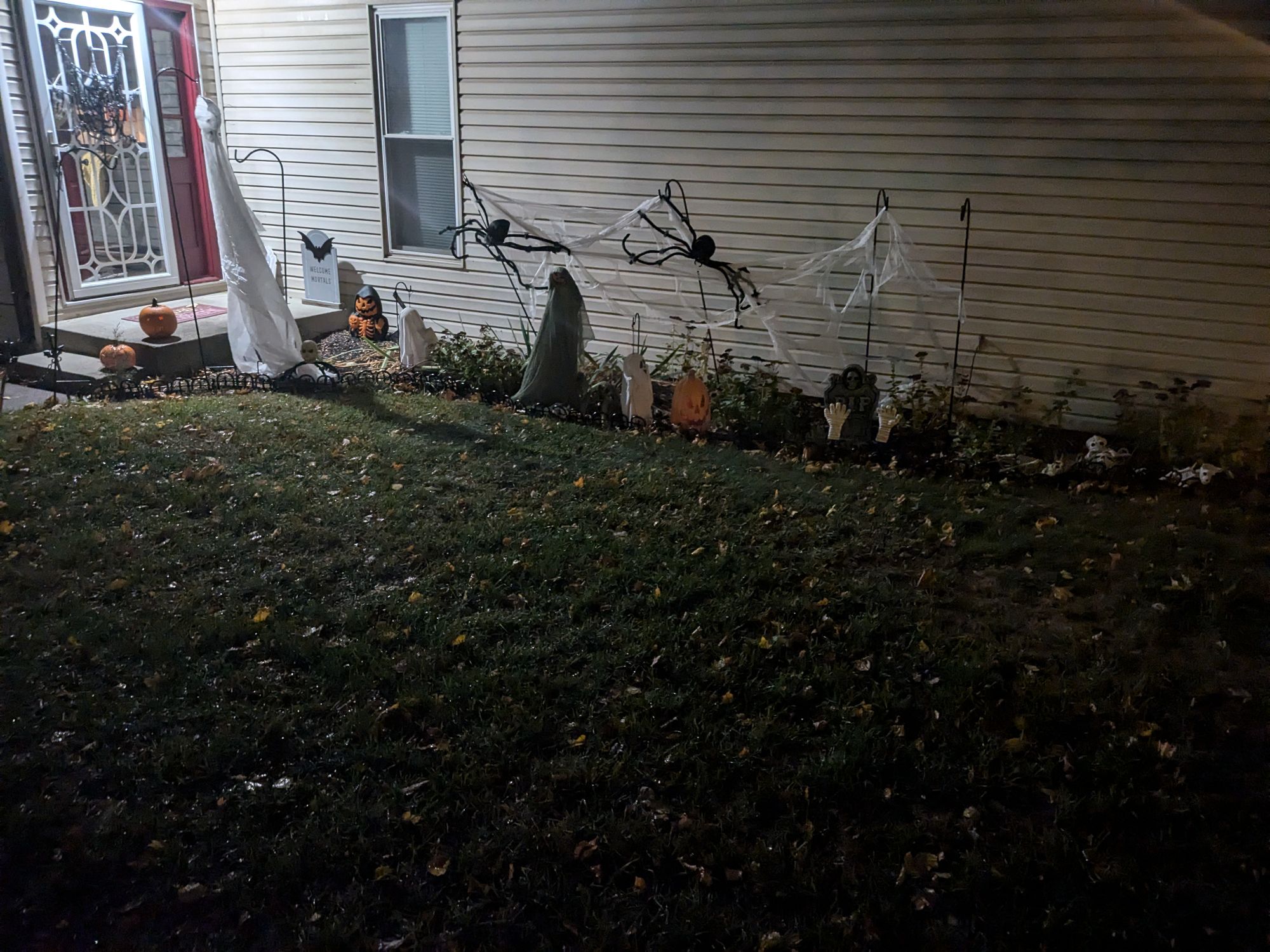
Sadly, it’s not very haunted by anything except me. I don’t know why, I’ve done voodoo rituals and everything else to make the place haunted, but so far, no otherworldly dice. At least I can make one hell of a Halloween display every October and decorate the inside as I like!
My yard is the spookiest in the neighborhood every October.
I’m the chapter coordinator for HWA Ohio. The Horror Writers Association is an international organization that supports horror writers and helps them network and grow. Ohio’s chapter is about six or seven years old, and I’m the guy who runs it! Which was never my intention: some other members organized the chapter, and I volunteered to find a venue. Somehow, I kept arranging locations for us to meet, and that morphed into becoming the chapter coordinator. And after the parent organization set a formal election process for chapter coordinators for all chapters…well, I ran without competition. I guess people think I’m doing a good job or something?
Anyway, HWA Ohio has its own website, which lists our members and puts out news about us. If you would like to check the website out and support us, click HERE.
So proud to have a story from this collection adapted into a radio play.
I recently had my very first story adaptation. Remember my collection Hannah and Other Stories, which I mentioned above? Earlier this year, I became acquainted with a producer for WCBE 90.5, a local NPR station who interviews local creative types. He also runs a yearly Halloween show, where a short story is adapted into a radio play, with the roles played by local high schoolers.
“Hannah,” the lead story in Hannah and Other Stories, was this year’s story. It was my first time having a story adapted, and it was so, so good! The kids did really well in their roles, and it was amazing hearing my story brought to life on the radio.
And if you would like to listen to it, you can! It’s available to stream online, and you can listen to it in full HERE. Let me know what you think if you listen to it. The more people who listen, the better for future shows and future students. Plus, who knows? Maybe another one of my stories will get adapted. It happened once, didn’t it?
I tend to break out in song at any provocation. I kid you not, this is something I did daily in high school, and which I do quite frequently these days. In fact, I’m part of a critique group with some of my fellow Ohio horror writers, and they say it’s not a meeting if I don’t burst out in song at least once!
Too bad I sing badly, but hey, why should I let that stop me?
What I’m working on now. I’m juggling a few projects at the moment. For one, I’m putting together another collection of short stories, and I hope to have more on that in the coming days and weeks. I also recently finished a new novel, The Shape of Evil, which is about a 3D printer from Hell, and I hope to have that ready for pitching to agents and publishers by June next year. Finally, I also have a collection of novellas I plan to work on at some point, and I have a mummy novel I started but put aside for other projects that I plan to get back to.
Plus some short stories to send out to magazines and anthologies here and there. Yeah, I’m a busy guy, aren’t I? But that’s kind of the way I like it.
Anyway, that’s thirteen things you need to know about me. I hope you enjoyed learning about me, because I enjoyed writing it. And if you did, be sure to follow this blog and my other social media to keep up with what I’m doing and when I have new work coming out.
And if you would like to check out any of my other work, I’ll leave a link to my book page down below. You’ll find all my published works and then some there, including free stories. And if you like what you read, I hope you’ll leave a review online so I, as well as other readers, know what you think.
Until next time, my Followers of Fear, good night and pleasant nightmares.









 Rami Ungar The Writer