I’m happy to let everyone know that I’ve recently been interviewed by Tricia Drammeh of Authors to Watch about the short stories I published in the Strange Portals anthology last month and which she appears in as well. If you get the chance, please check out the interview. And while I’m talking about it, I’d like to thank Tricia for featuring me. It really means a lot to me and I hope I can return the favor sometime.
Posts Tagged ‘author interview’
Conversations with Pat Bertram
Posted: July 14, 2014 in Author Interciew, WritingTags: author interview, authors, blogging, editing, entertainment, interview, living and life, novel, publishing, reflections, social media, thriller, writing
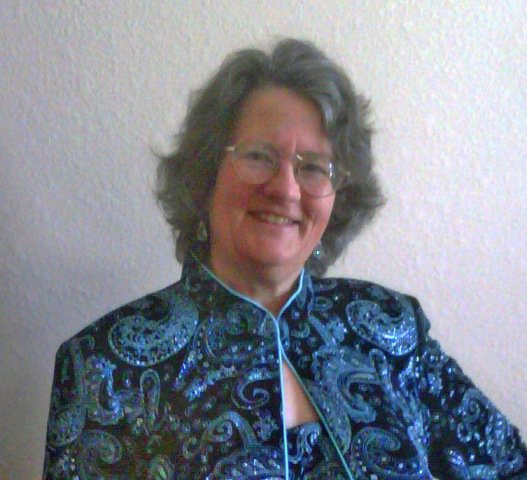
Today’s interview is with an author who has a lifetime of experience and some really great books too. Pat Bertram is an author with Second Wind Publishing, whose books include the thriller novels More Deaths Than One and A Spark of Heavenly Fire, as well as the non-fiction book Grief: The Great Yearning, a book about dealing with grief based on personal experiences. Pat also is an administrator and active participant in a Facebook group for suspense and thriller writers, and has two blogs, one of which she writes posts for at least once a day.
I was lucky to have a chance to ask Pat, whom I consider a friend, some questions on her life, her writing process, and what she’s up to these days.
How did you get into writing in the first place?
When I was in my mid twenties, I set out to be a writer. I quit my job, gathered up paper and pens, and sat down at the kitchen table to write. I thought writing was a type of automatic writing, that I just needed to put pen to paper and words would come. Didn’t happen. When I tried to force words on the page, I discovered I had no talent for writing, so when real life got in the way, I let go of my desire to write and turned my mind to other things. About fifteen years ago, I had some predicaments I wanted to work through, so I decided, talent or no, that I would write the story, which I did. And it was terrible! During the subsequent years, I have learned how to write, to pace a story, to write sparse but picturesque prose, but most of all, I have learned how to rewrite and edit.
How would you characterize the stories you write?
The unifying theme in all of my books is the perennial question: Who are we? More Deaths Than One suggests we are our memories. A Spark of Heavenly Fire suggests we are the sum total of our experiences and choices. Daughter Am I suggests we are our heritage. Light Bringer suggests we are . . . ? So, perhaps my genre is “identity quest,” though I can’t see that as ever being a big draw. My only hope is to build an audience for “Pat Bertram books.”
What is your writing process?
I have no real process. When I do write, it’s usually late at night because all is quiet. I don’t set a daily goal — the words come hard for me, so I’m grateful for whatever words I manage to get on paper. Oddly, considering this is the electronic age, I still prefer to write longhand, though I am gradually doing more writing on the computer. As for the story, I know the main characters, I know the beginning of the story, I know the end of the story, and I know how I want the characters to develop, but I don’t flesh out the individual scenes until I start writing them.
You blog at least once a day, and you often talk about your personal life, both the good and the bad. What gives you the courage to share such information with your readers?
Before my life mate/soul mate died, I wrote innocuous — and fairly impersonal — posts about the books I read, the stories I was writing, general thoughts I had. After he died, I was shocked both by the true scope of grief and people’s ignorance of the process, so I made it my mission to tell the truth of what I was going through to help dispel the myth that after a couple of months, life goes on as it did before. I gained so much by opening up, that I have continued to be open as other traumas enter my life, such as my efforts to cope with both my aging father and my dysfunctional brother.
Are you working on anything at the moment?
Yes. When the members of my dancing class found out I was a writer, they suggested I write a book about them. It’s been fun — all the characters have real life counterparts, so it has become something of a group project.
What is some advice you would give to potential writers?
Writing is not always about writing. Some authors can sit down and let the words flow and lo! There is a story! Other authors have to think about what they’re doing. So ask yourself, what story do you want to write? Why? What do your characters want? Why? How are they going to get what they want? Who is going to stop them getting what they want?
If you were stuck on a desert island and could only take three books with you, what would they be?
Three blank notebooks. And pencils, of course.
If you’d like to find out more about Pat, you can find her at her personal blog Bertram’s Blog and on Pat Bertram Introduces, where she interviews authors, publishers, and even book characters, as well as on her Facebook page.
Conversations With Timothy Louis Baker
Posted: June 20, 2014 in Author Interciew, WritingTags: author interview, authors, editing, entertainment, interview, journalism, living and life, novel, publishing, reflections, social media, writing
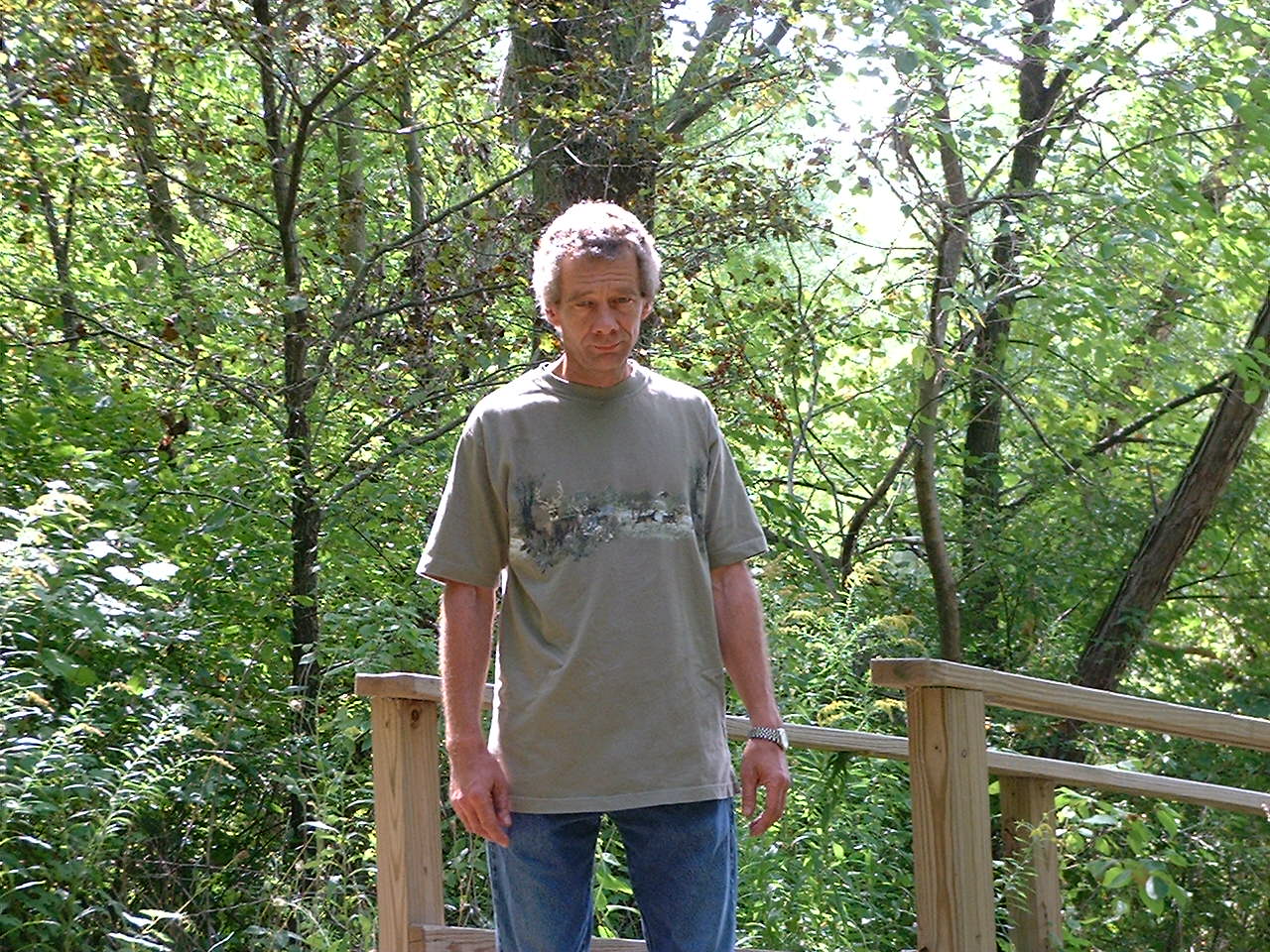
He started out on a farm, but had to leave because people were after his life. What happened over the many years for this man, before turning to writing, involved a life with more twists and turns than a labyrinth, involving drugs and crime, camping and living in the mountains across North America, and even some interesting paranormal experiences. Today’s interview is with Timothy Louis Baker, author of Fantastic Florida Fun, Crime and Drugs on Trip City Street, and his autobiographical When North Meets South and East Meets West.
Based on the descriptions of your books, a lot of your writing seems to be based on your own personal experiences. What motivates you to write about your past and how do you come up with stories based on your life?
Rami, I often make the comment that I write what I know and I know what I write and that holds true, through present I refer to things of my own life to write about and very little do I have to look up in another book or online somewhere. That is all because I have had such an interesting life and I’ve found that if I take those experiences I’ve had and expound upon them in fiction but along the same lines as has occurred in my own past, that my writing is just that, not only interesting but entertaining, to the ultimate degree. I’m very well-traveled and have been in a variety of locations and multitude of actual experiences, so I have no trouble in keeping a story line going about a certain person, place or thing. Whether I write fiction or non-fiction in the case of my autobiographical works, my story unfolds and continues consistently with new material and not keep repeating the same thing over again. If you examine my writing, you’ll find that the pace is fast and constantly changing, with either what the character is doing, where they are in location or what they are up to. It all varies at an incredible rate because that’s exactly how I’ve lived, continuously changing where I am, what I’m doing or whatever, there is never a dull moment. My lifestyle reflects upon the pages of my books, even the fiction works and really as a writer and an author, because of the kind of person I am, I wouldn’t have it any other way. That just goes to show you, personalities show up through our work and I think that’s the way it’s supposed to be.
Could you walk us through your writing process, from the moment you get an idea to when you publish the book?
I started writing on pencil and paper then graduated to a typewriter and eventually by computer, but it all goes the same route. I write my story and then I edit it with my own author’s knowledge but sometimes, after submitting to a publisher, I have to crack down on myself and allow them to edit it also. My full-length autobiography Where North Meets South and East Meets West was an idea I had long ago, I mean like when I was 16 years old and hitchhiking to Florida with little or no money, I had an idea that my life was going to be long enough and full enough to write a book about it all, and more. When I was in my 20’s and living part time in the mountains of Kentucky, Tennessee, Arkansas, and the forests of Michigan and Minnesota, I came about the idea for each and every story of all my books and made that mental note in my head the exact ideas I had for them, and eventually I did write them. It was easy because I already had the created version in my head, I just had to use my imagination to add the characters, places and events that were in my head to the pages of my books and behold I am an author again. Then after submission to publisher and acceptance of my manuscript I am again a published author. With me, writing is the work, editing is minuscule comparatively and when I get that acceptance email from a publisher is truly happiness. Because I know my writing is going to be available to the public for the people to have access and that is the point of my career. It’s not how much money I might make or how famous I will become that is important, but getting my writing out there to the people who may read it. The rest all comes along with extras in between that, not just as the main point of enjoyment in my life but the fulfillment of what I’ve written as an author to be enjoyed by others.
You’ve had some very interesting life experiences. What do you do now these days? Is your life any more interesting, or has things gotten somewhat calmer?
Ah, but life is the same. Now that I don’t do all of the things, as much or as many times in a row, as when I was younger, doesn’t mean that I’m any less active or live a less exhilarating lifestyle anymore. I keep occupied at what a great many people may do, and I’m sure they do, by online computer and other devices. Look we have access to all of the things that people used to have to go to the library to look up or reserve a mental note to ourselves to ask a certain particular person we might know, next time we see them. Now not only that we can read books and gain all of this information or personal entertainment, right at the touch of our fingertips. Life is as exciting as ever. I fish in the creek, I ride a bike almost everywhere I go in town and at 55 I still lift weights. Lifting weights is what I used to call bodybuilding, but because I’m not a spring chicken anymore and don’t grow as rapidly nor can I do as much weight as I used to, I now just ‘lift weights’ or ‘do my weightlifting.’ As far as living a calmer life? Maybe when I’m a hundred. Never a dull moment and I always mean that in a good way when I say it. One does not have to go thousands of miles to experience adventure. That is something a person can do anywhere they are and anything they’re doing. It is something you find inside yourself, so much of the time anyway. All it usually takes is a little bit of initiative to find or discover and that can be nearby as well as far away, it just depends on the situation. I like the days when the last thing I can possibly do that night when I go to bed is drag myself off to the bed and lay down to sleep, just as much as I like those days when I am able to sit for longer periods of time and let the radio or television entertain me rather than get it by just so much activity of my own hoping that will keep me excited enough to stay up without falling asleep until I get all the work done. Mentally I’m probably more active since becoming a writer than I ever was before. If not then just as much anyway.
How did you get into writing?
When I was 33 years old I had the idea to write down some notes about my lifetime and because my life had been so interesting up to that point I soon invested in a typewriter that ended up the forerunner of a rough draft for my autobiography. I had lived so many interesting experiences that I thought the world should know all about them. It wasn’t until a few years later that I was able to gain the ownership of a computer but before I did I set down a rule in my house: Every time I came up with an idea on something pertaining to a real experience that happened to me personally in my lifetime I would write it down on a piece of scrap paper and lay it on a pile on my kitchen table. Well after several months and when the pile was a couple of inches tall and I was sure everything I would need the time to think of before writing had already taken place, I finally found a way to get a computer and that is when the placement in chronological and geographical locations began to take shape. With the computer I could write something where I thought it should be and then if I didn’t like where it was or how it was written, I could change it and copy and move it and paste it wherever the best place for it I judged would be at. Well this was OK except that something happened, that is now included in my autobiographical works, a catastrophe and all I got away with it all were the floppy disks of some of the stories of some of my books now, but also including a printout copy of my first rough draft. Well to make a long story short, being relocated a couple of times, finally I was able to manage to procure another computer and that was the one that wrote all of the rest of my seven books that I had not already written on either the floppy disks or the paper printout version of my autobiography. This led to me achieving internet access and that brought on copyrights for all seven books and eventual publishing of them all. Basically I got into writing because I had some things happen to me that I thought were so unique that nobody else in the world had these occurrences and so I was compelled to write then and that is my full-length version autobiography Where North Meets South and East Meets West, the less graphic and condensed edition An Experience Heaven Sent and My Life’s History in Poetry and the uniqueness of those events that I’ve never heard of happening to any living man in my generation were the miracles including and especially the living, waking, physical ascension in Heaven where everyone and everything was young and beautiful and lived forever. Then I was returned to the earth by my ‘higher power’ that had caused me to thus be arisen into that afterlife, also brought me back. If that isn’t something to write about then I certainly don’t know what is of my own personal lifetime of events and trivia.
What are you currently working on?
I haven’t been writing any actual books lately but I’ve got one started that I began a few years ago and sometime when the workload of book marketing the seven books I’ve already published slackens and begins to give me ample opportunity to finish writing that one I will. I have to have some time for me too on a personal level to do the things I want to do with my own time on my own space but the name of this newest work of mine is Some Sing Song Way and it is a historical novel about a man that is abducted by Indians from the Oregon Trail and he discovers that living with the red men is actually compatible to his own life. He has a past with the white men and now he lives with Indians, finally on a voluntary basis and actually sort of prefers them. Later in the book he will meet up with the past in a US fort out west and after that when he is alone and in solitude the events of his lifetime will unfold before him as he will contemplate that past with his own history with Indians, while he is living out in nature without either one, or anyone, and he will decide how he really feels about it all in his own present and that will make up his mind on his decision about how, where, and with who he will live the rest of his days.
What is some advice you would give a budding writer?
I always give the same answer to people that ask me advice through posing this question and that is – write what you like and hopefully that will be what you know and if you write what you know, you are likely to write the very best that you can write. That has so far been my answer to this question of what to tell someone that asks what they should write for a book, written by them.
If you were stuck on a desert island and could only take three books with you, which ones would you take?
That’s easy and they are all books that I have written. The books that are the most important things that I could ever take with me to be alone. Even if I ever doubted I would ever see anyone else ever again, I would take the three autobiographical works that I have written, Where North Meets South and East Meets West, An Experience Heaven Sent and My Life’s History in Poetry. Because in them I know what I left in print in books behind me back in civilization, the most important words or any kind of works I have ever performed in life would be there to remind me of what I left behind that someday, maybe not in my own lifetime, but someday in some generation in the future perhaps, would be invaluable to the rest of the world of their, those people’s time. In other words, someday in some generation this story will come out and make that big impression upon all humanity at that time and continue for the rest of life on earth as we now know it.
If you would like to know more about Timothy Louis Baker, you can find him at Author’s Den, on the website of SPBRA, Facebook, and Twitter. And if you’re interested in checking out his books, you can find them on Amazon.
That’s all for now. Hope to have some more interviews soon. And if you want to read previous interviews, head to the Interviews page, where authors and characters will tell you about themselves and their books (and whether they write them or spring from them).
Rami Ungar, Author of “Snake”
Posted: June 14, 2014 in Author Interciew, Journalism, Living and Life, Novel, WritingTags: author interview, authors, blogging, editing, entertainment, interview, living and life, novel, publishing, Snake, thriller, writing
My friend and fellow author Pat Bertram just released this interview on Snake and what went into the writing of it. It’s a really great post, and I enjoyed reading it. And you should also check out Pat’s blogs as well. She’s an amazing author and woman, and you can learn a lot from reading her posts.

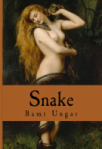 What is your book about?
“Snake” is about a young man (and I mean young) whose girlfriend is kidnapped over the phone. Later events cause him to have a break with his sanity and he becomes a serial killer, determined to hunt down every member of the mafia family that has his girlfriend. It’s a very dark thriller, and it’s very unusual to have the serial killer as a protagonist. I’m hoping that will allow people to enjoy the story more, though. Fingers crossed, at any rate.
What inspired you to write this particular story?
I guess maybe it was the movie “Taken”. Yeah, there are plenty of similarities, but it’s definitely it’s own story. That’s actually what I wanted: I wanted to create a much darker story than “Taken” portrayed, though that was pretty dark in itself. I like to think I’ve succeeded in that respect. We’ll see what…
View original post 503 more words
Conversations With Ruth Ann Nordin
Posted: April 21, 2014 in Author Interciew, WritingTags: author interview, authors, editing, entertainment, interview, living and life, proper decisions, publishing, reflections, self-pub authors, social media, writing
There is so much I’d like to say about Ruth, but I only have limited space to do so. Let me start with the things you definitely should know about her: Ruth is a prolific author, having written an astounding forty-six books, consisting of many different types of romance, as well as science fiction, fantasies, and non-fiction. A co-founder of that wondrous blog Self-Published Authors Helping Other Authors, many authors, including myself, look forward to her articles on how to self-publish cheaply and to do it well. And having been in the business for a number of years, she knows what she’s talking about. Though if you ask her, she will say that she still has a lot to learn.
I was able recently to sit down with Ruth and pick her brain on writing, her experiences with writing, and what she’s been up to lately. And as always, it was a wonderful and illuminating experience.
How did you get into writing?
When I was in the eighth grade, I went to the library looking for a certain plot. I searched through all the books in a section and couldn’t find the book I wanted to read. Then it occurred to me that I could write the book and read it.
Do you have a routine when it comes to writing?
I wish I did, but I don’t. I do have the luxury of staying home during the day so I can write, but I also have a husband and four kids to take care of, and they are constantly interrupting me. I pretty much write during the entire day, but I write in 10-20 minute spurts.
How did you get into self-publishing and what has the experience been like?
I got into self-publishing because I wanted to have full control over the content in my books. My experience has been extremely rewarding and surprising. The rewarding part is that I get to see my books in ebook and in paperback. I have the pleasure of going back and reading them whenever I want. The surprising part is how quickly self-publishing took off for authors. Back in 2009 when I gave up on the idea of going with a publisher, I pretty much assumed I would never sell any books. Back then, there wasn’t this expectation you could make money self-publishing books. You believed the publisher was the only way to see money (via advances and royalties). These days, the opposite is true. Never in a million years, did I think things would be as they are today.
Why did you help start “Self-Published Authors Helping Other Authors”?
At the time Stephannie Beman and I decided to create the blog, there was no other blog out there dedicated to helping other authors who were thinking of self-publishing their books. I had searched the internet, and it seemed that every blog I came across was dedicated to helping authors who were looking to find a traditional publisher. I wanted to educate, inspire, and support other authors who wanted to self-publish their books. Back then, the big thing was just letting authors know it was okay to self-publish. There was a lot of stigma associated with self-publishing. Today, that stigma is still there, but it’s so small that it doesn’t even come on the radar. These days, the focus is more on educating new writers on how to produce quality books that can compete with (and often be even better) than traditionally published books.
What inspires you the most?
The characters in my stories are the ones that inspire me to write. If I don’t feel an emotional connection to them, then the book isn’t worth writing.
What do you do when you’re not writing?
When I’m not writing, I’m usually doing household chores, spending time with family and friends, or reading. Most of my reading is nonfiction, some for spiritual growth and some for research on how to better write or run my business. My fiction reading is mostly for genres apart from romances. I write romances so much that I like to get a break from the genre to read other things. I love horror the most, probably because it’s a lot different from romance.
What are you working on now?
I always have several projects going on at the same time. I’m working on two co-authored books with Stephannie Beman and three that are on my own. Four are historical western romances and one is a contemporary fantasy romance. See why I like a break from romances when I read?
If you were stuck on a desert island and could only have three books to pass the time till you were rescued, what would those books be?
The Bible, How to Market a Book by Johanna Penn, and Rise of the Machines: Human Authors in a Digital World by Kristen Lamb.
If you would like to find out more about Ruth, you can visit her on Self-Published Authors Helping Other Authors, as well as on her website, her blog, on Facebook, and on Twitter. And while you’re at it, make sure to check out any of her 46 books. I bet you won’t regret you did.
Conversations With Becket
Posted: March 7, 2014 in Author Interciew, Journalism, Living and Life, Novel, Reflections, WritingTags: author interview, authors, blogging, celebrities, editing, entertainment, ideas, interview, journalism, living and life, novel, publishing, social media, writing

Today’s interview is with indie author Becket, whose books include The Blood Vivicanti series and the Key The Steampunk Vampire Girl books, including the recently released The Tower Tomb of Time. When not writing, Becket works for author Anne Rice and is supplementing his education with a degree in psychology.
I had the chance to email Becket and learn a little bit about him, his books, and what it’s like to work for Anne Rice. It was definitely an enjoyable correspondence.
RU: So Becket, you’ve had quite the interesting life, working as an author, working for an author, and at one point you were a Benedictine monk. Makes me curious about what else you’ve done, so could you give us a brief history of yourself?
Becket: I entered the seminary when I was 21 because I wanted to deepen my relationship with God as well as be a minister of hope, faith, and love. I spent three years in the seminary, during which time I also finished my BA in music composition. Then in the summer of 2000, I entered a Benedictine monastery, St. Joseph Abbey in Covington, LA. The spiritual charisma of the monastic life appealed to my personality type. The monks lived a very silent life, guided by two principals of work and prayer. During my first year in the monastery, Anne Rice requested a harpsichord for a book signing in New Orleans. We monks had a very nice one; and the abbot asked me to deliver it because of my musical background – I had studied the instrument in college, along with several others. That was when Anne and I first met. We developed an email rapport over the next few years while I was earning my MA in theology. When I completed my degree in 2005, I decided that it was time for me to re-enter lay life and, needing a job, I emailed Anne, asking her fi she had a job on her staff for a former monk with a few degrees. She replied with a job offer. I’ve been with Anne ever since, studying the craft of writing under her guidance while also earning an MS in psychology.
RU: What is it like, working for Anne Rice? Besides the amount of jealousy you must receive from fans including myself, I mean.
Becket: What is it like, working for Anne Rice?
Working for Anne Rice is like working for a childhood hero. I first read Anne’s books when I was a teen. Being a lonely adolescent, an outsider, Anne’s words spoke to me powerfully – because her words have a wonderful way of showing empathy for the outsider/reader. Many days she and I talk about literature and the book publishing business. It is a continual learning experience. Every day I learn something helpful and significant about my writing, about the publishing of my own books, about my own capacity for problem-solving, about many things. But every day is a new experience because every day I’m presented with a new challenge. Before I started working for Anne, I had never used Photoshop. So to assist her as best as I could, I learned many new skills, such as photography, shooting video, proper lighting, sound engineering, etc. I also learned several programs in the Adobe Creative Suite, namely Photoshop, Illustrator, and even Premier Pro and After Effects. Most of those programs I use every day, whether it is creating an app for Anne, or posting an image, or editing a video for Youtube. And today all those programs have helped me greatly in my own work; they are invaluable book publishing tools. A successful indie author cannot live on Word alone.
RU: Tell me about it. iMovie and Photoshop have been great tools in the past for me. Now, you’re new book is the latest adventure for your character Key the Steampunk Vampire Girl. Tell us about her and the new book.
Becket: Key’s new adventure picks up where the last book left off: Key has just escaped from the Dungeon of Despair. Yet unlike the last book, which takes place over the course of 250 years, the course of this book happens in a single night. Key gets to do what she has not done in over two centuries: She gets to explore the City of the Dead. She rides a Hobbeetle, she meets the Worm King, she visits the Grave of the Grim Goblin, whose not as grim or dead as some people might think, and she does so much more! Ultimately she finds herself at the Tower Tomb of Time, which allows her to visit the moment when she was first made a vampire. She discovers the mystery behind her mom and dad’s disappearance, as well as the reason she was taken to the City of the Dead in the first place. In other words, The Tower Tomb of Time explores questions that were raised in The Dungeon of Despair.
RU: Some people would hesitate to write a vampire novel these days when most people associate vampires with Twilight. What made you decide to write about vampires?
Becket: Before there was Twilight, there was Anne Rice. She was ground breaking (and indeed she still is) in the sense that she made the vampire a Byronic hero – someone whom we could easily identify with. Moreover, being a vampire isn’t the story of Key the Steampunk Vampire Girl – which is fundamentally the case with Bella, the heroine of Twilight. Bella actively seeks to become a blood drinker. Key, on the other fang, like Anne’s Louis or Lestat, never wanted to be a vampire at all. Becoming what she is happened to her, and then lots more terrible things happened to her, and so she has to make the best of her situation. That kind of narrative ambience is what I strove to create when I wrote Key. I hope readers will associate with her story and say to himself or herself, “I know how she feels being in the Dungeon of Despair, or confronting the Worm King, or revisiting a past that was hitherto forsaken.” Additionally, I hope readers would also feel inspired by Key’s successes and victories over personal demons. Key’s story is a coming of age story.
RU: What is your writing process like for you?
Becket: Generally my process begins with an idea, which usually comes to me while I’m writing another book. I write down that idea, and if it stays with me for some time, I will jot down notes about potential plot development, prose style, themes, and so on. When I finish one novel, I immediately begin another; there is no waiting for me. I write every day. It is a routine. And the routine for starting new novels is grounded in two goals: (1) the long-term goal of my book, and (2) the short-term goal of my daily writing. My long-term goal is the size of the book that I want to write, and I generally determine that by comparing it with other books. For instance, I know that Alice’s Adventures in Wonderland is about 25,000 words. So if I am seeking to create a children’s story, such as Key the Steampunk Vampire Girl, I will make the long-term goal of my first draft comparable to 25,000 words. My short-term goal is the amount of words that I will write in a day. On average my goal is at least 1000 words a day; usually I write more, often twice as much; and some times I write fewer words. The point isn’t perfection: It’s progress. As long as I am writing, I am coming closer to the completion of a book.
RU: I admire your tenacity. Now what are some tips you might have for other self-published authors, such as myself, on writing and getting your work out there?
Becket: The beauty of indie-publishing is in the word “indie” – independent. This is a quintessential word to keep in mind because, if a writer gets embroiled in the industry of professional book publishing, that writer would lose some degree of control. The writer would usually not be able to control, for instance, interior or exterior formatting. In other words, you would probably have little to say in the creation of your book jacket. I can’t tell you how many times I have heard professionally published authors complain about their book jacket, how it does not look like the story they told. Other authors have complained about the struggle they have with their editor or copy editor, how important words will be edited out, or how sometimes sentences or pages completely rewritten. There are some authors who want to be controlled like that. And that is good! Great books have been written with the help of excellent editors. But finding such an editor is like finding love in your life: It usually happens when you least expect it. Being an indie-author means controlling every element of your work. I like this, not micro-managing, but being purposeful and meaningful with every element that I produce.
RU: I love that independence too. It’s gone well for me. So what’s next for you, Becket?
Becket: The Blood Vivicanti Parts 5 and 6 will come in March and April. And after that, I will be publishing a book titled, The Door to Heaven, which is about a boy whose life is changed forever when he encounters an old man’s face on the doorknob to the Door to Heaven.
RU: That “Door To Heaven” sounds very Stephen King-ish. Last question: If you were stranded on a desert island and could only take three books with you, which books would you take?
Becket: Well, I am a man of faith and prayer, so I would probably take the ESV Bible (because I like that translation), The Imitation of Christ, and a book of blank pages, so that my mind could fill it up with my own stories.
RU: I love it when authors say they want to bring a blank notebook with them. Shows their true writing spirit, in some ways. Well, thanks for joining us, Becket, and best of luck to you.
If you’d like to find out more about Becket or check out some of his books, you can check out his website, his Facebook page, Twitter feed, and get personally autographed copies from the Changing Hands Bookstore.
Our next scheduled interview is March 31st with author and dear friend Angela Misri, who will be talking about her debut novel Jewel of the Thames. So get excited for that!
 Rami Ungar The Writer