Posts Tagged ‘manga’

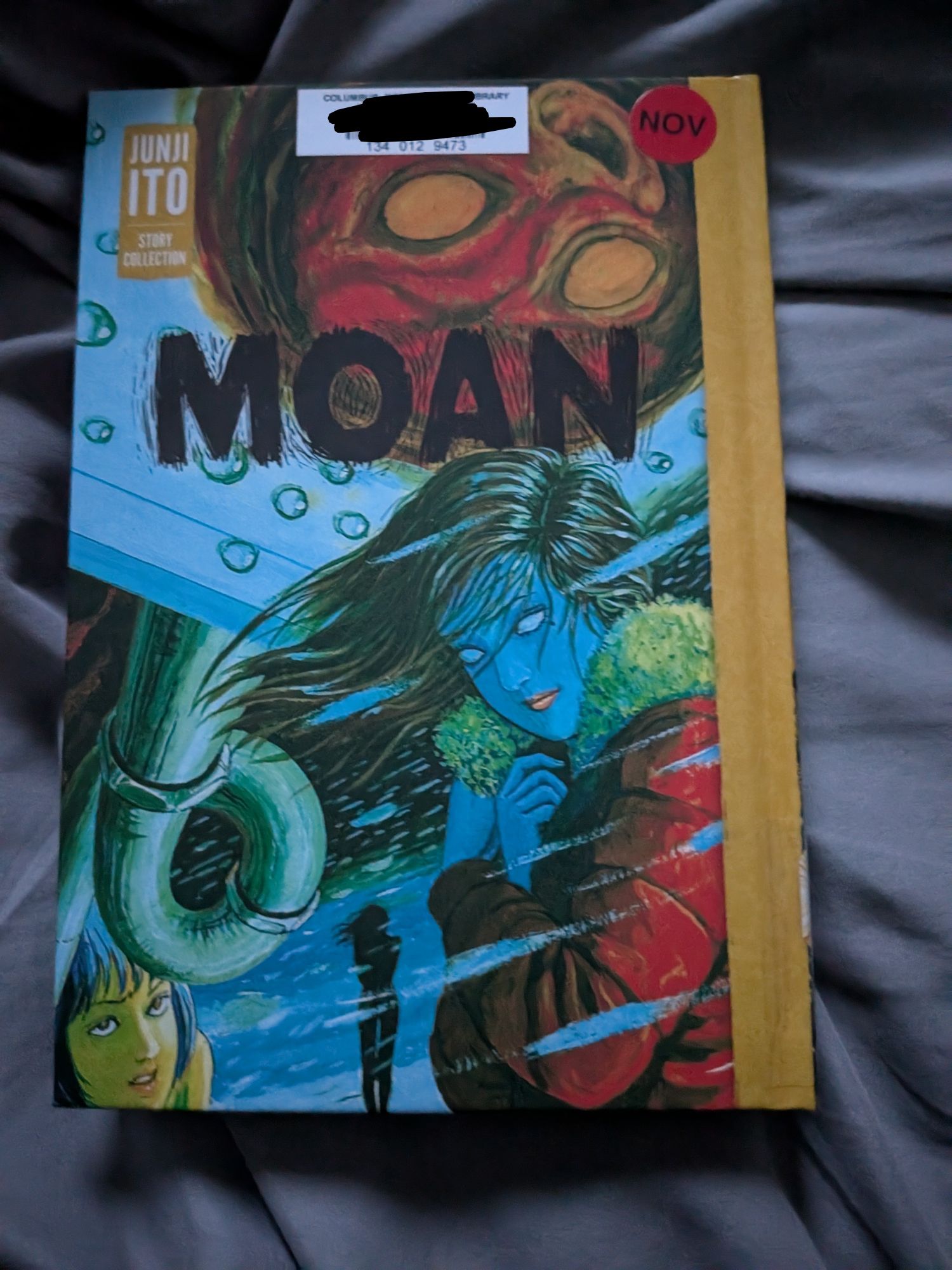
Junji Ito collections, with the exceptions of masterpieces like Remina or Uzumaki, usually rate a 3.8 out of 5 from me. There’s usually some good ones, but the bad ones can really bring down the score of the collection. And with Ito himself admitting in his last collection that as more time goes on, the more he’s scraping the bottom of the imagination barrel, I was braced for a collection full of duds.

In Moan, Ito-sensei gives us four stories of around 60 pages or so, and two shorter ones of about 10-15. And what do you know? This time around, the majority of the stories worked for me.

The first story, “Supernatural Transfer Student,” is fun and imaginative. A small town high school gets a new transfer student, who immediately joins the Supernatural Studies club, which has some possibly-real, possibly-fake psychics. Suddenly, the town is full of weird phenomena right up the club’s alley, and the new kid might be causing it. It’s visually enjoyable and escalates nicely, so I enjoyed it.

The titular story, “Moan,” is about a family whose mother is obsessed with cleanliness to the point of neurotic. When a murder occurs in their home, things start getting weird and a moaning noise comes out of the pipes. Is it the spirit of the murder victim? Or is something else going on here? There’s a sense of claustrophobia and spiraling madness in this story, and the climax is very terrifying. The story ends a bit too abruptly to me, but I attribute that to manga publishers having a limited page count (still would have liked ten more pages to give the story a proper ending). Other than that, the story is chef’s kiss levels of good.

“Blood Orb Grove” is a tale of vampirism that has an interesting twist on the lore of vampires. It’s good, but there’s a bit too much talking and needless info-dumping in the climax. Meanwhile, “Flesh-Colored Mystery” is a great and imaginative story about how much someone’s beauty standards can mess up the lives of others around them. It’s visually creepy and the themes of beauty and abuse really resonate. Perhaps the ending for this one is also a bit too abrupt, but I still enjoyed it.

The fifth story, “Near Miss,” is very short and unimaginative, and is honestly the low point of the collection. However, the last story, “Under the Ground,” makes up for it with an engaging story that has a predictable, but still very well done, twist at the end.

All in all, I really liked Junji Ito’s Moan. On a scale of 1 to 5, I’m giving it a 4.5, much higher than the usual score. There’s some great stories here, and they’re all done with Ito-sensei’s iconic art style. Hell, some like “Moan” or “Blood Orb Grove” might make for great movies, so long as they were live action (at this point, I’m convinced you can’t make a good animated Junji Ito adaptation). Just avoid the fifth story in the collection, and you won’t regret reading it.

You know the drill: Junji Ito releases a new collection in the States; I read it; I review it. And in his latest collection, The Liminal Zone 2, Ito-sensei once again gives us four stories that try to toe the line between the world of human-caused horror and the more supernatural kind. (Plus the complicated relationships between fathers and sons, now that I think about it.)

You may recall, but I was not impressed with half of the stories in the first Liminal Zone (see my full review here). And, as Ito-sensei himself says in the afterword of Liminal Zone 2, he feels he’s having fewer ideas for stories every year. Can what ideas he has work for me this time?

For the most part, yes.

The first story, “Demon King of Dust,” follows a young boy living in what remains of a hot springs inn with his increasingly unstable father and two servants. The father is paranoid about dust, claiming it’s part of a terrible demon that rules over the abandoned resort town where the inn is located. It’s a very freaky story, where every couple of pages reveals more and more strange and disturbing imagery and truths. I love how it just escalates and how you’re left guessing how much is real or how much is in the father’s head.

The second story, “Village of Ether,” is about four college students returning to the small town one of them grew up in, and where a pair of scientists were supposedly developing perpetual motion machines (machines that lack an external power source and are considered impossible by mainstream scientists). However, the town is very changed from when the one student was a kid, and the only remaining scientist is hiding secrets that are about to come to the surface. Again, the art here is imaginative and terrifying, especially the “automaton servants,” and it just keeps getting freakier up until the end, which I would define as “explosive.”

The third story, “The Strange Hikizuri Siblings, Chapter 3: Uncle Ketanosuke,” is the latest venture in the Hikizuri siblings, six strange and dysfunctional siblings who have appeared in previous, increasingly supernatural stories (don’t worry, you don’t have to have read the previous stories to enjoy this one). In this tale, a girl named Hotaru senses a strange aura from the Hikizuri family home and ends up staying with the siblings in the hope that it may explain why she’s always felt a heavy weight upon her soul from early childhood. Be careful what you wish for, because the truth is as freaky as these siblings, and I bet a live-action film on just this one tale would be both hilarious and creepy!

The fourth and final story, however, is the weakest of the bunch. “The Shells of Manjunuma” is about a young man living in an area where the local turtles and crows are considered evil and cursed, and the turtles’ belly plates can predict who will die under mysterious circumstances. Ito-sensei himself all but admits in the afterword that he was really scraping the bottom of the barrel with this one, and it shows. The story feels pretty pointless, which only detracts from some of the very gruesome art.

But all in all, this is a much better collection of Ito-sensei’s work. Whereas The Liminal Zone earned a 2.5 out of 5, I’m awarding The Liminal Zone 2 a 3.8 out of 5. Plenty of great storytelling and scary imagery to match! Just skip the last story and you’ll be sufficiently creeped out.

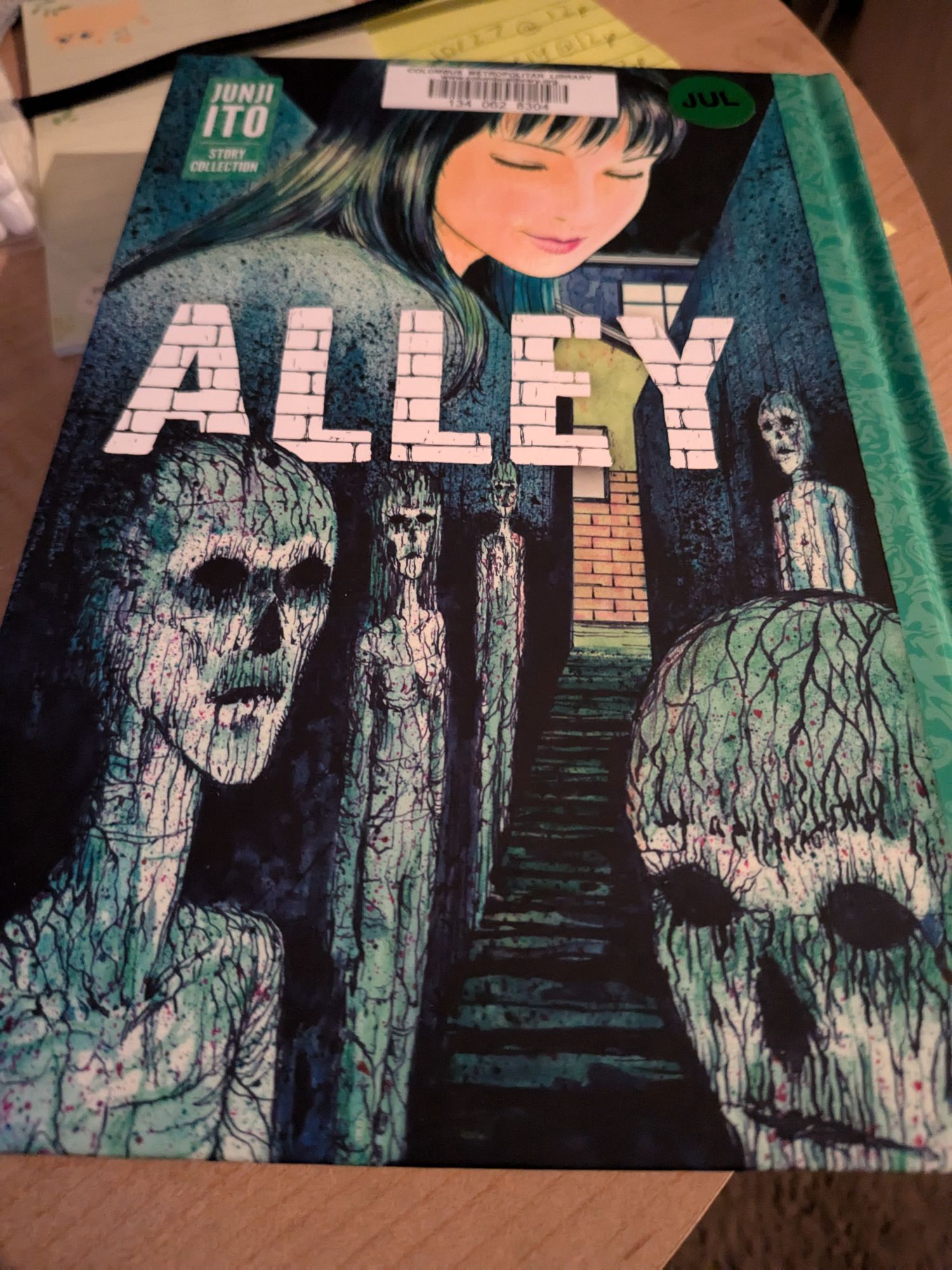
So, I just heard that Fangoria Entertainment is going to make a whole bunch of movies based on Junji Ito’s work. They mainly will adapt stories from his collection Smashed, but I hope Remina or Madonna get adaptations as well, as they are great stories (see my reviews for Remina and The Liminal Zone, respectively). In the meantime, a new collection of Junji Ito stories got translated, so I’m here to review it.

As I say, Junji Ito can be hit or miss with me, but this one was entertaining enough.

My favorite story was probably “Town of No Roads,” which follows a teen girl who goes to live with her aunt after her parents and brothers react the wrong way to a stalker breaking into her room. As if that’s not stressful enough, her aunt’s home has been swallowed up by a giant structure where nobody has any privacy. It’s weird, but you really start to empathize with the main character and the themes of the necessity for privacy really do resonate.

Other stories really struck a chord with me, which was nice. “”The Ward” is a creepy body horror story about several women in a hospital ward who start acting funny, while “Blessing” is a tragic love story with a great twist in the end. “Mold” just grossed me out (as a homeowner, I felt the main character’s pain, especially when it comes to cleaning one’s home). And “Descent” was a weird but engrossing story with a great hook and a mysterious resolution.

Of the rest, they were mostly decent. The titular story, “Alley,” has a great idea, but I feel like there’s too much exposition, which is followed by an ending that could have been a few pages longer. “The Inn” has a great idea and some terrifying art, though the ending kind of puttered out on me, and “Smoker’s Club” has a great idea about tobacco and smoking that would put anyone off cigarettes, though it also could have used more pages for its story. And “Memory” has a great story, though not enough scary art for me (it still would make a great movie).

The only bad story was “Ice Cream Bus,” which other than a reminder about why stranger danger exists, wasn’t much better than its animated Netflix adaptation.

Overall, I think I would give Alley by Junji Ito a 3.8 out of 5. There’s some decent horror in there, so if you’re looking to get into his work, this might be a good choice for your second or third read of his (I recommend picking between Remina, Uzumaki and Tombs for your first and second reads).

That’s all for now, my Followers of Fear. Until next time, good night and pleasant nightmares!

The other night, I was reading the final volume of the manga Alice in Borderland. If you haven’t read the original manga or seen the kickass live-action adaptation on Netflix, the story follows a teenager who finds himself among several people randomly placed in a Tokyo emptied of people. Even stranger, the people left in Tokyo have to take place in life-or-death games. If they win the games, they’ll get to live a bit longer. If they lose, they die. And if they don’t survive the games, a laser will come out of the sky and kill them.

Yeah, pretty dark stuff. Makes for a great sci-fi thriller.

Anyway, without spoiling the end of the manga or the TV series, the last chapter features a reporter asking random people on the street why they’re alive. Seems like a random way to end a rollercoaster of a manga, until you realize the death games the characters deal with takes a toll on them psychologically, to the point that some of them even wonder if it’s worth trying to live.

The answers the reporter gets are all over the place. A few aren’t interested in answering and make sure the reporter knows it. A few more don’t know and have never thought about it. Several give variations on “So I can die without regrets” or “I do it because there’s someone important in my life.” Some answers are shallow, like the weekend beer or for material things. Others are about how happy they are everyday or pursuing what they love.

One woman thinks it’s to find out why we’re here, while two others think it’s because of biology.

One little girl in Gothic Lolita dress says she’s living and putting herself in misery everyday for revenge against her parents.*

One man says it’s because this life is all there is.

A couple, for one reason or another, are just going through the motions until they die.

Reading the chapter, I realized something; none of us really know why we’re alive. Not what the meaning of life is; that related, but I feel like that’s a question revolving around the general population and not the individual.

But seriously, why are we alive? Was each one of us placed on this planet for a purpose? Is it just because of biological drives for survival? The need to reproduce and pass on our DNA to a new generation? Is it something we need to figure out for ourselves? Or is it just because we’re already alive, so might as well keep living?

Or perhaps it’s not something we should not think too much about. Perhaps instead we should live.

It’s a question that would probably puzzle this guy for quite a while.

It’s something I’ve been thinking about since I read that chapter. I know my purpose in life, the purpose I set for myself: live a good life, write some damn good horror stories, and try to leave this world a bit better than I found it. And I have an opinion on what the meaning of life is (no, it’s not 42). But are those the same answers to this question?

Maybe. Or maybe not. Like I said, I don’t get up every day thinking, “I’m getting up and I’m alive to write scary stories and have a good life and improve the world.”

Hmm…but I do get up every morning because I have dreams I want to pursue. A lot of what I do everyday is because I want to achieve those dreams. So maybe’s that’s why I’m alive.

But in the end, I don’t know if I need to think about it that hard. It never was something I needed to think that hard about before, after all. Why should that change going forward?

In any event, I’ll keep going forward. I’ll keep pursuing those dreams and hopefully improving my life and the lives of others while I’m at it. And maybe, if a reporter asks me, “Why are you alive?”, I’ll have a decent answer.

How would you answer that reporter’s question? What do you think of this topic? Was this too heavy a subject for a blog post?

*And I’m probably going to write a story around that little girl, because that answer was just too dark and intriguing for me to just pass over. I want to write a story around her and find out what made her like that!


Just a reminder, my Followers of Fear: this Saturday, April 6, I’ll be at the Wagnalls Library in Lithopolis, Ohio from 10 AM – 2 PM for their Local Author Fair. If you can, please stop by. I’ll be selling books, doing Tarot readings, and sitting on a panel. You can find out more on their website here. Hope to see you there!

Until next time, my Followers of Fear, good night, pleasant nightmares, and check out Alice in Borderland. Manga or TV show, it’s an awesome series. Just my two cents on the subject!

You know the drill: new Ito comes out, I read it, I write a review.

Mimi’s Tales of Terror follows Mimi, a college student who has a bad habit of encountering supernatural or strange phenomena in the course of her everyday life. The stories are adapted from Shin Mimibukuro, which from what I’ve been able to gather is some sort of anthology of urban legends and spooky stories that may or may not be connected to a series of movies and TV specials. In this volume, Ito takes those random tales and centers them around one girl, who should honestly learn how to be like the Winchesters of Supernatural.

Anyway, Ito’s work can go either way for me. Some of it is awesome, some of it is terrible, and a lot of it is average. Where did Mimi fall? I’d say above average.

Granted, the first three stories are definitely below average. Two of those stories are only a few pages long, so you wonder why they’re included or not fleshed out more. The third, about a woman in black whose height seems to change every time she leaves her apartment, had a good premise but ultimately left me unfulfilled and disappointed.

However, the rest were quite spooky. In one, Mimi moves to an apartment building next to a graveyard and witnesses some stuff that I found a little unsettling. In another, a little girl clings to her because a strange phantom follows her around and leaves ash everywhere. And then, after she and her boyfriend have a fight, Mimi joins a friend in a secret basement with a red spot on the wall that changes appearance over time. It’s all quite freaky and showcases Ito’s love of strange and macabre.

I also got a kick out of Mimi and her friends’ speech patterns. They’re written like they have American southern accents, which probably means they’re from the Kansai area of Japan. (I wouldn’t call it the Japanese equivalent of the south, even if it is in the southern part of the country, but generally people from the Kansai area in anime and manga are given southern accents when the work is brought to North America to differentiate them from folks who speak with a more Tokyo-ish/General American pattern.)

The most unsettling tale, however, is an extra at the end of the volume called “Monster Prop.” In this story, a young woman working for a haunted attraction tries to recreate a scary experience she had as a kid as a prop for the haunted house. However, doing so has some unintended and unforeseen consequences. It’s truly freaky stuff.

On a scale of 1 to 5, I would give Mimi’s Tales of Terror a 3.8 out of 5. If you avoid the stories that are under six pages and the one with the woman in black, you’ll probably enjoy the old school psychological horror vibe of the volume. Give it a shot and see what you think.

You know the drill. Junji Ito, currently the biggest name in horror manga right now, released a new collection of short manga in North America. I got my hands on a copy from the library, read it, and now I’m reviewing it.

In Tombs, Ito brings together some old and some new stories to terrify us. From a town where tombstones show up wherever someone dies, to a strange neighbor who calls to a young man at night and a town where everyone appears to be anemic, there’s something for everyone in this collection. And all of it is guaranteed to stick in your mind.

This was probably the most solid collection of Ito’s shorts that I’ve read. Not a bad one among the group. Obviously, Ito’s art is always well-done and extremely evocative, with every line made to scare the ever-living daylights to you. And the ideas of these stories are all very inventive. I often found myself envying some of the ideas he had to come up with these stories, my favorites being the titular story “Tombs,” as well as “The Bloody Story of Shirosuna.” The former story is the one I mentioned where tombstones show up whenever someone dies, while the latter is the one about the town being anemic.

Close runner-ups were “Floaters,” a story where people’s inner thoughts manifest physically as these little hairballs that float in the air and speak your thoughts when you touch them, and “Bronze Statue,” which follows an old woman’s obsession with her youth and commemorating it in bronze.

It was also great to finally read “The Window Next Door,” which I’ve only heard about and have never read (I didn’t want to read it illegally online). That particular story has some of the most disgusting and off-putting art I’ve seen from Ito, all without using blood or gore.

The only issue I really had with the collection was that the story “Clubhouse,” which is a ghost story with a fun and clever concept, ended a bit too abruptly for my tastes. I honestly felt like it could have had a better resolution if it had a few more pages. That being said, the story is still pretty awesome as it is.

All in all, Tombs by Junji Ito is a great collection with some amazing and creepy stories worth reading. On a scale of 1 to 5, I’m going to give it an even 5, a top score. Definitely go out and read a copy if you can get your hands on it. Hell, I might buy myself a copy to own if the opportunity presents itself. It’s that good.

Also, I think “The Bloody Story of Shirosuna” would make a great live-action movie. Can someone please get on it? And yes, please do live action, not anime. I’ve sort of given up on anime adapting Junji Ito well (two series have been really sub-par and the Uzumaki adaptation has been delayed forever, so what does that tell you?). And don’t make an American version of it, I’m sure that would ruin it by adding all the wrong elements to make it more local. But yes, please make a live-action adaptation of it.

Alright, that’s all for now, my Followers of Fear. Until next time, good night and pleasant nightmares!

The following review features mention of suicide. If you or someone you know is feeling suicidal or considering suicide, please contact the National Suicide Prevention Hotline by dialing 988 in the United States. Other nations have similar hotlines set up and they are just a Google search away, so please make that call if dark thoughts are plaguing you. Thank you.

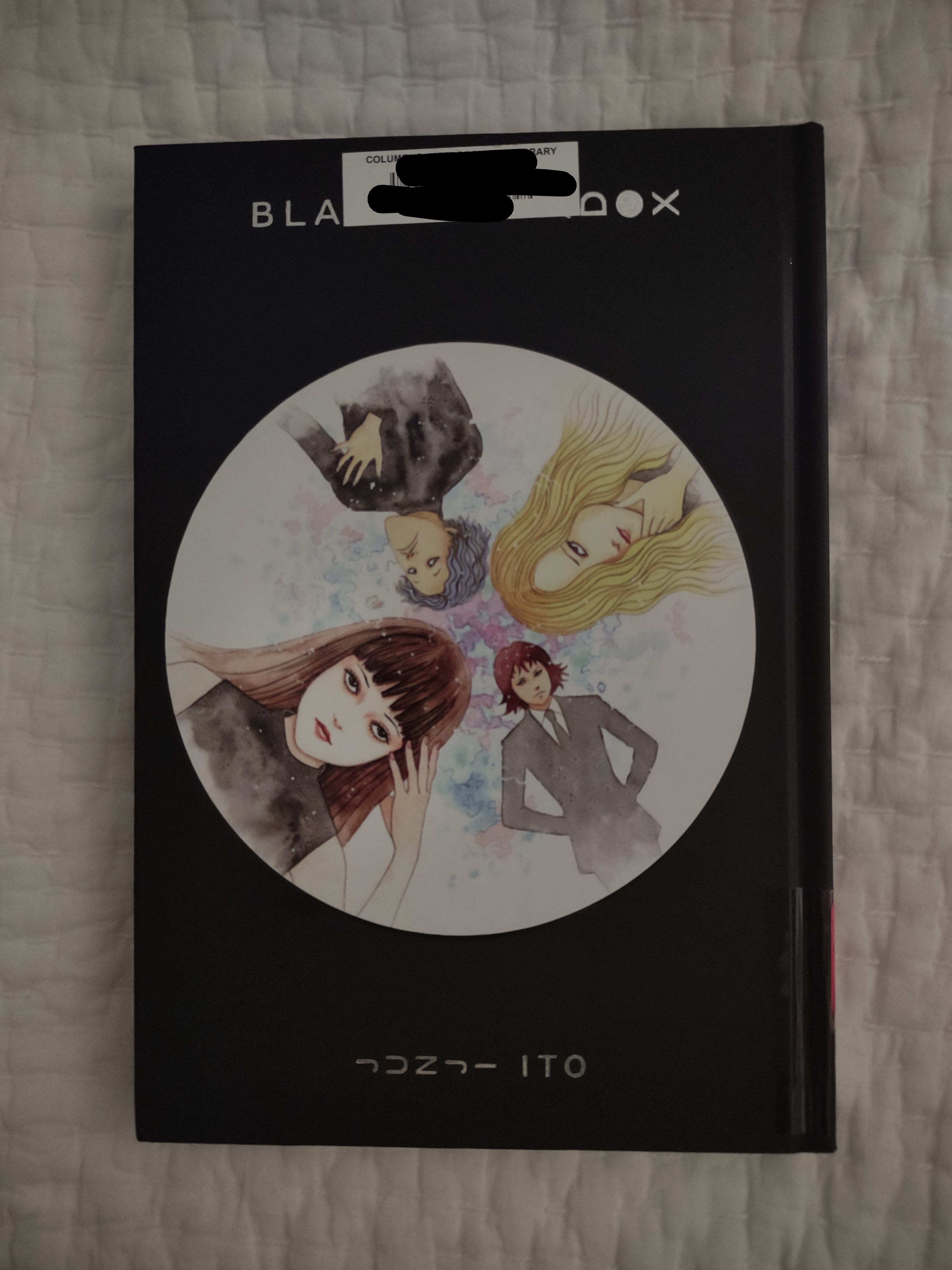
Black Paradox follows four individuals who meet on an online suicide message board. However, almost immediately odd events derail their plans, most notably the discovery that one of their members has a portal in their belly to another dimension and keeps vomiting up precious gems (yes, you read that right). However, the gems contain a dark secret, and their discovery in our world set events into motion that will affect not just the four protagonists, but the entirety of humanity.

I would say that the word that describes this short series is “inventive.” Almost immediately, weird stuff happens and it is generally very freaky. The gems, later called “paradonite,” are also an inventive touch, as well as what they do. I haven’t seen much horror around gemstones unless it’s like a haunted/cursed necklace or something. Plus there’s a robot in there, doppelgangers, and quite a few other things that will surprise you. The paradonite itself is an interesting object, as it has a few surprises associated with it.

The art is also quality. Ito being Ito, you know he’s going to put a lot of effort into his work to create an evocative and at times unsettling illustration. It’s especially effective with sequences of body horror, which are rife throughout this book.

However, it does feel like at times Ito was making it up as he went along, and not in a good way. There are certain threads that are left dangling at the end of the series, and while in horror it’s okay to sometimes leave certain questions unanswered, especially with Ito’s work, it didn’t work too well this time around. Also, I don’t think the topic of suicide was handled as delicately as it could have been. At times, as events unfold, it’s almost brushed off and forgotten as inconsequential.

Also, there’s a four-page bonus story at the end that’s kind of included as a joke. It’s not very good. I’m not sure why it was included.

Despite all that, however, I would call Black Paradox quintessential Ito and worth a read. I struggled on what score to give this one, but I kept coming back to 3.8 out of 5, so I’ll go with that. If you are looking for a strange and surprising horror manga, I would recommend Black Paradox (though Uzumaki and Remina are still leagues better).

That’s all for now, my Followers of Fear. It’s been a hell of a month, but a good month nonetheless. I hope December is just as good and that we all have a stress-free time during the last 34 days and three-or-so hours of 2022. Until next time, pleasant nightmares!

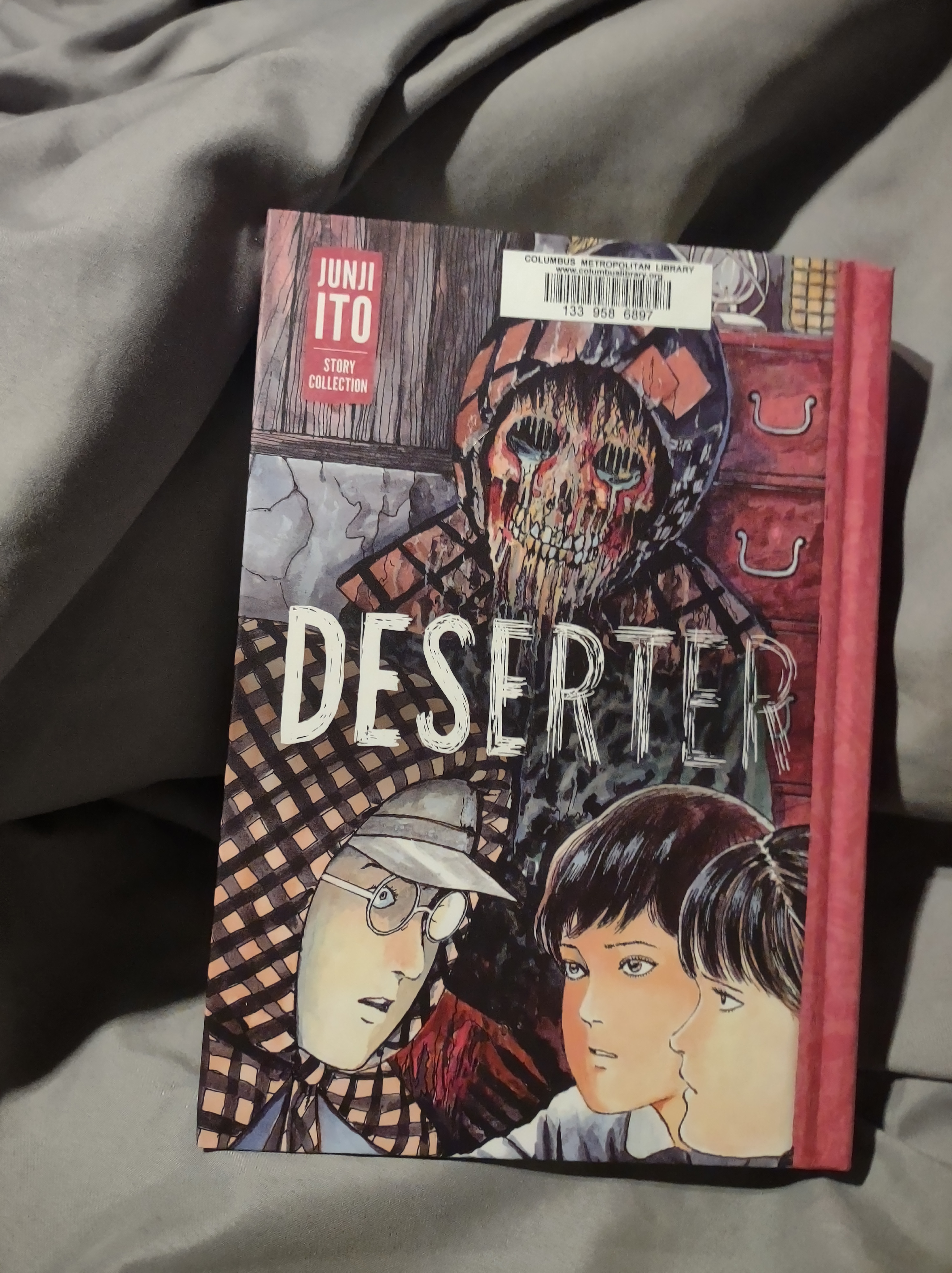
As many of you know, I’m a big fan of manga author Junji Ito. While sometimes his stories can be hit-or-miss with me, there’s no denying the man has a distinctive style that aims to bring out the full horror of whatever story he’s drawing. And his latest release in North America is Deserter, a collection of some of his early works dating back all the way to the late 80’s. You can bet I was curious. What was Junji Ito, the author and illustrator behind such terrifying stories as Uzumaki and Remina like during his early days? I was determined to find out.

Now, as I said, this is a collection of the author’s early works, and with just one exception, the stories are presented in the order they were chronologically published in. And that really gives you a clue on Ito’s evolution as an artist and storyteller. For example, the artwork is a lot rougher and feels more rushed in the earlier stories in the collection. You can see more of a reliance on thicker brushes and the characters are a bit more sketch-like. Ito’s famous for purportedly spending up to ten hours a day on a page with pen and paper, making his artwork as dark as possible. If I had to guess, this would be from the days he couldn’t afford to do that, or wasn’t yet at that stage, and that explains the roughness we see.

The stories in the earlier sections are also pretty rough around the edges. The first, “Bio House,” feels shocking for shock’s sake and has a rather slap-dash kind of plot, while “Where the Sandman Lives” makes little sense. Others, such as “Face Thief” and “The Devil’s Logic” have good concepts behind them but the payoff is either a rushed conclusion or a story that feels like its potential wasn’t fully reached.

It’s not that they’re bad, they were good enough to be published. They just remind me of some of my earliest horror writings, when I was realizing you needed more than a monster to tell a horror story but I didn’t yet have the tools to write a truly scary story. That’s how those stories feel to me.

However, once you get to the last five stories, you can see Ito really gaining experience and the stories improving in quality. “A Father’s Love” still is a little rough in the art department at times, but it has a compelling stories and characters you really feel for (ooh, I shipped those two young kids!). “Village of the Siren” is a bit long-winded, but it has a really cool idea and the artwork to match. “Bullied,” which is a famous story of Ito’s that I’ve been waiting to get to America, is a terrifying story of karma and psychological trauma built around childhood guilt. And the titular story, “Deserter,” is a meditation that asks, “Who is really doing the haunting? Who is really trapped in a haunted house?” I was in awe of that one.

Overall, I’m conflicted on what score to give the collection. On quality alone, I’d give it a 3.3 out of 5. However, the value of the book and how it shows Ito’s evolution is a 4 out of 5. I’ll meet it halfway and award Deserter by Junji Ito a 3.6. If you’re new to Junji Ito, I wouldn’t advise checking this one out till you’ve read some more of his work, particularly Uzumaki or Remina. However, if you’re already familiar and want to consume more of his work, I would totally recommend it just to see how the author evolved and to read those last five stories.

That’s all for now, my Followers of Fear. Life is crazier than the Joker right now, but I’m hoping have some good news in the near future. Either that or you’ll hear about my attempts to open the gates of Hell just so I can get some peace and relaxation.

Until next time, my Followers of Fear, good night and pleasant nightmares.

Photo by Pixabay on Pexels.com

Recently on Twitter, another author I’m acquainted with tweeted that she didn’t think she would ever reach the levels of the authors she admired. She then went on to say that while she aspired to “champagne quality” writing, her stories usually ended up being “boxed wine” quality.

First off, what’s wrong with boxed wine? The first sips of wine I liked came from boxes. And price, prestige, method of preparation, or recommendation of experts is no guarantee of quality or tastefulness. Just check out this hilarious video on the subject.

And second, just because you think your work isn’t as good as your heroes or as prestigious as other stories doesn’t mean it’s bad. For starters, you think the writers you aspire to be don’t have their bad days? Robert Heinlein, Isaac Asimov and Frank Herbert probably bemoaned that they would never come up with stories as influential as those of Mary Shelley, HG Wells and Jules Verne. Every professional manga artist, including those who have made the most famous series like Eiichiro Oda, Rumiko Takahashi, and Naoko Takeuchi, have lamented they’ll never be as good as their favorite artists despite all proof to the contrary. And God knows HP Lovecraft, one of the most influential and controversial writers in horror, worried that he would never measure up to the likes of Edgar Allen Poe, Robert Chambers and Arthur Manchen.

(And if I’m being honest, between his prejudices and his hyper-Victorian style of writing, he never did.)

Another thing to keep in mind is that just because another work is considered “prestigious” doesn’t mean it’s good. In fact, the word prestige comes from the Latin word for “illusion.” And that’s what prestige is: an illusion. A bunch of critics or purveyors or publishers came together and agreed that because a work of art has certain qualities or is being sold in a certain place (like a fancy, pretentious art gallery), it’s considered “good” and worthy of being worshipped. But beyond making sure that it’s been edited well, that’s no guarantee of quality.

An example of a bestseller whose quality is questionable.

Neither is being a bestseller, honestly. The way a bestseller is defined is often based on how much a publisher thinks a story will do and how much marketing is done for the book. Most bestseller lists can be gamed for profit, such as happened with Lani Sarem’s YA novel a few years ago. And many bestsellers fade into obscurity after a few years, rather than having staying power. It has nothing to do with quality of the story itself (just look at my review of Nothing But Blackened Teeth, which has attained bestseller status, if you don’t believe me).

You know what is an indicator of quality (beyond editing and not having anything offensive in the content)? An audience’s reaction. Fiction is often an escape and helps audiences heal from our awful reality, or at the very least bring joy and give readers a feeling that their interests are shared by others. So if your work brings people joy, then that’s a great sign of its quality. Doesn’t matter if it involves college professors and literati types scheming and having sex with one another; fighting aliens in another solar system; or having a love affair with a powerful man in a universe where humanity is divided into castes based on supposed wolf pack heirarchy.* Just as long as your audience gets joy from reading it, then it’s quality.

You especially see this in the horror genre. You have your Gothic and ghost stories with flowery language; serial killer thrillers that gush blood and gore; Nazi zombies that bite your face off as they propagate a toxic and deadly ideology; and even stories around killer cows or living poop monsters or other ridiculous ideas. All those are stories in the horror genre, and very few within the genre will judge you for it.

Plenty outside the genre will, though. Horror as a whole is still looked down upon as a genre, even as it proves more profitable and popular every year. But that’s another thing: tastes and what is considered prestigious changes all the time. Shakespeare, opera and even lobster used to be considered low-class. Now they’re fancy and high-falutin. Perhaps in a hundred years, your “boxed wine” fiction will be taught in high school and college classes, working on horror and superhero movies is a highly sought-after privilege, and a restaurant is considered luxury if it serves real bacon. You never know.

All that being said, this might not make you feel any better about your stories. These feelings might come from stress, anxiety, depression, or dating a demon fairy who scares people with a twitch of the face rather than trying to write stories. But if learning all this helps you feel like your work is champagne quality, then mission accomplished. Because no matter what your story is about, how flowery the writing is, or who’s hyping it up or buying it, if your work is enjoyed by someone, that’s what matters most.

Better have an editor check it over first. They catch stuff you’ll never see in a million years before you get to the publishing phase.

You may think your story is a boxed wine, but that doesn’t mean it’s bad or low-class. The exact opposite, in fact.

That’s all for now, my Followers of Fear. I’ll be back Monday for something special (you probably know what already). Until next time, good night, Happy Thanksgiving, and pleasant nightmares!

*This is an actual subgenre of romance, and it is apparently very popular. I won’t judge anyone who likes it, but I will say that wolf packs aren’t actually based around alphas, betas and omegas. Research has shown that wolf packs are really alliances of small, nuclear families and lone wolves adopted into the pack. The more you know.

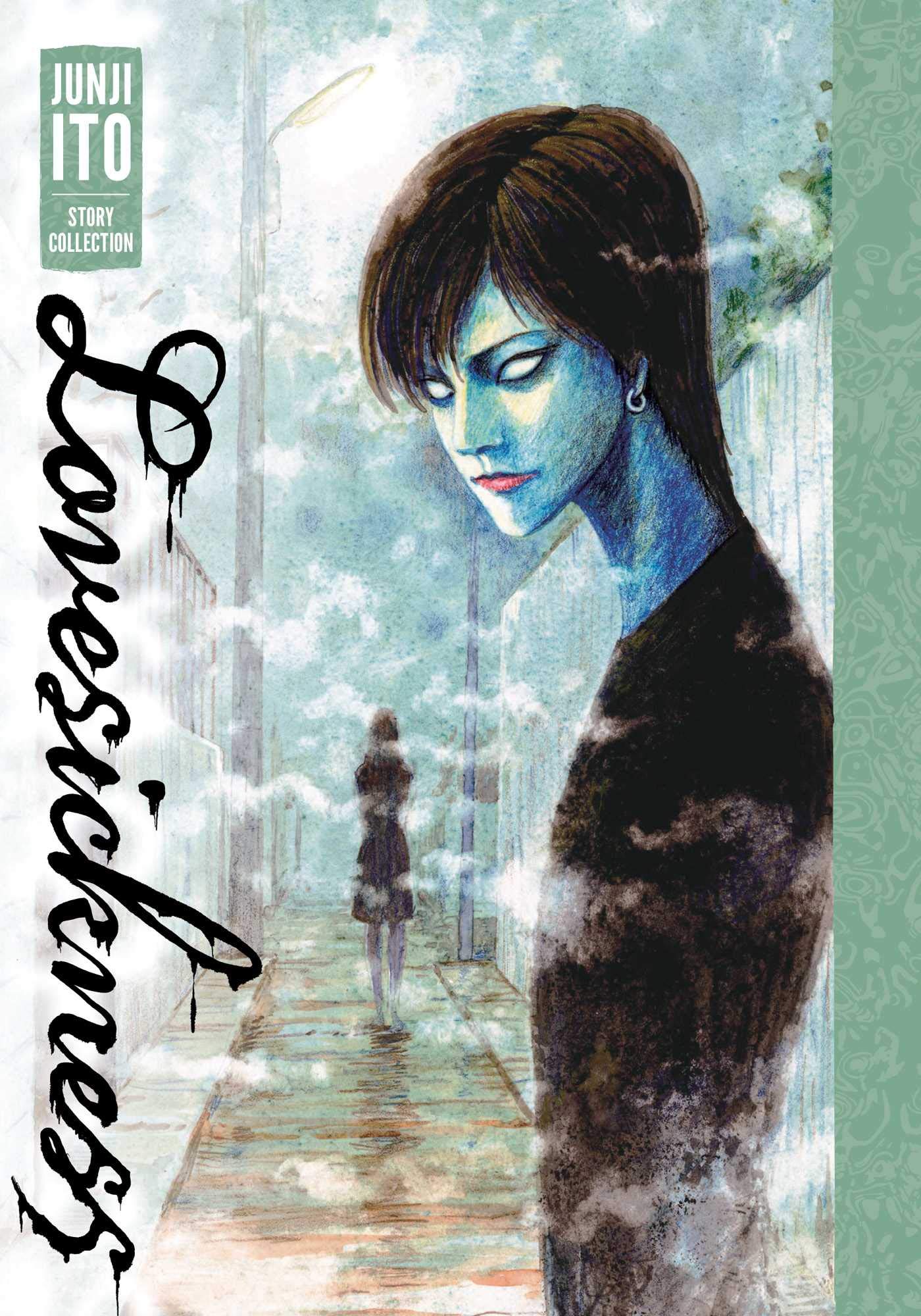
I always look forward to a Junji Ito collection. Whether I like it or not, I know I’m in for an experience. One with great artwork and a weird but most likely intriguing story. And Lovesickness is no exception.

The bulk of this collection is the titular six-chapter saga, taking place in a town under a perpetual fog. In this town, there’s a popular fortune-telling tradition where you wait at an intersection and ask the first passerby to tell their fortune. However, this tradition has bad memories for a young middle schooler who is returning to town for the first time in nearly a decade. And his own trauma is exacerbated by events in the town. A mysterious young man in black is giving fortune-seeking girls prophecies of doom, driving them to suicide. This leads to a series of events that will affect everyone in the town, and destroy more than a few lives in the process.

Except for maybe the last chapter, this story is pretty solid. The backgrounds are often pretty dark, except when the fog is particularly thick, which lends it this creepy atmosphere al a Silent Hill. And the protagonist is pretty believable as a young man with serious PTSD. While the antagonist is always drawn with this sort of mist-like smudging, which lends him this otherworldly aura. Add in some creepy ghost imagery that would make most zombie graphic novels ashamed, plenty of downward spirals into madness, and it’s one hell of a horror story.

The other highlights of the collection are the short stories The Mansion of Phantom Pain and The Rib Woman. Both of them have very weird and interesting concepts, though the latter pulls its concept off a lot better.

On the other hand, two of the related stories in the collection, which follow a strange family of siblings, aren’t that good. I think it might have been Ito’s attempt at a new horror-comedy series, but I couldn’t get into it. Like The Addams Family without the charm.

And there’s a story in the back called “Memories of Real Poop,” which I think is a vignette from Ito’s childhood. Anyway, it’s a weird addition to the collection and kind of stupid. Don’t know why Ito spent his time drawing it unless he needed to pad out a collection or two.

And as I said, the last chapter of the titular story didn’t sit well with me. Honestly, it felt tacked on just to give a bit more resolution to the story.

Still, it’s a good collection. On a scale of 1 to 5, I’m giving Lovesickness by Junji Ito a 3.8 out of 5. Most of the stories are rather scary and worth a read. Just be sure not to read the main story on a foggy night. You don’t know what you’ll see when you look up from the book and out the window.


Just a quick note, my Followers of Fear: Indie Author Book Expo Aurora, or IABE Aurora, has been moved from August 7th, 2021 to September 11th, 2021. As far as I know, this is the last date change. All other details, such as taking place at the Prisco Community Center in Aurora, Illinois. Hope that doesn’t impact anyone’s travel plans. Anyway, I hope to see you there. At the very least, you’ll get a much better fortune from my Tarot cards than you would from the fortune telling method in Lovesickness.

Anyway, you can find out more about the convention here.

Until next time, pleasant nightmares!