Archive for the ‘ideas’ Category

Yesterday I visited my advisor’s office in the English department and discussed doing my senior thesis in the fall. Normally I would talk to her about this after spring semester had started, but I wanted to get a jump on things before I was busy with homework from five different classes. Plus I had the day off yesterday so I thought to myself, why not?

During the course of our meeting, I was outlining what I’d like to do for my senior thesis, mainly to write a novel. For this novel, I chose five different ideas for stories from the list of novels I keep on my flash drive and gave a brief synopsis of each one to my advisor Ruth. Around the third idea, Ruth noticed a trend with two of the stories I’d mentioned: they both involved young girls as protagonists in the story (one was a story based on Alice in Wonderland, the other involved demons). She then asked me, “Why young girls? Why are they used so much in horror?” To my surprise, I realized I hadn’t thought of it much, and at that moment I didn’t have a very good answer for why, when children are used so much in scary stories, young girls are more dominant than young boys (notable exceptions include Danny Torrance from The Shining and six out of seven protagonists in Stephen King’s IT, the two boys from Monster House, and Hansel from Hansel and Gretel).

And guess what? The question’s been bugging me since that meeting yesterday. So between writing, work, applying for scholarships, and my household chores, I thought I’d take a moment to examine why young girls are more dominant in these sorts of stories. First, we need to examine why children in general are used so much in horror stories:

1. Children are very innocent creatures. It’s the most obvious reason, but it still needs to be stated. Children are very innocent human beings. They still believe that good usually wins against evil, that bad guys get beat up and thrown in jail by superheroes and cops, and the world is a safe place where they are loved and are protected from evil, at least until they’ve been warped by some of the harsh realities of the world. In horror stories, that innocence is tested and sometimes completely broken by the events of the story, whether it be monsters under the bed, abusive parents/teachers/bullies, or whatever else you may be using as the antagonist in a story.

Even the man/child/sponge has more imagination than most adults.

2. Let’s face it, kids are more imaginative. As we grow older, we tend to think less in terms of the fantastic and more in terms of what is real and reasonable. But as children, we really believe in Santa, the boogeyman, fairies, aliens and ghosts with little doubt that they are actual, concrete beings. This means that kids are usually the first to come to the realization that something evil is at work. They don’t realize it through any leap of logic or reason, but through gut feeling and belief. This is also usually why they are more likely to survive than that one guy in every horror film who insists with fatalistic stubbornness that there’s a logical reason for everything and then when they realize something’s up, they still insist on handling it themselves as men, even if it leads to their heads getting bitten off.

3. Kids are dependent on others. Until sometime between ten or twelve, children are dependent on adults for most of their basic needs, and even when they start to become independent, they still require a good portion of help from adults. When in a horror story, most likely a child can’t recieve help from an adult because they’re less likely to be believed by adults. This means they’re basically adrift in a metaphorical sea that wants to kill them painfully and mercilessly. How they survive without the security of an adult is something that keeps the reader drawn into the story.

4. Children are also not as resourceful. Or to be more specific, it’s rare for children to have access to the knowledge or tools they need to defeat the enemy of the story. They wouldn’t know how to set up a trap for a mutant monster, or how to draw a vampire into the sunlight without being totally obvious of their intentions, or even how to set a windigo on fire with nothing but a set of matches (which they shouldn’t be playing with anyway). If the characters are adult, all they need to do is get out their smartphone and Google “How to make a molotov cocktail” or “how to set up a tripwire alarm system”. Kids wouldn’t even have a smartphone, and even if they did they probably wouldn’t know what to Google. How do they survive with nothing to really help them? That is another draw of a horror story.

Look at that face! You know that hotel gave that kid some big therapy bills.

5. Children are easily influenced. Lastly, children are easy to influence, for better or for worse. Has anyone seen Friday the 13th Part IV? Right at the very end we see just how the events of being around Jason have influenced and hurt little Tommy, who will be dealing with his issues for the next two films. A horrific event can stay with a child for a very long time, corrupt their innocence or make them aware of their own abilities. Either way, the events of the story will stay with the child likely throughout their lives. From what I hear, the Overlook Hotel certainly stuck with Danny Torrance (I haven’t read Doctor Sleep yet, though it’s on my reading list).

Okay, so we’ve established why children in general are used so much in scary stories. But still the answer of why young girls are used in the stories has still to be answered. Often, like Carol Anne from Poltergeist, they are persecuted and kidnapped by beings we can’t really understand. Or, like Samara from The Ring, they are the stuff of our nightmares. And occasionally they are both (anyone watch The Exorcist recently?).

This morning I spent some time trying to figure out and I think a lot of it has to do with socialization and the roles we assign to the female gender. In other words, what we expect from young girls and how we believe they should act, behave, and think are why young girls are so popular in horror stories.

Please note that the suggestions I’ve listed below are for fictional girls and are just based on my own reading and viewing of many different horror novels, comics, TV shows, and movies. There may be several stories featuring girls that are the exact opposite of these reasons, I just have yet to be exposed to these stories. The reasons I’ve listed do not necessarily apply to real girls either, as I’ve made clear below. Here are the reasons I was able to come up with and which back up my beliefs on gender roles making female characters popular:

1. Fictional girls are more prone to sweetness, harmony, and nonviolence. Most boys when they’re young like to get wild, scrap a bit, use their fists and compete with each other through acts of physical prowess and aggression (when my cousin was younger, you could not stop him from acting like this). Young girls though are often portrayed as preferring to be friends rather than fight. They like doing cute stuff and they don’t like to get their hands dirty or do anything too wild. The only exceptions I can think of are Beverly Marsh from IT and my sisters, but then again my sisters are from my crazy family, so go figure. So since these fictional girls are less likely to use their fists and more likely to try to harmonize, they’re at more risk for whatever evil is after them in the story.

2. Young girls have yet to enter into the realm of maturity and sexuality. A lot of criticism with horror comes with how it sexualizes its female characters (please see my article Sex and Horror for more on this topic).However young girls have yet to reach that stage where people begin to see their sexuality. There’s an innocence in this lack of sexuality that young boys don’t get from their ignorance of sexuality, though that might have something to do with the fact that, like I said, a lot of women in horror are defined by their sexuality, whereas men don’t usually receive this sort of sexualized image no matter what age they are.

3. It’s adorable when young girls cry. Because of the pre-assigned roles that differentiate between boys and girls, at some point boys are taught that crying is not a manly thing to do, so they stop crying if they want to retain whatever form of manhood a young boy can have. On the other hand, it’s considered okay for girls to cry throughout their lives. And instead of pitying these girls or questioning their maturity like we would with boys, our hearts go out to the girls and make us want to hug them. This contributes to the popularity of young girls in horror stories.

And if these points haven’t hammered home my belief on gender roles playing a major role in the popularity of young girls in horror, here’s my final point:

In the end, the princess mentality takes a toll.

4. Young girls want to be princesses. It’s no understatement that plenty of girls in our Western society want to become princesses when they grow up and have a handsome prince rescue them from evil so they can live happily ever after, and our media perpetuates this to no end  (even Once Upon a Time and Frozen couldn’t leave this cliché out of their storylines, though they both do something rather original with the trope in each their own way). In horror stories, typically it’s up to a female character to either rescue herself from her predicament or to let a strapping young man save her and then sweep her off her feet. With young girls, that choice isn’t always available, and often the writer will write the story so that we wish for someone to come and save the little girl, while holding us with baited breath to see if she will be saved by a dashing prince…in the case of horror stories, most likely an older male relative with an axe or baseball bat.

So the reason why young girls are so popular in horror stories, as I’ve listed above, is that they fulfill certain gender roles that we’ve come to expect and work nicely into not just the plot of the story, but certain preconceived notions we unconsciously have in their minds. However, not all young girls fall into these roles. Beverly Marsh from IT plays a big part in stopping the demon clown when she’s a little girl by being the more aggressive fighter of the Losers Club. Coraline from the book of the same name is able to release the souls of the eaten children and save her parents all on her own. And even creepy Samara coming out of the TV is an exception, as she doesn’t fulfill any traditional roles, not even the one about needing saving. She’s the freaking villain!

Yeah, don’t mess with her.

So I think I’ve answered the question Ruth posed to me yesterday in her office. I’m not sure it’s the best answer or the right answer, but it’s what I was able to come up with. If you have any ideas about why young female characters are so popular, examples of girls who buck the trend, or any other points relevant to the discussion, please let me know.

Also, in a somewhat related note to children and horror, I finally watched the film version of Battle Royale. It was actually much better than I expected, almost as good as the novel. However there were a couple of creative choices I disagreed with, and that’s why it’s not on equal footing with the book. I also won’t see the sequel, because apparently it’s not based on the original story, its anti-American message goes beyond criticism of America to full-on attack mode, and nearly every reviewer who’s seen it has hated it, apparently.

All for now. Write on you later, Followers of Fear.

In his book The Seven Beauties of Science Fiction, Istvan Csicery-Ronay Jr. explains some of the most common themes of science fiction. He did this in order to examine how these themes could apply and impact our lives as we navigate a world that relies increasingly on technology and information. However, they also make great guidelines for examining science fiction and for writing your own stories that take place somewhere far off in time and space.

We went over these seven beauties early in the semester in my SF/Fantasy literature course, but today we went over them again. It was an optional class today that focused more on fantasy than science-fiction, and we came up with our own seven beauties of fantasy because the two genres overlap and are entwined in so many way. After class, I came up with my own list the horror, but could only come up with five beauties. Oh well.

Anyway, I thought I’d do a trilogy of posts that focused on the different beauties for each genre, because they are related genres and because they overlap in so many ways, so it’s interesting to examine some of the mores and common themes of these three genres. First, I’d like to start with the seven beauties of science fiction, because that’s what I learned first and it’s from these that my class created the seven beauties of fantasy, and I created the five beauties of horror.

With each beauty, I give a definition and an example, some from books and movies I’ve read/watched, some from my own work, and some that I’ve just heard about. If you have any examples, please let me know. I may just add them into the list.

1. Neologisms–new words or phrases that are exclusive to the world of the story. Every term that refers to something that only exists in that world, that’s a neologism. Consider the term twanking from the short story Mr. Boy, or warp in Star Trek. Those terms are a part of the story, and outside the story don’t have any relevance (unless, for the latter term, you’re a theoretical physicist trying to figure out how to warp something from one end of the room to the other).

2. Novums–technology or inventions that exist only in the story of the world. Take the ansible from Ender’s Game, or the lightsaber, or the TARDIS. These are technologies years ahead of us, only existing in stories and as imitations we see sometimes at comic book conventions. One can consider the flying saucer a novum, because as far as we know, real flying saucers don’t exist.

3. Historical extrapolation–referring to events that happened in the past in order to explain the world as it is now. You know how in Episode IV of Star Wars Obi-Wan explains how the Empire rose and the Jedi Order was destroyed thanks to Darth Vader? That’s historical extrapolation. It’s referring to events not always seen in the actual story to explain how the world we are in came to be. Other examples include how the first invasion of the Buggers in Ender’s Game creates Ender’s world and the aliens coming to Japan during the Meiji era in GinTama.

4. Oxymoron–implausibility or absurdities that only work in the story. An example of this would be crossing a human with a housefly to get a man-fly or radiation causing the dead to rise, like in the original Night of the Living Dead. Another way to look at this would be the idea that the human species develops in other regions of the universe at the same time, and when all the species come together, they find out they are all similar. It’s not likely, is it? Yet we see it in science-fiction and we don’t question it.

5. Scientific Impertinence–when laws that are deemed “unbreakable” by science are broken. Travelling at light-speed without expanding your mass to incredible sizes or traveling through time and space all in the course of a second without any aftershocks or side-effects might count as this. Scientifically, they can’t happen, but they do in these stories.

6. Sublime chronotopes– the space/time of the story. A science-fiction story is our world with added elements of scientific nature. Therefore, Star Trek and everything in its franchise are technically taking place in this world, but in the future and on other planets or in the void of space. Therefore, defining the sublime chronotopes of a story is defining its time and space relative to yours.

7. Parable–what’s the story about? Most sci-fi stories, we will find, is a parable that explores a certain issue. District 9 is about apartheid and racism. Do Androids Dream of Electric Sheep? explores what it means to be human. 2001: A Space Odyssey is about mankind’s dependence on technology. And A.I. Artificial Intelligence explores what could happen if robots and humans learned to bond with each other.

Whether you agree or disagree with these 7 Beauties of Science Fiction, they are useful in exploring the genre. And sometimes you can even use them as a tool in the endless debates that seem to come from popular franchises and stories.

Thanks for reading. I hope to have the 7 Beauties of Fantasy and the 5 Beauties of Horror up soon.

What do you think of the 7 Beauties listed here? Do you agree or disagree? Why? Do you have any examples?

As you will see, there’s a really bad pun in the title of this post.

You ever have that song stuck in your head, and you can’t get it out of your head but you really don’t want it to become unstuck? And for those writers out there, do you ever wish that you could find some way to connect that song to your writing? Both happened to me today. And here’s the kicker: the songs in my head were from the musical The Phantom of the Opera, based on the novel by Gaston Leroux (you see why I said there was a bad pun in the title?). What’s worse was that I wanted to write a story written around The Phantom of the Opera.

Sometimes ideas come to me quickly when the inspiration strikes. Today it didn’t. I had to actually spend all day thinking about this story before I came up with something. The story for it was there, I just couldn’t get quite the grasp on it. And it wasn’t until I read some poetry by a friend and stepped out of the shower this evening that this idea for a POTO-based story came to me. I literally started jumping up and down in the bathroom with excitement. I was so happy to have this idea before I went to bed.

Now I’ve written the idea down and I’m writing it here because I wanted to share it with you. It just seemed like the sort of story in my life that I wanted to share here on my blog. The idea involves magic, some familiar characters from the novel and the musical, and a supernatural war playing out in Ohio, New York, Washington DC and Paris, all in the course of at least three books (I love how my mind works. It just comes up with the strangest elements to add to my stories). There’s darkness, there’s intrigue, there’s even a little forbidden love involved. If I ever get the chance to write it, it’ll be awesome.

Of course, I’ve got a pretty full schedule, so I’m not sure when I’ll be able to write it. Hopefully some time soon, right?

Well, I’m going to sign off now (first time I’ve ever said “signed off” in over two years of blogging. How’s that for random?). It’s late, and who knows? I’ve gotten some great ideas from sleeping and dreaming. If anything comes up, I might just let you know. So goodnight, Followers of Fear. See you in the morning.

I’ve decided to post excerpts of my published work on separate pages. From now on, readers can click on any of the pages for the books I have out and read excerpts from the final drafts of each novel/short story collection. So if you’re interested in getting a sneak peek at The Quiet Game, Reborn City or Snake, you can scroll above, click on any of the pages for those works, and find a link to an excerpt.

I hope you get a chance to take a look at them. Each excerpt is carefully selected to give you an idea of what you might be reading should you decide you might want to purchase a hard copy of my published work (or e-copy, as it is these days).

I’m signing off now, but I want to let you know at some point during the week, besides more countdown posts for Reborn City and the usual Weekly Exercise, I also plan to write a reflection piece or two on themes in writing and perhaps a special Halloween post. Oh, and my last review till the Doctor Who 50th anniversary special.

Until then, have a good night everybody! See you later in the week and happy reading!

Had a pretty interesting experience today. This morning as I was getting ready to leave the house for my meditation class when I had an idea for a short story. I wanted to write it down, but I was about to leave the house though, so I couldn’t write it down. Instead I made a promise to write it down as soon as I had the opportunity to do so.

Just one problem: a good percentage of what passes through our five senses and through our thoughts gets forgotten pretty quickly if we don’t really grab onto the details and keep it in the short-term memory. And guess what? I didn’t seize a hold of this idea and now I’ve completely forgotten it! (I have a feeling it has something to do with the movie Pacific Rim, but other than that I cannot remember a single detail). And when I realized that, you know my beat myself up over losing it.

So I spent my meditation class trying to meditate my idea back to myself. I went over my morning, trying to find the moment where I had that spark of inspiration. However, I didn’t catch it. Whatever that idea was, for now it’s been lost to the darker recesses of my memory.

However, the day and the meditation wasn’t a total wash. I did manage to come up with a second idea that was just as good as the first (I think). I remembered a story I read last night, about a man from my state who had chained up his German Shepherd to a tree for four years and had neglected, abused and tortured the poor thing during that time (as hard as it is to read, I urge you to check out here). I thought to myself, what if the police hadn’t intervened and something happened to the dog? I recalled a certain belief from Southeast Asia about what happens when you abuse certain dogs, and I decided to turn that into a short story.

So while I would like to still get that idea back (and maybe someday I will), I think this idea is pretty cool as well. And it gust goes to show how ideas keep bubbling up in a writer’s imagination. It also shows you need to write them down as soon as you get them, but I think I already mentioned that. If I have any other good ideas, I’ll let you all know.

By the way, has anything like this happened to you? How did you feel about it?

Today I was walking back from running an errand. The streets were packed with people here to see the game between Ohio State and Wisconsin and drink and have a good time. There were people selling food and T-shirts and Buckeye gear all over the place. I barely noticed any of it. My mind was turning over other things: money and school, my two biggest worries in life these days.

I’m not going to unload my problems on this blog, at least not this post. That’s not what this post is about. But I will say that even with a job and some side gigs and the little money I get from writing, life’s still expensive. Tuition, rent, and groceries is what I pay for the most. And I wonder, as plenty of other people around the world and from all walks of life wonder, how I’m going to write it all.

And as I’m turning all this in my head, walking to the ATM to make a deposit and then head home, an idea for a short story pops into my mind. It’s more magical realism than horror,  but I think to myself, this sounds like a crazy good idea for a short story. I can base it around my own life, giving it an authentic touch. And I get to include some monsters in this story too! Imagine how much fun it’ll be to write that sort of story! A bit therapeutic too, that’s always good for the mind, body and soul.

Now I’m at home, writing up this post before I start on a paper for my English class. I have to say, writing about this had made me happier, even as it had occurred to me that it make my family worry about me because I’m blogging about money woes while talking about an idea for a short story involving my money woes. But like I said, I feel better writing about this, and if it guilt trips someone into buying my work, all the better.

I probably shouldn’t have written that last sentence. Oh well.

Now I’m wondering, does anyone else write about their problems? Do they use fiction of any sort to release and share their problems? I’m pretty sure there are plenty of literary authors who do just that, but I don’t usually read literary fiction. I bet there are plenty of other writers who include their problems in their genre work,, but none come to mind at the moment. But I think that stories like those are probably some of the best. It’s someone sharing their life, having a conversation with themselves and with others through a fiction story. It feels real, even if there are vampires or knights in shining armor or other weird things in their stories. And those sort of stories are the ones where people can really identify with the authors and the characters, because they’re thinking to themselves, I’ve been in that situation before, and it sucks.

Well, I’ve got the idea stored away now, so when I’m done with Video Rage and Laura Horn I’ll be able to remember it. I’ve got a little over thirty different ideas for short stories written down right now, so I’ll definitely have plenty of stuff to write about when I finish my two current works-in-progress. I could even write another, longer collection of short stories if I wanted to.

Hmm…another collection of short stories. Not a bad idea.

Until then though, I’ve got a paper to work on. Wish me luck! I’m aiming to get an A on this paper. I’ll settle for a B if I have to, but an A’s the goal at the moment.

Do you ever incorporate your life’s problems into your fiction? How do you do it? And what has been the result of that?

In a recent interview for his new book Joyland, Stephen King mentioned that one way he starts a story is that he starts with an image. In the case of Joyland, the image was of a boy on a beach with the sun setting. It took a couple of years apparently, but that image expanded to include a theme park and that’s how His Scary Highness came up with what would become a summer bestseller.

These past 24 hours I had a similar experience that allowed me to come up with an idea for a story. It started last night as I was going to bed. I was hypnotizing myself to sleep (yes, I know how to do that) and one of the commands I gave myself to help facilitate sleep was to let random images form in my head, “as if from a dream”. And among the images that formed was one that just struck me in a deep, deep way, like a line from a book that seems to resonate with you on so many levels, that for reasons you can’t understand, you find that becoming your favorite line in the whole story.

I wish I had an illustration or something to show you what I saw in my head. Unfortunately I don’t have the time to draw an illustration, let alone draw one and scan it into my computer, so I’ll try to describe it for you as best as I can: a girl, in her mid-to-late teens, with shoulder-length blonde hair and a black crown on her head with two twisting spires poking up to the sky. She wore a glittering black dress, like Glinda the Good Witch gone Goth. She stood on a glowing white staircase made of glass, and stars were shining aroundher. Her smile was warm and confident, and her eyes were alive with happiness.

Amazing what sort of things you can get from dreams. Am I right?

Well, you know me. If I can get an idea for a story, I will. So I quickly added to those hypnosis instructions, “If you see something you think you can use for a story someday, you will remember it in the morning.” When I woke up the next morning, I didn’t remember the image at first, but I did remember as the day went on. And as I had a rather unusual day (don’t ask, you don’t want to know), I had plenty of opportunities to develop a story from this image.

I thought that the image would work best at the end of the story, I had to figure out how to get this story from the beginning to the end. For that matter, I needed a beginning! Not too hard, I have a way with coming up with sh*t situations to put characters in at the start of their stories. I thought of a way for this girl in the black dress to start out, even gave her a name that I thought suited her. Then I worked on a catalyst…how about she meets a guy? No, it’s been done. Attacked by a monster? No, I’ve used that for stories before. Let’s go back to meetings. What meeting haven’t I used yet? Oh, that one will work (I can’t say what because that would give away just too much).

So what next? We’ve got a set-up. What happens after that fateful meeting? Something happens, something scary. Should I use an original mythology of my own making or taken from someone else’s mythology? Let’s go with the latter. Greco-Roman? Jewish? Celtic? Egyptian? Japanese? Native American? Okay, why not a combination? Mix and match…now we’re cooking.

In the end I manage to come up with a pretty nice story that uses some interesting monsters from mythology, come up with some interesting ideas for characters, conflicts, and even a monster or two (or three). And I wish I could go into details here, but that would give away too much. You wouldn’t want to read the book when I actually write it.

Did I actually do something he couldn’t? Probably not. But it’s nice to think so.

But isn’t it amazing? One image, and I have a wonderful idea for a story. I wasn’t sure exactly if you could come up with a story like King said he did, but I ended up doing the exact same thing…while saving a lot of time. I mean, King took years to come up with Joyland! I’m glad I saved the time on coming up with the story. And I hope someday I can do it again.

In the meantime, I’ve got a chapter of Laura Horn to start. I seem to have all the time in the world to come up with ideas, but none of the time to actually turn them into full-length novels. I should use the time when I get it.

Has this ever happened to you? How did it work out?

Writing is a mostly mechanical exercise, making practiced movements with a pen and paper or seeking the correct key on a keyboard. And putting those words together is part of the higher mental powers given to the human species through millions of years of evolution. But the act of imagination, the power it gives us to bring those words together into a coherent narrative and even tell stories with those words, to me that it is transcendent of all the abilities we’ve garnered from evolution. To me, it’s almost a gift of the soul.

I keep three separate lists on my flash drive. One list has short summaries and blurbs of novels, films, TV shows, comic books, and even video games I’d like to write. I’m up to sixty-one ideas at the moment. The second list gives short descriptions of short stories I plan to write (seventeen at the moment). And the third list has subjects for articles I can write for Self-Published Authors Helping Other Authors (great blog, by the way. Totally recommend it). That’s a total of eighty-eight ideas, and all of them are possible through my imagination. Heck, I wouldn’t have any of the ideas for stories I write if it wasn’t for imagination.

And imagination is influenced by so many things. Everyday life influences imagination, allows it to be transformed into stories. I read an article about efforts to stop forced marriages with metal spoons and I got an idea for a short story from that. When I went to my science fiction class, I had an idea for a novella that I had to blog about almost immediately (see this post for the actual article). Speaking to some friends about the recent death of an actor to suicide, I thought of an idea for a crime novel. When the lights in the Super Dome went out early this year, I got an idea from that too.

And not just events in life fuel the imagination. When I read or watch TV or a movie, I get ideas from them too. Just today, a book I’m in the middle of reading gave me an idea for a short story taking place in Jerusalem. Watching a favorite episode of Doctor Who the other day, I had an idea for a six-book series featuring Agatha Christie (Whovians, I bet you can guess which episode that is). I even have an idea for a movie to bring back a TV franchise I used to love as a kid. And how many fairy tales and childrens books have I taken and turned into new stories that boggle the mind and scare the soul? All this is possible through these works’ influences on my imagination, and my imagination’s influence on me.

Imagination. It is the ability to absorb events or old ideas and–pardon the adjective used–regurgitate it into a new form. It is the application of ideas and concepts in a new light, in a new way. It’s the churning of our subconscious, which spits out, like in a Greco-Roman Creation myth, something new and fabulous and beautiful. It is a force that I contemplate, that I look at and wonder about its complexity.

And perhaps one day I’ll write a story about its impact…oh wait. I’ve already got one or two ideas based on that! Never mind.

The point is, the imagination is something that is such a benefit to the act of writing, the act of living, that without it life would be so much less beautiful and powerful and amazing. It’s given me a ton of ideas, and I hope it’ll give me some more in the future. Because if my imagination can allow me to create a large body of work to leave me behind, even if I don’t get famous off of it all, I’ll feel like I’ve left behind an amazing legacy for the world.

Though if I can get famous I won’t complain.

What’s your view on the imagination and its impact on writing and on life?

Nice to meet you.

I finally sat down this evening, after finishing a whole lot of biology homework, and I watched the movie Warm Bodies. It’s amazing when people can take a tired, old plot and make it seem fresh and new. If you don’t get what I’m talking about, just see the movie. You’ll get it.

But it put me in mind of a zombie story I’ve written myself. Well, it’s not exactly a zombie story. Zombie-like or zombie-ish. If I call it a zombie story, it seems like it gets categorized into a larger body of work that people see as overused these days…and increasingly getting as dumb as its main antagonist. But my short story, “Buried Alive”, actually features some zombie-story elements. And even though I’m satisfied with the ending, I feel…I feel like the story could continue after it finished. And, I realized, I kind of wanted it to continue.

Just one problem: I don’t want to make a bleeding novel out of this story. I’ve got enough on my plate without another novel at this point.

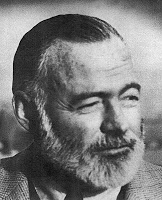
Looks like Sean Connery in the League of Extraordinary Gentlemen.

But then I thought of an old high school memory: in some of my English classes, particularly the AP courses I took when I was an upperclassman, we read a lot of Ernest Hemingway. My teacher just had this thing for Ernest Hemingway. Don’t know why. I didn’t particularly care for him, but we read quite a bit of him. Indian Camp, I think we read twice in my four years of high school.

And I remember, there was a character in many of Hemingway’s stories, a guy by the name of Nick Adams. This guy appeared everywhere, sometimes a kid, sometimes a teenager, sometimes an adult. I once asked my teacher about this guy, and he replied that Nick Adams appeared in plenty of Hemingway’s stories. Two dozen, to be exact. What made Nick Adams so appealing to Hemingway? He was supposedly based on a lot of Hemingway’s personal experiences, so maybe that had a lot to do with it.

In any case, I thought, “Why can’t this short story be my Nick Adams?” It would be short stories I write every now and then, featuring the same world and the same protagonist, all originating from “Buried Alive”. I could even release them in a collection someday, far, far in the future. Who knows what could happen?

In any case, I’ll see what I come up with when I have the time and the energy to write some short stories. There are definitely possibilities here for a series of interconnected stories.

Have you ever written a short story and wished you could write a sequel/spin-off/related story to it? What happened?

Don’t you just love the fans who make this stuff?

With Ben Affleck cast into the role of Batman for the sequel to Man of Steel, I thought I’d take some stabs at predicting what we could expect from this superhero mash-up that will try to rival the Avengers franchise. Now, I know my predictions aren’t always spot on, which is why I haven’t done any since the end of season one of Once Upon a Time (I think the only thing I got right there was Henry’s father). And I’m always afraid someone’s going to come back and tell me that I was off the mark by about 100%.

However, I really want to try again for Man of Steel 2, because for some reason this whole story sounds very familiar, and I want to get into the conversation on what we can expect from the film (which is likely going to be released summer 2015, if Warner Bros. has its way). So without further ado, here’s what I think will happen with various aspects for MoS2 (see what I did there?):

BATMAN. I’m pretty sure they won’t connect this Batman to Christian Bale’s Batman in any way, shape, or form. That trilogy is perfect the way it is, so why possibly spoil it by continuing it on in this new universe with Supes? Better to try and create a new Bats that will be as different from Bale as possible without being comical. I think a serious, more detective-like Batman would work, one who’s not overly violent but not afraid to use martial arts when necessary. That would be an original movie take, in my opinion.

VILLAINS. I’m predicting two villains will be used in the film, one from the Superman universe and the other from the Batman universe. For Supes, I’d go with the obvious choice of Lex Luthor, but if the filmmakers want to save him for the inevitable Justice League film, I’d say Brainiac will make an appearance. I still think Luthor is the likely choice though, so I’m going to throw out Dann Florek as the actor to portray him. As for Brainiac, I’d need more information on what sort of version of Brainiac they’d create for the movie. After all, there are so many versions of Brainiac, it’s hard to keep track. Unless I know more, I can’t recommend an actor (though with a little make-up James Marsters could possibly fill the role).

As for the Batman villain, I’m pretty sure it won’t be any of the villains from the Nolan trilogy, especially not the Joker (it’s too soon after Heath Ledger’s death). And quite possibly they won’t use villains from the Burton/Shumacher films due to the comedic natures of those villains. However if they do, I think cunning, sinister, and quite possibly much more dangerous versions of Penguin, the Riddler, or Poison Ivy could be usable.

If not though, then it’ll probably be a more obscure villain. I doubt that they’d use a crime boss as the villain, seeing as none of the crime bosses are memorable without a cool name and make-up. Perhaps the filmmakers could use a former Robin like Dick Grey or Jason Todd to be the Batman villain, both having come back in some versions of Batman as villains in their own rights. Under what form and in what capacity is a mystery to me, but if so, I’d pick Daniel Radcliffe or Mark Salling in a non-singing capacity.

And as an outlying vote for villain, I think Red Claw from the Batman animated series of the 90s would do great. She’s a feared terrorist with an accent who will do anything for her goals. And having Angelina Jolie, Mila Kunis, or Cote de Pablo play her would work out just fine.

PLOT. Now this goes without saying, first Supes and Bats will be enemies or just not get along as they pursue the same goal, but eventually they’ll team up and actually work very well together. I’m not sure what the evil villains’ plot will be, because I don’t yet have any idea who the villains will be. However, I’m also sure that it’ll cause a lot of destruction (that goes without saying) and may involve alien technology, nuclear technology, bio-warfare, and/or Kryptonite. Any combination of that is just fine with me.

Also, depending on the relationship status of Supes and Lois Lane, we may either get them just fumbling about trying to see if they’re compatible without danger in their lives to cause them to have hormones raging for each other or we may see them well into a relationship where they have to struggle between each other and Supe’s duty to America and the world. Either way, it’ll be put into a 2.5 hour film, so there’s not enough room for character development.

I’ll have more when I know the actual villains for the story and can guess the plot. Until then, what are your thoughts on this sequel? I’d love to hear your predictions…and possibly make a bet with you.