Archive for the ‘Reflections’ Category

If you haven’t heard, then here’s a news piece that’ll at least raise an eyebrow on your forehead: Amazon has announced their intentions to create a new publishing platform for Kindle called Kindle Worlds. The exact nature of this platform is for authors to publish fan-fiction and make money off of it. Yes, you read that right. People can now make money off of fan-fiction.

Naturally, this has set off a storm in the publishing and literary worlds, and a whole lot of discussion across blogs and Internet boards. Fan fiction is, by definition, fans of franchises making up their own stories based on these franchises and display it online or in writing groups for all to see. For many years, fan-fiction, or fanfics for short, have been hidden in the Internet closet. But with this announcement, fanfic writers can now post their stories–some trying to stay true to the original franchises they are based on, some showing unexplored romantic connections between characters, and some of those downright erotic in nature–on the Internet and make money on them.

Of course, there are a few catches. There’s no exact date as to when this platform will be available, and at this moment only certain franchises–The Vampire Diaries, Pretty Little Liars, etc.–are confirmed as allowing their work to be used by Kindle Worlds. In other words, unless the creators give the okay, you can’t publish a short story or novel based on a franchise unless the franchise owners are okay with it. The ones that are confirmed as allowed are franchises with already-large fan bases who write their work regularly in secret and in the Internet version of public. In addition, the owner of the original franchise gets a cut of the money, so they stand to gain too.

However, many authors are seething. Anne Rice is famous for being against fanfics of her work, and the same goes with George R.R. Martin (sorry GoT fans). I’m of this camp, simply because I feel that my stories and the characters within are like my babies, and I don’t want people taking my baby away and telling it what it should or shouldn’t do like it was theirs.

Yeah, he’s not allowing fanfic of his work. I’m not surprised.

Other authors however, have outwardly allowed fanfics of their work. Sci-fi franchises such as Star Trek and Star Wars have always had fanfics, the former at one point having an official fanfic magazine, and the latter creating a specific set of guidelines for fanfics based on the galaxy far, far away. JK Rowling was quoted as saying she was “flattered” that people wanted to write stories based on Harry Potter, while Stephanie Meyer has set up links from her website to fanfic websites where Twilight-esque works are featured.

There are arguments for both camps that each have valid points. For the sake of this post, I’m going to list a few points from both camps. For the pro-fanfic group, here is why they say fanfics are okay:

1. Fanfics encourage reading and writing and imagination. In this digital age when attention spans are short and people are reading less, fanfics allow people to return to reading and writing by giving them the opportunity to read and write things they already love, be it books, TV shows, or movies. If this is encouraging people to guess at what might happen if so-and-so happens to such-and-such character and they read about it or write it down, why should it be discouraged?
2. Good stories can evolve from fanfics. The famous (or infamous) 50 Shades of Grey started out as a BDSM Twilight fanfic. If such a crazy bestseller can result from fanfic, why can’t a best-selling YA series result from a kid in Omaha doing a Naruto fanfic, or a woman in Cardiff create a new type of espionage novel when she has James Bond take on villains with codenames based on The Wizard of Oz, or a new literary novel that has reviewers crying at the end arise from a teen in Johannesburg imagining himself having conversations with Captain Kirk, Darth Vader, and the Doctor and then writing them down?
3. Fanfics could be good source ideas. It is entirely possible–particularly for TV shows with ever-changing storylines and characters–that fanfics could be a source for new material. Perhaps fanfic writers will one day be commissioned to write scripts for new episodes based on a story they wrote when they were exploring a new possibility for a character in their favorite franchise. It could happen.

And now for the opposing camp:

1. Legally, this could be a crime. Many writers don’t approve of fanfics, and in the United States, you can sue a fanfic writer if they created a fanfic based on your work without permission, and the fanfic writer could pay dearly for it. And since most fanfics don’t constitute as fully original works or parodies, they can find themselves at the mercy of a very angry novelist or screenplay writer, especially if the fanfics were sold for money.
2. Fanfics may discourage writers from doing original work. There may be plenty of talent among fanfic writers, but if they spend too much time creating fanfics, how can they achieve their full potential by creating original stories? We may have the next Faulkner, Paolini, or Sparks on our hands, but they may be too busy writing stories based on Scandal or Harry Potter or Friday the 13th to create an original work. Heck, they may be too scared to do an original work, thinking no one will like a story with original characters or that fanfics are the best they can do.
3. Fanfics may create false expectations. You hear of shippers, those people who are rooting for two characters to get together on a show or in a series and talk about it online and write fanfics about it. What if by reading those fanfics, you come only to expect that somehow, some way or another, those characters will be in the relationship by the end of the show? And what if the creators of those characters have other plans? We’ve heard of how some fans were angry about how Charlaine Harris’s final Sookie Stackhouse novel ended and threatened her for it, and years ago when Books 6 and 7 of Harry Potter came out, Harry-Hermione shippers complained that JK Rowling had willfully ignored them or shot them down, particularly in that one scene with the locket Horcrux and Ron holding the Sword of Gryffindor. It’s entirely possible this could happen if fanfics become mainstream.

To do fanfics, or not to do fanfics? That is my question for you right now.

As the debate rages, we may see more and more authors joining the Kindle Worlds platform. Or we may see a retraction, as certain authors launch campaigns against Kindle Words (could happen, you know). I certainly know that I don’t want people making fanfics out of my work, but I can’t speak for other authors.

How do you feel about fanfics? Would you allow fanfics based on your work?

In the article I wrote that was published last weekend (you can read it here if you like), I mentioned that chapters and scenes don’t always mean the same thing. Some scenes take up several chapters, while sometimes several chapters are needed for one scene. This got me thinking on the different types of chapters I’ve seen over the years and doing an examination of these sorts of chapters. Hence the post you are currently reading.

I’ve divided the chapter types into three categories. Note that the names are my own creation and if there’s a proper name for these chapter types, then they’ve escaped me. Also, feel free to add any criticism or any fourth type of chapter that I may have missed or I am unaware of by leaving a comment, and I will gladly write a second post.

The Harry Potter chapter

When I wrote Reborn City, I used this chapter format. This type of chapter I first encountered when I read the HP books, so I’ve always associated the type with Harry Potter. However it is by far the most common type of chapter out there, mostly because it is easy to write and can encompass many events within itself, such as when Mr. Dursley has a very odd day, followed by his nephew being left on his porch in the first chapter of Sorcerer’s Stone. And changes of scene within the chapter are very easy to do, as they can be accomplished by a large space between the ends and beginning of sections or a series of asterisks (I prefer using ~~~ though). When I outline this sort of chapter, it usually looks like this:

Chapter 1: Rami Ungar sits down in front of his computer. He has published several novels, but has written nothing new lately and can’t even be inspired by his trusty list of ideas. He decides to write a story about a man haunted by a muse for no reason but to write something, and when he wakes up, he finds said muse on his couch, telling him to continue to write so that she can take form in this world.

Yes, that sounds like a recent movie, but I’d probably put a more sinister twist on it.

The Alex Cross chapter

This is the chapter format I used when writing Snake. I first encountered this format when I read The Da Vinci Code, but I’ve come to associate it with the Alex Cross books since then. In this format, a scene can take up several chapters, each likely very short, and is usually best utilized in the form of a thriller or other fast-paced novel, due to the short chapters heightening the tension before stopping and leaving the tension to continue in the next chapter. When I outline this sort of chapter, it might look like this:

Chapter 1: Rami Ungar wakes up when he hears a noise in the living room. He goes down to investigate with a baseball bat, but when he looks into the mirror hanging on the study door, he sees someone behind him.
Chapter 2: Rami turns around but sees no one there. He looks back in the mirror and sees no one there. He goes back to his room when he hears someone calling his name. He goes into the kitchen and sees a face peering out of the television beckoning for him to come closer.
Chapter 3: The face in the TV tells Rami she will be his muse from now on and will bring him fortune. Rami is stunned.
Chapter 4: Rami accepts the muse’s help and she tells him his name: Melly. Rami thinks it’s a nickname and wonders what it could stand for.

I could actually use this idea if I’m smart and change some names. Don’t steal it!

The Mark Chadbourn chapter
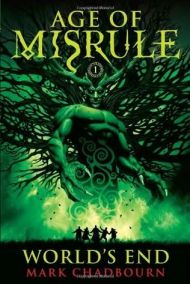
I have yet to use this sort of chapter, but I’m sure I will at some point in the future. This type isn’t named after any sort of literary character, but is named after the fantasy author Mark Chadbourn, who used this style of chapter with his series of nine fantasy books starting with World’s End and ending with Destroyer of Worlds. This format is unique, because it uses chapters, but each chapter is like a section of the story, and it has numbered sub-sections. I find this helpful for novels where there are a lot of different characters and plotlines to follow and you want to switch between characters and plotlines as dramatically as possible without being cheesy. When outlining this sort of story, it usually looks like this:

Chapter 1: Muse Makes Contact
           I: Rami Ungar wakes up and finds a ghostly woman in his room. She calls to him before she disappears.
           II: A witch has a prophetic dream of danger to come and summons her familiar. The witch, whose names is Azzie, tells her familiar Collos to head to Columbus Ohio and investigate an author by the name of Rami Ungar.
           III: Rami goes to work and then to classes, but sees the same ghostly woman everywhere he goes. Also, he feels like he’s being followed…and is then attacked by a man with a knife.

It goes on like that, if you get my drift, and can have any number of subsections. It’s a tough sort of format to pull off, but it works best with stories like this with multiple narratives, and can leave the author the option of working with many different characters at once.

As I’ve demonstrated here, there are many different types of chapters, and probably some that I’m not even aware of. Whatever one you use though, if you use one because you’re comfortable with it or you switch it up depending on the story, it’s probably because you know the story best and therefore you know what sort of chapter is needed. And if you can give your story what is needed, including chapter, then that is one mark of a great author.

Every author wants to write a great story, one that’ll be remembered for years and years after the author has passed on from this life. It’s the reason why so many of us spend years bettering ourselves, polishing ourselves and learning from as many experts in the field as we can so we can be great at our craft.

But what about writing great lines? Every author also has a desire as the person who coined a phrase like “To be or not to be”, or “Luke, I am your father”, or “When you play the game of thrones, it’s either you win or you die” (That last one I had to find through Google to get the quote right). How do you create a line that will be remembered throughout all time and be dissected in high school and college classrooms for generations to come?

I wish I could offer a trick to creating a great line that’ll stand out in your work. Unfortunately, none exists that I know of. In my experience, the most famous lines happen through accident and luck. Take Stephen King’s The Shining, arguably one of his best novels. The term Redrum has become a part of our social consciousness and is often used for creepy (or sometimes comedic) effect. I bet when King created the term though, he was just looking for something scary and strange, a device to add another layer of menace and mystery to the Overlook Hotel. I also bet that when the novel (and later the movie) became a success, King was very surprised by how popular the term Redrum was becoming.

Or how about “Live long and prosper”? Leonard Nimoy, who played Spock, was drawing on his Jewish roots, as that phrase and accompanying hand symbol were used by the priests in the days of the Holy Temple to bless the nation of Israel. When they were looking for an iconic catchphrase and symbol for the Vulcan character, Nimoy suggested, “How about ‘Live long and prosper’?” It stuck, and thanks to the show’s sometimes mind-boggling fandom, the phrase entered into our culture.

(By the way, that story has been a beloved tale among Jews for decades ever since the show began, and we still get plenty of oppurtunities to tell it and sometimes educate non-Jews about its Biblical significance. L’chaim!)

I guess the best way I can say for someone to create an excellent line is to just write as great a story as you can, and hopefully someday, just by writing a great story, you’ll pen or type out a sentence or phrase or piece of dialogue that’ll really catch the reader’s eyes and resound in their consciousness. Basically, keep doing what you’re doing as a writer and someday a great line may be born.

What’s your take on creating great lines? And what constitutes as a great line in the first place?

I’ve heard fiction writers say they worry that they’re writing the same story over and over, just changing the names, the locations, and the situations. They say they worry they’re becoming one-liners, that their work is unoriginal and that they might as well be using cookie-cutters to write their stories.

I’ve had these worries myself. A lot of ideas for novels I have sound very similar if you look at them from certain angles. I’ve gone on thought trains that go something like this: “Oh, this story’s heroine reminds me of this heroine from another story…and she reminds me of another heroine…and don’t their stories sound a little similar?…and what about their male counterparts?…oh my God, did I repeat myself?!” Luckily I’ve got so many ideas for stories that I’m sure I can space these similar sounding stories enough so that critics and readers can’t accuse me of being unoriginal. But even if I didn’t have so many ideas, who cares? You can tell so many of the same story and still be successful. Look at Shakespeare! Every tragedy ends up with a ton of blood, every comedy ends up with bad guys getting butts kicked and lovers falling into each others’ arms in comical fashion, and every history…well, it’s history.

But if you still worry that your work is repetitive and just looking like the same old story over again, then don’t despair. Treat it like you do writer’s block–in my case putting the story aside for a couple of weeks and then getting it out again to look it over. In the amount of time that break took up, I’ve probably done a lot of fun things, or read several awesome books and graphic novels, or watched some pretty interesting TV shows or movies. I can add all that I’ve experienced to the story as I go over it and try to find some way to improve it. And if that doesn’t work, try using a random word generator and using three nouns from that generator to help mix up your story (it’s something I learned to do in high school. Thanks Mr. Guinan).

But if you still feel that you’re only repeating yourself, look on the bright side. Most people don’t have the energy or the fortitude to write a full story, even if they are born with the talent to do so. The fact that you can write only one story, you can do a lot more than others. Perhaps you can even make the best version of that story ever written. And isn’t that worth all the repeats over the years?

Lately there have been a lot of modern-day reimaginings of famous franchises. Superhero movies such as the Nolan Batman films or Man of Steel, James Bond for the past three films, the Star Trek franchise’s prequels, the remake of the Hawaii Five-O TV series, and Doctor Who’s revived series. All of them have been rebooted for the modern era in some way or another. And why not, says movie and television producers and executives. These franchises have strong fan followings, they are mainstream, and they’ve enjoyed huge success in the past.

Horror however, has not been as lucky. Horror is not mainstream, the chances of making a success with any horror film is hit-or-miss, especially if you think it’s easy to scare people (it’s not, but that’s a post for another time), and even franchises with strong followings don’t get these sort of reboots because of the image of the horror fan is so negative (creepy teenatgers and adults in basements who like porn and playing the Peeping Tom and are just waiting for an excuse to imitate the killers on screen). Who wants to cater to that sort of audience?

And when there have been modern-day reboots, they’ve either been really bad (check out the remakes for Friday the 13th, Black Christmas, or Prom Night for examples), or they’ve been good but are often compared negatively with the original (Dawn of the Dead, Nightmare on Elm Street) or are ruined by really bad sequels (Rob Zombie’s Halloween II). As a result, there hasn’t been a lot of rebooting for horror.

Until recently that is.

Over the past couple of years, some successful horror franchises, such as Evil Dead and Texas Chainsaw Massacre, have been rebooted with sequel/remakes taking place in modern times, and famous films such as Carrie have even been remade for the modern audience and modern world, with talks about Cujo, Gremlins and Van Helsing also getting the modern-day remake treatment also occurring (though I debate the wisdom of doing that with VH, seeing as the Hugh Jackman original was awesome).

Not only that, but with TV executives finally tapping into the horror fanbase with shows like American Horror Story, The Walking Dead, and The Following, there have been a few reboots for TV as well. During the summers, Teen Wolf acts like a modern-day Buffy the Vampire Slayer with monsters, magic, fighting, romance, and humor, and late season premieres such as Hannibal on NBC and Bates Motel on A&E have been holding steady ratings since their premieres as they bring fresh life to the legends of Hannibal Lecter and Norman Bates respectively. And more is on the way, with NBC doing a Dracula reimagining for the fall and other projects based on Hellraiser and Leprechaun on the way as execs start looking to reel in the horror junkies.

Why so many modern-day reimaginings? In terms of TV shows, I think TV execs are finally becoming more comfortable with horror itself and with taking risks on shows that appeal to horror fans. And as many horror fans are watching these shows and raving or debating or criticizing them on social media websites, these same execs are finding more and more ways to appeal to these horror fans. And if that means they must remake a few famous stories and franchises, why not? As long as it does well.

As for movies, I tend to think those movies are usually remade and rebooted by fans of the original franchises who see where those who came before had gone wrong or could’ve done more to improve the overall story, so they try and fix what has been done before. For example, the TCM franchise’s sequel got bloodier and more ridiculous with each movie, so the filmmakers tried to go back to the roots of the story and start from there with TCM 3D. As for Evil Dead, those movies were unnerving even with the really bad special effects. Imagine what could happen with better SFX, said the filmmakers.

Regardless of the reasons though, I think this is a good time for these sort of remakes, and there’s plenty of material for it. Here are some suggestions I have for modern-day reimaginings:

Frankenstein–With the rate of technology these days and the amount of zombie-based works being released these days, I say it’s high-time we have a Frankenstein remake. This could work either as a movie, or better yet as a TV series that could expand beyond the original novel and go in all sorts of directions in terms of story and character development. And who says the monster has to be ugly? We could have a halfway decent-looking monster to draw in the female viewers (I’d certainly go that route).
The Phantom of the Opera–I’m not talking about the musical, but the original novel. The story itself, which I read in high school, hints at several hidden, magical creatures and beings living with the Phantom underneath the Paris opera house. Imagine a drama set around the Phantom and the other inhabitants of the opera house trying to interact with the opera house. And imagine if it was set in modern times, when we are so sure of science conquering over the mysterious and superstitious. Sounds like fun, right?
Labyrinth–How many of you remember the 80’s Muppet-filled musical-comedy starring David Bowie as the goblin king? Imagine if it was remade as a serious story with CGI and animatronics and no musical numbers. That could work very well, especially if we delved more into Jareth’s history and his motivations and showed the goblin’s darker sides.
Tale of the Body Thief–Anne Rice’s fourth book in the Vampire Chronicles was recently optioned for a movie, but the movie never materialized due to differences between the movie studios involved. I wouldn’t mind seeing that movie made. Would you?
Willard–This famous 1971 film about killer rats spawned quite the legacy, including the sequel Ben and its famous theme song by Michael Jackson, several films about killer animals (including Jaws), and a 2003 remake. Imagine what would happen if that movie could be remade today?

Whatever the future holds, I hope it has some pretty good reimaginings of famous works, and plenty of people willing to make and to watch them.

What would you like to see remade and set in the modern world?

At the end of the 2012 presidential election, riots broke out at a Mississippi university where racial slurs were shouted by the mob, and over the ensuing months the White House was inundated with petitions asking for individual states to secede from the Union. All these and a few other interesting little acts of rebellion and political anger were the result of President Barack Obama nabbing a second term and, in the eyes of these people, sitting comfortably in a position to create a dictatorship.

I thought these people were being overdramatic and possibly a little unpatriotic. I mean, why not wait till the next election, like the Democrats were forced to do from 2000 to 2008? Why threaten leaving the Union? And until this past weekend, I thought nothing could match this overreaction.

I was wrong.

Author Charlaine Harris is receiving hate mail and death threats for wanting to end her vampire series and to end it a certain way. Seriously?

This past weekend, I read several articles, online and off, about how Charlaine Harris, author of the Sookie Stackhouse books, was receiving negative reviews, angry letters, and even a few death threats. Why, you ask? Because a small but extremely passionate legion of her fans are upset that the latest book, Dead Ever After, also happens to be the last Sookie Stackhouse book. Some were angry that Ms. Harris was ending the series. A few were threatening to do horrible things to themselves or to Ms. Harris if the ending doesn’t put their favorite couples together (and when a leaked copy of the novel appeared in Germany, some fans did what they threatened).

This isn’t the first time an author has received this sort of treatment from fans. Stephanie Meyer received some very angry letters when she said she didn’t want to write any more vampire stories, and even Sir Arthur Conan Doyle got his share of haters attacking him when he threw Sherlock Holmes over a cliff, seemingly killing him. For the latter, this led to Holmes’s resurrection, which can show how powerful fans can be, and in the age of the Internet, a few people can create a tidal wave of faceless anger and indignation.

But can I remind everyone of something? THESE ARE FICTIONAL STORIES! There’s no actual Sookie Stackhouse or Bella Swann, Sherlock Holmes doesn’t actually mysteries in London, there are no vampires or Hogwarts, Klingons are the creation of talented make-up artists working with patient actors in seats, and the fact that adults get so worked up by a show about talking animated ponies seems a little creepy! None of it is real, but the fact that so many people treat these things like life or death just seems to disturb me.

The new target: celebrities and artists. It’s ridiculous.

So why do people go all Annie Wilkes when their favorite author decides to do something that a few fans disagree with? Or to go a little broader, why do some fans threaten to boycott or do horrible things to a celebrity when that celebrity does one little thing that doesn’t fit with the image these fans create of certain idols? And yes, fans create the images of their idols, because it is only in their minds that Tom Cruise is truly a dashing, charismatic, very eccentric man, or that the super model is the cool, serious seductress of your dreams. Magazines and TV and movies may help perpetuate these images, but the fans are the ones who create these images in the first place.

But to return to my original point, I don’t know why certain fans act so crazy when an idol does something that doesn’t fit their image, be it a pure actress that cannot be anything other than the sweet girl from the country, or the author that wants to end a book series after so many years, or the bad-boy musician who keeps his marriage and family secret because “that does not fit his image”. I always look at what these people do as gifts: they give us a wonderful story or a performance or a song and we appreciate it because of all the work that went into creating such a beautiful present.

“Mr. Spock, please set fanatics to minimal. Their interference could jeopardize the smooth running of our operations and the lives of many civilians.”

Even more so, plenty of artists treat their work like their babies, children they create and give birth to inside themselves. What happens when someone else tells them how they should raise their own children, what those children should learn and who they should love? It’s a little freaky, to say the least.

But it seems that some fans don’t see things the same way. They love their idols while the idols do what the fans want, but as soon as the idol does the opposite, the fans become hostile, believing they are owed something. The truth is, the rabid fans are the ones who owe something to the artist, and that’s an apology. You don’t own the work, you didn’t create it, and you sure as heck can’t tell the creators of such work what they should do with it. And if you are willing to go to such lengths such as try to ruin an artist’s career like hurting yourself or go on a hate campaign, then I seriously worry about your mental state.

So people, the next time you want to do horrible things to an artist for doing something not remotely criminal but you still find yourself feeling really upset about it, take a step back and ask: Is this really worth going to war over?

I highly doubt it.

I recently read a blog post (you can read it here) where the author commented on the attitudes some people have toward different academic studies. According to the author, fields of study like physics, mathematics, and biology–fields collectively known as “hard sciences” and based on reasoning and mathematical proofs–as more important and more factually true than the study of literature, which is seen as “soft” and therefore variable, indefinite, and downright false.

Now I admit that those who study literature (and those who create it) aren’t solving the mysteries of the universe, curing cancer, or creating alternative forms of energy. And I admit that you can look at a novel, poem, play or short story and draw many different meanings from the author’s comparison of blue curtains to the blue sky. And yes, fiction is, by definition, outright falsehoods. There’s no Hogwarts, the zombies aren’t coming for us, and in all likelihood Dante never visited all three realms of the afterlife.

But I don’t think that the English major is inferior to physics or chemistry or engineering. Far from it. I believe the English major fulfills a different role than the hard sciences. Fields like elementary neuroscience and evolutionary biology and botany seek to understand the physical world around us. Literature and English majors, on the other hand, seek to understand the human condition, to understand our collective soul. We’re focusing on a whole other dimension of existence, multi-layered and able to bring understanding and meaning to the lives of others. We make metaphor of life, turn it into art, show our darkest fears and our deepest desires in the struggles of characters brought to life through letters and words.

Isn’t that worthwhile in itself? To make people understand through a story not only themselves but the world around them? To feel empathy for a character, joy when they triumph and sadness when they struggle, because that character reminds a reader of themselves or what they want to be? I think it is, especially since reading and writing bring so much fulfillment to me and to the people I know who feel the same way I do.

Besides, the hard sciences may be solving mysteries and doing important work, but there is something that they lack, and that is the ability to identify with and inspire the masses. The theory of relativity will never be able to define an age like The Great Gatsby did, and Heisenberg’s uncertainty principle will never have the same effect on our youth like Harry Potter did.

Sure, you can argue that the space race defined the sixties and seventies and that the Internet and technology defines us now. But let me remind you that those age-defining technologies were first dreamed about in a literature course or on a writer’s desk while his pen rolled across a page. From cell phones to space ships to the Roomba, all were first talked about and made awesome and terrible by some writer somewhere (especially if that writer’s name is Isaac Asimov).

And yet even today’s technology is influencing literature. Dan Brown’s Digital Fortress was as much inspired by the Internet as the blog and the webisode were. Several science fiction writers are now writing works on how social media and hacking are becoming a total part of our society and reflecting on that. And I wouldn’t do some of my best writing without technology.

So these fields aren’t competing with each other for superiority or totally exclusive. On the contrary, they merely handle different fields of our existence and feed each other occasionally. It’s like the relationship between bees and flowers: the bees get their food from the flowers and spread the pollen around so that the flowers can create new seeds. In this sense, they are helping each other grow.

So deride my English major anytime. I may not be solving some mysterious aspect about black holes or quarks, but I might just give you an idea someday on how to solve that mystery. And you may never be able to write your own homage to Edgar Allen Poe, but your work on cancer research or molecular genetics may give me or a friend some new idea for a future bestseller. It could happen.

What’s your take on this subject?

This week alone, several stories have surfaced in the news of American children being killed by guns in their homes. Two children, shot accidentally by their siblings. One child was killed by his uncle’s handgun hidden in a backpack. Another was shot in the crib while their 14-year-old brother was using his .22 rifle, which was given to him as a birthday gift.

The two cases listed above didn’t end in saved children. Instead, the children died en route to the hospital. The parents and siblings of these dead children, the rest of their families, the communities, and everyone who hears of these cases can only wonder, “Why?”

There are a million reasons why: negligence, misfires, simple intentions to see a gun, the belief that guns actually don’t kill, the crazy belief that giving a gun to a teenager is a good idea. However, debating the reasons why these tragedies happened won’t do any good. These children are wounded or dead, and it happened by weapons kept in the home.

Now I won’t try to argue the Second Amendment or the dangers of automatic rifles and machine guns this time. I believe that if it’s for legitimate reasons, people should have access to firearms like handguns or hunting rifles. However, when children are involved it’s a whole other issue. Children have a habit of getting into places they shouldn’t, and they think things that are dangerous are fun or sometimes cute. And even if a child seems mature, no child should be given something that’s main function is killing, be it animals or people.

The worst part of this is that these tragedies could’ve been totally preventable. The parents and adults could’ve locked up their guns better, or at least made attempts to lock them up. They could’ve waited until their kids were teenagers to teach them to use guns, and then only when they were 18 would they have been allowed their own guns. Or better yet, they could’ve never have bought the guns in the first place! After all, there’s a significantly higher chance that if you bring a gun into your home, it’ll do more damage to your family than any would-be intruder.

So the NRA may be having a party in Houston and saying that guns are here to stay, that taking away guns will lead to a dictatorship, and that the only thing protecting our children are guns. But they can’t shut out the facts, no matter how many senators they buy off. Guns are dangerous tools, and until we have some common-sense legislation, all this violence and death will only stay the same, or possibly get worse.

I saw a friend of mine yesterday at the library a little after 2pm. He and I began talking about finals (the topic de jeur during this last week of the semester) and he mentioned that he had to write a short story for his history class based on some of the stuff he’s been learning in class. I offered to look at his short story and critique it if he wanted, to which he said he’d send it over.

This evening I took a look at it and I wrote a quick critique of it before e-mailing my friend. After I finished and sent the email, I thought to myself, Hey, that’s the first time I critiqued something for a friend that wasn’t required by a class of mine. I don’t count that one time my sister asked me to look at her speech as she was running for a position on the board of the youth group we both belonged to in high school, mostly because we couldn’t get past the opening without her disagreeing about my assessment of the opening. God, that was a long time ago.

“This blog post is perhaps the worst thing I’ve ever read online. Now your friend’s short story…”

Okay, enough rambling. Back on topic:

I’ve been in two workshop classes in the past year, and I had to do a similar assignment to what my friend did when I took a world history course my first year in college. I’ve looked at a lot of short stories, occasionally had to look stuff up just to understand what a certain word meant or what the action revolved around, and written close to fifty critiques for each story. I’ve seen bad short stories, I’ve read ones that absolutely floored me with their first drafts, and I’ve read one or two that confused me so bad that I mentioned how confused I was in the critique letter.

But writing for a friend…it’s an entirely different experience. You want to give them the best critique possible. You want to tell them their story has potential. You want to say they did a great job. You want to tell them it’s only a matter of time before they’re selling books in bookstores and receiving royalty checks. But at the same time, you have to point out flaws, you have to say that they should possibly rewrite the whole thing, and sometimes you have to tell your friend that, for one reason or another, the story stunk to high heaven and you absolutely hated it. It’s a very different experience than critiquing for classmates you don’t know that well, and finding a balance between kind to your friends and critical of the work is tough, especially if you’re sensitive to a friend’s feelings or there’s a chance that they may say their work is too high-brow and those who don’t like it or understand it are literary fools.

Luckily my friend doesn’t aspire to literary stardom and even if he did, he’s a chill dude who doesn’t get emotional over critiques. But still, I took his feelings into account when I critiqued his work, and I hope he appreciates the critique and isn’t daunted or upset by what I had to say. (For the record I wrote a very positive critique and suggested that he rewrite the story from the POV of the sheriff character and do more showing and less telling) It was the first time I understood what my friend Matt goes through every time he looks at a chapter of Reborn City for me and tells me what he thinks, and what my friends and family go through when they review my work for me, and it’s a pretty crazy feeling.

I’m not sure if I’ll ever do a critique like this ever again, though I’m sure I might be asked in the future to look at someone else’s work, especially if it’s for class. If I am asked by a friend to look at his work though, I hope I’ll be able to do a serviceable critique that will help them with their work and with their writing over time. Because if there’s one thing writers can do for each other, especially indie writers, it’s help to make each other’s work better and make sure they reach wider audiences.

What do you think when you get your work critiqued or someone critiques your work?

This is a rather unique question, and one that came up very unexpectedly for me. You see, I heard from some friends and teachers–all published writers as well–that James Patterson, author of the famous Alex Cross books and a few YA books whose names I tend to forget–that Patterson uses ghost writers to help get all his work done, which is how he’s able to publish 9 books a year. At first, I didn’t want to believe it, but then I did some research and sure enough, I found a NYT article about this “collaboration”. And it broke my heart.

Should he work alone or should he work with ghost-writers? Most would say “no”.

Now, collaboration isn’t always a bad thing. Technically speaking, my friend Matt looking at Reborn City is a collaboration. Dave Berry and Ridley Pearson wrote a children’s reimagining of Peter Pan together, and it is certainly not a “technical” collaboration. And who can forget the legendary meeting of the pens of Stephen King and Peter Straub?

But those were collaborations that everyone knew about, everyone agreed to, and the fans were fine with. Most fans are still unaware of these Patterson collaborations, who he’s working with, and he gets all the credit. And it explains why the last couple of Alex Cross books haven’t been exactly up to par.

And we, the fans, are the ones who hurt the most. After all, we expect that the writing is original and from the author. And it’s…not. It’s a ghost-writing collaboration that is making the rounds on the Internet and that nobody really wants. We feel a little betrayed. And yet I still want to read his work, with hope that Patterson will someday return to writing on his own and doing what he does best, even if it means he’s not putting out nine blockbusters a year.

I’m not sure why Patterson does this–though I think money has something to do with it–but I hope that he cuts it out soon. It’s not what the fans want, it’s hurting the quality of his work, and honestly, if I were him I wouldn’t want this. I wouldn’t want to be working with several different ghost-writers and spending less time on the actual work just so I can be prolific and get a ton of money in. I mean, I plan to be prolific, but I plan to be prolific on my own, not with the help of other writers. Why can’t Patterson do the same?

What’s your take on these collaborations? Is it a good thing or a bad thing?