Archive for the ‘Review’ Category

You know the drill: Junji Ito releases a new collection in the States; I read it; I review it. And in his latest collection, The Liminal Zone 2, Ito-sensei once again gives us four stories that try to toe the line between the world of human-caused horror and the more supernatural kind. (Plus the complicated relationships between fathers and sons, now that I think about it.)

You may recall, but I was not impressed with half of the stories in the first Liminal Zone (see my full review here). And, as Ito-sensei himself says in the afterword of Liminal Zone 2, he feels he’s having fewer ideas for stories every year. Can what ideas he has work for me this time?

For the most part, yes.

The first story, “Demon King of Dust,” follows a young boy living in what remains of a hot springs inn with his increasingly unstable father and two servants. The father is paranoid about dust, claiming it’s part of a terrible demon that rules over the abandoned resort town where the inn is located. It’s a very freaky story, where every couple of pages reveals more and more strange and disturbing imagery and truths. I love how it just escalates and how you’re left guessing how much is real or how much is in the father’s head.

The second story, “Village of Ether,” is about four college students returning to the small town one of them grew up in, and where a pair of scientists were supposedly developing perpetual motion machines (machines that lack an external power source and are considered impossible by mainstream scientists). However, the town is very changed from when the one student was a kid, and the only remaining scientist is hiding secrets that are about to come to the surface. Again, the art here is imaginative and terrifying, especially the “automaton servants,” and it just keeps getting freakier up until the end, which I would define as “explosive.”

The third story, “The Strange Hikizuri Siblings, Chapter 3: Uncle Ketanosuke,” is the latest venture in the Hikizuri siblings, six strange and dysfunctional siblings who have appeared in previous, increasingly supernatural stories (don’t worry, you don’t have to have read the previous stories to enjoy this one). In this tale, a girl named Hotaru senses a strange aura from the Hikizuri family home and ends up staying with the siblings in the hope that it may explain why she’s always felt a heavy weight upon her soul from early childhood. Be careful what you wish for, because the truth is as freaky as these siblings, and I bet a live-action film on just this one tale would be both hilarious and creepy!

The fourth and final story, however, is the weakest of the bunch. “The Shells of Manjunuma” is about a young man living in an area where the local turtles and crows are considered evil and cursed, and the turtles’ belly plates can predict who will die under mysterious circumstances. Ito-sensei himself all but admits in the afterword that he was really scraping the bottom of the barrel with this one, and it shows. The story feels pretty pointless, which only detracts from some of the very gruesome art.

But all in all, this is a much better collection of Ito-sensei’s work. Whereas The Liminal Zone earned a 2.5 out of 5, I’m awarding The Liminal Zone 2 a 3.8 out of 5. Plenty of great storytelling and scary imagery to match! Just skip the last story and you’ll be sufficiently creeped out.

Wow, it’s just been good book after good book after good book lately. At least I’m having luck in that area lately.

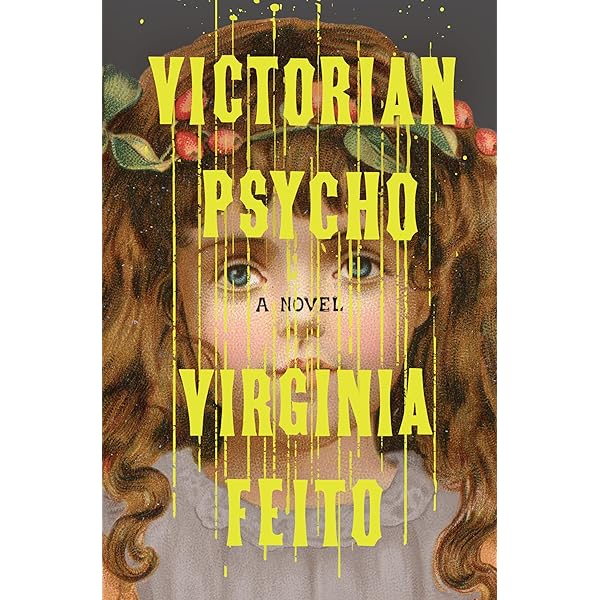
Set in my beloved Victorian England, Victorian Psycho follows Winnifred Notty, a governess who comes to Ensor House, the country home of the Pounds family to help instruct and raise the children. However, Winnifred is about as far from Mary Poppins as you can get. She’s got a history, has a mind that works in mysterious ways, and has some terrible plans in store for the Pounds family. Ones that will come to terrible fruition on Christmas Day.

Whoo-boy, this was a wild one. Written entirely from the point of view of Ms. Notty, you really get in her head, and it’s an uncomfortable place to be. She sees things that aren’t there (or are they?), does things that defy both common sense and my uncommon sense, and puts up red flags left and right while making the funniest observations (like what she says about the head maid’s sexual history). Compounded by the fact that you can’t rely on anything she says (I highly doubt most of the people’s last names in this book are their real last names), it’s an intriguing read that keeps you wanting to read more.

It’s also darkly funny, satirizing the manners and beliefs of the age in a way that somehow manages to keep things between insane and believable. I could hardly believe it when one character mentioned that when he got home, he’d have to deal with both a depressed wife (apparently she’s delaying getting over her child’s death much too slowly for her husband’s sake), and a chimney sweep who’s stuck in their chimney (they tried to light a fire under him to press the issue that they didn’t want him hanging around. It didn’t work).

And then what happened a few pages later…well, I’ll just say that was a real thing Victorians did, and seeing it depicted here was kind of amazing.

As far as downsides go, I did think some parts of the ending could have been tweaked. Also, maybe it was just because I was listening to the audio book, but I was only able to listen to this book in short spurts before needing a break. Which is weird, because when I first started, I thought this was the sort of story I would nearly binge from start to finish, and that feeling is hardly ever wrong.

All in all, though, Victorian Psycho by Virginia Feito is a quick and enjoyable read. On a scale of 1 to 5, I give it a 4.2 for its witty, stomach churning portrayal of insanity and evil set against the backdrop of banal, Victorian melodrama and morals. A movie version is set to release next year with Margaret Qualley in the lead, and if she brings the same A-game she brought for The Substance (which I recommend if you can deal with body horror), it’s going to be a hell of a film.

In the meantime, better go brew some (hopefully poison-free) tea, lie back in the drawing room, and crack open a copy of Victorian Psycho. Trust me, it’s worth a read.

(Note: This review contains some spoilers for this book’s predecessor, I Feed Her to the Beast and the Beast is Me. So, if you haven’t read that one and want to go in unspoiled, you’ve been warned.)

Sequels are tough. I’ve tried to write sequels before, and they are fucking tough to write. Not only do you have to continue the story you set up in the previous entry, but you have to keep up the tension and further develop the characters. And, if possible, up the stakes from the last story. So, when I started listening to I Am the Dark That Answers When You Call, the sequel to I Feed Her to the Beast and the Beast is Me (see my review here), on audio book, I hoped that the sequel would be up to the same level as the original book.

Starting a few months after the events of I Feed Her to the Beast, Laure Mesny is back in Paris and trying to move on with her life. However, things are not as easy as she would like. For one thing, not only is she the vessel for the dark god Acheron, who constantly whispers in her ear, but she’s also being haunted by ghosts from her past, both literal and figurative. And on top of that, Elysium, the strange dimension below Paris where the gods reside, is dying, setting in motion a chain of events that will see either Laure’s ascendancy…or her doom.

I enjoyed I Feed Her to the Beast immensely, but I think I enjoyed I Am The Dark even more.

For one thing, let’s look at the horror. There’s definitely more of an emphasis on the cosmic horror aspects in this volume, and they work well, with the power of the gods becoming a corrupting influence as Elysium continues to degrade and rot. The new human villains of Neve and her retinue were a great addition to the story, as was Laure’s relationship to Acheron, which I expected to be more like Eddie Brock and Venom in the movies but turned out completely different.

I also liked the development of Laure as a person. If the first book was about Laure trying to get what she wanted and deserved, only for her to see its dark side, then the second book was about Laure trying to find who she is and what she really wants out of life now that the Paris Ballet is behind her. Jamison Shea handles that deftly, leading to a climax that left me on the edge of my seat (metaphorically; I was cooking dinner during those scenes).

Finally, there were a lot of surprises in the story that threw me for a loop, which only deepened my enjoyment of it overall. Several times, I was like, “What? Are you serious?” And it’s not easy to surprise me, so kudos to the author for that.

If I have any criticisms, it’s that I thought the linking of the cosmic horror elements to the Cthulhu Mythos felt a little forced to me. Also, I thought a certain character introduced in the story was going to have a bigger role when it was revealed how much they were aware of, so it was kind of disappointing that they didn’t have that bigger role. I understand why the author did–it was part of Laure’s personal growth, after all–but still.

All in all, though, I came away from I Am the Dark That Answers When You Call by Jamison Shea very satisfied. On a scale of 1 to 5, I’m giving it a 4.8, which is 0.3 points higher than its predecessor. Unrelenting, cosmically dark, and full of twists and turns. I’m almost sad that there’s not a third book in the works (as far as I know), though Laure’s story does work well as a duology.

Anyway, if you’re at all interested, or if you enjoyed I Feed Her to the Beast, you won’t be disappointed by I Am the Dark. Give it a read and see for yourself.

That’s all for now. Until next time, my Followers of Fear, good night and pleasant nightmares.

Having read The Good House before, I knew I was in for a good time (see my review here). But I was not prepared for Tananarive Due’s latest novel. After starting it, I learned the book was based not only on the Dozier School for Boys, a reform school in Florida where numerous atrocities were committed against the kids there, but on a relative she had who died at the school. And even after learning that, I still wasn’t prepared for what was to come.

Set in Florida in 1950, The Reformatory follows twelve-year-old Robert Stevens (named after her relative) and his older sister, Gloria. After kicking a white boy who makes advances on Gloria, young Robert finds himself sent to the Gracetown School for Boys, a reform school where the boys are under threat by both the spirits haunting the campus after years of mysterious deaths, and the Warden Haddock, a terrifying personage with a sadistic streak. When Haddock learns Robert can see the ghosts on campus, he forces the kid to help him catch the spirits. Meanwhile, Gloria attempts to find a way to free her brother from the horrible reformatory, setting them both on a path that will change them forever.

Man, this book was a rough read! Due does not skimp on the human horror the characters face, whether that be the horrible things Robert faces at the reformatory at the hands of the adults and the other kids, or the racism Gloria faces trying to get her brother out of that place (not to mention the utterly disgusting advances Lyle McCormick makes on Gloria in the novel), it feels all too real. Not to mention kind of timely!

Speaking of feeling real, the worldbuilding is amazing! Gracetown, the location of the reformatory and most of the other events of the book, as well as the people in the book, feel extremely real. I noticed that with The Good House, but Due is great with character development, and setting can be as much a character as the characters! I also loved how Gracetown apparently has this reputation as a place where children are able to interact with spirits and lose the ability as they grow older. That’s a pretty cool idea, and Due uses it to flesh out the spirit world of Gracetown and the reformatory so well.

I think the one thing I didn’t like was that I feel we only scratched the surface of the Gracetown School for Boys. I know that might sound masochistic, considering what we saw was pretty horrific, but we only saw a fraction of the school grounds, of life at the school, and the sordid history there. And as much as that would’ve scarred my psyche, I would’ve like to see all that explored more.

Maybe an anthology based around the Gracetown School for Boys? They’re doing one for The Stand, after all. I can dream.

All in all, though, The Reformatory by Tananarive Due is a soul-shaking journey of abuse, racism, and the darkness of humankind that, at times, I had to take a break from, I was that shook. On a scale of 1 to 5, I give it a 4.5 out of 5. I feel like I get why this book was talked about so much when it came out last year, and I wish I’d read it sooner. And if you haven’t read it yet, you should go and read it, too.

Or listen to it. The audiobook is fantastic!

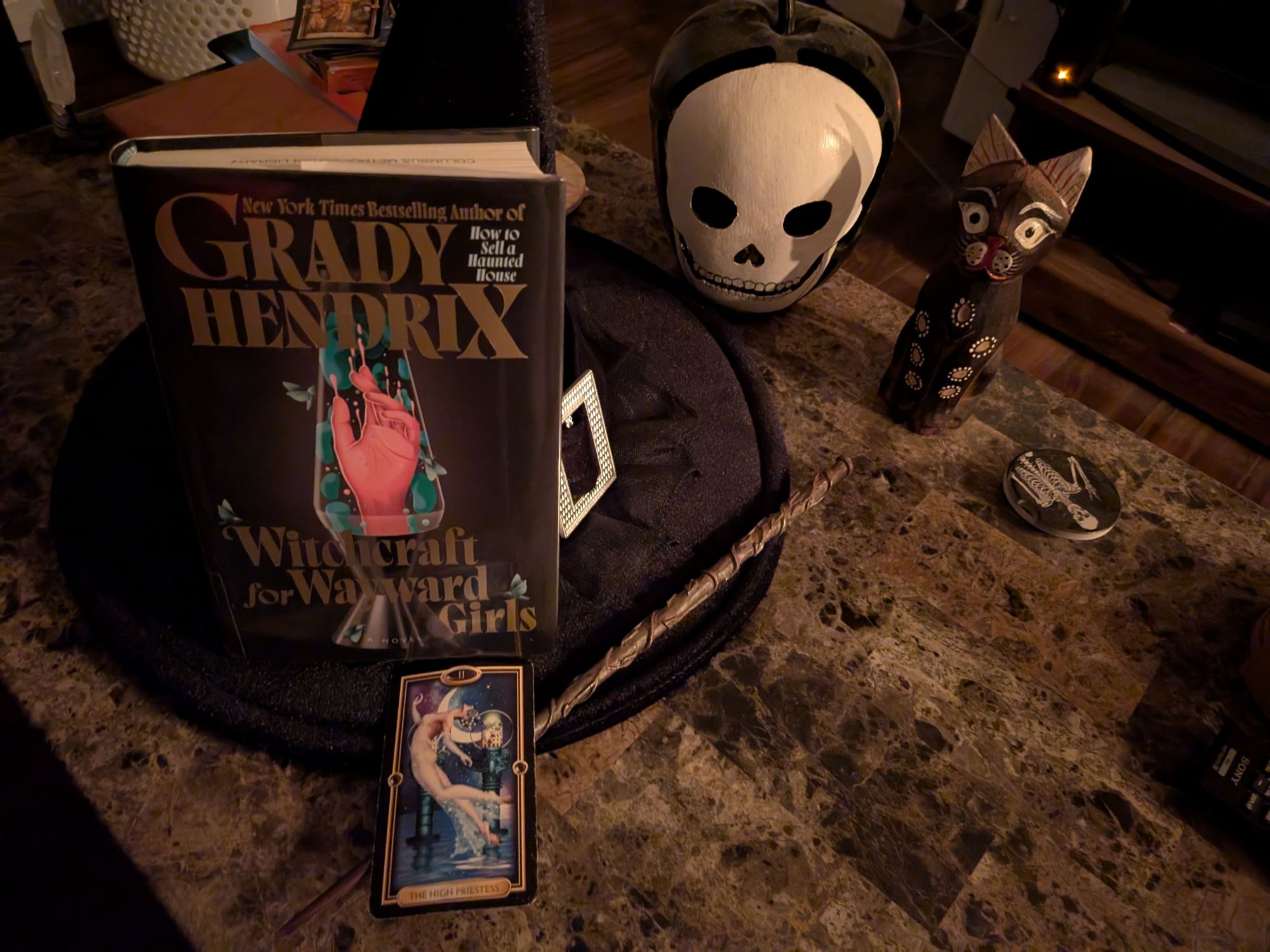
The photo I took the day I got my copy from the library. Can you tell I was excited?

We’re only five weeks into 2025, but I may have already found my favorite new book of the year. In fact, at times I got so deep into this book, I had dreams about it! You don’t know how special a treat that was for me.

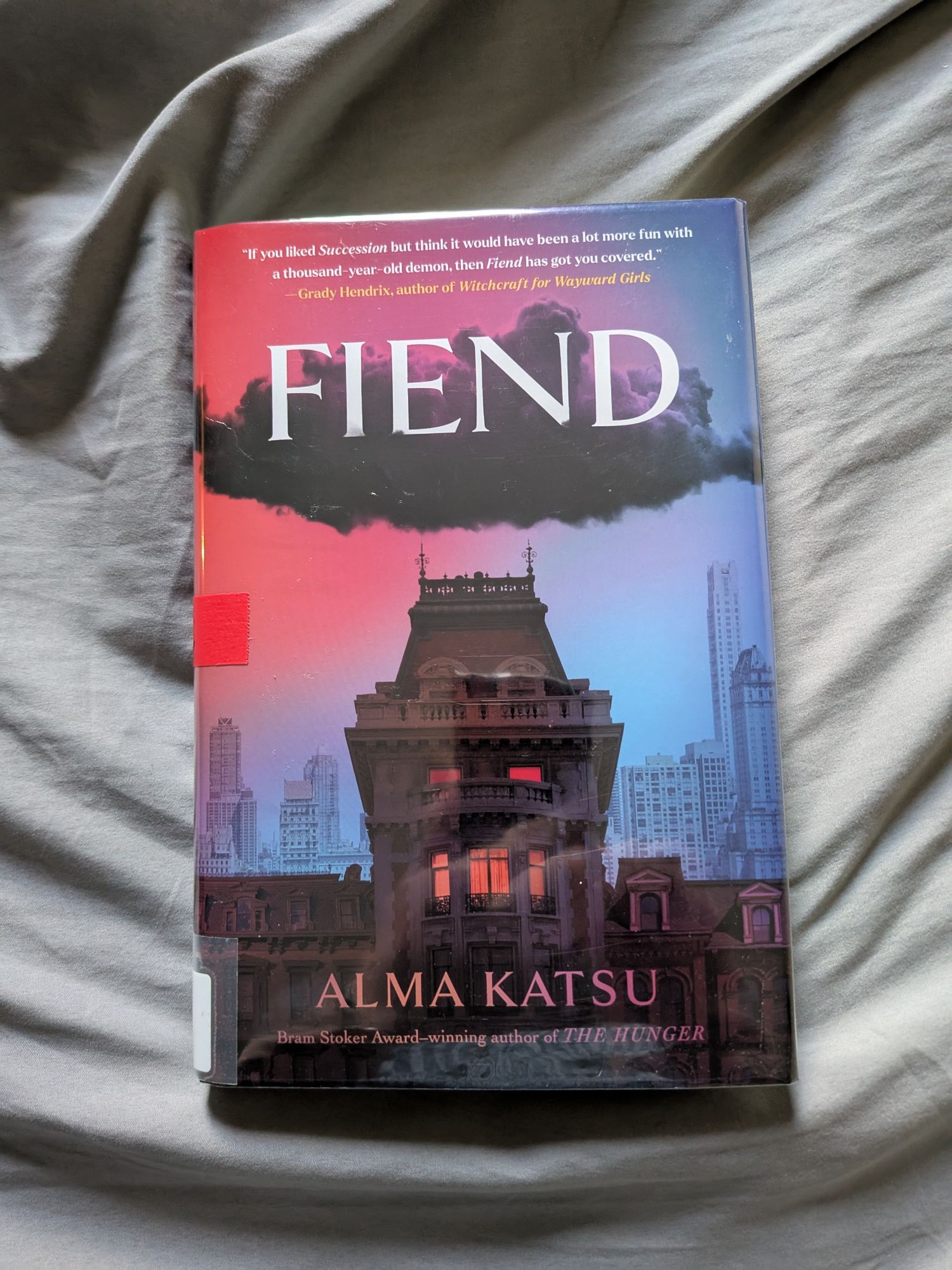
Set in 1970, Witchcraft for Wayward Girls follows four girls sent to Wellwood House, a home for unwed mothers in Florida: Fern, a young high schooler who wants her old life back; Rose, a rebellious hippie with a bit of a mean streak and a bit of a nice streak; Zinnia, a young musician who plans to marry her baby’s father; and Holly, whose youth and silence hides a dark and terrible secret. Hidden away from the world like shameful secrets and repeatedly told that they are at fault for their condition and that the only good thing they can do now is give up their babies for adoption to a loving couple, the girls seek any way to take back a little control over their lives and bodies. When a mysterious librarian hands them a book that’s full of actual magic, they think they’ve found their solution. But when it comes to magic, everything comes at a price. And the price they have to pay may be bigger than any of them can pay.

So, if it wasn’t clear from the first paragraph, I freaking loved this book! For one thing, the horror is palpable from the first couple of chapters. Not from the witches, but from the people. Through Fern’s eyes, we see how everyone blames her, including herself, for getting pregnant outside of marriage, even though it takes two to tango. From what I’ve been told, that really was the attitude towards unwed mothers back then, and Hendrix does a great job bringing it to life throughout the story, as well as the callous cruelty the girls face as unwed mothers, even after they’ve given birth.

I also really liked the witches of the story. They’re not exactly old school wicked witches, but they’re not entirely good witches or granola-crunching Wiccans, either. They’re their own thing, a group of women with access to power and who are trying to ensure the continuation of their way of life and their freedom, and they’re willing to get their hands dirty to do so.

To list out all the colorful characters would keep us here too long, but some of my favorites included hippie Rose, who grew on me as the story went on and whose experiences midway through the book broke my heart; Hagar, the cantankerous cook at the Wellwood House, who does try to help the girls, if rather reluctantly; Zinnia, who has more sense than most of the other characters in the book; and Fern, who really does learn something from her experience.

All these elements come together into a fantastic story where I struggled to guess what would happen next and was surprised more than a few times by certain developments. It really was amazing.

Hendrix admits in the acknowledgments that he’s probably the last person to be writing a book where nearly every character is pregnant, but given how phenomenal of a job he did, I think we can forgive him. I can’t think of a single flaw in this story, it was just that good. On a scale of 1 to 5, I’m giving Witchcraft for Wayward Girls by Grady Hendrix a full 5. Grab a copy, put on an appropriately witchy playlist (I hope “Abracadabra” by Lady Gaga is on that playlist), and settle down for a read.

Trust me, this is one you don’t want to miss.

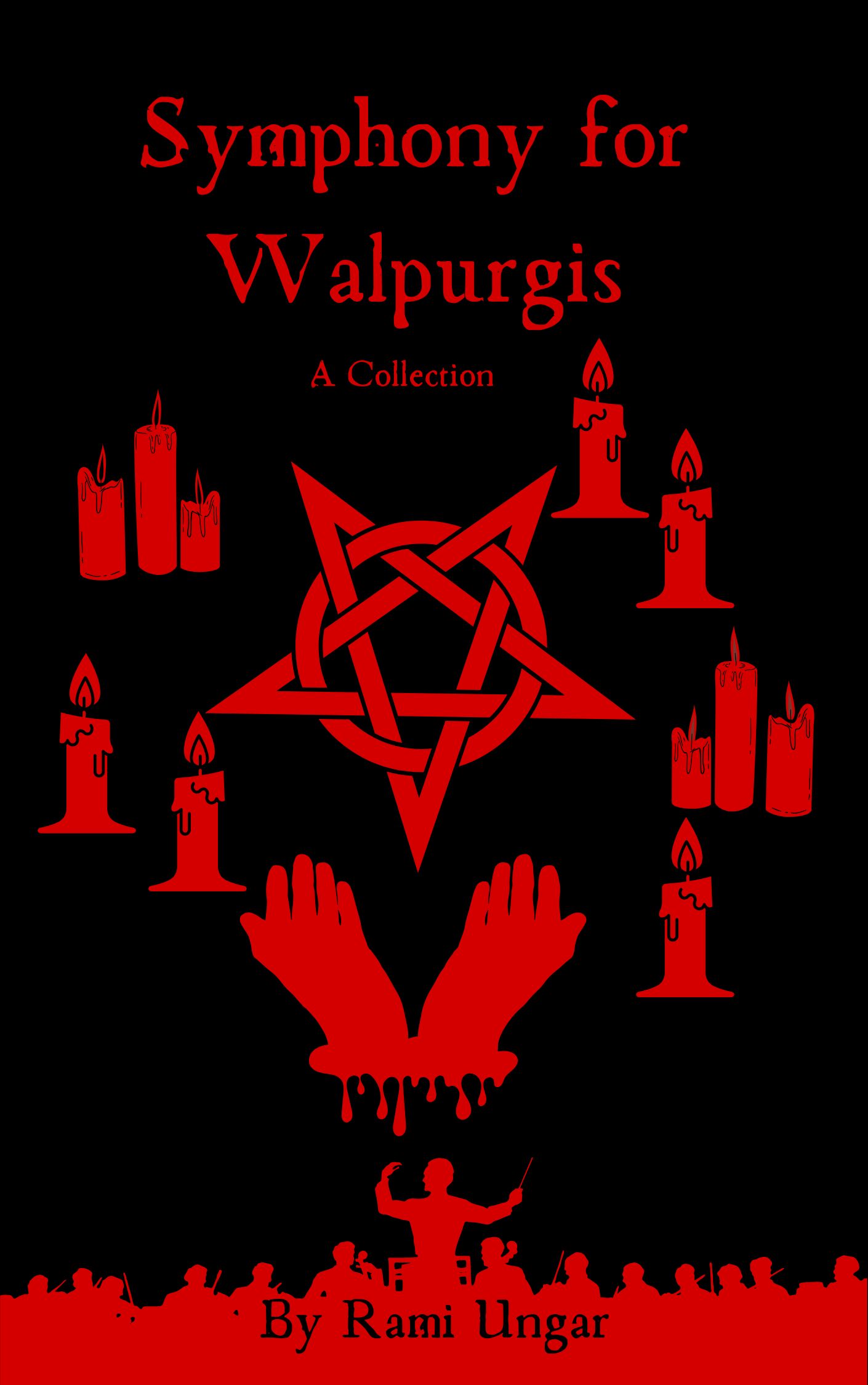
Oh, happy day! It’s still only three months away, but Symphony for Walpurgis has its first review! And holy crap, it’s a five-star review! Everybody start dancing!

No surprise, this review, which I discovered on Goodreads yesterday, comes from an ARC reader. And not just any ARC reader, but from Priscilla Bettis, who is not just a fellow author, but has been a Follower of Fear for several years now. Since…I want to say before Rose came out? Anyway, she got the ARC of Walpurgis the other day and apparently got through it in a week before leaving a review.

Don’t be fooled, though: just because she’s a longtime Follower of Fear, doesn’t mean Priscilla isn’t willing to criticize a story when she dislikes it or finds something problematic. I should know, she’s beta read a few of my stories. So the fact that she gave Walpurgis five stars means she must’ve really liked it.

Here’s some of what she wrote:

Symphony for Walpurgis is a collection of novelettes, all horror. There are themes of money-power-arrogance (I should just say “corruption), abuse of nature and one another, grief, and (my favorite) insects.

Dragon bats … not a story title, but a thing. One of the best creatures Rami’s ever created. You’ll find them in “Disillusionment and Trauma Sometimes Go Hand-in-Hand.”

In “Blood and Paper Skin,” Grey, a college-aged man, and a group of his friends run into deadly trouble when out to buy drugs. It’s scary and tense, and Ungar makes it easy to like Grey and cheer him on. But there are twists. Other characters besides Grey come to the forefront. This is the twisty-ist story in the collection, great fun!

“The House on Lafayette Square” is a Jewish demon-exorcism story with freaky-scary descriptions. The story takes a left turn somewhere, so instead of everything being tied up in a neat bow, I was left DISTURBED at the end, maybe because I am a mother IRL. (Kudos to Ungar for that.)

Wow. I disturbed her. For a horror writer, that’s a serious compliment. Especially from someone who’s a big fan of horror.

And that’s only half the review! You should see the rest of it. In fact, I hope you do. Because I’m aiming to amass fifty (hopefully positive) reviews on Amazon and on Goodreads in the first year alone, so this is a good start! So, if Priscilla’s review gets you even a little bit interested in reading the book, then I hope you read the rest and then go preorder the book.

Here’s the back cover blurb for the book, which is out May 1st:

What’s the difference between humans and monsters? Is there a fine line, or is it more gray and blurred? Rami Ungar, author of Rose and Hannah and Other Stories, explores this question in his latest collection, Symphony for Walpurgis. From legendary cryptids to malevolent spirits and from Ohio in the 1950s to modern-day California, readers will be treated to nine terrifying stories of the weird and macabre. So settle down and be prepared. For you have bought your ticket to Symphony for Walpurgis.

I’ll leave links below in case you want to check the book out. And if, after the book is released, you read it and like it (or don’t), I hope you’ll leave a review. Positive or negative, I love reader feedback, and it helps both me and other readers out in the end.

Anyway, that’s all for now, my Followers of Fear. I’ll be sure to check in with you guys when I have updates on Walpurgis or on anything else going on in my life and/or in my writing career. So, until next time, good night and pleasant nightmares!

As many of you know, Kill Creek by Scott Thomas has become one of my favorite novels, if not my favorite (you can read my review from 2018 here). So, when I heard Thomas was releasing a collection of four novellas, I had to get my hands on it. And while it took me longer than I wanted to get through it (I picked it up in September and only just finished it), I’m glad I got to read it.

Taking place in a fictional version of Kansas that’s part of the same universe as Kill Creek (and possibly his other novel Violet, I’m not sure), each novella follows a native who gets pulled into horrors beyond their control. Three of these stories connect to the very land and the entities, natural or supernatural or preternatural, that inhabit and make up Kansas, all of these stories deal with dark histories and hidden truths, and each story connects in some way to the authors who were the stars of Kill Creek,* enhancing the reading experience.

The first novella, The Door in the Field, follows a young construction worker with anger issues who joins his boss for a drink after an incident, and ends up spending a night in terror. This story does move a bit slow at times, but it’s a thrilling tale full of blood, violence, and cosmic horror that pays off well at the end with the reveals and the main character’s growth. My one major criticism is that the novella is kind of a story within a story, and the framing device doesn’t really add much to the story. It doesn’t take anything away, but it doesn’t add much, either.

The second novella, Wear Your Secret Like a Stone, follows a troubled young woman who, after her pick of book for the Halloween display at her job is taken down by a customer complaint, goes on a mission to get her favorite book back. Only along the way, she learns some frightening local history which is more alive than she thought. I think this might have been my favorite novella of the bunch. It’s atmospheric, the protagonist is likeable, and the ending is a dark fantasy twist that will bring you chills.

The third novella, The Boy in the Woods, is about a young boy who, on the last night at camp, finds himself in the middle of a slasher story with a rage zombie twist. It’s a wild ride of a story with a sympathetic protagonist and a the way the slasher/rage zombie aspect are approached gives both tropes new life that I wasn’t expecting. If Wear Your Secret was my favorite, then The Boy in the Woods is a close second.

The final novella, One Half of a Child’s Face, is about a mother who is able to see into her ex’s apartment building al a Rear Window. There, she frets about not having her daughter living with her full-time and gets a vicarious thrill at watching the residents live their lives…until a strange painting in an empty apartment seems to throw an evil influence over the building’s residents. Of the four novellas, I would consider this the weakest. It takes a long time to build to anything and there are quite a few plot threads left hanging at the end. However, the last fifty pages are so were hard to put down and I enjoyed reading them.

All in all, Midwestern Gothic by Scott Thomas is a worthwhile collection of novellas. On a scale of 1 to 5, I would rate it a 3.9. Pick up a copy, settle down in your favorite chair, and prepare to be transported to a different sort of Kansas.

*If you haven’t read Kill Creek, don’t worry. You can still read the collection just fine. Kind of like how you can watch The Big Bang Theory and still laugh at all the jokes while not necessarily getting every sci-fi or comic book reference the characters make. Still, I highly recommend Kill Creek, so if you’re curious, read that one, too.

I love horror and I love ballet. I often combine the two in my work. And when I find another author who has combined the two forms of storytelling, I want to read it. And if it’s good? I’m especially glad to read it. Jamison Shea’s novel I Feed Her to the Beast and the Beast is Me is one of those books I’m especially glad to have read.

Taking place at the Paris Ballet and its attached academy, I Feed Her to the Beast follows Laure Mesny, a dance student in Paris who is the most talented in her class, but has had to deal with privilege and racism in the academy and the company every day. When a fellow ballerina she admires leads her into the tunnels of the catacombs, she is introduced to an ancient godlike entity that offers her a deal: her blood in exchange for the power she has always craved. Laure takes it, and it leads her on a path that could end in her stardom, or her destruction.

Where do I start?

Well, let’s talk about the horror. While there is some eldritch occult horror here, the real horror is with the human characters. Not just what the characters are willing to do for their goals, but what they’re willing to do to each other out of spite. Laure’s fellow dancers, often white and privileged, treat her horribly and tell her, behind her back and to her face, that she doesn’t belong and will never be good enough, even though she is amazing. More than a few bring up that she’s black and from a poor background and, in their view, wouldn’t be a good fit for the company. When Laure finally gets some power, it’s kind of scary how quickly she not only gets used to it, but how much she enjoys using it, including to do violence!

Not to say there isn’t some more traditional horror. The gods living beneath Paris are quite cool, as is the destruction they wrought, and there’s a murder mystery throughout the story which resolves in a way that surprised even me and which felt quite satisfying.

I also liked how most of the characters felt real. They’re all extremely complicated, especially Laure. She’s had it rough, coming from a broken family and dealing with racism and poverty, and often being told to be better and be perfect despite doing everything she should. And despite all that, she still wants to belong and feel loved by her coworkers, which honestly feels very human to me. I also empathized with her struggle to try to balance her dreams and her relationships. She’s not all good, and she’s very flawed, but it’s hard not to root for her, even at her worst. And we see her at her worst a lot.

I think the one flaw is that some of the supporting characters could have used some more development, especially Keturah. She sort of becomes a sister figure to Laure halfway through the novel, but I never really felt like we got a chance to see past her surface. Maybe in the sequel. (Yes, there’s a sequel, and I’ll check it out as soon as I can.) And, at times, the story did drag a little.

All told, I award I Feed Her to the Beast and the Beast is Me by Jamison Shea a 4.5 out of 5. This is a riveting slow-burn novel that delights in being bad and in delving into the darkest parts of humanity. Get yourself a copy, put on Stravinsky’s The Rite of Spring, and prepare to be transported. Believe me, it’s worth the read.

As we’ve entered September, horror fans have started celebrating spooky season. Because as we all know, spooky season starts as soon as the stores start putting up stock, and a few stores already have. And since we’re all thinking about what movies to watch, I’m putting out another list of films you can consider for this year.

I’ve tried to come up with a good mix of well-known and lesser-known films, as well as a good mix of older and newer films. So, hopefully there’s something here that will appeal to every horror fan out there. Enjoy, and let me know if you’re familiar with any of these films or if there are any I should check out myself. The more films we share, the better!

YellowBrickRoad (2010)
In 1940, a small New Hampshire town up and walked north along an unmarked trail into the unexplored woods. Half were found dead, and the other half were never found. In modern day, a film crew tries to figure out the mystery of the disappeared townsfolk, including following the townspeople on the route they went. A route with a stone marker bearing the legend “YELLOWBRICKROAD.”

This move is an unsung gem. It’s a surreal and psychological piece of rural horror that takes the isolation and interpersonal conflicts of The Blair Witch Project and ups the ante by 100%. It’s not going to be everyone’s cup of tea, but it is certainly going to be an interesting watch, no matter what.

Antrum (2018)
A film-within-a-film, Antrum is a documentary about…Antrum, a supposedly cursed film said to be the deadliest film in history. The documentary crew manage to get a rare copy of the film, and, for the first time, show it to the public. What proceeds is a horrifying trip through hell which will leave you wondering if you’ll survive to see the morning.

I love horror mockumentaries, and this one is one of the best I’ve seen. It starts out as a documentary, showcasing the history of the film, before showing us the actual film. And it all feels damn realistic, to the point you could almost believe there’s a cursed film called Antrum and you’re really watching it. In fact, my sister and I saw it together and wondered if we would survive after watching it! As you can see, we did, but it still made us believe a little.

Peeping Tom (1960)
This proto-slasher follows a shy young man who works as a cameraman and spends his free time killing women while recording their deaths. It’s a slow-burn psychological horror that really lets you get to know its main character. I’m honestly surprised it hasn’t been remade, because we’re so obsessed with recording everything. Anyway, I would totally check this out if you’re interested. It’s not as bloody and horrifying as other horror films, but it is fascinating and at times quite tense.

The Dark and the Wicked (2020)
A pair of siblings return to the family farm when it appears their father is on death’s door. However, events unfold that show that something sinister at the farm. And it’s after the family. It’s a very dark and nihilistic film, and while some will be annoyed by certain aspects of the film, such as how the characters react to the supernatural presence, it is still a very chilling film. If you’re looking for something very morbid and grim, this film is for you.

The Void (2016)
After finding an injured man on the side of the road, a sheriff’s deputy and several other townsfolk find themselves under siege at the local hospital, menaced not just by a mysterious cult, but by monsters hidden within the hospital hallways. For those who love cosmic horror, this is one of the best I’ve seen in years. The special effects and creature designs bring to mind both The Thing and Color Out of Space, and the story is a terrifying thrill ride. It’s a movie that gets better with every viewing, and I highly recommend it if you want to scare yourself silly this Halloween.

Late Night with the Devil (2023)
In the 1970s, a struggling late night show host brings the lone survivor of a Satanic cult and the therapist working with her onto the show for a Halloween special. As you can imagine, shit eventually hits the fan. When this film got its limited theatrical run earlier this year, people were raving about it and even called it the best horror film of 2024. While I wouldn’t call it that, I would say it’s quite scary and a well-done film. I’m actually planning on watching it again myself as soon as my copy comes in from the library.

(I should warn you, though, a couple of images from the film utilize AI. It’s only three, but I know a lot of people feel strongly about AI, so I figured you should know.)

When Evil Lurks (2023)
In a world where demons physically manifest like diseases and can infect everyone around the possessed, a pair of brothers try to protect their families when an infected individual goes missing and the disease starts to spread around the tiny village.

Some have called this the best horror film of 2023, and I can see why it was called that. Besides having a neat twist on the concept of demonic possession, this Argentinian horror film has plenty of tension and scary moments that keep you on the edge of your seat. Give it a watch and see for yourself.

Stopmotion (2023)
A stopmotion animation artist is assisting her demanding mother in completing her last film. When the latter becomes gravely ill, the artist tries to make her own film, only to find herself spiraling into Hell.

I’m not normally a fan of horror stories where the whole premise is “the horror is the main character’s spiral into mental illness.” However, this film is quite captivating in how it melds stopmotion animation and real life storytelling to give us a frightening film with some seriously disturbing imagery. Warning you now: have a strong stomach before you go in to watch this one.

Night of the Demon (1957)
A psychologist comes to England for a convention, only to learn that one of his esteemed colleagues has died and a so-called magician and cult leader is claiming his magic is responsible. Along with the deceased professor’s niece, the psychologist investigates the magician and his cult, and along the way learns that there may be more to the magician’s claims of magical power than just trickery and suggestible followers.

While it’s an older film, it’s quite influential in showing the demon multiple times throughout the film (quite unusual for the time), and many horror fans and creators, including Stephen King, have cited it as an influence. Just don’t watch its shortened American version, Curse of the Demon, because the original is the one to watch.

Land of the Dead (2005)
Set in the same universe as Night of the Living Dead and Dawn of the Dead, Land of the Dead takes place decades after the undead have taken over the world. Pittsburgh has become a last bastion for humanity, with the wealthy living in a magnificent luxury skyscraper and the poor living in slums. However, when one zombie, nicknamed Big Daddy, begins leading his kind to the city after a supply raid ruins his territory, it sets off a chain of events that will forever change the city.

Fun fact: this was the first time in the film series the word “zombie” was actually used for the zombies! Up until now, the terms used were “ghouls” or “undead.” Besides that, the film’s quite thrilling, with plenty of horror and action to satisfy fans. Give it a watch, especially if you’ve seen the first two films in the series (I would skip Day of the Dead, the third film).

Other fun fact: I’ve met Eugene Clark, the actor who played Big Daddy, and he was very nice. He even let me take a photo with him, which you can find on my Instagram.

In the Mouth of Madness (1994)
An insurance investigator goes to a small town to try and locate a horror author whose work is considered so terrifying, people have actually gone crazy from reading it. What happens there, however, will not only change him forever, but the world as well.

The last film in John Carpenter’s Apocalypse trilogy (the first two being The Thing and my own favorite, Prince of Darkness), this film has grown quite the cult following due to its meta-narrative and exploration of cosmic horror. It’s not perfect, but it’s a fun and at times quite scary movie with lots of great imagery and cool ideas involving what it’s like to live in a fiction story. By the end, you’ll want to read Sutter Cane’s work as well. No matter what it does to your sanity.

The Empty Man (2020)
In the 1990s in the nation of Bhutan, a group of American tourists discover a cave, which leads to terrifying events on a mountaintop. Twenty-three years later, a former police officer is asked by a friend to find her missing daughter, and finds himself wrapped in a cult with ties to the tourists in Bhutan.

This movie is almost hypnotic in how it draws you in, and it is both terrifying and…dare I say this? It’s satisfying. It’s that good, and I’m honestly sad that it’s rarely available on any streaming service I actually have access to (and never on DVD or Blu-Ray). Anyway, it’s a great horror film, so check it out if you trust my word.

Pontypool (2008)
In a small Canadian town, a radio host and his team are working in the middle of a blizzard when they get reports of riots and horrifying deaths happening elsewhere in town. As time goes on, a strange sort of apocalypse starts to occur in the town. An apocalypse based around language.

I first saw this in college and loved it. I saw it again recently, and, while there are some aspects about the ending I dislike/don’t buy, it still holds up very well. It’s a very tense and freaky film with a great concept at its heart, so if you’re looking for a fun twist on the zombie apocalypse, I highly recommend this one.


And those are my recommendations, my Followers of Fear. But tell me, Followers of Fear, have you seen any of these films? What did you think? And what are you watching this season? Anything you would add to this list? Let’s discuss.

Until next time, my Followers of Fear, good night, pleasant nightmares, and only 52 days till Halloween! Get the Headless Horseman’s horse ready for him at once!

Took a little longer than I expected, but I finally finished this book tonight and, as promised, I’m writing a review.

Jumping back and forth between the late 1990s and 2019, The Dissonance follows Hal, Athena, and Erin, who, along with their friend Peter, discover that they have mysterious powers. Powers that, according to Peter’s grandfather, stems from the Dissonance, a magical energy that stems from the gap between our broken world and the world as it should be. They start learning how to harness their powers, but tragedy strikes during their senior year of high school. Twenty years later, they return to their old stomping grounds as forces begin to throw the world out of whack. And in the midst of it all, a great evil descends on their hometown, dragging a closeted gay teen in tow…

I’ve heard this book called a cross between The Magicians and IT, and while I’m only vaguely familiar with the first one, I have to say, the comparison to IT is apt. Not only does it hop back and forth between past and present, but Hamill does a great job showing the characters as hormonal teens trying to navigate friendship and their lives in the past, and trying to deal with cosmic shift and their broken lives and relationships in the present.

As for the story, it’s definitely more in line with dark fantasy than horror. For example, the Dissonants conference feels more Harry Potter than The Craft. Still, it’s got some horror elements. The magic itself, which requires tapping into the pain and misery of life, is pretty dark in and of itself, and plenty of aspects of the novel are of the cosmic horror vein.

If there’s one thing I would have liked to see more of, it might have been more of the character Owen. I get that the focus was more on Athena, Hal, and Erin, but Owen was a relatable character and I would have liked to see the kid have a bigger role.

Well, if there’s a sequel, that might be a possibility. The book does present the possibility of being the jumping off point for a shared universe, like The Hobbit was for Lord of the Rings, but with more in common with the Cthulhu Mythos than Tolkien.

But getting back to the review, I award The Dissonance by Shaun Hamill a 4.5 out of 5. It’s an engaging dark fantasy novel with great characters and worldbuilding and a magic system that feels right for this wrong world. Grab a copy, tap into your deep well of inner pain, and prepare for a twisty, magical ride through hell.

That’s all for now, my Followers of Fear. Until next time, good night, pleasant nightmares, and only 61 days and one hour till Halloween!