Archive for the ‘Scary Stuff’ Category

Wow, it’s just been good book after good book after good book lately. At least I’m having luck in that area lately.

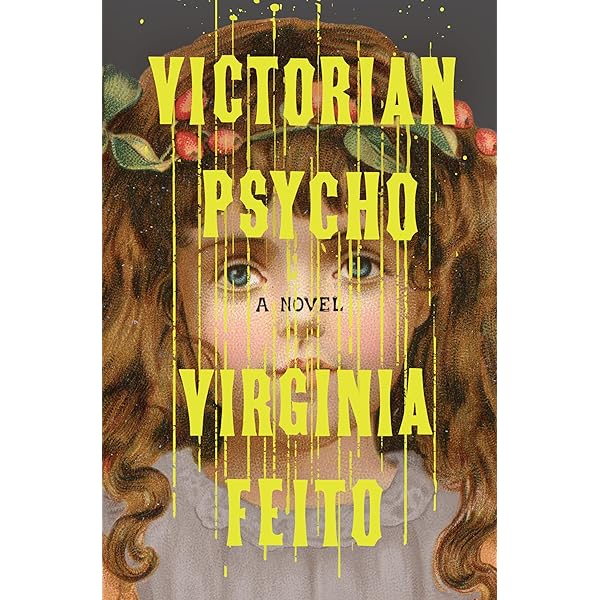
Set in my beloved Victorian England, Victorian Psycho follows Winnifred Notty, a governess who comes to Ensor House, the country home of the Pounds family to help instruct and raise the children. However, Winnifred is about as far from Mary Poppins as you can get. She’s got a history, has a mind that works in mysterious ways, and has some terrible plans in store for the Pounds family. Ones that will come to terrible fruition on Christmas Day.

Whoo-boy, this was a wild one. Written entirely from the point of view of Ms. Notty, you really get in her head, and it’s an uncomfortable place to be. She sees things that aren’t there (or are they?), does things that defy both common sense and my uncommon sense, and puts up red flags left and right while making the funniest observations (like what she says about the head maid’s sexual history). Compounded by the fact that you can’t rely on anything she says (I highly doubt most of the people’s last names in this book are their real last names), it’s an intriguing read that keeps you wanting to read more.

It’s also darkly funny, satirizing the manners and beliefs of the age in a way that somehow manages to keep things between insane and believable. I could hardly believe it when one character mentioned that when he got home, he’d have to deal with both a depressed wife (apparently she’s delaying getting over her child’s death much too slowly for her husband’s sake), and a chimney sweep who’s stuck in their chimney (they tried to light a fire under him to press the issue that they didn’t want him hanging around. It didn’t work).

And then what happened a few pages later…well, I’ll just say that was a real thing Victorians did, and seeing it depicted here was kind of amazing.

As far as downsides go, I did think some parts of the ending could have been tweaked. Also, maybe it was just because I was listening to the audio book, but I was only able to listen to this book in short spurts before needing a break. Which is weird, because when I first started, I thought this was the sort of story I would nearly binge from start to finish, and that feeling is hardly ever wrong.

All in all, though, Victorian Psycho by Virginia Feito is a quick and enjoyable read. On a scale of 1 to 5, I give it a 4.2 for its witty, stomach churning portrayal of insanity and evil set against the backdrop of banal, Victorian melodrama and morals. A movie version is set to release next year with Margaret Qualley in the lead, and if she brings the same A-game she brought for The Substance (which I recommend if you can deal with body horror), it’s going to be a hell of a film.

In the meantime, better go brew some (hopefully poison-free) tea, lie back in the drawing room, and crack open a copy of Victorian Psycho. Trust me, it’s worth a read.

(For the first two quote filled posts, click here and here. You can also see all of them at once on the Symphony for Walpurgis page.)

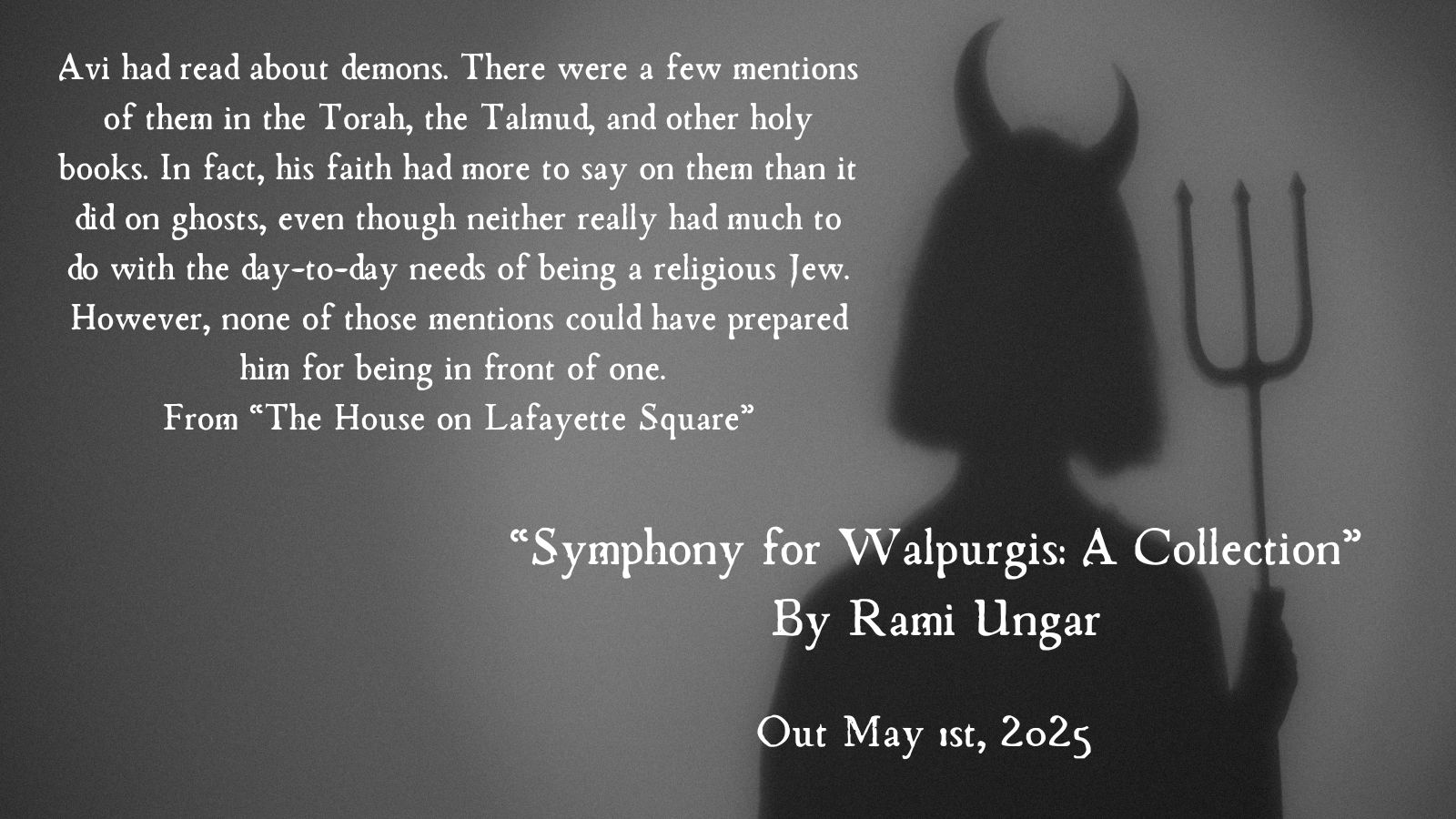
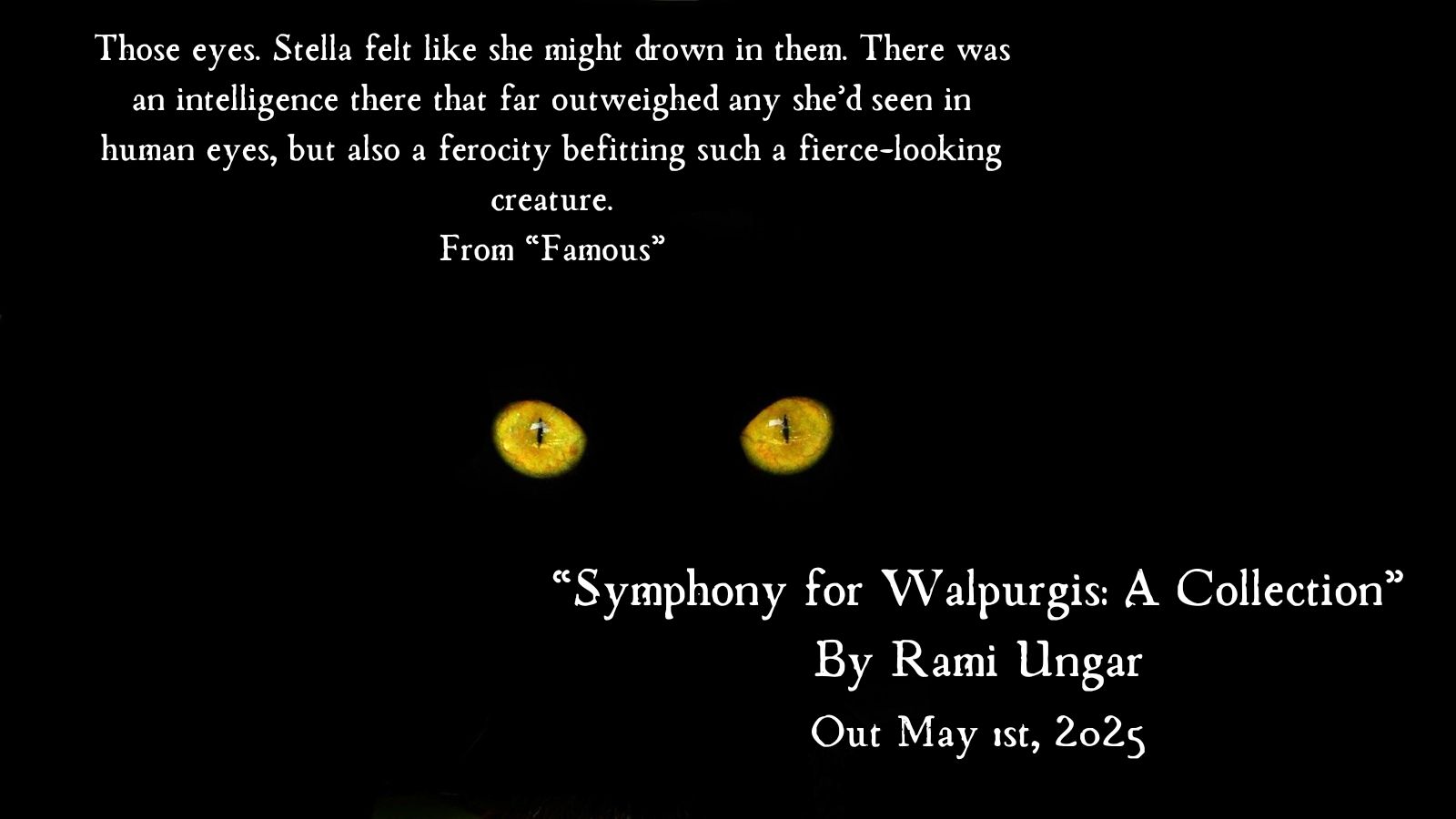
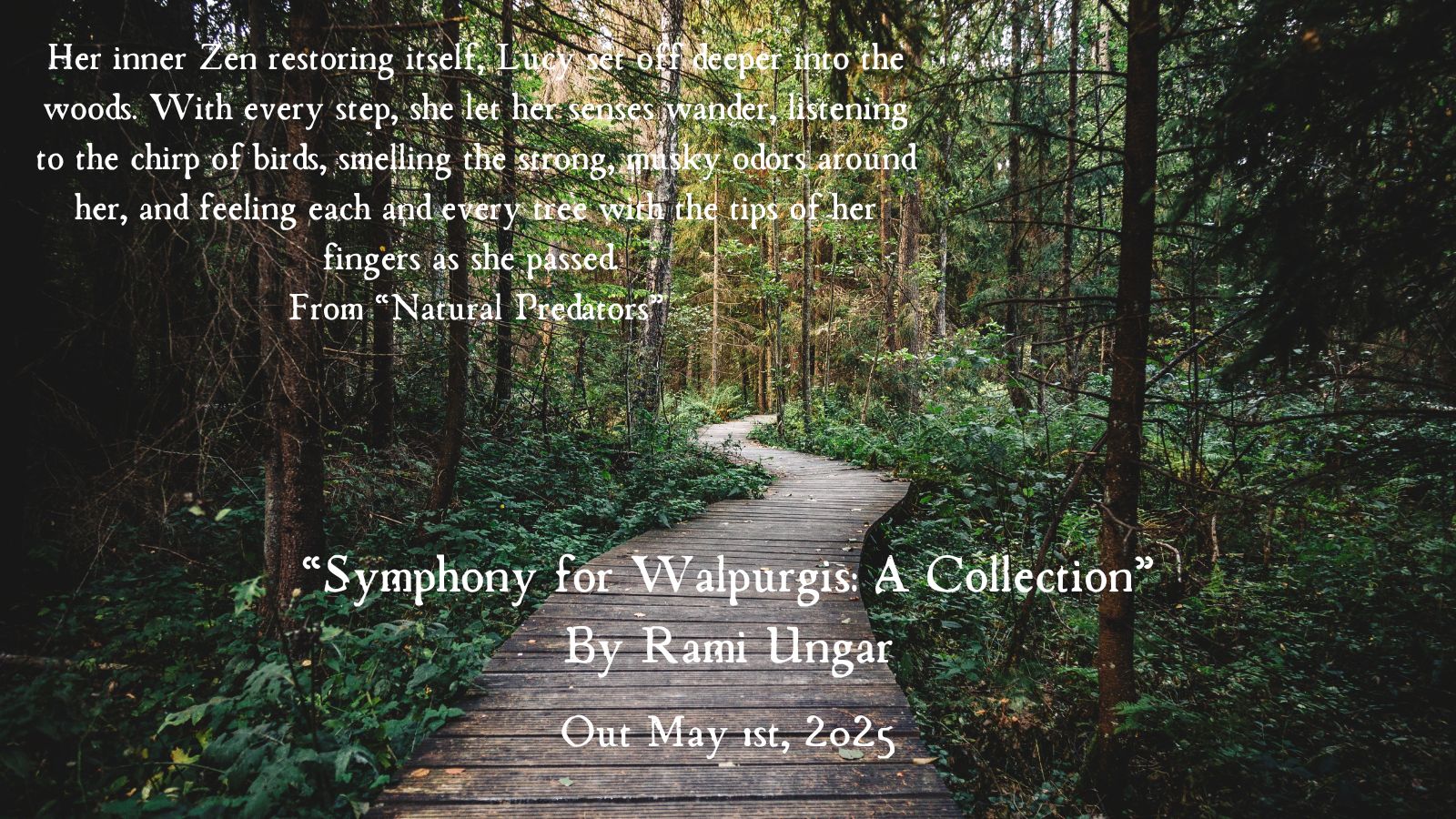
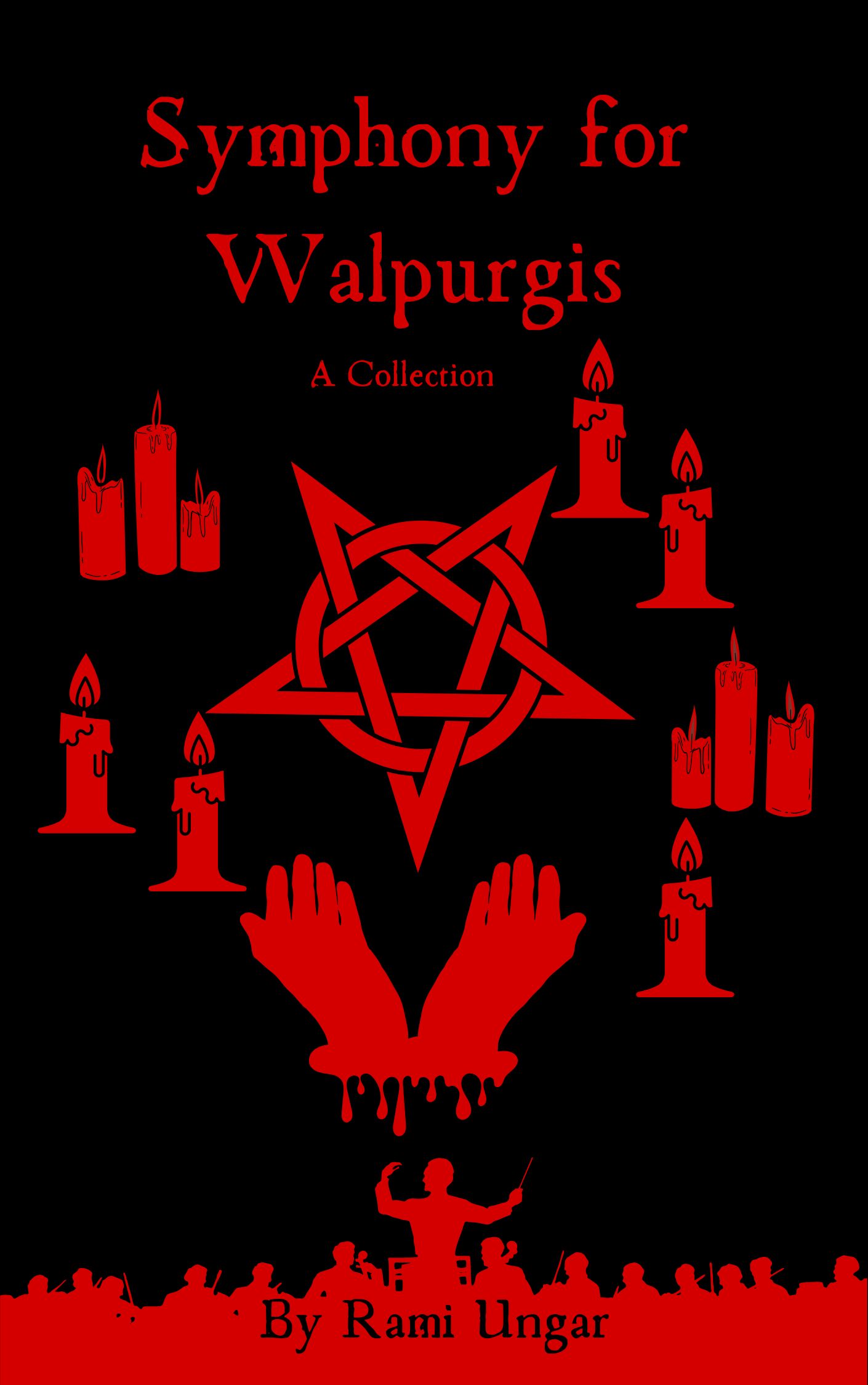
Well, it’s that time again. As many of you know, I’ve been creating graphics with quotes from my upcoming collection, Symphony for Walpurgis, and posting them every couple of days. This is to hopefully generate some interest in the collection by giving people short previews into what’s inside. I usually go through graphics for all nine stories in just three weeks, then I make more. But first, I’m posting the most recent round of graphics here for you to enjoy.

Who knows? Perhaps you’ll see these quotes and be interested enough to want to read Symphony yourself.

I have to admit, finding the right quotes for these graphics, making sure I can fit the quotes in the graphic templates, and then finding imagery to match the quote, is not easy. In fact, a few times, it’s been kind of frustrating. You do not know how hard it is just to find a good demon image for “The House on Lafayette Square,” or the right quote to use from “Famous.”

Still, I’ve seen these graphics help attract readers, so I think I’ll stick with it for the next couple of weeks until the book comes out.

And in the meantime, if you’re at all interested in Symphony, you can preorder copies or read early reviews using the links below. The book comes out on May 1st, just less six weeks from now, and I’m very excited for people to check it out. I’m very proud of these stories, which include tales of cryptids, malevolent spirits, and even a Jewish exorcism! Yeah, those exist. They don’t happen often, but they exist.

And if you end up reading the book, I hope you’ll leave me a review. Positive or negative, I love reader feedback, and it helps me out in the long run.

That’s all for now, my Followers of Fear. I’ll probably be back soon, so be sure to keep an eye out. And until next time, good night and pleasant nightmares.
I’m at the point in my marketing plan where I get super annoying with reminders that I have a book coming out. But hey, can you blame me? If it gets one more person to read the book, then it’ll have been worth it.

So, if you’ve been living under a rock, I have a new book coming out on Thursday, May 1st, 2025. The book is a new collection called Symphony for Walpurgis. What’s Walpurgis, you ask? You can find out here. But back to the collection. This is a collection of nine novelettes, four previously published and five original, that I’ve gathered together because there’s just not enough publishers of novelettes out there these days. So, if you can’t find homes for them, make a home for them yourself and show the world how awesome they are!

At least, that’s what I’m hoping to accomplish, along with letting people read some amazing stories.

Here’s the back cover blurb for the collection:

What’s the difference between humans and monsters? Is there a fine line, or is it more gray and blurred? Rami Ungar, author of Rose and Hannah and Other Stories, explores this question in his latest collection, Symphony for Walpurgis. From legendary cryptids to malevolent spirits and from Ohio in the 1950s to modern-day California, readers will be treated to nine terrifying stories of the weird and macabre. So settle down and be prepared. For you have bought your ticket to Symphony for Walpurgis.

Sweet, right? And get this: the collection already has some reviews on it! Yeah, a couple of advanced readers posted their thoughts on Goodreads, and they really liked the collection. So much, in fact, they each gave it five stars! Considering that the book is not even out yet, that’s a really good sign of things to come!

And I really hope good things will come with this collection. I like sharing my stories with people, and I’ve noticed that short story collections tend to be very popular, especially at events. Maybe that’s because you’re getting several digestible stories in one package, rather than one gigantic story in a single package. If that’s the case, perhaps the release of this book will not only be well-received with readers, but will help me get closer to writing full time (that’s the dream, after all).

Careful, folks. There’s a lot of these beasties in one of the stories!

Besides, what horror fan could resist a collection featuring tales of several college-age kids waking up in a strange jail (“Blood and Paper Skin”); a teenage girl becoming an unwitting accomplice in a revenge plot using occult means (“Disillusionment and Trauma Sometimes Go Hand-in-Hand”); a Jewish exorcism (“The House on Lafayette Square,” and yes, Jews have exorcisms on occasion); a town filled with spiders and sordid history which is quickly catching up with the residents (“Mother of Spiders”); a Las Vegas performer who will do anything to make her mark on the world (“Famous”); an interview revolving around an unusual actress (“The Little Goddess of Horror”); a family under threat by multiple parasites (“The Parasite Man”); a young man who discovers a mermaid in his uncle’s basement (“Cressida”); and a campsite becoming ground zero for a new pandemic (“Natural Predators”)?

I couldn’t , that’s for sure.

And if you can’t, either, I’ll include links for the book, including its Goodreads page. Right now, it’s only available in ebook from a few stores, but more stores and a paperback edition will be available soon, so keep an eye out for that announcement.

And if you like what you read, please leave a review online. Positive or negative, I love reader feedback, and it helps me and other readers in the long run.

Thank you for your support, my Followers of Fear, and I look forward to sharing with you Symphony for Walpurgis. Until next time, good night and pleasant nightmares.
(Note: This review contains some spoilers for this book’s predecessor, I Feed Her to the Beast and the Beast is Me. So, if you haven’t read that one and want to go in unspoiled, you’ve been warned.)

Sequels are tough. I’ve tried to write sequels before, and they are fucking tough to write. Not only do you have to continue the story you set up in the previous entry, but you have to keep up the tension and further develop the characters. And, if possible, up the stakes from the last story. So, when I started listening to I Am the Dark That Answers When You Call, the sequel to I Feed Her to the Beast and the Beast is Me (see my review here), on audio book, I hoped that the sequel would be up to the same level as the original book.

Starting a few months after the events of I Feed Her to the Beast, Laure Mesny is back in Paris and trying to move on with her life. However, things are not as easy as she would like. For one thing, not only is she the vessel for the dark god Acheron, who constantly whispers in her ear, but she’s also being haunted by ghosts from her past, both literal and figurative. And on top of that, Elysium, the strange dimension below Paris where the gods reside, is dying, setting in motion a chain of events that will see either Laure’s ascendancy…or her doom.

I enjoyed I Feed Her to the Beast immensely, but I think I enjoyed I Am The Dark even more.

For one thing, let’s look at the horror. There’s definitely more of an emphasis on the cosmic horror aspects in this volume, and they work well, with the power of the gods becoming a corrupting influence as Elysium continues to degrade and rot. The new human villains of Neve and her retinue were a great addition to the story, as was Laure’s relationship to Acheron, which I expected to be more like Eddie Brock and Venom in the movies but turned out completely different.

I also liked the development of Laure as a person. If the first book was about Laure trying to get what she wanted and deserved, only for her to see its dark side, then the second book was about Laure trying to find who she is and what she really wants out of life now that the Paris Ballet is behind her. Jamison Shea handles that deftly, leading to a climax that left me on the edge of my seat (metaphorically; I was cooking dinner during those scenes).

Finally, there were a lot of surprises in the story that threw me for a loop, which only deepened my enjoyment of it overall. Several times, I was like, “What? Are you serious?” And it’s not easy to surprise me, so kudos to the author for that.

If I have any criticisms, it’s that I thought the linking of the cosmic horror elements to the Cthulhu Mythos felt a little forced to me. Also, I thought a certain character introduced in the story was going to have a bigger role when it was revealed how much they were aware of, so it was kind of disappointing that they didn’t have that bigger role. I understand why the author did–it was part of Laure’s personal growth, after all–but still.

All in all, though, I came away from I Am the Dark That Answers When You Call by Jamison Shea very satisfied. On a scale of 1 to 5, I’m giving it a 4.8, which is 0.3 points higher than its predecessor. Unrelenting, cosmically dark, and full of twists and turns. I’m almost sad that there’s not a third book in the works (as far as I know), though Laure’s story does work well as a duology.

Anyway, if you’re at all interested, or if you enjoyed I Feed Her to the Beast, you won’t be disappointed by I Am the Dark. Give it a read and see for yourself.

That’s all for now. Until next time, my Followers of Fear, good night and pleasant nightmares.
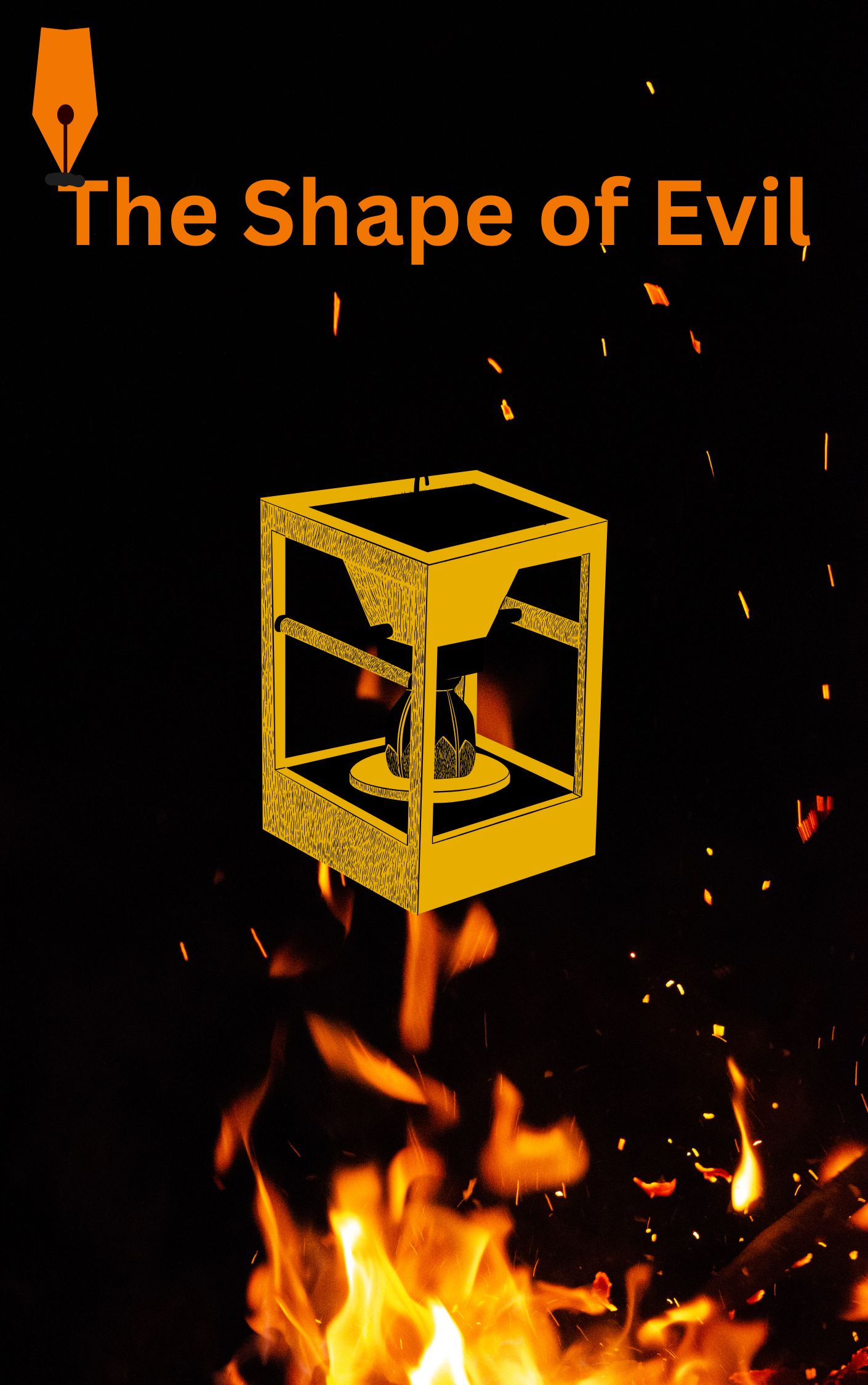
Pour the libations! Light the celebratory bonfires! Chant to the eldritch wonders that wait beyond our reality and offer them sacrifices! The sensitivity readers sent me their notes for The Shape of Evil! We are one step closer to my being able to pitch this baby at StokerCon in June!

Now, for those of you who don’t know, The Shape of Evil is a novel I wrote last year about a 3D Printer of Hell. I started it thinking it would be a long novelette or a short novella, but it ended up becoming a whole freaking novel of around 75,000 words. And as I got further along with it, the idea to pitch it to agents at StokerCon, which always has sessions for doing just that, came to me. So, for the past year, that’s what I’ve been working for.

And as part of that process, I had to find at least one sensitivity reader to look it over. You see, my protagonist is non-binary. And I, despite being bisexual, am only cisgender. So, I wanted to have someone who had firsthand experience look over my story and make sure I was being both respectful to the community and portrayed accurately.

As luck would have it, I managed to find two trans horror writers who agreed to look it over. And they both got through the second draft within days of each other, with the second one getting their feedback to me earlier today. This means I’m going to be ready to work on the third draft starting next month!

I’m incredibly thankful to my sensitivity readers for reading through the manuscript, finding issues and giving me their feedback, and doing so in such good time. I’ll do my best to incorporate their feedback and improve the manuscript. That way, when I pitch it to agents and editors, they’ll be that much more likely to want to help me find a home for it.

For now, though, I want to write a spooky short story inspired by Hamilton. Afterwards, I’ll start on the next draft.

That’s all for now, my Followers of Fear. I wanted to make sure you all knew that the next step in this book’s crazy journey is going to start soon, and I wanted to do it today, so I’m glad I got it done. Now, if you need me, I’m going to get ready to bed. Today I was totally drained, so I’ll need sleep if I’m going to get anything done tomorrow.

So, until next time, good night, pleasant nightmares, and be careful with your celebratory rituals tonight. Just Friday, I did one wrong, and my dad’s dog was turned into a cat. She turned back, but she’s still coughing up hairballs. Oops.

Having read The Good House before, I knew I was in for a good time (see my review here). But I was not prepared for Tananarive Due’s latest novel. After starting it, I learned the book was based not only on the Dozier School for Boys, a reform school in Florida where numerous atrocities were committed against the kids there, but on a relative she had who died at the school. And even after learning that, I still wasn’t prepared for what was to come.

Set in Florida in 1950, The Reformatory follows twelve-year-old Robert Stevens (named after her relative) and his older sister, Gloria. After kicking a white boy who makes advances on Gloria, young Robert finds himself sent to the Gracetown School for Boys, a reform school where the boys are under threat by both the spirits haunting the campus after years of mysterious deaths, and the Warden Haddock, a terrifying personage with a sadistic streak. When Haddock learns Robert can see the ghosts on campus, he forces the kid to help him catch the spirits. Meanwhile, Gloria attempts to find a way to free her brother from the horrible reformatory, setting them both on a path that will change them forever.

Man, this book was a rough read! Due does not skimp on the human horror the characters face, whether that be the horrible things Robert faces at the reformatory at the hands of the adults and the other kids, or the racism Gloria faces trying to get her brother out of that place (not to mention the utterly disgusting advances Lyle McCormick makes on Gloria in the novel), it feels all too real. Not to mention kind of timely!

Speaking of feeling real, the worldbuilding is amazing! Gracetown, the location of the reformatory and most of the other events of the book, as well as the people in the book, feel extremely real. I noticed that with The Good House, but Due is great with character development, and setting can be as much a character as the characters! I also loved how Gracetown apparently has this reputation as a place where children are able to interact with spirits and lose the ability as they grow older. That’s a pretty cool idea, and Due uses it to flesh out the spirit world of Gracetown and the reformatory so well.

I think the one thing I didn’t like was that I feel we only scratched the surface of the Gracetown School for Boys. I know that might sound masochistic, considering what we saw was pretty horrific, but we only saw a fraction of the school grounds, of life at the school, and the sordid history there. And as much as that would’ve scarred my psyche, I would’ve like to see all that explored more.

Maybe an anthology based around the Gracetown School for Boys? They’re doing one for The Stand, after all. I can dream.

All in all, though, The Reformatory by Tananarive Due is a soul-shaking journey of abuse, racism, and the darkness of humankind that, at times, I had to take a break from, I was that shook. On a scale of 1 to 5, I give it a 4.5 out of 5. I feel like I get why this book was talked about so much when it came out last year, and I wish I’d read it sooner. And if you haven’t read it yet, you should go and read it, too.

Or listen to it. The audiobook is fantastic!

Yeah, I’m going to be extra annoying with this stuff for the foreseeable future. But hey, can you blame me? With a new book on the way, I have to do everything in my power to get people interested.

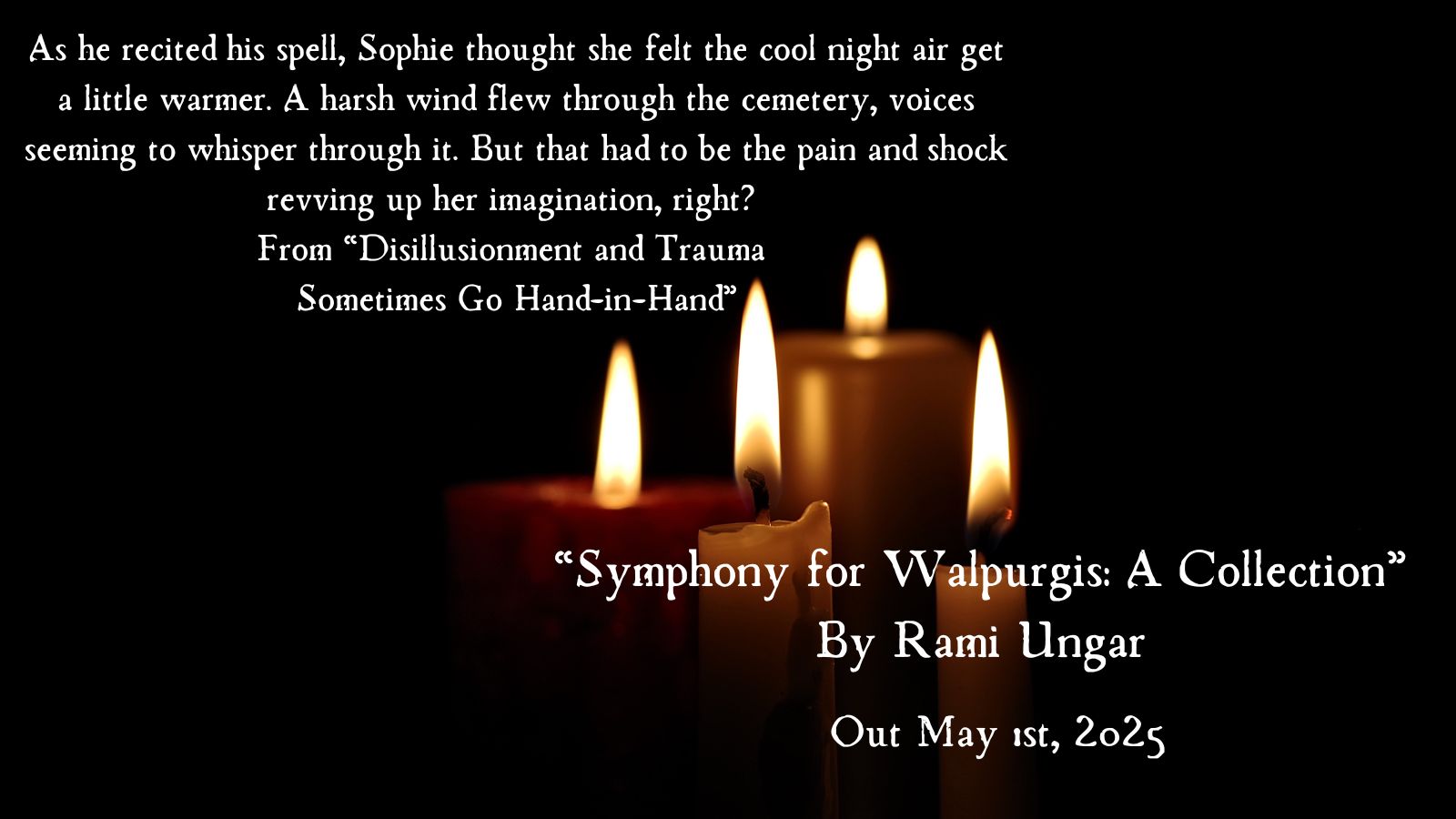
And that’s what these quote graphics are about. When Hannah and Other Stories was coming out the first time, these helped advertise the book far and wide. Obviously, I’m repeating this with Walpurgis, creating graphics for each story and releasing them three days a week on my social media.

Below are the latest round, which I’ve been releasing over the past three weeks. I hope they capture your attention.

I hope you enjoyed reading these. With these quotes, I made the fonts bigger so they were easier to read. With any luck, that will make reading them easier for people with vision issues.

If you’re at all interested in reading the previous quote graphics, you can check them out on Walpurgis‘s page on this website. And if you would like to check out the book itself, I’ll leave links below. It comes out on May 1st and is full of cryptids, malevolent spirits, and even a Jewish exorcism. Below is the blurb I’m using for the back cover.

What’s the difference between humans and monsters? Is there a fine line, or is it more gray and blurred? Rami Ungar, author of Rose and Hannah and Other Stories, explores this question in his latest collection, Symphony for Walpurgis. From legendary cryptids to malevolent spirits and from Ohio in the 1950s to modern-day California, readers will be treated to nine terrifying stories of the weird and macabre. So settle down and be prepared. For you have bought your ticket to Symphony for Walpurgis.

That’s all for now, my Followers of Fear. Until next time (which hopefully won’t be another promotional post), good night and pleasant nightmares.

You may have seen some news reports that Jack the Ripper’s identity has been solved. A lot of those reports include mentions of DNA evidence, which gives the claim an air of legitimacy. However, that raises the question: has Jack the Ripper’s identity been found? And if so, who is it?

First, for those of you who don’t know (thought at this point, I’d be surprised if you didn’t know), Jack the Ripper is the name given to a serial killer who murdered five women in London’s Whitechapel and Spitalfields neighborhoods in 1888, though it’s possible many more died. The women killed by the Ripper were supposedly prostitutes, though in recent years, doubt has been cast on that (check out The Five by Hallie Rubenhold for more on that).

As for the killer’s name, it comes from a letter sent to a local newspaper supposedly by the killer where the “killer” identifies himself as such. Jack, however, was never caught, leading to over a century of speculation as to whom the killer is.

As to this latest news story, historian Russell Edwards has claimed that DNA found on a shawl supposedly belonging to Catherine Eddowes, one of the Ripper’s victims, matches both Eddowes’ living descendants, as well as DNA belonging to descendants of the older brother of Aaron Kosminski, one of the top Ripper suspects. Based on this, Edwards believes that Aaron Kosminski was the Ripper, beyond the shadow of a doubt.

This leads to the question: was Kosminski really Jack the Ripper?

Honestly, I have my doubts. This isn’t because I have my own suspect I believe was the Ripper (though I do believe it was this person to the point I made him a character in my Victorian Gothic novel The Pure World Comes). It’s just that there are some serious problems with Edwards’ claims, and I shall try to go over all of them here.

First, who was Aaron Kosminski? He was a Polish Jewish immigrant who worked as a barber/hairdresser in Whitechapel in 1888 and who was one of the original suspects of being the Ripper owing to a violent mental disorder. He was committed to an asylum a few years later and died in custody in 1919. To this day, he’s still one of the most popular picks for the Ripper’s true identity.

The DNA evidence is way more problematic than it appears at first glance.

First, there’s the DNA. While this method is a lot more reliable than other methods of forensic crime solving (you would not believe how unreliable fingerprinting actually is), DNA isn’t infallible. In fact, DNA is subject to contamination, incomplete samples, and degradation over time. It would take incredible luck for both samples to remain intact and uncontaminated enough so that they could be used to match with the victim and suspect’s descendants.

But sure, let’s say the DNA found on the shawl, which Edwards bought from an auction house and which passed through a few hands before then, really did have enough intact DNA for the scientists to do their work. While Eddowes’ DNA probably came from bloodstains, the DNA linked to Kosminski was mitochondrial DNA from semen. Mitochondrial DNA is a lot smaller than regular DNA found in cell nuclei and isn’t as handy in identifying people as is regular DNA. (See this YouTube video where a DNA expert explains it much better than I ever could).

Also, semen being present on the shawl only proves that someone had sexual contact with Eddowes (if it was her shawl). As I said, whether the Ripper’s victims did or did not engage in sex work regularly has been called into question in recent years, but whatever the truth, it doesn’t prove that Kosminski killed her. All it really says that he may have had some sort of sexual contact with her.

All of these factors might be why the study in which Edwards makes his claims hasn’t been published in a peer-reviewed journal, and that’s a problem. “Peer-reviewed” means that the experiments and the results can be reliably replicated, and the fact that no peer-reviewed journal has published Edwards’ study is concerning.

The identify of the Ripper, to put it simply, is still an open question.

Finally, there’s the issue of whether Aaron Kosminski was actually the suspect the police were referring to! You see, Kosminski’s name came to prominence because the name “Kosminski” was mentioned in police memos and in the diaries of investigators from the original case, and that eventually led to the identification of Aaron Kosminski. However, these same policemen may have been referring to one Nathan Kaminsky, also known as Aaron or David Cohen, another Polish Jew with mental issues and a violent personality and who was held in the same asylum as Kosminski before his death in 1889. The police may have confused one man for another, and the asylum may have named him Aaron Cohen because Kaminsky or Kosminski was too difficult to spell or understand. Whatever the case, we can’t be sure which man the police were referring to, given the similarities and lack of reliable records.

So perhaps Aaron Kosminski did have a sexual encounter with Catherine Eddowes, but Nathan Kaminsky was the real Ripper. Or maybe he wasn’t. There’s no way to tell.

And that’s the main problem. Even if the DNA results aren’t problematic, there’s no way to know 100% for sure who Jack the Ripper was without a time machine. I’m sure we would all love to put to bed who the Ripper was, even if our personal choice of suspect was wrong. But it’ll take a lot more than sketchy DNA results to do so. And, like many infamous cold cases, it may never be truly solved.


Thanks for reading through my rant on this subject, Followers of Fear. I just really disliked how many publications were taking Edwards’ announcement like the gospel. Hopefully this put the whole matter into perspective for some of you.

If you’re at all curious whom I think is the Ripper, you can find out by reading The Pure World Comes. As I said, I included him as a character in the novel, and I included some of the historical knowledge I found on the guy in the story. Plus, it’s a great Victorian Gothic horror novel, if I do say so myself. I’ll leave links below if you’re curious. And be sure to leave a review if you read it!

I also highly recommend if you’re curious to check out The Five: The Untold Lives of the Women Killed by Jack the Ripper by Hallie Rubenhold. Ms. Rubenhold does an excellent job exploring both the lives of the five canonical Ripper victims and the contemporary attitudes that may have unfairly led to them being labeled prostitutes. Reading it made me look at the Ripper case in a whole new light and helped me ultimately come to whom I believe the Ripper is. (See my article on it here.)

That’s all for now, my Followers of Fear. Until next time, good night and pleasant nightmares!

Good evening, humans. I hope you’re doing well. If you’re like me, you’re avoiding the Super Bowl (now if it was the Superb Owl, I would tune in). And I thought I would take this opportunity to share with you some updates on Symphony for Walpurgis, seeing as a lot has happened since I last posted about it. Which was…just six days ago? Damn, it has been a crazy week!

Anyway, for those of you who don’t know, Symphony for Walpurgis is my upcoming book, a collection of novelettes, some of which were previously published and others which weren’t. The book is set to come out on May 1st, 2025, meaning less than three months from now. I’m doing my utmost to get as many people as possible reading it once it releases. In fact, I’m hoping to sell 500 copies and get fifty positive reviews on both Amazon and Goodreads in the first year!

Anyway, let’s get into these updates, shall we?

Walpurgis has two reviews now!

It’s crazy to think, but Symphony for Walpurgis already has two reviews on Goodreads. And even better, both are five-star reviews! Both came from advanced readers and Followers of Fear, but they’re willing to criticize me if necessary. The most recent review, written by Louise Conway, starts with this:

Bravo! This might just be Rami Ungar’s best work yet. Offering tales of unearthly retribution, dark mysteries, vampires re-imagined and blood curdling entities, Symphony is a gloriously ghoulish anthology with something for almost every kind of horror fan.

“Best work yet.” I’m flattered. Of course, I aim to put out more and more work as time goes on, and to improve as well.

Anyway, this is good progress on my goal for fifty positive Goodreads reviews. I hope more of the advanced readers let people know what they think of the book, and that leads to plenty more readers when the book comes out. In the meantime, if you would like to read the full reviews, you can click below to check them out.

The author copies came in this weekend!

One of the most exciting moments for a published author is when the first batch of author copies comes in. That includes self-published books, and I felt that excitement this weekend when my author copies for Walpurgis came in. I designed the cover myself after a lot of trial and error, as well as the book’s back cover and interior. It was nice to see it had turned out so well!

And, being the kind of guy who likes to share every achievement, no matter how small, I filmed an unboxing video. Here it is, in all its cheesiness and beauty. Enjoy!

Hopefully, this is the first of many author copy deliveries. Like I said, five hundred sold copies in the first year, and most of those will likely come from live events. And I plan to find many homes for many copies.

The Book Trailer is Live!

Like with my last collection, Hannah and Other Stories, I sought to create a gripping book trailer for Walpurgis. This time, I wanted to have one out before the release date (that should have happened with Hannah as well, but life had other plans). And with a couple of hours of work this afternoon, I created what I think is an awesome book trailer for a collection of horror. Check it out.

Not bad, right? It’s nothing special, but I think it’s decent and conveys the horror of this collection well. If it gets even one or two people to read Walpurgis, I’ll be happy.

By the by, if you enjoyed these videos, please consider liking/commenting/subscribing. You know, all that usual YouTube shtick. You can find my channel here.

Book Quotes

One thing I learned from Hannah and Other Stories was how helpful releasing quotes from your book can be. Especially when you pair the quotes with interesting and relevant graphics. So, this time around, I’m creating graphics with quotes on them, and releasing them three times a week. Here are the first batch of quotes graphics, one from each story. Hope you find them exciting and interesting. They were fun to make.

I’ll post the next nine in a single post once they’ve been published on my social media. In the meantime, you can find each graphic as they’re uploaded on Walpurgis‘s page on this blog.

Final Word

Anyway, that’s all to say right now, my Followers of Fear. I’ll try not to overwhelm you with Walpurgis-related posts, though I do have to do my necessary advertising for it as we approach May 1st. And in the meantime, if you would like to preorder a copy of Walpurgis, I’ll leave links below. More stores and formats will be made available as we get closer, so keep checking back if you don’t see a store or format you prefer.

And if you like what you read, my Followers of Fear, then please leave a review. Positive or negative, I love reader feedback, and it helps me and other readers out in the long run.

Until next time, good night and pleasant nightmares.
The photo I took the day I got my copy from the library. Can you tell I was excited?

We’re only five weeks into 2025, but I may have already found my favorite new book of the year. In fact, at times I got so deep into this book, I had dreams about it! You don’t know how special a treat that was for me.

Set in 1970, Witchcraft for Wayward Girls follows four girls sent to Wellwood House, a home for unwed mothers in Florida: Fern, a young high schooler who wants her old life back; Rose, a rebellious hippie with a bit of a mean streak and a bit of a nice streak; Zinnia, a young musician who plans to marry her baby’s father; and Holly, whose youth and silence hides a dark and terrible secret. Hidden away from the world like shameful secrets and repeatedly told that they are at fault for their condition and that the only good thing they can do now is give up their babies for adoption to a loving couple, the girls seek any way to take back a little control over their lives and bodies. When a mysterious librarian hands them a book that’s full of actual magic, they think they’ve found their solution. But when it comes to magic, everything comes at a price. And the price they have to pay may be bigger than any of them can pay.

So, if it wasn’t clear from the first paragraph, I freaking loved this book! For one thing, the horror is palpable from the first couple of chapters. Not from the witches, but from the people. Through Fern’s eyes, we see how everyone blames her, including herself, for getting pregnant outside of marriage, even though it takes two to tango. From what I’ve been told, that really was the attitude towards unwed mothers back then, and Hendrix does a great job bringing it to life throughout the story, as well as the callous cruelty the girls face as unwed mothers, even after they’ve given birth.

I also really liked the witches of the story. They’re not exactly old school wicked witches, but they’re not entirely good witches or granola-crunching Wiccans, either. They’re their own thing, a group of women with access to power and who are trying to ensure the continuation of their way of life and their freedom, and they’re willing to get their hands dirty to do so.

To list out all the colorful characters would keep us here too long, but some of my favorites included hippie Rose, who grew on me as the story went on and whose experiences midway through the book broke my heart; Hagar, the cantankerous cook at the Wellwood House, who does try to help the girls, if rather reluctantly; Zinnia, who has more sense than most of the other characters in the book; and Fern, who really does learn something from her experience.

All these elements come together into a fantastic story where I struggled to guess what would happen next and was surprised more than a few times by certain developments. It really was amazing.

Hendrix admits in the acknowledgments that he’s probably the last person to be writing a book where nearly every character is pregnant, but given how phenomenal of a job he did, I think we can forgive him. I can’t think of a single flaw in this story, it was just that good. On a scale of 1 to 5, I’m giving Witchcraft for Wayward Girls by Grady Hendrix a full 5. Grab a copy, put on an appropriately witchy playlist (I hope “Abracadabra” by Lady Gaga is on that playlist), and settle down for a read.

Trust me, this is one you don’t want to miss.