I’ve got a document called “Ideas” on my flash drive. The document is a list of ideas, mostly for novels, but there are about three films, a couple of TV shows, about four manga/comic book series (including one starring my superhero alter-ego Judgment), and even a video game. Tonight I added three new ideas to that least, officially bringing me up to fifty ideas. Yes, fifty ideas, none of them gray (yes, I went there). Although some of these ideas might actually depend on making enough connections to make a film or a TV show or whatever, some of them have already been brought into being (think Reborn City and Snake).

As I came up with Idea #49 last night, which is a novel based in Bolivia and featuring one very mentally unstable teenager, I realized something important: most of my work is not inspired by events in my life, but by the work of others. Reborn City was inspired by thinking of films featuring street gangs while listening to rap music, with the sci-fi elements added in while I had a snack at a Dairy Queen. Snake came from watching Taken and being totally rocked by it and later making the action hero into a serial killer. The series I plan to make my magnum opus when I write it is inspired by Schindler’s List and my favorite anime, taking some aspects of both and meshing them together with magic and steampunk. Idea #49 came to me after reading Hannibal and then letting my mind wander to Stepehn King’s Misery, with a South American setting mixed in after the idea came to me. All this and more, inspired by the work of others.

Is that a bad thing though, that I’m mostly inspired y others? Absolutely not! Just because “Art Imitates Life” is a famous adage doesn’t mean all artists have to abide by it. In fact, my favorite painting at the Columbus Museum of Art is a modern retelling of an old Dutch portrait. Every time I’m there (which isn’t often, but when it does happen) I have to see that painting or I don’t feel like my time was worth the trip. Plenty of movies, both good and bad, were inspired by the space craze that resulted after Star Wars came out. Books like Wicked and Alice I Have Been were based on The Wizard of Oz and Alice in Wonderland. And let’s not forget that there would be no Friday the 13th, Nightmare on Elm Street or other famous slashers if Halloween hadn’t started the slasher boom in 1980 (some of you may wish it hadn’t, but let me thanks the producers of that film for creating an influential genre in horror).

But all that aside, it’s important to remember that every artist gets inspired differently. Some take the events in their life and use it to create a work of genius. Others, like me, see or read or hear those works and come up with their own works thanks to a little inspiration from the works they’ve seen or read or heard. Others try to answer a question with their work, such as “Is humanity worthy of living?” or “Why do I feel this way and can I figure it out if I write it in a fictional context?” And some are just inspired by a quick kiss on the lips, a reminder from their lover that they are the most important person to them, and a shared cup of coffee and eggs in the kitchen…and I am not sure where I am getting this scenario. It could happen, though.

So writers, artists, musicians, actors, whatevers–create however you want, whatever your inspiration. Each one of us works in a different way, and we should be inspired by the way that works best for us. After all, isn’t that how the best art is created?

What inspires you? And do you have any memorable moments of inspiration?

Please let me know.

Review: Olympus Has Fallen

Posted: March 23, 2013 in Review
Tags: , ,

More and more I find myself disagreeing with Entertainment Weekly‘s reviews. I might stop reading them altogether, but along with being entertaining (obviously) and occasionally I agree with them.

Not this time though: Olympus Has Fallen is a thrill-a-minute, and comes with all the gunfire and explosions of an action film for guys, with a lot more substance to it. The ever-impressive Gerard Butler plays Secret Service agent Mike Banning, who must go into the White House and save Aaron Eckhart’s President Asher from being killed by North Korean terrorists with a much darker intention than simply destroying one of the symbols of the nation. With surprises around every corner, you’ll be left on the edge of your seat as you watch this film and the evil plan of the North Koreans unfold. Also, watch Morgan Freeman’s character. In every role he plays, he’s just the bomb (and I don’t mean literally in the case of this film).

For anyone in need of a good break from reality, or afraid of Kim Jong-Un playing with his daddy’s toys, I seriously recommend this film, which I give a 4.2 out of 5.

I was watching a movie recently and at one point near the end, a literature teacher is teaching her class that there is only one plot in any work of fiction: “Who am I?” And when I logged onto the Internet a little while ago, I read a blog post by my friend and fellow author Pat Bertram (see here:http://ptbertram.wordpress.com/2013/03/21/where-my-books-originated/) where she stated that at the core of every one of her novels, plus her memoir on grief, the central theme was “Who are we?” This all happened within a 48-hour period, so I definitely started thinking hard about these questions. Do all stories of fiction have just one plot to them, which can be summed up in “Who am I?” or “Who are we?”

Well, a lot of novels do have this question as a theme throughout the story. Plenty of coming-of-age novels are about children and teenagers finding themselves and learning just who they are, or becoming individuals, or finding their place in this chaotic universe. Heck, my own science-fiction novel Reborn City has plenty of identity themes in it, especially for Zahara and for the Hydras as a whole.

But at the same time, I’m not so sure that all stories are about “Who am I?” Look at some classic novels like “A Tale of Two Cities” by Charles Dickens. I hated that novel, but I do know that the central story was about one character nearly getting his head chopped off because of a family relation’s crime. I don’t think the whole “Who am I?” question figured much, especially when one character kept trying to keep his head on his shoulders. And recently I read Henry James’s “Daisy Miller” for class. That had nothing to do with “Who am I?” It was an unidentified narrator telling us about a story he heard (with details and all) about a guy trying to court a naive young girl who spends too much time with men and gets slandered in society for it.

Of course if you would rather me use a modern example, how about “Daughter of Time” by Josephine Tey? That whole novel was about figuring out an actual conspiracy in history, not about the main character’s identity as a cop or anything. Or what about any of the Hannibal Lecter books? Those are about one agent trying to catch a serial-killing criminal while Hannibal gets in their heads.

Sure, one can make an argument that each one of those examples has someone trying to find themselves, whether they know it or not (Richard III certainly didn’t know in “Daughter of Time” that people were helping him clear his name, a form of finding themselves). But those arguments sometimes seem very circuitous to me, at least when I go through them in my messed-up head. And do they necessarily prove those stories are about “Who am I?” or “Who are we?” I’m not sure, but if you can make an argument that doesn’t seem long and circuitous, then by all means, go ahead. I’d love to hear it.

Still, I don’t think you can sum up all fiction in one sentence or one question. And as for my friend Pat Bertram, that’s just the sort of stories she writes. I write some that are like that and some that are definitely not like that (Snake comes to mind for the latter). So like many things in the writing world, it all depends on the author and their particular stories and preferences.

What’s your view? Are all stories under a particular question, or do they fall under different questions and themes and beliefs?

semicolon: a grammatical tool of punctuation used to indicate two interdependent statements.

If anyone has read a good deal of my writing, they’ll know I like using the semicolon a little bit too much. I didn’t realize how much I liked using it until recently though, when my friend Matt Williams, who is editing Reborn City, pointed out how many semicolons I use and started taking them out of the stories. And then the other day, while critiquing a classmate’s short story for our creative writing class, I noticed how often she used semicolons as well, and how periods or different ways of phrasing the sentence can really affect how the sentence and the paragraphs flows.

With all that in mind, I realized how much I used the semicolon, and how I was really better off not using it as I had. So I decided to get rid of it, and to come out here and admit that I’m a semicolon addict. However, I am working on getting over this habit. For instance, during the editing of Snake I started cutting out many of my semicoloned sentences and phrases, changing them so that they were either all one sentendce or two independent sentences. And on my latest short story, which I’m naming Vile, my aim is to write the entire story without using the semicolon once. Hopefully then I’ll be able to get over this habit that my writing can do without.

Oh, and speaking of habits, here’s one writing habit I picked up recently that I’m unsure of its origin. In a few short stories I’ve written, I’ll describe something in a sentence that manages to encompass the development of something over a long period of time into a few words. For instance, when writing about a character’s relationship with his girlfriend: “They first connected over their biology projects, then over their mutual interest in Gothic literature, and then finally they connected with their bodies”. Or in Vile, the main character describing what his wife had done while he’d been dead: “She had continued to live and thrive and undergo plastic surgery that allowed her to look like a college student again.”

You see those two sentences? They encompass so much, but say it in so little. I like it, but I can’t help but feel that I picked it up recently from some author I read either over winter break or in my American Lit class. Any ideas whom I might’ve picked it up from? Because I have absolutely no idea at all!

To many, rape is just this: a hand reaching out of inescapable waters, but with no one to grasp it.

Over the past two days, I’ve read about four or five stories online about the Steubensville rape trial (for those of you unfamiliar, two teens from a small town in my state sexually assaulted a 16-year-old girl while she was intoxicated and unconscious, urinated on her, and then posted the damning proof of it on Facebook). The two teens who committed the act were found guilty yesterday and sentenced to juvenile detention centers till they were 21. What upset me though, and what has upset many people as well, was not only that the poor girl was sexually assaulted, but the defense attorneys for the case tried to twist the concept of consent out of order by saying that since the girl was intoxicated, she never really said “no”; that there may have been a cover-up by the local high school, whose football team these boys belonged to and which is a source of pride among the local community; that those who witnessed the crime and were responsible for the photos on Facebook were not charged (though that might change pretty quickly, according to the Ohio AG); and that some of the coverage of the trial, which has gained nationwide attention through the Facebook posts, were actually in favor of the two boys charged.

The two rapists in question. They have no one to blame but themselves.

Yes, in favor. ABC News first reported the case not too long ago by saying the boys “took liberty” with the girl, which is definitely a new one if ever I’ve heard one. And yesterday, CNN seemed only able to lament the fact that these boys had promising futures stolen from them, that they could’ve made names for themselves at Ohio State and then in the NFL, that now they have to register as sex offenders, possibly for the rest of their lives. Underneath the spoken words, the silent implication: that the “good boys” weren’t to blame, but the victim for getting drunk and presenting an all-too-appealing oppurtunity for these boys to have a little bit of fun.

The same day, a story broke out about another gang-rape in India, where a camping couple from Switzerland were attacked, beaten, the wife raped, and then robbed. Arrests were made hours afterward (a record for India), but some public officials have blamed the couple for camping in that area. More victim blaming? I guess after the initial outrage of the bus gang-rape, some people still don’t know when to shut their yaps.

As an ardent supporter of women’s rights and of human rights, I’m abhorred, appalled, and disgusted. This victim blaming turns every woman out there who is the object of unwanted sexual advances into sex toys and shames them into being quiet, tells them they should accept what they get or they will be the ones at fault, that they will be scrutinized for their clothes and behavior and will be called sluts forevermore. Meanwhile, men can wear whatever and drink whatever and screw around as much as they want, and they’ll rarely be called a “man-whore”. This double standard mystifies me as much as it makes me ashamed to be a man. Yes, ashamed! I’m ashamed that my sex gets away with so much while the other half of the species is put down and turned into objects so much.

It also makes me think of a novel I plan to write in the future. I first came up with it by thinking to myself, “What’s the worst event that could happen to a singular person and then use whatever happens to them in the story to help them at least begin to heal?” Being so influenced by Law & Order: SVU (for better or for worse), my mind went right to rape. Only the victim can feel that terror and trauma that comes from rape, they often suffer in silence, and when they do come out, they are often at the recieving end of brutal victim-blaming and stigmas and questions about what they experienced that are never about clarifying the events as they happened. It fit what I was looking for to a tee.

At first though, I considered changing what that tragedy would be for this character. I mean, even I have my limits for what I’ll write, and that’s a lot for a horror writer. But I decided to stick with rape, though at the time I wasn’t sure why. But when I see articles in the news about victims of rape being blamed for what happened to them, even just subliminally, I’m reminded of why I kept rape as that character’s tragedy. Just like Reborn City has themes of the evils and lies of Islamaphobia, this novel of mine and this character can be a way to encourage women to come out about their attacks, to show men that rape, under any circumstances, is rape and their own fault, and perhaps a wake-up call for many readers that rape is a problem and our attitude towards it needs a major change.

I’m not sure if I’ll write an actual rape scene when I do end up writing this novel, but I do know that when I do write this novel, I’ll be channeling my rage, my disdain and my disgust for rape and rapists into it. Perhaps some will feel this underlying rage and learn something from it, like rape is never the victim’s fault. Or that the rapist is the only one to blame. Or there are no circumstances where rape is okay.

Savannah Dietrich was raped last year, but spoke out on Twitter and named her rapists when she felt the plea deal they got wasn’t enough. Sadly, she was nearly charged with contempt of court for naming her rapists.

And perhaps then, the world will change for the better. Because you know what? I shouldn’t have to be writing about this! I shouldn’t have to be telling people on my blog that I find rape and the double standards surrounding it disgusting, or that I plan to channel my rage over this insanity into a novel! I shouldn’t have to check my email and then see that another girl was raped, or that someone in an important position insinuated that the victim had no one to blame but herself. I shouldn’t have to, and neither should anyone!

But we live in the sort of world where all this happens on an all-too regular basis. And you know what? I’m not going to stop raging about it until it does stop, until change does happen, until that novel’s heroine is able to break free of her chains and start the move towards healing. Because I know the world should not be in this state, and I see a moral and an ethical duty to try and make it better. If what I write here does end up helping someone, then that’s great. In the meantime though, I have a lot of work to do, and I’m getting started right now.

For the victims who are blamed. For those who live in fear. And for those I can help before it’s too late, and this dark culture gets them into the wrong mindset.

What about you?

Well, I’ve been a busy little blogger today. This makes for the fourth post on this lovely Sunday, and the third in so many hours. But this last post for March 17th is one that I’m especially eager to share with you. Since I’m finished editing Old Sid and I’m not working on any novels except to get them ready for publication, I’ve got some short story writing to do. And this next short story is a strange but rather compelling one. When I told my dad about it over dinner, he was nodding like, “Yeah, that I can see as pretty interesting”. Now that was a motivator.

How many of you have heard of the death-barrier? For those of you who haven’t, this refers to what keeps us from becoming immortal, the inevitability of death. Everyday we hear about advancements that are meant to keep this barrier at bay, but every now and then we hear about people trying to remove the barrier altogether, essentially granting immortality. And not only that, but there has been talk of bringing back the dead.

Yes, bringing back the dead. Not through corpse bits and lightning though, but by regrowing healthy tissue and restimulating the brain to reanimate the dead. If you do your research, you’ll be able to find companies that will cryonically freeze your corpse after you die so that when this barrier is no longer an issue, you can be brought back to life…for a hefty donation to scientific research. Yeah, sounds a little like it’s out of a sci-fi novel, but it’s true. And if you’re interested, there’s a Castle episode where the whole plot of the story revolves around a murdered doctor whose body was cryonically frozen. It’s a ton of fun.

Assuming you could resuscitate the dead, what would happen? How would a revived person react? Would they enjoy being back? Or would they feel that being brought back was unnatural?

This is my short story. I plan to follow around someone who has died and been brought back and how they react to the world. It should be interesting and very challenging to write. I’m not sure what I’ll call it, but it’ll be interesting to see what results from it. I’ll let you know when I finish it. Wish me luck, especially with coming up with an appropriate title!

Have a good night, everybody.

A Dark Milestone: 666 Comments

Posted: March 17, 2013 in Living and Life
Tags:

I am a horror author. I write on anything that’ll scare people: serial killers, ghosts, science gone awry, the darker sections of our minds, racism, hate, darkness, demons. You name it, I’ve probably written about it, and if I haven’t I probably will.

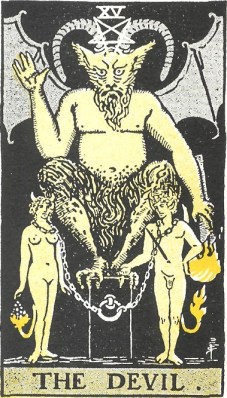
I also don’t believe in Satan as an adversary of God, seeing as traditional Judaism does not have Satan in that sort of capacity. Still, I admire Satan the character and I’m fascinated by him, which is why for me getting six-hundred and sixty-six comments is a big thing for me. It’s something, as a writer of all things evil and scary, I have to commemorate.

I’m sorry if this post offends any readers who are Christian and believe in Satan as the Devil and 666 as his number. I mean no offense, I’m just stating that I reached something that for me is cause for celebration. I respect your religious beliefs and I hope we can see past this in the future.

Thanks to my Uncle Joel, who’s comment on a previous post made it possible to get this far (so if you have anyone to blame, he has a good chunk of it). You may not have the most comments on my blog Uncle Joel, but you certainly make some meaningful ones.

Have a demon-free evening everybody.

Well, it took me a while, but I finally did it! I finished Old Sid, the second short story I submitted to my creative writing class. For those of you unfamiliar with it, Old Sid is about a bunch of students at Ohio State University trying to delve into the truth of Old Sid, an urban legend I made up for the short story (so don’t go online trying to see if Old Sid is a real thing, because it’s only a product of my imagination). The story is narrated from the point of view of several people at once, similar to what Jeffrey Eugenides did with his first novel The Virgin Suicides.

I ended up changing a lot with this draft, and at times I purposely got easily distracted just because it was slow-going and I wanted a break. But the story’s done, and I really like how it turned out. Old Sid has his Boo Radley moment where the characters realize he’s not a legend but very human, but it’s done in such a subtle way that it’s not right in your face. I think my teacher will like it when he reads it, especially since Old Sid is in the vein of literary fiction and I’m barely able to write horror in short story form with any amount of competence.

After I get my grades for the semester and some feedback on Old Sid, I might edit it again and send it off to a literary magazine, preferably one based in Ohio or better yet in Columbus. It’ll probably have a better chance in a local magazine, since a lot of people are very familiar with Ohio State in its home state than outside it (of course). I’ll let you know if I have any luck in that department. Wish me luck.

I’ve noticed that I’ve been getting a lot of new followers over the past month or so, and especially during these past two weeks. So with that in mind, I’d thought I’d extend a welcome to my new followers and thank them for deciding to follow me and read my blog. And to my returning followers, welcome back and thanks for continuing to read my blog.

Also, I wanted to clarify some things for the newest readers. Occasionally on this blog, you’ll see words and phrases such as The Quiet Game, Reborn City, or Snake. These are my works-in-progress that I’ll be self-publishing hopefully within the next year or so. Each is very different from the other, and are at different stages of getting ready for publishing. I’d like to take this oppurtunity to tell you all about each of them and to let those who are already familiar with the works in question how progress is coming along.

So without further ado, here’s a look at my WIPs:

The Quiet Game: Five Tales To Chill Your Bones

TQG cover

This is a collection of short stories I’ll be putting out soon. I wrote these short stories over winter break and the beginning of spring semester, and it’s almost ready for publication. I’m just waiting for the US Copyright Office to get me my copyright and then I’ll be ready to upload this onto the Internet. Since the Copyright Office takes about two and a half months though, we’ve still got a bit of a wait to go before it comes out. So please be patient, and in the meantime you can read the description for the book on the page “Books by Rami Ungar” or watch the trailer below:

Reborn City

This is a science fiction novel about street gangs in a post-apocalyptic future I wrote in high school and that’s being reviewed by a beta reader before I prepare it for publication. The beta reader, Matt Williams, also happens to be a published writer and blogger, so you should seriously check out his blog here: http://storiesbywilliams.com/. Currently Matt’s halfway through the novel or thereabouts, and since he finished his latest novel Pappa Zulu, he’s been able to get the chapters back to me that much faster. I can’t wait to see what results from our collaboration.

Snake

This is a thriller novel I wrote over six months from June to December 2012 and follows a serial killer in New York who is hunting members of a powerful mafia family, his reasons for doing so clouded in mystery and in murder (how’s that for a description). I recently finished the second draft and have sent off the first four chapters to a beta reader I trust. Hopefully she’ll be able to let me know what she thinks very quickly. In the meantime, there are a few excerpts of Snake on this blog, so if you get bored you can probably go looking for them and find them.

Well, that’s all I’ve got. I hope this piqued your interest in some of my work. Once again, thanks for reading and agreeing to follow my blog. It really means a lot to me. Have a nice day, and I’ll post again soon.

Rami

I met with my dad the other day for dinner at a restaurant near campus. It was the middle of spring break, so the place wasn’t very crowded and my dad and I got our meals very quickly after we ordered. At some point during the meal, my dad asked me about my job prospects after I graduated, which is still about two years away, and if I’m not already at least making a living off my writing. I’d already told him in previous conversations that there’s always a chance that I might be possibly be hired by the financial aid office, where I work, after I graduate, and if that didn’t happen, there’s a program that helps graduates finds jobs in Columbus through the school’s Jewish organization, OSU Hillel. I even added that English majors, which is one of my majors, are getting hired in record numbers lately.

Of course, my dad was still worried about my job prospects. This is understandable for several reasons: first, my dad’s a parent. Worrying about me is his job, and he probably won’t be cooling off on the worrying anytime until I’m safely secured into a position that pays enough to at least cover my basic expenses (rent, food, bills, etc). Also, my dad associates my English major and my History major with either teaching or scholarly work or writing (at least for English), and since the first two are not my aim and the third doesn’t always garauntee a successful career, he fears I’m going to live in his basement for the rest of my life. There are a few other reasons, but I’m not going to go into those here.

Besides, I’m writing this post because I want to assuage my dad’s worries at least a little bit, not point out why he worries about me (I’ll save that for a comedy act one of these days). So, I’ll write some reasons why, even if God doesn’t see fit to make me a writing success before graduation, I actually have some good job prospects, even if I don’t take classes that look good on a resume, whatever that means. I’ll skip over the one about my current workplace hiring me as a full-time employee after graduation though; that’s still two years off and there’s no garauntee that they’ll hire me, though they love me and my humor and the head of the office keeps saying she’ll have to get my autograph before I’m famous.

So without further ado, here are some reasons why my job prospects are actually pretty good right now:

1. Graduation is still two years off. That’s still plenty of time to write, take classes, earn money, make friends and contacts, and possibly write something that gets a lot of sales on Amazon and Smashwords. Besides, the job market can change rapidly over time, so what can be considered a job-winning major may not be the case a few years down the road and vice-versa (I will return to this point later on).

2. OSU Hillel is helping graduates. The program at OSU Hillel, Growing Jewish Columbus, apparently has had a great success rate in getting grads of all majors hired after college. I’ve already contacted the woman in charge of the program and a friend of mine, and she said I should contact her again in the fall, when I’m in that two-year stretch to graduation. Still, with her track record, there’s some reason to have faith, isn’t there.

3. My majors are assets, not liabilities. Back when my parents were in college, unless you planned to teach or you were so incredible a writer that publishers were banging down your doors, majors like English were the kiss of death. However, with the advent of the Digital Revolution, the market has shifted in ways that most people at the time could not imagine. In fact, English majors are getting hired at rates not seen in years, and for jobs not necessarily associated for English. In fact, a report I read in May last year said that Nationwide Insurance has hired English majors to work on PR and Communications. Apparently English majors are very good for writing online pieces about the companies that employ them.

Also, my History major has a hidden benefit: research skills! Historians are not just fat old men sitting in libraries looking over tomes, we’re actually more like investigators, trying to piece history together with the facts and the evidence before us. Plenty of my history professors have gone abroad or have spent extensive hours in libraries tracking down one piece of information, the elusive diary, the one date. Plenty of jobs need research and investigative skills,  so what’s better than a history major?

4. Some jobs don’t care what your major was! In fact, plenty of jobs at my university, they hire you irregardless of what you majored in during your undergrad years. At the financial aid office, I was told when I was hired that no one wakes up hoping to be a financial aid administrator. And several people in the office had majors unrelated to finance. There’s a guy who graduated not too long ago and is working while attending grad school part time. His major was Sports Education!

This not only applies to the financial aid office, but it applies to all sorts of different jobs. Administration, clerical work, heck library work, they don’t necessary need to have corresponding majors. With that in mind, a lot of possibilities do open up. Plus I have backgrounds in working in administrative and clerical positions and I’ve done some work in libraries, so I might actually be better off than some of my peers.

Of course, there’s always a chance that I may be wrong and I just might not be listening because my parents are the ones imparting advice.

So what are your thoughts? I’d love to hear them. I think the reasons listed above might actually help me, but I’d appreciate your opinions if that’s not too much to ask for. What’s your take? And would any of you be interested in hiring me?