Posts Tagged ‘novel’

As of this evening, I’m only fifteen chapters away from finishing the third draft of my thriller novel Snake. Boy, it’s been a lot of work. I added two chapters, and I cut out a bunch of words and I added a lot more words than I deleted because it was necessary…and I’m starting to worry that it’ll be so long nobody will want to read it. It’s already kind of scary. If it’s long too, will anyone want to read it?

I hope. And I also hope to get this draft done by the end of this coming Memorial Day Weekend. Because once I’m done, I’d like to work on other projects before I decide if I need another draft or if I should go straight to the presses. I want to edit a couple of short stories that have been waiting for their next drafts. I want to finish “Vile”, the short story about coming back from the dead that I had some writer’s block on when I last looked at it. And I want to write a short story that’ll be a homage to Edgar Allen Poe’s “The Premature Burial” (and yes, I love  The Following despite how crazy its story can get). And yes, I want to put out The Quiet Game and get ready for when it’s time to put out Reborn City.

But I do like how this draft of Snake has turned out. With every draft my story is a bit more polished, what the characters do makes more sense. I added a lot of character development and I fixed some things that I’m pretty sure some fanatic will nitpick to death on the Internet. And I’m sure that if I do another draft, give my story to a beta reader, or just send it to the presses, I can at least say this story turned out much better this draft.

So whether or not you like books up to 400 pages, I hope this book finds its niche and a group of fans…and hopefully not any mentally unstable fans. Until that time though, I’m going to finish this draft and keep working on my writing. Wish me luck.

I include the “by Max Brooks” part to distinguish this review I will eventually do on the movie (both will probably get a ton of traffic once the movie comes out, I bet). Also, I know I keep saying that I like to put a week’s distance between reviews and it’s only been a few days since I did the review for The Great Gatsby, but this was such a phenomenal novel, what could I do?

As a History major studying the Holocaust and World War II, I read a lot of memoirs by survivors and soldiers alike. As I read Max Brooks’s zombie apocalypse novel, one of the things I was struck by was that it sounded so much like a Holocaust memoir, it was uncanny. And I don’t mean in terms of content–it’s a zombie apocalypse novel, after all–but in terms of how haunted the voices of the characters are. Each section of the novel is a different person’s experience during “The Great Panic” and the war against the living dead, ranging from Chinese to Russian to Chinese to American to South African to Middle Eastern to English and everything in-between. The horrors and haunted tales of each survivor, which are all assembled by a nameless interviewer (Max Brooks in a world that he created, playing the role of reporter, perhaps?) into a single collection of tales, will keep you reading for hours after you should’ve gone to bed.

That’s kind of what happened to me: I was reading late last night, finished the book, and then went to bed. I had the craziest dream afterwards where I lived through my own zombie apocalypse. Just one problem: I didn’t find out what happened to the woman I met in my dream and the baby we were having together! I felt like Dorothy wanting to get back to Oz! Cursed alarm, waking me up in the thick of the battle.

Anyway, another thing I noticed about World War Z was that Brooks thinks of several things that we don’t. I’m not going into detail, but let’s just say that he considers everything from the disadvantages of conventional warfare on zombies, to survival plans foolish and wise, to how the public would react to zombies, and how other people would react to those reactions. It’s so detailed and so well thought-out, you think you’re reading something that actually happened. I’ve read memoirs and history books that have the same level of detail, and it’s crazy how real it all seems. Like Stephen King’s The Stand trying to pass for nonfiction, it feels that real.

A very engrossing read, 5 out of 5 definitely and deserved. I wonder how the movie, which will probably take more liberties than any other book-to-movie adaptation in the history of moviemaking (with the possible exception of Priest), will compare.

Oh, funny story while I have your attention: on Tuesday night, Jews everywhere started Shavuot, one of our more important holidays. During Shavuot, it’s traditional on the first night to have a long study session that lasts late into the night. The study session I attended was divided into two parts, the first consisting of different classes we could take. I took the one on bikkur cholim, which is the commandment to visit the sick but also implies praying and caring for the sick. Near the end of the session and after some lively discussion about the effects of biblical and modern-day quarantine, I asked about bikkur cholim and zombie plagues. The instructor’s answer: “Throw bikkur cholim out the window, and run for your life!” Sounds sensible, doesn’t it?

At the end of the 2012 presidential election, riots broke out at a Mississippi university where racial slurs were shouted by the mob, and over the ensuing months the White House was inundated with petitions asking for individual states to secede from the Union. All these and a few other interesting little acts of rebellion and political anger were the result of President Barack Obama nabbing a second term and, in the eyes of these people, sitting comfortably in a position to create a dictatorship.

I thought these people were being overdramatic and possibly a little unpatriotic. I mean, why not wait till the next election, like the Democrats were forced to do from 2000 to 2008? Why threaten leaving the Union? And until this past weekend, I thought nothing could match this overreaction.

I was wrong.

Author Charlaine Harris is receiving hate mail and death threats for wanting to end her vampire series and to end it a certain way. Seriously?

This past weekend, I read several articles, online and off, about how Charlaine Harris, author of the Sookie Stackhouse books, was receiving negative reviews, angry letters, and even a few death threats. Why, you ask? Because a small but extremely passionate legion of her fans are upset that the latest book, Dead Ever After, also happens to be the last Sookie Stackhouse book. Some were angry that Ms. Harris was ending the series. A few were threatening to do horrible things to themselves or to Ms. Harris if the ending doesn’t put their favorite couples together (and when a leaked copy of the novel appeared in Germany, some fans did what they threatened).

This isn’t the first time an author has received this sort of treatment from fans. Stephanie Meyer received some very angry letters when she said she didn’t want to write any more vampire stories, and even Sir Arthur Conan Doyle got his share of haters attacking him when he threw Sherlock Holmes over a cliff, seemingly killing him. For the latter, this led to Holmes’s resurrection, which can show how powerful fans can be, and in the age of the Internet, a few people can create a tidal wave of faceless anger and indignation.

But can I remind everyone of something? THESE ARE FICTIONAL STORIES! There’s no actual Sookie Stackhouse or Bella Swann, Sherlock Holmes doesn’t actually mysteries in London, there are no vampires or Hogwarts, Klingons are the creation of talented make-up artists working with patient actors in seats, and the fact that adults get so worked up by a show about talking animated ponies seems a little creepy! None of it is real, but the fact that so many people treat these things like life or death just seems to disturb me.

The new target: celebrities and artists. It’s ridiculous.

So why do people go all Annie Wilkes when their favorite author decides to do something that a few fans disagree with? Or to go a little broader, why do some fans threaten to boycott or do horrible things to a celebrity when that celebrity does one little thing that doesn’t fit with the image these fans create of certain idols? And yes, fans create the images of their idols, because it is only in their minds that Tom Cruise is truly a dashing, charismatic, very eccentric man, or that the super model is the cool, serious seductress of your dreams. Magazines and TV and movies may help perpetuate these images, but the fans are the ones who create these images in the first place.

But to return to my original point, I don’t know why certain fans act so crazy when an idol does something that doesn’t fit their image, be it a pure actress that cannot be anything other than the sweet girl from the country, or the author that wants to end a book series after so many years, or the bad-boy musician who keeps his marriage and family secret because “that does not fit his image”. I always look at what these people do as gifts: they give us a wonderful story or a performance or a song and we appreciate it because of all the work that went into creating such a beautiful present.

“Mr. Spock, please set fanatics to minimal. Their interference could jeopardize the smooth running of our operations and the lives of many civilians.”

Even more so, plenty of artists treat their work like their babies, children they create and give birth to inside themselves. What happens when someone else tells them how they should raise their own children, what those children should learn and who they should love? It’s a little freaky, to say the least.

But it seems that some fans don’t see things the same way. They love their idols while the idols do what the fans want, but as soon as the idol does the opposite, the fans become hostile, believing they are owed something. The truth is, the rabid fans are the ones who owe something to the artist, and that’s an apology. You don’t own the work, you didn’t create it, and you sure as heck can’t tell the creators of such work what they should do with it. And if you are willing to go to such lengths such as try to ruin an artist’s career like hurting yourself or go on a hate campaign, then I seriously worry about your mental state.

So people, the next time you want to do horrible things to an artist for doing something not remotely criminal but you still find yourself feeling really upset about it, take a step back and ask: Is this really worth going to war over?

I highly doubt it.

This is the first of two posts I plan to write this evening. This one was inspired by my younger sister, who asked me how many stories I’d thought about in my head yesterday as I was helping prepare dinner. Now I’ve mentioned my Ideas list on this blog before, a document on my flash drive that contains a little over fifty different ideas for novels, movies, TV shows, mangas, and even a video game. I keep this list because my memory is amazing on some things but remarkably poor on others (but doesn’t everyone have that problem?). However at various times throughout each day I’m thinking about one or more of these stories and trying to work out various plot points and scenes, even if I won’t write these stories for a long while.

I answered my sister truthfully, “About three or four.” One of them was my science fiction novel Reborn City, which is in its final draft and less than ten chapters away from completion (thank you, Matthew Williams, for your diligence on this project). The other, my thriller Snake, is in the middle of its third draft, and when I had the chance yesterday, I was able to edit a few more chapters. The other two was a possible novel about an assassin with multiple personalities, and a story influenced partially by Sleeping Beauty (by the way, I call stories I write based off of fairy tales and other well-known stories, of which I have many ideas for, “Fractured Fairy Tales Untold”. Catchy title. A prize goes to the first person who gets where I got the title for this category from).

Anyway, my sister’s latest dream of what she’ll do when she’s an adult is to write, though I think she’s more into fantasy and I’m not sure how deep her devotion is or if this is just one of those passing fancies all kids seem to go through, even during the teen years. She claims she has twenty ideas going through her head each day, which I take to be exaggeration and possibly the hubris all starting writers have when they find they can string a few sentences together to make the bare bones of a story. But the conversation got me thinking, and I’ve been wanting to write this post since then, because there are a lot of writers out there who have a ton of ideas running through their heads and I think it’s a good topic to explore.

Every writer wants to be known for something they’ve written. Some have just the one work and want that to be well known, while others want to be prolific and have lots of famous stories. I think the former dream of just publishing their manuscript, while the latter dream of being the next Stephen King or Ernest Hemingway or Ezra Pound. I also believe the latter tend to have many different ideas brewing at any one time in their head. After all, if they want to be known for a large body of work, they have to have a lot of it in their heads already, right? These authors are always working on something, and they often spend great amounts of time just working on a story, whether by writing or by daydreaming. Not to mention, they also have new ideas coming into their heads, so when they do get a new idea they may spend hours, days, weeks, months, or sometimes years plotting and planning before they start to write it.

Of course, with so much in their head, it’s doubtful they’ll run out of ideas at any point. Or more precisely, it’s in doubt that they’ll finish even a tenth of all the work they’d like to do. I personally view this to my advantage, as it means that I’ll have multiple objects every time I start a new project. Should I start the next volume of a series? Should I work on a new series? How about a stand-alone? Which one? A Fractured Fairy Tale Untold? A psychological thriller? Something with the potential of a sequel should it do well? A science fiction novel with thought-provoking social themes? The options are endless!

Other writers may not have the same view of having many ideas as I do. They may think its better just to focus on the one idea, or perhaps they try to write as much as possible so they can get as much out as they can while they’re still breathing. Or, if your name is James Patterson and you have tons of money on hand, you hire co-writers to work with you so you can get out nine books a year (yes, I’m still a little sore over this, though I thought Alex Cross, Run was one of the better books in the series lately). It’s different for every author.

But like I said, I like having multiple ideas to focus on at any one time. It gives me something to do, and I think as time goes on, like wine, these stories get better with age. And even if I don’t write everything on that Ideas list, even if every manga isn’t serialized, every movie made or every TV show has a pilot filmed, I can still say that I gave it my all while I was writing and that’s enough for me.

Do you have multiple ideas in your noggin? What’s your view on having all these ideas?

I recently read a blog post (you can read it here) where the author commented on the attitudes some people have toward different academic studies. According to the author, fields of study like physics, mathematics, and biology–fields collectively known as “hard sciences” and based on reasoning and mathematical proofs–as more important and more factually true than the study of literature, which is seen as “soft” and therefore variable, indefinite, and downright false.

Now I admit that those who study literature (and those who create it) aren’t solving the mysteries of the universe, curing cancer, or creating alternative forms of energy. And I admit that you can look at a novel, poem, play or short story and draw many different meanings from the author’s comparison of blue curtains to the blue sky. And yes, fiction is, by definition, outright falsehoods. There’s no Hogwarts, the zombies aren’t coming for us, and in all likelihood Dante never visited all three realms of the afterlife.

But I don’t think that the English major is inferior to physics or chemistry or engineering. Far from it. I believe the English major fulfills a different role than the hard sciences. Fields like elementary neuroscience and evolutionary biology and botany seek to understand the physical world around us. Literature and English majors, on the other hand, seek to understand the human condition, to understand our collective soul. We’re focusing on a whole other dimension of existence, multi-layered and able to bring understanding and meaning to the lives of others. We make metaphor of life, turn it into art, show our darkest fears and our deepest desires in the struggles of characters brought to life through letters and words.

Isn’t that worthwhile in itself? To make people understand through a story not only themselves but the world around them? To feel empathy for a character, joy when they triumph and sadness when they struggle, because that character reminds a reader of themselves or what they want to be? I think it is, especially since reading and writing bring so much fulfillment to me and to the people I know who feel the same way I do.

Besides, the hard sciences may be solving mysteries and doing important work, but there is something that they lack, and that is the ability to identify with and inspire the masses. The theory of relativity will never be able to define an age like The Great Gatsby did, and Heisenberg’s uncertainty principle will never have the same effect on our youth like Harry Potter did.

Sure, you can argue that the space race defined the sixties and seventies and that the Internet and technology defines us now. But let me remind you that those age-defining technologies were first dreamed about in a literature course or on a writer’s desk while his pen rolled across a page. From cell phones to space ships to the Roomba, all were first talked about and made awesome and terrible by some writer somewhere (especially if that writer’s name is Isaac Asimov).

And yet even today’s technology is influencing literature. Dan Brown’s Digital Fortress was as much inspired by the Internet as the blog and the webisode were. Several science fiction writers are now writing works on how social media and hacking are becoming a total part of our society and reflecting on that. And I wouldn’t do some of my best writing without technology.

So these fields aren’t competing with each other for superiority or totally exclusive. On the contrary, they merely handle different fields of our existence and feed each other occasionally. It’s like the relationship between bees and flowers: the bees get their food from the flowers and spread the pollen around so that the flowers can create new seeds. In this sense, they are helping each other grow.

So deride my English major anytime. I may not be solving some mysterious aspect about black holes or quarks, but I might just give you an idea someday on how to solve that mystery. And you may never be able to write your own homage to Edgar Allen Poe, but your work on cancer research or molecular genetics may give me or a friend some new idea for a future bestseller. It could happen.

What’s your take on this subject?

I’ve been meaning to write this post for two days, but Sunday was nuts, and Monday wasn’t much better (though I did see Iron Man 3). In any case, I wanted to talk about something I noticed while working on Chapter 47 of Snake. In that chapter, the Snake gains an unlikely ally, and she goes out of her way to help him escape from the police. As I was looking over the chapter, I was puzzled by some of the things I was reading. I couldn’t figure out why I had written a character doing or acting a certain way, so I had to go back and explain in detail why the character had taken that action. As I did this, I realized something: this wasn’t the first time I’d done this.

I have this bad habit sometimes with my writing. I’ll forget that unlike me, my readers don’t know everything about the story or the characters. So what makes sense to me won’t make sense to the readers because they don’t know the same things I know. What’s worse is I sometimes do this with my characters as well: I’ll have my characters think about what a character did or is doing right now, not realizing that I hadn’t planned on revealing that until later, so it’s weird that the character should know that.

I’m sure this has happened to all writers, but it’s still embarrassing  for me (and I’m sure for many others) when it happens. In fact, while writing this post I realized another moment in that same chapter that I have to fix up because of one of these instances occurs there and I totally didn’t realize it until just now. I hate having to admit it, but it’s true, so as soon as possible I’ll get into that chapter and fix that little problem up.

I guess the important thing is not to let these moments bog you down or make you think you’re a terrible writer. Just go back, fix it up, and try to keep these instances in mind so you don’t repeat them in the future. That’s what I’m going to do, anyway.

Has this ever happened to you? How do you feel about it?

It’s been a while since I’ve had anything to really write about, but I have something now. While I moved out of the dorms on Tuesday afternoon, I did not recieve my final grades till just now, so I’m writing this post now which some of you may have been eagerly anticipating. Others of you may also care less, but I hope you read this post anyway.

So anyway, a whole semester went by a little too fast if you ask me, but I did very well. I got a 3.3 GPA, an improvement by 0.1 from last semester. I didn’t get all the As I wanted, but I’ll work for that this coming semester. I did very well in Creative Writing with an A and American Literature with an A-. I also met some really awesome professors and learned a whole bunch.

I also worked hard on finishing up The Quiet Game: Five Tales To Chill Your Bones and I’m now waiting for the copyright. Also, thanks to my friend Matthew Williams, Reborn City is close to having its final draft finished, and Snake is getting its 3rd draft. I’m a busy guy, but with all this effort I’m putting in, I should have RC out by the holidays and Snake by summer 2014 (hopefully).

In the meantime, I’m going to be working in the financial aid office at Ohio State like I did last summer, and I’ll be writing when I have the chance. Plus I’ll probably be seeing plenty of movies and reading a lot of books, so expect reviews. And let’s not forget I’ll hopefully be getting a Kindle, so if you want me to read your books, better start bribing me now.

So here’s to the start of summer. Let’s hope it all goes well.

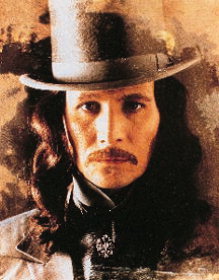
I’ve always wanted a snake in a basket. Yes I’m strange, but you already know that, right?

I’ve been busy lately. Exams, preparing for two summer jobs, and a recent addiction to Doctor Who, plus all my normal writing and editing obligations. I’ve been one busy guy, but I wanted to take a break to share with everyone how the editing job for the third draft of Snake is coming along, especially since the main aim of this draft was to add more depth and history to some of my characters.

So far, mission accomplished. I’m about halfway through the draft, I’ve written one of the two new chapters I meant to write, and I’ve gone into some depth into the characters’ personalities and history. I’ve definitely had some fun working on Allison, my heroine, exploring where she got her feisty attitude and seeing how it’s been affected by her ordeal. At the same time, I’m still searching for the right place to insert some more back story between my killer and the heroine, because there’s a lot there that I need to add in for the relationship to make sense.

Oh well, I have 54 chapters to go. I should be able to figure something out and insert those parts (and for those of you with your mouths open right now because I said 54 chapters, don’t worry because most don’t make it past five pages). And by adding all this character history, the characters become more real, their actions make more sense, and their struggles make them that much more endearing.

Except in the case of the killer. In that respect, you find the Snake more creepy and fascinating at the same time. At least that’s my take on him. He’s changed so much from when I first created him. He’s definitely not the same character I created back in June last year.

Well, there you have it. I’m going to hopefully do some more work on Snake tonight, but first I’m going to grab some dinner. Can’t edit on an empty stomach, am I right?


As most of you are aware, I have three works of fiction on their way to publication, and at various stages of that progress. Since there has been significant progress made in all three works on their roads to publication recently, I thought I’d give you all an update of each work, in the order they’ll most likely be published in. So here we go:

The Quiet Game: Five Tales To Chill Your Bones
The last time my collection of short stories came up in a post, I think I’d sent it to the copyright office so that I could sue anyone who used it without permission after publication. Getting a copyright through the US Copyright Office takes about two and one-half months, so I’m about a month and one-half of the way through the wait. When I do get the copyright, I plan to do a month-long countdown, and then upload The Quiet Game onto Amazon, B&N, Smashwords, and other sites. It’ll be available for about $1.29, which is about the same as an iTunes song, but better because you get five short stories in one neat little package.
If you want to like the Facebook page for The Quiet Game, you can follow this link:

https://www.facebook.com/TheQuietGameFiveTalesToChillYourBones

And if you want to watch my home-made trailer for The Quiet Game, please watch the video below.

Reborn City
As I’ve mentioned before, my friend Matt Williams (author of the phenomenal novel Whiskey Delta, now available on Amazon) is critiquing each chapter of RC and giving me feedback. Just yesterday in fact, Matt sent me Ch. 17, leave less than ten chapters left. After I’ve finished editing the entire novel based on Matt’s evaluation, I plan on creating a cover, a Facebook page, and a trailer, just like I did for The Quiet Game. Plus of course the whole copyright process will be repeated for RC.
And for those of you who don’t know what RC is about, it’s the first novel in a trilogy taking place several years in the future and follows a street gang whose leaders have strange abilities and their strange connection with a shadowy military company. I hope it’ll gain an audience, especially given some of the themes in the story.

Snake
My thriller novel about a serial killer hunting members of a certain New York mafia family is in the middle of a third draft, the point of which is to go into deeper character development and character history for the main characters. Once that’s done, I’ll probably put it through one more draft before I get ready to copyright it and publish it. And by the way, I think this novel is some of the scariest work I’ve ever done, and also some of the best.

I hope your interests are piqued by what you’ve read here today. I hope to publish The Quiet Game  soon and to have RC ready soon, so wish me luck and keep reading the blog for updates. Thanks and I’ll write another post later. I’ve got an errand to take care of.

This is a rather unique question, and one that came up very unexpectedly for me. You see, I heard from some friends and teachers–all published writers as well–that James Patterson, author of the famous Alex Cross books and a few YA books whose names I tend to forget–that Patterson uses ghost writers to help get all his work done, which is how he’s able to publish 9 books a year. At first, I didn’t want to believe it, but then I did some research and sure enough, I found a NYT article about this “collaboration”. And it broke my heart.

Should he work alone or should he work with ghost-writers? Most would say “no”.

Now, collaboration isn’t always a bad thing. Technically speaking, my friend Matt looking at Reborn City is a collaboration. Dave Berry and Ridley Pearson wrote a children’s reimagining of Peter Pan together, and it is certainly not a “technical” collaboration. And who can forget the legendary meeting of the pens of Stephen King and Peter Straub?

But those were collaborations that everyone knew about, everyone agreed to, and the fans were fine with. Most fans are still unaware of these Patterson collaborations, who he’s working with, and he gets all the credit. And it explains why the last couple of Alex Cross books haven’t been exactly up to par.

And we, the fans, are the ones who hurt the most. After all, we expect that the writing is original and from the author. And it’s…not. It’s a ghost-writing collaboration that is making the rounds on the Internet and that nobody really wants. We feel a little betrayed. And yet I still want to read his work, with hope that Patterson will someday return to writing on his own and doing what he does best, even if it means he’s not putting out nine blockbusters a year.

I’m not sure why Patterson does this–though I think money has something to do with it–but I hope that he cuts it out soon. It’s not what the fans want, it’s hurting the quality of his work, and honestly, if I were him I wouldn’t want this. I wouldn’t want to be working with several different ghost-writers and spending less time on the actual work just so I can be prolific and get a ton of money in. I mean, I plan to be prolific, but I plan to be prolific on my own, not with the help of other writers. Why can’t Patterson do the same?

What’s your take on these collaborations? Is it a good thing or a bad thing?