Posts Tagged ‘reflections’

This evening I went to a very interesting meeting of Ohio State’s Science Fiction Club (a whole other blog post to discuss what we talked about), and I got inspired for a few stories and articles. As I walked home from the meeting, I had another idea for an article, which you’re reading now.

As I walking home from Campbell Hall, enjoying the slightly warmer-than-usual weather and listening to heavy metal on my iPod (the mood music I usually listen to when I’m thinking or brainstorming), I was musing on the sorts of stories I tend to write, which ones were good and which ones were terrible, and what differentiated them. I realized something then: one thing that separated some of my good stories from my bad stories is which comes first, the plot or the theme.

Let me explain what I mean: when I first came up with the concept for Reborn City, it started as a simple gangster story with a science fiction twist. I had no idea of what the story would be like beyond that. I wanted it to be more adventure than explanation of scientific theory, I wanted excitement and sci-fi wackiness and life-or-death fights and maybe some sex (which got cut out after the first draft because it just didn’t fit the plot of the story). All the themes that ended up being woven into the story–the struggles and problems of gang life, Islamaphobia and racism, drug abuse, etc.–were woven in at a much later stage, though they became part of the story well before I started actually writing it.

On the other hand, there have been some short stories–which I don’t want to name–where I write them with the specific intention that they represent a theme or an idea. One early sci-fi story from high school about two technicians on a spaceship was meant to reflect on the loneliness of space travel and of isolation. Another was meant to be a ridicule of patriarchal values in society. And there are a few more I could mention, but let me just summarize by saying they were all conceived with a theme first that subjugated the story to the theme.

Apparently for me that latter approach doesn’t really work. The words feel all wrong and forced when I write like that and I find it difficult to make the story move forward.  And I realized as I walking home, past the library and towards the north end of campus, that my best stories are written when I focus more on the plot rather than any significant meaning behind the story. If the story itself is compelling, then the rest will follow, including any very deep themes.

I’m going to have to keep this in mind when I write stories in the future. And if I do end up writing a story where plot is subjugated to theme, at least it’ll be a good learning experience for me on what stories I shouldn’t write and how to avoid writing those sort of stories. I’m sure that there are plenty of authors who can write those stories and do it well (for some reason I’m thinking Kate Chopin’s The Awakening and plenty of other authors I’ve been assigned to read in my high school and college careers), but apparently I’m not one of them.

But in the end is that not surprising? People who love genre fiction, especially the sort of fiction I write, don’t necessarily read a story because they’re looking for a story that exposes the mindset of a battered woman or because they want an allegorical tale of small towns haunted by ghosts representing the ills of ignorance and a narrow-minded worldview. No, they want a story that scares them, and if the themes in the story make you think as well facilitate the whole scaring part of the story, then great. And since this is what I do when I read a story–to look for a good time, not for a deep meaning–it makes sense that my best fiction comes from focusing on the story rather than on what the story means.

Do you ever have problems with this? What are your thoughts on the subject?

See also: The 3 Types of Terror

As a horror writer, one of the biggest challenges I face is building terror in a story. As Stephen King said on Facebook not too long ago, terror is “when you come home and notice everything you own had been taken away and replaced by an exact substitute. It’s when the lights go out and you feel something behind you, you hear it, you feel its breath against your ear, but when you turn around, there’s nothing there…”

Creepy! Anyway, I’ve been thinking of different ways authors utilize terror in their stories, how they manage to insinuate that terror element into their work and look for patterns. Based on those observations, I think I’ve come up with some answers, and I’ve put those answers into two models for using terror, which I will talk about below.

The first model of using terror is called the Uphill Model. In this version, you slow ramp up the strangeness and terrifying aspects of the story, starting with small, subtle cues but gradually introducing more overt signals until the wrongness of the situation is so obvious that at this point you can introduce the horror aspect (aka the vampire or the demon or whatever’s meant to creep us out in the story) to the sound of terrified squeals and screams (especially if you’re in a movie theater). A good example of this model would be Samson Weiss’s Curse, one of the short stories from The Quiet Game. The story starts out with small things that are out of the ordinary (a stalker at a rally, maybe some trouble sleeping, a voice or two), but things escalate and become more obvious as the story goes on until the villain of the piece is revealed, in all his horrifying grandeur. I also used the Uphill Model in The Loneliest Roads, one of my more recent short stories, which is currently going through the editing process and may be submitted to magazines soon. This is a good method to use for short stories, especially since it requires a steady but quick escalation in order to keep the reader interested and scared. However, the method requires precision in measuring out how much terror you should use and in what ways. Too much or too little terror used too soon or too late will work against the story, and actually turn readers away. Writers need to be cognizant of this when using this model.

Bad movie. Great example.

The second model is called (quite appropriately) The Seismograph Model, because there are moments where there is intense moments of terror followed by lulls or smaller spikes of terrifying elements. A wonderful example of this is Stephen King’s IT, where there are moments where the strangeness of the situation is very high followed by moments where the amount of terror is low or non-existent. Usually during the spikes of terror there is also a lot of accompanying horror and Gross-out, the other two types of terror. During the lulls, authors generally use this time to work on character development and to expand on the situation the characters find themselves in, as well as to maybe show the characters in more casual settings or enjoying life without threat of something evil. This model is helpful for novels, especially longer ones where there are plenty of run-ins with the great evil of the story before the actual climax takes place and it requires a bit less precision than the Uphill Model, though it does require some skill to do it right.

Let me just say that these models are not perfect and that they don’t apply to every horror story out there. They are simply frameworks to examine a story and maybe to help shape your stories while you are writing them. There may be other models out there that I’m unaware of and have yet to discover, and if there are, I doubt any story out there fits any of these models perfectly. Like I said, the models are tools of examination and reference more than actual models to be followed.

Anyway, I hope as time goes on and I work on new short stories, I hope to be able to use both models to some degree and to use them effectively in my stories. I think that if I can, I might be able to write better stories and further my career as an author. That’s the hope, anyway.

Do you use any models when writing? If so, what?

Oh, and while I have your attention, I have some announcements to make. First, I’ve included links to the book trailers of my various books on the pages above. So if you want to see the book trailer for a novel or a collection of short stories, all you have to do is visit the appropriate page and click on the link. Makes more sense than having to scour YouTube or this blog for the correct video or post, right?

Second, I’d like to announce that I’m starting work on a new collection of short stories. By that, I mean I merely plan to write a new collection that includes some old, unreleased work and some new work that I’ve been looking forward to writing. I’m not sure when this collection will be ready, when it’ll be released, or what I’ll call it, but when I do get around to all that, everyone here will be the first to know.

And finally, I’ve created a new page on this blog, entitled Interviews. The page contains both interviews with other authors and interviews with characters from my novels. It doesn’t have much on it yet, but I plan to add more interviews for both authors and characters as time goes on. I’m especially looking forward to adding more interviews with other authors: those are a chance to help out friends with new books coming out, meet new authors and get a chance to know them, and to possibly expand the number of people reading my work. We’ll see what happens, but I hope only for good things.

Well, that’s all for now. Tonight’s Buckeyethon, so I’ll be offline until I get home after a 12-hour dance marathon, followed by a 6-12 hour nap to catch up on my sleep. See you guys Saturday evening, when I write a post about how awesome Buckeyethon was and what happened while I was at it. Happy Valentine’s Day, Followers of Fear.

Here’s a fun manga I highly recommend.

Well, that was a longer title than what I usually give a blog post. But it contains grains of truth.

Last night I was reading a manga in bed. The manga was Hikaru no Go, which is about a boy who starts learning how to play Go (a Japanese board game, for those of you who haven’t heard of it before) and how he becomes a better Go player. While it’s not the kind of story you’d expect to have you at the edge of your bed, I couldn’t turn the pages fast enough. I wanted to know if the main character passed the pro test (in Japan, you can take the pro test if you’re under the age of 30), and was reading as fast as I could to find out what happened.

When I finally got to the last chapter of the volume I was reading, I couldn’t put the book down. They kept me wondering the results right up until the last moment, and when they finally revealed the results, I jumped out of bed and started doing a funny little dance. Thank goodness I didn’t shout for joy, though I was tempted to (I did not want to wake up my roommate, who had just gone to sleep).

But you see, this illustrates a very important point. While Hikaru no Go isn’t a very complex manga and its rating is for “General Audiences”, the author and illustrator were able to tell the story in such a way that you begin to feel the emotions of the characters and you wish the best for them while at the same time reading on ahead just so you can find out how they are doing. And when the resolution presents itself, you just want to dance like I did at the end of the volume I was reading, because you felt you were there and that you wanted to partake in the celebrations as well.

I think the mark of a great story is when an author can induce this effect in its readers. It’s an effect I don’t usually see in stories, but when I do they end up becoming some of my favorite stories. Every author tries to replicate that effect, and whether or not they do depends on the skill and experience of the author, as well as on the readers who take the time to commit to the story. I know it’s an effect I’ve been trying to create in my stories, and if some of the reviewers of my work are being truthful, I’m getting to the point where I might be able to insert that effect into my stories.

But how does one go about getting that effect into the stories? I’m not sure any author can answer that very well. The only advice I can give is that you should read a lot and take notes on what the writers did in the novels or other stories you find yourself celebrating with the authors. Then trty to replicate that wth your own stories. If your audiences end up enjoying your work and give responses like what you’re looking for, that they celebrated the victory of the characters, then I guess you’ve done your job.

What are some stories you’ve read that made you celebrate the victories of the characters? What do you think the author(s) did to make you feel that way?

Yesterday I got some great advice from my American History teacher on grammar. You’re probably thinking “What?” Allow me to explain.

I take an American History class that covers America’s rise as a superpower from right after WWI to 1963 as one of the required classes I need to take for my study abroad trip. The class meets three days a week for about fifty-five minutes, and it is probably my favorite class this semester. Not only is it the first class I have on the days we meet (and we meet after 10am, so I’m a little less rushed to get to class on those days), but the subject material is interesting, we do small quizzes and short papers instead of midterms and finals, and the teacher is such an animated storyteller and genial character, you can’t help but be mesmerized and enjoy listening to him when he speaks.

Yesterday morning, our teacher was talking to us about the grades we got on our first papers, where we examined the different sides in the Scopes trial back in the 1920s. He was telling us about how to improve our essays for next time, and then he said something that really resonated with me as a writer. This is what he said, as best as I can reproduce it here:

“I always have the one student that grumbles about grammar. It’s not an English class, so why is it so important to have good grammar? Well, if this were an engineering class, would it be okay to have a little bad math? Or if this were a physics class, would it be okay to have a few incorrect equations? If the answer is yes, then let me know what bridges you’ve built or what planes you’ve built, so I can know to avoid them! Good grammar is important in History, even if it’s not an English class. And I expect good grammar in your papers.”

And not just in history papers, but in all written works, one should have good grammar. If one looks at the self-publishing phenomenon, one has see new authors emerging by the thousands to publish their books. And that’s good. Although it means more competition for every author, it’s great that authors get the chance to publish their work without having to pander to New York-based publishing companies who are only concerned with making a profit. However, some of these authors, whether they feel that too much attention to grammar stifles creativity, or they have forgotten the rules of good grammar, or they’re too lazy to be bothered with it, have neglected grammar in their books. This has not only brought down the quality of their stories, but has put a stain on all self-published authors, that we’re half-assed about our craft and that we write sub-par stories with horrifying grammar.

Grammar can also be like that.

The truth is, most self-published authors–a majority of self-published authors–are very serious about their craft, grammar included. And it’s important that authors, whether they’re writing their first book or their twelfth or their fiftieth, should pay attention to their grammar. It makes the story flow nicely, the quality of the story is vastly improved, and the author feels a sense of satisfaction when, in reviews (when they get them), no one’s griping about how bad the grammar has been.

So if you’re an author who thinks that grammar isn’t that important, consider thinking again. Because grammar is there for a reason, and it is not one to be taken lightly. Yes, it’s sometimes a pain to add every apostrophe or to know where the semicolon belongs or whether to use “me” or “I”. But nobody ever said writing was easy. And sometimes we have to go through annoying or painful trials in order to make our art the best.

Or we could get on the unstable bridge or the plane that won’t stay up after reaching a certain altitude. But I hear the chances of doing those twice aren’t so great.

Oh, good news: one of my teachers is allowing me to write a short story I came up with for class (not the American History teacher, though I will use material from that class). My Deaf Literature class has an assignment where we have to bring in something representative of the Deaf community or Deaf culture. I plan to write a short story about a young deaf woman living in the Oklahoma Panhandle during the middle of the Dust Bowl of the 1930’s. I figure I can make an exciting story when I add those factors together. Though whether I can add a serial killer or a monster is up in the air at this point. Might not even happen (sigh). We’ll see what I can come up with by next Wednesday.

Today I finally get the chance to post my interview with science fiction author Charles Coleman Finlay, or CC Finlay for short. A graduate of Ohio State, his first story Footnotes was published in 2001 in Fantasy and Science Fiction, where several of his short stories have been published since. He’s also published four novels, including the Traitor to the Crown series (which one of my favorite shows, Sleepy Hollow, strangely resembles) and a collection of short stories, The Wild Things.

I sat down with him to talk about writing, fiction, and how delicious the food from the Wexner Café was (comments about that last subject are not in this interview). It was a great way to have lunch on a Friday afternoon.

RU: I guess the first question I want to ask you is, how did you get into science fiction?

CCF: I’m not sure there’s a short answer. When I was a kid, I felt overwhelmed by the world just because of personal events in my life. So I was looking, unconsciously,  for larger than life characters, people who faced world-sized problems and overcame them. So I started with cartoons and comic books. I loved superheroes–Superman, Batman, Green Arrow, the Flash, the X-Men. When I started reading a lot of books, science fiction and fantasy fulfilled the same needs but in a more complex way. Take Lord of the Rings, for example. Here’s Frodo with this burden he didn’t want, and he’s not a wizard or a superhero, and still he finds some way to triumph. That really resonated with me. Edgar Rice Burroughs was also a really important writer for me. All of his characters face big overwhelming problems, whether it’s Tarzan orphaned in the jungle or John Carter transported to another planet. Science fiction and fantasy are  full of those kinds of stories, and I loved them. I still do.

RU: I like comic books too, though they’re usually the Japanese kind, and I still read them a lot. When you write, what is your process?

CCF: Every writer is different. For me, it’s an iterative process. I have to have the whole story in my head, the shape of it like a picture, and then write it down. My first drafts can be pretty rough, but then I revise it and rewrite it many times. My wife’s also a writer, but she’s the exact opposite of me. She needs the scene perfect each time. So she writes more slowly, but she does less editing than I do. But if you ask this question of a hundred different writers, you’re going to get a hundred different answers. Everyone is different.

RU: A lot of the readers on my blog are a strange grouping of traditionally-published and self-published authors. How do you feel about the changing dynamics of the publishing industry these days?

CCF: There’s not a period of time where you can point to traditional publishing–however you define traditional publishing–as stable. It’s always changing, always evolving. If you’re thinking of it from a professional point of view, the most important question is this: how do authors get paid. A lot of technologies are allowing authors to get paid and published in new ways. That can be good for authors. But there are also a lot of authors who publish their books too soon, before they’re ready. I know one writer who, when he was young, self-published his first novel and was so discouraged by the reaction to it that he gave up writing for a decade. That was a shame, because he was incredibly talented. Had he stuck with traditional publishing there would have been more people around him to keep him going and to help make his books better, so that when they did come out, people would have loved them. On the other hand, I have friends who, after being traditionally published, have started to self-publish. T.A. Pratt and Henry Connolly, for example, both had series that got cancelled by their publishers, but they had a hardcore group of dedicated readers. They self-published more books in the series and had huge success with it. So it’s a lot like the question about the writing process. There’s no single right answer, and every writer has to find the right path for them. Everyone will make mistakes along the way. So it’s up to authors to educate themselves about potential opportunities, but also potential problems.

RU: What advice would you have for an author who isn’t having much success right now?

CCF: Keep working at it. I was writing seriously and submitting fiction for over six years before I sold my first story professionally. That’s pretty common. I’ve heard it described as the Million Words of Crap theory–that every writer has to write a million words of crap before they start producing something good. Other people I know quote Malcolm Gladwell and point out that you need to put in 10,000 hours of practice to get good at any skill.

Also, surround yourself with other writers who are as serious about it as you are. Pick them up when they get discouraged, and let them do the same for you. Learn from them and share your own mistakes to shorten the learning curve for everyone. Writing can be lonely enough, but don’t let it isolate you.

RU: Do you think as less people are reading, the novel will die out?

CCF: More people are reading than ever before, not just in the US but throughout the world and ebooks are making that easier. So I don’t see the novel dying out soon. The problem is there are more writers, more novels, than ever before. So it’s harder to find a big readership for any single book.

(Editor’s note: Mr. Finlay recommends going to this website for more information on the subject.)

RU: What do you look for in the stories you read?

CCF: That is a great question. I am a guest editor for the July/August issue of Fantasy and Science Fiction. In the month of January, over 750 stories were submitted to me to read for this issue. From that I had to narrow it down to about 12 stories that I will get to publish. So I’ve been thinking about this a lot.

I like to be surprised, which is hard when you’re a writer. The surprise can be plot, language, format, character, knowledge. But it has to be something. The more I read, the more it’s something else besides plot–you see every plot twist, every angle in a story before it happens. So when a plot surprises me, I really value it. And then I look for stories that make me feel. It’s not just putting characters through terrible things, there has to be some emotional resonance as well. Fear, excitement, sadness are all good emotions, but I really look for and enjoy stories that can make me feel delight, wonder, joy. Those are a lot harder to write, and I appreciate stories that can evoke those emotions. And then I love to laugh. Not every story is funny, or should try to be funny, but when a writer can make me laugh consistently, I really appreciate that.

RU: So much science fiction has become reality: communicators become cell phones, all-matter materialization devices are 3D printers, and we have information literally at the tips of our fingers. Where do you think science fiction will go from here now that a lot of it is becoming science reality?

CCF: I don’t think it’s something new. Thomas Disch wrote a great nonfiction book called The Stuff Our Dreams Are Made Of about this phenomenon. But I also don’t think that science fiction is a laboratory for new technology. Science fiction is about the present, not the future. If people envision something and make it a reality, then that’s something different from science fiction.

RU: Final question: If you were stuck on a desert island and could only bring three books with you, what would you bring?

CCF: I think you have to take Robinson Crusoe by Daniel Defoe with you for all the obvious reasons. Defoe invented the novel and Robinson was one of the first he invented. I would also take a collection of Lois McMaster Bujold. I think she’s an amazing writer, and I reread her Vorkosigan series in particular every year or so. And then I’m a writer. So the last one would be a book full of blank pages, so I could write the book I wanted to read. That’s what we do as writers, right?


If you’re interested in learning more about CC Finlay, you can check out his website at www.ccfinlay.com.

January was a great month for me. I got a lot of writing done, I did very well in most, if not all, of my schoolwork, I applied for several scholarships for my study abroad trip, That, and Angela and I are very close to finishing the final draft of Snake (thanks for all the help, Angela, by the way. Couldn’t have done it without you). Since January was so good, I’ve got similar feelings for February, and I thought I’d share what I hope to accomplish this month:

Write and edit like a madman. I’ve still got several short stories I want to write, so I hope to get those done before I return to my WIP Laura Horn. I also hope to edit those same short stories and maybe send them to some magazines. That, and I plan to finish Snake and get it ready for publication (already thinking about a book trailer), as well as to write an article for a magazine a friend of mine runs. And finally, I hope to write some really great blog posts that examine various aspects of writing and ask some deep questions on fiction writing. Not sure what those will be yet, but I have some ideas. We’ll see what I can come up with.

I’m going to enter a few contests. There’s a short story award given out every spring semester by Ohio State’s English Department, and I’ve submitted my entry already. I decided to go with Ohm, the short story I wrote last month about a man who starts a cult around himself using meditation. It’s not horror, but with OSU’s English Department that might be a good thing (they’re more literary-oriented, sadly). I think they’ll like it, but we’ll see. I also plan to submit Reborn City for the Amazon Breakthrough Novel Award in the middle of the month. I don’t think I’ll get very far with my first novel, but I hope to get to a certain round where you can get a possibly favorable review. If that happens, I’m hoping that more people will discover RC and maybe like it. Fingers crossed!

I’m going to work hard in school. Five classes, most of them between the 3000-5000 level makes for some heavy assignments to get through. As soon as I’m done with one, I have another to look forward to! But I’m not going to let it get in my way. I’m going to get all A’s this semester and I’m going to keep my place on that study-abroad trip! And speaking of which…

I’m going to get a lot of scholarship! Okay, that’s kind of out of my hands, but I applied for a lot of scholarships. At least one of them might come through! It’ll save me from applying for a loan to finance this trip, anyway!

And finally, I’m doing Buckeyethon again! Last year I had so much fun raising money for cancer research and then celebrating with a 12-hour dance marathon, I’m doing it all over again this Valentine’s Day! Oh, and if anyone wants to make a last minute donation, here’s the link. It’s all for a good cause!

Well, that’s all I got for now. I hope to have more good news later this week and this month. Until then, Goodnight Followers of Fear!

Some people think that anyone who’s published a book must be very talented  and rolling in money. I’m going to leave the question of talent to the side for another post, and focus on sales, particularly sales in the world of self-publishing.

I published my first book in July last year and my first novel in November. As a self-published author, a college student, and a guy working at Ohio State’s Student Financial Aid office part-time for nine bucks an hour, I couldn’t exactly afford an advertising team to help me spread the word about my books. I’m completely reliant on my blog, every social media platform I can get my hands on and learn to use, and the spoken word, along with any contacts I can make in the writing industry.

Truth is, most writers don’t make that much money out of their craft, especially if they’re self-published and doing a lot of the work on their own. Most writers usually have teaching jobs or something else to help pay the bills. Stephen King didn’t stop teaching until Carrie went paperback. Anne Rice and JK Rowling had small sales until their careers started taking off, and then they began writing full time. There are numerous other examples I could mention, but the point is that writing and publishing books is not guaranteed income. In fact, several authors I know, most of them self-published but a few of them having gone the traditional route, have described their book sales as getting a big boost whenever a book is published, followed by a steady decline to the usual amount of sales after a month or so. I’m still working to get to that level of popularity!

But then again, most authors don’t care about the amount of sales, at least not like an executive in a toy company might worry about how a toy is not selling as it should among kids 8-12. Most of the time, we’re more worried about how people are liking our books, if they enjoy what they’re reading and if they’re connecting with the characters. In short, every writer wants to know is if people are appreciating the stories they create. And the authors that are more concerned with sales in the other sense? Well, I don’t think that they got into writing for the right reasons.

So most authors don’t make big sales like some people tend to think. We certainly wouldn’t mind having more sales but it’s not as big a factor for us as one might think. In fact, I’m very happy with my current fanbase, though it’s pretty small at this point. The people who read my work tend to enjoy it very much, and they let me know in reviews and emails and in conversations. And for now, that’s all I can ask for. When I get the big sales and the larger fanbase, it’ll be because I’ve earned it.

All for now. I’ve got a short story to work on. Wish me luck!

I came across this post by Stephen King on Facebook the other day and I thought it’d be interesting to write about. The post goes like this:

The 3 types of terror: The Gross-out: the sight of a severed head tumbling down a flight of stairs, it’s when the lights go out and something green and slimy splatters against your arm. The Horror: the unnatural, spiders the size of bears, the dead waking up and walking around, it’s when the lights go out and something with claws grabs you by the arm. And the last and worse one: Terror, when you come home and notice everything you own had been taken away and replaced by an exact substitute. It’s when the lights go out and you feel something behind you, you hear it, you feel its breath against your ear, but when you turn around, there’s nothing there…

Words of wisdom from the King himself.

When I read this, it struck a certain chord with me. I realized that a lot of horror writers and filmmakers can easily gain an understanding of the first two, but it takes a long time to get into the third type, and an even longer time to gain a mastery of it. For example, there are a lot of films out there (of varying quality) that utilize Gross-out and Horror. They have serial killers, they have vampires and demons, but they’re kind of low on terror. The Evil Dead films and many bad slasher flicks are prime examples of this (I’m talking to you, Friday the 13th remake). Even I had trouble with this early on in my writing career. I could easily write a story about vampires or demons that had plenty of blood  and fight sequences, but I was lacking in the terror department. Even worse, I rarely thought about including the terror factor, and when I did I didn’t really do it as best as I could.

But at that age though, and in that point of my development as a writer, all I thought I needed was a monster, someone’s life in danger, and the rest would take care of itself. I learned later on that adding terror to the story is a process, something that has to be consciously done before you can go about actually adding it in unconsciously. This is something I’ve had to comprehend with lately and which I’ve been working on with some of my latest stories. With The Loneliest Roads, I tried to put in a sense of unreality and strangeness even before my protagonist entered the limo, and slowly heightened it once she got into the limo. with some of the short stories I’m planning on writing now, I’m looking for ways to increase that terror without seeming silly or absurd. And in future novels, I hope to add that factor in with more skill and precision than I have in the past.

Perhaps adding terror in is the most difficult part of horror writing because, as King said, it’s the worst. It’s what really makes a horror story memorable to those who read or see it, and the thing about it is that it’s often an underlying element in the story, something that’s a factor in the scary elements of the story but rarely the main element. That goes to the Horror, which usually causes in one way or another the Gross-out. But the Terror? It’s what hails the coming of the horror, what prepares you for the jumps and scream the Horror will cause. And getting someone prepared for that can be really difficult, all told.

Although I’m still trying to get mastery of all 3 elements, I’m hoping that in the future I’ll be able to get a better handle on them, and to do that I just have to keep writing, to keep practicing and see where it takes me. As I write, I learn, and hopefully I learn how to tell scary stories much better than I have in the past. It’s an ongoing process, but I feel it’s one I must take part in. Wish me luck.

And for those horror writers out there, how do you deal with the 3 elements listed above? Do you have any advice on utilizing any of them? What?

(Don’t say “limit Gross-out” though, because I’ve already figured that one out. Too many horror films rely on Gross-out as it is, and it’s annoying after a while.)

Some of you know I go to a weekly meditation class on Sundays. Today at the class we had an interesting discussion about the differences between meditation and hypnosis. The discussion started while going over some of the aspects of a particular chakra. One suggestion for clearing this chakra of impurities or of other problems is to abstain from activities such as hypnosis. Because I use hypnosis a lot in my life as well as meditation and because I know how to perform hypnosis, I had to ask why one should avoid it, especially since hypnosis and meditation are very similar and have similar aims when performed (unless you’re a stage hypnotist, in which case your goal may just be to do some interesting trick).

Ultimately, the problem comes down to relying on yourself vs. relying on others. The form of meditation I do, called Sahaja Yoga, has a great emphasis on practitioners being able to do Sahaja Yoga on their own and become their own guru in order to find the answers they are looking for or to resolve the problems they are experiencing. Hypnosis, on the other hand, relies heavily on the hypnotist to help a subject, and because hypnosis is largely dependent on the hypnotist’s suggestions, there is an opportunity for abuse on the part of the hypnotist to hurt the subject or cause them to do harm onto others. For this reason, some Sahaja Yogis are very against hypnosis.

As someone who has positive associations for both practices, I saw it as almost like the science vs. religion debate: while they may seem at odds, that doesn’t necessarily mean that they can’t work together. For example, many people are able to believe in both the Genesis story and the theory of evolution, and that’s just one example of how people have learned to reconcile religion to scientific beliefs or theories that seem to contradict each other. Also, both disciplines can be abused by those who are trained in them: a preacher could abuse his followers’ trust in him to scam them or hurt them, while some scientists used to use pseudo-science to justify racist, sexist, anti-Semitic, or homophobic beliefs (a few still do, sadly).

Hypnosis and meditation can also be like this. While some may see the two as distinctly different and that they can’t work together, others see them as very similar and that they can work together. Many researchers have found that the hypnotic state is very similar to the state of consciousness achieved during meditation, and that they can both have positive effects on the physical, mental, and emotional self. For a personal example, last semester there were a couple of weeks where I was under intense stress and was constantly worried about finishing projects and homework, my finances, and other problems. It took a very powerful combination of meditation and hypnosis to be able to get back to my normal self and handle my schoolwork without having a breakdown of any sort.

Not only that, but both hypnosis and meditation can potentially be abused by those who practice it. A hypnotist may use a client’s suggestibility to cause harm to the client or to themselves, but someone who knows some meditation can easily create their own brand of meditation and charge through the roof for lessons or even start a cult based around them and their meditation brand (when I pointed this out to my class, my first thought was, “Hey, that could make a great short story”. Believe me, I will make it into one).

Whatever you feel about hypnosis and/or meditation, it’s important to keep in mind that both aim to help people, that they are very similar in several ways, and that there are people who will swear by one, the other, or both that they are helpful disciplines. I feel that my life is enhanced by both, and I’m glad to be able to know how to do both.

If you are interested in trying either in order to better understand the issue, I’ve embedded two videos below. The first features Shri Mataji Nirmala Devi, the founder of Sahaja Yoga, giving an introductory session in Sahaja Yoga to an audience in Sydney, Australia. The second video is a basic hypnotic relaxation video that gives you an idea of what a hypnotic state is like and what one can accomplish in it. All you have to do for either video is follow the instructions given (preferably while wearing headphones for best quality), and you’ll get a sense of what each is like.


What do you think of hypnosis and/or meditation? Do you think they’re incompatible or compatible? Or do you just think the whole discussion is silly?

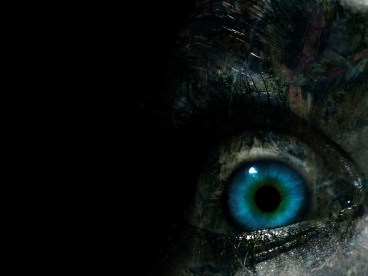
Yes, this is my 666th post. The fact that I’ve been counting up to this post must tell you a lot about me. I just wish I had something scarier to mark the occasion. I guess the picture to the left of this paragraph will have to do.

I want to make a confession to you on this post, and that confession starts with a little story. Today I met with one of my counselors at Ohio State and she told me she’d read Reborn City over winter break, and that she’d enjoyed it very much. In fact, she told me at times she had trouble putting it down because she wanted to keep reading and see what happened, which explained why she read it so quickly. I’d heard this from someone else who’d recently read RC, so it made me feel pretty good. But at the same time, I also felt pretty incredulous. After all, I wrote this book in high school. It took me about four years to get it ready for publication, and I needed a lot of help along the way from friends and family.

The truth is (and this is the confession part from the title of this post), I’m still trying to figure out what the hell I’m supposed to be doing. I may act sometimes like I’m all experienced in the matters of fiction writing and all that’s terrifying, especially when I’m writing a post for Self-Published Authors Helping Other Authors, but I don’t know it all. I have no idea how to get more people to read my blog, or how to get more people to purchase or download copies of my books. I tried with the Weekly Exercises to get people interested in buying my fiction writing and just interested in my writing in general, but it didn’t work out so much (this is part of the reason why I haven’t been writing any Exercises recently, in case any of you were wondering. That, and I didn’t have the time or the inexhaustible well of ideas for so many flash fiction pieces). And I’m certainly not the authority on terrifying people. I’m pretty far from it. I’m still trying to learn how to do a better job of scaring than jumping out to yell BOO! or use a big, scary monster with claws or a serial killer with a knife. There are subtleties to scaring people and doing it well. I’m still learning how to do it.

So I ask that you still support me and help me. I’m working hard to fulfill my dreams and to become a better writer. If you want to read my writing, then I’m happy about that and I thank you for it. And if you never want to read my books because it’s just not what you’re into, then that’s fine. Everyone’s tastes are different.

And now for those updates:

–I’ve written a blurb for Video Rage. For those of you who’ve read Reborn City and enjoyed it, I wrote a short blurb for RC‘s sequel that gives a few hints as to what we can expect for the next book. Unfortunately VR is only listed as Coming Soon, as it’s still in the first draft at this point. Still, if you’re interested in the second book, you can read the blurb here.

–I’ve published a few stories on WattPad. Well, one story, to be exact. Revenge for a Succubus’s Beloved was published about a year ago, and it’s still one of my favorites, so I published it again on the site for others to read if they so desired. The other two publications are previews of The Quiet Game and Reborn City. I hope to publish some original fiction in the coming months on the site, and when I do I’ll let everybody know. If you would like to read The Quiet Game‘s preview, click here. If you want to read RC‘s preview, click here. And if you want to read Revenge for a Succubus’s Beloved (and it’s one of my favorites, so I hope you do), click here.

–My Facebook page has reached 100 likes! Growing and maintaining a Facebook page is not easy, ask any author who has one. Ask any person who has one. And I finally managed to get 100 likes on my own page. Took several months, but I did it. I’d like to thank everyone who’s liked my page and stayed with me through the months. Just like everything else, it couldn’t happen without you. And if you’re interested in checking out my Facebook, follow the link here.

Well, that’s all for now. Have a good night, Followers of Fear. Thanks for reading my 666th post, confession and all. I hope nothing demonic results from you reading it.