Posts Tagged ‘review’

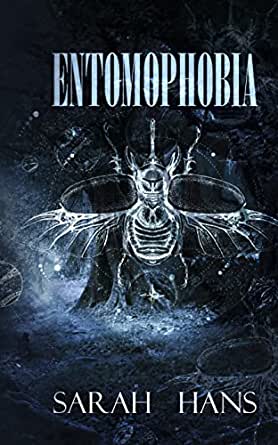
The cover of Entomophobia.

Some of you may remember my interview with Sarah Hans last year about her debut novel, Entomophobia (click here if you’d like to read it). I was interested enough that I bought my own copy (Sarah gladly signed it for me) and I began reading it recently. And while I don’t have a lot of time to read these days, I was able to get through it quite quickly. So, what did I think? Let’s find out.

Entomophobia follows Meri, a woman who has just left her abusive husband and is trying to get her life back together. However, it seems life is conspiring against her at every turn: her aloof mother is unsupportive; the judge ruled that her soon-to-be ex-husband will have primary custody of her daughter, Magda; and, after having to steal supplies for an art show she’s part of, she gets cursed by a tiny man with insectile features. The curse is changing her, forcing her to face her darkest fears. And if she doesn’t do something quick, she’s going to lose what little she has.

One of the biggest strengths of this novel is Meri. She’s a fully realized character, sympathetic yet flawed. Within a few chapters, I felt like I really knew her, and that made it easy to empathize with her pain and fear and the woes of her life. There’s also a strong supporting cast, especially in the character of her mother, whom I wanted to strangle at times.

Another of the book’s strengths is the human-based horror. We see a lot of characters being cruel, uncaring, or just plain awful. This is obvious in Meri’s ex-husband Adam, who is a huge piece of shit, but also in her mother, in random teens in a bad neighborhood, and even in her ex-boyfriend Dan, though he does mean well at times. Whether they realize how their actions effect others or not, it’s horrifying to see just how much they don’t give a shit at times about the damage they cause.

The body and supernatural horror isn’t anything to sneeze at, either. A lot of scenes in this book will make your skin crawl as you read them, and the description of some of the characters, especially the less-human ones, really bring them to mind and make it easy to imagine what they might look like.

I do have some gripes, however. I did feel like the book could have been longer. As I said at the beginning of the review, it’s a short book, and I feel like it could have been a bit longer. Perhaps some scenes could have been drawn out more or added in, especially ones involving the curse or Meri’s phobia. I would have been good with some expansion.

On a scale of 1 to 5, I’m giving Entomophobia a straight 4. It’s a quick, creepy read with a great cast and an engaging story that I recommend.

On a sad note, you might have trouble finding copies. As mentioned in my interview, Entomophobia’s publisher closed and was only printing new copies through the end of 2022. So right now, I have a kinda-rare first edition.

The good news is, Sarah tells me Dragon’s Roost Press will be re-releasing the book sometime this year, possibly this summer. So if you’re interested in getting Entomophobia when it’s available again, check out Sarah’s Twitter and you’ll find out with the rest of us when the book is available again.

That’s all for now, my Followers of Fear. I’m off to read some more before heading to bed (I’d rather do some more writing, but I know if I start now, I’ll never get to bed at a decent time). Until next time, good night and pleasant nightmares!

Before we start, I would like to thank Lucy A. Snyder and the team at Tor Nightfire for providing me with an ARC copy to read (and a special thank you to Lucy for the awesome galley copy she gave me a few months back).

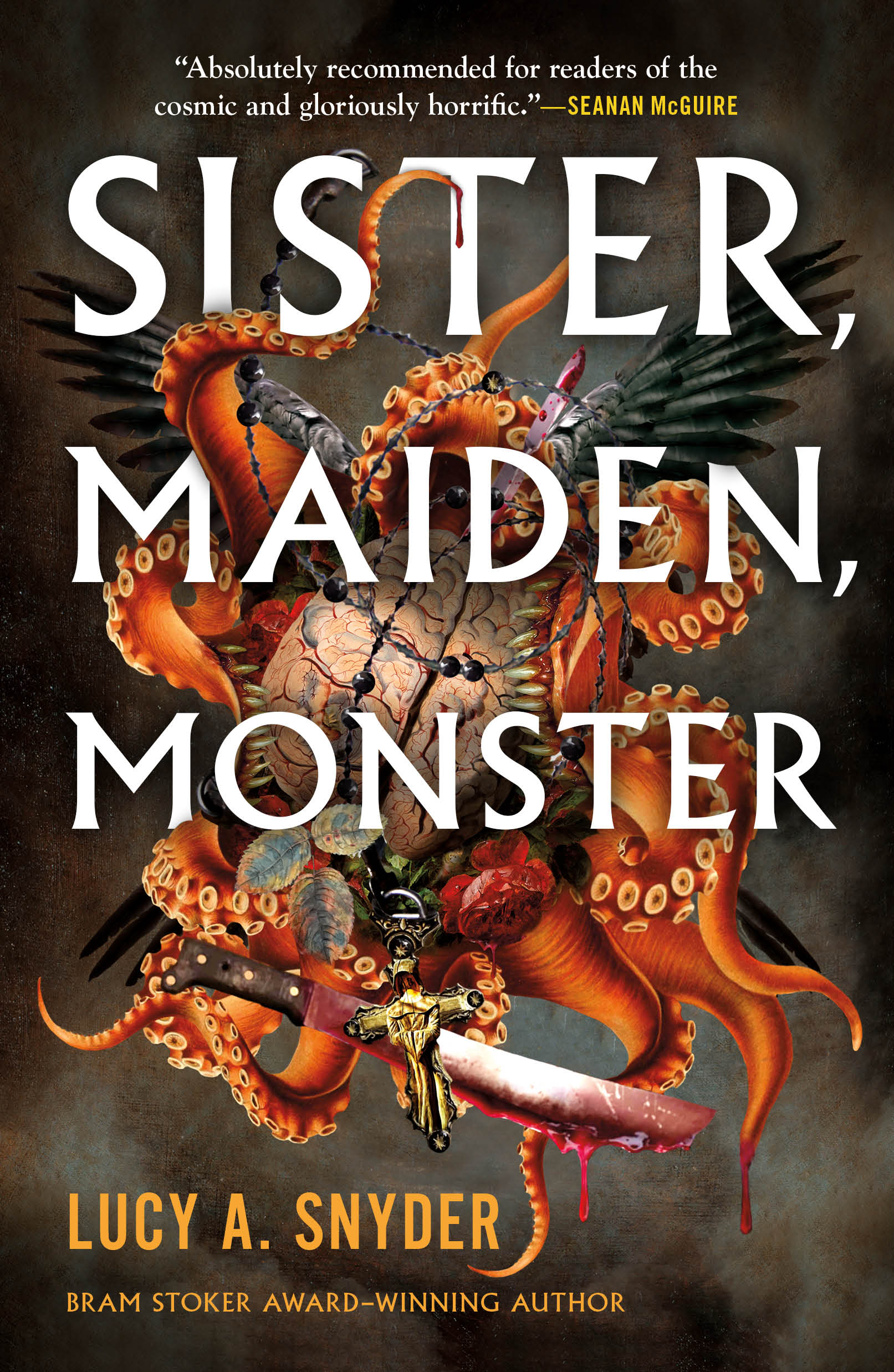
Set a few years after our current COVID-19 pandemic, Sister, Maiden, Monster follows three separate women as their lives are affected by a terrible new disease raging across the planet. Known as polymorphic viral gastroencephalitis, or PVG, the disease is like the stomach flu from hell. For those who are lucky, it kills them very quickly. For the rest, it changes them, making them unable to eat most sources of nutrients. They have to get their nutrition through rather macabre means. And that’s only the start of the apocalypse that’s going to come.

So, it looks like there’s still an appetite for pandemic fiction, even after a real pandemic. At least, if the release of Sister, Maiden, Monster, the airing of “The Last of Us,” and one or two of my own stories, among other works, areanything to go by. And everyone telling those stories are making sure the hypothetical future pandemics are even more terrible than COVID-19 was. Which, honestly, I gotta respect.

Alright, onto the story. Sister, Maiden, Monster was great. I really enjoyed it. For one thing, the three main characters are really well-developed, which is great in such a character-driven story. There’s Erin, who’s seeing her life implode and strange new desires growing inside her after becoming infected; Savannah, a prostitute and dominatrix who discovers she has a talent for causing death in the name of new masters; and Mareva, a sickly woman who has been chosen for a terrible purpose. I really got to know these characters and get inside their minds. Which, by the way, was not always the most pleasant ride, believe me.

Speaking of which, Lucy Snyder does not shy away from showing what Stephen King calls the “gross-out” factor of horror. There are bloods, brains, gore, and plenty more body horror to make more squeamish readers feel faint. Add in the isolation and paranoia of living through another pandemic, this one worse than the one preceding it, as well as some good and delicious cosmic horror, and it makes for a rather scary read.

I did think that the time spent with each narrator was unbalanced. Somewhere between a third and half the book is from Erin’s perspective, and while I get why, I would have liked to see more from the other two narrators. Especially Savannah. That lady is wild and a lot of fun to read, even if you would be horrified by her if she were real.

I also noticed that something that appeared later in the book and which I loved seeing was foreshadowed earlier in the story, but I felt it could have been foreshadowed a bit more. Hell, I nearly forgot about the foreshadowing until the reveal, so that says something.

All in all, Sister, Maiden, Monster is a great, body horror-filled ride and I’m glad I got to be among the first to read it. On a scale of 1 to 5, I’m giving it a 4.3. The book releases this Tuesday, February 21st, so go preorder a copy, settle down when you get yours, and get ready to see the horror of the pandemic go through a terrifying metamorphosis.

Until next time, my Followers of Fear, good night and pleasant nightmares.

I’ve been hearing about this one in one of my Facebook horror groups, so I got interested and got the audio book. And on the ride home from work, I finished it today.

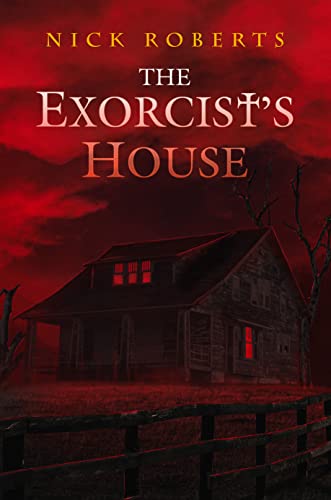
Set in 1994, The Exorcist’s House follows the Hill family as they move into a farmhouse in West Virginia with the goal of flipping it for a profit before the new baby arrives. However, the house used to belong to a local exorcist who spent much of his life fighting demons. And there’s plenty to suggest that while the exorcist is no longer living there, or even living, something else is. And if the family doesn’t do something soon, they may not live much longer.

So, I couldn’t help but see this as kind of Conjuring-esque. I mean, it feels like something that would be inspired by The Conjuring. A family moves into an isolated home in the middle of the country with a history of the paranormal, demons start to oppress and try to possess them, it all takes place in an era that’s starting to become nostalgic in the public’s memory, an exorcist or two are involved in the story, and plenty of Catholicism to boot. Near the end, I couldn’t help but think that the author could do a whole shared universe around some of these characters, especially the exorcist of the title.

That’s not detracting from it, I’m just saying that’s how it feels.

All that being said, it was an enjoyable read. The story is well-written and the characters are quite fleshed out, especially mother Nora who has a strong character arc in regards to her own inner demons (pun intended). Even daughter Alice, who is a stereotypical teenager, is more than just a flat stereotype. There’s also some really scary scenes, such as the scene with Nora in the basement in the first half of the book (I got shivers while listening to that chapter in the car), as well as a few twists that I didn’t see coming.

And that ending! Not sure if the author really is setting up for a sequel or a shared universe al a The Conjuring, but even if he isn’t that ending left me satisfied as only a horror fan can be.

That being said, there are some tropes that we’ve seen a hundred times, such as an exorcist being brought in during the third act for the big confrontation, so at times it does feel a little predictable.

On a scale of 1 to 5, I’m going to award The Exorcist’s House by Nick Roberts an even 4. Plenty of good scares, a decent story and possibly the launching point for a shared universe. Also, the audio book has a great narrator with a ton of range. Pick the format of your choosing and get settled in for a nice read.


That’s all for now, my Followers of Fear. This will, in all likelihood, my last review of the year, and likely my last post of 2022 (unless something comes up between now and Saturday and 11:59 PM). Thank you all for your support in 2022 and I look forward to sharing with you my adventures, trials and accomplishments in 2023. Until next time, happy new year, good night and pleasant nightmares!

The following review features mention of suicide. If you or someone you know is feeling suicidal or considering suicide, please contact the National Suicide Prevention Hotline by dialing 988 in the United States. Other nations have similar hotlines set up and they are just a Google search away, so please make that call if dark thoughts are plaguing you. Thank you.

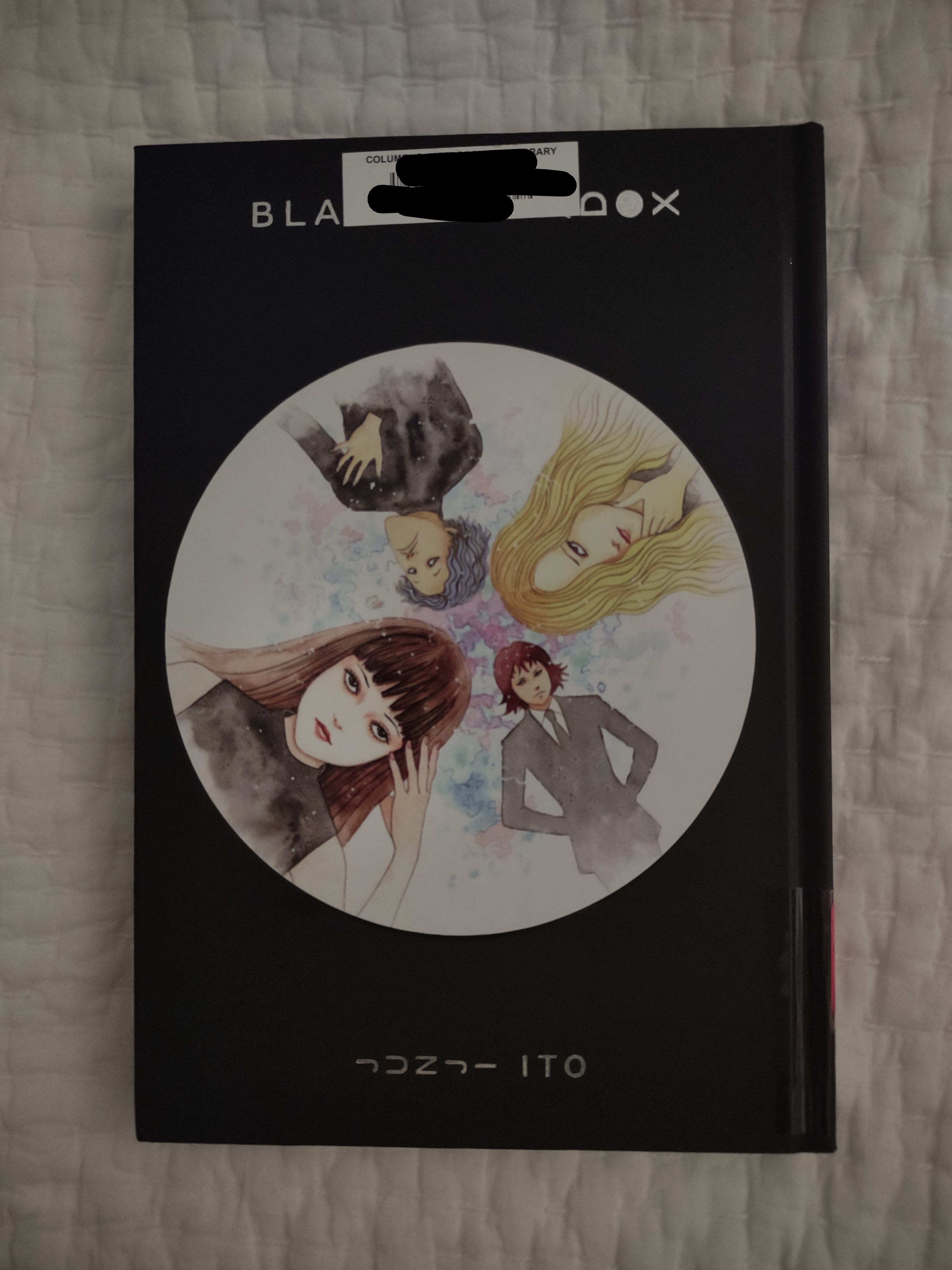
Black Paradox follows four individuals who meet on an online suicide message board. However, almost immediately odd events derail their plans, most notably the discovery that one of their members has a portal in their belly to another dimension and keeps vomiting up precious gems (yes, you read that right). However, the gems contain a dark secret, and their discovery in our world set events into motion that will affect not just the four protagonists, but the entirety of humanity.

I would say that the word that describes this short series is “inventive.” Almost immediately, weird stuff happens and it is generally very freaky. The gems, later called “paradonite,” are also an inventive touch, as well as what they do. I haven’t seen much horror around gemstones unless it’s like a haunted/cursed necklace or something. Plus there’s a robot in there, doppelgangers, and quite a few other things that will surprise you. The paradonite itself is an interesting object, as it has a few surprises associated with it.

The art is also quality. Ito being Ito, you know he’s going to put a lot of effort into his work to create an evocative and at times unsettling illustration. It’s especially effective with sequences of body horror, which are rife throughout this book.

However, it does feel like at times Ito was making it up as he went along, and not in a good way. There are certain threads that are left dangling at the end of the series, and while in horror it’s okay to sometimes leave certain questions unanswered, especially with Ito’s work, it didn’t work too well this time around. Also, I don’t think the topic of suicide was handled as delicately as it could have been. At times, as events unfold, it’s almost brushed off and forgotten as inconsequential.

Also, there’s a four-page bonus story at the end that’s kind of included as a joke. It’s not very good. I’m not sure why it was included.

Despite all that, however, I would call Black Paradox quintessential Ito and worth a read. I struggled on what score to give this one, but I kept coming back to 3.8 out of 5, so I’ll go with that. If you are looking for a strange and surprising horror manga, I would recommend Black Paradox (though Uzumaki and Remina are still leagues better).

That’s all for now, my Followers of Fear. It’s been a hell of a month, but a good month nonetheless. I hope December is just as good and that we all have a stress-free time during the last 34 days and three-or-so hours of 2022. Until next time, pleasant nightmares!

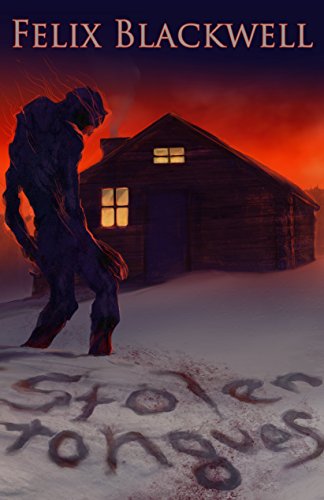
About a year or two ago, this one title became kind of a sensation in one of Facebook groups. Everyone was talking about it, raving that it was the next best thing in indie horror. Combined with a striking cover and name, I couldn’t help but grow curious. Sadly, my TBR list is already a mile high, so I had trouble getting around to reading it. Thankfully, I get plenty of reading done thanks to audio books, so when I found out the audio book for this novel was finally released, I scooped it up for my October read.

So, after all that hype and fanfare, is Stolen Tongues worth the wait?

Set mostly in California and Colorado, Stolen Tongues follows a fictionalized version of the author himself, Felix Blackwell, as he and his fiancée Faye go up to her parents’ cabin in the mountains as a little engagement present. However, the lovers’ weekend is interrupted when they find a strange object hanging from the trees, and later that night start to hear odd voices coming from the surrounding woods. Soon, Faye starts to walk and talk in her sleep, and it becomes clear that something is influencing her in her dreams. And it will stop at nothing to have her.

So, the suspense throughout this novel is phenomenal. The prologue itself would make a terrifying short story on its own, and the early scenes, where we have no idea what sort of monster we’re dealing with or how it’s doing what it’s doing, are some of the tensest, most heart-pounding scenes I’ve ever had the pleasure to read. It’s also quite unsettling to see Faye undergoing changes due to the influence of the creature. Her personality warps at times, as do her memories, and you feel the narrator’s anguish and concern as she becomes someone he doesn’t recognize.

I also like the reverence and respect shown to Native American beliefs, both the beliefs themselves and indigenous people’s attitudes towards their beliefs and sharing them with outsiders. As the novel’s monster draws heavily from Native American culture, it’s refreshing to see so much respect. Often, horror that draws on Native American folklore and ideas doesn’t always include the very peoples from whom the folklore and ideas derive from, and when they do, not always in the most respectful manner, so it’s a welcome change to see said folklore, as well as Native characters, portrayed with such care.

Actually, the author includes at the end of the book an essay he wrote on writing Native American characters and horror based on their folklore, which I would read after you’re done with the novel.

Sadly, the novel isn’t perfect. After the reveal of what the creature is, some of the tension and mystery is sacrificed. The author does try to keep things creepy, especially after the narrator has a close-up encounter with the monster, but it’s not always successful. I also thought the ending was rushed and a letdown, with far too much telling, not enough showing, and not a finale epic or scary enough to match the rest of the novel.

I know me griping about showing vs. telling when I only just got better at that this year is rich, but it’s still a legitimate problem.

Overall, while it’s not the terrifying ride of suspense and creepy atmosphere that I was led to believe I was going to get, Stolen Tongues by Felix Blackwell is still a decent and chilling novel. Those sections where the tensions really works make it worth the read all on its own. On a scale of 1 to 5, I’m going to give it a straight 4. If you’re still looking for something spooky to read this October, this book might be a good choice. I’m certainly glad I finally got around to reading it.

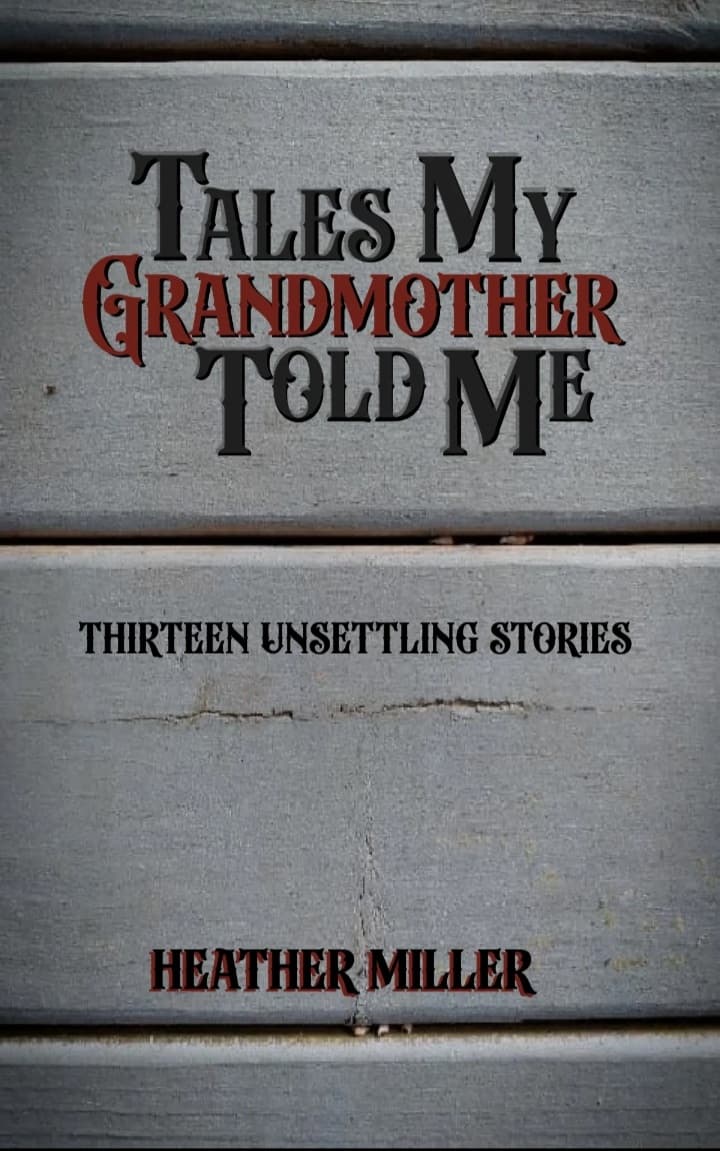
I met Heather Miller recently, and I could tell she had a passion for horror. It feels like every day, she’s posting a review of the latest horror novel she’s read and what she thought of it. So when she announced that she would be publishing a collection of short stories, the majority of which were based on tales her grandmother told her either as a ghost story or as a song, I thought I’d check it out. I got an advanced copy, and read it in about a week.

And as you can guess, here’s my review.

My impression of the thirteen stories in Tales My Grandmother Told Me is that it would make some great summer camp or around-the-campfire reading. Which, honestly, is rather fitting considering the first story is told around a campfire. They’re also quite bingeable. You can read them back-to-back pretty quickly, like I did. And I have to say, while I wasn’t terrified, I did enjoy most of the stories. My favorites were Safe House, which was a creepy Gothic horror story, and Girl’s Best Friend, which was a fun twist on an old urban legend.

I will say that this collection didn’t feel aimed at me. It felt more like it was aimed at the teenage crowd, especially teens who are just starting to ease their way into horror. Kind of like Scary Stories to Tell in the Dark was for children. If I knew any young teens who were looking to get into horror but weren’t ready to be traumatized, I would probably recommend this.

On a scale of 1 to 5, I’m going to award Tales My Grandmother Told Me by Heather Miller a 4 out of 5. If you have a teenager who wants to wade into the waters of horror, or you like that fiction, you’ll probably enjoy this collection. It’s available now from Amazon, so check it out if you like. And if you enjoy the book, be sure to leave a review so both the author and others know what you think.

Until next time, my Followers of Fear, good night and pleasant nightmares.

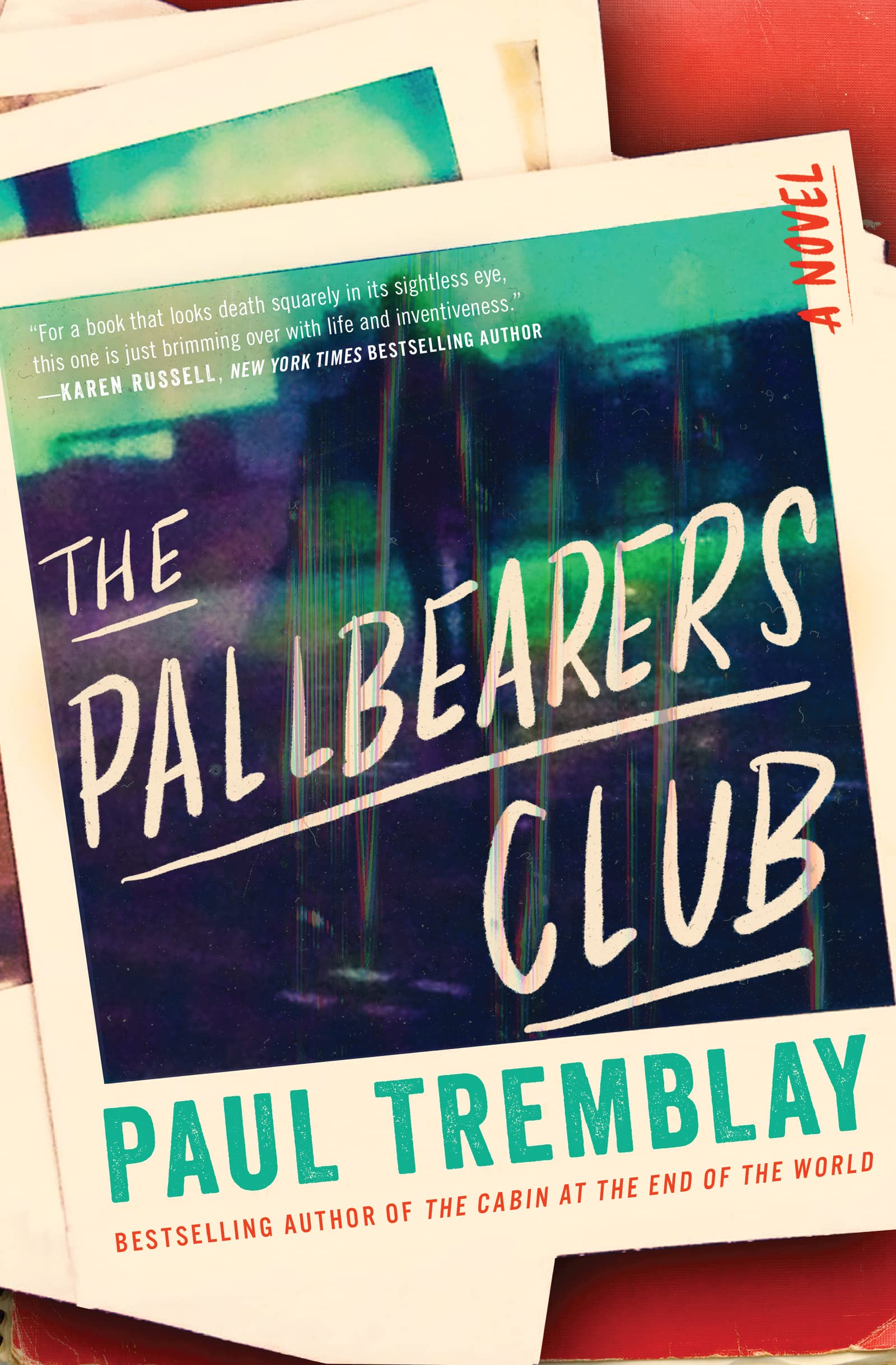
With books like A Head Full of Ghosts, The Cabin at the End of the World and Survivor Song (which I still say would make a great stage musical), The Pallbearers Club by Paul Tremblay has been one of the most anticipated novels of 2022. I got my copy almost as soon as it came out, but because my life has been busy lately, I only just finished the book today. So now, as I feel obligated to do, I’m writing my review.

The Pallbearers Club follows a man who calls himself (or the version of himself in the novel/memoir he is narrating) Art Barbara. Seeking to pad out his college applications, Art starts the Pallbearers Club, a volunteer club where members show up to funerals for the homeless and lonely, and then carry them out to the hearse (because who wants no one to show up to their funeral?). At one of these funerals, Art meets Mercy Brown, a strange college girl who both opens up Art’s world and sets him on a path that will affect him through his adulthood. And maybe even beyond.

For starters, the novel is creative in its presentation. It’s written primarily by Art on a computer, while Mercy’s red-inked, handwritten notes speckle the margins and bookend each chapter. It allows you to learn a lot about each character, who are both somewhat unreliable narrators for each their own reasons, and there’s a lot of reflections on topics like memory and identity. It also makes me wonder what the audio book is like, because Mercy’s notes are a big part of each chapter. Does her narrator interrupt the text every now and again?

I also like how Art uses unusual adjectives while he writes, and the best parts of the novels are probably the sections set in Art’s teenage years during the late 80s. You really get to know and like the characters the best at that point, and it’s among the best examples of 80s nostalgia I’ve come across.

That being said, there’s a lot about this novel that rubbed me the wrong way. My biggest issue is the story, or almost lack of one. Art spends a lot of time going through the major points of his life, especially where Mercy is part of his life, but it becomes a slog because he hits you over the head at times with how little self-esteem and how much self-loathing he has. It’s okay early in the book, because he’s a teenager and those are always difficult times and Mercy is at least opening up his world. But after graduation, Art seems intent on just making you hate him as much as possible.

Which might be okay if Mercy or the plot helped balance the story out, but they don’t. Even with her notes, Mercy’s so intent on being edgy and mysterious that we really don’t get to know the real her, and it makes it hard to see her as a character and more as a mystery. Again, fine early in the book, but after a while, we get tired of it.

There’s also not a lot happening in the book. At least, not as far as horror novels go. The New England vampire lore is part of the story, but not in a significant way like I’d expected. It becomes more like a background theme, kind of a parallel about aging, health problems, and our own anxieties and delusions are like vampires on us and we wonder where in the hell they come from. Which is fine, if the story is interesting or the the lore is utilized in the right way.

The Pallbearers Club didn’t do it in the right way. I feel like it was trying to go for what Revival by Stephen King did, which was show how a single man affected the life of an aging rocker throughout his life while mixing in the supernatural. But while it tries, it doesn’t succeed.

And this isn’t something I’ll deduct points for, but why pick on Def Leppard in the early parts of the story? That band is a big part of why I love 80s music, how dare you!

I normally like Paul Tremblay’s work, but on a scale of 1 to 5, I’m going to give The Pallbearers Club a 2. The way it’s written is creative and the initial chapters are great, but annoying characters and an unimpressive plot just stakes it through the heart.

That’s all for now, my Followers of Fear. My next read will be The Devil Takes You Home by Gabino Iglesias, while my next review will likely be Tales My Grandmother Told Me by Heather Miller (read an advanced copy). You’ll know my thoughts on both in time.

Until next time, good night, pleasant nightmares, and 49 days till Halloween.

In his latest collection, Junji Ito contains four short horror manga for us to enjoy. Surprisingly, none of them are named “The Liminal Zone,” which is unusual for his collections.

That’s it. That’s the summary of the book.

So, as you all know, Ito-sensei’s work can be really hit-or-miss with me. Some of it, like Remina or Uzumaki, are masterpieces and I feel should be read by horror lovers everywhere. Others, like Smashed or Fragment of Horror, didn’t make that big an impact on me (though I think one of the short stories in the latter inspired one of the stories that’ll be in Hannah). This collection, for the most part, was a miss.

The first story, Weeping Woman Way, is about a couple who come across a professional mourner, affecting the woman in the couple. It is kind of eerie, but it kind of fell flat with me. Too much exposition and not enough focus on the horror, which I feel is a trend with the lesser of Ito’s stories.

The second, Madonna, was my favorite. Taking Catholic veneration of Jesus’s mother Mary to new extremes, the story takes place at an all-girls school where the principal’s wife dresses up as the Virgin Mary. As new student Maria Amano notices weird things occurring at the school, and the attentions of the principal and his wife become more than creepy, she finds herself wrapped up in a terrifying plot centered around the belief that the Virgin Mary will reincarnate one day.

As a cult story, I rather liked it and how it took Mary worship in a rather disturbing direction. I also like how Ito-sensei explored feminist themes in the story, like how many of the female characters equate acting passive and devoted to their god–the principal–to acting like Mary. Even the main character acts very passively and only takes action when her own life is threatened.

The one flaw with the story was that I would have liked a slightly different ending, but overall it’s easily the best story in the collection. I would love to see how a live-action horror adaptation would handle the story. It would likely be an improvement over that other horror movie about twisted Marian veneration that came out last year.

The third story, The Spirit Flow of Aokigahara, is Ito’s take on the famous “Suicide Forest” of Aokigahara, and I did not think it was possible to find a story on that subject I would hate more than 2016’s The Forest (see my review here). A terminally ill man and his girlfriend head to the forest to commit suicide and find a mysterious phenomenon involving ghosts and a mysterious cave. I really have no idea what was up with this story. It just seemed like Ito was throwing darts at a board and trying to see what plot points he could hit.

Though I do appreciate that it made fun of that idiot YouTuber who actually posted footage of a dead body on his channel by having another YouTuber experience something sanity ending.

The final story, Slumber, wasn’t half-bad. A guy believes that he’s been going out and killing people after he goes to sleep. It’s a decent psychological thriller with a nice twist. Plus, the art is especially gruesome.

All in all, this is one of Ito-sensei’s lesser collections, though there is material to enjoy. On a scale of 1 to 5, I’m going to give The Liminal Zone a 2.5 out of 5. If there was more or better material inside, the grade would have been better, but it is what it is. Read for Madonna and Slumber, but skip over the other two.

That’s all for now, my Followers of Fear. I’ll have some more posts out next week, believe me. So until next time, good night and pleasant nightmares!

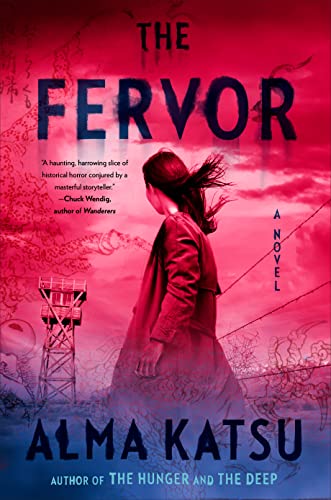
You know me by now. In addition to horror, I love Japanese culture, especially anime and manga. So I was very excited to hear that Alma Katsu was putting out a new historical horror novel that would draw heavily on the myth of the jorogumo, or the spider-woman. Add in a WWII backdrop and I knew I wanted to read it.

Following several story threads, The Fervor mainly focuses on Meiko Briggs, the Japanese wife of a white pilot off at war, and her daughter Aiko. They are kept in the Minidoka internment camp by the US government for fear that they are Japanese spies just because of their ancestry. And as awful as that is, it gets worse. A strange disease is moving through the camp, striking down internees and guards alike, making them aggressive, violent and paranoid. As this disease, known as “the fervor,” spreads beyond the camp, Meiko realizes that this disease isn’t just killing her fellow Japanese, but it may have its origins in both Japanese culture and her own personal history.

So, Katsu admits in an afterword that this novel is different from her past historical horrors. The story of a disease attacking Japanese during a wave of anti-Japanese sentiment in the USA isn’t just an artistic choice. This book was written during a wave of anti-Asian sentiment after conspiracy theorists started spreading the rumor that China deliberately released COVID-19 upon the world. And it shows in the novel’s focus on not the disease, but on the other contagions that were common during WWII: fear and hatred. The same contagions that lead to the Holocaust in Europe and which led to the internment of Japanese Americans in camps throughout the United States, two of the most shameful chapters of human history.

This novel, as Katsu says, is a mirror.

But, how is this mirror as a story?

As you can expect, the story is extremely well-researched. Katsu, who is half-Japanese herself, draws from the stories of many of her relatives to bring to life the internment camps. You really feel you’re at the camp at times, as well as to the rest of WWII America. She also juggles the many characters, their at times contradictory minds and personalities, and the plot threads like a master. At no point did I feel that any of these characters were being emphasized too much or neglected, and they eventually come together satisfactorily. My favorite character was young Aiko, who is a bit of an outsider in more ways than one, and goes through quite a bit to survive what occurs in the novel.

And while Katsu admits she plays a bit with the WWII timeline a bit, she also includes some people and things that readers might not know about. While a fictional portrayal, Minidoka was a real place and the version we see here is based on actual testimony, minus the pandemic, of course. Also, Archie Mitchell was a real person and the balloons that play a part in the novel are based on the Fu-Go balloons that were actually used by the Japanese (and which I don’t remember being taught in my college WWII classes).

That being said, there were some things that could have been better. While most of the novel did the mirroring of our own age without being too over-the-top or preachy, the final chapter feels a bit like an overdramatic or melodramatic finish. Coming after a climax I felt was anticlimactic, I felt the ending was a bit of a letdown after what had been a good read so far. And this is a small gripe, but I spent several chapters thinking Aiko was younger than she was. True, there were hints based on the flashbacks of her true age, but the way she was written, I was surprised when I read she was twelve.

On a scale of 1 to 5, I’m giving The Fervor by Alma Katsu an even 4. While the story could have been wrapped better, it was still a great read that was well told and did a good job reflecting both the shameful parts of our past and our present. Pick it up, give it a read and see for yourself.

And if you would like some more background on the novel, read my interview with Alma Katsu on The Fervor from February. I had a great time picking her brain on the novel.

I heard a movie based on this book was coming out later this year, so I thought I would check it out. And since I had to drive up to Cleveland yesterday (it’s a Passover thing, don’t ask) and the audio book was long enough for the drive to and back, I thought I would listen to it. I started as I pulled out of my parking space and finished about a mile from my complex on the way home. And I have to say, it certainly added to the drive.

Set in an unnamed village on Halloween night 1963, Dark Harvest follows Pete McCormick, a teenage boy who is participating in the Run, an annual harvest ritual where he and the other teen boys in town chase a living pumpkin-headed scarecrow known as “Sawtooth Jack” and “The October Boy.” The kid who manages to catch and kill Sawtooth Jack before he reaches the church in the center of town by midnight wins great prizes for him and his family, including the right to leave the village. Pete is gearing to win this year, even if it means breaking some rules, but he soon finds out there’s a darker truth to the Run. And losing might not be the worse thing in the world.

I have to say, while I was able to predict certain things, I enjoyed the story. I was sucked in by the immediate weirdness of the tale and by the haunting atmosphere. There’s this explosive potential in the narration and the reveling in violence and death that comes from the story. It really fits the Halloween vibe, as well as the cruelty and nihilism that comes with it. And while some things were predictable, as I said, it’s such a joy watching them unfold.

That being said, the style of narration was kind of annoying at times. There’s a lot of addressing the reader and rambling on the thoughts of individual or multiple characters. Great, it’s lots of psychological flowery language, but I would like to reach the next exciting bit of the story, and what does this all add to the overall book?

That, and it wasn’t really explicit about why the Run exists. It’s hinted it’s some sort of pagan ritual to help with next year’s corn harvest and keep people in town, but it’s never really spelled out or how this sort of thing began in the first place. Mostly, you hear stuff about how the Run is part of a way of life, but that only explains so much.

Still, I had a great time with this novel and was glad I finally got around to reading it. On a scale of 1 to 5, I’m giving Dark Harvest by Norman Partridge a 4.3 out of 5. It’s a fun little Halloween romp that you can gobble up in a day or so. Whether or not you plan to see the movie version, if you haven’t read this one and love your Halloween stories, I recommend checking it out.

That’s all for now, my Followers of Fear. I hope to have some exciting news out very soon. Until next time, good night and pleasant nightmares!