Posts Tagged ‘review’

Let me just say, it’s always a pleasure reading books by friends, especially because they’re usually really good. And this is no exception. Thrice Burned, the second book in Angela Misri’s Portia Adams Adventures series, has the young detective now living at 221B Baker Street taking on some twisty new cases, while at the same time adjusting to her growing social circle and trying to find the answers to her own deep and complex personal dilemmas.

As expected, the mysteries in this volume are hard to decipher and make you want to read late into the night just to find out the answers (I was able to make some guesses on one of the mysteries that turned out to be true, but that was about it). The resolutions are also fun to watch, and sometimes can be a little touching, usually coinciding with Portia finding something new about herself or making an important decision in her life. Praise should also go to the new characters of Annie Coleson, an energetic and free-spirited journalist, and Gavin Whitaker, an ambitious forensic pathologist with a mind to match Portia’s, who challenge our protagonist in so many fun ways.

And of course, there’s Portia. Honestly, I can see why so many readers identify with her. Her struggles feel more real than many YA heroines, most of whom have to deal with nothing bigger than which boy they like more. Portia Adams has to contend with so much in her life, including where she wants to go with her career, having to adjust to the presence of new people in her life who take her out of her comfort zone in so many ways, earning the respect of her peers in law enforcement, how to be an introvert when society doesn’t always allow for that, the travails of having a mind unlike anyone else’s, and so much more. It’s good to see such a well-rounded character, and I think the character of Portia is going to grow in popularity as more people find her and feel like they they’ve gone through what she’s going through at some point in their lives.

My one complaint would be that at times it feels like the story emphasizes Portia’s personal problems more than the mysteries she’s supposed to be solving, but then again this is technically a YA novel, and they’re supposed to be big on character development, so I can see why.

In any case, this is a great second installment to a series I can see going on for several books, and I can’t wait for March 2016, when the third book in the series comes out (okay, I can wait, but it’ll be agonizing). For great storytelling, characters you feel can come off the pages, and for mysteries that will leave you on the edge of your seat, I rate Thrice Burned a 4.3 out of 5. If you can, definitely check this series out, especially if you like yourself a good mystery.

For more on Portia Adams and her adventures, read my interview with the author, as well as my review of the first book Jewel of the Thames and the interview I had with Angela prior to that one’s release.

The main fear of every fiction writer is whether or not they’re telling a good story, usually meaning they hope they have an interesting story or they’re telling it in the best way possible. After that those, there’s another fear that is just as important and just as scary: you fear your characters aren’t relatable, that they don’t feel real to the reader. The last thing any author wants to read in a review is that the characters seemed “artificial” or “their actions and words felt forced” or instead of seeming like real people, they were “more like robots.”

Unless all or most of your characters are actually robots, of course. Then those reviews might actually be compliments.

But in most other situations, you want to avoid getting these sort of reviews, and there are a number of ways to do that. One is to fill out a full character bio for each of your characters, even if you don’t plan on using everything on that bio in the story. I’m talking full educational history, childhood experiences and traumas, hobbies, likes and dislikes, dirty little secrets, all that good stuff. Having a full picture of your character can help you bring them to life. You can tell a lot about a person just by knowing the full story about them, and you can do the same by knowing everything about your characters, getting in their heads and figuring out everything from reactions to certain situations to their decision-making processes.

Some of these involve writing, which I think adds to the fun.

One of the best parts of some of these is you get to write them out. If you’re one of those types who write a certain amount of words a day, this may help fill it out on a bad day.

Another thing you can do, if you’re wondering if something your character says or does seems believable or not, is to do what I call split-mind writing. I forget where I got this (it might have been a Stephen King novel), but it’s a pretty interesting way to work out problems, if rather schizophrenic. What you do is take a piece of paper, and pretend to have a conversation with someone on that piece of paper. Basically it’s a game of question-and-answer where you bounce ideas off of the person you’re writing to, see if you can work out what’s bothering you about your character and find a solution through this process.

There’s also acting it out, which is as the name implies (and with the perfect partner, is as fun as it sounds). If you have someone to act it out with, fill the in on a scenario in the story and act it out. If you or your partner’s reactions and words are different than what you’d expect or thought might happen, examine why. There might be something in that difference that can help you in your work.

A fourth one, and one that I feel is always worth a try, is to look at your favorite characters in literature. Examine them and ask yourself why those characters feel so real to you, or what about these characters that you identified with. Often we’re inspired by these sort of characters and the stories they’re in. We want to write stories that are just as inspirational as those ones that inspired us. Going back and figuring out why can be very helpful with putting those same qualities into your stories.

And of course, there’s my favorite option: would I do that in the same situation? I find asking myself this sort of question of myself actually helps. Often our characters have a bit of ourselves in them (as they should, seeing as we created them). Asking if we would do the same thing as them, and then exploring the answer, may help you make these characters seem real. After all, if you consider yourself at least fifty-percent normal and your reactions too, then maybe those thoughts and reactions should apply to your characters as well.

Sometimes it’s just a matter of thinking and puzzling it out.

Sometimes it’s just a matter of thinking and puzzling it out.

While making characters seem real to your audience can seem daunting, it’s not impossible to do. We all start out having trouble making our characters seem real, but with time we improve, make them real not just to us, but to our readers. And part of that is just asking a question: why or why does this character not work? The answers you get can be the key to writing something–and maybe even someone–truly awesome.

Let me preface this review by pointing out that I usually enjoy the movies that Jason Blum and his company Blumhouse Productions put out. Sinister, Insidious and Insidious 2, The Conjuring and Annabelle. Those are freaky movies. Which is why I’m saddened to say that this latest venture does not live up to expectations. In fact, Unfriended is more a time waster than a terror coaster.

Unfriended follows Blaire Lily, played by Shelley Hennig of Teen Wolf fame and somehow playing a much blander character than the one she played in Ouija. And for most of that film she’s dead (see my review of that one here)! Anyway, the film is told by watching Blaire’s laptop’s desktop and the multitude of programs she’s got going at once. All of her friends and her boyfriend log in for a Skype call and are joined by a mysterious, faceless person who seems to be stalking them. The person claims to be Laura Barns, a friend of theirs who committed suicide a year previously after an embarrassing video of her was uploaded onto the Internet. Whoever it is, they threaten anyone who signs off, uploads embarrassing information about each person, and then kills them. As the number of friends wind down, we get closer to the heart of the mystery: who filmed and uploaded the video that started it all.

I kind of knew before I even saw the movie that it would be difficult to make an impressive film told entirely from a Mac desktop. If they’d kept the tension and terror going through the whole film, then it might not be a problem. However, there are several minutes where nothing happens, where Blaire is chatting on Facebook or through IMs or looking things up or where Laura is typing to the living. During those parts, the tension doesn’t just mellow out, it disappears. Even during a sequence where Laura is forcing her friends to admit they’ve said or done horrific things, it’s not scary. Tragic or sad, but not scary.

Even sadder is that I don’t get to know these characters enough to build any sympathy for these characters. They’re all pretty much stereotypes or archetypes and not much beyond that. Blaire’s the supposedly sweet and innocent virgin, a horror staple, her boyfriend’s the sweet, lovesick puppy teenager from next door. The others are a bitchy drama queen, an overly-entitled rich kid, a geeky hacker, and a blonde (yeah, she’s just a blonde. Nothing beyond that. As a blonde, I’m kind of insulted). Beyond all that, there’s not a thing to say about these people.

And Laura Barns? Don’t know what to make of her. Some say she was just a sweet girl with some family troubles that are briefly hinted at, others see her as an awful bitch. All we see is the villain manipulating them and their computers. I’d have loved to see a flashback of this girl, rather than just some videos and recollections.

That said, Unfriended does have its points. The film looks like it has been filmed in one continuous shot and any cuts in film (of which I’m sure there are) are so hard to catch it looks seamless. The characters do show how unstable teen relationships can be, how you can be a friend and still call someone a bitch at the same time. And there’s that underlying theme of bullying and cyberbullying throughout. They do that well.

Still, I wouldn’t waste money on Unfriended if I were you. Wait until it’s on DVD. It’s an interesting concept, not something previously done in film, but it might have been better told as a short story than as a movie. I’m giving it a 2.6 out of 5. I’m sad that they’re already considering a sequel to this movie, or maybe even a line of sequels. God, I hope they don’t waste the money making more of these! That cash could go to so many better things.

Well, that’s all for now. I’m–wait. What’s this chat box? I–Oh damn. Ghost on my computer. Gotta go, my Followers of Fear. I think I need an exorcist.

So today was the day. The day I’ve kind of been working towards since Fall Semester started back in August. My thesis discussion, where I would discuss with my advisor and one or two other people about the finished product of the novel I’ve been working on.

Well, finished product is a bit of a misnomer. But you get the idea.

Early this morning I met in my advisor Manny’s office for the big meeting. My second reader for the discussion was Maura, a teacher I’ve taken classes with, whose company I enjoy, and who is a huge sci-fi enthusiast (can you see why I asked her to join us?). For about an hour and a half we sat and discussed Rose, how I got the idea for it (actually in one of Maura’s classes), how it grew in my head and became the novel I wanted to write for my thesis, and how all that went (you know the process of that from my many posts on the subject). We also discussed changes I could make for the third draft (which I will do, in time) and what they liked and disliked about the story.

I won’t do a transcript of the entire hour and a half, but I will go over the salient points. As you probably already know, Rose is about a young woman brought back from the dead by a man claiming to be her boyfriend and begins to turn into a plant-like creature (when Manny told the subject of my thesis to some of his writing friends, they were rather impressed by the originality of the idea). It’s about forty-nine thousand words as of the second draft, and still needs some work.

Maura and Manny definitely enjoyed the symbolism and thematic elements of the story, as well as how Rose’s character developed over the course of the story. However, there were some things that could be changed. The first third of the book or so could stand to have quite a few things changed around, including the portrayal of Rose’s amnesia and how she first interacts with the antagonist, the man who brought her back. They also thought that how certain revelations of both characters could be spaced out a bit more evenly and maybe change how the antagonist’s dad is characterized or used. There were some other elements that they touched upon, but I can’t mention them here because they would reveal too much. In any case, they’ve got my brain churning in all the best ways and when they’ve emailed me their notes I’ll take down some notes of my own and put the story away for the third draft.

In between this draft and the next though, I plan to finish a couple of short stories and then dive right back into editing Video Rage, the sequel to Reborn City. Yes, I know I’m overdo for that one and it might take a little while longer to get it ready, but I promise you, I’ll get it done as fast as I can. And after that…well, I don’t know. Maybe I’ll work on the third draft of Rose. Maybe I’ll have enough material to do that rewrite of Laura Horn I’ve been meaning to work on. Or I’ll work on some short stories and maybe an entirely new project. Anything’s possible.

You know, it’s been quite the crazy journey for this story. It’s gone through so many changes, more than most of the stories I’ve had the pleasure of writing. And it’s journey is not over yet. No, it’s just at rest, waiting for the next transformation, the next polish. And what a polish it will be when it happens. I think that when the third draft is done, even if it’s not the final draft, Rose will definitely be much closer to publication than it is now.

In the meantime, I’ve got a paper to research and a few other things to do, so I’m going to get on that. You have a great rest of your day, my Followers of Fear. I know I will.

Here’s an impression of some of my reactions while watching this film:

“Aah!”
and “Yikes!”
and let’s not forget “Oh my f***ing God!”

Yeah, it was a really good movie. It’s like watching the movie version of a Stephen King novel without actually having anything to do with Stephen King. Inspired by childhood nightmares of writer and director David Robert Mitchell, It Follows…well, follows Jay, a young woman who has recently been seeing a handsome young man named Hugh. One night they have sex in Hugh’s car, which leads to all sorts of trouble. Apparently Hugh’s passed on a curse, making Jay the target of a creature that can only be seen by those affected by the curse and follows them at a walking pace with the intent of killing them, and then going after whoever was the previous bearer of the curse. The only way to pass the curse on is to have sex with someone else.

The “sex equals death” trope has been part of horror since perhaps before Dracula or Frankenstein, but it’s so rare to see a well-worn theme reinvented like this, making the film a very strange metaphor for STDs and the overwhelming power they have on our lives. There’s also the fear of intimacy, alongside a fear of strangers and what they can do to us. That last theme is exploited pretty well in this movie, where every unknown character or extra could be It. Heck, at one point I was wondering if It was a squirrel, and I was afraid!

But that’s not all that makes this film awesome. For instance, the writing is phenomenal, starting slow but mysterious and quickly getting exciting. There’s barely any gore, and the jump-scares, rather than relieving tension, enhances the tense atmosphere that just builds throughout the film. The few moments of humor in this film seem to fit right in, giving us a short break from the constant suspense that characterizes It Follows throughout. And the way it ends is terrifyingly awesome, the perfect satisfactory ending (who knew I’d get that sort of ending just hours after my last post?). And the monster, so undefined and strange, is guaranteed to cause you terror, even at its strangest (and arguably slightly goofy) moments.

Not to mention the acting from the small cast, who are extremely talented! Special mention goes to Maika Monroe, the gorgeous actress playing Jay, shows wonderful breadth and ability despite still being very early in her acting career. I think I fell in love with her a little while watching her performance, it was that good. Also worth mentioning is Keir Gillchrist as Paul, a young man who obviously is crazy for Jay, and his earnest manner is so wonderful that you really want to support him no matter what happens. I definitely empathized with him, and I’m sure I’m not the only one who will.

I can say more about this film–it is phenomenal–but I don’t want to give away any more. Instead, I really encourage horror fans to go see this movie if you can. It’s creepy, it’s fresh, and you’ll have second thoughts about one-night stands forevermore. Just a wonderful example in the continuing trend of great horror films from the indie scene and made on smaller budgets that scare us more than any bigger-budget franchise film.

I’m giving It Follows a 4.5 out of 5. This film is a new gem in the horror genre, so much that I tried to get the poster from the box office after the movie (unfortunately they don’t give those away anymore, darn it). I’m almost kind of hoping for a sequel. God knows the film leaves open the possibility for one, and I wouldn’t mind having some questions answered and seeing Jay and her friends grow in the face of this threat. On the other hand, why risk the possibility of ruining a great story by making a sequel that might fail to live up to the original? It’s quite the dilemma.

Well, that’s all for now. I’m going to bed. Maybe I’ll have a nightmare that’ll lead to an awesome story of my own. One can only hope, right?

“I love a happy ending.”

You hear that a lot. People go to the movies or read books or watch TV shows or plays and they tell you that the happy ending is the best part. Some people won’t even check something out–movie, play, book, whatever–unless they know there’s a happy ending in the story, as if their whole enjoyment of this creative work hinges upon how it ends and nothing else.

But what is a happy ending? What is the definition of a happy ending? If you think about it, it’s not as easy a question to answer as it seems. It can actually vary between genres. In romance, a happy ending is that after many trials and tribulations the hero and heroine finally end up together, madly in love, and the villain, if there is one, either realizes the errors of their ways and repents for it or they suffer for the misery they’ve caused. In fantasy, usually the quest the characters set out upon is accomplished, though sometimes that has its own consequences (the hero dies or, like Frodo in LOTR, has been too affected by the events of the story to truly be happy). And in horror, happy endings aren’t easily achieved. If you’re lucky, you’ll survive and have most of your psyche intact. Anything else is up in the air.

And in some cases, happy endings don’t come at all. Take about a third of Shakespeare’s plays, or movies like Oculus, or the movie Godfather (everyone gets brought low in that film). How about stories where the enemy is defeated but someone dies tragically (Moulin Rouge). Or maybe, as in one of my favorite indie horror film I Am A Ghost, you are left with more questions than answers.

I think happy endings are actually pretty subjective and hard to define. Does everyone but the bad guy win? Do the lovers end up together? Does nobody come away with traumatic experiences? I think it’s easier to look for a satisfactory ending than a happy ending. A satisfactory ending is a conclusion that resonates with you, that you feel is the natural conclusion of this long story you’ve been reading/watching and brings out an emotional response in you that doesn’t involve disappointment. It makes you say, “I like how this ends.” And it’s much less likely to make you burst out crying because you’re so happy that all has turned out well.

How do you feel about happy endings or satisfactory endings?

What’s your definition of either?

snake

How far would you go for love and revenge?

(Warning! This review has some spoilers. Proceed with caution if you haven’t read the book and might read it in the future.)

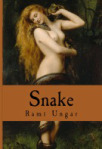
I’m super-excited to announce that my novel Snake has gotten it’s fifth review, and it’s second five-star review. For those of you who are unfamiliar with this book, Snake is the story of a young man whose girlfriend is kidnapped and becomes a serial killer to find her (yes, I wrote that sort of story. It is awesome). This latest review comes from Ruth Ann Nordin, fellow author, contributor and administrator on Self-Published Authors Helping Other Authors (psst! Check out her blog. It’s got good stuff).

Her review, titled Good Thriller, was uploaded onto Amazon earlier today. Here’s what Ruth had to say:

I really enjoyed this book. When I selected “dark” for the mood, it was almost a toss up with suspenseful. You knew early on who the mafia killer was, but the question of how he was going to find his girlfriend and rescue her was suspenseful. I ended up choosing “dark” because of the level of violence our main character used in getting to the girlfriend. But he was a complex character. Even though he definitely had the dark side to him, there was a surprisingly good side to him, too. You don’t really see this until later on in the book. So early on, you might think this is an unredeemable character. But one of the most intriguing characters are those who aren’t what they initially seem, and for this reason, I enjoyed this character. The pacing was just right. It wasn’t rushed, and in no way did I ever feel it dragged, which is awesome for a book that was over 500 pages in paperback.

This book is violent, and it contains sexual situations. Some of it can be cringeworthy. So I wouldn’t suggest this for young readers. I’d recommend this only to adults. If it was a movie, it would be a strong R. There’s also swearing. These things don’t bother me as a reader, but I know it bothers some, which is why I mention it. But if you don’t mind these elements, I think you will enjoy this book. It’s a great thriller.

Wow, this is one of the best reviews I’ve ever received. And you’re probably right, it would get an R rating if this were ever made into a movie (I wish! If it does happen though, I’d like Dylan O’Brien to play the Snake and Molly C. Quinn to play Allison). And I got to say, the other critics agree:

Rami Ungar makes a promise to (the reader) in all his writings: he WILL scare you, and if he does “his job is done.” Snake will scare you. I am a huge Stephen King fan, so this should give you some idea of my tolerance level for gore, death and mayhem – I was scared. Rami takes you into places you would never have believed possible, and manages to pull his hero (and eventually his heroine) out of them against all odds. If you like to be scared. If you LOVE to be scared. You should read this book.

Angela Misri, author of Jewel of the Thames and Thrice-Burned

Well, I took yet another vacation where I made my family “just wait until I finish this chapter.” This page-turning read was another great effort by Rami. He is not afraid to take risks in plot twists and turns, character development and he takes the reader on quite the journey in this book. So looking forward to his next creation!

Michele Kurland

Anyway, I have to say thanks to Ruth for this wonderful review. I really appreciate it and I look forward to continuing to work with you. And I hope maybe we’ll be able to read each other’s works in the future (if there’s something up my alley that you wrote, I’d really be interested in reading it). Also Ruth, thanks for the private email with the suggestions on how to better sell and market Snake. Please know I am considering your ideas and if I decide to use them, I’ll let you know.

And if any readers here are interested in reading Snake, you can check it out on Amazon and Smashwords. And if you do decide to read it, please let me know what you think, either in a comment or a review. Positive or negative, I love feedback and always use it to improve my writing.

Also make sure to check out Reborn City or The Quiet Game if you haven’t already. Both have also gotten some pretty good reviews and I think you might find them very enjoyable.

Well, that’s all for now. Got a phone interview in the morning so I’m going to get ready for bed. Goodnight, my Followers of Fear. Pleasant nightmares.

Otherwise known as a pretty amazing Korean horror film.

I first heard about this film from Rare Horror and was very interested (they’ve turned me onto a couple of interesting films). It took a while, but I finally tracked down and got my hands on a copy of this very strange Korean fantasy/horror film, directed by Yim Pil-sung and starring Chun Jung-myung. I have to say, I’m surprised this one hasn’t been given an American remake yet. It’s definitely the sort of story that makes you think of the success of The Ring or The Grudge.

Hansel and Gretel (or in its Romanized form, Heljelgwa geuretel; don’t ask me for the Hangul, I  don’t know how to get it on this blog) is about a salesman named Eun-soo who has learned that has gone on a trip to visit his sick mother, which may also be an excuse to get away from his girlfriend, who is four weeks pregnant. On the highway he gets into an accident and wakes up in a forest. He meets a young girl who takes Eun-soo to her home, where he meets her parents and her older brother and younger sister. At first glance, they seem like a 1950’s TV family from Korea. But from the moment he arrives, Eun-soo has senses something very strange about the house and the family here, confirmed when the parents up and leave, asking him to watch over the kids. Unable to leave the forest, Eun-soo tries to figure out the mystery of the house and the children and find a way to escape. And when he finally finds out the secret, it’ll change him forever.

This is definitely an interesting film. The sets and cinematography are excellent, like looking at a Christmas tableau with a horror hidden within it (which makes sense, considering Christmas is a running theme in this story). And the acting, especially from the child actors, is amazing. I forgot that these were actors, but thought they were their characters. This film is practically gore-less (yay!), doesn’t have many jump-scares (sad, but whatever), and works hard on building an atmosphere of dread, which works for it (especially if you turn off the lights and watch it in the dark like I did).

There are only two things I don’t like about this film. One is that it’s two hours long and may feel like a drag to people who like fast-paced stories with plenty of jumps and scares.The other is that when we finally find out how this whole creepy thing gets started, it seems a little riddled with cliches. But other than that, it’s a pretty creepy film with lots of dark, fantasy-based beauty. There’s plenty of character development and growth, which can be rare in horror films, and in the end you find yourself being very impressed with this journey you’ve gone on with the character.

I’m giving Hansel and Gretel a 3.5 out of 5. It’s a very strange movie, a lot of fun, and if you get a chance, check it out.  It’s already given me a few ideas for stories, so that’s definitely a good sign. I’ll definitely check out a few more Korean horror films if I can find some. Should be fun and inspiring.

Last year Angela released her first book, Jewel of the Thames, about a young woman named Portia Adams who moves into 221B Baker Street and begins solving mysteries happening in London (see our first interview and my review of JotT). Now she’s back, and she’s here to discuss her new book, the sequel to JotT, Thrice Burned and the growing fanbase around her character Portia.

RU: Welcome back to the program, Angela. Now, in Jewel of the Thames, Portia moves into 221 Baker Street, establishes a reputation for herself, and learns some very interesting things about her family history. What can we expect in Thrice Burned?

AM: Portia spends most of Thrice Burned struggling with the idea of becoming a real detective. Up until now, her cases have been small potatoes, brought to her by Brian, or friends or in the case of the missing child on a train, just the luck of being in the right place at the right time. With the full knowledge of her heritage just weeks old in her mind, Portia is truly at a juncture in her young life. Should she follow the easy route and take her law degree, fading into relative obscurity as one of the many barristers walking the streets of London? Or should she step up and take the road-less-travelled and take up the shingle to Baker Street, becoming the latest consulting detective in London? At the same time, other choices are being thrown her way when she meets Gavin Whitaker, a man who stimulates her brain in a way no one else ever has. Annie Coleson inserts herself into Portia’s life and suddenly, she has a persistent new friend (whether she wants one or not). So, in addition to the usual mysteries to solve, Thrice Burned focuses on decisions that need to be made for your young heroine to become the detective we all know she will be.

RU: Has Portia’s character changed at all between the books?

AM: Wow. Yes, it has, dramatically so. Where in Toronto she was essentially an introverted shut-in who did her best to fade into the background, since arriving in London Portia has made friends and developed a rather dramatic habit of getting into trouble. She’s still a very focused girl with introverted tendencies, but she’s starting to recognize when those tendencies move her towards depression and is trying to get a handle on it. She’s started documenting her moods, trying to avoid the extremes that her grandfather Sherlock Holmes experienced and while she doesn’t exactly embrace the lifestyle Mrs. Jones is determined to introduce her to, she does start to see its value and the value of the new friends in her life.

“Thrice Burned” by Angela Misri. Available March 24th


RU:  How do you come up with the cases for your books?

AM: This hasn’t changed through three books of writing about Portia. For me, it always starts with the crime – I have an idea for a crime and work outwards from there. In the case of Thrice Burned, I had a cool idea about some unexplained fires in London that could be linked back to a firefighter. In the case of my latest casebook that I’m working on for book four, I had an idea about unexploded mines from the first world war being set off at London train stations. I have a video from my series that explains my methodology (such as it is).

[Editor’s note: Angela has a series of web videos on YouTube called One Fictitious Moment about writing fiction. You can watch the particular video she’s referring to here.]

RU: Portia’s been gaining quite a fan base. She’s gotten some fan art and even appeared in a Wikipedia entry. How does that make you feel?

AM: Incredibly blessed. I still find it surreal to meet fans who know all about my characters and talk about them like they’re real people (which in my head, they are of course!).

RU: How many more volumes of Portia’s adventures can we expect? And what’s next for you personally?

AM: Well, I have at least one more book with Fierce Ink Press (coming out March 2016) but I am well into writing book 4 in the series. I don’t know to be honest. I think as long as I enjoy writing them, I will continue to do that and hopefully find someone who will publish them! In my head I really want to make it to the Second World War in the books, because Brian is going to go off to fight, and Portia is going to have to get involved with the war as well (though I’m not positive as to how yet). What do you think? Keep going or wrap it up at three books?

RU:  I’d like to see some more of Portia. And speaking of which, you were in London recently. Was that mostly research or pleasure?

A little of both to be honest! I haven’t been in London since I started writing this series, so I really wanted to put my eyes on some of the locations I describe in Jewel and Thrice Burned. I visited Trafalgar Square, Old Scotland Yard, Regents Park, Kings Cross station and of course Baker Street. It was kind of a dream come true to take a picture of my first book at 221B Baker Street!

RU: Jealous! Finally, what are you reading right now that you’d recommend to others?

AM: I just started Moriarty by Anthony Horowitz and on the recommendation of a friend I’m also reading The Grammar Devotional by Mignon Fogarty.

Thrice-Burned comes out March 24th, and will be available from Amazon and Indigo.com. Angela will also be attending 221B Con in Atlanta this April as a special guest speaker. And make sure to check out her blog, A Portia Adams Adventure.

And if you’re an author interested in getting interviewed for an upcoming release, head over to my interview page and leave me a comment. We’ll arrange for something to happen soon.

saturation [n]: the act or result of supplying so much of something that no more is wanted.

–courtesy of Merriam Webster Online

Lately Hollywood is all about the franchises. Disney announced recently that they are making a Frozen 2, that they’ve set release dates for a Star Wars spin-off and Episode VIII, and for some reason they’re doing a live-action Dumbo remake. Sony recently announced that alongside the new female-led Ghostbusters reboot they’re making a male led one as well to even things out (because three male-led films vs. one female-led one is true equality), plus a production company to come up with all sorts of Ghostbusters-related stuff, and a Zoolander 2 is on its way as well.

Look, I’m looking forward to some of these sequels and prequels and remakes and reboots and spin-offs and franchises. Try and keep me away from the Poltergeist remake, the new Star Wars episode, and a few other upcoming films. However, I think that all this emphasis on creating major film series and franchises is actually working against Hollywood rather than helping it. I know that place is run by money primarily, with the idea of making memories and memorable films being a far second, and all these mega-franchises has everyone wanting to have their own moneymaker. But to pursue all that without investing in new material, to me anyway, is not smart business practice.

Not that there haven’t been original films this year. Seventh Son, Jupiter Ascending, and Chappie all are original films (one’s based on a novel, but whatever), so studios aren’t totally ignoring original ideas. However, the former two were panned and didn’t do well at the box office, while the latter…well, it did well at the box office, but the critics don’t seem to like it. I didn’t either. And that isn’t good, because it might make movie studios more wary about greenlighting new projects.

Does this seem a little excessive to you?

This means more superhero movies, more film series and franchise, more reboots and remakes and God only knows what else. And that’s likely to continue. The question is, how long will it continue? Marvel and DC have films scheduled through 2019 and 2020 respectively, but will we feel like watching them by that time? Will we feel like we’ve seen these films so many times that it takes something rare to make us enjoy the film, like it is for so many horror fans today? Are we going to reach saturation point soon? And when it does, what will the film industry do?

Luckily, there’s the indie scene, which is producing original and wonderful stories all the time (particularly horror: I Am A Ghost, The Babadook, and the upcoming It Follows, though I haven’t seen that last one yet). And the comedy genre keeps churning out with originals, probably because they know that pulling off sequels are difficult in that genre. There’s a growing number of biopics coming out each year (not exactly original, but not exactly overly done either), and most of the movies nominated for the Oscars each year are meant to be stand-alone films. Maybe we won’t reach saturation too soon.

But if we do, I think we might have enough filmmakers out there who aren’t so concerned with money and sequels, and want just to tell good stories. Heck, I might even join in then: I’ve got a few idea for screenplays, so I might write one too one of these days. We’ll see.

Do you like the way Hollywood is these days? Why or why not?

Do you think we’ll reach saturation point soon? What’ll happen when we do?