Posts Tagged ‘review’

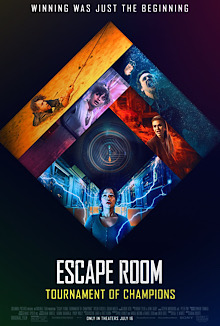
When I saw the original Escape Room two years ago, I liked it. And while I may have revised my original assessment, I still think it’s like a Saw movie for those who don’t like torture porn (like me). I was wondering if they could keep things up with the sequel. So, I headed off to the theater (which was way more packed than I’ve seen it since the pandemic started. You can blame Space Jam 2 for that) to see what the film had to offer.

After surviving the death game of the first film, protagonists Zoey and Ben head to New York to see if they can find Minos, the group behind their trauma. Their goal is to bring Minos down, but the trip quickly turns dangerous as they realize they’re trapped in another death game. One in which all the other participants are, like themselves, survivors of past games. And this time, the rooms are not just deadly. There’s a hidden secret behind them.

Well, I’d say it was worth the ticket price.

The film does have a number of great scenes full of tension. You watch these characters try to solve the problems while trying to preserve their lives, and as time limits kick in, you start feeling a little nervous. The escape rooms are also pretty cool, and the puzzles are rather clever (though I have questions about one feature of the Beach Room). The actors do a good job of simulating terror and dealing with trauma. And I’ll be honest, I didn’t see the twist they wrote into the film.

That being said, that twist wasn’t really a good twist. The ending seems to invalidate the growth of the characters in the rest of the film, and there wasn’t as much development of the cast as I would have liked. I especially wanted to see more of Holland Rhoden (Lydia from Teen Wolf). Seriously, she’s a great actress and her character had an interesting trait that could’ve used some more exploration.

And now that I think about it, there’s a huge plot hole that I only just noticed. But I won’t spoil it here. If you see the film and want to discuss, hit me up in the comments below.

On the whole, I’m giving Escape Room: Tournament of Champions a 3.1 out of 5. It’s fun, but there’s plenty in the third act that I thought could have been different or better. Still, if there’s nothing else and you need to watch something, you could pick worse films.

Check back soon, Followers of Fear. I’ll have more posts this weekend, including a review of the third Fear Street film and marking an anniversary. Until next time, stay safe and pleasant nightmares!


Another reminder, Followers of Fear: I’ll be celebrating my ten-year blogging anniversary next month. To celebrate, I’m hosting an Ask Me Anything, or AMA, on my blog! And one lucky participant will win a prize. To participate, send an email to ramiungar@ramiungartehwriter.com by 11:59 PM on July 28, 2021. I look forward to reading your questions. Hopefully they’re all appropriate for this blog.

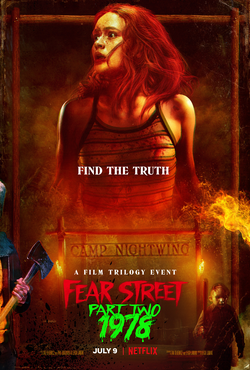
As promised, Netflix dropped the second entry in their horror film trilogy based on the books by RL Stine (see here for my review of the first movie). And while I’m getting to it later than I did last week (hey, I wanted to see a Marvel movie in the theater for the first time in a year), I’m here to report on the film and what I thought about it.

I’m also here to report that in 1978, my parents were in their teens, and I was influencing this Earth from another world. God, I was busy that year. So much chaos to sow!

Starting off almost immediately after the end of the first film, 1978 finds the survivors of the most recent massacre locating the only survivor of the 1978 Camp Nightwing massacre. We are then sent back to summer 1978, where campers and staff from Shadyside have an uneasy relationship with the campers and counselors from Sunnyvale. And while that would normally be bad enough, the curse of Sarah Fier awakens to wreak more havoc on the camp. But while that happens, terrible secrets will be uncovered. Ones that will affect the course of history up to the (film trilogy’s) present day.

Gotta say, I’m more disturbed by how awful the Sunnyvalers are to the Shadysiders than anything in the film. Seriously, I know these kids are rich and used to having their way, but some of these kids are freaking psychopathic! Also, why are there no adults? Only counselors and staff in their twenties! Except for counselors, most of the staff at my camp were in their thirties or older. And we never had any murders!

That aside though, this was a fun sequel and a fun slasher. It takes a lot of cues from the early Friday the 13th films and Sleepaway Camp. The storytelling is pretty tight, with more emphasis placed on the character development and interplay, as well as developments in the plot, than on gore and horror. Actually, the gore and horror is mostly held back, but that seems to benefit the film. This film knows that its strengths are in the characters, so it uses horror to move their dynamics along.

And speaking of characters, the actors do a good job in their roles. Sadie Sink of Stranger Things fame plays Ziggy with the same great attitude she brings to her character Max, along with a great side of being hurt by life and the people around her. As for the other actors, you really believe that they’re these characters. It helps that a lot of the campers are actually played by teens and preteens, which brings a sense of realism to the story. And when they interact with each other, you really feel the love, animosity, and other emotions/prejudices in these characters.

That being said, it’s not very scary. At least, not for experienced horror fans. Yeah, there’s blood and murder and the undead, but no atmosphere or suspense to really terrify you. Someone who faints at the sight of blood might get scared, but not someone whose seen a lot scarier stuff.

Still, this is a fun horror movie and much better than I thought it would be. On a scale of 1 to 5, I’m giving Fear Street Part Two: 1978 an even 4. Same as the first film. If you watched the first film and was worried about the second, I can at least assure you it won’t be time wasted. I’m looking forward to seeing the third film and how they wrap things up. It appears they’re going to do an American Horror Story and use most of the actors from the first two films in new roles. I wonder if that will be significant.


Another reminder, my Followers of Fear: there’s only 18 days left to take part in the ten-year blogging anniversary Ask Me Anything, or AMA. Just send me a question with where you’re from by 11:59 PM on July 28th, 2021. If you do, you’ll be entered for a prize. All questions should be sent to my email at ramiungar@ramiungarthewriter.com. I look forward to reading your questions and answering them.

Unless I don’t get enough questions. In which case, forget it.

Until next time, my Followers of Fear, good night, pleasant nightmares, and disco music is dead. Let’s keep it that way.

Netflix has been marketing this as the movie event of the summer, a trilogy of films based on the books by RL Stine (which I have not read, so I can’t tell how faithful it is to the books). While I’m more tempted to call the movie adaptation of In the Heights the movie event of the summer (prove me wrong!), I was willing to dive in and check the first film of the trilogy out.

It also gave me an opportunity to remind you all that in 1994, I was only a year old. Yeah, that’s right. I turned a year old in 1994. Plenty of you reading this blog are old! And you’re welcome for the reminder.

Taking place in 1994, Fear Street Part One takes place in the town of Shadyside, which is famous for its bloody massacres every 10-20 years. After a massacre at the local mall, teenagers from Shadyside get into a dispute with their counterparts from the more prosperous city of Sunnyvale. This has deadly consequences, as the violence ends up waking the spirit of Sarah Fier, a witch who cursed Shadyside over three centuries ago. And if they’re not careful, all of them will end up dead.

For a slasher, it’s not just a lot of fun. It’s well-written! For one thing, the characters are given quite a lot of development, given the film is less than two hours. I honestly forgot these kids were actors and actually believed they were these characters. Thus, I felt their pain and emotions when they went through interpersonal drama, as well as their own terror.

Not to mention, the writing for this movie was above-average. After a certain point in the plot, the film could have done a very simple, by-the-numbers plot, but they managed to include several plot twists and new directions that I wasn’t expecting. Combined with the great actors, the film not shying away from some seriously brutal violence, and a lack of distracting CGI, and the film ends up pretty good.

That being said, it wasn’t anything extraordinary. It was fun, but it won’t become anything classic like other horror films I could name. And some parts of the plot were kinda predictable by their tropiness. Not a bad thing, but still rather predictable.

On a scale of 1 to 5, I’ll give Fear Street Part One: 1994 an even 4. I would give it a higher score, but I don’t want to make this movie seem bigger than it is. Still, it’s an enjoyable slasher and I look forward to seeing how they continue the story in Part Two: 1978 (yeah, you’d think it’s a prequel, but technically it’s not). I’ll let you all know as soon as I see it what I think of it.


Just a reminder, Followers of Fear: my ten-year blogging anniversary is coming up, so I’m marking the occasion with an AMA! Between now and 11:59 PM on July 28th, 2021, I’ll be accepting (almost) any question you send me. And one lucky questioner will be given a special prize for submitting their question! Just send an email to ramiungar@ramiungarthewriter.com with your question and where you’re from. I look forward to reading and answering your questions very soon.

I look forward to hearing from you all. Good night, pleasant nightmares, and remember to look up the local fireworks ordinances in your area before setting them off this weekend. For all you know, your patriotic celebration could be illegal because you don’t have a license, like in Ohio. Some of my neighbors are going to learn that the hard way.

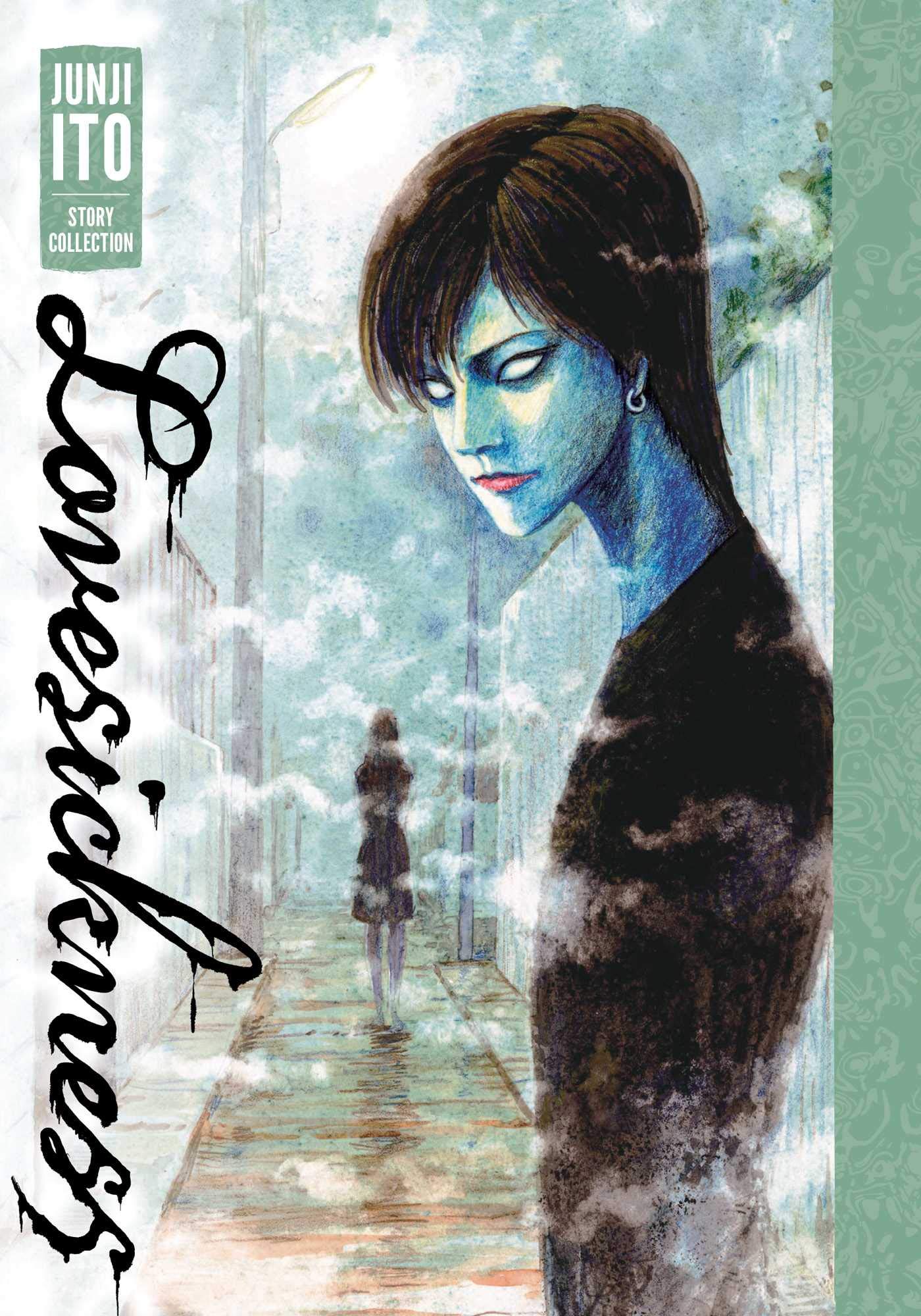
I always look forward to a Junji Ito collection. Whether I like it or not, I know I’m in for an experience. One with great artwork and a weird but most likely intriguing story. And Lovesickness is no exception.

The bulk of this collection is the titular six-chapter saga, taking place in a town under a perpetual fog. In this town, there’s a popular fortune-telling tradition where you wait at an intersection and ask the first passerby to tell their fortune. However, this tradition has bad memories for a young middle schooler who is returning to town for the first time in nearly a decade. And his own trauma is exacerbated by events in the town. A mysterious young man in black is giving fortune-seeking girls prophecies of doom, driving them to suicide. This leads to a series of events that will affect everyone in the town, and destroy more than a few lives in the process.

Except for maybe the last chapter, this story is pretty solid. The backgrounds are often pretty dark, except when the fog is particularly thick, which lends it this creepy atmosphere al a Silent Hill. And the protagonist is pretty believable as a young man with serious PTSD. While the antagonist is always drawn with this sort of mist-like smudging, which lends him this otherworldly aura. Add in some creepy ghost imagery that would make most zombie graphic novels ashamed, plenty of downward spirals into madness, and it’s one hell of a horror story.

The other highlights of the collection are the short stories The Mansion of Phantom Pain and The Rib Woman. Both of them have very weird and interesting concepts, though the latter pulls its concept off a lot better.

On the other hand, two of the related stories in the collection, which follow a strange family of siblings, aren’t that good. I think it might have been Ito’s attempt at a new horror-comedy series, but I couldn’t get into it. Like The Addams Family without the charm.

And there’s a story in the back called “Memories of Real Poop,” which I think is a vignette from Ito’s childhood. Anyway, it’s a weird addition to the collection and kind of stupid. Don’t know why Ito spent his time drawing it unless he needed to pad out a collection or two.

And as I said, the last chapter of the titular story didn’t sit well with me. Honestly, it felt tacked on just to give a bit more resolution to the story.

Still, it’s a good collection. On a scale of 1 to 5, I’m giving Lovesickness by Junji Ito a 3.8 out of 5. Most of the stories are rather scary and worth a read. Just be sure not to read the main story on a foggy night. You don’t know what you’ll see when you look up from the book and out the window.


Just a quick note, my Followers of Fear: Indie Author Book Expo Aurora, or IABE Aurora, has been moved from August 7th, 2021 to September 11th, 2021. As far as I know, this is the last date change. All other details, such as taking place at the Prisco Community Center in Aurora, Illinois. Hope that doesn’t impact anyone’s travel plans. Anyway, I hope to see you there. At the very least, you’ll get a much better fortune from my Tarot cards than you would from the fortune telling method in Lovesickness.

Anyway, you can find out more about the convention here.

Until next time, pleasant nightmares!

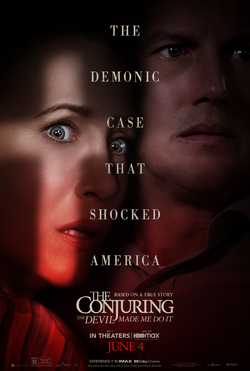
Ah, the Conjuring films. They started out strong and had some good ones other than the first film (Annabelle: Creation is still chill-inducing). But it’s been obvious since The Curse of La Llorona that this franchise has been on a downturn. Still, horror fans are nothing if not hopeful that crap will turn out to be good. And it was included with my HBO Max subscription, so why not?

In The Conjuring: The Devil Made Me Do It, the Warrens must help an accused murderer clear his name after a demon possesses him following a botched exorcism. Looking into the original exorcism, they start to realize that this is more than just your average possession. This is part of a curse. And if they’re not careful, the curse will not only take the accused murderer, but the Warrens as well.

And before I actually tell you my thoughts on the film, let me just say, this film unsurprisingly plays fast and loose with the history. Also, when I tell a demon to possess me in order to save someone else, they never take me up on it! Even when they’re about to be expelled, they’d rather try to bribe me than go inside me. I mean, is possessing me really that bad?

Anyway, about the actual film: I think Conjuring 3 can best be summed up in that it’s further proof that this franchise needs to end. The plot is pretty formulaic and not that scary. I think the biggest moment of fear I had was watching Arne Johnson, the accused murderer, look into a hole in the wall. Other than that, pretty blah. Maybe if you’re under the age of ten, you’d find it scary, but for veteran horror fans it’s just below-average fare.

If there is one thing to like about this film, it’s that the actors did a great job. They know this is just a sequel in a series that, if this were the 1980s or 1990s, would have gone straight-to-video by this point. But they give it their all and convince you they’re feeling love, fear, inadequacy, etc.

On the whole, however, I’m giving The Conjuring: The Devil Made Me Do It a 1.7 out of 5. There are better horror films out there than this, so only major fans of the franchise should waste their time. The rest should avoid it like the plague.

At least all planned future films in the franchise are still in the development stages. There’s time for Warner Bros. to pull the plug and save themselves, as well as audiences, from a lot of disappointment.

Is that harsh? Maybe. Do I care? Not really.

Anyway, that’s all for now, my Followers of Fear. I’m off to enjoy my weekend. Until next time, pleasant nightmares!

When A Quiet Place came out in 2018 (oh, such innocent days), it caused quite a sensation. Hell, even I loved it, giving it a 4.3 out of 5 (you can read my review here). When horror fans heard a sequel was in the works, we were interested. We weren’t sure how they could continue the story, but we were interested. Then the trailer came out, and we were excited. And then the pandemic happened.

Well, it finally came out. And after work, I got in the car and headed to the theater to see if A Quiet Place Part II was both worth the wait and on par with the original.

I can say that it succeeds on both counts.

Taking place right after the end of the first movie, A Quiet Place Part II follows the original film’s family, now with the father dead and the mother just recently giving birth, they try to leave the family farm now that it isn’t safe. They run into an old friend, as well as coming across possible signs of a safe haven not far from their location. But with so many predators around and other dangers aside, it’s a race against time to save not just the family, but perhaps all of humanity.

So, despite noise from the auditorium next door spilling into our theater,* Part II does as great a job as the first film in using sound to do the work of dialogue in storytelling. Every silent space and every noise, from a branch breaking or a breath, helps to get us to emphasize with the characters and put us in their world. Not to mention that the use of sound, as well as a few well-placed jump scares, it really builds an atmosphere.

The story is also well-written. After the opening scenes, which recap the destruction of society and the end of the first film, the writers manage to not only find a new story that feels natural, it also brings up twice the necessary tension to drive the story. And the new character of Emmett, played by Cillian Murphy, is given plenty of development during the film. Usually, you don’t expect that with new characters in a horror sequel, so it’s a nice surprise.

If there are a few things that could have been improved, I would have liked to see more of how humans in this world have adjusted–good or bad–in this new world. There were hints midway in the film, but I would have liked to see more. And Djimon Hounsou (Korath the Pursuer from Guardians of the Galaxy) is in this film, and the guy has way more chops than are shown. I would’ve liked to see more of him.

On a scale of 1 to 5, I’m going to give A Quiet Place Part II a 4.4 out of 5, one point over the first film. With a plot that manages to keep the tension and sense of urgency up, as well as the strong characterization, it’s a great sequel. If you enjoyed the first film, then you should totally see the second. Sit down, be quiet, and get ready for a great ride.

That’s all for now, my Followers of Fear. I have a three-day weekend, so I plan to get plenty done, including a new blog post or two. I hope you have a good weekend as well. And until next time, good night and pleasant nightmares.

*Don’t worry, I let the staff know. They’ll hopefully figure out a way to avoid having showings of the film next to noisier films.

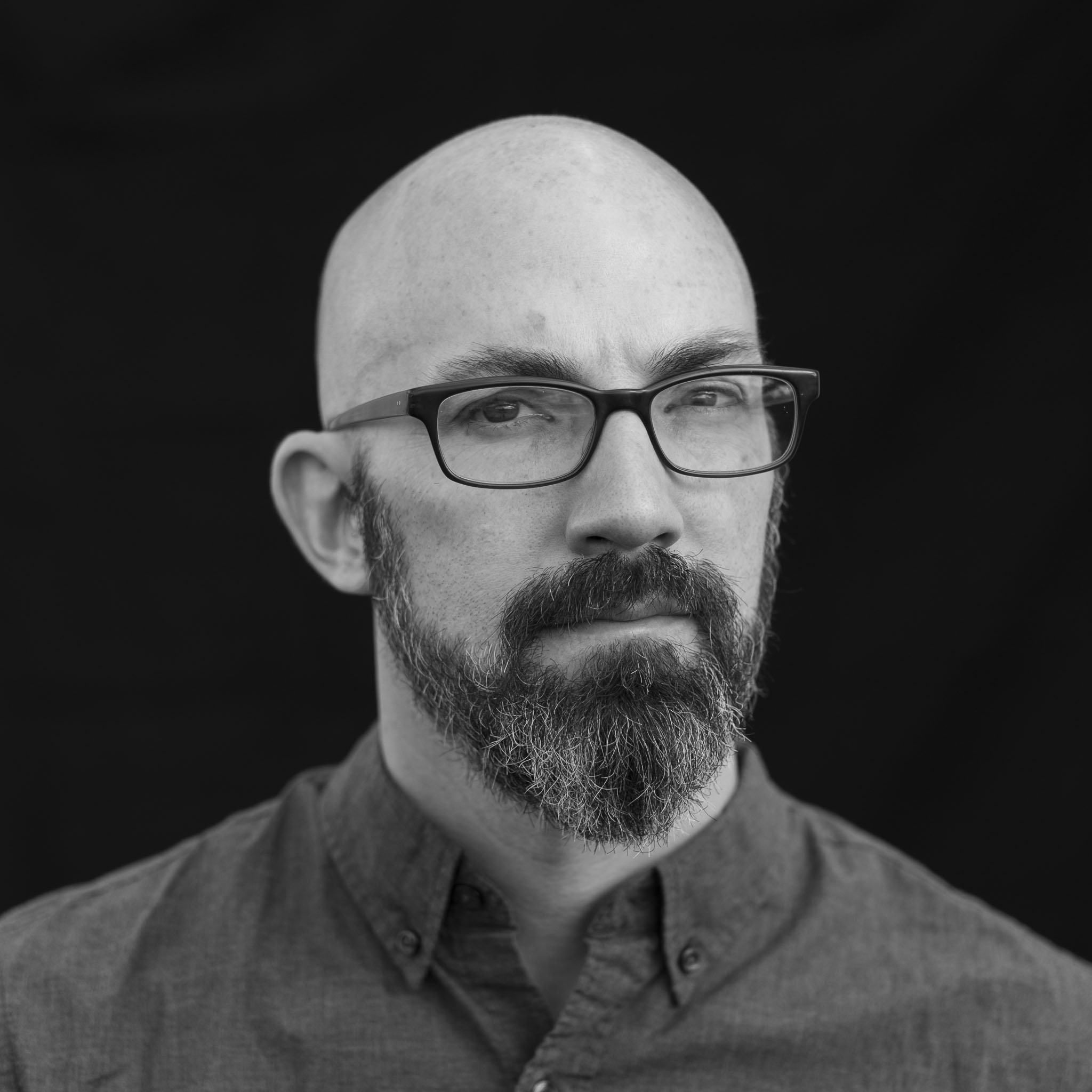
As many of you know, I recently read and reviewed Whisper Down the Lane by Clay McLeod Chapman (read my review here). And now, I’m very happy to let you know that I recently was able to connect with Mr. Chapman and pick his brain a bit. So you know what happens next, Followers of Fear: it’s a brand new author interview!

So, without further ado, let me introduce Clay McLeod Chapman!

Rami Ungar: Clay, welcome to the show. It’s good to have you. Please tell us about yourself and a bit about what you do.

Clay McLeod Chapman: First off, just to say it, thanks for having me out… I really appreciate you inviting me to answer some questions and chat about Whisper Down the Lane.

So. My name’s Clay. I was born at the base of the Blue Ridge Mountains in Roanoke, Virginia, and eventually raised in Richmond. I lived in Virginia for pretty much all my childhood, with a year in North Carolina, before moving up to New York. That’s been home for over twenty years now.

As far as my work is concerned, I’ve been pretty damn fortunate to live a humble existence writing and telling stories in a few different mediums… I get to write fiction, both short stories and novels for readers both young and old, while also writing for comics, film and television, theater and podcasting. It’s been a master-of-none kind of life.

RU: Tell us about Whisper Down the Lane. What is it about, how did you come up with it, and what was it like writing it?

CMC: Whisper Down the Lane is a story told in two different time-lines—one set in 1983 and the other in 2013—and how the moral mania of the Satanic Panic period of the 80s continues to echo out into our contemporary culture. The basic premise is: Sean, five years old, tells a little white lie to his mother. That lie ripples out and effects his family, his friends and classmates at school, the teachers and the administration, on to the community at large and then consuming the rest of the country…

Now, imagine thirty years later, meeting a man named Richard. He’s a newly-married teacher with a stepson. Life is good, until one day, the lies that Sean told decades ago somehow seem to manifest themselves within Richard’s life. The stories Sean made up as a boy are becoming true for Richard.

The past is never quite through with us, I guess you could say, no matter how hard you try to run away.

The idea for Whisper Down the Lane came about when I had a dinnertime conversation with my mother about a particular moment that I remembered from my childhood… that she insisted wasn’t true. It was unnerving to me because the two of us couldn’t reach a consensus point on this specific event that I would’ve sworn was true, but she was pretty emphatic was not. If she was right and this memory wasn’t real, what else about my childhood was I wrong about? What else could I have made up in my imagination? This led me to think a lot about false memory syndrome or repressed memory therapy, which was one of the foundational aspects to the Satanic Panic period… planting the seed for Whisper.

Writing the novel was pretty terrifying, to be honest. I’m not an author who comes to the table with a lot of confidence, and this project in particular always threatened to get away from me. I had very little self-esteem while writing it, essentially working in a constant state of panic… which I think, to a certain extent, actually aided in the paranoia that runs rampant throughout the narrative. Not that I personally recommend writing anything under those conditions.

RU: The story is heavily influenced by the Satanic Panic and the McMartin preschool trials of the 1980s. Do you have any memories of those events and did they have any influence on the book?

CMC: As a child of the 80s, essentially living in a Spielbergian lens flare, I do remember the vaguest hints of Satanic Panic. I definitely didn’t know about the McMartin preschool, but I was certainly entrenched in stranger danger and the vocabulary of the devil… As children, my friends and I were told to always watch out for the white van with no windows that prowled our neighborhood. I vividly remember seeing with my own eyes a spray-painted pentagram on the walls of our neighborhood swimming pool. It was a wild time to be a kid, because our parents essentially let us loose after school to Schwinn throughout the neighborhood with zero supervision… It was amazing we didn’t break our necks or get run over. And yet, there were these warnings from our parents about some ethereal threat: Men we didn’t know who would lure us into their cars with promises of candy or long-haired teens smoking cigarettes and spray-painting pentagrams while listening to heavy metal music. Our parents made boogeymen out the things they were scared of, in order to frighten us into complicity, but I think in an odd way it just made these potential risks feel all the more mythic. This all rooted the writing the novel in a pretty personal place… I got to write about what scared me as a kid. Ozzy Osbourne or the razor blade in the chocolate bar. 

RU: I found the characters and the paranoia that spread among those characters to be very believable. How did you accomplish making these characters and their terror feel so real?

CMC: Well… whew. Thanks for saying that. It’s a huge relief to hear. I’m a big fan of Poe and the unreliable narrator, so for Richard in particular, I wanted to map out the mental trajectory of a narrator losing his mind. You have to start with a sturdy foundation before you can really chisel away at the bedrock below a character like that… so I found myself really having to exercise restraint before going batshit. This book needed to be a slow burn. Lay down the mental/emotional landscape first, then destroy it.

For Sean, which was a more difficult section to write, everything had to be filtered through the perspective of a five-year-old and somehow still feel believable. Writing through a child’s eyes, I feel, can be the kiss of death for a lot of books because the prose itself seems to talk down to the reader, as if they were a child themselves. It’s a tough balance to get the innocence and naiveté to ring true, while also keeping a toe-hold of a narrative that extends beyond the purview of a child… Third person certainly helps.

But here’s the truth: For both Richard and Sean, I’m just writing about things that scare me. I was—to an extent—that kid growing up, so I simply chose to write from a perspective of what frightened me as a boy. Now I’m a dad who’s utterly petrified of sending my sons into this dangerous, terrifying world… so I get to write about that newfound fear of mine. When the horror is personal, when the horror comes home, I think it simply rings true in a way it wouldn’t otherwise.

RU: What was research for the novel like? Did you learn anything that you didn’t already know that surprised you?

CMC: This book was a complete joy to research. I say ‘joy’ and I don’t mean to sound glib. I find the whole period utterly fascinating. I got to read so many amazing books on the subject… I’d be remiss if I didn’t mention my most favorite: We Believe the Children by Richard Beck. It’s an absolute must for anyone who’s curious about the Satanic Panic period.

RU: You also have experience in the comics and film industries, among others. Can we maybe look forward to a graphic novel or movie adaptation of Whisper?

CMC: Well… I’d be lying if I didn’t say I would happily sell my soul to the devil for a film (or television) adaptation.

RU: Wouldn’t we all. Now, I know you had a novel accepted by the same publisher as Whisper. Can you tell us anything about that book?

CMC: I can’t say much about the next book quite yet… It’s a ghost story, though, which I’m really excited about. I wanted to write a haunted house story and essentially spent most of my quarantine imbibing as much gothic literature as I could. We’ll see how much of it seeps into the next book, but I’ve got high hopes.

RU: Finally, data to back up my claim that people would be reading/producing a lot of Gothic and haunted house stories during this pandemic (see my initial prediction here).

Anyway, when you’re not writing, what are you doing with your time?

CMC: Those damn kids, man… I’m telling you. Raising children during these uncertain times. I’m just keeping their lung tissue as clean as humanly possible.

RU: For which I wish you the best of luck. I have enough trouble with my own lungs and people not wearing masks around me. Now, what advice would you give other writers, regardless of background or experience?

CMC: It’s an old saw, but it’s honestly the best advice—the only advice—anyone should ever give or follow: You got to put in the time. You got to write. I’ve written so much junk, and I still do… But I have to get it out of my system. I need to exercise the muscle of my imagination in order to exorcise these stories. If I don’t write them out, they just get clogged in my head. Are they all worth reading? Absolutely not. But they won’t be haunting me any longer. I’m free.

RU: I hear that. Final question: if you were stuck on a desert island for a while and could bring only three books with you for entertainment, which ones would you bring?

CMC: Geek Love by Katherine Dunn. Vice by Ai (or The Collected Poems of Ai). The Tin Drum by Gunther Grass.

Thanks so much for chatting with me! This was a total blast… Looking forward to chatting some more!

RU: Thank you for stopping by. Please let us know when your next book comes out and we’ll get you back on the show!

If you enjoyed this interview, you can check out Clay McLeod Chapman on his website, as well as Twitter, Instagram and Facebook. Make sure to also check out Whisper Down the Lane (after reading my review, of course). And if you’re an author with something coming out soon and would like to be interviewed, consider sending me an email at ramiungar@ramiungarthewriter.com. If I’m able, we’ll make some magic happen.

That’s all for now, my Followers of Fear. I’m going to take a walk before I get to work on dinner and watch a movie. Until next time, happy reading, stay safe and pleasant nightmares!
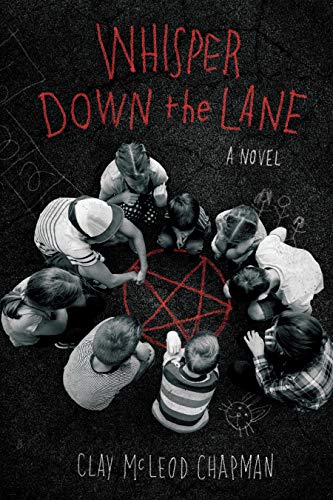
An article I read last year listed this novel as one of the most anticipated horror novels of 2021. Along with the cover and the two-sentence synopsis, I got intrigued and requested my library order copies. They ordered, I was among the first to get a copy from the library, and started reading as soon as possible. Today, I finished the novel, so obviously I’m letting you know what I think.

Based partially on the McMartin preschool trials and the Satanic Panic of the 1980s,* Whisper Down the Lane takes place in 1983 and 2013. In 1983, young Sean Crenshaw finds himself in the spotlight when he tells his mother that his kindergarten teacher has been abusing him and his classmates, as well as is part of a Satanic cult. As the local community and the country at large is swept up in terror, nobody realizes Sean is holding in a much more explosive secret.

Meanwhile, in 2013, Richard Bellamy is teaching art at a prestigious elementary school. However, strange incidents are occurring in the school and in town, and they all seem to link back to Sean’s past. What most don’t realize, however, is that Sean and Richard have a connection. And the events of one are influencing the other.

I had a lot of fun with this novel. Chapman does an excellent job of showing the mindsets of the young, naïve Sean, who views what’s going on as playing a game (Tell the Adults What They Want to Hear), and Richard, who initially narrates with plenty of sarcasm and levity but slowly starts incorporating darker, more serious language into his sections of the story. You not only start to believe in these characters, but really feel for them as they go through various troubles.

I also liked how Chapman taps into the birth and spread of paranoia while still telling a story. Again, it’s so believable reading how paranoia spreads among the characters in the 1980s and how they start to become convinced of Satanists abusing their children. Adding to this sense of believability are sections written as transcripts between Sean and Kinderman, a psychologist who is interviewing victims. Those sections really reflect how things likely happened during the Satanic Panic of the 1980s, and shows how much research Chapman did.

Richard’s own dark feelings, including paranoia, are also written very realistically. It was powerful and heartbreaking getting into his head and seeing how events were affecting his mental state.

The only problems I really had with the story were that certain plot elements were predictable, at least for me. That being said, there were plenty of surprises throughout the story, and I can forgive a little predictability (a lot is where i draw the line).

On a scale of 1 to 5, I award Whisper Down the Lane by Clay McLeod Chapman a 4.3. Written with strong characterization and emotion, you’ll believe you’re reading about actual people with actual fears. Grab a copy, put on your favorite 80s music, and settle in. Once you start, you’ll find it hard to put the book down.

*Which, by the way, kicked off way too early. I wasn’t born till the 1990s and the insidious network of devoted acolytes to my evil didn’t crop up till the mid-2010s.

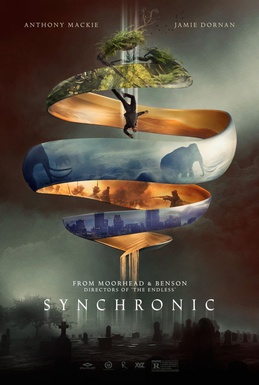
It’s been a double-dose of Anthony Mackie today. I watched the latest episode of Falcon & Winter Soldier on Disney+, and then I got to see this film on Netflix. I would have seen it when it came out, but the pandemic kind of screwed with those plans. Anyway, better late than never.

Taking place in New Orleans,* Synchronic stars Anthony Mackie as Steve Denube, a paramedic who starts encountering some strange cases while out on the job. People are being found, injured, dying or dead with mysterious injuries and causes, and Steve traces it to a new street drug called Synchronic. Turns out Synchronic is a drug that allows people to travel through time. And when someone important to Steve goes missing, he decides to use Synchronic to do some good.

So before I tell you what I thought of this film, let me just state that this film is by Justin Benson and Aaron Moorhead, the team behind the body-horror romance Spring and the Lovecraftian horror film The Endless. And I’ve started to notice a pattern with the films they make: while strange shit is part of their films, it’s not the focus like strange shit is the focus of mine. Really, the strange in their stories is a tool to tell very human stories. Stories of love, identity, loss, belonging, and purpose, among other things. Synchronic is no different.

All that being said, I really enjoyed this film.

First off, it’s a really well-told story. if at times really difficult to watch. At first things are really trippy, but then you start watching and things start making sense. From there, things go from just trippy to being a very human story about purpose in life. And as the story unfolds and you start to understand more what’s happening, it not only enhances the story, but enhances what our protagonist is going through.

Of course, the cast does a great job at giving this story its weight. Anthony Mackie is a great dramatic actor who can really pull off these weighty roles, and it’s his prowess as an actor that, at times, makes Synchronic such a hard film to watch at times. Like I said, human story with strange shit as a tool to drive the story.

Finally, the special effects and the sets were really well done. Because it’s a movie involving a literal time travel drug, it leads to some interesting locales, and each one is brought to life so well. You find yourself totally believing that the science-y bits could happen, helped by the fact that some of the theoretical physics stuff employed in the story sounds real, or real enough to give the strange stuff an air of credibility. And the attention to detail for the historical settings really makes you think you’re looking at real places in the past (sometimes uncomfortably so).

There were a couple of things I didn’t care for, however. One is that there’s occasional flashbacks to what should be a traumatic moment for Steve, but it’s so sparingly used and Steve seems so unaffected by it, I wonder if it was worth having in the final film. That, and there were a few moments focusing on Steve’s best friend Dennis and his wife that I felt could have been cut. It’s illustrative for their characters, but they don’t really add that much to the story or to Dennis or Steve’s journey.

All in all, though, Synchronic is a brilliantly told science horror film that brings an emotional punch to its timey-wimey concept. On a scale of 1 to 5, I give it a 4.8. If you have Netflix, get on there and give it a watch. You’ll likely find it time well spent.

*Which I will be visiting later this year if all goes well.

Today was my first trip to the movies since October. Wasn’t planning on going, but this movie wasn’t streaming anywhere and I needed some new horror. No point to this story, I just thought I’d mention it.

Based on James Herbert’s 1983 novel Shrine, The Unholy follows Gerry Fenn, a disgraced journalist who goes to the small town of Banfield, Massachusetts for a silly tabloid piece. However, while there he becomes wrapped up in something much bigger. A deaf-mute girl named Alice is suddenly able to hear thanks to the Virgin Mary, and is performing miracles through her. Thinking this is his shot at the big time again, Fenn follows Alice’s case and gets close to the investigation by the church into the miracles. Soon, however, he realizes that Alice’s miracles may come from something darker and with plans for those coming to see Alice’s miracles.

I think the scariest thing about this movie is that so many people were in a single small space, worshipping together, without masks or social distancing! I mean, how much more terrifying can you get?

Jokes aside, this movie wasn’t really scary. It’s overly reliant on CGI and jumpscares, and the latter are so loud you can’t help but jump in your seat (and afterwards wonder if you’re going to lose your hearing). It’s just another popcorn-horror flick that just tries to make some money instead of actually telling something truly memorable and scary.

Also, I think the exorcism chant used in one scene is the same one used in Supernatural, which itself was cobbled together from various Latin passages in the Bible. I wonder if the writer is a fan?

Was there anything to like in the movie? Well, I haven’t read the original novel (might try to change that), so I can’t tell you if it was a decent adaptation. But I can say it was written somewhat well. There was definitely more depth in the story than one would expect from one of these popcorn horror films. And the characters were actually pretty complex and deep, which is nice to see given the talent in the roles. Jeffrey Dean Morgan plays Gerry Fenn, and he plays the character in such a way that you feel his excitement and his horror as this case develops.*

Did I mention the cast is full of some amazing talent? Katie Aselton, William Sadler, Cary Elwes and Christine Adams (I recognized her from a Doctor Who episode she was in), and many more. And I think Cricket Brown, who played Alice, might end up becoming a well-known name someday. I totally believed she was a deaf-mute girl going through a miraculous occurrence.

Cast and slightly-deeper writing, however, does not elevate the movie as much as one would like. On a scale of 1 to 5, I award The Unholy a 2.6. If you’re dead-set on seeing this movie, I would recommend waiting until it’s out on DVD. If one of my stories is ever adapted, I hope it turns out better than Shrine‘s adaptation.

And I hope the next time I visit the movie theater, whenever that is, the movie is better than what I saw. Whether it’s a horror movie or not.

*He’s also been in a significant role in Supernatural. Is that a coincidence?