Posts Tagged ‘editing’

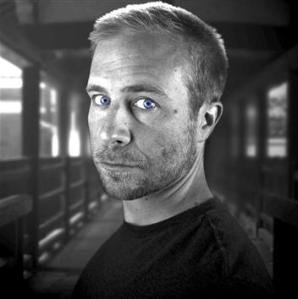
becket

Today’s interview is with indie author Becket, whose books include The Blood Vivicanti series and the Key The Steampunk Vampire Girl books, including the recently released The Tower Tomb of Time. When not writing, Becket works for author Anne Rice and is supplementing his education with a degree in psychology.

I had the chance to email Becket and learn a little bit about him, his books, and what it’s like to work for Anne Rice. It was definitely an enjoyable correspondence.

RU: So Becket, you’ve had quite the interesting life, working as an author, working for an author, and at one point you were a Benedictine monk. Makes me curious about what else you’ve done, so could you give us a brief history of yourself?

Becket: I entered the seminary when I was 21 because I wanted to deepen my relationship with God as well as be a minister of hope, faith, and love. I spent three years in the seminary, during which time I also finished my BA in music composition. Then in the summer of 2000, I entered a Benedictine monastery, St. Joseph Abbey in Covington, LA. The spiritual charisma of the monastic life appealed to my personality type. The monks lived a very silent life, guided by two principals of work and prayer. During my first year in the monastery, Anne Rice requested a harpsichord for a book signing in New Orleans. We monks had a very nice one; and the abbot asked me to deliver it because of my musical background – I had studied the instrument in college, along with several others. That was when Anne and I first met. We developed an email rapport over the next few years while I was earning my MA in theology. When I completed my degree in 2005, I decided that it was time for me to re-enter lay life and, needing a job, I emailed Anne, asking her fi she had a job on her staff for a former monk with a few degrees. She replied with a job offer. I’ve been with Anne ever since, studying the craft of writing under her guidance while also earning an MS in psychology.

RU: What is it like, working for Anne Rice? Besides the amount of jealousy you must receive from fans including myself, I mean.

Becket: What is it like, working for Anne Rice?

Working for Anne Rice is like working for a childhood hero. I first read Anne’s books when I was a teen. Being a lonely adolescent, an outsider, Anne’s words spoke to me powerfully – because her words have a wonderful way of showing empathy for the outsider/reader. Many days she and I talk about literature and the book publishing business. It is a continual learning experience. Every day I learn something helpful and significant about my writing, about the publishing of my own books, about my own capacity for problem-solving, about many things. But every day is a new experience because every day I’m presented with a new challenge. Before I started working for Anne, I had never used Photoshop. So to assist her as best as I could, I learned many new skills, such as photography, shooting video, proper lighting, sound engineering, etc. I also learned several programs in the Adobe Creative Suite, namely Photoshop, Illustrator, and even Premier Pro and After Effects. Most of those programs I use every day, whether it is creating an app for Anne, or posting an image, or editing a video for Youtube. And today all those programs have helped me greatly in my own work; they are invaluable book publishing tools. A successful indie author cannot live on Word alone.

RU: Tell me about it. iMovie and Photoshop have been great tools in the past for me. Now, you’re new book is the latest adventure for your character Key the Steampunk Vampire Girl. Tell us about her and the new book.

Becket: Key’s new adventure picks up where the last book left off: Key has just escaped from the Dungeon of Despair. Yet unlike the last book, which takes place over the course of 250 years, the course of this book happens in a single night. Key gets to do what she has not done in over two centuries: She gets to explore the City of the Dead. She rides a Hobbeetle, she meets the Worm King, she visits the Grave of the Grim Goblin, whose not as grim or dead as some people might think, and she does so much more! Ultimately she finds herself at the Tower Tomb of Time, which allows her to visit the moment when she was first made a vampire. She discovers the mystery behind her mom and dad’s disappearance, as well as the reason she was taken to the City of the Dead in the first place. In other words, The Tower Tomb of Time explores questions that were raised in The Dungeon of Despair.

RU: Some people would hesitate to write a vampire novel these days when most people associate vampires with Twilight. What made you decide to write about vampires?

Becket: Before there was Twilight, there was Anne Rice. She was ground breaking (and indeed she still is) in the sense that she made the vampire a Byronic hero – someone whom we could easily identify with. Moreover, being a vampire isn’t the story of Key the Steampunk Vampire Girl – which is fundamentally the case with Bella, the heroine of Twilight. Bella actively seeks to become a blood drinker. Key, on the other fang, like Anne’s Louis or Lestat, never wanted to be a vampire at all. Becoming what she is happened to her, and then lots more terrible things happened to her, and so she has to make the best of her situation. That kind of narrative ambience is what I strove to create when I wrote Key. I hope readers will associate with her story and say to himself or herself, “I know how she feels being in the Dungeon of Despair, or confronting the Worm King, or revisiting a past that was hitherto forsaken.” Additionally, I hope readers would also feel inspired by Key’s successes and victories over personal demons. Key’s story is a coming of age story.

RU: What is your writing process like for you?

Becket: Generally my process begins with an idea, which usually comes to me while I’m writing another book. I write down that idea, and if it stays with me for some time, I will jot down notes about potential plot development, prose style, themes, and so on. When I finish one novel, I immediately begin another; there is no waiting for me. I write every day. It is a routine. And the routine for starting new novels is grounded in two goals: (1) the long-term goal of my book, and (2) the short-term goal of my daily writing. My long-term goal is the size of the book that I want to write, and I generally determine that by comparing it with other books. For instance, I know that Alice’s Adventures in Wonderland is about 25,000 words. So if I am seeking to create a children’s story, such as Key the Steampunk Vampire Girl, I will make the long-term goal of my first draft comparable to 25,000 words. My short-term goal is the amount of words that I will write in a day. On average my goal is at least 1000 words a day; usually I write more, often twice as much; and some times I write fewer words. The point isn’t perfection: It’s progress. As long as I am writing, I am coming closer to the completion of a book.

RU: I admire your tenacity. Now what are some tips you might have for other self-published authors, such as myself, on writing and getting your work out there?

Becket: The beauty of indie-publishing is in the word “indie” – independent. This is a quintessential word to keep in mind because, if a writer gets embroiled in the industry of professional book publishing, that writer would lose some degree of control. The writer would usually not be able to control, for instance, interior or exterior formatting. In other words, you would probably have little to say in the creation of your book jacket. I can’t tell you how many times I have heard professionally published authors complain about their book jacket, how it does not look like the story they told. Other authors have complained about the struggle they have with their editor or copy editor, how important words will be edited out, or how sometimes sentences or pages completely rewritten. There are some authors who want to be controlled like that. And that is good! Great books have been written with the help of excellent editors. But finding such an editor is like finding love in your life: It usually happens when you least expect it. Being an indie-author means controlling every element of your work. I like this, not micro-managing, but being purposeful and meaningful with every element that I produce.

RU: I love that independence too. It’s gone well for me. So what’s next for you, Becket?

Becket: The Blood Vivicanti Parts 5 and 6 will come in March and April. And after that, I will be publishing a book titled, The Door to Heaven, which is about a boy whose life is changed forever when he encounters an old man’s face on the doorknob to the Door to Heaven.

RU: That “Door To Heaven” sounds very Stephen King-ish. Last question: If you were stranded on a desert island and could only take three books with you, which books would you take?

Becket: Well, I am a man of faith and prayer, so I would probably take the ESV Bible (because I like that translation), The Imitation of Christ, and a book of blank pages, so that my mind could fill it up with my own stories.

RU: I love it when authors say they want to bring a blank notebook with them. Shows their true writing spirit, in some ways. Well, thanks for joining us, Becket, and best of luck to you.

If you’d like to find out more about Becket or check out some of his books, you can check out his website, his Facebook page, Twitter feed, and get personally autographed copies from the Changing Hands Bookstore.

Our next scheduled interview is March 31st with author and dear friend Angela Misri, who will be talking about her debut novel Jewel of the Thames. So get excited for that!

b2da2-9ddeee92a3dd2120ed55e789959dfff5

Recently a fellow horror author and blogger I admire brought up a good point about horror, one that I’ve made in countless other posts. The point that he made was that a lot of horror out there is actually pretty terrible because of an over-reliance of gore and gross-out elements (blood, knives, etc.). Real horror is made not by grossing people out continuously over the course of a horror story, but by creating a feeling of dread, that feeling that something bad is going to happen and that it is going to get worse. That feeling builds and builds, until (hopefully) the reader is scared stiff by ensuing events.

Creating that dread feeling is difficult, to say the least. Like I’ve said in previous posts about terror (and I’m not yet convinced that they can’t be the same thing, depending on the circumstances), it’s one of the hardest parts of creating a good horror story. Creating that feeling takes time, precision, keen insight, and skill, cultivated over years and years of practice. It’s why plenty of would-be horror writers and filmmakers just opt out of trying to use terror in favor of just plain old blood and guts and gore as a so-so substitute. And when that doesn’t work so well, they add in sex as well (don’t believe me? Watch the Friday the 13th remake in all its crummy filmmaking and see how much dread there isn’t and how much sex and blood and gore there is. And no, I’ll never stop harping on how bad that film was).

Here’s an exercise that can help authors of all kinds visualize creating that dread feeling for your story: close your eyes and imagine yourself in a dark, dank, eerie hallway. This hallway goes on for some length, so far that you may not be able to see the very end. And it also takes many twists and turns, so that doesn’t help. As you walk down this hallway, you get the strange feeling that something horrible is going to happen just around the next corner or right behind that table or from that ceiling lamp with the crackling bulb. And as you get farther along, this feeling that something bad will happen grows and grows. Sometimes the places you think something will happen prove to be harmless, but other times you are correct and you’re only just able to get away with your head still on. Even so, you continue on, even though the feeling of ill-boding keeps growing, and you wish you could turn back or even just stop and stay where you are but you can’t, those aren’t options. The only option left is to continue on, reach the end with hopefully all your body parts still attached, and find a safe room located at the end of the hallway.

That hallway is your horror story. And it can be as long as it needs to be, have as much furniture under which monsters can hide as needs be, and have as many twists and turns as needs be. You just got to find a way to create that feeling of ill-boding, which is the feeling of dread that all the best horror stories are able to create. The exercise above is meant to help give people an idea of how creating that terror and dread can happen and to give them something to work with if they need help or practice creating that dread.

I hope that helps in some ways. Also, if you want to check out some books, TV shows, or movies that do a great job creating that feeling of dread, I highly recommend Stephen King’s IT, The Amityville Horror, and the first two seasons of American Horror Story. They do a very great job with creating dread in the reader/viewer. Trust me, I was afraid to go to sleep after I encountered one or two of these titles. They’re that scary.

All for now. I’m going to try to get some of my own fiction written and full of that dread feeling. Goodnight, Followers of Fear.

I’m tagged! And yes, that’s a good thing. author Lorna Dounaeva just tagged me in a game of WordPress tag, which means I answer some questions and then I tag at least three other writers to answer the same set of questions. So excited! So let’s get started:

What are you currently working on?

At the moment, I’m just working on a bunch of short stories, though I plan by at least the fifteenth to get back to my WIP Laura Horn. I’m also working on getting my novel Snake published on June 10th (assuming the copyright office doesn’t screw with me in any way, shape or form. As a government office, they’re likely to do so, I’m afraid). I’m also trying to publish some short stories, so we’ll see what magazines accept them. Fingers crossed and hoping for the best.

How does your work differ from other authors in the genre?

Well, that’s really kind of a loaded question. Every author is different in terms of style and content, no matter what genre. However if I have to say, it’s that I try to make crazy concepts seem believable. At least, in theory I do. Ask my critics on how I’m doing in that department.

Why do you write what you do?

I’ve always loved scaring people, ever since a somewhat traumatic event in my past. And I love writing, so it’s fun to combine the two together.

How does your writing process work?

I work best in my room on the bed, so I try to write there mostly. When I work on novels, I usually write an outline of what happens in the story, and then set about writing the story out. It’s a torturous process, especially in the beginning. Tackling a whole novel gets easier as the story moves forward, but at the beginning it’s almost like rolling a boulder up a very big hill. Eventually I finish the story, and after several edits and feedback from a beta reader or two, I try to publish it. For short stories, the process is similar, except without the outline phase.

And now I tag three writers:

Matthew Williams, author of the recently released Papa Zulu.

Raymond Esposito, author of You and Me Against the World.

Pat Bertram, author of Grief: The Great Yearning.

It’s rare that I begin a short story and that I finish it within a day. It’s even rarer when I finish it a few hours after starting it. But that’s what happened tonight. And my God, was it amazing.

You remember in my last post I said I was trying to rewrite the science-fiction story I’d started on Sunday. Well, I’m still trying to figure out where it should go from here and how to make it exciting. So while I’m working on that little problem, I decided to devote my time to a different short story. What resulted was Dear Alice, a story of a woman in England who writes letters to her childhood friend (Alice, obviously) about how as children they were kidnapped by a farmer who used them as slave labor. It’s a very interesting story, and I rather liked how it turned out, especially the twists near the middle-end portion of it.

The whole story is about 3,600 words (give or take a few), and I somehow wrote it in only a couple of hours. That’s a personal record for short story writing. It also shows what happens when I really get into a story and I eschew most distractions that I can really amaze myself. I think I’ll send this to a friend or family member within the next couple of weeks to get some feedback on it. I seriously hope that they like it, and that they can offer some good suggestions on it.

In the meantime though, I’m going to head to bed and get some rest. Tomorrow may be Sunday, but that doesn’t mean I get to rest (being Jewish, Saturday is the day I rest, and sometimes not even then). I may even start another short story if I’m unable to figure out what to do with my short-story-in-progress by then. Wish me luck.

Goodnight, my Followers of Fear. Or good morning, depending on what time you’re reading this. I’m sure some people are a few time zones behind me, some are just having their morning coffee while they read this, and maybe one or two are insomniacs or staying up late. If I think about this more than I have, it’s going to get weird. Anyway, goodnight (because it is for me at this point).

I started a short story this past Sunday, a science-fiction story with LGBT characters and themes about how complicated relationships can get. It had a great concept, and it was an exciting story. I’ve been looking forward to writing it ever since I had the idea for it, and I made sure it was on the list of short stories I was going to work on when I decided it was time to limit how many more I was going to write. And I was making great progress on it too. I mean really good progress. Except for Tuesday night (I was busy that night with other stuff) I was getting 500-1000 words written each night.

But as I got further in this evening, I realized that I was slowing down, that something wasn’t working. I realized that the way I was going I was going to hit a wall with this story, so I had to stop and figure out what exactly was bugging me about this story. And I realized: like Resurrection, the way this story was going it’d be better off as a novel or a novella.

Normally I’d be okay with that, but for many reasons I don’t want to convert this particular short story into a novel. Not only do I already have so many ideas for novels to write that I’m not sure I want to add this story to that list, but I feel that if I can find some way to keep the short story as a short story, it’ll be a thousand times better than any novel I could ever write based on it. It’s a very strong feeling, too. So I’m not going to turn this particular story into a novel.

Instead, I’ll go back to the beginning. Most likely I’ll end up rewriting this story, and instead of writing a whole bunch of expository lead-up to the main scene, I’ll write that main scene, which is what inspired and excited me about this story in the first place. I feel overall it’ll be a better story that way, one that a sci-fi magazine would be proud to host within its pages.

So tonight I’ll end my writing spree by saving the short story and taking a break to think about how I can improve it. I have some ideas now, but nothing I want to act on just yet. I just need a little time to let the ideas cook and see what works and what doesn’t work. After all, this is one amazing short story idea I have. And it deserves to be written in a way I can be proud of.

That’s all for now. I’m going to watch something I’ve taped, and see what my brain can come up with in the morning. You all have a lovely night, and a fantastic weekend, my Followers of Fear. And I hope wherever you are, you’re warmer than I am. It’s Arctic temps here in Ohio. Trust me, I’m looking forward to spring and summer a lot more than most. Good thing I’ve got my Snuggie to keep me warm.

Great book if you’re interested in the Dust Bowl of the 1930s.

You know you’re a writer and a college student when you manage to find ways to make your writing count for a grade. And that was kind of the point of this latest short story, which I wrote for one of my classes. Called Darkness at Noon, it’s not a horror story despite the title. Instead, it’s more literary/historical fiction. Why the heck am I writing that sort of story? I’ll explain.

The class I wrote this story for is my Deaf Literature and Culture class. Our teacher gave us an assignment to bring in some artifact (a book, a painting, a TV show or movie), something that represented deaf culture and do a presentation on it. I chose to write a short story, partially because I didn’t want to repeat myself by bringing up the episode of House where he treats a deaf teenager (I’d used this for a previous assignment), but mostly because I seriously wanted to write a short story and get something from it, such as a good grade. After getting the okay from my teacher, I started on the short story immediately.

As with most writing, getting started and keeping it going can be difficult. The style of story was also difficult for me, as I prefer horror and with no serial killer, ghost, or even angry wild animal, it was sometimes slow going writing this one. However this evening, after getting home from watching a movie with some members of my study abroad group and taking a shower, I set down to finish the story. I’m happy to report that I finished it at 4,652 words, at about a quarter to two in the morning.

The story itself follows a young woman living in the Dust Bowl during the 1930s who is deaf. She’s unhappy with the direction her life has taken, and it takes a terrible dust storm to make her realize that things aren’t as bad as she thinks.

I got most of my research from what I’ve been learning in my Deaf Lit class, as well as from the book The Worst Hard Time by Tim Egan, which I finished last weekend for another class. Both helped me visualize not only the world my character lived in, but also taught me what might go through the mind of a young woman who has to live in a town where she’s the only one who can’t hear. I like to think my character has a lot of baggage to her. She feels alone and isolated because of her deafness, and has some understandable anger towards those who’ve looked down on her because of the fact that she’s deaf.

Anyway, I like how this story turned out for the most part. I think the ending will need a little tweaking to make for a smooth finish, but I feel confident that when I turn it in on March 21st, I’ll get a very good grade for it (and possibly a recommendation for some Deaf Lit magazines or somewhere else I could publish the story).

Well, that’s all for now. I’m probably going to go to bed soon, so I’d like to wish you all good night and hope you have pleasant dreams. See you tomorrow, my Followers of Fear.

This evening I went to a very interesting meeting of Ohio State’s Science Fiction Club (a whole other blog post to discuss what we talked about), and I got inspired for a few stories and articles. As I walked home from the meeting, I had another idea for an article, which you’re reading now.

As I walking home from Campbell Hall, enjoying the slightly warmer-than-usual weather and listening to heavy metal on my iPod (the mood music I usually listen to when I’m thinking or brainstorming), I was musing on the sorts of stories I tend to write, which ones were good and which ones were terrible, and what differentiated them. I realized something then: one thing that separated some of my good stories from my bad stories is which comes first, the plot or the theme.

Let me explain what I mean: when I first came up with the concept for Reborn City, it started as a simple gangster story with a science fiction twist. I had no idea of what the story would be like beyond that. I wanted it to be more adventure than explanation of scientific theory, I wanted excitement and sci-fi wackiness and life-or-death fights and maybe some sex (which got cut out after the first draft because it just didn’t fit the plot of the story). All the themes that ended up being woven into the story–the struggles and problems of gang life, Islamaphobia and racism, drug abuse, etc.–were woven in at a much later stage, though they became part of the story well before I started actually writing it.

On the other hand, there have been some short stories–which I don’t want to name–where I write them with the specific intention that they represent a theme or an idea. One early sci-fi story from high school about two technicians on a spaceship was meant to reflect on the loneliness of space travel and of isolation. Another was meant to be a ridicule of patriarchal values in society. And there are a few more I could mention, but let me just summarize by saying they were all conceived with a theme first that subjugated the story to the theme.

Apparently for me that latter approach doesn’t really work. The words feel all wrong and forced when I write like that and I find it difficult to make the story move forward.  And I realized as I walking home, past the library and towards the north end of campus, that my best stories are written when I focus more on the plot rather than any significant meaning behind the story. If the story itself is compelling, then the rest will follow, including any very deep themes.

I’m going to have to keep this in mind when I write stories in the future. And if I do end up writing a story where plot is subjugated to theme, at least it’ll be a good learning experience for me on what stories I shouldn’t write and how to avoid writing those sort of stories. I’m sure that there are plenty of authors who can write those stories and do it well (for some reason I’m thinking Kate Chopin’s The Awakening and plenty of other authors I’ve been assigned to read in my high school and college careers), but apparently I’m not one of them.

But in the end is that not surprising? People who love genre fiction, especially the sort of fiction I write, don’t necessarily read a story because they’re looking for a story that exposes the mindset of a battered woman or because they want an allegorical tale of small towns haunted by ghosts representing the ills of ignorance and a narrow-minded worldview. No, they want a story that scares them, and if the themes in the story make you think as well facilitate the whole scaring part of the story, then great. And since this is what I do when I read a story–to look for a good time, not for a deep meaning–it makes sense that my best fiction comes from focusing on the story rather than on what the story means.

Do you ever have problems with this? What are your thoughts on the subject?

See also: The 3 Types of Terror

As a horror writer, one of the biggest challenges I face is building terror in a story. As Stephen King said on Facebook not too long ago, terror is “when you come home and notice everything you own had been taken away and replaced by an exact substitute. It’s when the lights go out and you feel something behind you, you hear it, you feel its breath against your ear, but when you turn around, there’s nothing there…”

Creepy! Anyway, I’ve been thinking of different ways authors utilize terror in their stories, how they manage to insinuate that terror element into their work and look for patterns. Based on those observations, I think I’ve come up with some answers, and I’ve put those answers into two models for using terror, which I will talk about below.

The first model of using terror is called the Uphill Model. In this version, you slow ramp up the strangeness and terrifying aspects of the story, starting with small, subtle cues but gradually introducing more overt signals until the wrongness of the situation is so obvious that at this point you can introduce the horror aspect (aka the vampire or the demon or whatever’s meant to creep us out in the story) to the sound of terrified squeals and screams (especially if you’re in a movie theater). A good example of this model would be Samson Weiss’s Curse, one of the short stories from The Quiet Game. The story starts out with small things that are out of the ordinary (a stalker at a rally, maybe some trouble sleeping, a voice or two), but things escalate and become more obvious as the story goes on until the villain of the piece is revealed, in all his horrifying grandeur. I also used the Uphill Model in The Loneliest Roads, one of my more recent short stories, which is currently going through the editing process and may be submitted to magazines soon. This is a good method to use for short stories, especially since it requires a steady but quick escalation in order to keep the reader interested and scared. However, the method requires precision in measuring out how much terror you should use and in what ways. Too much or too little terror used too soon or too late will work against the story, and actually turn readers away. Writers need to be cognizant of this when using this model.

Bad movie. Great example.

The second model is called (quite appropriately) The Seismograph Model, because there are moments where there is intense moments of terror followed by lulls or smaller spikes of terrifying elements. A wonderful example of this is Stephen King’s IT, where there are moments where the strangeness of the situation is very high followed by moments where the amount of terror is low or non-existent. Usually during the spikes of terror there is also a lot of accompanying horror and Gross-out, the other two types of terror. During the lulls, authors generally use this time to work on character development and to expand on the situation the characters find themselves in, as well as to maybe show the characters in more casual settings or enjoying life without threat of something evil. This model is helpful for novels, especially longer ones where there are plenty of run-ins with the great evil of the story before the actual climax takes place and it requires a bit less precision than the Uphill Model, though it does require some skill to do it right.

Let me just say that these models are not perfect and that they don’t apply to every horror story out there. They are simply frameworks to examine a story and maybe to help shape your stories while you are writing them. There may be other models out there that I’m unaware of and have yet to discover, and if there are, I doubt any story out there fits any of these models perfectly. Like I said, the models are tools of examination and reference more than actual models to be followed.

Anyway, I hope as time goes on and I work on new short stories, I hope to be able to use both models to some degree and to use them effectively in my stories. I think that if I can, I might be able to write better stories and further my career as an author. That’s the hope, anyway.

Do you use any models when writing? If so, what?

Oh, and while I have your attention, I have some announcements to make. First, I’ve included links to the book trailers of my various books on the pages above. So if you want to see the book trailer for a novel or a collection of short stories, all you have to do is visit the appropriate page and click on the link. Makes more sense than having to scour YouTube or this blog for the correct video or post, right?

Second, I’d like to announce that I’m starting work on a new collection of short stories. By that, I mean I merely plan to write a new collection that includes some old, unreleased work and some new work that I’ve been looking forward to writing. I’m not sure when this collection will be ready, when it’ll be released, or what I’ll call it, but when I do get around to all that, everyone here will be the first to know.

And finally, I’ve created a new page on this blog, entitled Interviews. The page contains both interviews with other authors and interviews with characters from my novels. It doesn’t have much on it yet, but I plan to add more interviews for both authors and characters as time goes on. I’m especially looking forward to adding more interviews with other authors: those are a chance to help out friends with new books coming out, meet new authors and get a chance to know them, and to possibly expand the number of people reading my work. We’ll see what happens, but I hope only for good things.

Well, that’s all for now. Tonight’s Buckeyethon, so I’ll be offline until I get home after a 12-hour dance marathon, followed by a 6-12 hour nap to catch up on my sleep. See you guys Saturday evening, when I write a post about how awesome Buckeyethon was and what happened while I was at it. Happy Valentine’s Day, Followers of Fear.

Here’s a fun manga I highly recommend.

Well, that was a longer title than what I usually give a blog post. But it contains grains of truth.

Last night I was reading a manga in bed. The manga was Hikaru no Go, which is about a boy who starts learning how to play Go (a Japanese board game, for those of you who haven’t heard of it before) and how he becomes a better Go player. While it’s not the kind of story you’d expect to have you at the edge of your bed, I couldn’t turn the pages fast enough. I wanted to know if the main character passed the pro test (in Japan, you can take the pro test if you’re under the age of 30), and was reading as fast as I could to find out what happened.

When I finally got to the last chapter of the volume I was reading, I couldn’t put the book down. They kept me wondering the results right up until the last moment, and when they finally revealed the results, I jumped out of bed and started doing a funny little dance. Thank goodness I didn’t shout for joy, though I was tempted to (I did not want to wake up my roommate, who had just gone to sleep).

But you see, this illustrates a very important point. While Hikaru no Go isn’t a very complex manga and its rating is for “General Audiences”, the author and illustrator were able to tell the story in such a way that you begin to feel the emotions of the characters and you wish the best for them while at the same time reading on ahead just so you can find out how they are doing. And when the resolution presents itself, you just want to dance like I did at the end of the volume I was reading, because you felt you were there and that you wanted to partake in the celebrations as well.

I think the mark of a great story is when an author can induce this effect in its readers. It’s an effect I don’t usually see in stories, but when I do they end up becoming some of my favorite stories. Every author tries to replicate that effect, and whether or not they do depends on the skill and experience of the author, as well as on the readers who take the time to commit to the story. I know it’s an effect I’ve been trying to create in my stories, and if some of the reviewers of my work are being truthful, I’m getting to the point where I might be able to insert that effect into my stories.

But how does one go about getting that effect into the stories? I’m not sure any author can answer that very well. The only advice I can give is that you should read a lot and take notes on what the writers did in the novels or other stories you find yourself celebrating with the authors. Then trty to replicate that wth your own stories. If your audiences end up enjoying your work and give responses like what you’re looking for, that they celebrated the victory of the characters, then I guess you’ve done your job.

What are some stories you’ve read that made you celebrate the victories of the characters? What do you think the author(s) did to make you feel that way?

After finishing “A Haunted Man” two nights ago, I’ve decided that, although I’ve got so many short stories I’d like to work on, I need to narrow it down to a few choices so I can return to my WIP Laura Horn. Yeah, I know I can just get through all the short stories I want to get through before I get back to the WIP, but I don’t like to leave a novel unfinished like that, and I would prefer having several short stories unwritten than have a novel languishing unfinished on my flash drive.

Besides, as I recall most of the chapters of LH were pretty easy to get through, so I don’t see it taking too much time to finish up. Then during the summer after I get back from my study-abroad trip, I can spend the whole summer editing my other novels and working on short stories. Besides, I’ll most likely be working on a novel for my senior thesis in the fall, so it’ll work out in the end. At least, I think it will.

So I’ve narrowed the number of short stories I’m going to work on to about eight, and I’m going to try to get through as many of them as possible before mid-March, when I plan to start working on LH again. I picked the short stories based on a couple of factors, namely that I thought the ideas behind them were exciting, that I knew where I wanted to go with the story in terms of plot, and that I think they could be published in magazines, especially ones that pay for their published work (I know that sounds crazy, but it helps pay the rent, so I’m trying to get into more magazines that pay for their work). Oh, and one of the short stories will be submitted as a homework assignment to one of my classes, so I could get a very good grade on it.

So that’s my plan for the next four weeks or so. I hope to at least get two to five of these short stories written. Among the eighty-odd ideas for short stories I have written down, these are among some of the best, so I think I’ll enjoy writing them. When each of them is done, I’ll write a post and let people know how they’re doing.

I’m also going to try to come up with an idea for an article. A friend of mine runs a magazine, and I want to write an article for it. Just the question of the subject that’s getting to me. We’ll see what I can come up with.

Oh, and one last thing: I’m thinking of posting a few stories on WattPad all at once. Would you be interested in reading anything of mine if I published it on WattPad, even if it wasn’t strictly horror?

Well, that’s all for now. I’m going to prepare myself mentally for writing later this evening. Wish me luck.