Posts Tagged ‘films’

(This is the sequel to my previous post The Rabid Fans. In this installment, the fans are nuttier, the anger is much more bloodthirsty, and the references to Charlaine Harris’s work…is basically not part of this post. Sorry, but it’s an old story, and frankly there’s more to this phenomenon than vampires in the Bible belt. Onto the sequel, which may or may not be better than the original, depending on your opinion)

He’s Batman, deal with it.

Hollywood is being terrorized. Well, not really terrorized. More like annoyed. A few weeks ago, Warner Bros. announced that in the Man of Steel sequel, good ol’ Bats will be played by Ben Affleck. Now personally I have no problem with Affleck. He’s a capable actor, I liked him in Daredevil, and I’m sure, given the chance, he will break new ground in the role of Batman (if they force him to play a Bale copycat or something else that’s been done before, then God help the producers of the film). However, some fans were not so happy with the casting decision, taking to Twitter to voice their discontent in a tweeting storm. Many sent angry letters to Warner Bros. to tell them they hated their casting decision, and some even started a petition on the White House We the People page to get the White House involved.

That petition was taken down because, for all the obvious reasons, the White House isn’t going to take part in a casting call in Hollywood. They’ve got some bigger problems to deal with, in case you haven’t noticed. But then things got crazier, when this past week Universal Pictures and Focus Features announced that Sons of Anarchy star Charlie Hunnam and Ben and Kate actress Dakota Jonston were cast in the roles of the leads for the upcoming film adaptation of Fifty Shades of Grey. Moms and middle-aged women and a former neighbor of mine who just happens to be a fan weren’t happy when the announcement came out. Instead, they started a petition, this one on Change.org apparently, asking that instead of Hunnam and Johnston, Matt Bomer and Alexis Beidel play the roles.

I’m surprised this is being made into a movie, but hey, if it makes money, why not?

Obviously, Hollywood ignored both outpourings of fan reactions. And I’m not surprised. After all, a lot more goes into a casting besides good looks. Talent, availability, willingness to play a role, chemistry, and a bunch of other factors go into the casting of a single character. And if the fans don’t like it, that’s their decision. In a meantime, there’s a movie to make, and not enough time to bother with annoyed men and women on their computers.

That’s Hollywood’s line of reasoning, anyway. But honestly, I think even the elites in LA are a little annoyed and worried. Heck, I find it worrying. Fans these days seem so…entitled. It’s not just casting calls, but demands for sequels (or threats should a sequel/remake be made), certain characters be made couples or else. It’s insane.

So let me take this moment to let all you rabid fans out there know one very important thing: THERE’S A F***ING LIMIT TO HOW MUCH OBLIGATION HOLLYWOOD HAS TO YOU, AND YOU’RE BLOODY WELL OVER THAT F***ING LIMIT!!! I mean honestly, the people who make these pieces of entertainment don’t have to make these films/shows/books. They could easily find other things to do or make. Yes, they’ll try and stay close to the original vein of the story, and they will do what they feel is best. You may not like it, but to assume that you know better than the producers and directors and writers is just plain snobbish arrogance. I mean come on! They have money and creating a brilliant story on their minds when they make these things. To assume they’re not trying to make the best story possible or that for some reason a simple fan knows better, well before the story is even made, seems imbecilic to me.

Yes, I understand there are people who want sequels to John Carter or Dredd 3D despite their miserable box office intakes (I wouldn’t mind the latter personally). And I know you want the characters you love to be portrayed by competent actors who look like they would fit the parts (I’m a little skeptical because the person playing Sue Snell in the Carrie remake isn’t a brunette). And I know you want certain characters to end up with each other at the end of the series (I was a Harry-Hermione supporter until Book 5 or 6, I’ll admit it now). But listen, you’ve got to let these things go. Give the filmmakers and writers and directors a chance, and stop thinking you know better. I’m willing to see if the new Sue Snell can impress me. I want to see if Affleck can break new ground at the Dark Knight. And I think Harry-Ginny and Ron-Hermione has a sort-of harmony to it.

There will not be a sequel. Harassment must cease. Failure to comply will result in the ultimate punishment provided by law.

Besides, the world won’t end if there’s no sequel to your beloved film. People won’t die if the favorite actor/actress plays a certain part. The universe won’t cause a storm if Character A and Character B end up in love and having cute babies together. The world moves on, because everything I’ve listed above–50 Shades, Superman vs. Batman, Carrie and John Carter and Dredd 3D and others–they’re all FICTION. Not real, fake, born from the imaginations of people who are paid to lie. Yes, they feel real and I understand that, but at the end of the day, it’s all fictional and therefore irrelevant to the workings of the world.

Help those being treated like mutants now.

Stop Assad with me!

If you must get angry about something, then think about this: people in Syria are being killed like humans when faced with General Zod. In many nations, LGBT communities and women are treated like Marvel’s mutants. In many nations, women can’t decide between two hunks who look good without their shirts on or have sex with mysterious and tortured partners. They get married off to men sometimes much older than them by their parents and if they protest they can get tortured or killed without any protection from the law.

Now that’s something to get upset about!

But if you still disagree with me on all that I’ve discussed above, I’ve some friends I want you to meet. They’re very animated, but I think they’ll take good care of you and you’ll learn a lot from them and their foundation.

Get the picture? Good. Have a lovely evening, everybody. Hope you’re not planning on sending me hate comments or discussing casting and writing decisions for the latest Star Trek movie (yes, there were obvious flaws in that movie, but that’s a post for another time. Probably never).

Writing is a mostly mechanical exercise, making practiced movements with a pen and paper or seeking the correct key on a keyboard. And putting those words together is part of the higher mental powers given to the human species through millions of years of evolution. But the act of imagination, the power it gives us to bring those words together into a coherent narrative and even tell stories with those words, to me that it is transcendent of all the abilities we’ve garnered from evolution. To me, it’s almost a gift of the soul.

I keep three separate lists on my flash drive. One list has short summaries and blurbs of novels, films, TV shows, comic books, and even video games I’d like to write. I’m up to sixty-one ideas at the moment. The second list gives short descriptions of short stories I plan to write (seventeen at the moment). And the third list has subjects for articles I can write for Self-Published Authors Helping Other Authors (great blog, by the way. Totally recommend it). That’s a total of eighty-eight ideas, and all of them are possible through my imagination. Heck, I wouldn’t have any of the ideas for stories I write if it wasn’t for imagination.

And imagination is influenced by so many things. Everyday life influences imagination, allows it to be transformed into stories. I read an article about efforts to stop forced marriages with metal spoons and I got an idea for a short story from that. When I went to my science fiction class, I had an idea for a novella that I had to blog about almost immediately (see this post for the actual article). Speaking to some friends about the recent death of an actor to suicide, I thought of an idea for a crime novel. When the lights in the Super Dome went out early this year, I got an idea from that too.

And not just events in life fuel the imagination. When I read or watch TV or a movie, I get ideas from them too. Just today, a book I’m in the middle of reading gave me an idea for a short story taking place in Jerusalem. Watching a favorite episode of Doctor Who the other day, I had an idea for a six-book series featuring Agatha Christie (Whovians, I bet you can guess which episode that is). I even have an idea for a movie to bring back a TV franchise I used to love as a kid. And how many fairy tales and childrens books have I taken and turned into new stories that boggle the mind and scare the soul? All this is possible through these works’ influences on my imagination, and my imagination’s influence on me.

Imagination. It is the ability to absorb events or old ideas and–pardon the adjective used–regurgitate it into a new form. It is the application of ideas and concepts in a new light, in a new way. It’s the churning of our subconscious, which spits out, like in a Greco-Roman Creation myth, something new and fabulous and beautiful. It is a force that I contemplate, that I look at and wonder about its complexity.

And perhaps one day I’ll write a story about its impact…oh wait. I’ve already got one or two ideas based on that! Never mind.

The point is, the imagination is something that is such a benefit to the act of writing, the act of living, that without it life would be so much less beautiful and powerful and amazing. It’s given me a ton of ideas, and I hope it’ll give me some more in the future. Because if my imagination can allow me to create a large body of work to leave me behind, even if I don’t get famous off of it all, I’ll feel like I’ve left behind an amazing legacy for the world.

Though if I can get famous I won’t complain.

What’s your view on the imagination and its impact on writing and on life?

If it was Europa Report Card, I’d give it an F.

Not as good as I expected.

I was very curious about the film when I saw the trailer when I went to see Elysium. So when I finally got the chance to see it, I hoped it was as good as they were trying to make the film seem, which was a documentary/found-footage film that marries Paranormal Activity to modern astrobiology theories and science fiction.

Unfortunately, the filmmakers fail to do this. The film, which is about a manned mission to Europa, one of Jupiter’s moons and the one that scientists believe cold possibly harbor life underneath its icy surface, chronicles from a number of placed cameras the trials and travails of the crew, especially when they finally get to Europa and find they’re not alone (obviously). The events aren’t always in chronological order, and there are a lot of interviews with representatives and scientists working for the company that funded the mission.

Is it a novel idea? Yes, to a certain degree. Is it a good thriller? Not really. The film takes too long to actually get to Europa, reveals who’s going to die too early to make the story very thrilling, and when we finally get to Europa’s surface, there’s more fascination with the scientific experiments than there is of the monster menacing the crew. By the time the focus of the film is to get away from the monster, who has not been revealed except for some deep-pink bio-luminescence underneath the ice, we are more annoyed with curiosity for what the creature is than what is happening to the crew, whose fate we basically have figured out and are bored with.

And when they finally reveal the monster…well, not so scary. In fact, it’s kind of stereotypical for alien movies where the alien is more monstrous than humanoid. It’d be scarier if it were modeled after Godzilla. Even the deep pink bio-luminescence couldn’t make that less terrifying.

All in all, Europa Report is so high on the science and documentary-style footage that its filmmakers forgot to make the film actually entertaining for the people going to see it. I give it a 2.6 out of 5. Don’t even bother to wait for it to come out on DVD. Trust me, it’s a waste of time.

Nice to meet you.

I finally sat down this evening, after finishing a whole lot of biology homework, and I watched the movie Warm Bodies. It’s amazing when people can take a tired, old plot and make it seem fresh and new. If you don’t get what I’m talking about, just see the movie. You’ll get it.

But it put me in mind of a zombie story I’ve written myself. Well, it’s not exactly a zombie story. Zombie-like or zombie-ish. If I call it a zombie story, it seems like it gets categorized into a larger body of work that people see as overused these days…and increasingly getting as dumb as its main antagonist. But my short story, “Buried Alive”, actually features some zombie-story elements. And even though I’m satisfied with the ending, I feel…I feel like the story could continue after it finished. And, I realized, I kind of wanted it to continue.

Just one problem: I don’t want to make a bleeding novel out of this story. I’ve got enough on my plate without another novel at this point.

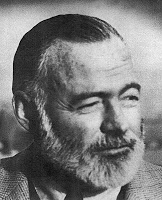
Looks like Sean Connery in the League of Extraordinary Gentlemen.

But then I thought of an old high school memory: in some of my English classes, particularly the AP courses I took when I was an upperclassman, we read a lot of Ernest Hemingway. My teacher just had this thing for Ernest Hemingway. Don’t know why. I didn’t particularly care for him, but we read quite a bit of him. Indian Camp, I think we read twice in my four years of high school.

And I remember, there was a character in many of Hemingway’s stories, a guy by the name of Nick Adams. This guy appeared everywhere, sometimes a kid, sometimes a teenager, sometimes an adult. I once asked my teacher about this guy, and he replied that Nick Adams appeared in plenty of Hemingway’s stories. Two dozen, to be exact. What made Nick Adams so appealing to Hemingway? He was supposedly based on a lot of Hemingway’s personal experiences, so maybe that had a lot to do with it.

In any case, I thought, “Why can’t this short story be my Nick Adams?” It would be short stories I write every now and then, featuring the same world and the same protagonist, all originating from “Buried Alive”. I could even release them in a collection someday, far, far in the future. Who knows what could happen?

In any case, I’ll see what I come up with when I have the time and the energy to write some short stories. There are definitely possibilities here for a series of interconnected stories.

Have you ever written a short story and wished you could write a sequel/spin-off/related story to it? What happened?

I first heard about this film from my boss at work. Her fiancé apparently was a cop in Alaska back in the eighties, and a certain case he’d worked was being made into a movie. It was the story of Robert Hanson, a serial killer who had taken several girls up to the woods in his plane and then killed them. The girls he took were prostitutes, whom he raped and murdered, and then took trophies from. He’s now serving 461 years plus life for his crimes.

Did I mention that the movie stars John Cusack as the killer, Vanessa Hudgens as the prostitute who escapes him and later identifies him, and Nicholas Cage as the cop who takes him down? If I haven’t, than I think I just did.

This movie is only available through select theaters and on-demand, but it could be good enough for a national release. Watching it, I find it hard to tell what’s Hollywood BS to spice up the story and what’s actually happened. It’s done so convincingly. You see actual emotions, characters who feel so real to the point that you forget you’re watching actors. Hudgens especially pulls off the role of a prostitute with a hard life very well. As she says at one point to Cage’s character, “I’ve had things happen to me…things no little girl should have happen to them.” For many girls on the street, that’s how they start out. Bad things happen to them, and it warps them, putting them into a role they don’t want but can’t shake. And the whole instinct of survival at any cost drives a lot of their actions, which is why Hudgens’ character does a lot of what she does, even if it defies logic sometimes.

At least, the logic of you or me.

The Frozen Ground also gains points for its dark and realistic portrayal of the police process back in the eighties. It’s a tough job, with sometimes very few leads and several roadblocks to getting justice. You can feel the frustration mounting as at certain points, these cops find themselves blocked in trying to take down Hansen. It’s like Law & Order, but only deeper and with even less Hollywood crap.

My few complaints is that many of the characters are undeveloped. We don’t really get a chance to understand Hansen or Cage’s character, and many of the other characters, especially characters on the force, don’t get their names used once in the movie (so I could not tell which character was my boss’s fiancé, sadly). It’s a cop drama, so not a lot of room to get into character development when a killer’s out on the loose, but still, could you spend a few hundred dollars filming some scenes that show us what motivates some of the other characters in this story? The only other characters whose heads I can get into is the pimp character played by 50 Cent, and that’s such a stereotype, it’s not even funny. Because hey, the black pimp has been used so much it’s a cliché.

Anyway, I was going to give The Frozen Ground a 4.3 out of 5, but Hudgens’ performance and the realism of the movie elevate it to a 4.8. If you get a chance, do go check out the movie. And stick around after the closing shots. You’ll see the captions “This film is dedicated to all the victims, known and unknown”, followed by photos of some of the known victims of Hansen.

And one more thing before I wrap this review up. The next time you see a girl on the streets turning tricks or you hear some pundit make some comment about prostitution on TV or the radio, remember that these girls aren’t doing what they’re doing, with little or no legal protection, health insurance, retirement plan, or guarantee of safety, just for the fun of it or the money. Many are forced into it for a variety of reasons. The least you can actually do is show these girls some compassion, and remember they are real women too.

Today we had a rather interesting discussion in my Science Fiction and Fantasy class (for those of you new to the blog, yes there’s such a thing. Apparently Ohio State’s English Department has been studying the foundations of nerd culture since 2007. And possibly there’s a grad student in the Sociology Department who’s studying the actual people of nerd culture, but that’s an investigation for another time). Anyway, we were talking about the differences between heroes in science fiction stories from pre-WWII and the stories written after WWII.

In the pre-WWII stories, the heroes were always larger than life, able to overcome evil and fight off any villain with ease. In a sense, they were Supermen without superpowers, and they still won every battle, got the girl, saved the world, and were home in time for tea. Some great examples were John Carter of Mars from the Barsoom novels by Edgar Rice Burroughs and Freder from the movie Metropolis.

But then you have World War II. There you see death camps, POW marches, bombings, jungle warfare, beaches that run red with blood, mortars and claymores and bullets, racism and nationalism, beheadings, and several other bits of Hell made incarnate. Those who came back from the war were given a darker outlook on the world, and those whose talents were more geared to the written word and who in turn enjoyed a little space travel incorporated that new world view into their work. The best examples I can give you of the sort of hero that became popular after WWII are Barton from the short story The Cold Equations and Han Solo from Star Wars. They are not Supermen. They are simply men. They have problems, conflicts, flaws. Barton is haunted by what his job requires him to do when he finds a stowaway on his ship. Solo is looking out for himself and his ship and nobody else, though the Expanded Universe of Star Wars says that he’s like that because his lover died leaving him cynical and jaded. And then he met Jabba the Hutt.

The point is people liked these characters. A lot. They’ve been around since then in some way or another. Look around at science fiction and fantasy stories today. Harry Potter admits he’d be lost without his friends, and as Hermione is fond of pointing out, he’s useless with girls. Katniss Everdeen is troubled by her feelings for both Peeta and Gale and her memories of the Hunger Games, and is only in the situations she’s in so that she can protect her sister and stay alive, in that order…though she does love a little revenge every now and then. Max de Costa from Elysium is trying to be a better man, but with his life on the line he becomes the definition of a survivalist, willing to do anything to live. And Buffy Summers from Buffy the Vampire Slayer has a host of issues that inhibit her life, especially in season six of the series. Jeez, that season was psychologically dark!

And it’s not just science fiction. Other genres of speculative fiction have these sorts of character. My own fiction has these sort of flawed characters:

Zahara Bakur (Reborn City): low self-esteem and a sometimes overwhelming timidity and fear of violence.

Rip (Reborn City): recovering drug addict with image issues.

Snake (Snake): highly disturbed serial killer due to abusive childhood.

Laura Horn (Laura Horn): pathological shyness, social anxiety and general anxiety due to sexual assault.

Why are these characters so popular when they are so far from perfect? I think it has something to do with the fact that’s what they are: imperfect, They care deeply and try hard, but occasionally they fail and they fall and the consequences are terrible. To the readers, that makes them real. We don’t want to read about infallible heroes, because we know all too well that they don’t exist. We want heroes who are a little more like us. They depend on people, they hurt, they need a good smack occasionally to see that what they’re doing is hurting both themselves and their loved ones. We’ve all been in positions like that to some degree in our lives. And that makes these characters relatable to us, and our problems, even if they don’t involve magic or spaceships or fighting in an arena with other young kids.

Not only that, but these protagonists tend to grow in the story. They tend to become better than what they were before. And I don’t mean better warriors or fighters or healers or wizards or whatnot. I mean better people. They learn what’s really important in life, or how to express their love for others, or they come back as true leaders who put the lives and interests of those who depend on them first. In other words, the sort of people we want to be.

I personally prefer using these characters with their flaws and warts and troubles. I used to be more into characters that were impervious, Granted, I was a kid at the time, and all my favorite TV, movie, and book heroes seemed impervious to me. But I’m older now, smarter, wiser, and a bit more aware that the world doesn’t usually produce such heroes. So I like to use the heroes with problems, with something that’s keeping them back. Along with the conflict of the story, it gives me something to grapple with and for the characters to grapple with as they fight onwards. After all, a story is not just getting from Point A to Point B, it’s also about letting the characters grow and become better people.

“I’m not even perfect, and I’m bloody brilliant in all my forms.”

Now are these sorts of characters here to stay? I’m tempted to say yes, at least for the meantime. If you look at the latest movies, TV shows, novels, and comic books, the main characters all have problems of some sort that makes life difficult for them. Watching them grow, take on these problems, and overcome them is part of the appeal of the story. And I certainly plan to use these flawed characters in the future, as do other writers I know. So yes, it’s quite possible these flawed protagonists will be staying for quite a while.

How do you feel about flawed characters? And are there any that you particularly like above all others?

Don’t you just love the fans who make this stuff?

With Ben Affleck cast into the role of Batman for the sequel to Man of Steel, I thought I’d take some stabs at predicting what we could expect from this superhero mash-up that will try to rival the Avengers franchise. Now, I know my predictions aren’t always spot on, which is why I haven’t done any since the end of season one of Once Upon a Time (I think the only thing I got right there was Henry’s father). And I’m always afraid someone’s going to come back and tell me that I was off the mark by about 100%.

However, I really want to try again for Man of Steel 2, because for some reason this whole story sounds very familiar, and I want to get into the conversation on what we can expect from the film (which is likely going to be released summer 2015, if Warner Bros. has its way). So without further ado, here’s what I think will happen with various aspects for MoS2 (see what I did there?):

BATMAN. I’m pretty sure they won’t connect this Batman to Christian Bale’s Batman in any way, shape, or form. That trilogy is perfect the way it is, so why possibly spoil it by continuing it on in this new universe with Supes? Better to try and create a new Bats that will be as different from Bale as possible without being comical. I think a serious, more detective-like Batman would work, one who’s not overly violent but not afraid to use martial arts when necessary. That would be an original movie take, in my opinion.

VILLAINS. I’m predicting two villains will be used in the film, one from the Superman universe and the other from the Batman universe. For Supes, I’d go with the obvious choice of Lex Luthor, but if the filmmakers want to save him for the inevitable Justice League film, I’d say Brainiac will make an appearance. I still think Luthor is the likely choice though, so I’m going to throw out Dann Florek as the actor to portray him. As for Brainiac, I’d need more information on what sort of version of Brainiac they’d create for the movie. After all, there are so many versions of Brainiac, it’s hard to keep track. Unless I know more, I can’t recommend an actor (though with a little make-up James Marsters could possibly fill the role).

As for the Batman villain, I’m pretty sure it won’t be any of the villains from the Nolan trilogy, especially not the Joker (it’s too soon after Heath Ledger’s death). And quite possibly they won’t use villains from the Burton/Shumacher films due to the comedic natures of those villains. However if they do, I think cunning, sinister, and quite possibly much more dangerous versions of Penguin, the Riddler, or Poison Ivy could be usable.

If not though, then it’ll probably be a more obscure villain. I doubt that they’d use a crime boss as the villain, seeing as none of the crime bosses are memorable without a cool name and make-up. Perhaps the filmmakers could use a former Robin like Dick Grey or Jason Todd to be the Batman villain, both having come back in some versions of Batman as villains in their own rights. Under what form and in what capacity is a mystery to me, but if so, I’d pick Daniel Radcliffe or Mark Salling in a non-singing capacity.

And as an outlying vote for villain, I think Red Claw from the Batman animated series of the 90s would do great. She’s a feared terrorist with an accent who will do anything for her goals. And having Angelina Jolie, Mila Kunis, or Cote de Pablo play her would work out just fine.

PLOT. Now this goes without saying, first Supes and Bats will be enemies or just not get along as they pursue the same goal, but eventually they’ll team up and actually work very well together. I’m not sure what the evil villains’ plot will be, because I don’t yet have any idea who the villains will be. However, I’m also sure that it’ll cause a lot of destruction (that goes without saying) and may involve alien technology, nuclear technology, bio-warfare, and/or Kryptonite. Any combination of that is just fine with me.

Also, depending on the relationship status of Supes and Lois Lane, we may either get them just fumbling about trying to see if they’re compatible without danger in their lives to cause them to have hormones raging for each other or we may see them well into a relationship where they have to struggle between each other and Supe’s duty to America and the world. Either way, it’ll be put into a 2.5 hour film, so there’s not enough room for character development.

I’ll have more when I know the actual villains for the story and can guess the plot. Until then, what are your thoughts on this sequel? I’d love to hear your predictions…and possibly make a bet with you.

It’s been a while since I’ve seen a movie such as Elysium, one that’s not just visually, but also intellectually stimulating and emotionally invigorating. I was so glad my roommate Morgan and I went to go see it.

Plus we had a laugh afterwards making fun of right conservatives’ reactions to this movie.

Elysium, directed by District 9‘s Neil Blonkamp, depicts a world where the rich literally live above us all, in a Mercedes-logo satellite called Elysium where there is no war, crime, or sickness and all the buildings look like a cross between mansions, Greek temples, and sci-fi edifices. On Earth, the rest of humanity have to deal with poverty, non-existent education, sickness, and crime. That is, until Max de Costa, played by Matt Damon without any hair, gets hit by radiation during a workplace accident and learns he has five days to live. Returning to his old criminal contacts, Max will go to great length to go to Elysium and save his life. What happens next will change the course of human history forever.

What was interesting about this film was that it didn’t follow the normal flow for a sci-fi action movie of this sort, which is introduce the world and the conflict, dive right into the action, have your resolution after a ton of explosions and deaths, all while avoiding character development that can’t be done in a few frames or in a very tense emotional scene with romantic or beautiful background music. Instead, Elysium flows more like a novel, with a slow but steady build-up to the catalyst that causes the conflict in the story, several twists and turns of action and espionage and deceit in the middle, full of character development that penetrated deeply into your soul, and an ending that, while unconventional for sci-fi movies, left you feeling satisfied and full of joy and hope.

Unless of course you’re a right wing conservative, which means you left this movie in tears because you thought you saw the future.

Elysium was well-executed in terms of filmmaking. The settings were vivid in their portrayals of excessive wealth and terrible degradation, the special effects were extremely realistic, and the ways you could relate this film to our own lives and the United States political system these days are many (not surprising, considering whom the director is). My one complaint is that at one point, the all-powerful healing machines do something that I think is a little like cheating, but other than that an excellent movie.

For all of the above, I give Elysium a 4.5 out of 5. Best of all, no bad sequels. I cannot wait for what Neil Blonkamp will make next.

The other day I was daydreaming, brainstorming, and reflecting on a number of subjects (one of the lovely things about me is that my head is in the clouds about half the time). During this particular brainstorming session, I thought up an idea for a novel where half the story is set in an insane asylum. As I wrote the idea down, i thought to myself, “Asylums are great places to set a horror story”.

And that’s when my head exploded with an idea for a blog post. And after the mess was partially cleaned up, I started thinking of all the reasons why someone would want to use an asylum for the setting of a story, especially a horror story. I realized that asylums can add many layers and aspects to a single story in terms of character development, plot points, build-up and suspense, and a variety of other reasons.

I will try to list as many of these aspects and layers as possible in this post without boring you. If I help anyone come up with an idea for a story, then I’m happy to be of service.

Okay, reasons why an asylum is a great location for a story. Here we go:

(The following post will use the terms “asylum” and “mental hosptials” or “mental wards” interchangeably. We apologize for any confusion regarding this flexibility.)

American Horror Story: Asylum’s own Briarcliff Manor. You go in…but you never come out.

1. It’s closed off to the outside world. Asylums and mental hospitals–heck, even menal wards–are like their own little words. No one can get out without express permission from someone in power or without a daring escape plan involving car chases, guns, and possibly a hidden underground tunnel from when the asylum was a TB hospital. Within the hospital itself, there is a set life that cannot be interrupted by outside forces. It’s a little claustrophobic, if you think about it. Especially when it’s a ward that occupies only one-fifth of a hospital floor.
And the intimacy of such a space–everyone’s problems, neuroses, delusions, paranoias–are apparent in such a small space. The amount of openness and lack of privacy can increase the sense of claustrophobia, almost filling up the area of the asylum with its glaring lack of privacy. Talk about terrifying!

2. Everybody who’s there has something. I hesitate to use the words “crazy” or “insane”, because labels can be damaging. But you get the idea. Everyone put in an asylum has some sort of problem that needs addressing through a combination of drugs and talk-therapy.  It can be difficult to live in such an environment, whether or not you actually are suffering from a mental illness (both have been known to happen). And if weird stuff like demons or magic or whatever starts appearing around you, you can’t be sure if you’re really seeing what you’re seeing, if this is a result of your own mental illness, or if you’re being influenced by someone else’s delusions. It can get pretty freaky, which adds to the terror and mystery.

3. The people in authority aren’t always good or wise. This is true on many points. Sometimes guards and orderlies can be overly rough with patients or take certain liberties with them that can be downright illegal. Doctors may believe that someone is sick when they are not (there have been studies that show that if a normal person went into an asylum complaining of voices, they would be instantly committed and nothing they could do to convince people they were sane afterwards worked, passed off as stubbornness or as a result of the illness). And there have been cases when doctors, management, and owners of asylums have deliberately mistreated patients in order to make the most money from the states and the family of those committed. It’s very sick, but unfortunately all these and more have been known to happen.

The voices in your head. Do they confuse you…or help you?

4. Underfunding can make things difficult. There have been state hospitals for the mentally ill and for those with physical and mental disabilities in the past and today that, due to underfunding, have seriously hurt the people those facilities are trying to protect. There was a hospital in Pennsylvania for the mentally and physically disabled, where they had maybe two nurses for two hundred patients, and believe me there was a lot more patients than that. Because the nurses, bless them for the work they did and with so little pay or help or compensation, were so busy cleaning and getting food to these patients, they never had the time to help some of the younger patients with basic activities, such as learning how to walk. Instead, some of them just stayed in bed 24/7, until they died or became adults.
And that’s just the tip of the iceberg! Imagine how those sorts of problems could shape someone forced to live or work in such a place.

5. Perfect place to do a little reflection. If you want to get your head shrunk at an asylum, then by all means do so. Despite the problems with asylums then and now, they are founded with the purpose to help people sort their problems. I’m pretty sure the movie It’s Kind of a Funny Story was about a kid who used a mental ward to help sort through his problems and combat his depression. Who’s to say your character can’t do the same while s/he has been committed? Surely they could use a little character development while they’re locked up with all the time in the world to examine their minds.

That’s really all I have at this point. If I think of any others, I’ll do a second post. Until then, happy brainstorming. Don’t come up with anything that might cause a mess later.

Yesterday I saw a video on a Freshly Pressed post on pregnancy in science fiction and fantasy, particularly the “mystical pregnancy”. The full video is below:

This video got me thinking. First I started thinking about all the instances not mentioned in this video: Nymphadora Tonks in Harry Potter and the Deathly Hallows, Scully once again in the seventh-eighth seasons of The X-Files, Amy Pond in the sixth series of Doctor Who, Ruth Gallagher in the second book of The Age of Misrule trilogy, Lady Gaga in the Born This Way music video and live performances, Padme Amidala in Revenge of the Sith–you can stop me anytime, you know.

Then it got me thinking about the use of pregnancy in fiction, particularly the TV shows, movies, and books I like. It was a bit of a shock, how transparent and flat these women can become when they are impregnated by their writers. Some are barely there at all as characters. It’s a little sad, and kind of sexist, reducing an entire complex being to the process of pregnancy of birth. And if you need a great example, take a look at Padme in Revenge of the Sith. She gets maybe twenty minutes of screen-time, has very few significant lines, and in the end dies of heartbreak after giving birth. I think her most memorable line from that movie was “So this is how democracy ends: to the sound of thunderous applause.”

To reiterate, this wasn’t what fans were hoping to see.

But after discussing things with the Suspense/Thriller Writers group I belong to on Facebook and sleeping on the subject a bit, I came to a realization that while pregnancies, and mystical pregnancies as well, are used perhaps a bit too much in fiction, it’s the portrayal of the characters that matters the most. For example, Padme’s pregnancy is a very bad example of how badly the subject of pregnancy can be handled. However there are better examples, such as Aeryn Sun from Farscape. According to writer David Lucas: “Aeryn: surrounded by enemies, gives birth. Later, with the baby in a sling, emerges even stronger as a character and as a fighter as she has something even more precious to fight for.” Note this part of a FB comment, so that’s why there’s two colons there.

Two other writers, John Saunders and Annette Wright, points out the character of Sarah Connor in the first two Terminator films. In the first film, Sarah is naïve and has to struggle a lot. But her pregnancy and its aftermath helps hone her into a fierce fighting machine, pun totally intended.

Don’t mess with Sarah Connor, people.

And there are plenty of other examples where female protagonists and other characters have used their pregnancy to grow as characters rather than become one-dimensional breeding machines. For example, Adalind Schade from Grimm becomes even more of a schemer and antagonist, because now she has something over the other characters: the birth of a new prince. Ripley in Alien 3 had a chest-burster growing in her body, but instead of letting the men do the work, she worked proactively to defeat the Dog Alien and kill the Queen growing inside her (and yes, I’m counting that as a mystical pregnancy). And there are probably loads of examples I can’t even think of, showing that portrayal is most important in using pregnancy in science fiction and fantasy.

This was a woman who didn’t let an alien baby get in her way!

So for future reference, I’ll make sure to take a look at pregnancies in fiction and see how it’s portrayed, what works, what doesn’t work, and what can make up a positive or a negative portrayal. I may even write an article on this for Self-Published Authors Helping Other Authors, if I can find the time.

Plus I’d like to check out the other videos in that Tropes vs. Women series. It looks interesting, and I might just learn something important that’ll improve my fiction writing in the future.

As always, thought and comments are welcome on this subject. What is your take on pregnancy in fiction, particularly mystical pregnancy?