Posts Tagged ‘novel’

Well, Angela Misri and I have reached another milestone as she continues to help me with the final draft of Snake. This evening, I finished edited Chapters 45-48, and sent her Chapters 49-52. And since Snake is a hundred chapters long*, this puts us officially halfway through the final edits of the novel.

*If the fact that there are a hundred chapters in the novel scare you, there’s no need to be worried. Each chapter is less than 10 pages of 8.5″ x 11″ paper, the standard MS Word sized-paper. Not sure how that’ll translate over to paperback, but the point is, each chapter is very short.

I’m very glad for all that Angela’s been able to do for me, and I look forward to every single one of her suggestions. I hope we can do more collaborations together in the future. And I’m also happy to say that at the rate we’re going, that at the outside we’ll be done by the end of January 2014, barring anything unexpected happening.

If you wish to read an excerpt from Snake, you can see one from the final draft here. Also, check out Angela’s blog, A Portia Adams Adventure. Believe me, it’s well worth checking out.

All for now. Goodnight everybody!

Today I logged onto the Huffington Post to check the latest in the news, and I saw a story where a white supremacist found out on a talk show that he’s only 86% white. The rest is 14% sub-Saharan African, which is apparently home to some of the darkest-skinned people on the planet. If I’ve done this correctly, I’ve embedded a video from NewsBreaker onto this post. If not, here’s a link to the article itself.

Shocking, right? And kind of funny, too. According to Cobb, even one drop of black clood makes you black. So sadly, he wouldn’t be allowed in his own “enclave”, were it to actually be set up.

But as much as this Cobb guy and other people who proclaim the (insert race here) race is superior, I’ve got news for them. I’ve learned something recently in my sociology class that I thought was mind-blowing. Apparently “race” as we understand it is a social construction, not a biological thing. It’s something we create in our minds to help us humans categorize, because apparently we love categorizing things.

In biology though, there’s actually little difference between humans of different races. There’s more differences between two penguins of the same species than there are between a black guy and a white guy. And the more scientists look for a biological basis about race, the more they find evidence to the contrary. Even things like melanin content, which determines skin color, and differences in susceptibility to certain diseases, something documented in the various races we’ve created, are determined by a number of traits that all humans share and could occur in people around the world at any time.

Even more mind-boggling is that definitions of race aren’t static: in Brazil, there are around 500 different races, while in the US there are about four or five. And races can changed. Someone from Mexico could be Spanish or Native American, and nobody could see the difference. President Obama could consider himself white if he wanted to, considering his parentage, but he’s black by choice. And not only are the races we define ourselves by subject to change where you go, the traits associated with races can change too:

He not only broke records, he broke down erroneous beliefs.

Before the 1936 Olympics, Americans assumed that because blacks, Native Americans, and Chinese mostly lived in poverty, they were degenerate and inferior in both mind and body (these beliefs never took into account socioeconomic situation, lack of education, or discrimination, even when statisticians published “findings” supporting these beliefs). However, after Jesse Owens took home the gold, race enthusiasts changed their beliefs in order to jibe with Owens’ success at the Olympics. They changed their attitudes to say that because African-Americans had been physically honed for strength and speed while in slavery, their physical abilities were superior, while their brains were inferior to the white man’s brain. I don’t know if Neil deGrasse Tyson plays sports, but that last part is definitely false, and it just shows how fluid beliefs about race are. And just as not all whites are smart or athletically superior, neither are all blacks, Asians, or Native Americans either of those or anything else. Everybody’s different, even as we’re all the same.

And finally, even on the genetic level there’s little to differentiate us from people of different races. If I were to get my blood typed and compare it to others in a worldwide database (and I’m actually looking into doing that, by the way), statistically speaking I’d be just as genetically similar to a Yoruban man as I would be to a Japanese woman or a child in the Amazonian rainforests. So on almost every level, race is not actually biological, but really just a product of our minds.
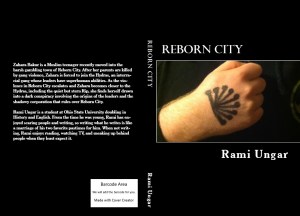
Reborn City

So why am I writing all this, besides to make fun of the Cobbs guy’s beliefs and possibly blow a few minds? Because all this relates in a strange way to my novel Reborn City. When I wrote the novel back in high school, I still thought there was at least a small basis to differences to races, and that reflects in the novel, where most of the gangs are divided up by race. I didn’t even factor in that there are different subgroups in races, like instead of just all Hispanic/Latino, there are Mexican, Cuban, Dominican, Nicaraguan, etc. I just knew I wanted to include a racially-diverse cast of characters and at the same time show how races work together would always win out over races fighting against each other.

Too bad I find out all this mind-boggling information after the book comes out, right? But now that I’m better armed, I’ll try to be a little smarter about it all. I’ll still include a racially diverse cast, but I won’t write it with the belief that races are homogenous or static or anything. I’ll just have people with very diverse backgrounds and that won’t even be a huge factor in the works I write, but instead just something interesting about my writing style.

However, that doesn’t mean one should ignore race because it doesn’t to exist, or because race shouldn’t matter. The fact is, people still see race as an actual, biological thing, and the belief is the basis of a lot of problems, controversies and discussions in the United States and the greater world. Ignoring it would be like ignoring your health in the hope you won’t get sick; it just won’t work. Instead, one should acknowledge race as a social construction, try to see through it, and if possible help others see through it.

That’s my opinion, anyway. You can agree or disagree as you like.

I’ll try and write a post tomorrow if I can. Until then, good night everybody!

I’ve been meaning to write this post all weekend, but I’ve been crazy busy with homework (ah, the life of the busy college student with less than four weeks till finals). Anyway, this past Friday several people bought or downloaded copies of Reborn City. Before Reborn City came out, I’d sold nearly fifty copies of The Quiet Game: Five Tales To Chill Your Bones. With the additional copies of RC, I realized something: I’d sold fifty copies of all of my books, total.

Now, I know that’s not as prestigious as selling fifty or a hundred or a thousand copies of each book. But for me, it’s a big deal, especially as a self-published author. I remember very well when no one was reading this blog, let alone showing any interest in my writing. The fact that I’ve come this far, that people want to read my blog and that at least enough people for a mid-size class at my school want to read my book means a lot to me.

Still, I want to sell more copies of my books. Which is why I’m making an announcement. I wrote an article for Self-Published Authors Helping Other Authors a few days ago about how the publishing platform CreateSpace is offering new, free distribution options for its authors. I was hesitant to put either of my books through these channels though, because it would mean a higher price to buy my books. Not only did I not want to put a strain on my readers, but I was afraid new readers wouldn’t want to read my work because it cost more.

I’ve since changed my mind. My books will be available in bookstores and libraries if I were to take those distribution channels. Heck, I could reserve my own book from my local library! That would be amazing! And there’s always a chance someone will want to read the book even if it’s a bit pricier than most supermarket paperbacks. So look forward to possibly seeing RC and The Quiet Game in your local Barnes & Noble or library in the future, okay?

In the meantime, I’ve got some work to take care of. I’m hoping to get my homework done tomorrow, and to write a Weekly Exercise as well. Wish me luck, okay? Good night everybody!

Reborn City

I didn’t think it would happen so soon, but it did. Within a week of Reborn City coming out, the first review has appeared on Amazon. This comes Matthew Williams, Canadian science-fiction author and dear friend (I did a review for his zombie thriller Whiskey Delta). Matt also is the author of the blog Stories by Williams and is an authority on all subjects related to science and science fiction. And I’m proud to say, he’s also the guy I asked to edit RC before I got it ready to publish.

And it’s because of all of those that I was really excited to see his review on Amazon today, in which he gave RC four stars. Here’s what he had to say:

“Gangland violence, superhero-like enhancements, a futuristic setting, and social commentary that stems from a semi-post-apocalyptic theme. And then there’s a story where people come together as a family to deal with mutual loss and tragedy. What’s not to like?”

I’m glad you thought so highly of it, Matt! What do you say to taking to a look at Video Rage when I’m ready to show it to someone else?

Well, I’m glad Matt likes it. I’ve had a couple of sales so far, and from what I’m hearing, people are liking RC so far. I had a friend message me over Facebook the other day to let me know that she thought the first couple pages of RC were scary due to the violence. I was like, “I wasn’t intending to scare anyone with the violence, but I’m glad you’re reading it and I hope you enjoy the rest of the novel.” Or something to that effect.

If you wish to read Reborn City, you can find it on Amazon, CreateSpace, and Smashwords. And if you do decide to read it, please let me know what you think. I love feedback, whether positive or negative.

Also, you should check out my friend Matt’s blog. Whether it’s drones threatening to become intelligent, the latest in medical science, changes in climate, or the latest superhero movie news, he’s your guy. And if you like what you see, check out his published work, including Whiskey Delta. It’s worth the read.

A couple of weeks ago, I wrote a post about the scariest scene I’d ever written in my career. It was a pretty intense sexual assault scene, so bad that I had to go out shopping in the middle of a downpour just to find my center and write about it in a blog post (it was that bad). Two of the concerns I had with the scene was if it would deliver the emotional effect I was looking for, and was it well written?

Well, I can’t really testify as to the former question. Only readers of the story could tell me, and that novel is still in its first draft. But for the latter, I might have an answer.

The book I’m reading for class right now.

I’ve mentioned before that I’m taking a literature class that covers science-fiction literature (and a couple movies). One of the books we’re reading is called The Windup Girl by Paolo Baciagalupi, and early on it has a pretty terrifying rape scene. I found myself reading it on my couch, putting a hand over my mouth as it ended. I was thinking about it the whole rest of the day and well into the evening, trying to wrap my head around it.

And then I realized something. I felt these same emotions writing my own rape scene. Not at the same intensity, but close to it. And it was written in a similar way to my own scene as well. In fact, I thought to myself, “There are many similarities between the scene in Baciagalupi’s novel and my own draft for Laura Horn.” Now I’m not saying I’m on par with a novelist who’s won the Hugo and Nebula Awards (and besides, his scene had some sci-fi twists, making it very different from mine), but the similarities really sprung out at me, especially the emotional similarities. It made me realize that wondering whether it’s well-written–whether I included the right words, whether I was describing anything right–was the wrong thing to worry about.

Instead, I should be worrying about delivering the emotional impact that you’d expect from a rape scene. The terror, the humiliation, the pain, the anger, the crushing despair. I should be more focused on those aspects of the writing when I write those sort of scenes. If I do that, the well-written part will somehow weave itself into the scene.

So now that I’ve figured that out, I think I’ll approach those scenes very differently in the future, should I decide to do one again. In the meantime though, I think I’ll go to bed, as it’s getting quite late. Goodnight, my dear Followers of Fear (that’s what I’ve started calling people who read this blog regularly, along with those on my Facebook page and Twitter feed. Do you like the nickname?).

Oh, and for those of you who are wondering when I’m going to end this self-imposed hiatus on my writing (if anyone’s wondering that at all. I’m sure most of my readers have more important things to think about, but you never know), I promise you it’ll be as soon as my workload clears up a bit. That might not be till after final exams, when all I have is work at my job and whatever’s on TV or whatever I’m reading at the moment, but on the plus side, exams are in four or five weeks, so it’ll be soon. And then I plan on writing up a mean storm of fiction! It’ll make up for all I’ve missed during NaNoWriMo!

You know what I just learned? That you can get self-published books directly through CreateSpace. I had no idea till just this moment. Says a lot about how oblivious I am, but yeah, I just found out about the CreateSpace store.

So now my books are available through the Createspace Store, and I’ve included the links to them on the pages for each of my books and below. If you wish, please check them out so you can be among the first to get the paperback version of Reborn City. Or not, it’s your choice.

Once again, I apologize for my obliviousness, and I wish you a great weekend. Blog on you later.

Reborn City: https://www.createspace.com/4324924

The Quiet Game: https://www.createspace.com/4326012

Reborn City

Four years ago, I sat down in front of my computer and began outlining a novel about a girl named Zahara Bakur and her experiences with the Hydras. Over two years, taking many breaks for homework and an after school job and reading and a five week trip to Israel in summer 2010, I finished the novel that I named Reborn City. Then, over the next two years, I refined, edited, and polished up the novel, and finally I had my good friend Matt Williams at Stories by Williams take a look at RC before going ahead with the publishing process.

Now, after nearly four years, Reborn City is available for everyone to read. Sure, the print version is a bit more expensive than promised because Amazon said the price had to be so-and-so dollars, which I think is a little dickish, but whatever, it’s still out.

I can’t believe after so long it’s finally out, but I’m very happy and I am so glad I can finally share this novel with the world. If you are interested in reading Reborn City, you can check it out on Amazon and Smashwords. And if you want to read a preview before you commit to buying or downloading a copy, you can read an excerpt here.

Once again, thank you so very much for all your support and I hope you have an enjoyable read. If you feel like it, after you finish reading it please write a review on Amazon or Smashwords. Good or bad, I really don’t care. I’m always happy for feedback. Oh, and if you can’t find the print version on the Amazon page, most likely that’s because it’s still being processed by Amazon. Come back later today and it should be there.

Have a nice weekend everybody! Here’s the book trailer for RC, if you haven’t seen it yet.

The other day I was reading a blog post by impossiblegirl123, author of Life and Other Diasters, that got me thinking. The post was about the author’s favorite books growing up, and I mentioned some of mine in the comment sections. It was then that I noticed something interesting about the books mentioned: several of them had orphans as main characters. From Harry Potter, A Series of Unfortunate Events, and Eragon to The Thief Lord and The Bartimaues Trilogy, all these books had at least one parentless child as the protagonist.

Now here’s my question: why? Why are orphans so popular in fiction, especially fiction aimed at children and young adults? It’s not something I’ve considered before, though now that I look at it the orphan trope seems pretty popular. Heck, I use orphans in Reborn City: all the main characters are orphans in one sense or another! So in this post I’m going to try and figure out why orphans are so popular as protagonists, especially when in real life orphans aren’t that lucky to be in harrowing adventures involving magic, love, and mystery (how many series did I just pin down right there?).

1. We want to think good things will happen after horrible events occur. I think that’s the more emotional reason behind the orphan trope. Everybody hopes that after a disaster occurs, such as the loss of parents, we’ll be then blessed by something extraordinary. Having orphan characters, people who have no parents and are affected by their absence in some manner, allows for us to identify with the characters and what we hope would potentially happen to us should, God forbid, we tragically lose our parents before their time.

2. Who needs parents in the way? An orphan cahracter is a parentless character. And how many times would a parent get in the way of a character if they had to set out on a probably very dangerous journey? I’d say 100% of the time. Hence, having an orphan character means parents won’t get in the way of the plot development.

3. Great introspection. Parents help to shape our identities. Orphans are therefore somewhat lacking an identity. During the course of their journeys and adventures, there is plenty of room for an orphaned protagonist to wonder about the important questions, such as “Who am I? What’s my purpose in life? Why was I abandoned to the world? Will I ever find someone who will love me for who I am? Why do terrible monsters keep coming after me?” It’s perfect for authors who love to add a little grounding introspection and character development in the middle of a pulpy action-adventure plot.

4. A morality tale. As children we’re often taught the difference between right and wrong from our parents. When you have a lack of parents, whom do you learn right and wrong from? Do you even get a chance to learn or do you have to figure it out yourself? Do you ever figure it out at all? All of us want to believe that fi we were in horrible situations, like being orphaned at a young age, we’d be just as moral and virtuous as we are in reality (which might be a contributing factor in the continuing popularity of Oliver Twist and Harry Potter, two orphaned boys with incredibly kind dispostitions). Personally I find the story slightly more interesting when the orphan in question has to struggle to be the righteous and confident hero, which will forever put me at odds with the first couple chapters of Sorcerer’s Stone, but you still can’t deny that there’s something about characters who remain good in the face of adversity that just makes you want to love them, right?

From many Brothers Grimm protagonists, to Tom Sawyer and Oliver Twist, to Batman and Spider-Man, to Harry Potter and Eragon, we love orphans in fiction for any number of reasons. The reasons we may include them in our stories may be any of the ones listed above or perhaps an entirely different reason, but the reasons are why orphans are a continuously popular trope in fiction and while they’ll still play large parts in the stories we write for years to come.

Do you have a favorite orphan character? Have you ever written an orphan character? Why do you like the character or why did you use that sort of character archetype?

Reborn City

This morning when I posted on my Facebook page and Twitter feed about Reborn City coming out three days from now, I joked that I couldn’t tell if I was shivering from excitement or from the cold (this year autumn seems to have passed Ohio by and let winter take over early). Later today when I logged onto the Internet after back-to-back classes and quite a bit of homework, I noticed that my sister Adi had posted about RC on Facebook and Twitter as well. It made me very happy and I was glad that she was my sister. It also made me wonder if she’d been replaced by an alien of some sort, which is always a possibility.

But you know, I’ve received a lot of support these past couple of days. My mother told me last night when we went out to dinner she might buy more than one copy of RC, and I’ve had friends, family, and classmates telling me to let them know when it comes out just so they can buy it.

This makes me very hopeful. I’m looking forward to seeing how RC does when it comes out, and I can’t wait to hear what everyone thinks of it, seeing as it’s my first published novel. I guess with the first one you always feel the most trepidation and excitement, because it’s your first time putting a full-length work out on the stands. And when it goes out, you wonder to yourself, will this be my big break? Will people love it or hate it? Will I have an excellent movie made out of it starring the actor from one of my favorite shows?

Okay, that last one was a bit much for a self-published writer with only one other book to his name, but you get the idea,

Anyway, thanks for the all the support, everyone. I can’t do any of this without you constantly reading, liking, commenting, and cheering me on. I hope that when RC comes out you like it and that you’re not afraid to tell me what you think of it, whether it be positive or negative thoughts.

All for now. I’ve got a Weekly Exercise to write!

(The following review has more than one spoiler, so if you haven’t finished or even begun reading The Wolves of Midwinter but are planning on it, please don’t read this till you do. Sorry I have to spoil some things, but I can’t do the novel justice in this review without mentioning one or two very important plot points. I’ll try and keep the number of mentions down though.)

This’ll be last review for a while, so I wanted it to be special, and I can’t think of anything more special to review than Anne Rice’s latest novel. Some of you may remember my review last summer of Ms. Rice’s The Wolf Gift. I’m sorry to say that I won’t be using food metaphors this time around, not just because it’s been a couple hours since my last meal, but also because I found it a little ridiculous, looking back, that I was the reviewer who used food metaphors.

Now on with the review.

Anne Rice has a talent for crafting truly extraordinary stories. In another author’s hands, they might seem mundane or boring, but with her hands she’s able to craft a engrossing novel that keeps  you reading the story long after you should go to bed. The Wolves of Midwinter is no exception. In this volume of The Wolf Gift Chronicles, protagonist Reuben Golding has some unexpected developments in his life, including the visit of the ghost of a friend of his. This sets the stage for further developments in Reuben’s life as a Man Wolf, as his fellow Morphenkinder Margon and Felix introduce him, fellow pack member Stuart and Reuben’s lover Laura to some more aspects of their strange, immortal world. At the same time, Reuben deals with the changing dynamics of his family as changes in his life and in the lives of his loved ones occur and as his own immortality becomes more apparent to him, sometimes rather painfully.

What do you brood about tonight, dear Morphenkind?

What is most magnificent about The Wolves of Midwinter is that the novel is always engaging even without a central antagonist or conflict to drive the story forward. Sure, there is a dangerous pack of Morphenkinder with some very dark plans for Reuben and his pack, but they are not essential to the plot that without them there would be no story. Indeed, reading the novel you get the sense that you’re reading about several chains of events closely linked to one another like crisscrossing lines of dominoes, and that the dominoes are just falling to their inevitable conclusions in the book you are reading in your hands. I marvel and kind of envy how the novel was written that way (I wish I could write a story like that. I wonder how Ms. Rice learned how to do it?).

The only part of the novel that I didn’t care for was when Reuben gets a little surprise gift a few months before Christmas, he seems to accept the implications rather quickly and give into the demands his family puts on him without much of an argument. I would’ve rather seen a more in-depth exploration of how he reacted to this surprise gift (not to mention how Laura takes it), but the rest of the novel moved along very well, so that was the only complaint I really had. And when you compare it to the rest of the book, it seems a little bit trivial.

My favorite portion of The Wolves of Midwinter was the last hundred or so pages, starting with some terrifying and unexpected events at a Morphenkind Yuletide celebration, followed by some tribulations in the life of Reuben’s brother Jim, and ending in a joyous celebration at the end of the Christmas season that almost makes you want to cry but instead makes you marvel at how masterfully crafted the ending of the story is.

For The Wolves of Midwinter, I’m giving it a 4.4 out of 5. The storytelling and language, the plot, the characters and how they deal with events as they (sometimes literally) hit them, made this a truly enjoyable read. I hope to read more of Reuben’s story in a future volume of The Wolf Gift Chronicles. Either that or another novel in the Songs of the Seraphim series, I love those books.

Oh and speaking of which, congratulations to Ms. Rice for her Song of the Seraphim novel Angel Time getting made into a TV show like Stephen King’s Under the Dome was this past summer. No word yet on when that’ll be happening, but I can already see it in my head and I bet it’s going to be great. I’m kind of seeing Christopher Eccleston as Toby O’Dare and Mehki Phifer or Omar Epps in the role of Malchiah. Don’t know if that’ll actually happen, but I definitely wouldn’t mind if it did..