Posts Tagged ‘scary stuff’

“I love a happy ending.”

You hear that a lot. People go to the movies or read books or watch TV shows or plays and they tell you that the happy ending is the best part. Some people won’t even check something out–movie, play, book, whatever–unless they know there’s a happy ending in the story, as if their whole enjoyment of this creative work hinges upon how it ends and nothing else.

But what is a happy ending? What is the definition of a happy ending? If you think about it, it’s not as easy a question to answer as it seems. It can actually vary between genres. In romance, a happy ending is that after many trials and tribulations the hero and heroine finally end up together, madly in love, and the villain, if there is one, either realizes the errors of their ways and repents for it or they suffer for the misery they’ve caused. In fantasy, usually the quest the characters set out upon is accomplished, though sometimes that has its own consequences (the hero dies or, like Frodo in LOTR, has been too affected by the events of the story to truly be happy). And in horror, happy endings aren’t easily achieved. If you’re lucky, you’ll survive and have most of your psyche intact. Anything else is up in the air.

And in some cases, happy endings don’t come at all. Take about a third of Shakespeare’s plays, or movies like Oculus, or the movie Godfather (everyone gets brought low in that film). How about stories where the enemy is defeated but someone dies tragically (Moulin Rouge). Or maybe, as in one of my favorite indie horror film I Am A Ghost, you are left with more questions than answers.

I think happy endings are actually pretty subjective and hard to define. Does everyone but the bad guy win? Do the lovers end up together? Does nobody come away with traumatic experiences? I think it’s easier to look for a satisfactory ending than a happy ending. A satisfactory ending is a conclusion that resonates with you, that you feel is the natural conclusion of this long story you’ve been reading/watching and brings out an emotional response in you that doesn’t involve disappointment. It makes you say, “I like how this ends.” And it’s much less likely to make you burst out crying because you’re so happy that all has turned out well.

How do you feel about happy endings or satisfactory endings?

What’s your definition of either?

snake

How far would you go for love and revenge?

(Warning! This review has some spoilers. Proceed with caution if you haven’t read the book and might read it in the future.)

I’m super-excited to announce that my novel Snake has gotten it’s fifth review, and it’s second five-star review. For those of you who are unfamiliar with this book, Snake is the story of a young man whose girlfriend is kidnapped and becomes a serial killer to find her (yes, I wrote that sort of story. It is awesome). This latest review comes from Ruth Ann Nordin, fellow author, contributor and administrator on Self-Published Authors Helping Other Authors (psst! Check out her blog. It’s got good stuff).

Her review, titled Good Thriller, was uploaded onto Amazon earlier today. Here’s what Ruth had to say:

I really enjoyed this book. When I selected “dark” for the mood, it was almost a toss up with suspenseful. You knew early on who the mafia killer was, but the question of how he was going to find his girlfriend and rescue her was suspenseful. I ended up choosing “dark” because of the level of violence our main character used in getting to the girlfriend. But he was a complex character. Even though he definitely had the dark side to him, there was a surprisingly good side to him, too. You don’t really see this until later on in the book. So early on, you might think this is an unredeemable character. But one of the most intriguing characters are those who aren’t what they initially seem, and for this reason, I enjoyed this character. The pacing was just right. It wasn’t rushed, and in no way did I ever feel it dragged, which is awesome for a book that was over 500 pages in paperback.

This book is violent, and it contains sexual situations. Some of it can be cringeworthy. So I wouldn’t suggest this for young readers. I’d recommend this only to adults. If it was a movie, it would be a strong R. There’s also swearing. These things don’t bother me as a reader, but I know it bothers some, which is why I mention it. But if you don’t mind these elements, I think you will enjoy this book. It’s a great thriller.

Wow, this is one of the best reviews I’ve ever received. And you’re probably right, it would get an R rating if this were ever made into a movie (I wish! If it does happen though, I’d like Dylan O’Brien to play the Snake and Molly C. Quinn to play Allison). And I got to say, the other critics agree:

Rami Ungar makes a promise to (the reader) in all his writings: he WILL scare you, and if he does “his job is done.” Snake will scare you. I am a huge Stephen King fan, so this should give you some idea of my tolerance level for gore, death and mayhem – I was scared. Rami takes you into places you would never have believed possible, and manages to pull his hero (and eventually his heroine) out of them against all odds. If you like to be scared. If you LOVE to be scared. You should read this book.

Angela Misri, author of Jewel of the Thames and Thrice-Burned

Well, I took yet another vacation where I made my family “just wait until I finish this chapter.” This page-turning read was another great effort by Rami. He is not afraid to take risks in plot twists and turns, character development and he takes the reader on quite the journey in this book. So looking forward to his next creation!

Michele Kurland

Anyway, I have to say thanks to Ruth for this wonderful review. I really appreciate it and I look forward to continuing to work with you. And I hope maybe we’ll be able to read each other’s works in the future (if there’s something up my alley that you wrote, I’d really be interested in reading it). Also Ruth, thanks for the private email with the suggestions on how to better sell and market Snake. Please know I am considering your ideas and if I decide to use them, I’ll let you know.

And if any readers here are interested in reading Snake, you can check it out on Amazon and Smashwords. And if you do decide to read it, please let me know what you think, either in a comment or a review. Positive or negative, I love feedback and always use it to improve my writing.

Also make sure to check out Reborn City or The Quiet Game if you haven’t already. Both have also gotten some pretty good reviews and I think you might find them very enjoyable.

Well, that’s all for now. Got a phone interview in the morning so I’m going to get ready for bed. Goodnight, my Followers of Fear. Pleasant nightmares.

Otherwise known as a pretty amazing Korean horror film.

I first heard about this film from Rare Horror and was very interested (they’ve turned me onto a couple of interesting films). It took a while, but I finally tracked down and got my hands on a copy of this very strange Korean fantasy/horror film, directed by Yim Pil-sung and starring Chun Jung-myung. I have to say, I’m surprised this one hasn’t been given an American remake yet. It’s definitely the sort of story that makes you think of the success of The Ring or The Grudge.

Hansel and Gretel (or in its Romanized form, Heljelgwa geuretel; don’t ask me for the Hangul, I  don’t know how to get it on this blog) is about a salesman named Eun-soo who has learned that has gone on a trip to visit his sick mother, which may also be an excuse to get away from his girlfriend, who is four weeks pregnant. On the highway he gets into an accident and wakes up in a forest. He meets a young girl who takes Eun-soo to her home, where he meets her parents and her older brother and younger sister. At first glance, they seem like a 1950’s TV family from Korea. But from the moment he arrives, Eun-soo has senses something very strange about the house and the family here, confirmed when the parents up and leave, asking him to watch over the kids. Unable to leave the forest, Eun-soo tries to figure out the mystery of the house and the children and find a way to escape. And when he finally finds out the secret, it’ll change him forever.

This is definitely an interesting film. The sets and cinematography are excellent, like looking at a Christmas tableau with a horror hidden within it (which makes sense, considering Christmas is a running theme in this story). And the acting, especially from the child actors, is amazing. I forgot that these were actors, but thought they were their characters. This film is practically gore-less (yay!), doesn’t have many jump-scares (sad, but whatever), and works hard on building an atmosphere of dread, which works for it (especially if you turn off the lights and watch it in the dark like I did).

There are only two things I don’t like about this film. One is that it’s two hours long and may feel like a drag to people who like fast-paced stories with plenty of jumps and scares.The other is that when we finally find out how this whole creepy thing gets started, it seems a little riddled with cliches. But other than that, it’s a pretty creepy film with lots of dark, fantasy-based beauty. There’s plenty of character development and growth, which can be rare in horror films, and in the end you find yourself being very impressed with this journey you’ve gone on with the character.

I’m giving Hansel and Gretel a 3.5 out of 5. It’s a very strange movie, a lot of fun, and if you get a chance, check it out.  It’s already given me a few ideas for stories, so that’s definitely a good sign. I’ll definitely check out a few more Korean horror films if I can find some. Should be fun and inspiring.

saturation [n]: the act or result of supplying so much of something that no more is wanted.

–courtesy of Merriam Webster Online

Lately Hollywood is all about the franchises. Disney announced recently that they are making a Frozen 2, that they’ve set release dates for a Star Wars spin-off and Episode VIII, and for some reason they’re doing a live-action Dumbo remake. Sony recently announced that alongside the new female-led Ghostbusters reboot they’re making a male led one as well to even things out (because three male-led films vs. one female-led one is true equality), plus a production company to come up with all sorts of Ghostbusters-related stuff, and a Zoolander 2 is on its way as well.

Look, I’m looking forward to some of these sequels and prequels and remakes and reboots and spin-offs and franchises. Try and keep me away from the Poltergeist remake, the new Star Wars episode, and a few other upcoming films. However, I think that all this emphasis on creating major film series and franchises is actually working against Hollywood rather than helping it. I know that place is run by money primarily, with the idea of making memories and memorable films being a far second, and all these mega-franchises has everyone wanting to have their own moneymaker. But to pursue all that without investing in new material, to me anyway, is not smart business practice.

Not that there haven’t been original films this year. Seventh Son, Jupiter Ascending, and Chappie all are original films (one’s based on a novel, but whatever), so studios aren’t totally ignoring original ideas. However, the former two were panned and didn’t do well at the box office, while the latter…well, it did well at the box office, but the critics don’t seem to like it. I didn’t either. And that isn’t good, because it might make movie studios more wary about greenlighting new projects.

Does this seem a little excessive to you?

This means more superhero movies, more film series and franchise, more reboots and remakes and God only knows what else. And that’s likely to continue. The question is, how long will it continue? Marvel and DC have films scheduled through 2019 and 2020 respectively, but will we feel like watching them by that time? Will we feel like we’ve seen these films so many times that it takes something rare to make us enjoy the film, like it is for so many horror fans today? Are we going to reach saturation point soon? And when it does, what will the film industry do?

Luckily, there’s the indie scene, which is producing original and wonderful stories all the time (particularly horror: I Am A Ghost, The Babadook, and the upcoming It Follows, though I haven’t seen that last one yet). And the comedy genre keeps churning out with originals, probably because they know that pulling off sequels are difficult in that genre. There’s a growing number of biopics coming out each year (not exactly original, but not exactly overly done either), and most of the movies nominated for the Oscars each year are meant to be stand-alone films. Maybe we won’t reach saturation too soon.

But if we do, I think we might have enough filmmakers out there who aren’t so concerned with money and sequels, and want just to tell good stories. Heck, I might even join in then: I’ve got a few idea for screenplays, so I might write one too one of these days. We’ll see.

Do you like the way Hollywood is these days? Why or why not?

Do you think we’ll reach saturation point soon? What’ll happen when we do?

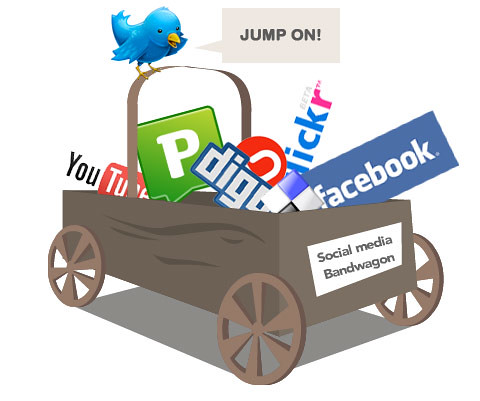
Many authors these days start blogs or websites or Facebook pages or Twitter accounts or any of the other five-thousand different forms of social media, hoping that not only will doing so let them connect to potential readers, but these said readers will go out and buy their books. It was certainly my reason for starting this blog: I began a blog in August 2011 in order to build an audience so that by the time I published my first book I might have some readers willing to buy a copy. It’s also the reason why I started a Facebook page and a Twitter account.

Contrary to this popular belief though, having a blog or any of the other things I mentioned doesn’t actually lead to decent book sales. There are numerous reasons for this, but I’d like to quote a friend of mine who recently posted about this on her own blog:

It’s like going to a movie theater and trying to sell your books to the people around you when all they want to do is watch the movie. Even worse, there are other writers in the theater trying to do the same thing you are, so the viewers are not just focused on the movie, they are purposely shutting out everything else. The challenge is to get their attention and make them more interested in you and your book than in the movie.

And like Pat, I’m not really sure how to get people interested in my book rather than the movie. While I’m lucky in that I’ve got a decent amount of followers (thanks for following, by the way!), if I charged for every time someone read one of my posts, I think my readership would be much smaller. My books cost anywhere between one to three dollars (if e-books) and a little under six to thirteen and a half dollars (if paperback). Plus I mainly write horror and science fiction, which don’t appeal to everyone.

Still, those aren’t the main reasons that I don’t make a lot of sales through social media. Other authors have had this problem as well, from romance and erotica authors to masters of mystery to sci-fi and fantasy lords and your literary connoisseurs. Like Pat said, every author is trying to get you to buy their books. I just happen to work in a genre known for its dark and macabre nature.

I think that’s the problem though. So many authors are using social media to promote their books that it’s difficult for any single one to get heard and make a lot of sales. The first few people who used blogs, Facebook, Twitter, and any other platform did make plenty of sales (or so I hear), but so many people have caught on that social media doesn’t sell as much as it promises.

It’s not easy to get sales through social media. But you can try.


Still, that doesn’t mean you shouldn’t try. Otherwise, I wouldn’t be on my blog, let alone Facebook or Twitter. Each author discovers success on their own. I’ve known authors to gain many readers of the books and many more readers on their blogs. It depends on how you go about writing your posts, what you write about, and how you promote it, among other things.

Do I know what those things are? Well…I’m a bit better at writing a terrifying story. I don’t know all the tricks. But I’m learning them here and there. I let my readers know about important updates, what’s going on in my life, my viewpoints on important issues. I often share funny or reading and writing-related photos on my FB page.Most importantly, I let people know when I get a new review on Amazon, and use direct links to Facebook and Twitter in case anyone wants to look.

And it pays off. Literally: I got two tax forms from Amazon–one for paperbacks, the other for e-books–and together it wasn’t too bad. And I’ve only been published for a little over a year and a half!

So maybe social media isn’t the direct way to bestselling novels like it bills itself to be. But with practice, hard work, and a lot of luck, you can do some amazing things through it. #BelieveIt

Do you find social media helpful for selling books? Why or why not?

What tricks do you have for selling books through social media?

I wanted to see this movie in theaters, but the one near my place wasn’t playing it (or it might have but forgot to post it on their website. Believe me, they did that once). So when I got it recently, I was hoping it would break the string of  bad horror films I’ve seen lately. Sadly, Ouija has only become the latest dud on my list. Even the great horror producer Jason Blum couldn’t make this project terrifying. I blame the fact that Michael Bay also produced this film, and most of what he touches blows up in his face, even if it does make tons of money.

Ouija is about a group of teenagers who try to contact their friend after she kills herself using the titular board game. This causes them to get marked by an angry spirit that seems intent on killing them. From there, it’s a race against the clock to stop the spirit before it gets strong enough to kill them all.

This movie’s good on jump scares, but it fails to keep up an atmosphere of suspense and dread, making the movie a long drag towards the end without even gore or sex to try to make up for it all. The acting is passable, though most of the “teens” in this movie look college age or older. Two of the characters are sisters and that’s supposed to mirror the ghost’s relationship with a living relative, but they don’t go into it enough to actually make the connection more than scant at best.

Still, Lin Shaye from the Insidious films and Shelley Hennig from Teen Wolf both have minor roles in this film, so that livens up the film slightly. Slightly.

I’m going to give Ouija a 1.3 out of 5. If you want to see a horror film and tell your friends that even though you’re a scaredy-cat you weren’t scared, this is the perfect film to be the foundation of that lie. I doubt it’ll ruin Ouija boards for enthusiasts of the game, which is something considering Michael Bay’s track record and possibly the one true positive thing to say about this film.

Still, I can’t say it’ll bring anyone joy to know that there’s a sequel in the works. Not surprising, considering that it made nearly a hundred million dollars at the box office and was made on only five million. Let’s hope the sequel will be several years off and direct-to-DVD, right? And in the meantime, I hope a good horror film comes out soon. I could use one!

The other day on my Facebook page I wrote a post about how I was doing some editing that day and I then…compared it to plucking a chicken after you’ve slaughtered it. Yeah, hearing it in my head it sounds really weird. But you’ve got to hear me out, it’s got merit as a metaphor. It even got a like or two after I posted it.

Then again, that like might’ve come from my dad, so…

Anyway, let me explain my reasoning for comparing editing to plucking a freshly-dead chicken (still sounds weird in my head). An author writes a book, edits it so that when the reader gets it it’s not full of boring speech, grammatical errors, plot holes, etc., and then turns it into a neat little consumable package that readers can pick up in stores or on Amazon for their own perusal. Similarly, a farmer will raise a chicken from the moment it hatches, feed it, make sure it grows, and once it’s ready, kills it, prepares it, and then sends it in a neat little consumable package so that grocers can eat it at home.

See my metaphor? So now that the first draft has grown to full size and been slaughtered with a butcher’s knife been written, I’m in the process of editing it. And if editing four other books has taught me anything, editing is a lot like plucking a chicken and getting rid of all the other bits you don’t want to eat. Yeah, every word, every description and every flourish of the pen (or keyboard) seem absolutely necessary when you’re writing the first draft. But then you give yourself a little bit of time to distance yourself from this book you’ve just finished and then you see that there are parts that need work. Some things could be phrased much differently, others could be shortened or expanded upon. And a lot of the work you slaved over, you just decide to get rid of it. Why? Because on reflection you find that it’s extraneous or doesn’t make sense to you anymore. So you nix it.

See, that metaphor does work! At least, I feel it works, especially in my case. I put in all these big words and beautiful flourishes and lots of explanatory stuff, and on the second draft I realize (or my beta reader points out) that a lot of it is weighing the book down. Sometimes you have to pluck them out if you’re going to make the story ready for sale in your local supermarket in bookstores and on Amazon.

What metaphor do you use for editing?

Oh by the way, Rose is coming along great. I’m a little bit over a third of the way through my novel-that-doubles-as-a-thesis and will start a new chapter after this post. And can I just say, I forgot how scary and unpredictable my antagonist can be. He can be very strange, and you never know what’ll set him off. I’m definitely trying to emphasize that in the second draft. I think people will like him very much when they meet him. Or they will fear him. I seriously hope they fear him.

I have never lived in a haunted house, as much fun as that would be. I have experienced paranormal activity (the hand!) and I stayed in a bed and breakfast at one point that I’m pretty sure had a few spirits in it (that door didn’t close on its own, I’m pretty sure of that!). But I would really love to live in a haunted house, provided the spirits sharing space with me were friendly.

However, I know that most people would prefer that their homes were spirit-free and if they move into a genuinely haunted house, they may not know what to do when such things occur. And since there’s only so many articles on the Internet about what to do if you move into a haunted house, I thought I’d add my two cents. So here’s what I say:

First, are you sure it’s haunted? Creaky sounds, cold drafts of air, a feeling of being watched. These could be signs of a haunting…or it could be an old house settling down and your own paranoia. Lots of times people think their house is haunted, but it’s actually just reasonable explanations. For example, a lot of times when people wake up, unable to move and see a figure standing over them, it’s more likely a condition called sleep paralysis, in which the body is interrupted by REM sleep and wakes up still dreaming, which is why you can’t move (lest you try to fly in real life while dreaming you can fly) and why you think someone is in your room.

So if you think your house is haunted, make sure that it’s not just problems with your old house or something normal causing problems before you call the Ghostbusters. Other common signs of hauntings include shadow figures or apparitions, voices that seem to come from nowhere, balls of light with no discernible source, mysterious footsteps or bangs, objects moving on their own, etc. This leads to our next topic:

Confirming you have a haunting. The wonderful thing about the modern age we live is that with the right tools, you can do just about anything. If you’re sure your house is haunted or you can’t find anything normal to pin the strange happenings on, there are numerous ways to get a better lay of the land, so to speak. One would be to consult paranormal research groups in your area. Reputable ones won’t charge you to investigate the house (I wouldn’t use psychics or mediums though, because there are a lot of frauds out there and they’ll tell you what you want to hear for a fee). Another thing to do would be to research the house’s history, see if any deaths (including violent ones) or any other odd happenings in its time. Ghosts have to come from somewhere, right?

All the better to catch crazy stuff like this.

And if you have the means to do so, you can go full Paranormal Activity, putting cameras around the residence so you can catch anything odd whenever it happens. Of course that means someone has to review all the footage, but them’s the breaks.

And if you do confirm you have a spirit in the house, there are several things you can do.

But first, don’t be afraid! God forbid it’s a malevolent spirit, it will latch onto that fear and use it to make your life hell. So remain strong and don’t let what’s going on get you down. If that’s happen, you can choose from several options on what to do next.

For example, you can live with it. Most spirits don’t realize they’re dead, or they do and they’re just looking for a connection with the living. Normally they’re also harmless, so all you have to do is say you acknowledge that there’s a spirit living in the house and that should be the basis for a good relationship. If you have any idea of its identity, I’m sure the spirit would appreciate it if you played music from its era or had objects around that it would find familiar. Like I said, all it wants is a connection.

Or you can ask it to go away. Strange as it seems, one article I read before writing this one claimed that if you ask a spirit with a firm voice to leave, it will. Or at the very least the ghostly hauntings will calm down a bit. No guarantee it’ll work, but it doesn’t hurt to try.

Of course if it does continue to happen no matter what you do and you can’t exactly move, you might as well live with it. Unless of course…

One of these in your house? Get an exorcist or get the f@&k out!

It’s malevolent or demonic. In which case I think you should call an exorcist or look into some purification rituals. Yes, there are exorcists and purification rituals do exist. Call your local religious organization and see what they can do. And if that doesn’t work out, you might want to get the heck out of Dodge, because no one wants to be near a dangerous spirit.

What’s your take on living with spirits? Do you have any tips?

Do you believe in spirits? Do you think I’m crazy?

If yes, I’m not sure I want to hear your opinions.

I’ve mentioned a few times on this blog that I’ve been struggling with some story ideas, trying to make them much more terrifying or compelling or just plain better. One is a potential novel, the other is a short story I’ve been struggling with on and off for about nine months or so. Both involve witches, strangely (maybe it’s a sign of something).

The novel has been a big struggle for me. The way I work with potential ideas, I write down a short summary of the story, like a blurb for a back cover, which allows me plenty of time to come up with ways to modify it, come up with new scenes and characters, and whatever else you do when you create a story. For the past couple of months, I’ve been looking into ways to modify this one novel. Maybe it’s been my experience with the initial story path of Rose, which was so expansive and crazy that it required modification and a new outline a month into writing, but I was worried I was going the same direction with this novel idea, and that I had to find some way to simplify it while keeping the original theme the same.

Well, I haven’t been able to think of anything yet. Ideas come to me but they don’t work out, I just shove them aside because they’re not what I’m looking for. I really like this idea, but I can’t think of anything that’ll work for this story. I’m a bit of a perfectionist that way. I don’t want to write a story that I don’t think is any good.

And then today while I was walking to class (to History of Magic and Witchcraft, ironically), I was thinking about this story, wishing that I could think of some way to make the story work and at the same time wishing that the original idea could still work. And then that errant voice that is in all of us, the voice that questions our beliefs and convictions, asked me, “Well, why can’t the original idea still work?” It actually made me pause (metaphorically, I still had to get to class) and think. I looked at the bare-bones idea of the story and thought. It made me realize that the idea’s original plot wasn’t as expansive as I thought it would be. It might make for a long novel, but it wasn’t so expansive that I had to create a whole world in several books. It actually was pretty solid.

Why was I so worried? If I wrote it right, it wouldn’t have the same problems as the initial draft of Rose. In fact, it might work.

So I’m not thinking about how to modify the story right now. Instead I’m thinking of this initial plot, how it could work after all and how I might support it. I’m not too worried about changing the plot. I can make this one work, if I’m careful.

And as for my stubborn short story, I had another idea on how to fix that. Don’t know when I’ll get around to working on that, but the idea will stick in my head for sure.

You know, authors are constantly learning something new, improving their craft and looking for ways to tell better tales. I learned this past fall that you have to be careful not to get too crazy with your story’s plot or you’ll lose the point of your story and it’ll be boring or confusing. That was the problem with my first attempts with Rose, which I made so big and sprawling because I was worried that if I kept it simple it might get boring.

That lesson is important, but one I got today is that you shouldn’t let fear of being too expansive get in the way of trying to make a good story.

Well, that’s all for now. I’m going to get some schoolwork done, and leave it at that for the night. Expect another blog post soon, my Followers of Fear. It’s about halfway through the semester, after all. Until then, goodnight and pleasant nightmares.

(Note: the following post contains some spoilers from various television series. Be a little wary before reading on.)

I watch a lot of TV. Sometimes I think too much. Actually, there’s a strong case to say I watch too much TV But what can I say? A lot of great stuff on TV these days. Serial killers, seven different types of apocalypse, a dozen different types of crime shows, screwball comedy and dramas that twist and turn with every episode. And that’s just the tip of the iceberg.

Isn’t there another way to explain why Annalise is the way she is?

As much as I love TV though, sometimes I think Hollywood might be going in the wrong direction or not thinking things through before they create something. Here’s one thing that’s got my goat recently: in the latest episode of How To Get Away With Murder (SPOILERS!), it was revealed that main character Annaliese Keating, as well as several of her relatives, were raped when they were young, which is why Annaliese has such trust issues and puts up a tough, angry front.

While I do agree that sexual assault could cause this to happen, I have to wonder if it was necessary to use sexual assault as the reason why Annaliese is the way she is. In fact, it makes me wonder why sexual assault is being used as a form of character development in so many different shows. Not just HTGAWM, but Scandal, Reign, Game of Thrones, heck even Law & Order: Special Victims Unit, and several more than I could name here.

Now, I may not be the best person to speak about this. Sexual assault or attempted sexual assault has been part of my stories more than once. Heck, I wrote a novel about a young rape victim trying to fight her demons, set within the backdrop of a conspiracy in Washington (now that’s an original idea for a thriller, isn’t it). I plan to rewrite it later this year if possible. But I have to say, how much rape is being used as a form of character development or backstory is rather too much.

Rape is a horrible thing, and it does change the people to whom it happens. But there are other ways to change someone, to make their personalities make sense or to bring them to the next stage of their journey. The loss of the lover, seeing someone die, a war starting, an apocalypse, time travel, a new job, a betrayal, torture, kidnap, etc. Heck, that last one (SPOILERS!) was used in the last three or so episodes of Scandal, and Olivia told Fitz afterwards that there were some things worse than rape. Why is rape being used so much, to the point that it seems to cheapen the tragedy when it happens in real life? Makes it seem like it’s not a big deal, because it happens so often and heck, most of the characters on TV to whom it happens may not be 100% better afterwards but their characters grow and change in interesting ways?

It also says something that it’s used almost entirely with women than with men. Sexual assault of men does happen, but due to a number of reasons is not often reported by the victims themselves or by the mainstream press. And yet when portrayed on TV, almost always it happens to women or children. Men on TV are rare victims, which I can’t help but wonder might be because people don’t want to see that or something along those lines.

So I’m going to finish this post with a request to the heads of the television industry, to the writers and actors and producers and everyone else involved in the TV making process. The next time you wish to use rape in your show, ask if it’s absolutely necessary, if there’s a good reason for it, or if it’s just there to boost ratings and explain why a character is the way s/he is. Because I don’t believe the latter should be used that often. Perhaps something else might do the same sort of thing for your characters and show than what you plan to use. And I think many people would agree with me, maybe even articulate it better than me.

It’s something to think about.