Posts Tagged ‘television shows’

Two months ago, I published a post about problems only horror fans have and understand. Since then, I’ve thought of more problems that face the horror community, so I’ve decided to write a post about those problems and try being funny as well as educational. And I’ll probably fail miserably while I’m at it.

And now you’re thinking, “He’s going to try to be funny and educational and fail at it too? EEEK!” I wish you wouldn’t think that, I put a lot of work into this blog post!

1. Not enough Slender-Man media. If you live under a rock, Slender-Man is an Internet meme I’ve visited before on this blog, a faceless being with a tall body and long, lanky arms wearing a suit. The myth varies depending on who’s telling it, but usually he lives in the woods, occasionally has tentacles, and likes to kidnap/scare/sometimes even kill children. It started as a couple of photos made for a contest on an Internet site and has since grown and become a modern piece of Internet folklore.

Sadly, Slender-Man’s copyrighted, and not by the guy who originally created him (who is fine with any adaptations as long as they’re good), but by a third party whose identity is unknown to the public. So if you want to make a for-profit work based on good ol’ Slendy, you need to find this third party and ask them for permission. Which sucks because how can you negotiate a deal with someone you can’t find? Such is the quest to make Slender-Man merchandise.

2. We’re getting our IT adaptation…with a catch. Last time I wrote about this, I mentioned how Cary Fukunaga’s two-part adaptation of the Stephen King classic was cancelled because Fukunaga and New Line couldn’t see eye-to-eye over budget and creative directions. Well, good news, looks like New Line is still trying to make the adaptation. Just two problems: one is it’s probably going to be a single movie. Really? This is a thousand page book! Even a three hour movie will hardly get most of what made one of King’s scariest creations very good.

Even worse, the guy being courted for director is Andy Muschietti, who directed 2013’s Mama. Now a lot of people found that movie scary, but I felt that it was overall not very good. Started out great, but got slow and cliched near the end. So you can see why I’m a little hesitant over this directing choice, especially with only one movie to work with.

Seriously, why not two parts? The Hobbit got three, and it’s one book! And when Peter Jackson adapted the LOTR trilogy, it was a big, risky move. Look at how that paid out!

*Sigh* I really hope I’m surprised by this movie if it comes to be.

3. “Why not a happy story?” This actually happened to me today. I was talking to my boss and we were discussing an ice cream truck that passes through the base every day. I was trying to think of a short story involving an ice cream truck with an original and scary twist. She just looked at me with this funny face and asked, “Why can’t you write a happy story?”

Who says horror stories can’t have happiness in them? Seriously, some of them do end with the monsters gone and the main characters still alive and actually stronger for their struggles against evil. Yeah, some of them end in tragedy. But there are happy endings.

And besides, would a happy story really be that interesting? Once upon a time a bunch of schoolchildren went to play in the flower fields. They picked flowers, and one of the ones they picked turned into a handsome prince. The prince said a witch had turned him into a flower after he refused to marry her, and he would’ve died with the first frost if the kids hadn’t plucked him among the flower fields. So the prince made them all honorary princes and princesses and they were forever allowed into his castle to eat ice cream and ride the horses and learn how to dance like they do at Viennese balls.

I think I might vomit if I don’t fall asleep from boredom.

4. “But don’t you get nightmares?” Another one from my boss (in her defense, I think she ordered a copy of Reborn City today, so at least we know she’s got good taste). Yes, I do get nightmares occasionally. It’s estimated that all adults get at least two nightmares a year. Rarely do I get them from the movies I watch and books I read, though. And I’m willing to risk the possibility that one day I’ll be scared in my dreams because of one of those books or movies. Just means someone’s doing their job in making something super-scary, right?

I’ll even dream about him if it means a good scary story!

5. Horror’s so cliched. Actually, no it’s not. True, a lot of horror stories do have their tropes and conventions that appear a lot: the virgin girl, the slutty girl, the campground, the sin factor, etc. But hey, have you seen people who get upset over Bible films if there’s even a single deviation from even the most obscure text? They want the same story every time! Now that’s a lot of cliches.

And horror doesn’t always rely on cliches. There’s a lot of originality in horror, if you care to look. It Follows, I Am a Ghost, Carrie, Dracula, Interview with a Vampire. All of those were very original, thank you very much.

6. Horror has no depth. Oh, so there’s no depth in a ghost or heads getting cut off? Really? Well, where’s the depth in comedies with fart jokes? Or stories where we all go in knowing the hero and heroine will eventually hook up and that’s the only reason why we paid money for this? Where’s the depth in that?

You’d be surprised how deep a horror story can go. Anne Rice’s early Vampire Chronicles are known for their poetic philosophy and imagery. Some, including the author, has described them as “the agnostic’s search for the truth” (this is a rough quote, I may have phrased it wrong). IT, which I discussed above, deals simultaneously with the loss of childhood innocence and the rediscovery of childhood belief. And don’t you dare tell me that The Shining doesn’t explore the struggle of personal needs and desires versus the good of the group! Think about it!

7. No, I’m not sex-starved and that’s why I enjoy horror. Yeah, horror sometimes is dirty. Doesn’t mean we’re making up for something. Unless you’re the filmmakers behind the Friday the 13th remake, in which case you packed in as many boobs as possible because you wanted people to see the movie AND it was a dry spell (Ooh, new slam on that shitty movie!).

And why are you wondering about our sex lives? It’s none of your business, you perverts!

Yeah, I like these guys. So what?

8. Ghost hunting. Okay, this might just be my problem, but just bear with me, because it’s related. Plenty of people believe in ghosts, interest in horror or not. Some of us believe that it is possible to find out about ghosts using modern-day technology, which is why we support ghost hunters and even watch some of the ghost-hunting teams that have their own TV shows.

So what’s the problem? Some people think ghost hunters are snake oil salesmen and make fun of them and their shows whenever the subject comes up. For those like me who believe in ghosts and maybe even base our ghost mythologies on what ghost hunters may uncover in investigations, it’s hurtful.

Yeah, this isn’t strictly a horror problem. But it’s a problem nonetheless.

~~~

Did you identify with any of these problems? Did I miss any? Was I funny? If not, did you at least learn something?

Well, hope you enjoyed this whatever your reaction. Just thought I’d get out another list. Hopefully I won’t find any more reasons we horror fans have it tough. Have a goodnight, Followers of Fear!

The wait till DVD…oh dammit!

2015: 10-6
2014: 10-6, 5-1
2013: 10-6, 5-1

Well, it’s time for the Top 5 Villains of 2015. These are the baddest of the bad, the freakiest of the freaky, the ones you have to watch out for. Are you ready to take on this list? Then let’s dive in!

A reminder that these villains are fictional and none of them were created by me. Otherwise it’s me taking a swing at politicians I don’t like or plugging me own books.

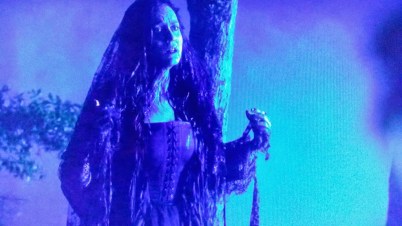
5. Mary Wells/The Weeping Lady (Sleepy Hollow)

People had some differing opinions on Season 2 of Sleepy Hollow, but honestly I think we can all agree this is one of its best episodes, and one of its most memorable villains. Mary Wells was Ichabod Crane’s fiancee, their marriage arranged for them as children. However while Mary was infatuated and obsessed with Ichabod, the latter only felt brotherly feelings for her. When she died in an accident involving Ichabod’s future wife Katrina, she became a ghost forever weeping for her lost love. When she is raised by Henry, the Horseman of War, to cause chaos, she goes after every woman close to Ichabod, including Katrina and Lieutenant Abby Mills. When she reveals Katrina’s role in her death, it is the wedge that begins the end of the Cranes’ marriage. Sad and spooky, we love this woman, feel for her and can’t get her out of our heads. Her spot on the Top 5 is well-deserved.

4. Annabelle (Annabelle)

I love creepy dolls, but even I would hesitate to have this one in my house. Originally from The Conjuring and based on a real haunted doll, Annabelle was popular enough to get her own prequel movie exploring how she was a woman in a satanic cult who died and possessed a rare collectible doll along with her demon master. The result was that she got the chance to cause chaos for a young family, with the intent to take an innocent soul and send it to Hell. And she nearly succeeds too. Creepy to look at and dangerous to have in your house, Annabelle will inhabit your nightmares for years, which is why she’s Number 4 on this list.

Oh, fun fact: the real Annabelle doll is actually a large Raggedy Ann doll. However the makers of Raggedy Ann (or whoever owns the copyright these days) would never consent to have one of their dolls portrayed in a horror movie like that, so the filmmakers designed a creepy looking doll for the part. And that doll has been creeping us out ever since. Yikes!

3. Ultron (Avengers: Age of Ultron)

Actually more like Couple Days of Ultron, but that’s another story. No matter how long he was around though, Ultron is still a terrifying force to be reckoned with. He seems genial and funny at times, but his humor and reasoning, along with his fascination for religious philosophy, are only a cover for his true sinister nature and his plan to cause an extinction event that will wipe out humanity and allow his clones to take over the Earth. With a silky smooth voice provided by James Spader, you won’t want to be anywhere near him when he starts singing classic Disney songs. Definitely deserving of the Number 3 spot.

2. Isaac Heller/The Author (Once Upon a Time)

Now, if you watch the show you may not think he’s much of a villain. But in actuality he’s definitely real villain material. A wannabe F. Scott Fitzgerald who is chosen to become the chronicler of great adventures through out the many different worlds, he abuses his power and starts directing events, earning himself the punishment of being sealed in his own book. When he escapes, he uses his weak attitude and his power to weasel his way out of any situation, not caring who gets hurt or what has to happen in order for him to receive his fifteen minutes of fame. And the crazy thing is, he still considers himself one of the good guys! Yeah, he does. Even when he traps the residents of Storybrooke in a fiction novel and tries to kill the one guy who escaped, he still thinks he’s a good guy. This sleazy character will justify his actions no matter what, and his spot at Number 2 is perfect for him.

1. Meredith Walker/The Benefactor (Teen Wolf)

Sometimes the greatest villain is someone who is sweet and innocent, but has been influenced by the wrong people. Meredith Walker is a banshee, one who predicts death. Years ago she overheard the thoughts of Peter Hale, one of the show’s recurring villains, where he had an insane plan to kill off the weaker members of Beacon Hills’ supernatural community and remake it in his own image. Meredith, who is already a little unhinged but normally very nice, carries out his plan, paying assassins and hunters to go after the supernatural community. Even worse is she doesn’t think this is wrong, she just thinks she’s doing what she’s supposed to do because Peter implanted the idea in her brain. Only when she realized that she’s caused the deaths of many innocent people and that Peter was more unhinged than her does she regret her actions. Kind and afflicted, Meredith’s turn as a villain was terrifying and stunning and I’m seriously hoping she has a role in Season 5. Bravo Meredith, you’ve earned the top spot.

What are your thoughts on my Top 5 villains this year? Do you agree or disagree? Let me know in the comments below. Tune in next summer for 2016’s Top 10 villains. By then we might have a few new entries or maybe some old ones will resurface. One can only hope.

Until next time, my Followers of Fear!

2014: 10-6, 5-1
2013: 10-6, 5-1

It’s that time of year again! When I list the top villains who have scared and/or impressed me over the past year. And this time around we’ve got some pretty interesting and unexpected entries on this list. So let’s dive into the first half of the list and see who was the baddest of bad guys this year! Remember, these villains must be fictional and they can’t be any of mine (otherwise it’d just be me plugging my books, and this isn’t where I want to do that).

Honorable mention goes to Dandy Mott from American Horror Story: Freak Show. That guy was a psychotic man-child with a love for attention and a greater love of killing. I’m looking forward to what his actor will be up to next season.

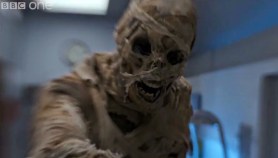
10. The Mummy/The Boneless (Doctor Who)

Yes we have a tie for entry #10! And both from the same show, well done. Appearing in the episodes Mummy on the Orient Express and Flatline, these creatures are scary and mysterious and their spots are well deserved. First, let’s start with The Mummy: an ancient warrior from a long-ago war, the Mummy has since become a legend, a moving skeleton wrapped in bandages who can only be seen by those it targets. They then have 66 seconds to live, during which the Mummy will get them. And kill them. It is a very creepy creature, and the Doctor was only just able to stop it, making Mummy on the Orient Express my favorite episode of that season.

The Boneless, as the Doctor names the species, is a 2-D alien species from another dimension who invade our world with the intention of taking over and becoming three-dimensional as well. The moment they or their energies touches anything, it’s as good as two-dimensional and (if it’s living) it’s dead. Heck, the Doctor nearly dies facing them, which goes to show how much of a force they are to be reckoned with. These unfathomable monsters are simply amazing and terrifying to watch, which is why they go alongside the Mummy to earn the Number 10 spot.

9. Missy/The Mistress (Doctor Who)

Another DW villain, and definitely one of the most lovably bad! If you’re unfamiliar with the show, Missy is the female version of the Master, one of the Doctor’s oldest and greatest enemies (yeah, characters on this show can change their genders). Watching from the shadows, she only reveals herself at the end with a plan to convert the world’s dead into Cybermen and then give the Army to the Doctor. Why? Because she wants to see if she can make him as bad as her! I know, crazy right? But that’s Missy’s charm: she’s playfully mad and wants nothing more than to rope her best friend into some crazy fun scheme, and will do anything bad to get her way. Plus she has an awesome theme song, which makes her spot at Number 9 well deserved.

Okay, I said something nice Missy, please don’t kill me, okay?!

8. Kim Jung-Un (The Interview)

I know, I said fictional villains, but this is a fictional version of the character, so I think I can make an exception. Plus he’s just so funny! In this controversial and provocative movie, Kim Jung-un at firsts comes off as a shy and sweet guy who had a lot of responsibility thrust upon him at a young age and occasionally just wants to rock out to some Katy Perry in a Russian tank. However as you get to know him, you realize that he’s about as nice as sulfuric acid, and that he’s actually quite the sociopathic tyrant. Seeing him go from a crying wreck to having a tantrum to trying to murder the world and then get blown up is well worth watching, and secures his place at Number 8 on the list. So North Korea, please don’t hack me, okay? There are some things the world is not ready to learn about me!

7. The Babadook (The Babadook)

If it’s in a word it’s in a look, you can’t get rid of the Babadook. Thus starts the picture book out of Hell, as depicted in this creepy Australian indie. The Babadook is a terrifying reimagining of the boogeyman, a creature that wears a top hat and sticks to the shadow, stalking its victims until it drives them mad and kills them dead. When it sets its eyes on struggling single mom Amelia and her behaviorally-challenged son Samuel, you’ll experience ninety-four minutes of pure terror! And the freakiest part of it is, you can’t tell if the Babadook is a real monster or if it’s all in the heads of the characters! Even all this time later I still can’t tell! Yikes!

6. The Creature (It Follows)

The writer/director of this creepy gem said he based the story on nightmares he had as a child. Indeed, the Creature is nightmarish. Only seen by those affected by the curse and able to take any form, the Creature delivers a promise: that no matter how long it takes, no matter how far you go, it’ll follow you. It will find you. And it will kill you, one way or another. And this promise is delivered to everyone affected by the curse, going from the latest victim and heading down the line to the beginning of the curse. We don’t know why, but to say the least, the how of it is enough to make us all stay away from one night stands forever.


Like the list? Have any thoughts? Let me know in the comments! And join me for the Top 5 later on, when we’ll see who 2015’s Baddest of the Bad are! Until next time!

Last night as I was dropping off to sleep and feeling happy about setting up that new blog of mine (thanks to everyone who’s already signed up to follow that, by the way), my mind started to wander, as it usually does right before I fall asleep. This time around my mind went to horror stories (yeah, it does that quite often too), and I started to ponder character depth and development in horror stories. At some point I realized that in horror, you often have either characters who are very well-rounded and developed, or you have characters that are little more than archetypes, e.g. the Skeptical Dad, the Final Girl, The Psychic Child, The Expert, etc. And you know what else I realized, what made me get up out of bed and write this revelation down before I fell asleep and forgot? Sometimes these stories require different level of character development, depending on what the story is.

Let me explain. In certain scary stories, such as Stephen King’s The Shining (the book, not that poorly adapted Kubrick film), the characters are more than just archetypes and we get to know them very well. This is because their inner conflicts are just as important to the story as is the outer conflicts happening with the hotel. Jack Torrance is trying to keep his cool and be a good husband and father for his family after so many screw ups, while also fending off his desire to drink and the mental assaults of the hotel. His wife Wendy is trying to keep her family together while also keeping an eye on Jack in case he reverts to bad habits. And Danny, psychic and wise beyond his years, is trying to stay strong and endure the hotel’s attempts to kill him because he knows a lot is riding on his father taking care of the hotel through the winter. How they react to situations and grow as characters is just as important as what is happening within the hotel, so King makes sure they are well-developed.

Part of the terror (in the book, anyway), comes from the conflicts these characters wrestle with inside themselves as well as the ones the hotel sends them.

Meanwhile other stories don’t need as much character development. Take Insidious 3, for example (yes, I’m using the third entry in a horror film series, but bear with me). Besides main character Elise Rainier, most of the characters in the film do not get much character development. In the Brenner family, who are experiencing all these supernatural happenings, you don’t see much beyond the roles they play in the story: Quinn is a pretty girl with dreams of acting and is being victimized by a spirit, her dad Sean is the scatter-brained parent trying to keep his family together through grief and tragedy, and the annoying younger brother Alex is…well, the annoying younger brother. Despite not getting a lot of characterization though, these three characters do actually get some growth in the story: Quinn’s car accident and the spirit attacking her causes her, her brother, and her father to get out of their own little worlds and come together as a family to save Quinn’s life.

And of course, there are those stories that require little or no characterization or growth at all. This is common in slasher films, where the characters are often reduced to archetypes or roles (anyone who’s seen Cabin in the Woods knows what I’m talking about). This also happens in a short story I had an idea for recently (and that I might write as soon as I finish editing Video Rage). In this story, I decided that I wouldn’t spend time going over why the protagonist’s younger brother is a bratty kid or why the antagonists are as freaky as they are. The reason I decided this is because the events of the story are where the terror and intrigue come from, not from any inner growth. This is usually the case with slasher films as well: the events of the story are where we get our terror and excitement from, so more attention is pointed towards telling the story than going over any inner conflicts of the characters.

Half the fun of this show is seeing these two interact with each other.

What I’m driving at here is that how much character development is required from a story depends a lot on where the excitement and fear is coming from and how essential developing a character is in order to keep a reader or viewer invested in the story. In the case of a Nightmare on Elm Street film or the story I mentioned above, we’re reading or seeing the story because we know that the story’s events is where we’re going to get the excitement we paid to read/see. In the case of stories like The Shining or most episodes of Hannibal though, a major reason why we’re investing time into the story is because of the characters, not just what’s happening around them. This is especially so in Hannibal, because most of the conflicts and intrigue comes from the characters, their psychological states, and how they play against one another. We’re there not just because Hannibal Lecter is a famous and charismatic serial killer, we’re also there because we like seeing how Will Graham’s relationship with Lecter changes and evolves over time.

And knowing how much to balance of these two elements–character development and story-focus–is very important. Look at the remake of Poltergeist that came out recently. It was an awful film, and one of the many problems it had was that they tried to insert character development near the beginning of the film and failed miserably. Early on it focused on the dad losing his job and trying to find a new one, as well as mentioned something about the wife being a writer. I think the filmmakers were trying to translate this into an arc where the family tries to stay together and come together through rough circumstances, but ultimately the whole thread of the dad looking for a job and the parents trying to keep the family together fails to really get resolved or come together and ends up feeling unnecessary to the story. You’d think that it would just be enough to say the dad got promoted or transferred or a new job and leave it at that!

So whether it’s a zombie flick, a novel about a haunted house, or a psychological horror TV show, knowing the balance between character development and story-focus is just as important as creating a memorable and creepy villain or writing the story in such a way so that the story actually remains scary rather than goofy or just plain stupid (*cough* Friday the 13th remake *cough*). If you do, you’re more likely to write a good story worth remembering than you are to write garbage that horror fans sift through trying to find a nugget of gold.

I’ll certainly keep the balance in mind with the next story I write.

Yesterday was my birthday, as you probably already knew. Lot of good things happened, but there’s one thing I’d like to focus on in this post. I’m on YouTube a lot (some argue it’s typical of my generation, and to some extent I agree), and yesterday Doctor Who’s official channel uploaded a short video featuring Sarah Dollard, who’s writing an episode for the upcoming season (you can watch the video here). Me being me, I comment on the video that someday I’d like to write for Doctor Who despite being an American. And that opened the commenter floodgates.

Now, YouTube has acquired a reputation where commenters can be the nastiest people around. I’ve seen this side of YouTube before. I once was called gay for commenting on a video of an old anime’s theme song that I used to love watching that show (wrong asshole, I’m bisexual. There’s a difference), one troll told me all the stuff in a video series I was watching was staged despite proof that it all actually happened (he was easy to fend off though once it was pointed out that he had only his belief to back him up), and infamously one guy joked I’d been raped by meditation music when I commented on how a meditation video really relaxed me (you can read my post condemning that joke here). With these sort of experiences, you learn to be a little guarded in what you comment. You filter yourself so that people don’t gang up on you, strangers using their anonymity to just be awful to you or take your words out of context or a hundred other nasty things.

Which is why yesterday’s experience was so heartening and uplifting. Throughout the day, I had people replying to my comment, telling me that I had to just be a very good writer and get on the DW team’s radar in order to work for them, that nationality had nothing to do with it (later I found out that Sarah Dollard is Australian, so there’s the proof right there). I replied that I was a writer, that I had a few books out and that they were on sale in honor of my birthday (and that sale’s still going on through Sunday, by the way. You should seriously check out my work on Amazon and Smashwords for marked down or even free books).

And that’s when it starts getting really awesome. People are wishing me a happy birthday, they’re wanting to know what sort of books I write, one guy even asks for the titles of my books so they can purchase them himself! All told, there were twenty-something replies to my original comment, some of them by me but others by the complete and total strangers I’d learn to be wary of over the years.

You know, the way YouTube is, they’re not very good at policing their comments sections for abuse. Believe me, Google’s tried, but the systems they use often miss the really nasty stuff and sometimes persecute commenters for relatively harmless stuff. Some content creators on YouTube even moderate each and every comment or don’t allow comments whatsoever on their channels because of these problems. And for those viewers like myself, we have to learn to cope with this, either by not commenting in fear of the replies we’ll get or just to learn to grow a thicker skin and develop tools to deal with it ourselves.

So I comment, but I sometimes wonder if on YouTube there’s only so much civility, that comments are on a spectrum from respectful and somewhat nice to just downright awful. Yesterday surprised me and made me very happy. Within those twenty-something replies was a level of kindness and support and love that I didn’t know I could experience outside of Facebook or blogging. I got to learn that people online, especially on YouTube, can still be decent human beings even with the protection of anonymity around them, so easy to abuse sometimes.

And perhaps maybe my faith in humanity was bolstered a little.

So from now when I’m on YouTube, listening to music videos or watching funny content or whatever, I might not be so jaded. I’ll remember this little birthday surprise and I’ll know that not everyone on YouTube has the potential to be a jerk. Some have the potential to be really, really awesome people (and not just because they’re probably Whovians, though that can sometimes play a factor). And I wish the best for the people who were so kind to me yesterday, because what they did was just so overwhelmingly positive and unexpected that it deserves special mention in a time when so many people are using the Internet for awful reasons.

Bravo folks. Bravo. And thanks. You made my birthday that much more special, and I appreciate the encouragement. Here’s hoping I’m writing with the BBC someday!

I’ve mentioned it before, but being a fan of horror (let alone a writer of horror) can be very difficult sometimes. We’re not even in the Top 10 Most Popular Genres. We might be in the Top 20…I think. Such is the fate of a group that likes to be scared, when most people would rather avoid the feeling of having something evil and murderous lurking over your shoulders. Because of that, I thought I’d make a list of problems that is mostly unique to the horror genre. Here it is for your humor edification.

1. You’re not dangerous or creepy, you’re actually well adjusted. For some reason the popular image of horror fans is that we’re a dark, moody bunch who got bullied a lot as kids and we’re just looking for the opportunity to get our revenge on the world in the most depraved of ways. Why does anyone think that? Is it because we like movies where serial killers find half-naked girls in the woods, throw them against trees, and then cut them in half?

I don’t know. But if I’m anything to go by, I’m not that image. True, I was bullied a bit when I was younger, but it definitely didn’t affect me that badly! People tell me I’m a funny and really nice kind of guy whom they generally like. And most other fans I know are good people, we just like a good ghost story or slasher flick on the weekends rather than the latest Sandra Bullock comedy or have a fantasy football league. I mean, some of us do those things as well, but we also like to shout “Redrum” when we’re angry or go see Slipknot when we’re in concert. It’s just how we roll.

2. It’s hard to get people to go to the movies with you. Is there a new Avengers flick out? You’ll probably find someone to go with you by simply sending a text message. Comedy or romance film? If no one in your immediate social circle is available, chances are someone at the office will go with you. Horror movie? Yeah, unless your date or your friend is super brave or tolerant of scary stuff, you’ll be sitting in that theater alone for the most part. I speak from experience.

And speaking of which…

3. You can’t make people see why Cary Fukunaga’s departure from the new adaptation of IT is such a disaster. In case you didn’t know, Fukunaga, who’s directed True Detective among other things, was set to direct a two-part adaptation of the Stephen King classic. Sadly he split after he and New Line couldn’t see eye-to-eye over certain aspects. To which many say, “NOOOO! Why?” Most people just assume we’re being drama queens, especially since there’s already an adaptation of IT out there that scared them as children.

Really not scary.

Really not scary.

Yeah, as children. Truth be told, you watch it again, it’s a crappy adaptation, sanitized for TV audiences and with so much changed from the original story fans of the novel are left with a bad taste in their mouths. And Tim Curry as Pennywise the Clown isn’t even that terrifying. Mostly he just laughs at a distance and talks about making corpses float. The kids are never shown in real danger. I’ve seen scarier things in a college final (for more reasons why the IT TV miniseries sucks, watch this review by the Nostalgia Critic and laugh yourself silly at how you ever thought this could be scary).

So naturally, we were hoping that we would get the adaptation IT deserves. Without Fukunaga, it’s about as dead as a corpse floating in a sewer, and we’re all disappointed.

Hey, maybe I did make you see why Fukunaga’s leaving is such a disaster. Go me!

4. You can’t wear your horror fan badge with pride on first dates. Horror fans do date, and a lot of us have great relationships and families. However, declaring you’re a horror fan on the first date and several subsequent dates is like romantic suicide. People assume that, if you’re male, you’re some wannabe serial killer creep who spends too much time peeping on girls, looking at graphic porn, and practicing killing in a dark and moldy basement. If you’re female, they think you were one of those goth girls in high school whom nobody got along with and who has anger and break-up issues.

Like I pointed out above, we’re not. Most of us stay out of those basements, get along with plenty of different people, and would never dream of hurting anyone. Not as if we can point that out on the first date though. Maybe pull out a Stephen King novel when you start staying over at one another’s places, and that’ll signal that you like to dip into terror every now and then. After a few more sleepovers or whatever and the books consistently stay scary, they’ll realize that yes, you like horror, but you’re not going to hobble them with an axe or mallet and chain them to a bed in your house.

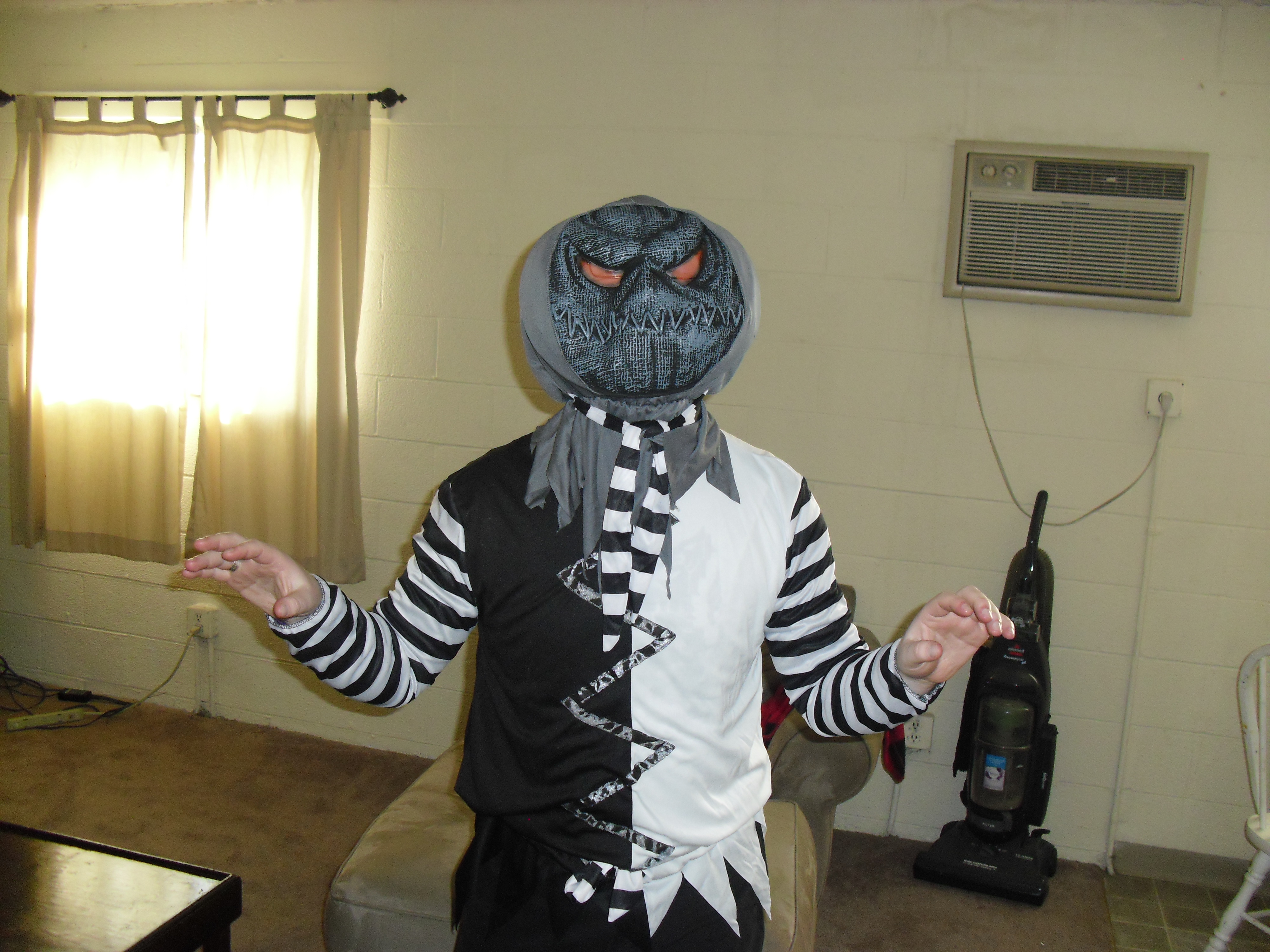
As you can see, Halloween's a big deal for me.

As you can see, Halloween’s a big deal for me.

5. Halloween is more than just a single day of the year for you. No, it’s an entire freaking month, and a lot goes into it. You want the perfect scary costume, the perfect creepy decorations. You have to decide what scary movies coming out you’re going to see, what scary movies you’re going to revisit on DVD, what books you’re going to read. You’re going to want to discuss how the new season of American Horror Story is doing leading up to the two Halloween episodes. And you’re going to want to find the perfect party to show off your Halloween love.

You see, Halloween for us is kind of like how moms treat their daughters when they enter beauty pageants for children. We want to show the world how good we are, we want it done right, and you all better cooperate with us and with our zeal for this or there will be plenty of hell to pay! Happy Halloween, bitches! You just try and beat me at my own game!

6. Our love of metal is probably much healthier than being a fan of Justin Bieber. Again, we’re back on that negative image. Most horror fans have a pretty wide-ranging taste for music. Stephen King’s a rock fan, and I have an eclectic mix of J-Pop to classical on my iPod. Yes, I like metal too and so do a lot of other people, but it’s all just fun. We’re not actually looking to submit to Satan or in danger of turning into gunmen. Most metal artists are apparently pretty decent people when you meet them too. They have normal lives like you or me, they just are good at reaching our inner angst through music. It’s much better than listening to an overgrown toddler still going through puberty and acting like a total idiot when he’s not on tour, anyway.

7. It’s hard to discuss serial killers, fictional or real, in the company of others. I learned this the hard way, and to this day I still wish I’d shut my mouth before it made people give me stares. Sorry if I’m a little passionate about explaining how Ed Gein helped inspire Hannibal Lecter, Norman Bates, and Texas Chainsaw Massacre. You’re the one who asked if that last one really was based on anything real.


8. Most importantly, we go to great lengths to find gold in a pile of shit. I mean that metaphorically, of course. But it applies so well. There’s a lot of horrible horror novels and films out there, and horror fans will go to great lengths to find a film if they think it’ll be interesting to watch, much more than fans of other genres. Fear for us is like a drug, and we’ll try the gamut of bad films if it’ll give us the high we’re looking for. And even if we get a couple of bad ones, it’s well worth it when we find a really awesome one that scares us to our core.

Like Fukunaga’s IT would’ve been. And now I’m sad.

~~~

If anything, this post is meant to show you that horror fans are normal people, just like you or bronies. Are we perfect? No. Are some of our interests very macabre? Yes. Have I been to a morgue? Once or twice, but in the long run, does it really prove anything? Not really. It just shows, like everyone else, we’re all a little different and have our own special quirks.

So the next time you meet a horror fan, do us all a favor. Don’t discuss serial killers with us until we know you better. Instead, talk about the IT adaptation we wish we had and about how hard it is to get a good scare these days. Or the economy, that works just as well.

Was there any particular problems about being a horror fan that I missed?

Do any of these items stand out to you at all?

[Writer’s Note: The following post does contain some slight spoilers about the new Avengers movie, but it’s all very minor stuff, nothing that would ruin your viewing of the film if you plan to go and see it. Just wanted to let you know.]

So last night I went with a friend of mine to catch Avengers: Age of Ultron. It was fantastic, great action scenes, some really dark moments of character development, and plenty of that humor we’ve come to enjoy from the MCU films. If I were to give this film a rating, I’d probably put it between a 4 and a 5.

However, there were some things that bothered me, and I want to talk about them here. One of those things, as said by Maria Hill during that party (which we’ve known about for months, so it’s not a spoiler): “Where are all the women?” Yes indeed, where all the women? If you think about it, while there are plenty of women in these movies who hold their own against the men, the women are still underrepresented in the MCU. Black Widow has shown up in four films so far and set to appear in the next Captain America film, but a solo film isn’t even in the works (though a treatment apparently has been written) and she’s only got 24 action figures compared to over a hundred various Iron Man toys.

It’s even more sad when you consider how she’s such a great, well-rounded character who can be a great role model for girls, and Scarlett Joahnnson’s costars make fun of her and call the character “a slut” and “a whore”. Yeah, they did that. Women are so much more than their sexuality and gender, and yet these guys reduce a character to being sexually promiscuous just because she’s comfortable around a bunch of testosterone-high males. Seriously, half or more of the audiences of these films happen to be female, as I understand. At least half the people in the theater with me last night were women, and I don’t think they were there just for Captain America and Thor’s good looks. You’d think the people making these films would remember that more often before saying something so hurtful and wrong.

Seriously, where’s her time? Where’s her solo film?


Now, there is a Ms. Marvel film in the works, Agent Carter was a real hit when it came out as a TV miniseries earlier this year and AKA Jessica Jones is being made into a series on Netflix, but the Ms. Marvel film isn’t due out until late 2018, a full year after DC plans to release a Wonder Woman film. Really Marvel? You’ve been doing this for way longer than the other studios, and you’re going to let DC get a superheroine flick out before you? I’m ashamed. You could’ve at least put more priority on getting more female characters out there.

Another thing that gets my goat (and again, this won’t ruin your experience of the movie, so don’t bite my head off), is that while Nick Fury, James “Rhodey” Rhodes/War Machine and Sam Wilson/Falcon make appearances, the latter two’s involvement in this film is minimal at best. War Machine shows up near the very end but ends up contributing very little. And Falcon is maybe in the film for a little over forty seconds, making me wonder why he was in the film at all if they weren’t going to really use him.

Really? Look, by 2050 minorities are going to be the majority in this country, and shows like Scandal or How To Get Away With Murder and movies like the Fast & Furious franchise are popular partially because of their extremely diverse casting. People like seeing characters like them that they can look up to in these stories, and these franchises and shows give that to so many people who have been shut out of the entertainment industry for years. Yet the most diverse casting so far in these films is the group from Guardians of the Galaxy. And I think with so many different non-white heroes in the Marvel universe, the filmmakers are making a big mistake by not trying to have more diverse casts in their movies.

Then again, there is room for hope. A Black Panther film is in the works with Chadwick Boseman as the character, there are rumors that the new Spider-Man might be black or Latino*, and hints from Age of Ultron that the next couple of movies will feature more diverse casts, which I can only say is a good thing. And with Marvel planning on putting out more of these films at least through 2028 as long as people are still willing to see them (my God, this franchise will never end!), so there’s still opportunity to make sure the women of the MCU get their chance in the spotlight as well.

They’ve got plenty of time, so I hope thy use that to put out a few films with more diverse casts.


We just have to hope that Kevin Feige and the folks producing these films take the hints their audiences are sending them.

What’s your take on this? Is it a big problem, or are critics taking this issue way too seriously?

Which character would you like to see given a solo film?

*I’m sorry, I’m going to take the end of this post to rant a little and blow some steam. I kind of liked the Marc Webb Spider-Man films with Andrew Garfield. He was funny, they were clearly setting up a cinematic universe of their own, and I liked the characters very much. But Rise of Electro makes less than $750 million at the box office and what does Sony do? Cancel all immediate plans for a sequel and sell out to Marvel so that Spidey can join the Avengers! I mean really! Why even bother making the films in the first place? I just hope Spidey 3.0 is funny and engaging, otherwise one of my childhood heroes is going to be ruined for me.

I am Sheldon Cooper.

I’m great in my field, or perhaps I’m narcissistic enough to think that I’m great. I can talk on and on about writing and horror until I realize it’s too late, I’ve made the person or persons I’m talking to feel uncomfortable. Sometimes I don’t even realize it. But then I find myself talking about how much I hate the Friday the 13th remake and I forget I’m supposed to be having a conversation.

I have odd habits that make no sense to others. I laugh at jokes only I find funny. Sometimes they don’t even leave my head and I’m in hysterics. I talk to myself, I trace shapes in the air with my mind. I hold imaginary conversations with my characters and with other people’s characters. Whatever leads to an idea, right?

Social situations can confuse me. I’ll say something that seems totally innocent in my head, and not realize most people will find a second, possibly offensive or disgusting meaning to it. If I’m lucky, I’ll realize within the next couple of hours this faux pas and never repeat it. Occasionally I never notice though, and I worry about those times, because I’m not sure when or where or why they happened. I only know that they probably have.

If someone says I shouldn’t do or say something, I will ask why if the answer isn’t immediately obvious to me (which is usually sixty percent of the time). If you only say “Just because” or “It’s bad”, I won’t believe you or listen to you. If asked why, I will reply “Once some nasty peers of mine asked me if I was gay before I knew what that meant and they wouldn’t tell me. I said yes just to see what would happen and was the laughingstock for the rest of the day.” So you either tell me what’s so wrong and you walk me through it to make the point, or I’ll just assume that it’s not so big a deal because you don’t want to spell it out.*

Sometimes I’m resistant to changes or new things that seem great but I just don’t feel comfortable with yet. I was horribly opposed to social media like Facebook for years because I just didn’t want to have to try it, an to a certain extent it just wasn’t necessary. I’m only now considering a smartphone. A sudden change in schedule can also annoy me to no end every once in a while. And if I can’t watch my shows? Oh, it’s going to bug me. And don’t make me try that thing I have preconceived notions of. I’m sure I’m going to hate it until I try it and I form new opinions.

I like fun, but sometimes I’m happiest in front of the TV with a drink and a show, writing during the commercial breaks or slow parts of the show. If there’s a cat on my lap, even better. I don’t date much, if at all. I sometimes feel that the whole dating/mating/courting process is such a waste of energy and an unnecessary cause of stress. And why go out? The indoors of the world are so friendly, comfortable and familiar.

Oh, and I’m very pale. Can’t forget that.

But I do have my differences from Dr. Cooper. I write fiction and tell stories. I like touching and hugs and I like to be social, though sometimes I prefer it on my own terms. And my roommate and I don’t banter about in such a way that audiences would laugh if they heard us. Plus I definitely believe in God and ghosts, so that’s another important difference.

But yeah, very much like Sheldon Cooper. It’s not always a bad thing–some people say my eccentricities are part of my charm–but it does have its pitfalls. Still, I wouldn’t change me for the world**, because then I wouldn’t be able to do what I love and do the things I’m able to do. It just would be too different.

*I remember when I was eleven or twelve I learned from a camp friend there was an N-word. Being that age and in an environment where swearing was as plentiful as breathing, I wanted to know what it was, but no one would tell me and they wouldn’t tell me why they wouldn’t tell me, which upset me to no end. I didn’t find out until a year later and read Stephen King’s IT why that word was so bad. So way to go, camp kids, you let a horror writer explain to a kid why he shouldn’t use the N-word. And if that doesn’t take the cake, years later some of those same campers would use the N-word casually, calling each other that when we were the whitest Jewish kids you’d ever seen. By that time I was the one trying to keep them from saying it, but up until the end of summer they never stopped, even when a black man nearly heard them say it. I tell you, talk about ironic reversals!

**Unless of course it’s for the suave spy/bad boy personality that’s at ease in almost any situation and draws people together for a common cause, usually defeating some awful evil. I might go for that.

“I love a happy ending.”

You hear that a lot. People go to the movies or read books or watch TV shows or plays and they tell you that the happy ending is the best part. Some people won’t even check something out–movie, play, book, whatever–unless they know there’s a happy ending in the story, as if their whole enjoyment of this creative work hinges upon how it ends and nothing else.

But what is a happy ending? What is the definition of a happy ending? If you think about it, it’s not as easy a question to answer as it seems. It can actually vary between genres. In romance, a happy ending is that after many trials and tribulations the hero and heroine finally end up together, madly in love, and the villain, if there is one, either realizes the errors of their ways and repents for it or they suffer for the misery they’ve caused. In fantasy, usually the quest the characters set out upon is accomplished, though sometimes that has its own consequences (the hero dies or, like Frodo in LOTR, has been too affected by the events of the story to truly be happy). And in horror, happy endings aren’t easily achieved. If you’re lucky, you’ll survive and have most of your psyche intact. Anything else is up in the air.

And in some cases, happy endings don’t come at all. Take about a third of Shakespeare’s plays, or movies like Oculus, or the movie Godfather (everyone gets brought low in that film). How about stories where the enemy is defeated but someone dies tragically (Moulin Rouge). Or maybe, as in one of my favorite indie horror film I Am A Ghost, you are left with more questions than answers.

I think happy endings are actually pretty subjective and hard to define. Does everyone but the bad guy win? Do the lovers end up together? Does nobody come away with traumatic experiences? I think it’s easier to look for a satisfactory ending than a happy ending. A satisfactory ending is a conclusion that resonates with you, that you feel is the natural conclusion of this long story you’ve been reading/watching and brings out an emotional response in you that doesn’t involve disappointment. It makes you say, “I like how this ends.” And it’s much less likely to make you burst out crying because you’re so happy that all has turned out well.

How do you feel about happy endings or satisfactory endings?

What’s your definition of either?

(Note: the following post contains some spoilers from various television series. Be a little wary before reading on.)

I watch a lot of TV. Sometimes I think too much. Actually, there’s a strong case to say I watch too much TV But what can I say? A lot of great stuff on TV these days. Serial killers, seven different types of apocalypse, a dozen different types of crime shows, screwball comedy and dramas that twist and turn with every episode. And that’s just the tip of the iceberg.

Isn’t there another way to explain why Annalise is the way she is?

As much as I love TV though, sometimes I think Hollywood might be going in the wrong direction or not thinking things through before they create something. Here’s one thing that’s got my goat recently: in the latest episode of How To Get Away With Murder (SPOILERS!), it was revealed that main character Annaliese Keating, as well as several of her relatives, were raped when they were young, which is why Annaliese has such trust issues and puts up a tough, angry front.

While I do agree that sexual assault could cause this to happen, I have to wonder if it was necessary to use sexual assault as the reason why Annaliese is the way she is. In fact, it makes me wonder why sexual assault is being used as a form of character development in so many different shows. Not just HTGAWM, but Scandal, Reign, Game of Thrones, heck even Law & Order: Special Victims Unit, and several more than I could name here.

Now, I may not be the best person to speak about this. Sexual assault or attempted sexual assault has been part of my stories more than once. Heck, I wrote a novel about a young rape victim trying to fight her demons, set within the backdrop of a conspiracy in Washington (now that’s an original idea for a thriller, isn’t it). I plan to rewrite it later this year if possible. But I have to say, how much rape is being used as a form of character development or backstory is rather too much.

Rape is a horrible thing, and it does change the people to whom it happens. But there are other ways to change someone, to make their personalities make sense or to bring them to the next stage of their journey. The loss of the lover, seeing someone die, a war starting, an apocalypse, time travel, a new job, a betrayal, torture, kidnap, etc. Heck, that last one (SPOILERS!) was used in the last three or so episodes of Scandal, and Olivia told Fitz afterwards that there were some things worse than rape. Why is rape being used so much, to the point that it seems to cheapen the tragedy when it happens in real life? Makes it seem like it’s not a big deal, because it happens so often and heck, most of the characters on TV to whom it happens may not be 100% better afterwards but their characters grow and change in interesting ways?

It also says something that it’s used almost entirely with women than with men. Sexual assault of men does happen, but due to a number of reasons is not often reported by the victims themselves or by the mainstream press. And yet when portrayed on TV, almost always it happens to women or children. Men on TV are rare victims, which I can’t help but wonder might be because people don’t want to see that or something along those lines.

So I’m going to finish this post with a request to the heads of the television industry, to the writers and actors and producers and everyone else involved in the TV making process. The next time you wish to use rape in your show, ask if it’s absolutely necessary, if there’s a good reason for it, or if it’s just there to boost ratings and explain why a character is the way s/he is. Because I don’t believe the latter should be used that often. Perhaps something else might do the same sort of thing for your characters and show than what you plan to use. And I think many people would agree with me, maybe even articulate it better than me.

It’s something to think about.