Posts Tagged ‘writing’

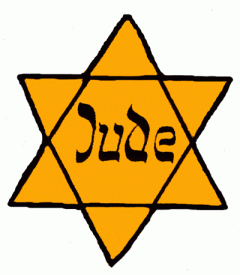
This week at Ohio State University is Holocaust Remembrance Week. Like last year, I am giving a small speech to commemorate this sad occasion at OSU’s Jewish organization, OSU Hillel, during the Friday night service. Since I know most of you won’t be at Hillel, I’m posting my thoughts on the subject here. If there are any grammatical errors or misspellings that I missed, please forgive me, it was not my intention to leave those there.

I hope you enjoy reading this and that it affects you positively. Thank you for reading.

***

It’s been nearly sixty-eight years since the Holocaust ended and Adolf Hitler committed suicide, signaling the end of the war in Europe. The war left millions dead, millions more displaced, and thousands of questions unanswered, many still unanswered. The most important question though, at least for those of us who commemorate the estimated thirteen million dead, is how could the Holocaust happen?

As one of my majors is History, and my focus is on the war in Europe, I could go into all sorts of reasons as to why the Holocaust happened. I could go over for hours on the “Stabbed-in-the-Back” legend, Germany’s political and economic conditions during the Weimar era, Hitler’s underlings meeting at the Wannsee to determine the Final Solution, quotations from Mein Kampf—but the one reason I’d like to focus on can be summarized in one simple word: dehumanization.

Hitler made numerous insinuations about the Jews of Germany and the rest of Europe. However one thing that remained true of every insinuation, and that was the Jews were less than human, as if they were monsters with barely human form. As more people came over to Hitler’s side, more and more people were willing to see the Jews and all those that Hitler deemed “sub-human”, as not a human being like them.

And once you see something as non-human, it becomes easier and easier to discriminate against it. First the Jews and all “sub-humans” were discriminated against. Then legal measures were taken to turn “sub-humans” into second-class citizens. And then the “sub-humans” were turned into slaves. And finally, cattle to be slaughtered and thrown out with the trash. Such is the value of things considered less than human. It took the efforts of many Righteous Gentiles, risking their very homes, security and lives, to see past this illusion of inhumanity and protect many thousands from the gas chambers Hitler had built for us. If more had thought like the Righteous Gentiles, perhaps more people would’ve survived the Holocaust.

We often think that the events of the war couldn’t possibly happen today. Sadly, we are so wrong. As we all too well know, minorities in this country such as African-Americans, Hispanic-Americans, and Asian-Americans were discriminated against for years, and even amendments to the Constitution haven’t totally brought those with darker skin to the same status as whites, whether it be educationally, economically, or socially. Stereotypes keep well-qualified workers away from jobs, and can even lead to them being imprisoned simply because of their race.

In addition, women the world over are given second-class status, and any actions to rise above that status can get them beaten, imprisoned, committed to insane asylums, or even executed, all in the name of “morality and modesty”. Even in countries where this is not the case, such as America, women still aren’t equal to men in the eyes of the Constitution, and their voices are often drowned out by government officials who do not represent their interests.

And we all know that many people in the LGBT community still lack the rights of straight people. In certain countries homosexual activity can get you jailed or killed, and even in today’s air of equality, there are those who will stop at no end to keep the LGBT community in the place they are now, simply because they are different.

One of the greatest teachers of Judaism, Hillel the Elder, taught that “what is distasteful to you, do not do unto others. That is the whole of the Torah; the rest is commentary. Go and learn it.” By “it”, Hillel does not refer to the Torah or commentary, but the lesson that we may derive from this main truth. So when you go out tonight, remember that you would not like to see happen to you, don’t wish it or perform it on others. And if you see someone less fortunate than you, don’t look down on them, but ask yourself, “How can I help this person whom I might be like if I were in a similar situation?” And then once you’ve thought about it, act upon your conclusion. That is the whole of Hillel’s teaching. It was applied by the Righteous Gentiles during the Holocuast, and it can still be applied today, by you and by me.

Thank you and Shabbat Shalom.

I had a bit of a revelation last night, but I haven’t been able to share it until now. So without further ado, here’s my revelation:

Last night I was watching the second episode of the new TV series Hannibal, which for those of you who don’t know is a prequel to the Hannibal Lecter novel Red Dragon. As I watching it I was seeing all these little things they were doing to develop the characters that the author of Red Dragon, Thomas Harris, hadn’t done when he originally wrote the novel. It struck me then that I had committed a grevious error in my own serial killer thriller, Snake: I hadn’t gone into any sort of character development whatsoever.

I hadn’t gone into the pasts of any of the characters, only focusing on the events of the story and what immediately precipitated those events. I had not gone into any detail on why the Snake was so twisted, why the female lead was so defiant and spunky, why the villain was who he was, none of that! I’d left it all up to the imaginati0n of the reader, but now I realize that might’ve been a mistake. I mean, the reasons why we emotionally invest in characters is that we want to know them, not just what they do in a story.

So I’m going to go over the manuscript one more time and see where I can add in more character development. Perhaps then I know it’ll be ready for publication. Heck, my beta reader’s on board with it, so why not?

I’ll let you know how things go after the third draft is done. Hopefully it’ll all go well.

I’ve only attempted to write flash fiction once in my life, back in high school. The attempt did not go very well: I was barely able to keep the word count under 1000 words, and the magazine I sent the piece to didn’t like it, something about the twist at the end. I have not attempted to do any sort of fiction under 1000 words since.

However lately I’ve been thinking of trying again. After all, if I can make a meaningful statement in a Facebook status, which is usually less than 100 words, why couldn’t I do a piece of flash fiction? Luckily my creative writing class was having a small lesson on flash fiction this evening, so I got experience from one of the best teachers at Ohio State University. Using examples we had to read for homework, my teacher taught us some things about flash fiction and then left the room to give us time to write our own stories. When he got back, I was eager to read my story to the class. He suggested a change, but then said I had the form down. Considering my first attempt was such a disaster, this was a much-needed piece of encouragement.

So now I’ll touch up the story I wrote in class and write another one that’s been sitting in my disturbed head for a little while. I’ll see if I can get either of them published in a magazine and then post about it here. Wish me luck, folks. I’m embarking on a bit of an adventure for myself, and in less than 2000 words to boot. (speaking of which, this post is 277 words. Who’d have thought?)

I woke up yesterday morning and was filled with memories of some of my old attempts at writing, the first fiction stories I ever wrote, and how they shaped and defined me over the years, and how I got to this point in my writing.. I wanted to write a post about them, but with all that was going on yesterday, I didn’t have the time. Well, better now than never, right?

The first time I tried to write anything, I must’ve been five or six, eight at the most. I had just seen Harry Potter and the Philosopher’s Stone for the first time and then read the book, which was infinitely better. My mind was blown, and I could only think to myself, “I want to write something like that”. So I did, creating a similar story to HP1 except with the genders of the characters switched (even then, I had a thing for strong female leads, I guess). I called this obvious copyright violation Amanda Robinson, I gave her a cat instead of an owl, and I planned that the cat was a prince in cat form who would be my main character’s love interest at the end of the book, but beyond that same basic plot as HP1. I didn’t finish this work, either because I had the good sense to stop before I got sued or because at that point in my life I couldn’t keep my focus on any one project for very long. But it did spark my interest in writing, which only grew as time went by.

My next major project was a pirate adventure story called Bane Nycroft and the Maelstrom Pirates (I’m not sure if this one was inspired in any way by Pirates of the Caribbean, but it’s a possibility). That story featured a lycanthropic teenage pirate with a stolen Navy ship, leading a band of fellow orphans on the high seas and stealing from rich government banks and fighting monsters and demons. Along the way the pirate picks up a rebellious princess and they discover an island where all sorts of strange and magical creatures reside, and eventually they take on a prince who’s actually a demon in disguise. This one went through several rewrites, each rewrite growing more supernatural as time went by. Eventually I lost interest, but more than Amanda Robinson, Bane Nycroft gave me a taste of what professional fiction writing was like.

After that came the Davis trilogy, a couple of vampire novels that were inspired by the movie Van Helsing. In those novels, which fused a lot of the Buffy mythology to Van Helsing and my own twisted imagination, a teenager commits suicide after seeing his crush with her boyfriend. The teenager makes a deal with the Devil to become a vampire and take over the world and make the girl his vampiric bride. The girl, on her way to becoming a vampire, must band with her boyfriend, her older brother, and her best friend, who happens to be a witch, to stop this horrible vampire from turning the world into permanent darkness. I actually got to the third book with this one, but at that time the slow realization that nobody would want to publish such a confusing story that ripped off so many works came over me. Plus as I got further along the story got more and more sexualized, which sort of corresponded with where I was at that point in my teenage years.

I wasn’t entirely finished with the vampire mythology though, and almost immediately afterward I began work on Mahiro, which in my opinion had the first inklings of the style of writing I have today. In it a teenage boy travels to an alternate universe inhabited by vampires. While there, he is found by Mahiro, the queen of vampires, who takes a liking to him and turns him into a vampire. But before she can finish the ritual and take his soul, he escapes and finds the human resistance, where he assembles a team of crack fighters to help him take on Mahiro and perhaps find a cure for vampirism. At the same time, he must deal with a romantic triangle, being drawn both to his girlfriend, whom he left on the other side of a dimensional portal, and an equipment tech with some terrific sharp-shooting skills. It was promising, but at that point Twilight was hugely popular and was gaining more fans everyday. As a consequence the number of vampire books out there was astronomical, and I didn’t want to compete with that. With that in mind, I shelved Mahiro until a time I could bring out the characters again and rewrite the story. Until then, no vampires for me.

There was also a poorly-researched caveman story and a Frankenstein-esque horror story I wrote in between Bane Nycroft and the Davis trilogy, plus some attempts at zombie literature. Other than that, those were the main works that preceded the creation of Reborn City, which I’ve stuck with up until now and I’m happy to say will be published as soon as the beta reading period is over, I can create a cover, format the whole darn thing, and get a copyright.

Over the years, I’ve written a lot. My writing style’s changed drastically since I started writing fiction, and I’ve incorporated new elements to my work with every author I’ve read and every experience I’ve gone through. I wonder what the kid who sat in front of the old Windows 97 computer hen-pecking out a Harry Potter rip-off would say if he saw me now and what my writing’s like (probably “Why aren’t you living in a mansion yet?”). I hope to continue to grow in my writing and to create awesome and scary works. And perhaps, unlike my previous work, the characters will be college students or even full adults instead of teenagers. That’d be a break from the past!

Two posts I read recently got me thinking about something that many people talk about or wish they had: luck. Some people say there is no luck or if there is you make your own. Some say luck is something where a strange series of random events play out in your favor. And others say there’s a strange system or algorithm to luck that sometimes you can tap into, especially when you have a rabbit’s foot or some talisman like that. But how does luck work in the writing business, especially in these turbulent times when the author has to do so much themselves just to get their work into the hands readers, even the interested ones?

Well, that depends on who you ask: my friend and fellow author Pat Bertram (you might remember her as the person who did that wonderful interview a while back) mused in her article on the nature of luck and quoted a professor who believed that luck was the result of a consistently positive outlook on life (for the article look here: http://ptbertram.wordpress.com/2013/03/13/can-you-change-your-luck/). And today, I read another author by the name of Richard Levesque, who concluded that no matter how much work you do on your own to advertise your book, luck still plays a big part in your success (for his post read here: http://richardlevesqueauthor.wordpress.com/2013/04/01/how-much-does-random-chance-account-for-a-writers-success/).

What’s my take? Well…it’s a little bit of both, with some of my own spiritual beliefs mixed in. First, I think having a positive outlook helps everyone on the road of life. You can be in a wrestling match and feel discouraged that the guy you’re facing is bigger and weights much more than you and let him beat you…or you can let yourself stay positive, notice that his weight is great but his stance is sloppy, and tackle him that way. You’l think “Lucky I noticed that”, but truth is, you were able to do that because you didn’t let yourself admit defeat and kept fighting, not just physically but mentally and psychologically, which allowed you to see that winning move.

At the same time, sometimes luck comes in random coincidences and events. Some of you remember nearly a year ago that I wrote a review for Anne Rice’s The Wolf Gift, then I sent her a letter telling her I enjoyed the book and including a link to the review, should she ever get bored. Well, either Ms. Rice reads a lot of her mail and all reviews she can find or she was bored, because the next Friday she linked my review to her Facebook page, causing my stats to explode. Never expected that to happen, and to think that Ms. Rice read my letter, let alone my review, still amazes me.

Still, I think that those random events and coincidences might be sometimes manipulated by The Big Guy Upstairs. Why do so many people thank God after they’ve won or achieved something so important in their lives? Maybe becuase on some level they realize that a certain Some Being helped them achieve that goal. At least, that’s what it seems to me, and it’s the reason why I thank Him for so many good things that happen in my life.

However luck works, it’s undeniable that it does act in a writer’s life. JK Rowling was lucky that her books were such successes, and Psy was lucky that his video, out of so many, became such a viral hit. In essence, luck is something that gives artists of all types boosts so that they become great. I don’t know if this great luck will ever come to me, but that doesn’t stop me from hoping that it will. But until that luck comes to me, I’ll keep fighting and working so that my success can come that much more easily.

This morning I woke up with a memory and an idea: I remembered one time I let a friend of mine, whom I knew would not steal any of my ideas, look at the list of ideas for novels and other assorted creative endeavors. This was midway through high school and I’d probably just started the first draft of Reborn City. He sent it back to me with one note: Interesting.  A lot of ideas using magic here.

That was several years ago, like I said, and that Ideas List couldn’t have had more than 15 ideas on it at the time. Now it’s at 51 ideas and counting, and I thought I’d take inventory again. I went over the ideas, and I found some interesting numbers here. I share them with you now because they give insight into not only the sort of stories I like to write and create, but also gives an idea of who I am, and what my imagination gives birth to.

I’ll list these ideas, occasionally giving some information on why I gave these stats, and then I’ll tell you what I think of all these sorts of story ideas. You’re welcome to draw your own conclusions as well and tell me what you think. Also, please excuse the randomness of some of these stats. I listed them as they came to me. Also be aware that several of these ideas cross over with each other in terms of elements, such as serial killers crossing over with demons, science gone wrong featuring monsters, and so on and so forth.

Number of stories dealing with the supernatural: 29
–Number with ghosts: 6
–Number with monsters/demons: 26
–Number with magic: 24
–Number featuring God(s): 9

Trust me, plenty of stories featuring this sort of creepy stuff.

Number of science fiction stories: 9
–Number with science gone wrong as the main theme/driving force: 7

Number of crime/thriller stories: 17

Number featuring human antagonists: 33
–Number featuring serial killers/rapists/etc.: 25

Number of stories with strong female protagonists: 25

Number of ideas that aren’t for novels: 13
–Number of films: 3
–Number of TV shows: 2
–Number of comic books/mangas: 7
–Number of video games: 1

Number of ideas that are suitable for younger audiences: 1

As I said, I’d provide a little feedback on some of the numbers listed above. The first I’d like to draw your attention to is that most of my science-fiction ideas feature science gone wrong. Why? Maybe it’s got something to do with the fact that I sometimes wonder that our society, which is getting more technologically dependent with every passing day is going to find itself in a lot of trouble because of how much we rely on our technology. Although none of these stories feature Terminator-like elements, where the tech actually rises up to get us, I do think the stories do illustrate just how dangerous technology can be if we let it be the center of our existences, and shows just how paranoid I am about that happening. It may also explain why I always wait to try out new technology and social media until everybody else is using it. Makes it safer, I guess, at least in my strange mind.

Also, why did I emphasize stories with strong female protagonists? Because even in the year 2013, there are many novels/TV shows/movies/whatever where the female characters just fill a postition, often times to draw in male readers. And there are plenty of times when the female characters could be replaced by male characters and there wouldn’t be much change to the overall story. Imagine for one second that Hermione Granger from Harry Potter was a boy. How much would it change? The Ron/Hermione subplot would be taken out, but beyond that, there’d still be a smarty-pants character helping Harry figure out important stuff that’ll save his life later. Perhaps the readership, particularly the female readership, would be less, but it might still be a popular story.

Imagine how different this story would be if Katniss were a normal girl or if she were even a bad-ass boy? Not too fun to think about, is it?

So I write a lot of stories where female protagonists are like Katniss Everdeen: they’re indispensable to the plot. Change their gender or make them more meek or in a more traditional role, and you have by far a much less interesting story. Katniss is so popular not because she has two dreamy guys after her affections, but because she’s a kick-ass female with sharp-shooting skills and the determination to fight against a very corrupt system. All without showing off her boobs and butt as well. She’s something female readers want to be, and something male readers can fall for because of how different she is. So many of my female characters become like that, indispensable and not allowed to change or they would change the story for the worse.

By the way, I think that part of me that likes those characters might be due to my childhood, where I had a lot of women and girls around me all the time and where I had a lot of strong female role models in my life, including but not limited to my mother. In addition, a lot of the shows I watched when I was younger involved strong female main characters, most notably Sailor Moon (not afraid to put that out there, by the way). It’s no wonder i have so many strong female characters.

And finally, there’s the fact that one of my ideas is suitable for children. Unusual for a horror writer, right? But I recently discovered some of the old cartoons I used to watch when I was younger, and one of them I relly enjoyed watching again. I hope someday to reboot that as a movie, if I should ever have the money, power and influence to be able to do that. So I list it there, with the hope that I can someday be able to create a fun little movie reboot with jokes for both kids and adults and a plot that’ll draw in any viewer.

I sometimes think my subconscious looks a little something like this. Eerie to behold, right?

So what does all this say about me? Well, without the actual list it’s difficult to pull up any sort of psychological profile about me. But I think it does give you an idea of what sort of stories I’ll put out in the future, and what you can expect from some of them. So either you are either very psyched to read my work or you’ll never pick up a Rami Ungar book as long as you live. Either way, it gives you some idea of who I am and what I like to write. And I think that’s what I want people to get from this post.

Got any questions? Feel free to ask, and I’ll make up an answer as best I can.

You’d think I’d do something a bit more festive for my 400th post. But no, all I got is some bad news.

Truth is folks, I’m in a little bit of a slump. I have two short stories that are not coming along like I want them to, and I feel absolutely no desire to work on either of them while I’m drained. Every time I sit myself down in front of a computer with the intention of writing, I find myself instead watching crime shows online or reading or playing Angry Birds on Facebook. Not only that, but I’ve been neglecting one short story I’ve been meaning to send to some magazine or another, but when you’re a full-time student with homework and a part-time job, you sometimes don’t feel like doing the research.

What I’d rather be doing is working on novels. I’d rather write or edit them or even research them. But the only novel I’m going to write anytime soon is Reborn City’s sequel, which I won’t start on until I’ve put out RC on the Internet, and my beta reader for RC is only halfway through the novel at this point. And although I have plans for a sequel to Snake, I want to wait a little while before I even think of starting the sequel to that, and besides, my beta reader for Snake’s been busy herself, so she hasn’t had a chance to start on it yet.

So what do I do in the meantime? Work on short stories, but those are harder for me than novels. Novels I can stretch out, go deep into the character’s history and identities and personalities, do all sorts of interesting twists and turns and create a whole mythology for. Short stories are compact, usually less than 10,000 words, and we writers have to fit a whole story into that amount of space. You can see where a guy like me, who grew up on a steady diet of novels, usually novels that were part of series, might encounter problems. The joke is that the short story is the novel’s neglected younger sibling, but really, it’s the sibling that requires more skill to handle.

So I’m in a slump. I have no idea what to do at the moment, with no novels t0 write, only the occasional chapter to edit, and two short stories whom I can’t seem to fully finish. Even when I come up with new ideas for novels, which I do a lot, I can’t work on them anytime soon, so that’s not helpful.

Any suggestions would be most welcome. They could be anything from tricks or strategies to help me finish the short stories to suggestions of something else I could try doing while I wait for inspiration and chapters to edit and whatnot.

And if you feel the same as me or have felt the same as me, please let me know. It’d make me feel better.

A friend of mine sent me a link on Facebook. The link led me to an article about a study that suggested in a one-sentence introduction and three slightly-longer but very neat paragraphs that fiction books are becoming scarier. What did the study base this assessment on? The leaders of the study perused a Google book database for words relating to six human emotions: anger, disgust, fear, joy and sadness. One of the interesting things they found in the data set they got was that words relating to fear seemed to be on the rise, while disgust fell sharply and the other four emotions leveled off.

The obvious conclusion, according to these researchers, is that fiction is becoming much more horrifying.

I disagree. Here’s why:

First off, that Google database only represents 4% of books published between 1900 and 2000, and that’s not including self-published books or books published as serials in magazines. If you’re only including 4% of any population, even a collection of books, it’s not very representative of it. Second, the study was based on words signifying emotions. Just because a type of emotion shows up in a story more and more often doesn’t mean you can classify it as horror or romance or whatever. Perhaps the story in question might be a novel about a guy with agoraphobia who feels all sorts of fear when it comes to leaving his apartment. That’s more literary than horror, mind you.

And third, my own personal experience tells me that horror is not necessarily on the rise. Even today, there are many publishing houses, agencies, and magazines that refuse to deal in horror, even when they deal in science fiction or fantasy, horror’s friendlier and kinder genre sisters. Those that do deal in horror, particularly magazines, are either exclusively into horror, or they only deal with a certain type of horror, one that either crosses over into sci-fi or fantasy or, while still scary, is tame enough that readers won’t be turned off by reading it. If horror’s on the rise, there should be a response in the publishing industry towards it, but I’m still waiting to see this response.

And yes, there’s been a rise in TV shows catering to horror fans, so one in literature may seem only logical. Not so much: contrary to the opinion of some, I don’t believe that a love of horror stories just arose out of the television-watching audience. Those horror fans were always there, they just had to content themselves with books or movies (bad or good, you take what you can get with these films), simply because horror wasn’t really available on TV. Ryan Falchuk, creator of American Horror Story, said he was taking a monumental risk, bigger than what he’d been taking with Glee, by trying to put a horror show on TV, even if it was on a cable channel like FX. Luckily the investment paid off, but there was always the chance things could’ve gone sideways, and that chance might’ve put off some producers. The creation of shows like The Following or Bates Motel are mostly trying to capitalize on the success of AHS, and other shows with supernatural/horror themes that came before AHS–Vampire Diaries, True Blood, or Teen Wolf–may have horror elements, but they have plenty of measures of comedy and romance and drama to keep more mainstream viewers interested in the show, just like with Buffy and Angel of ages past.

So while a rise in words evoking the emotion fear might mean a rise in scary literature, I’m more suspicious based on all the evidence I’ve listed above. If there happens to be a rise in horror though, and I’m just not seeing it, then splendid! I hope people buy my books when they come out.

Oh, and before I include a link to the article about the study below, I’d like to mention one line of the article that really annoyed me. The author of the article said that terrifying people is easy. Ex-squeeze me? Terrifying people is damn hard! Look at all the movies out there that rely on jumps and nudity to thrill and terrify audiences, and see how they fail miserably. It’s dificult to really scare people, and there’s an art to it that even I haven’t fully mastered. Keep that in mind the next time you find yourself watching or reading a very chilling tale and you think about they make these sorts of stories so terrifying.

Anyway, here’s the link to the article. Enjoy:

http://www.slate.com/blogs/xx_factor/2013/03/22/study_finds_more_fear_words_in_books_now_than_ever_before.html

I did a TNBTBH back in February (and yes, that is an abbreviation) for The Quiet Game: Five Tales To Chill Your Bones after being nominated by fellow blogger and author Lorna Douvaena. On Friday, my friend and fellow author Matt Williams did his own TNBTBH on his Whiskey Delta trilogy (check out the exact post here: http://storiesbywilliams.com/2013/03/23/next-big-thing-blog-hop/). As usual with these posts, he nominated several others to do this, including me. So I’m doing a Part 2 to my own TNBTBH…without Jason Voorhees behind me (anyone get the reference? If not, you need to watch the first two Friday the 13th films).

And what work am I doing this time? Reborn City, of course! Matt and I both seem to have a fondness for it.

What is the working title of your book?

Reborn City, which is the name of the city in the first book and the name of the trilogy of the whole. I wanted to do a different name for the trilogy, but guess what? Trilogies named after the first book series are on the rise. Might as well get on the bandwagon.

Where did the idea come from for your book?

I was walking home one day from the library back in high school and was listening to rap music on my Walkman (yes, I had a Walkman in those days). At that time I’d just seen and become enthralled with the movie Freedom Writers, which was filled street gangs. A stray thought went through my head that I should write a story about a street gang, and it took hold. At that moment an explosion went through my head and I went to the nearest Dairy Queen to eat ice cream and figure out how I should go about writing a gangster story. All the elements of the story–the science fiction element, the themes of racism and Islamophobia, the street gang leaders with their special powers–came later on. As they say, the rest is history.

What genre does your book fall under?

Science fiction. ‘Nuff said.

Which actors would you pick to play your characters in a movie?

If I had a choice…I’m not sure. I’ve such a firm idea of what my characters look like in my head, I’m not sure any current actors could play the characters. We might need to look for some newcomers.

Of course, I wouldn’t mind if Samuel L. Jackson played my main villain Jason Price. He’s the perfect actor for the role, and I actually based the character on some of Jackson’s best performances.

What is the one-sentence synopsis of your book?

“Street gangs in a post-apocalyptic future”. That’s what I tell people when they ask, anyway.

Is your book self-published, published by an independent press, or represented by an agency?

It’s going to be self-published. However, if a major publishing house wanted to give me a deal…well, let’s talke and see if it comes to anything.

How long did it take you to write your first draft?

About two years. I was in high school when I wrote it, so I had to take a lot of breaks for school, homework, my after-school job, the Sabbath, and just to find time to relax. I hope for the sequel I can keep it within six months, since I’ll hopefully have a lot more time on my hands.

What other books would you compare this story to within your genre?

I hate comparing one work to another, but I think that perhaps Hunger Games might be a good comparison. The government’s evil, and the fate of many rides on a bunch of disillusioned teenagers with a penchant for getting into deadly fights.. If that doesn’t sound like Hunger Games, I need to reread the books.

Who or what inspired you to write this book?

I think the thought that like Freedom Writers, both the book and the movie, inspired many teenagers to apply themselves through writing and words rather than fighting and guns. I thought if RC could help people, why not write it? That’s kept me going through the years, especially when I realized the book might also help combat Islamophobia.

What else about your book might pique readers’ interests?

I think that it’s a unique tale, involves street gangs in a post-apolyptic landscape, and that most of the characters have very real problems that resembles problems in today’s world might draw them in. But then again, read the book when it comes out and tell me what you think. You might like it.

That’s my TNBTBH. I hope you enjoyed it. And if you read this blog post today and you’re working on something, you’re nominated for a TNBTBH. Congratulations. Let me know when you’ve written your post!

Good night, everybody.

I’ve got a document called “Ideas” on my flash drive. The document is a list of ideas, mostly for novels, but there are about three films, a couple of TV shows, about four manga/comic book series (including one starring my superhero alter-ego Judgment), and even a video game. Tonight I added three new ideas to that least, officially bringing me up to fifty ideas. Yes, fifty ideas, none of them gray (yes, I went there). Although some of these ideas might actually depend on making enough connections to make a film or a TV show or whatever, some of them have already been brought into being (think Reborn City and Snake).

As I came up with Idea #49 last night, which is a novel based in Bolivia and featuring one very mentally unstable teenager, I realized something important: most of my work is not inspired by events in my life, but by the work of others. Reborn City was inspired by thinking of films featuring street gangs while listening to rap music, with the sci-fi elements added in while I had a snack at a Dairy Queen. Snake came from watching Taken and being totally rocked by it and later making the action hero into a serial killer. The series I plan to make my magnum opus when I write it is inspired by Schindler’s List and my favorite anime, taking some aspects of both and meshing them together with magic and steampunk. Idea #49 came to me after reading Hannibal and then letting my mind wander to Stepehn King’s Misery, with a South American setting mixed in after the idea came to me. All this and more, inspired by the work of others.

Is that a bad thing though, that I’m mostly inspired y others? Absolutely not! Just because “Art Imitates Life” is a famous adage doesn’t mean all artists have to abide by it. In fact, my favorite painting at the Columbus Museum of Art is a modern retelling of an old Dutch portrait. Every time I’m there (which isn’t often, but when it does happen) I have to see that painting or I don’t feel like my time was worth the trip. Plenty of movies, both good and bad, were inspired by the space craze that resulted after Star Wars came out. Books like Wicked and Alice I Have Been were based on The Wizard of Oz and Alice in Wonderland. And let’s not forget that there would be no Friday the 13th, Nightmare on Elm Street or other famous slashers if Halloween hadn’t started the slasher boom in 1980 (some of you may wish it hadn’t, but let me thanks the producers of that film for creating an influential genre in horror).

But all that aside, it’s important to remember that every artist gets inspired differently. Some take the events in their life and use it to create a work of genius. Others, like me, see or read or hear those works and come up with their own works thanks to a little inspiration from the works they’ve seen or read or heard. Others try to answer a question with their work, such as “Is humanity worthy of living?” or “Why do I feel this way and can I figure it out if I write it in a fictional context?” And some are just inspired by a quick kiss on the lips, a reminder from their lover that they are the most important person to them, and a shared cup of coffee and eggs in the kitchen…and I am not sure where I am getting this scenario. It could happen, though.

So writers, artists, musicians, actors, whatevers–create however you want, whatever your inspiration. Each one of us works in a different way, and we should be inspired by the way that works best for us. After all, isn’t that how the best art is created?

What inspires you? And do you have any memorable moments of inspiration?

Please let me know.