Author Archive

Well, it’s been a year since I last had a Lovecraft binge (see Parts 1, 2, and 3 for my previous binges). And while I didn’t read any actual Lovecraft stories in the year (holy cow, that long?) since my last binge, he was certainly never far from my mind. I read a lot of fiction influenced or modeled after his work, including the Lovecraft/YA novel Awoken* (read my review here), shopped around my own Lovecraft-themed story The Red Bursts (still working on that), and wrote an article about why there’s not more adaptations or even a cinematic universe based on his work. No, surprise, after all that I was ready for another dive into his work. And boy, did I enjoy the eldritch swim.

So if you’re not familiar with HP Lovecraft (and I’d bet good money that you’re not), he was an early 20th-century author whose ideas and stories proved very influential on storytellers like Stephen King, Guillermo del Toro, and Allan Moore, among others. He’s considered the father of cosmic horror, the idea that humans are basically ants in our universe, that there are beings and truths so great and terrible that even glimpsing them can cause madness and death. It’s pretty bleak stuff, if you think about too much about it (which I have).

So this time around, I read “The Case of Charles Dexter Ward,” Lovecraft’s only finished novel, “The Colour Out of Space,” “The Dunwich Horror,” “History of the Neconomicon” and “The Whisperer in Darkness,” as well as several fragments, one letter excerpt, and one parody story, but I won’t go over those. And I got to say, these were definitely some of the most enjoyable of Lovecraft’s stories. They were consistently creepy and kept me engrossed in the story, as well as with the most accessible language (dude liked to pretend he was a contemporary of Poe, rather than a contemporary of Ernest Hemingway). Or am I just used to his style now?

The interesting thing about these highlighted stories is, they also mark Lovecraft’s shift from pure horror to science-horror. Sure, he’s done that before–“Herbert West: Reanimator” is the story of two men trying to discover the key to bringing back the dead using science, a theme also explored in “Charles Dexter Ward,” but more thriller and magical than science-fiction–but here there was definitely a more sci-fi element in his work. “The Colour Out of Space” and “The Whisperer in Darkness” both involved aliens, with the former involving a sort of alien infection and the latter involving aliens that have been visiting Earth for centuries.

Why did Lovecraft make this shift? Well, around the time these stories were written–late 1920’s and early 1930’s–was also the birth of science fiction as a proper genre. Pulp magazines like Amazing Stories and Astounding Stories were huge sellers, and since pulp rags like these were where Lovecraft normally published his work, he would’ve been aware of the young genre and its exploration of humanity’s possibilities through space exploration, technology, and aliens. It’s no surprise that he’d take elements from those stories and give them a freaky twist. And lo and behold, it led to Lovecraft writing some of my favorite works by him (especially “Colour Out of Space.” God, that was freaky, considering that what happened in that story could maybe happen in real life).

Honestly, I’m glad I decided to check out HP Lovecraft two-and-a-half years ago. Sure, his early works can be hit-and-miss, but as time went on, he got better. And by this point in his bibliography, he was very good at writing stories that stayed in your mind. It’s a shame he didn’t achieve more of a following during this time, because maybe then we’d have more works by him (sadly, he died in 1937 at barely forty years of age), and he’d be more well-known today.

And while I’m done with my latest binge, I’m looking forward to my next one, whenever that is. Especially if the stories from this point on are as good as the ones I read this time around. And seeing as At the Mountain of Madness is the next story in my collection, I’d say that’s a definite possibility.

Have you read these stories or others by Lovecraft? What are your thoughts on them?

*Funny story about Awoken: so I follow this woman named Lindsay Ellis on YouTube (check out her channel here) who does a lot of videos on our media and culture. Yesterday she uploaded a video about whether or not the hate over the Twilight franchise was warranted. During said video, she mentions she and friend/frequent collaborator Antonella “Nella” Inserra wrote Awoken as a parody of Twilight, only with Lovecraft characters instead of vampires. My mouth hit the floor. I had no idea that the novel was a parody of Twilight, let alone written by those two women under a pen name. Though now that I think about it, it explains quite a bit.

I reached out to both women on YouTube and Twitter, letting them know that I read the novel, my ignorance of its authorship, how much I actually liked it, and that I reviewed it on this blog. They asked for a link, and I sent it to them. Since then, I’ve gotten hundreds of views from their readers/viewers on that one review, and the number of reads is still growing. Wow. Didn’t expect that. Pretty cool. Probably won’t last a week, but it’s still cool.

Also, I learned about Poe’s Rule: if you write a parody of something, unless you ad a healthy dose of comedy, people will think it’s serious fiction in a particular style. Which is apparently what happened to me, as these readers are telling me. Good to know.

Well, I didn’t expect this to happen today. I figured it would happen at some point this week, but I never expected to get through the last three chapters so fast (especially since one of those three is thirty-three pages long). But yeah, I finished the fourth draft of Rose, the one edited with beta reader feedback! And all in a single month. Damn. I’m kind of proud of that rate of progress.

So if you’re among the many new Followers of Fear who are hopping onto this blog recently (hi! How are you? Are you enjoying my ramblings and opinions?) and you have no idea what Rose is, it’s a novel I started writing in college as my thesis project. The story is about a woman wakes up with amnesia and starts turning into a plant creature (and that’s just Chapter One). I did two drafts of it during my senior year of college, left it alone for a year, tried to pick it up again after I got my job, found progress very slow and dropped it, picked it up again this past summer with a new plan of going about editing the story, got through the third draft in four months, had some great beta readers look at the book and give me their feedback, and then somehow edited the book in a month (still gotta toot my horn on that one).

And you know what? This has been the most challenging story I’ve ever had to work on. I know I’ve said that before, but it’s the truth. Throughout the writing and editing process, this story has mutated more than the titular character does (because how else are you going to describe what she’s going through?)! Even during the very first draft, the story went through major changes. I initially had a different direction entirely for the story, which involved a lot more elements of Japanese folklore than appears in the novel (already heavily influenced by Japanese folklore), and involved some apocalyptic elements too. Thankfully, my thesis advisor helped me see how unfocused that direction would’ve been, and how much more intimate and scarier it would be if I went in another direction. This ended up being the route the story took, and if my beta readers can be believed, it’s a good thing I did, because the novel works the way it is now.

But honestly, that’s just the tip of the iceberg. So much changed with each draft, sometimes during the editing of a draft. Elements were added, subtracted, moved about, propped up and knocked down every day as the writing and editing needed. I added an entirely new plot element to the third draft to both add some length to the story and to foreshadow something that would be revealed later about one of the character. In the fourth draft, I changed the location of one minor element just so it wouldn’t seem unnecessary. I even wrote a whole new chapter for the third draft because I I needed it to do some necessary revelations about the antagonist.

Hopefully this happens to Rose very soon.

I keep thinking of those weird metal amalgams where if you add the right sort of current to it, you can change its structure (I’m pretty sure that’s a thing). Rose is very much like that: ever-changing with each new iteration, and hopefully becoming better each and every time.

Now that I’ve made that deep metaphor, I think I’ll talk about page and word counts, because I like talking about that. And while the shift from second to third draft was pretty dramatic, owing to the fact that I added about forty-thousand words of material to the story, third to fourth wasn’t that dramatic. If anything, it’s a bit smaller: the third draft was 266 pages (8.5″ x 11″, 12-point font, Times New Roman, double-spaced) and 84,677 words. The fourth draft was 264 pages and 84,390 words. A total drop of two pages and 287 words. I honestly thought it’d be a bit more, but I guess I was wrong.

So what’s next for Rose? Well, after four drafts and great feedback from my beta readers, I’m going to try looking for a publisher. I’ve been doing my research and I’ve got a few leads that I think could pan out, so hopefully I’ll have news within the year to share. And in the meantime, there are a couple of short stories, one novelette, and a blog post for Self-Published Authors Helping Other Authors I’ve been waiting to work on till I was done with the fourth draft, so I’ll likely start on those tomorrow. Hopefully I can get them all done before any publisher takes an axe to my door in their eagerness to publish me (I wish!).

Well, Followers of Fear, that’s all for now. It’s getting late, I’m tired, and I’ve got a big day tomorrow. I’ll let you know how things are going as they happen. Until next time, pleasant nightmares!

You know, I’ve seen a lot of YouTubers do series where they watch specific kinds of stories–sequels of great hits, weird-ass anime, the Mummy series, etc.–and I appreciate what they do, but I feel like I’m getting an idea of the horrors they have to endure just to entertain me. A lot of what they watch can be really bad or silly or painful, and they endure it just to bring me YouTube commentary and humor.

How do they do it as often as they do? They must have some serious endurance.

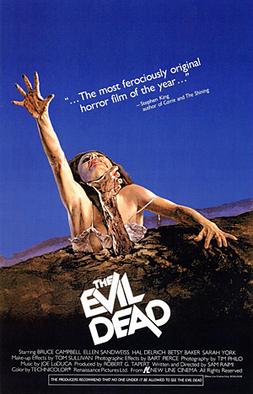
WHAT’S IT ABOUT: A bunch of friends/lovers go to a cabin in the woods for the weekend, and obviously, something horrible happens. It’s the embodiment of the cliche, if not the original that started the cliche.

WHY I DIDN’T LIKE IT: I saw it right before the remake came out, and I thought it was totally stupid. It was dated, the effects were terrible and cheap, and far from scary. I could not see how it became a phenomenon. And after I saw the remake and loved it, I was amazed that the original didn’t just get swept into the dustbin of history.

WHY I REWATCHED IT: You hear enough people talk about the influence of the original, and even do YouTube videos comparing both films (YouTube is a big part of my life, if that’s not obvious), you start to wonder if you missed something. It also started a phenomenon, as well as jump-started the careers of Sam Raimi and Bruce Campbell. Not to mention that the shooting was pretty dangerous: people were actually thrown into and had furniture fall on them. Not only that, but when the characters are fighting demonically-possessed friends with sharp knives, they’re actually fighting other actors with gunk in their eyes, completely blinded, while using actual sharp knives! Kind of makes you want to see if your opinion needs reevaluating.

THOUGHTS: Ummm…it’s better than I remember it. A little better, anyway.

There are some things about this film that are good. The camera work is always interesting, showing things from points of views I don’t normally see in horror films. At times, it feels like a drone is holding the camera: odd angles, fast movements, branches and whatnot hitting the camera. There are some really atmospheric moments, like when the characters arrive and there’s this eerie music and the porch swing is knocking against the wall.

And there are some shocking moments, like the…rape-tree scene. Yeah, if you didn’t know, that’s a thing this movie has. And it’s shocking and disgusting. Which is what the filmmakers were looking for, the most shocking horror film ever put to screen at that time, so I guess they got what they wanted.

But I have a lot of problems with this film. For one thing, the shock and awe only stays shocking as long as the audience isn’t desensitized. And I’ve been desensitized since I was nine and saw my first PG-13 movie. And when that stuff loses it power, what’s left has to hold up the rest of the film, and it doesn’t do that very well. Biggest issue I have is the effects: I know they’re going for memorable and it is, but they’re very silly at the same time, and in a horror film, even when I put aside my distaste for excessive gore, that’s just going to turn me off.

While I don’t expect the characters to be that fleshed out–not that kind of film–but they could’ve done a better job of establishing their relationships early in the film. I could not tell who was dating who, and they waited till nearly two-thirds into the film to reveal that Girl #3 was Bruce Campbell’s sister. Um…could’ve pointed that out earlier. I thought she was just a fifth wheel who went with the other four so she didn’t have to feel bad about not having a boyfriend. Which she was, but the sister part should be mentioned earlier.

And weirdly enough, for the bare-bones story, it actually gave me questions. For one thing, after the sister’s possessed and one of them is badly injured, the other characters are way too calm. Why are you so calm? Your friend’s possessed! Be a bit more freaked out and active! And why are the spirits said to be “sleeping” prior to being summoned by the incantations in the Book of the Dead, but they’re able to possess a hand or cause cars to swerve into the wrong lane? They seem pretty active to me! Are they like Cthulhu, sleeping but still able to affect the world, they’re just not at full power unless under certain circumstances? I’m so confused.

JUDGMENT: It may have caused a phenomenon and started a few careers, and you should see it for those reasons, but I wouldn’t expect to be really scared once you’re past age fourteen. On a scale of 1 to 5, I give the original Evil Dead film a 2 out of 5. That may be the unpopular opinion, but let’s face it: some classics don’t age well with time. We saw that with Texas Chainsaw Massacre, and I’m seeing that with Evil Dead. And I’m not sorry for pointing that out.

At the very least, I’ll check out the next film. I hear that and its sequel are at least a bit more enjoyable. And hopefully they will be.


That’s all for now, Followers of Fear. I’ve already reserved #7 in this series, and I think that, even if I don’t enjoy it as a film, I’ll find it interesting from an academic point of view. I’m talking Nosferatu.

Until next time, pleasant nightmares!

I’m far from perfect. And there are lots of areas I can be better (especially my impulse control when it comes to sweets). However, this post will be focused on the writing aspects I can improve upon.

There are a couple of reasons why I want to talk about that here. One is that for personal things I want to improve upon (damn you, sweet tooth! Damn you to hell!), I only talk about those sort of things here when it’s really important. Like if I’m really struggling with my choices in life, or if I want to talk about being on the spectrum. And at the moment, there’s nothing in my life I feel like talking about here at the moment. Second, this is a blog for a writer, so it makes sense that if I’m going to talk about improving stuff, it’ll be about improving my writing. And finally, while a lot of people I know in real life and even a few people online treat me as THE writing expert, especially when it comes to fiction writing, I’m far from an expert. If I were an expert, I’m pretty sure I’d have several bestsellers out by now, a few of them would have been made into movies already, and I’d be writing full-time in a nice three-bedroom, one-and-a-half bath house (I have goals that I aim for).

Point is, as a writer there are areas I’d like to improve in, so I thought I’d list some of those and ask for your feedback. Many of you who follow this blog are writers, and have much more experience than I do. Perhaps you’ve dealt with some of the issues I’ve dealt with, and have some tips on how to deal with them. Anything’s possible, right?

1. I’m addicted to adverbs and gerunds. Now if you don’t remember most of the fancy terms from grammar class, adverbs are words that end in “ly” (wildly, musically, horribly) and gerunds are words ending in “ing” (ending, writing, killing). And I overuse them in my writing (see? Did it right there). One of the biggest criticisms I got from Rose, truth be told, is that I overuse them. In fact, I almost used “actually” instead of “truth be told” in that last sentence. And in the one before this, I started writing “nearly” before I switched to “almost.” And in that last one, “I switched” started as “switching.” And before that–oh, you get the idea!

A couple of years ago, I wrote a post about how I had a similar problem with semicolons. I overused them, especially when they weren’t needed. Once I recognized the problem, I was able to correct it. But I have a feeling correcting these issues won’t come so naturally (see?). For one thing, while the semicolon issue was about fixing incorrect uses of punctuation, what I’m doing here isn’t technically wrong. These are speech patterns used everyday, you just don’t see them in a lot of fiction to the extent I use them. At least, not really good fiction. So one thing I’d like to do is know when to use adverbs and gerunds, and when not to use them.

2. Passive vs. active voice. I have a lot of trouble telling those two apart. Which is bad, because editors and publishers tend to prefer active voices in fiction, and I somehow always end up writing in passive voice. What’s the difference? Is there a video I need to watch or something that explains this? Help!

3. Writing snappier action. This is something I’ve taken steps to improve, but it’s still a work in progress. I tend to write these long sentences that illustrate a character taking a certain action. Example: “She stood, walked to the kitchen, and placed the glass in the dishwasher.” It’s a good sentence, but for fiction, this is better: “She put the glass in the dishwasher.” Boom! And if I’ve already established that the character is on the couch, it works even better. It shows the same amount of action with less words.

I’m trying to implement this sort of snappy action into my stories. Editors and publishers seem to like it, and when there are limits to how many words a submitted story can have, it’s helpful in reducing the word count. Still, it’s going to take some work. This, like the adverbs and gerunds and possibly the passive voice thing, are deeply ingrained habits.

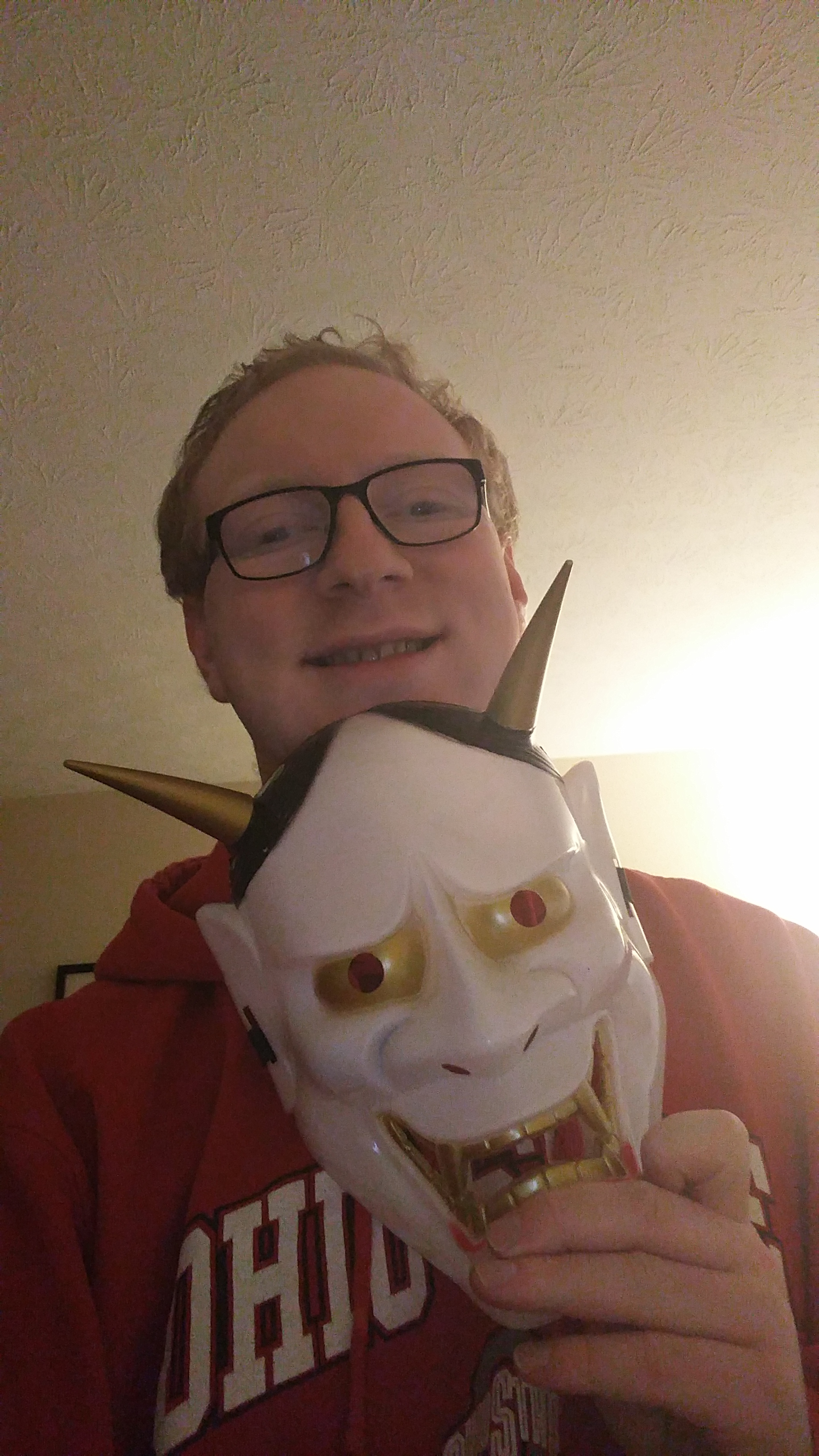
No reason to add this photo. I just want to show you my new author profile pic.

4. Short story writing. I’ve written novels or works meant to be novels for most of my life. That’s what I mostly read, so that’s what I mostly wrote. I’ve learned how to write short stories and read plenty of them since high school and college, but I’m still not as good at them as I am at novels. Which is sad, because I’ve had many, many ideas for short stories and novelettes over the years. And since I’ve spent most of my time on novels, I’ve written only a few short stories, and not many of those have been published.

What I want to do is write more short stories and novelettes, get better at writing them, and get a few of those published. Is it necessary, especially since I prefer novels? No, but a lot of authors I like do great short fiction, so I’d like to do great short fiction too. Good news is, I’ve been reading a lot of anthologies lately, and I should have a bit of time after I finish the fourth draft of Rose. That should give me time to practice.

5. Not listening to my anxieties. All writers deal with anxieties, especially with how their work will be received. Sometimes I let them have too much control of my mind, and I start freaking out Just yesterday, I got panicky over whether certain characters in Rose might be called tacky stereotypes. After a lot of discussion online with friends and colleagues, I don’t believe they are, but the worry ate at me for a while.

The important thing for me is just to be a bit more confident in myself, and the stories I write. And I should work on techniques to combat those anxieties when they try to tear at me. Because at the end of the day, I’ve still written some decent fiction. And I won’t let doubt or fear keep me from improving it and making it into possibly publishable fiction.


Well, those are the things I want to improve on with my writing. What are your suggestions on fixing those issues? Let me know in the comments below.

That’s all for now, my Followers of Fear. I’ve only six chapters of Rose left to edit, so I’ll hopefully get started on the next one tonight. Until next time, pleasant nightmares!

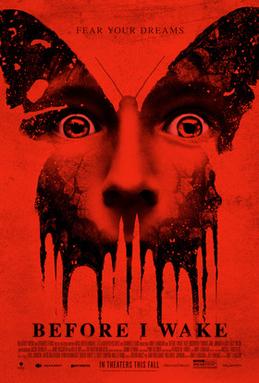
Before I Wake is a film that has been promising to come out since 2015. However the film’s distributor, Relativity Media, kept pushing it back and finally off the release schedule due to the company’s financial troubles and whatever decisions go on in Hollywood boardrooms. With only a promising trailer to go on, plenty of Americans were wondering if we’d ever see this film and if it would be any good if we did. However last year Netflix announced it had acquired the rights to the film, and this month they released it onto their streaming platform.

And as I’m sick today and didn’t feel like doing anything else, I decided to watch it and see if it would live up to my expectations (which was average at best).

*Sigh* I can see why it was taken off the release schedule by its cash-strapped distribution company.

Before I Wake is about Jessie Hobson (played by Kate Bosworth), who becomes a foster parent with her husband to young Cody Morgan (played by Jacob Tremblay) after their own son dies in a tragic accident. They soon learn that Cody’s dreams are able to manifest in the real world, and Jessie predictably starts using his powers so she can see her son again. However, Cody’s nightmares cause horrible things to happen, and Jessie must race to unravel Cody’s subconscious before it destroys everything around him.

And yes, I see the Nightmare on Elm Street influence, but let’s ignore that, shall we?

I’m not going to lie. This film was kind of disappointing. It does have its good points: Bosworth, Tremblay, and Thomas Jane as Jessie’s husband Mark have great chemistry. You really do buy Bosworth as a woman trying to fill the hole in her heart and sees Cody’s ability as a way to do that rather than Cody himself, and you also buy Mark as a man trying to be there for this kid and worried about his wife. And oh my God, is Jacob Tremblay some sort of prodigy? Because he is just amazing in this film. You really think he’s this earnest little boy who’s afraid of his powers.

And until we reach the last thirty minutes of the film, it’s decent.

But other than that, this film has some serious issues. The plot is kind of by-the-numbers despite the heartfelt emotions of the characters. The CGI monsters aren’t that terrifying after you get them into the light, and there’s more of a focus on this emotional connection than creating a scary atmosphere. And while I’m not opposed to focusing on a connection between characters, when you put more emphasis on that than on making a scary movie scary, you know you have a problem. Imagine if Carrie was less about a psychic girl using her powers to fix her life and then get revenge and more about two broken women trying to repair their relationship while psychic stuff happens around them and it’s still billed as a scary movie. You see my problem here.

And finally, that last half hour. That is my biggest problem of the film. Rather than trying to have a climax, it seems more like the film is concerned with wrapping up its story with exposition and trying to make us feel the warm fuzzies inside with a sappy ending. If perhaps they added an extra half-hour and tried to do some things different, maybe go in some darker directions, we could’ve had a better film. Instead we’re left feeling like the filmmakers got bored and just tried to finish up the film with an ending that sounded nice, rather than a good one.

On a scale of 1 to 5, I’m giving Before I Wake a 2. Great emotional storytelling and a good premise, but the execution makes for a terrible horror movie. If you’re looking for something scary to watch on Netflix, I would highly recommend watching another film.

Until next time, my Followers of Fear, I’m taking it easy while I continue to heal. Pleasant nightmares and have a good weekend.

Go to any slasher movie. I guarantee someone will do something stupid. And I also guarantee there’s a reason behind why they did it.

So yesterday I was doing some edits on Rose* and one of the points in the beta reader notes stood out to me. In that particular point, my friend/colleague/beta reader Joleene Naylor pointed out that it was taking the titular character Rose a lot longer to figure something out about the scene that Joleene had figured out much earlier. My immediate first thought was, “Well, it’s horror. Everyone’s a bit slower in horror.” And that thought really stuck with me. Yeah, the characters in horror aren’t always the brightest bulbs in the closet, are they? People in slasher films take too long to realize there’s a killer hunting them around a lake notorious for murders and disappearances, the family stays in their haunted house and might even pretend things are normal even if it’s obvious there’s demonic possession at work, dumb teenagers run upstairs when they should run out the door. They either realize something well after the audience has realized something, or they make really dumb decisions. And it’s such a well-known trope, it gets parodied quite a bit in our media, like in this Geico commercial.

This got me thinking: is this intentional on the part of horror writers? If so, why?

Well, I thought about this throughout the day (couldn’t write this before because I had to go to bed and then to work), and I think that what’s happening is intentional. However, I don’t think the intention is to make the characters stupid idiots.

First, let’s consider something: we’re the audience, and the characters are characters. In our daily lives we’re not keyed up, checking to see if horror-movie circumstances everywhere we go (and if we are, we’re usually recommended to see a doctor about that). It’s only when we sit down for a horror story that we start looking for signs of horror, because that’s what our brains are trained to do. Similarly, unless they’re enjoying a horror story or think they’re in one, characters won’t typically see all the signs of something evil around them unless that evil chooses to make itself known.

There’s also the fact that authors have to tell a story, and often the stories they tell have to be of a certain length. For example, I classify a novel as sixty-thousand words or more, so I have to figure out how to keep a novel going for that long. One of the ways to do that is to make the characters figure things out much slower than the audience, either by only giving them clues slowly or later in the story, or by actually making it so they can’t connect the dots until it’s convenient for the story. And considering that part of the appeal of horror, the thrill of the mystery and the unknown as well as our reactions to it once exposed, this is a sound strategy.

Okay, so making characters slow on the uptake is part imitating people in the real world, part storytelling tool. But what about stupid decisions?

Well, that’s actually pretty easy to answer: they’re under stress. When a character is being chased by a killer or trying to get away from a ghost, they’re under unimaginable pressures. So unless they’ve been trained to think under pressure, like in the Army, they’re not going to make a rational decision. They’re going to make split-second decisions that they hope will ensure their survival, and because it’s a horror story, they’ll likely make the wrong decision. Unless the author says otherwise, of course.

And even if they’re not in a stressful, life-or-death situation, the need for survival can cause us to do very stupid things sometimes, as well as our characters. Polly Chalmers, one of the protagonists of Stephen King’s Needful Things, keeps a charm around her neck, despite suspecting that there’s something alive in it and it’s twisting her personality somehow, because the thing is easing the debilitating pain of her arthritis. In other words, fulfilling a need to help her live.

Sometimes a character acts a certain way either because they’re imitating real people, or the author needs them to be that way.

So it’s not that characters in horror stories are dumb or slow. They’re victims of imitating people in the real world as well as the author’s discretion in storytelling. And we the audience, free of those issues, are able to pick up on things they can’t or won’t for a little while longer.

Of course, we will continue to call characters stupid and wonder how they could not do the smart thing. That just comes with the territory. But perhaps the next time we sit down for a scary movie, we’ll also consider what the characters are going through, as well as what the storytellers behind them decided was best for the characters and their story.

That’s all for now, my Followers of Fear. Hope this gave you plenty to think about. I had fun just thinking of it. Until next time, pleasant nightmares.

*Speaking of which, the editing on Rose is going very well. Yesterday I got through four chapters, bringing me halfway through the fourth draft. At the rate I’m going, I could be done before the end of the month. And after that, hopefully it’s a short wait till I find a publisher. God-willing, anyway.

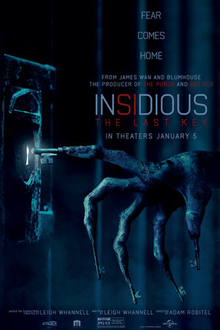
You know, horror sequels get a bad reputation for getting silly or boring over time. Now, there are some that do give this rep some credibility (looking at you, Jason Takes Manhattan). But among horror sequels, there are some truly great gems that have as much punch, or sometimes even more punch, than the originals. And Insidious: The Last Key is one of those sequels, not just for being scary and creepy, but also for keeping things interesting with a character-driven narrative.

In this entry in the Insidious series, Elise Rainier (played by unacknowledged Hollywood treasure Lin Shaye) is called back to her childhood home to defeat the evil spirits that live there and which haunted her childhood. As she and her two stalwart companions Specs and Tucker delve deep into the hauntings in the house, they will not only uncover horrors from the Further, but from this world as well, and from Elise’s own dark memories.

This was a seriously solid horror movie. The best part of it, of course, is Lin Shaye’s performance as Elise Rainier, along with the character’s own arc in this movie. The arc itself is kind of similar to Elise’s arc in the last film–that she’s dealing with trauma and has to overcome it to save a life–but here, the scars are so much deeper, and the raw emotion you feel from Shaye as Elise opens them up makes it seem all so new. You feel her pain, you feel her wanting to make amends, and when you see her triumphs, you share in them.

As always, the atmosphere in these movies is creepy, the right balance between tension and jump scares. The creepiest part, in my opinion, is the antagonist, The Man With the Keys, or Key Face as he’s listed on Wikipedia. This is such a freaky looking demon, and unlike the Man Who Can’t Breathe from the last film, who got scary once you could see him in the light, The Man with the Keys is freaky no matter when you see him. In the light, out of the light, he’s so scary. I think if you put him up next to Bill Skarsgard’s Pennywise and had a contest on just visual terror, it’d be a very close call.

I also like, in addition to the many keys we see in the movie, there is just so many key-shaped imagery in the movie. Pumps, signs, etc. They’re all key-shaped, kind of tying into the theme of the movie of opening up old wounds and opening up the past.

I also thought that new character Imogen (whose name only makes me think of the song “Hide and Seek” by Imogen Heap) was an interesting addition. Not giving anything away, but her presence in the film could be a hint of where the franchise could go from here, given where this film takes place in the series’ timeline. Especially if Lin Shaye wants to finish her time with the series with this film or with the next one.*

Was there anything I didn’t like? A few things. I honestly thought the climax wasn’t as epic as it could’ve been. Not only that, but a few things we saw in the trailers didn’t show up in the film, which is always annoying. And finally, Specs and Tucker, our supposed comic relief, just weren’t that funny.

But all in all, Insidious: The Last Key is well worth plunking down cash for a ticket. On a scale of 1 to 5, I give it a 4.4. Check it out, and open yourself up to some terrifying storytelling.

That’s all for now, Followers of Fear. We’re likely going to have a bunch more reviews this month, so I hope you’re ready for recommendations and opinions. And if the trailers I saw in the theater are any indication, I’m going to have a lot to say in 2018.

Until next time, pleasant nightmares!

*I’m assuming that we’re going to get a sequel, given that already the film has made back its budget and then a bit two days after coming out.

Hello, Followers of Fear, and welcome to our first author interview of the year. Today we have a previous guest who has been my friend for a number of years. She’s written several books and has even visited my house when I was still living with my dad, the first author friend/blog friend to ever do so. And today, she’s here to talk about the two books she published in 2017, Unfinished and Madame ZeeZee’s Nightmare (I’ve requested my local library to order copies, and I’m still waiting to hear back). Ladies and gentlemen, please welcome Pat Bertram!

RU: Welcome back, Pat. It’s good to have you here again. Now as I mentioned above, you published two books in 2017, Unfinished and Madame ZeeZee’s Nightmare. Please tell us what they’re about.

PB: Madame ZeeZee’s Nightmare is about fun, dance, and murder! When Pat’s adult dance classmates discover she is a published author, the women suggest she write a mystery featuring the studio and its aging students. One sweet older lady laughingly volunteers to be the victim, and the others offer suggestions to jazz up the story. Pat starts writing, and then . . . the dying begins.

Unfinished is about buried secrets and a woman finding herself when she finds herself alone. While sorting through her deceased husband’s effects, Amanda is shocked to discover a gun and the photo of an unknown girl who resembles their daughter. After dedicating her life to David and his vocation as a pastor, the evidence that her devout husband kept secrets devastates Amanda. But Amanda has secrets of her own. . .

RU: You weren’t writing fiction for quite a while. What made you get back into it?

PB: I don’t like leaving things unfinished, and besides, both Madame ZeeZee’s Nightmare and Unfinished deserved to be written. So I just . . . wrote.

RU: I love it when a story makes you want to write it. So tell us, what was the inspiration for the two novels?

PB: That’s easy. The inspiration for Madame ZeeZee’s Nightmare came from my dance class. It was their idea, and they provided the fodder for the characters. Inspiration for Unfinished came from my life. Too often, I have read novels where the spouse dies, and after a few perfunctory tears, the one left behind continues as if nothing ever happened. Grief does not work that way. It’s not so much that we go through grief, but that grief goes through us, and I wanted to show the truth, both about the changes such an upheaval brings and the courage it takes to accept those changes.

RU: Now, Madame ZeeZee’s was based on you and your dance class and classmates. How much of them and of you made it into the novel?

Madame ZeeZee’s Nightmare by Pat Bertram

PB: Many of my dance class mates — and the teacher! — made it into the novel. For the sake of reader’s sanity, a couple of times, I combined two or three women into one character. (Too many non-essential characters in a book confuse me as a reader, and I can only assume others are the same). And, though he isn’t a classmate, a fellow I know by the name of Rami Ungar made it into the book. As for me — well, Pat is Pat. At least, I think she is. I know one thing — if I ever decide to write a series, I will use Pat as the main character. It was incredibly easy writing myself as a character — I didn’t have to create characteristics, either positive or negative, and the character arc came naturally.

RU: I love that we’re both characters in your book! And your characterization of me is a lot nicer than what most people give me when they write me into a story.

What about Unfinished? Did you or anyone else you know make it into that book as characters?

PB: I seem to write only about me anymore. Although I gave that poor woman a different name and a different life, she was definitely me. At least everything she felt, I felt.

RU: What were your biggest challenges writing these novels and how did you overcome them?

PB: The biggest challenge is always me. Some writers can sit down at a keyboard and the story flows from their fingertips as if it wants to be written. In my case, I have to drag every word from somewhere deep in my brain, and sometimes the effort is more than I want to make.

For Madame ZeeZee’s Nightmare, when I got tired of trying to figure things out or to search for the proper words, I went to class and asked the appropriate “character” what she wanted me to do. It’s amazing how simple that makes everything! Other times, I used something that happened in class to push me along.

For Unfinished, I had to persevere. Make the determination to finish the book and just do it. It was hard, though, dredging up all those feelings.

RU: Are you working on anything now?

Unfinished by Pat Bertram

PB: I am finishing a fifty-day blog challenge, to blog every day for fifty days. And I have a sort of apocalyptic novel I am decidedly NOT working on. I have a mental block against the poor thing because I was working on it when Jeff (my life mate/soul mate) died, but one of these days, I will get my head in gear and find the determination to work on it.

RU: And finally, what are your writing goals for 2018?

PB: I intend to keep up the daily blogging, at least a while longer. In May, I plan to take a road/camping/hiking trip along the Pacific coast (or near the coast anyway), and I hope that experience will bring me insights for fabulous blog posts. As for fiction — well, real life has me in its clutches. Hopefully, I will be able to free myself one day and get back into the alternate reality of fiction.

RU: Well, thank you for joining us Pat. It’s always a pleasure to speak with you.

If you would like to check out Unfinished, Madame ZeeZee’s Nightmare, or any of Pat’s other books, you can check out her Amazon page. I also highly encourage you to check out her website, her blog, and her Facebook. Trust me, she’s someone full of strength and insight, and you can benefit from knowing her.

And if you have a book coming out in the near future, hit me up on my Interviews page, and we’ll make some magic happen. Have a great evening, Followers of Fear. Until next time (probably Saturday), pleasant nightmares!

Aokigahara forest.

On December 31st, YouTube star Logan Paul visited Aokigahara, a forest in Japan that is visited by thousands of tourists, families, and school trips, but has a dark side. Aokigahara is a popular suicide spot, to the point that its nickname is Suicide Forest. The Japanese government has even posted signs throughout the forest encouraging visitors to choose life rather than take their own lives. While there, Paul and his friends came across a hanging body, filmed it, and posted the video on YouTube (the body’s face was blurred out). The video quickly went viral, garnering a lot of negative controversy. Within a day, Paul took down the video, and issued an apology over Twitter, but people are still very upset and there has been a lot of talk online about his actions.

Before I get into the main thrust of what I wanted to talk about with this post. Firstly, I am about to talk about a sensitive subject, and I am going to approach this with as much care and respect as possible. Still, I am an imperfect being and I make mistakes, like everyone. So if I say something that offends you or that you disagree with, please understand that is not what I intended. I’m just trying to make sense of a difficult topic in a world that doesn’t make sense that often, and sometimes I miss things that cause misunderstanding between others and myself without meaning to. So please bear with me as I try and explore a topic that a lot of people have strong opinions about.

Second, there are two things about me I would like to tell you all. One is that I have experienced depression before, and a couple of times it made me think of suicide. Those times when I considered suicide, it was because I had toxic people in my life who made me miserable. I still remember the crushing despair, the feeling that things were never going to get better, and the thought that I could just make it all better by leaving this life and falling into–I don’t know. Something better. It took the extraction of these toxic people in my life, as well as the help of a lot of good friends and family to help me find happiness and hope again.

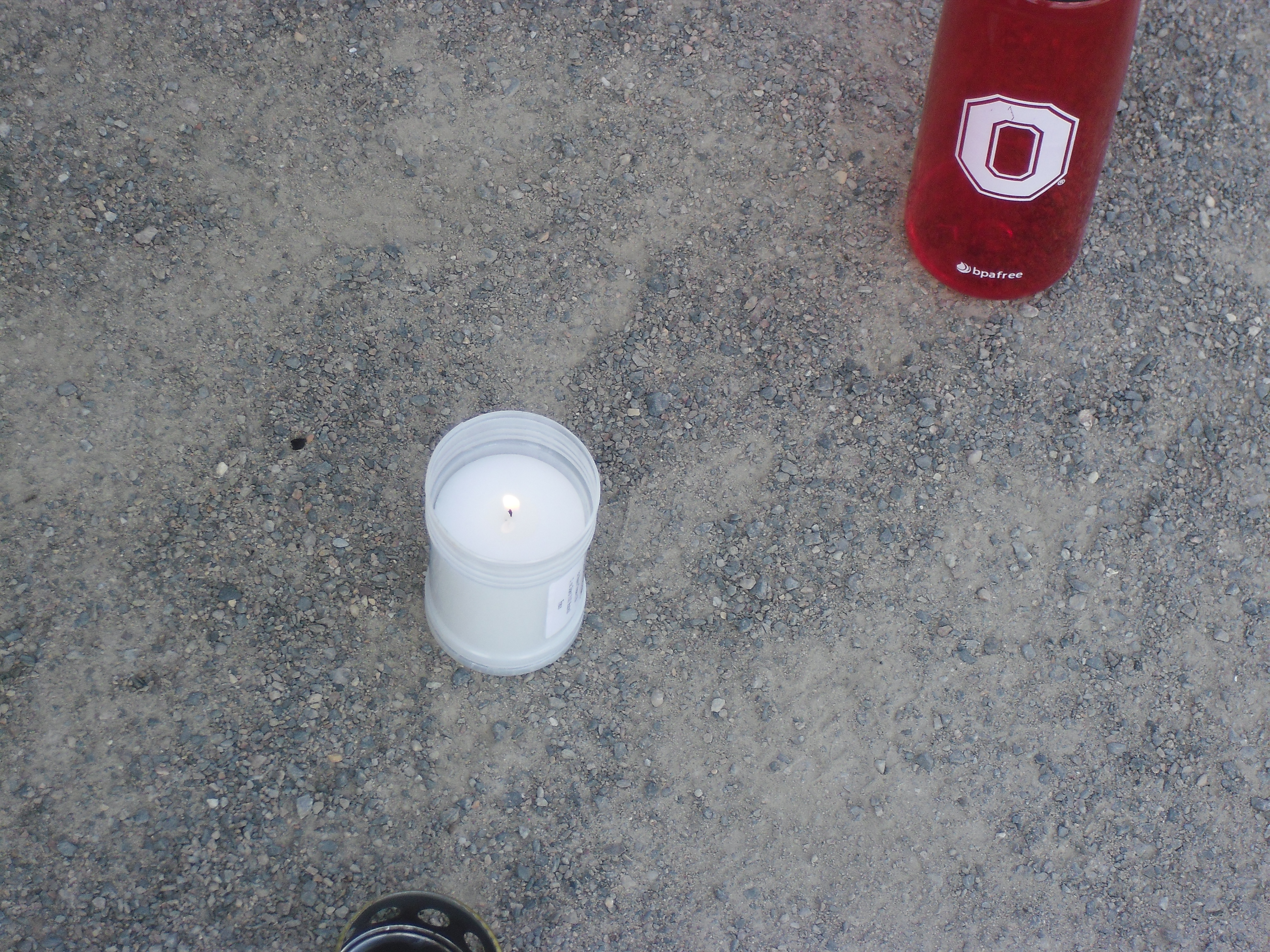
The Yahrtzeit candle I lit at Sachsenhausen.

The other thing I would like you to know is that back in 2014, I visited Sachsenhausen, a concentration camp twenty-two miles north of Berlin as part of my study-abroad trip. Around thirty-thousand people died at that camp while it was operational. When I arrived, it struck me as a very tranquil place. There was lots of grass and trees, the sun was shining, and there were only a few buildings left from when the camp was operational. But you spend enough time there, and this pall of despair settled over me. It was like the prisoners had felt over seventy years ago had seeped into my very body. An hour there, and it was just hard to even breathe there. I lit a Yahrtzeit candle, a ritual candle in Judaism for memorializing the dead, at a wall used by firing squads. And when I left, I was glad to get out of that anguish-infected place, even as I was glad to have visited a place connected to the history of my people.

Now to the point of why I’m writing this blog post. You see, a month before I went to Sachsenhausen, I wrote a blog post about haunted locations I wanted to visit, and Aokigahara was on that list (even before it became a suicide hotspot, the forest was well-known as a place for hauntings, hence why it was on the list). Given that, I feel like I have a responsibility to talk about this controversy, as well as my desire then, and now, to visit Aokigahara.

Obviously, what Logan Paul did was extremely disrespectful, the equivalent of taking a photo of the corpse at a funeral, or a selfie at Auschwitz or at the Berlin Holocaust Memorial. It shows total disregard for the deceased and their loved ones in favor of quick-lived social media attention, and should be discouraged at every opportunity.

However, there is nothing wrong with wanting to visit Aokigahara in itself (hold your comments, let me finish). As I pointed out above. Aokigahara is visited every year for totally innocent reasons. However, no matter what reason you go to visit the forest, it should be done with respect. Any death is horrible, and suicides are especially tragic. We can never know what is going through someone’s mind or what is happening in their lives, let alone someone dealing with depression and suicidal thoughts. Not unless we’ve been there ourselves, and sometimes not even then. But in every case, it is terrible, and shouldn’t be treated lightly.

With that in mind, anyone who visits the forest should do so with respect and cognizance for what has happened there, the same same way I approached visiting Sachsenhausen. Be respectful of what has happened and is happening there, understand that depression, suicide, and the forest itself has affected a lot of people in horrible ways, and if God forbid you do come across a body, leave it alone and notify the authorities. Only take photographs or footage if it is to help the authorities find the deceased, not for views or likes or whatever. Other photographs can be taken of the forest, or of the tourist attractions there such as the Narusawa Ice Cave and Fugaku Wind Cave, but definitely not of the bodies.

Remember, 1-800-273-TALK.

This is how, if I am ever lucky enough to visit Japan and I end up visiting Aokigahara, I will approach the forest. Not for ghosts, not for likes, and definitely not for suicide, but to pay respects to the dead and to draw attention to the ongoing struggle of suicide the world over. I may even bring a Yahrtzeit candle or some incense to burn, provided I can make sure it won’t cause a forest fire or injuries. Because what happens in this forest is a tragedy, and should be treated as such, no matter who you are or what your background is. Even as I enjoy the beauty of the forest and the tourist sites, I will remember these people, and hope they find rest, even as I hope others find the will to continue on and live.

And if you’re dealing with depression or suicidal thoughts, please know that things do get better. There were times when I thought my life couldn’t get better, but it did, and now, my life is great. And if you keep living, there’s always a chance your life could get better too. Every day is an opportunity for improvement. All it takes is the will to continue on. I support you, I’m there for you, and I hope you take this message to heart.

And again, if I said something wrong or caused offense, I beg your forgiveness. It is not my intention to cause any hurt feelings. I only want to make sense of something horrible and help those in troubled times. Thank you for reading.

If you’re dealing with suicidal thoughts, please also call the National Suicide Prevention Hotline at 1-800-273-8255. The counselors there will help you through this crisis, and help you find the light to fight off the darkness.

I’m not going to lie, 2017 was a tough year in a number of ways. In some ways, it even rivals 2016, which everyone agrees was kind of a shit year, pardon my language. We dealt with really horrible terrorist incidents, learned that some of our most beloved figures in entertainment and other industries were secretly monsters, and saw terrible devastation from hurricanes that left communities without good food, water or electricity. This and a whole lot more affected so many lives, and definitely not in a good way.

However, there were a lot of good things about 2017 too. Many of the things I described above caused people to come together and fight. Not too long after the bombing at Ariana Grande’s concert in Manchester, she and several high profile artists put on a charity concert to raise over ten million pounds for the families of the victims. After the shooting in Las Vegas this October, thousands rushed to donate blood at the Red Cross, with lines reportedly snaking around city blocks and lasting up to six hours, and millions were raised for the families of the victims! Plus in response to the shooting, Massachusetts banned bump fire stocks, which were used in the attack, and several bills were introduced into Congress to hopefully prevent attacks like this from happening again.

Throughout the year, men and women came together to protest sexism and the treatment of women in America and abroad, with marches throughout the year. The revelations of Harvey Weinstein led to dozens of women and men to open up about their experiences with sexual assault and harassment, catalyzing the #MeToo movement and leading to the ousting of several serial abusers from a variety of industries for their crimes which, up till now, they could get away with, and started a conversation that is continuing today about how to combat sexual assault by powerful people who use the system to get away with it. Heck, voters in Alabama came together to keep a man who has been accused of assaulting multiple teen girls from becoming a Senator despite widespread support for him. That’s huge!

A Red Cross station post-Las Vegas shooting.

And while Puerto Rico and other areas of the world are still recovering from natural and man-made disasters, a lot is being done online and offline to help. Thousands are still sending money, supplies, and even solar power equipment (looking at you, Elon Musk) to help Puerto Rico out of the rubble. Despite the United States pulling out of the Paris climate agreement, many corporations, cities, and even states have said they will continue to abide by the agreement’s guidelines in order to combat global warming, which likely contributed to the many hurricanes we saw this year. And plenty of people each day are pressing for relief to peoples in trouble, both at home and abroad, from their leaders. It’s amazing to see that happen.

I could go on (I really want to speak about the entertainment industry’s positive contributions this year), but I fear this post will go on too long if I do, and there’s quite a bit I’d like to talk about. I’ll just summarize by saying that there was a lot of positive things that happened this year. And while the bad stuff does sometimes seem to overshadow the good, it’s important to recognize the good and cheer ourselves for what we accomplished, as well as what we can accomplish in the coming year. Which seems to be plenty, if we put our minds to it.

On a more personal note…

2017 was a pretty good year for me. Yes, the things I listed above, good and bad, may have affected me at times (they affect everybody, don’t they?), but in terms of my own personal life, I had a very good year. A lot of positive things happened to me , and if you don’t mind, I’ll just highlight some of the big ones:

  • My health seriously improved this year. I lost about thirty pounds of unneeded weight, which means I’ve had to take fewer sick days and I’m less likely to develop certain diseases. My back pain has also lessened tremendously, thanks partly to weight loss and to seeing a chiropractor. I can now move as I used to pre-back pain, and while I’m still working on improving my back and my health, the fact that I’ve accomplished this much already is a great motivator for me.
  • This was a good year for writing for me. I got halfway through the first draft of Full Circle (still on break from that until I feel ready to tackle it again), finally pushed out a new draft of Rose, and even wrote and edited some short stories. I also published two short stories, the science romance novelette Gynoid, and the LGBT fantasy romance story What Happened Saturday Night. Not only that, but over sixty new people started following this blog, putting me within striking distance of the thousand-follower milestone! For me, that is huge, and I can’t thank you guys enough for making that happen.
  • As many of you know, I work for a supply organization in a role that involves getting disabled employees accommodations and organizing events to highlight the diversity in our workforce. As of December, I’ve been with the organization for eighteen months, and it’s been great. I’m doing work that helps people with a great team around me, and I get great pay and benefits too. What’s not to love?
  • I went on the best vacation ever to Massachusetts with my dad back in July, and it culminated with a night at the famously haunted Lizzie Borden Bed & Breakfast. I cannot even begin to tell you what a big deal that was for me.
  • All the movies I was super-excited to see this year were awesome, as I’d hoped. Especially the new version of It. That was the It we deserved.

And those are just a few of the highlights of 2017 for me. Yeah, it was a good year. And I hope 2018 goes just as well or even better. Especially if any of these happen:

  • More good news on the writing front, particularly with a fourth draft and maybe the publication of Rose, as well as several new stories and hitting the thousand-follower mile marker.
  • Continued improved health.
  • Continuing to do well at work.
  • Maybe a bit of travel, and definitely a bit of fun, whether that be going to shows or seeing friends.

And that much more.

So guys, I want to wish you a Happy New Year, and to remind you that, as hard as 2017 is, it’s 2018, and there are endless opportunities to have a better year. You just have to be brave enough to try and make a change.

And again, thank you all for being my Followers of Fear and reading my work. I’ve grown so much over the past couple of years, and you guys have been there for every accomplishment and lesson I’ve experienced. I hope you’ll continue to support me for this year too as I try to accomplish all my dreams and scare people silly.

Until next time, pleasant nightmares.