Archive for the ‘Review’ Category

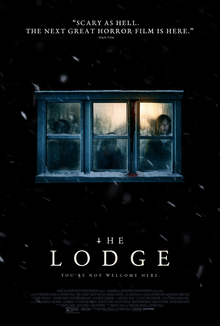
I’ve heard a lot of good things about The Lodge, including that it was a new classic in the genre (or something like that. I may be paraphrasing). With the last couple of horror films I’ve seen since my last film review being average or below and not worthy of a blog post (*cough* Fantasy Island *cough*), I had high expectations. At the very least, I hoped it was worth the cost of parking at the nearest theater it was playing at.

The Lodge follows Aiden and Mia, a pair of siblings living with their father following the sudden death of their mother. On their trip to their family cabin for Christmas, their dad’s girlfriend Grace comes along to get to know the kids better. The kids are less than thrilled, partly because Grace is the lone survivor of a suicide cult headed by her father. However, when the kid’s dad has to go back into the city for work and has to leave Grace with the kids for a few days, several days of madness ensue. One that will push Grace to the brink, and maybe take the kids with her.

Oh my God, this film is terrifying!

The Lodge takes storytelling and suspense hand-in-hand and creates an atmosphere where everything feels up in the air. If horror is fear of the unknown and loss of control, then this film succeeds. I saw hints of twists that were to come early in the film, only to quickly forget them even when I see them again because the film convinced me nothing was certain. Add in creepy imagery, strange happenings, and jump scares that are few and out of left field for their utmost effectiveness, and you’ve got one hell of a horror movie.

The four central characters also do an excellent job in their roles. Aiden is played from Jaeden Martell, who played Bill Denbrough in the IT movies, so he’s used to horror films, and puts it to use here. His sister is played by Lia McHugh, who also have a history in horror, so they bring the experience. But more than that, they know how to play siblings brought close by tragedy, to the point that I forgot they were actors.* Riley Keough also is excellent, showing the stress of the situation on a woman already psychologically and emotionally vulnerable so well. It’s honestly a delight to watch.

I can’t think of anything bad about the film. Doing so would be nitpicking. I will let you know that if you prefer horror films be filled with CGI and lots of jump scares (the opposite of me), this film may be a bit too intense for you. Trust me, most of the theater were freaking out in our seats. Even when nothing was happening on screen (or seemed to be happening, anyway).

On a scale of 1 to 5, I’m giving The Lodge a 4.8 out of 5. Nerve-wracking, twisty and twisted, you’ll be freaking out from the first jump scare to the haunting ending. Grab a blanket and someone to watch it with, and get ready to squeeze their arms tightly. Believe me, it’s that scary.

*And maybe wondered their relationship was incestuous. Hey, it’s an R-rated horror film, boundaries are hazy at best if it helps the story along.

February is Women in Horror Month. Since women writers are a big influence on my writing–JK Rowling got me into storytelling in the first place, and Anne Rice helped pave the way for me to write darker fiction–I thought I’d recommend some stories for those who want to help support the month. You’ll see some familiar names here, but also some you may not be familiar with. Either way, I hope you’ll consider giving them a read.

Tiny Teeth by Sarah Hans. This is actually a short story by a friend and colleague of mine, but it is a scary one. Imagine a world where a virus turns children into dangerous, gnawing animals, and one woman’s experience in that world. You can find it on Pseudopod.org, a website where scary short stories are read by narrators and released as a podcast. Give it a listen. Guarantee you, it’ll be 45 minutes not wasted. Here’s the link.

Garden of Eldritch Delights by Lucy A. Snyder. This is also by a friend and colleague of mine, but it’s also a great collection of scary stories. The majority of them feature cosmic horror themes and entities, which I love, as well as intriguing characters and plots. A couple of the stories also incorporate sci-fi and fantasy themes, and feature a diverse cast, which is something I love to see. If you pick up Garden of Eldritch Delights, you will find it worth your time. Here’s the Amazon link.

The Amaranthine Books by Joleene Naylor. You’ve probably seen Joleene’s name around this blog before, but did you know she’s written an entire book series? She has, a vampire series called the Amaranthine books, and they all come highly rated. Even better, some of the books are free or under a dollar under the Kindle edition, so why not take the opportunity to read them? You can find all the Amaranthine books, and then some, on Joleene’s Amazon page.

In a Dark, Dark Wood and The Death of Mrs. Westaway by Ruth Ware. Technically, these are mysteries, but they have horror themes about them, so I’ll count them here. In a Dark, Dark Wood follows a mystery writer invited out to a bachelorette party by a friend she hasn’t seen in years, unaware of the forces conspiring against her. The Death of Mrs. Westaway stars a Tarot reader on hard times who finds out she’s received an inheritance from a grandmother she didn’t know she had, and what that inheritance entails for her. Both are terrifying and keep you on the edge of your seat with suspense. You can check out both further on the author’s Amazon page (and I need to check out more of her work).

Kept me on the edge of my seat the whole audio book.

Within These Walls and The Shuddering by Ania Ahlborn. No joke, Ania Ahlborn is one of the scariest writers I’ve ever had the pleasure to read, and I really need to read more of her work, as should you. Within These Walls follows a true crime writer as he and his daughter stay in the home of a Manson-like cult leader, and what happens while they’re there (I actually reviewed it a few years ago). The Shuddering follows a group of young adults as they go skiing at a mountain resort, only to discover the area has come under siege from a rather hungry enemy. Either one will leave you shaking in your boots! Here’s the Amazon page if you want it.

The Haunting of Hill House by Shirley Jackson. Come on, you know I had to include this. Even if I’m not a fan of this book, it’s undeniable that Jackson’s most well-known novel, and one of the most influential horror stories of the 20th century. Following a group of paranormal researchers as they explore the titular house and the effect the house has on them, this book is still a well-known classic in the genre, and some consider it required reading for fans and authors. It’s so well known, I won’t include any links for it (surprise!).

Interview with the Vampire by Anne Rice. Again, can you blame me? Whatever you think of the many sequels, it’s undeniable that Anne Rice’s debut novel has remained a classic for a reason. A journalist interviews a 200-year-old vampire named Louis, who recounts his creation in French New Orleans and his travels around the world looking for meaning and for more of his kind. It’s a haunting tale, the horror coming more from Louis’s psychological journey and despair rather than from the supernatural. As I said earlier, this novel also paved the way for my eventual turn to horror, so I can’t recommend it enough (and I’ll have to reread it someday). Again, no need for links. It’s that well-known.


What recommendations do you have for Women in Horror Month? Are you reading anything for it? Are you familiar with any of these books? What was your opinion of them?

That’s all for now, my Followers of Fear. I hope you find something good to read based on this list. I’ll be listening to The Accursed by Joyce Carol Oates this month on audio book, so maybe I’ll add it to a future list someday. I better get started soon!

Until next time, pleasant nightmares!

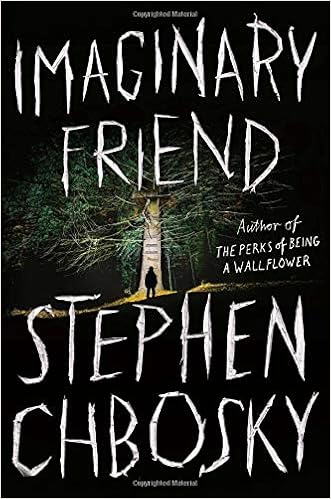
Over the past couple of months, people in the horror-themed Facebook groups I belong to have been raving about this particular book. I looked it up and it sounded up my alley, so when I had an Audible credit, I downloaded the audio book. But before I started it, I found out the book was written by the same guy who wrote the novel The Perks of Being a Wallflower, as well as wrote/directed its movie adaptation. Really? Isn’t that a sweet, YA rom-com? How do you jump from that to horror? (looks up what that book is really about.) Oh. That’s pretty dark. Yeah, I can see how the dude transitioned to horror.

Imaginary Friend follows Kate Reese and her son Christopher as they leave Kate’s abusive boyfriend and move to a small town in Pennsylvania. However, soon after they move there, Christopher disappears in the woods near his school. He reappears a week later, unable to remember what happened to him, except being led out of the woods and back to civilization by someone called “The Nice Man.” While Kate is happy to have her son back, and things start to improve after he returns, Christopher has changed. He’s smarter now, unable to sleep, and suffers from headaches a lot. And he’s in contact with the Nice Man, an invisible being who instructs him to build a treehouse in the woods he disappeared in, and to do it before Christmas. If he doesn’t, something bad will happen. To the town, to his mother, and to him.

This one was hard to put down. I normally only listen to audio books while at work, but the story was so intriguing and out there that I listened to it while checking email and cooking dinner. Imaginary Friend feels a lot like Stephen King novels like It or Needful Things, these huge stories based around weird concepts that are both scary and hard to put down. I mean, you got a kid who goes missing in the woods, and then when he comes back, has to build a treehouse to save the world from the Apocalypse. And that’s just what I feel I can tell you without spoiling too much.

I also have to give Chbosky credit: I had a hard time predicting what was going to happen as we got further into the story. Every little piece of the puzzle had the potential to surprise me, and quite a few did. During the “darkest hour” of the book, when things are at their most pessimistic, you felt the misery and the tension as the situation deteriorated. And that climax! Woo-boy, that was epic. Like, the final battle of an Avengers movie epic.

Not only that, but the characters are very well-developed. Also like some of King’s books, especially earlier ones, just about every character is well-developed. I felt like I’d known some of these characters my whole life, from Kate and Christopher Reese to the two or three old ladies suddenly regaining their faculties after years of dementia.

I do have one major gripe about the book: as the story goes further on, the novel takes on an…evangelistic air. It’s not like the Left Behind books, where it’s trying to get people to become born-again, but the story leans more in that direction than in the direction of The Stand or Supernatural. I don’t think the goal is to convert me: rather, I think Chbosky is using his Catholic upbringing to give the story a particular authenticity and philosophy other non-evangelistic Ultimate-Good-versus-Ultimate-Evil stories don’t have. There are some interesting ideas on the nature of guilt, our relationship to God, and how to find different kinds of salvation presented in the story.

Still, there were times when I was like, “Dude, scale it back a bit. I’m starting to get how people feel when I start ranking villains in horror, and they’re not horror fans.” That’s happened before, and it’s gotten awkward.

On the whole though, Imaginary Friend by Stephen Chbosky is an engrossing horror novel that’s weird in the best of ways and full of terror and twists. On a scale of 1 to 5, I’ll give it a 4.4. Pick it up and see for yourself. You’ll never look at treehouses and deer the same way again, but you’ll have a hell of a ride thanks to it.

The Colour Out of Space (yes, with a “u” in Colour), is my fifth favorite HP Lovecraft story (click here for my Top 8 Lovecraft stories). There have been a couple of adaptations of the film over the years, but they’re either foreign films that are hard to come by, or are really bad for one reason or another. So when word popped up in late 2018 that Nicholas Cage was going to star in a new adaptation of the film, directed Richard Stanley in his first major outing since the 1990s, fans of Lovecraft, horror and/or film in general were piqued. We only got more excited as news from the film trickled back to us. When the trailer came out, I immediately knew I had to see this film.

I got back from seeing it a little while ago, and I’m happy to report, it was well worth the wait. This film is freaking terrifying!

Color Out of Space follows the Gardner family, who are living on the family farm and have converted it into an alpaca farm.* One night, a meteor lands on their property, giving off a strange, colorful light. Soon after, lightning strikes the meteor several times during a storm, the meteor disappears, and then things get weirder from there. The animal and plant-life start changing shape and color, technology goes haywire, and the family starts acting unhinged. All of it can be traced to a mysterious light. An entity. A color. From out of space.

If you’ve seen the film Hereditary, Color is a lot like that. It’s a slow, excruciating build with the characters going through a downward spiral, punctuated by moments of strong terror that left me petrified in my seat. The use of CGI is sparing, used only when practical effects in the style of The Thing aren’t possible. And by the way, those practical effects are amazing! They create some truly horrifying visuals, and Richard Stanley knows when–or even if–to truly reveal the mutated monster. There are also a lot of excruciating scenes involving bodily harm that left everyone in the theater freaked out, including me (not easy to do), and they added to the film in the best way.

As for the actors, they all do an excellent job. This might be the first time I’ve actually enjoyed Nicholas Cage in a movie, as they managed to balance his noncommittal acting style with his crazy acting style in a way that works. It’s funny to see him go from “normal” to acting like a bitchy teenager, but it’s also horrifying because you see how it’s connected to whatever’s affecting the family. The rest of the actors are great, embracing their roles and really convincing you they’re going through this tragic event.

Did I mention that Colin Stetson, who did the music for Hereditary and will be doing the music for the upcoming anime adaptation of Uzumaki by Junji Ito, did the score for the film? Will, he did and it works really well. Sound plays as much a big role in this film as visuals, and Stetson’s score adds the perfect touch to the atmosphere.

First time I’ve actually liked Nick Cage in a movie. How about that?

My only criticisms are that there’s a scene involving the Necronomicon (yeah, there are quite a few Lovecraft Easter eggs in this film) that I feel wasn’t given the best payoff. That, and the character of Ezra, played by Tommy Chong of Cheech & Chong fame, felt kind of extraneous. If you cut him out of the film and have one of the Gardners say some of his lines, it wouldn’t change much.

All in all though, this is not only an excellent adaptation of Lovecraft’s work, it’s a great horror film that’s both faithful to the spirit and text of the original story and terrifying to watch. On a scale of 1 to 5, I’m giving Color Out of Space a 4.8 out of 5. Any fan of Lovecraft, or of horror in general, should come away satisfied (or freaked), so buy a ticket and get ready to see the first great horror film of 2020.

(I already plan to buy the Blu-Ray when it comes out. And I really hope the disc is more colors than just blue, if you get my meaning.)

*Yes, it’s an alpaca farm. And it’s that kind of farm for more than just laughs. Also, the family “dog” is a wolf-dog. Trust me, I researched it. What kind of family owns alpacas for farming and a well-behaved wolf-dog used for herding, I don’t know. It would make for a great reality show, but I digress.

You know, when the trailers for this film hit, the response was pretty lackluster. “Oh, it’s got Kristen Stewart in it and it’s a disaster film about an underwater sea base that’s about to be destroyed. They have to find a way to survive. Whoop-dee-freaking-do!” But then word among the horror community started saying…positive things. And later rewatches of the trailer made it look cool. So I decided to see it, though I couldn’t do so till this weekend because I was sick last weekend.

Underwater follows six workers on an underwater sea base seven miles below the surface of the Pacific Ocean, drilling for resources to bring above. However, a mysterious quake causes major damage to the base, meaning they have to navigate the failing base and find a way back to the surface or die. But there’s something else down there with them. And it’s not going to stop till they’re all dead.

I’ve heard a lot of comparisons to John Carpenter’s The Thing and Alien with this film, and I have to say, not only are the comparisons apt, they’re justified.

One of Underwater’s strengths is how it creates its atmosphere. Soon after the movie starts, we’re thrust into the destruction as we watch a residential section of the base succumb to water pressure and shifting earth. From there, we’re right in the middle of the action as the characters have to navigate dark and narrow passages filled with water and debris. And while the situation itself is urgent, the movie takes its time, allowing us to get to know these characters as well as building a feeling of tension and encroaching doom. Realistic sets and dirty water further the feeling of claustrophobia and the horrific death just beyond the walls. Somehow, that tension is kept up even when the characters are walking across the open seafloor in suits. Probably because those suits are a thin barrier between life and death as well. Add in some well-placed jumpscares that are never excessive, and it’s damn tense.

As for the creature or creatures in this film, they are the fun innovation that change this film from just another disaster film to a Lovecraftian horror fest. Their reveal is very slow, and even when fully revealed, the darkness of the sea leaves them with a bit of mystery. Fans of certain HP Lovecraft stories will recognize the creatures. Whether you do or don’t, however, there’s no denying how scary and deadly these creatures are, and they make the film worthwhile.

As for the characters, they’re serviceable for this film. For once, Kristen Stewart’s deadpan expression works pretty well with her character Norah Price, who defines herself as a cynic trying to get by. TJ Miller as weird, funny guy Paul does okay jokes. He and the character Rodrigo, played by Mamoudou Athie, both enjoy anime. Other than that, you can’t say much about these characters, but for the purposes of Underwater, that’s just fine.

That being said, the film does have its issues. There are a few moments where the tension reaches a lull, and during those moments I felt restless and a little sleepy (though that might be because I had to wake up earlier than planned this morning). And I would have liked to see what life on the base is like on a normal day. You know, when it’s not in danger of flooding and crumpling into dust. We only get a minute and a half of seeing the pre-destruction base at the beginning of the film, and that’s mostly filled by Stewart monologuing and saving a daddy long-legs from a sink.

Altogether though, Underwater is a tense, Lovecraftian thrill ride, a modern-day The Thing, almost.* On a scale of 1 to 5, I’m giving it a 4. If you have a chance, go to the theater and prepare to dive into a world of terror. Most likely, you’ll find yourself pleasantly entertained, and more than a little scared.

*And not just in quality. The Thing actually did poorly with critics and at the box office after its release. It didn’t become a classic until it hit home video. I have a feeling Underwater will go through a similar process, though I would like as many people to see it in theaters as possible.

And welcome to my first review of 2020! As many of you in the horror community are aware, the Grudge film series is famous both in its homeland in Japan, where it is known as the Ju-On movies, and in America, where both the original films and the first remake are considered classics in terrifying people.* However, the sequel to the American remake was only so-so, and the direct-to-DVD Grudge 3 was awful. Thus ten years have passed since the last film was released. When word of a new film got out, people were skeptical, but some were willing to give it a chance based on the trailers. Including me.

2020’s The Grudge begins with a live-in nurse leaving the original house from The Grudge and heading home to Pennsylvania.** However, she brings the curse home with her, and ends up killing her family and herself, making her home and her family an extension of the original curse. Years later, a detective enters the house while investigating a possibly-related murder, setting off a chain of events that will impact her life forever.

So this is technically a side-story to the original Grudge remake, following a new family of spirits and a new community to torment with the curse. The filmmakers did this so they could hopefully reinvigorate the franchise.

And they failed miserably on that front. While the film is told in a non-linear fashion and has plenty of callbacks to the 2004 film, switching Kayako and the Saeki family out for a new family of spirits was a huge mistake. Not only do these new ghosts feel so generic that they could come from any other ghost-centered horror movie, Kayako is an iconic part of the franchise. You can’t separate one from the other. It’d be like calling a movie Friday the 13th and having it focus on Jason’s cousin Matthew Bellman, who wears a football helmet and kills people who enter an abandoned ski resort. It just wouldn’t work.***

Even if you don’t factor that in, the film leaves a lot to be desired. As I said, the ghosts feel like they could come from any horror film, and the rest of the film feels pretty lackluster. Most of the scares derive from jumpscares, which are there and then gone pretty quickly. Most of the plot and acting feels pretty phoned in, and Lin Shaye’s appearance is horribly wasted (good thing she’s had better roles in most other horror films).

Is there anything good about the film? Well, there is a scene where the main character has to defend herself from the spirits in the dark basement of the police station that’s kind of tense, and a bloody scene with LIn Shaye that’s super-freaky. And John Cho as a realtor dealing with a crisis in his marriage is a surprising highlight of the film.

But other than that, 2020’s The Grudge is a poor horror film that was banking more on name visibility than actually trying. On a scale of 1 to 5, I’m giving this one a 1.7. Only watch if you want to make a drinking game out of how many times you see the number 4 (which in Japanese sounds a lot like the word for death). Otherwise, watch either the 2004 remake or the original Japanese films, but definitely not this.

I’m off to get the remake from the library. I need my faith in the series restored.

This is a bad start to 2020’s horror films. Hopefully the other ones coming out this month are better by leaps and bounds.

*No joke, when I first saw the American remake, my sister asked me to watch it for her to let her know if she could watch it without getting scared. I watched that movie in our basement, and then I never let her near that franchise until I moved out of the house. As far as I know, she still hasn’t watched any of the films.

**Why a live-in nurse goes from Pennsylvania to Japan for work when her family is still in Pennsylvania is not actually explained, so don’t expect an answer from me. I can only guess that there was a sudden shortage in live-in nursing jobs and they were only available in Japan, because otherwise it makes no fucking sense whatsoever.

***And it would also be worse than the 2009 remake, as hard as that is to believe. Yes, I found another way to blast that horrific movie! Screw you, Michael Bay! Your horror movies are travesties and deserve to be erased from history!

I heard first heard of Mr. Hamill and his novel after I came across his article on contending with the legacy of HP Lovecraft as a writer. The idea of his book interested me, so I put it on my reading list. Took a few books to get to it and a few weeks to get through it, but I read A Cosmology of Monsters from front to back. And with that out of the way, it is my pleasure and duty to review the book.

A Cosmology of Monsters follows the Turners, a family living in North Texas and running their own haunted house, The Wandering Dark. Told by the youngest member of the family Noah, the story begins with the meeting of his parents in 1968 and follows them as various tragedies befall the family throughout the decades, as well as the threat following the family through the years and generations.

Cosmology is literary horror at its finest.

Told in the style of Middlesex by Jeffrey Eugenides (which I’m told was a major influence on Cosmology and which I recommend as a read on its own) Noah Turner narrates how his family began, and through the decades the many hardships his family endures. It’s an engrossing way to tell the story, because every decision has far-reaching consequences on the Turner family. You also get a deep understanding of each character through this storytelling method, what their motivations and their troubles are, and how those play into the events of this story.

Noah himself is a fantastic narrator. He’s talking from the perspective of a grown-up looking back over fifty years of history, but he does a good job of calling up his childhood feelings of loneliness and isolation, of feeling alienated and not understanding why the people around him do what they do.

I also like how weird it can be sometimes (makes sense, since it’s me). The supernatural aspect of the story is very slight at the beginning and only gains prominence as you move deeper into the novel, and as you do, you find yourself with more questions than answers. Conventional monsters do play a part, so to speak, but there’s a lot more going on behind the scenes and it gets weirder with every layer revealed. It took me a while after I finished the book to really understand what all these revelations meant, and even now as I write this, I’m only half-certain I understand what everything meant.

All that said, there were things that I had issues with. There’s a section in the book where, instead of black letters against a white page, it’s white letters printed on a black page, and for some people, especially for people with certain eye issues, that might make things difficult to read (and why I don’t use my blog’s original theme anymore). And if you’re looking for a more typical horror story, with monsters popping out every five seconds or the supernatural aspect a constant presence in the story, this won’t be your kind of novel.

That being said, A Cosmology of Monsters is a mesmerizing read and one of the best books I’ve read this year. On a scale of 1 to 5, I’m giving it a 4.8. Grab your flashlight, and prepare to walk through a house haunted by the tragedies of the family. You won’t want to leave till you get to the very end.

And then you’ll want to think about both the deeper meaning of the book as well as what it’d be like to create your own haunted house attraction. Or is that just me?

The original Black Christmas from 1974 is a beloved, if kind of weird, early member of the slasher subgenre. The senseless nature of the killer “Billy,” for whom we never get any sort of explanation, as well as the helplessness of the characters, still makes it terrifying forty-five years later. A 2006 remake tried to capture that terror, but it failed miserably, mired in too much exposition and cliches. So, of course, everyone was skeptical when Blumhouse decided to make another remake. But the trailers promised a new angle, so who knows? It could be good.

2019’s Black Christmas again follows sorority sisters trapped on campus and in their sorority house with a killer who appears to taunt them through messaging apps. But there’s more at play here, and it all leads back to a particular fraternity on campus and the university’s controversial founder.

Um…how do I even talk about this one?

As far as storytelling and scares go, this is pretty run of the mill for a slasher, especially ones where a lot of stuff is given away in trailers. Granted, a couple members of the audience did get freaked (one audience member did yell out “that ****er is smart!” when an antagonist did something pretty sneaky), but if you’re familiar with slashers, it all feels standard and a little pulpy. A bit more exciting near the late middle and the last third, but still pretty standard.

The one thing that sets this movie apart is its incorporation of feminism into the plot. And this is where I have to really think about what I type, lest readers get the wrong idea.

Now, let me say this outright. I identify as a feminist. I get upset when I read stories in the news where women are subjected to harassment and misogyny and they are the ones blamed or called into question rather than the men attacking them. I also work in an office whose job is partly to deal with harassment, misogyny, and assault in our organization’s workforce. So I support women breaking barriers and creating more equal places for them in society.

Black Christmas tries to explore these issues in what, considering some of our current events, could be considered timely. And unlike Countdown, which felt gimmicky with its use of the #MeToo movement (see my review here), there was no gimmick here. The film’s handling of feminist issues is well-done at times. There is a lot of discussion of campus rape culture and how we as a society should approach it. Two characters have opposing views on the subject: one says everything must be done to stop the systemic problem, including by survivors, while the other says that not every survivor is willing to be a warrior and may just want to move on. And both bring up good points.

Another scene where the theme is handled well is when one of the protagonists goes to report her friend missing, and the male cop is apathetic, even acting dismissive. Like he thinks the protagonist is making a huge fuss because she’s a woman, not because there might be an actual problem.

Still, there were some moments where I wondered if the inclusion of these themes, as well as some exaggerated aspects, were meant to check some boxes and make this a “woke” sort of film, not really explore the subject matter and allow for enlightening discussion. But then, as I got home, I remembered something that put the film in a new light.

Back in 2018, Jason Blum, owner of Blumhouse Productions which produced the film, made comments about women directors, especially in horror, that drew a lot of ire from the horror community. Blum apologized for the comments and promised to do better. Fast-forward to 2019, and Black Christmas is the company’s first film with a female director, Sophia Takal. Takal also served as a writer with another woman, April Wolfe.

So this film could’ve been Blum’s way of apologizing for his comments and showing that he’s progressive. Or, and I like this scenario more, Takal and Wolfe were given the freedom to make their own horror movie, they were very much aware of what Blum said and they made a film not just to talk about their own issues with the film industry, but also to remind Blum that he, along with a lot of other people and segments in society have to go to really make things equal between men and women. And if that’s true, I can imagine how much Blum squirmed in his seat.

On a scale of 1 to 5, I’m giving 2019’s Black Christmas an even 3. While not as bad as the 2006 remake and a nice comeback to Blum’s comments, it still has areas that could’ve been better.

Thus ends the horror films of 2019, which, with a few exceptions, were either average or just bad. Here’s hoping 2020 is A LOT better. Until then, pleasant nightmares!

Last year’s premiere of Castle Rock on streaming service Hulu garnered lots of attention and love from critics and from viewers, both longtime Constant Readers and folks unfamiliar with King’s work. When word of a second season reached fans’ ears, we got excited. Which Stephen King stories would they draw on? Would the showrunners make every season different, like early American Horror Story? Would the different stories be connected by more than just a common location, like later American Horror Story? Or would it be a continuing story with the same actors and characters, like every other TV series out there?

We sat down and watched ten episodes over the course of eight weeks. And while I can’t vouch for the rest of the fandom, I can say this season far surpassed season one.

Season 2 follows Annie Wilkes–yes, that Annie Wilkes–as she and her teen daughter Joy find themselves stranded in Castle Rock after a horrific car accident. They’ve come at an interesting time, as Castle Rock and Jerusalem’s Lot–yes, that Jerusalem’s Lot–are about to celebrate the latter’s four-hundredth anniversary, and the Lot’s growing Somali population are facing discrimination and threats of violence from the likes of Ace Merrill, nephew of pawnbroker and loan shark Reginald “Pop” Merrill. Annie just wants to have her car repaired and leave town before her past comes for her and Joy. But when someone finds out about who she used to be, events are set in motion that will bring not just Annie, but the whole town to the edge of sanity.

While Season 1 was more influenced by newer, weirder Stephen King, Season 2 was definitely more old-school King: visceral, terrifying, and at times very explosive. Drawing on elements from mainly Misery and Salem’s Lot, the storytelling is mixed with terrifying scares and fun twists (episode 7, am I right?). And even the things you see coming from a mile away (and there are a few) are told in such a way that you don’t mind seeing them coming. And you gotta love all the homages to and Easter eggs referencing King’s works, including a heartfelt tribute to The Body (aka Stand by Me) in episode 3.

Probably the best episode was episode 5, “The Laughing Place,” which gives Annie a new backstory. Honestly, I was a little unsure at first, but as the episode goes on, it just hits you with the weight of the story and the emotion behind it as Annie becomes the person she meets. Sure, Annie is changed from a metaphor for toxic fandom to a painful example of what untreated mental illness can do to a person, but here it works.

“The Laughing Place;” best episode this season.

The actors were also great. Lizzy Caplan’s Annie Wilkes is a wonderful forerunner to the character we meet in Misery, a woman trying to do right by her daughter even as she wrestles with demons that not even medication can fully contain. Tim Robbins (aka Andy Dufresne of The Shawshank Redemption) gives the character of Pop Merrill, in the books a greedy and scheming man, a human side with guilt and a history he’s trying to make amends for. Yusra Warsama is excellent as Dr. Nadia Omar, Pop’s adoptive daughter dealing with her world basically imploding due to what’s going on around her. And Barkhad Abdi and Elsie Fisher as Nadia’s brother Abdi Omar and Annie’s daughter Joy, respectively, give great performances as people trying to deal with their upbringing and at the same time move away from it towards something positive.

If there’s one thing I’m going to ntipick, it’s that I wanted to see more of John “Ace” Merrill. It’s not easy to explain this without spoiling anything, but basically we only get to see one side of the character for a single episode, and then it’s a different side for the next nine. And I kind of wanted to see more of that first side (though the second side is an excellent villain). Did that make sense? I hope it does.

Overall though, Castle Rock season 2 is a scary and tense thrill ride drawing from some of the best of King’s earlier works and then some. On a scale of 1 to 5, I’m giving the season a 4.8. Sit down and buckle up, you’re going places you never imagined going before.

And while no season 3 has been announced, I feel it’s only a matter of time before we get word on that, so let’s start speculating. Which characters will come back? What stories will be drawn on?* And can I please get a commission to write an episode for the show? Only time will tell.

*I’m hoping The Library Policeman, Needful Things and maybe Apt Pupil.

What did you think of Season 2? What do you hope to see in Season 3?

This has been long overdue. But as promised, I am doing another post on anime I like. After all, along with horror, anime is a huge influence on me and my life as well as my writing (anyone who’s read Rose can see that). So with that in mind, I thought I’d do another post recommending some anime I’ve enjoyed recently and that I hope other people would like to check out.

If you’d like to check out my first list, click here.

And with that in mind, let’s get onto the recommendations!

Princess Tutu

At first glance, this anime seems like it’s something aimed at little girls. A duck is chosen to become a human girl, and then become a magical girl named Princess Tutu, who uses the power of dance to restore a prince’s lost heart. And admittedly, the first couple episodes are light-hearted and comedic. But as you continue on, it becomes clear that this is actually a dark and emotional anime about fate vs. free will. The characters soon begin to realize that there are sinister forces manipulating their lives, and it becomes a struggle not just to restore the prince’s heart, but if they should restore it, as well as to find a path that allows them to control the course of their lives.

This is the sort of anime where you’ll look back at the first episode after watching the last and be like, “Holy crap? Did that just happen?” It’s a roller coaster, a thought-provoking anime that uses dance to create emotional struggle and to explore the idea of who controls our destiny. If you want a surprising fantasy anime using a beautiful art form to tell its story, you might enjoy Princess Tutu.

Also, this is an anime I watched as research for Toyland. Just saying.

The Helpful Fox Senko-san

An overworked and super-stressed office worker comes home one day to find a fox spirit in the form of a human girl in his apartment. This fox-girl introduces herself as Senko, and says she’s here to take care of and pamper the office worker. Thus starts the office worker’s new, and hopefully more relaxing, life.

At first, I was not sure what to make of this anime, or why I kept watching it. But then I had a long, exhausting, stressful day at work, and I realized the reason why I was drawn to this show. We’ve all had days where life has stressed us out and we want to scream to the heavens about our exhaustion. And on those days, we really wish there was someone waiting at home for us at home to take care of us and make things better. Maybe not a magical fox girl, but someone. Senko-san taps into that, and gives us a scenario like that. And rather than making us overly jealous, it actually relaxes you a bit. You relax vicariously.

If you’re interested in an anime that aims to soothe you (or you’re into ASMR, like I am), I highly recommend The Helpful Fox Senko-san.

Digimon Tamers

A lot of people think Digimon is a knockoff of Pokemon, but in reality they’re just very similar products that came out around the same time in the 1990s. In fact, at some points Digimon was more popular than Pokemon! Another thing people don’t realize is, unlike Pokemon, the anime is made up of several different anime revolving around the same concept, like how there are multiple coexisting versions of Marvel superheroes with their own separate universes.* And Digimon Tamers is, by far, the best of the various series.

In this version of the franchise, Digimon are fictional characters with a TV show and card game, kind of like our world at the turn of the century. However, certain children come across real Digimon. Unlike on TV, however, these are violent and wild animals who enjoy the fight and the kill as much as they enjoy the human world. As time passes, it becomes clear that a secret shadowy organization is watching the Digimon and trying to stop them as they emerge into our world. And if these kids aren’t careful, they’re going to lose more than their new friends.

A darker take on the franchise, Digimon Tamers deals with the issues of what it’s actually like to have a connection with what is essentially a sentient wild animal that needs to kill its fellows to survive. It’s a slow burn story that grows more complex as time goes on, dealing with heavy psychological issues and even incorporating cosmic horror themes at times. If you want to see how a “kids show” can be more mature than some shows for adults, while at the same time evoking 90’s and 2000’s nostalgia, this may be the show for you.

*And for those unaware, the concept of Digimon revolves around children who befriend monsters made of computer data, and together they fight evil Digimon and try to maintain the balance of both the human world and the Digital World.

Flying Witch

Makoto is a young witch who moves out to the country to live with relatives. The goal is to attend high school in an area with plenty of nature while also nurturing her magic skills. Along the way, she makes friends, sees amazing sights, and collects a lifetime of memories.

Flying Witch is a relaxing, quiet anime that focuses more on interaction between its characters and making you laugh or feel good rather than building a big, magical world. The result is a mellow series that leaves you feeling relaxed while you watch it. If you’re just looking for something wholesome to melt your stress away, Flying Witch is probably the answer.

And trust me, it’s worth it just for the “Mommy” joke in the first episode.

Puella Magi Madoka Magica

Madoka Kaname is your average middle school girl. That is, until she saves a mysterious creature from a transfer student in her class, and the creature offers to grant her one wish in exchange for becoming a magical girl and fighting evil entities known as witches. While at first it sounds like a great deal, Madoka soon learns that every wish comes with a price. And for some, it’s too much to pay.

Considered a classic of anime, Madoka Magica is a dark take on the magical girl genre, showing the psychological toll of trying to be a savior of humanity at the tender age of 14 can do to a girl. Combined with masterful twists and storytelling, beautiful backgrounds and trippy imagery, this is an anime that’s still being talked about today.

If you’re looking for an anime to surprise you (or you want to see one of the other anime I watched as research for Toyland), I can’t recommend Madoka Magica enough.

Cells at Work

You know that movie, Osmosis Jones? Imagine an anime version that’s a thousand times better, and you have Cells at Work, which portrays an anthropomorphized world full of cells working together in a human body as their city.

This series has been lauded for its accuracy as a portrayal of how blood cells actually work (albeit from a whimsical side) and has even been used as a teaching tool in universities around the world. Plus, it’s just fun to see a hapless red blood cell hanging out with a ruthless white blood cell, platelets portrayed as small kids going around and building things, and watching bacteria getting the shit kicked out of them.

Maquia: When the Promised Flower Blooms

This is one of the most Ghibli-like non-Studio Ghibli films I’ve ever seen, and I mean that in a good way. Maquia is part of the Iorph people, a tribe of long-living humanoids with blonde hair, blue eyes, and youthful appearances. One day, after a powerful kingdom invades their homeland and Maquia is separated from her people in the ensuing madness, she comes across a human baby whose mother has just died. She adopts the child, and soon begins a journey that will change the both of them forever.

While I have some problems with how the movie explains the world it’s set in, I have to admit this is a beautiful tear-jerker of a film. It captures the struggles of parenting beautifully, while also adding in the pressures of being an eternally young mother. At the same time, it deals a lot with identity, extremism, and the things people are willing to do to survive. It’s a powerful film and may make you cry. If you prefer your anime more heartwarming and Ghibli-ish, I can’t recommend Maquia: When the Promised Flower Blooms enough.

Gonna be the Twin-tail

A parody of magical girl anime, Power Rangers, and the hairstyle of twin pony/pigtails (aka “twintails”) which shows up in 80% of anime, this is one of those anime meant to make anime lovers laugh!

A high school boy with a thing for girls with twintails is approached and tasked with a humongous task: aliens are coming to Earth with the goal of stealing the world’s twintails and other attributes that cause physical attraction! Why? Because they feed on that sort of thing, apparently! And this young man must stop these aliens from messing with his beloved twintails…while at the same time transforming into a redheaded girl with twintails named Tail Red.

Yeah, this series is weird. But for anyone who’s been around the anime scene long enough, it’s basically a goodhearted laugh at what makes most of us keep coming back to the medium. I wouldn’t watch it if you’re looking to explore anime for the first time. But if you’re already into the scene, and you need a lighthearted laugh, Gonna be the Twin-tail is the series for you.


What anime do you recommend? Have you seen any of the ones on this list? What did you think? Let’s discuss.

That’s all for now, my Followers of Fear. I’ll have more posts out soon, believe me (though it may be another 6-8 months before I do a list like this again). And until then, goodnight and pleasant nightmares!