Archive for the ‘Review’ Category

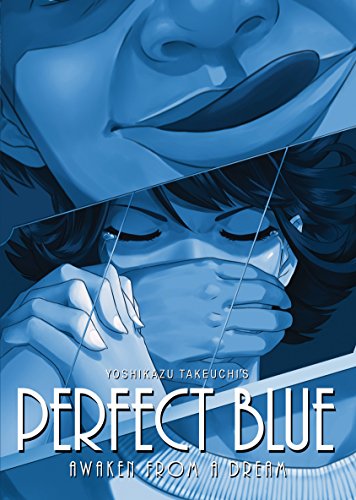
Some of you may remember I reviewed the novel Perfect Blue: Complete Metamorphosis, the inspiration for the anime horror film I’m a huge fan of. Turns out the novel had something of a sequel, an anthology of tales by the same author, Yoshikazu Takeuchi, about idols being stalked by obsessive fans. I’ve been meaning to read it forever, but only just got my paws on a copy recently. Hoping it would compare well to the original novel, I read it in about a night.

Um…I’ve read better.

The anthology has three stories inside, a short story called “Wake Me From This Dream;” a novella called “Cry Your Tears;” and a novelette called “Even When I Embrace You.” Yeah, they all sound creepy just from the titles. However, the quality ranges from story to story.

“Wake Me From This Dream” follows one fan’s strange experience when he actually gets to be with his idol (after a fashion). It’s kind of creepy in how it approaches its premise, as well as hard to look away until the end. The story actually reminds me of Stephen King’s quote about short stories, about it being a kiss in the dark from a stranger. It’s especially true of this story, though the author seems to confuse social anxiety and laziness in a less-than-helpful way.

“Cry Your Tears,” the longest story, is a standard celebrity stalker story. Guy is obsessed, in love with his favorite singer; his idol is creeped out by his intrusion into her life; a bloody climax ensues. Meanwhile, our heroine whines about how hard her life is. Like I said, it’s standard and doesn’t really do anything to pull itself away from the other standard stalker stories.

“Even When I Embrace You” is probably the weirdest story: a new idol singer who isn’t even sure being an idol is what she wants to be as an entertainer is pursued by a guy in a bunny costume. The premise is interesting, I’ll give it that, and it’s nice to see a heroine who’s a bit more rounded and doesn’t mind fighting back when she has to. However, the supernatural element to the story isn’t well thought out, and the bunny costume just sounds like another impractical movie killer costume.

On the whole, Perfect Blue: Awaken From a Dream is probably best left to the die-hard fans of the original novel and/or the movie. On a scale of 1 to 5, I’m giving it a 2.3. Outside of that first story, the rest feels run of the mill and uninspired, though they are well-written.

Yeah, not the best book. But I did get an idea for a novel from something the author said in the afterword, so that’s a plus.

Until next time, my Followers of Fear, stay safe, pleasant nightmares, and STOP TRYING TO FIND OUT WHERE I LIVE! I mean come on, do you know how dangerous that is? You might as well walk into the tiger enclosure at the zoo (and you’d probably have a better chance of survival while there).

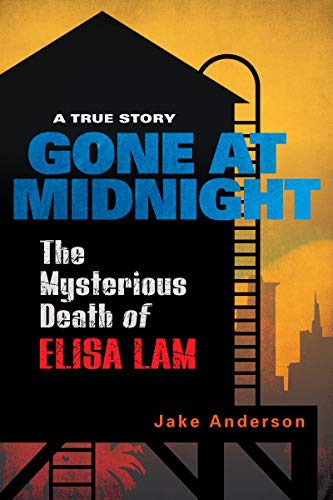
I’ve never reviewed a true crime book on my blog before. As you well know, I tend to specialize in horror of the fictional variety. But for a while now, since first hearing of the Cecil Hotel (which made one of my lists of haunted places to visit) and the death of Elisa Lam there in 2013, I’ve wanted to learn more than what I could glean from a ten minute YouTube video or from reading the Wikipedia page. And earlier this year, someone finally released a book about the case. Despite mixed reviews, I decided to buy a copy, and read it over the course of my vacation.

Here are my thoughts.

Gone at Midnight focuses on the case of Elisa Lam, a Chinese-Canadian student who disappeared in early 2013 in Los Angeles. Several days after her disappearance is reported, she is found dead in one of the water tanks of the infamous Cecil Hotel, a location known as “The Suicide” for its history of violent deaths and even having serial killers as residents at certain points. The incident is only made weirder by the release of footage from a hotel elevator showing Elisa acting strangely on the night she disappeared. Author Jake Anderson traces Elisa’s path over the last two years of her life, as well as how the case took a viral life of its own with websleuths on the Internet and the many problems with the police conclusion on the case.

I have to say, Anderson does a very good job of writing a convincing narrative. The book could easily have gone into the deep end a la The Mothman Prophecies by John Keel, with talk of synchronicity, paranormal happenings at the hotel, and theoretical physics, among other subjects. However, he keeps the narrative on track, only bringing up the weirder aspects as they relate to the case of Lam’s death and his own investigation into the case as a journalist. Anderson also does a terrific job of laying out the various problems with the police’s conclusion, and offers several alternative possibilities about what may have happened.

His reconstructions of what Lam may have been thinking during her final years (something I’ve found in a lot of true crime I’ve read), based on her many blog posts, also has an eerie authenticity to it. And his examination of the websleuth community, the pros and cons of the movement and how it all relates to Lam, is quite interesting. I wouldn’t be surprised if this book is used later for a sociological study into websleuthing.

There is one major criticism I have, and it’s one I share with a lot of other critics of the book: Anderson spends a lot of time on his own mental health. And while in some places it’s relevant to what we’re reading about, at other times it’s distracting. I understand why he did it: like Lam, the author has his own mental disorders, and his struggles strengthened the kinship he felt with Lam, despite having never met her. I too feel a strange kinship with Lam: not only was she a little older than me when she died, I also have my share of mental struggles, and enjoy writing and blogging like she did, among other things.

However, as I said, it’s distracting at times, and I feel like Anderson’s struggle with his mental state, while relevant, should have been kept in a foreward or afterward to the book, or maybe even in an essay published separately from the book.

All told, Gone at MIdnight: The Mysterious Death of Elisa Lam by Jake Anderson is as of this moment the definitive book on the Lam case, and deserves to be so. On a scale of 1 to 5, I’m giving the book a 4.3. After reading this, I’m going to be doing a bit more research into the case, but Anderson might have me convinced on his take on the Lam case.

Grab a copy, take a deep breath, and jump right in. You’ll find yourself on a roller coaster that may, as it did for me, hit close to home.

That’s all for now, my Followers of Fear. I’m finally back from my trip, so I’ll be posting quite a bit over the next two weeks (especially since I’m quarantining myself to make sure I didn’t catch anything). Keep an eye out for more reviews, breakdowns of the paranormal activity I encountered, the places I visited, updates on my writing, and so much more.

Until next time, stay safe and pleasant nightmares!

For those of you who are unaware, Slasher is a Canadian-American TV series that’s like American Horror Story, with a different story and cast every season, but more bent towards slasher horror. I’ve reviewed the first two seasons (see my reviews here and here), and have enjoyed watching the evolution of the show from a so-so derivative AHS knock-off to a very thrilling and bloody murder mystery in the second season. And while it took me a while to get to it, I finally got around to the third and final season. And what a season it was!

Subtitled Solstice, the story begins with the murder of Kit Jennings, a bisexual party boy who is violently murdered at his apartment building by a masked murderer known as the Druid. A year later, all the residents living at the apartment building at the time of the murder are still living there, and start to die under horrific and bloody circumstances. As the police rush to find the returned Druid killer, the apartment residents will have to watch their backs. Because everyone has a connection to Kit, everyone has a secret, and everyone is a target.

I don’t know if the third season was intended to be the final season, but in a way, I’m glad it was. There’s no way they were going to top this season.

For one thing, I love how they manage to take these diverse characters, flesh them out to make them feel real, and then weave a narrative around them. It could have easily come across as hard-to-believe, or silly, or dumb, but the writers made it believable and truly thought out every aspect of the story to make it thrilling. I also like how the emphasis on this season was on connections and community. There’s a lot of commentary on how people are united and divided in a community, both online and offline, people can be. You have white supremacists living next to Muslims, straight couples living by LGBT families, caring people living beside monsters. All that gels together in a way that feels organic and believable, and I loved it.

And speaking of the cast, I don’t think I’ve ever found a horror story where I wanted so many despicable characters to get murdered! The white supremacist; the white supremacist’s prejudiced, slutty daughter; the housewife who believes sharing everyone’s pain across her gossip vlog is real journalism;* the creepy teenager who thinks bringing up people’s trauma is funny. Each one of them is written and played so well, and I only hope I can portray such characters so well in my own work.

Finally, this season contains some of the most brutal kills in a slasher story I’ve ever seen. Kid you not, I cringed more than I normally do with these kinds of stories, and that’s saying something. If you decide to check this season out, be prepared. This season goes the limits.

If there’s something I didn’t care for, I would’ve liked to see more of protagonist’s, Saadia Jalalzai’s,** parents and family. They leave for a trip at the beginning of episode one and then are pretty much gone from the season. I honestly would have enjoyed seeing a bit more of them and their reactions to everything that occurred within the course of the season.

All in all though, Slasher‘s third season is a gory, terrifying delight for any slasher fan. On a scale of 1 to 5, I’m giving the season a 4.7. Get on Netflix, settle in for eight episodes and, if you live in an apartment building, thank whoever that even your worse neighbors probably aren’t as bad as the ones in this show.

That’s all for now, my Followers of Fear. I wanted to get one more blog post out before I left on my trip tomorrow, and I’m glad it was this one. Don’t know when my next one will be, but I’m sure whenever it is, it’ll be the first of several. And in the meantime, if you’re in Des Moines this weekend, come by the Valley West Mall for the 5th annual Indie Author Book Expo. I’ll be selling books and doing Tarot, so I hope to see you there!

Until next time, stay safe, beware of machete-wielding maniacs, and pleasant nightmares.

*BTW, if I ever get as addicted to my online following as that woman or some of the other characters in that show, please break my phone and slap me silly. I’ll need it.

**And yes, I was reminded a bit of my character from the Reborn City series, Zahara Bakur, but I’m pretty sure they just share an archetype.

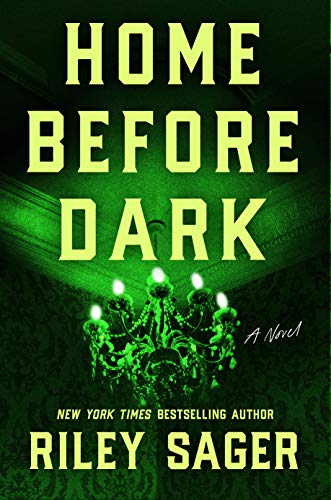
I may have stayed up late last night reading this one. What can I say? Riley Sager knows how to take a damaged young woman with a past, put her in a scenario reminiscent of famous horror films and novels, and then create a compelling mystery-thriller. Such is the case with Home Before Dark, where Sager takes on Gothic horror and The Amityville Horror.

Home Before Dark follows Maggie Holt, an interior designer who also happens to be one member of a family that experienced an Amityville Horror-esque situation that forced them to flee their newly bought home, the infamous Victorian mansion Baneberry Hall, after only twenty days. Her father Ewan later wrote a book about their “experiences” in the haunted house, which became a bestseller and has forever followed Maggie. Twenty-five years later, Maggie returns to Baneberry Hall, a place she doesn’t even remember, to renovate the house and find the truth hidden in her dad’s book. But as figures from the book emerge as real people and Maggie digs deeper, she finds an even deeper mystery within the manor. One with possibly deadly consequences.

From the start, the novel draws you in and makes it hard to put down. The story switches between Maggie’s present and passages from Ewan Holt’s “tell-all,” House of Horrors, and it’s fun to see how things that “happened” in the past line up with or contrast with what Maggie experiences. I also liked Maggie as a character. You could really feel how much her life has been affected by her family’s deceptions and the popularity of the Book (as she calls it). I almost felt angry at her parents just reading about how much they twisted her life.

And of course, there were numerous twists and turns along the way. I saw none of them coming and they really really kept the tension high and my mind boggled at the possibilities. They’re part of the reason why I was up past midnight last night.

If there’s one thing I didn’t like about the novel, it’s that during the sections quoting the Book, the plot seemed lifted from today’s B-horror films. You know, the kind that have paint-by-the-numbers plots, rely heavily on CGI and jumpscares, and you forget about them a year or so after they release? I get that it’s supposed to be a pastiche or satire of Amityville Horror-style haunted house stories, but at times it felt like I was reading a bad ripoff of The Haunting in Connecticut or one of the poorer Conjuring films. Not really my thing, as you well know.

All in all though, Home Before Dark is a twisty, satisfying read. On a scale of 1 to 5, I’m giving Riley Sager’s fourth book a 4.7. Grab a copy, settle into a comfy chair, and prepare to be thrilled. You’ll be “haunted” even after the very last page.

That’s all for now, my Followers of Fear. I might get another post out this week, but given that I’m leaving for my trip soon, that’s going to take up my attention this week. And it’ll be really hard to blog until after I get back. Nevertheless, once I do come back, I promise to have quality content for you. Or something you can use to fill five minutes of your life, depends on how you view it.

And in the meantime, if you’re able to come to the fifth annual Indie Author Book Expo in Des Moines, Iowa this coming weekend, please do. I’ll be selling copies of Rose, doing Tarot readings, and interacting with people, and I’d be happy to see you.

Until next time, stay safe and pleasant nightmares!

Since it was announced that King was releasing another collection of four novellas last year, I’ve been looking forward to reading it. The shutdowns due to COVID-19 delayed me getting my copy from the library by about two months (thanks, coronavirus!), but as soon as I had it, I settled down to read it and see how it stacked up against collections like Four Past Midnight and Different Seasons.

It took me maybe two weeks to read the book. What did I think?

Oh God, I was disappointed. I’m a huge King fan, but–oh God. This is definitely not one of Stephen King’s strongest collections of novellas. Out of the four stories in the collection, I disliked or was indifferent to three of them:

The first story, “Mr. Harrigan’s Phone,” follows a young boy whose relationship with a rich, elderly bachelor takes on a supernatural twist. And while it goes for a creepy coming-of-age story vibe with comments on technology addiction and how business takes place online, it feels like just your average coming-of-age story that tries to be creepy a few times. And not very well. If perhaps the story had dropped some of the literary focus and instead tried to focus on the protagonist through more supernatural terror, I might have enjoyed it a bit more.

The second story, “The Life of Chuck,” is actually three stories in one, all focusing on a man named Chuck Krantz at various stages of his life. And I didn’t see the point of all three stories being included together as one story. The three parts don’t really link up that well except for the titular character, and each has a different focus: the first is an interesting take on the verse from the Talmud “He who saves a life, saves a world entire;” the second is about an impromptu flash mob in Boston; and the third is a spooky ghost story set during Chuck’s childhood. I think if the three parts were released in separate collections, they honestly would have been stronger, especially the first and third. As they are though, I was just left annoyed and confused.

The final story, “The Rat,” is a semi-interesting story about an author trying to finish a novel in a remote cabin during a storm that takes a dark fantasy turn during the last third. And the way it takes that turn is so silly, I’m wondering if King meant for that to be a comedy/horror piece and I missed it. As it is, it’s not going to leave anyone with nightmares anytime soon.

The one story I actually liked is the third, “If It Bleeds,” starring Holly Gibney from the Bill Hodges trilogy (which I haven’t read) and The Outsider (read my review here). In this story, private eye and cinephile Holly Gibney realizes a monster like the one from The Outsider is causing death and misery after a school is bombed. It’s got a great mystery at the center, a thrilling climax, and some nice character development on the part of Holly (who, might I add, is on the spectrum with me. Positive representation!). It’s not exactly top-notch King, but it’s still very good, and I’d check out an adaptation if one were made and it was on a channel/streaming service I have access to (*hint hint wink wink*).

All in all though, If It Bleeds by Stephen King is not going to keep anyone up at night. On a scale of 1 to 5, I’m giving the collection a 2.3, and that’s mostly for the titular story. Major King fans are going to read this one, but I wouldn’t recommend it to anyone who’s either a casual fan, a new King reader, or just looking for a scary collection of stories.

For that, I recommend his collection Four Past Midnight.*

That’s all for now, my Followers of Fear. I’m disappointed that this book didn’t resonate with me, but I already have my next read, Home Before Dark by Riley Sager, waiting for me to start. Hopefully that’ll scratch my horror literature itch, especially if I finish it before it has to go back to the library. Until next time, pleasant nightmares!

*And would someone please make a movie based on the third story in that collection, The Library Policeman? PLEASE?!!! I would help make it and make it the best it can be if someone did.

I normally don’t review non-horror media on this blog. I stopped doing that at some point in college, when I decided to focus more to better appeal to my audience (I’ll do an anime recommendation post every now and then, but only because that stuff helps my craft). That being said, I feel compelled to review this film for a number of reasons:

One, this is an anime movie about Anne Frank. Yeah, you read that right, an anime movie about Anne Frank. Second, it was released free of charge to watch on YouTube last month, and so far as I can tell, this was done legally by its American distributor, not by a random person hoping to make a quick buck off ad revenue or who feels media should be free on an accessible platform. And three, even my parents, neither of whom are anime fans, are curious about this film! Given all that, I decided to watch it and see if it’s any good. And given what I saw, I felt a review on the blog was necessary.

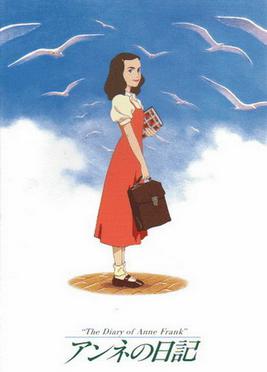
Anne no Nikki, or Anne Frank’s Diary, follows the life of Anne Frank as she, her family, and four others go into hiding during the Nazi occupation of Holland in a tiny apartment above her father’s former workplace. Based on the diary she kept during the war (something people who complain that the lockdown and social distancing restrictions are too onerous need to reread), the film starts right before her family goes into hiding, and ends right as they are discovered and sent off to the camps.

This film…is a bit of a hot mess.

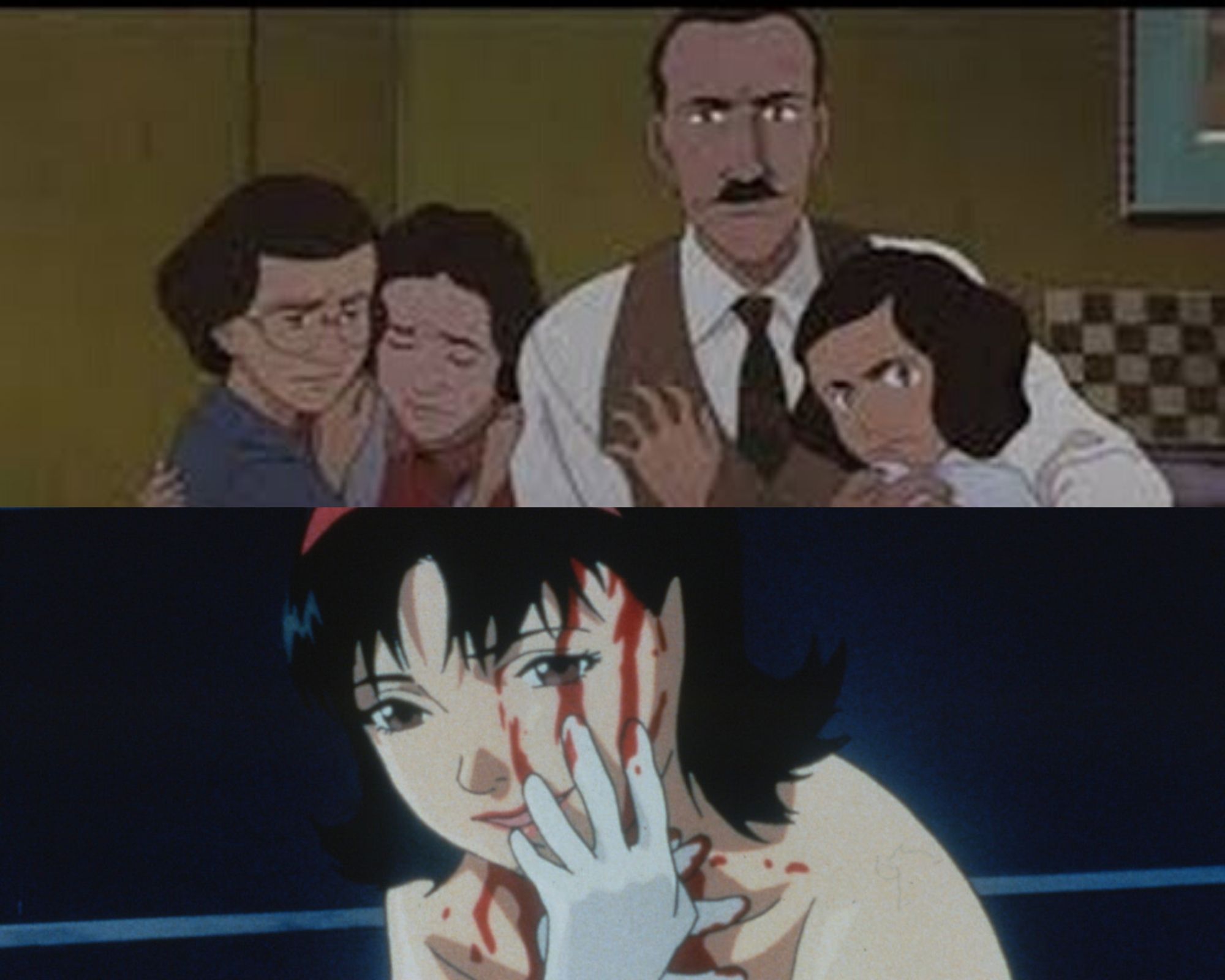
For starters, let’s talk about the animation. While the backgrounds are lovely enough to make me nostalgic enough for the short period of time I lived in Europe, the characters look flat, grey and unrealized. I think the animators were going for realism rather than stereotypical anime style character designs. However, when you compare it to the characters of Perfect Blue two years after this was released, or films like My Neighbor Totoro or Grave of the Fireflies, both released in 1988, and all three aiming for realism in the character design, it just pales in comparison.*

And at times, the movement is really weird, like they had to cut frames or the characters’ mouths don’t match what’s being said. It’s hard to believe this film was animated by Studio Madhouse, responsible for some of the best anime ever made, including the above-mentioned Perfect Blue, one of my favorite films ever, and my personal favorite anime, the isekai fantasy epic Overlord. What the hell?!

How the hell did the studio that produced Perfect Blue (lower) produce Anne no Nikki (upper) two years prior?

As for the plot, you have to wonder about a lot of decisions. Trying to fit this story into ninety minutes, a lot of material is skipped over, truncated or changed. Much of what allowed us to get to know and love Anne is rushed through, and perhaps a little too much time is spent on Anne’s romance with Peter.

I think the film’s worst sin, however, is that it doesn’t carry the message of Anne’s diary very well. While making us experience the darkest moments of Nazi occupation and living in hiding, Anne is still able to show us how life can go on and even be filled with hope for the future and human kindness. The film tries, but it can’t bring about that message. At least not in a way that feels authentic and powerful.

On a scale of 1 to 5, I’m giving Anne Frank’s Diary a 1.7. If you want to experience the story of Anne Frank–I mean really experience it–read the actual book. Watch one of the film adaptations (I hear the 1959 one is really good), or see if there are any recordings of the play available to stream (I saw it several years ago and highly recommend it).

Just don’t watch this movie. It was released on YouTube for free because the distributor knew they could make more money from YouTube ad revenue than if they put it on DVD/Blu-Ray or to rent on another site. I’m convinced of that after wasting my evening with it.

This has been Rami Ungar, wishing I had watched something else instead. Good night!


*For non-anime fans, think of a beautifully drawn Disney character, and then compare it to a character from a Saturday morning cartoon with a low budget. It’s close to that.

I heard about The Wretched earlier in the week, and became interested. Apparently this film was released a few weeks ago through video-on-demand platforms and drive-in theaters. Normally this wouldn’t receive such an overwhelming response, but thanks to the COVID-19 pandemic, the film has been topping the box office three weeks in a row. Still, was that all there is to it? Was it only successful due to almost no competition, or was it actually a good film? There was only one way for me to answer that, so this evening I rented The Wretched on demand and gave it a watch.

The Wretched follows Ben Shaw, a teenager sent to live with his dad in a beach town for the summer. While he’s hoping to deal with his personal problems and get by with his summer, Ben soon realizes something sinister is going on next door. A strange creature is spotted nearby, the neighbor’s mother starts to act sinister, and the next door neighbor’s kid goes missing a day after going to Ben’s house for help. Ben soon realizes there’s a witch next door, a bestial creature that feeds on children to survive. And now Ben has to prove it before the witch kills anyone else.

So, there are some things to like about this film. There are some really tense moments and some creepy imagery. The witch herself is rather freaky to behold in any of her scenes, especially when she’s hidden in shadow or when she’s finally revealed. The special effects are pretty cool, and aren’t reliant on CGI, so far as I can tell. And there’s a cat-and-mouse aspect to this film that works pretty well, as Ben tries to prove that there’s a witch next door to him. Not exactly easy when, in addition to trying to prove the impossible, Ben is already on rocky ground with his folks and the witch’s magic is interfering.

That being said, The Wretched has some issues. The first half hour or so is kind of slow. I think they’re going for slow-burn, but it’s a little too slow. John-Paul Howard, who plays Ben, at times feels like he’s not putting in a hundred percent. There’s a twist in the final third that feels like it was added in just to put twenty more minutes into the film, and was really unnecessary. And finally, the opening scene, which takes place 35 years before the main plot of the film, adds absolutely nothing to the story. You could take it out, and there would be no major change to the film.

All that being said, I am glad I saw this movie. Sure, it wasn’t as scary as it could be, but it satisfies an itch for horror fans. Especially when a lot of films we wanted to see have been taken off the release schedule and we don’t know when we’ll get to see them. And I got a couple of ideas for stories watching this, so that’s always a plus.

On a scale of 1 to 5, I’m giving The Wretched a 3.5. If you’re looking for something to scratch a horror itch, this might be just what you’re looking for. Check your local drive-in to see if it’s playing. And if it’s not, or you don’t have a drive-in theater, check Amazon, Google Play, and YouTube.

I can’t believe it’s been over a month since my last review, and nearly two months since my last review of a movie. Well, it’s the first of the month and a Friday night. I recently found out about an American remake of a Thai horror film that’s one of the best known Thai horror films and Thai films in general known internationally. The Thai film is on Netflix. Let’s get into it.

Shutter follows Tun, a photographer, and his girlfriend, Jane. On the way back from a friend’s wedding, they accidentally run a girl over and flee the spot. However, nothing is reported to the police or the hospitals, and things get weirder from there. Spirit images show up in Tun’s photos, and the more Jane digs into things, the more she realizes that the girl they ran over wasn’t just a random accident. Something’s coming for Tun and his friends, something from their past. And whether in a photo or in reality, it’s not going away.

So Asian horror films can be hit-or-miss with me, but this one actually did okay with me. While the plot feels a lot like a basic Blumhouse formula film–you know, characters somehow catch the eye of something evil, it slowly comes after them with jumpscares and other weird moments to scare them before killing them, and then finally there’s some sort of climax after all the backstory is revealed–here, it’s done pretty well. The jumpscares aren’t overused and are actually pretty effective, partly because the ghost of the film is so damn creepy.

Along with that, the film does some great scenes full of tension. There’s one scene with a flashing camera in a dark room that I’m sure was terrifying on the big screen, and there was another scene involving a biology lab full of preserved specimens that actually had me curled up a bit in my seat.

And as I said, the ghost of the film is so damn creepy, thanks to some great makeup and not overusing her appearances.

However, there are some things Shutter could’ve done better at. As I said, the story is kind of formulaic, so there were plenty of things I saw coming and which I’m sure other people would see coming. Sure, there were some good twists and some excellent foreshadowing at times, but still predictable at times.

And if you’re photosensitive, I would recommend skipping over the camera-in-the-dark room scene. Also, this film contains some elements that might upset certain viewers, so trigger warning.

On a scale of 1 to 5, I’m giving Shutter a 3.5. If you’re looking for a popcorn horror film to last an hour and a half, this might do the trick for you. It’s on Netflix, so enjoy.

That’s all for now, my Followers of Fear. I’m still taking orders for signed copies of Rose, all you have to do is email me at ramiungar@ramiungarthewriter.com. In the meantime, there’s a book that’s literally screaming my name (surprisingly not a grimoire of dark magic), so I’m going to go read that. Until next time, pleasant nightmares!

I heard about this book sometime last year and immediately requested my library buy copies (they did, and I was #1 on the list). I mean, a horror story set on the Titanic and having to do with some sort of creature living in the sea? Where do I sign up? And it came in for me at the library right before my library ceased operations due to the virus, so I was happy to get it when I did.

The Deep follows Annie Hebbley, a maid who works on the Titanic, and gets involved with the Fletcher family, a troubled married couple with a baby girl. Strange things occur on the ship leading up to that fateful (or fatal?) meeting. Years later, Annie meets Mark Fletcher, the very same man she waited on during that voyage, though now she’s a nurse on the Titanic’s sister ship the Britannic and he’s a wounded soldier returning from the battlefield of WWI. Coincidence? Or is something else at play? Something that has unfinished business with these ships and their passengers?

Let me tell you, this book has a lot going for it. For one thing, it’s set partially on the Titanic, which is always a fascinating topic and setting for any story. And turning it into a ghost story? Even cooler.* That, and the Titanic sailed during the Edwardian era, which is close enough to my beloved Victorian era that I felt right at home.

But beyond that, this is one damn good horror novel. Author Alma Katsu takes a psychological approach to this story, using hints to keep us guessing as to what’s going on. Are people going crazy onboard? Is there something supernatural afoot? Whether it be a seance or someone acting strange, you’re kept very up in the air about it up until the last fifth or so of the book, and even then, you may still have questions.

At the same time, you get to know a lot of these characters intimately. It’s a big cast, told from the points of views of Annie, Mark Fletcher and his wife Caroline, you have the POVs of several historical figures, including boxers Dai Bowen and Leslie Williams, whom I absolutely fell in love with; Madeleine Astor, worried about an alleged curse on her unborn child; and William Stead, an aged journalist with an interest in the occult.** But Katsu does a great job of developing each and every character and giving them a unique voice and issues to explore.

A lot of attention is paid to detail as well, the same sort of attention that went visually into James Cameron’s movie. It really brings alive the setting for both ships, and makes you feel like you’re there. And there are plenty of moments filled with tension, such as the aforementioned seance, a scene at the saltwater pool, or close to the very end, when things are finally revealed.

The ship may have sunk, but the stories about it, like my heart, will go on. And in some cases, get very creepy.

All these factors kind of make it feel like you’re watching a really dark and spooky stageplay about the Titanic, only you’re reading it out of a book. In fact, I can imagine The Deep being made into a stageplay someday, or perhaps even a Broadway musical, one that’s scarier and has less humor than Sweeney Todd. I’d even help adapt it if someone deemed me experienced enough and wanted me to.

I can’t find anything to put as a downside to this novel. Some might find it a bit too slow, or maybe too much time is spent on the characters’ problems and backstories. I didn’t, but I can see other people feeling that way.

Overall, I’m giving The Deep by Alma Katsu a 4.5 out of 5. It’s an unnerving, intimate historical horror novel that’ll have you enthralled. Pick up a copy, put on that one Celine Dion song you’re probably thinking of, and get ready to dive in to what may be a contender for next year’s Bram Stoker awards.

*Of course, when I try to turn a luxury cruise liner into a ghost story, Disney’s lawyers come after me. How was I supposed to know ritualistic murder wasn’t allowed in international waters? It’s always okay in wartime!

**I recognized him from my own research into Victorian England. When I came across him and the reference to the occult, I literally shouted “Wait, I know this guy!” to my empty apartment.

So the other night on Twitter, I see Richard Chizmar (you know, that author/publisher I interviewed a while back?) tweet about this movie, The House of the Devil, saying he had to stop watching it thirty minutes in and could only finish it by the light of day. Obviously, I’m intrigued, so I went and reserved a copy from the library. And I finished it in one sitting after dark, so I think I can brag about that? Wait, I live in an apartment with noises, and part of the reason Mr. Chizmar couldn’t finish it was because he was watching the film in a dark, quiet house. Obviously, there’s a difference.

Anyway, on with the review!

Set in the 1980s and “based on true events,” The House of the Devil follows Samantha, a college student struggling to make ends meet. In desperation, she answers a babysitting ad she finds on campus and takes it. However, things get weird when she gets to the house. And once she’s alone with her charge, she learns that there’s more afoot than meets the eye.

Ladies and gentlemen, I may have a new favorite horror film!

So first off, this really does feel like a horror film from the late 70s/early 80s. In addition to the normal signs of a 1980s-set story (teased hair, Walkmans, and music from the best era for music ever, etc.), the movie was filmed with 16mm film, giving it that slightly filtered quality we know and feel so nostalgic about. Add in some yellow credits and some pauses during opening credits, and I could almost believe this film was made over thirty years ago rather than just eleven years ago.

I also love how this film builds tension. I know I use the term “slow burn” quite a bit, but it fits here. Director Ti West takes his time laying the groundwork and establishing our main character Samantha (wonderfully played by Jocelin Donahue, who embodies natural 80s beauty as much as Natalia Dyer in Stranger Things). Once we get to the house, things switch to showing Samantha’s increasing unease and paranoia. The camera work in these scenes is great, showing the heroine exploring the house multiple times, as if she’s not sure she’s really alone, while at the same time the camera films things in a voyeuristic way, like we’re the ones stalking Samantha, allowing us to share in her unease.

And that final third! Whoo-boy, things go zero-to-sixty real quick, and it is scary and thrilling to watch. I also like seeing how Samantha strikes a great balance between terrified final girl and willing to fight back. Usually in these films it’s either they’re screaming their heads off or they’re angry vengeance personified, so it’s a nice change to see a compromise.

As far as problems go, this film might be a bit too slow and quiet at times for some viewers. If you prefer your horror film have faster paces or not so many quiet points where characters just talk, this may not be the film for you. Also, there are some flashing imagery at the beginning of the final third that might trigger people with photosensitivity. It’s not as bad as IT: Chapter Two was, but it’s still something to keep in mind.

All in all, The House of the Devil is a wonderful homage to the slasher and suspense-horror films of the 70s and 80s. On a scale of 1 to 5, I’m giving it a 4.8. Settle into the couch, order a pizza and prepare for one of the best horror films you haven’t heard of. You won’t regret it.

Unless you have nightmares. In which case you may regret it.