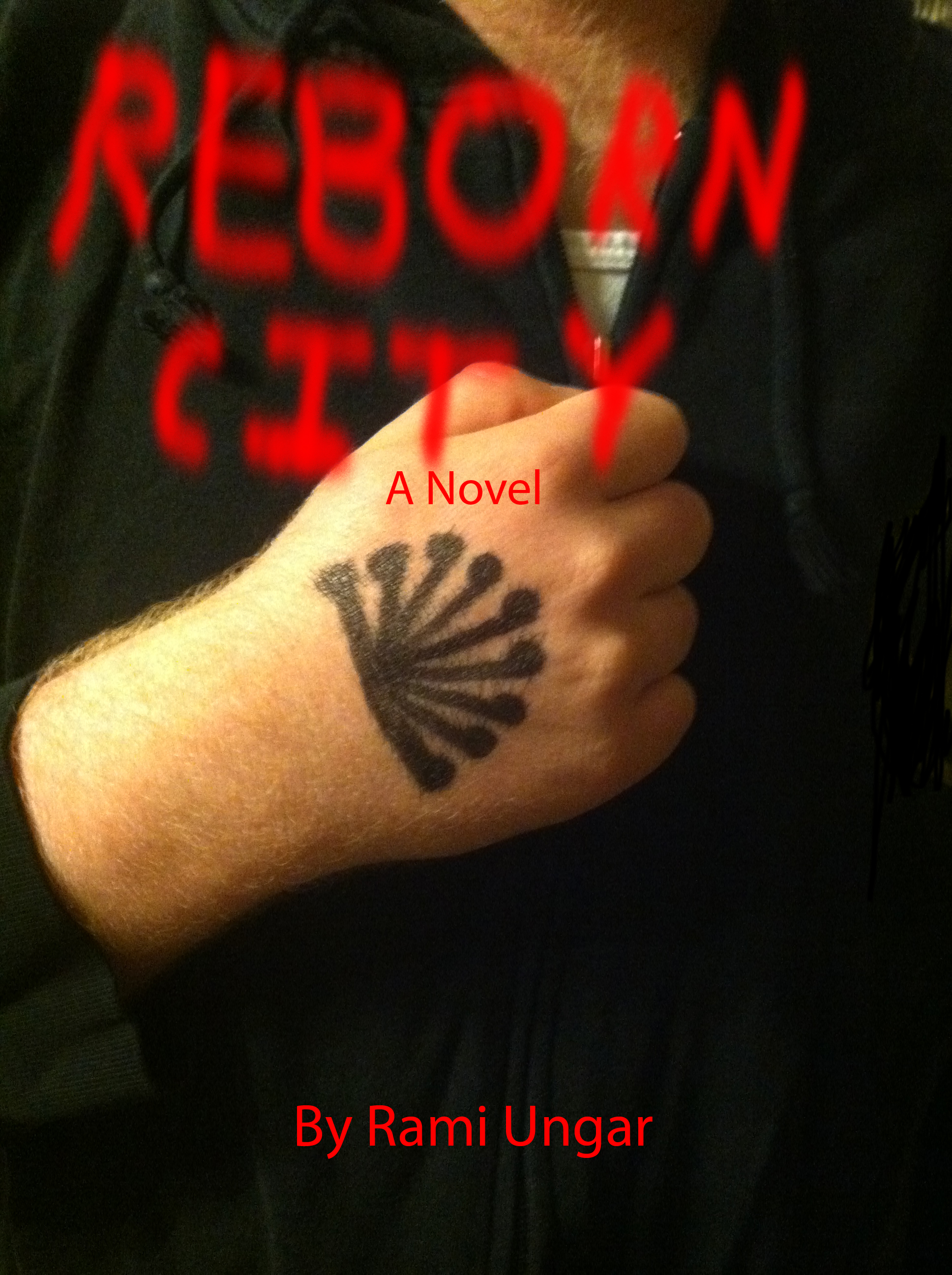
Okay, it’s not exactly like this, but it puts things in perspective as far as what I mean when I say “bringing the dead back to life through scientific means”.

Oh, ladies and gentlemen, I feel good. I just finished the short story I started rewriting on Friday, and in a strange way, I finished writing two stories at once.

I was struggling with two stories, one about a demonic possession gone wrong called Ownership, the other a story about a man brought back from the dead through scientific means called Vile. It wasn’t until I combined the stories into a single story called Resurrection that I finally managed to finish the stories. And let me tell you, every minute writing Resurrection was pure fun.

Truth be told, this story took on a life of its own as I wrote it. Most of the time I didn’t know where the story was going or what I was supposed to write next, though it wasn’t like when I had no idea what to do with the original parent stories. It was as if I just needed to find a way to keep the story fun for both me and any potential reader. But it wasn’t too hard to keep this story fun; it was very sci-fi heavy, so I got to really come up with some fun technology that might exist several decades down the road (like drones taking photos and videos at your party). When I wrote Reborn City, I focused less on the technological aspect of a story taking place about forty-five years ahead of us, so writing the science and tech aspects of Resurrection made up for it a little.

The ending of the story caught me by surprise. I always sort of knew how I wanted to end the story, but the twist I added in the end definitely threw me a little, even though I decided it was in the best interest of the story to add that little twist. Afterwards I wanted to add something like a news article stating what happened after the ending, but I felt it was unnecessary and that the ending I gave the story was good enough to close it out.

That, and my word count was getting dangerously high.

Now, I’d like to work on a bit of pure horror. I’ll be starting work on a short story that’ll be a homage to Edgar Allen Poe’s “The Premature Burial”, and it’ll probably be the closest I get to writing about zombies for a very long while. Look out for it, because I can’t wait to tell you about it.

gordon-gee-12490a4fe36e00ab[1]

Earlier this week, it came to light that E. Gordon Gee, the President of Ohio State University, had said some things about the University of Notre Dame and Catholics in jest at an athletics meeting. Some took the comments as offensive,  He apologized for his comments and Notre Dame formally forgave him. Most of the Catholic students on campus and on Facebook have agreed that they didn’t find the comments offensive. Heck, I’ve heard more offensive comments from comedians on TV (Jeff Dunham and his dummies come to mind).

But today, President Gee announced his retirement, effective July 1st, because of the controversy his remarks led to.

Naturally, I and several other OSU students are devastated. President Gee was a positive influence on the campus. He brought a smile to us with his bowties and jovial nature and kind and quiet manner of speech. To many students, meeting President Gee was a milestone in their OSU careers. I even met one student who said she came to Ohio State just to meet President Gee, right before she took a photo with him at the student union. To us, losing him because of this little incident will be a big blow to the morale of the university and to the students.

This is me with President Gee back in my freshman year. He was an inspiration. I hope he stays that way.

This is me with President Gee back in my freshman year. He was an inspiration. I hope he stays that way.

Which is why, after discussion with some other students and a lot of thought about the subject, I started a Change.org petition to get the Board of Trustees at Ohio State to let President Gee keep his position and continue to serve Ohio State as he’s done for several years. So far, 125 people have signed, and I’m hoping that I can get that number up to 10,000, or about one-sixth of the Ohio State student population.

I’d appreciate it if you signed the petition, and possibly shared it on your own blog or Facebook. This means a lot to me, and I’m trying to make a difference as best as I can. If I can, I want to see this petition reach the goal count. If you can help me, that’d be great.

If you decide not too though, that’s okay. I respect your opinion and your choice and I hope we can find other things to agree on. But if you feel like it, please do sign the petition. You don’t even have to donate money to do it! And the best part is, you’ll be making a difference for about sixty-thousand students.

That, my friends, will be the best part.

I recently ran out of things to read. I had free time, so I took the bus down to the library and went on a search for books I wanted to read. Unfortunately, there were no copies of the books immediately on list, so I decided to pick up some good old Stephen King.

I first discovered the current King of Horror when I was 12 or 13 when I read It and I found myself hooked. For the next couple of years, I read a huge amount of King’s work. Unfortunately, around age 16 or 17 I started to grow tired of the King, and I stopped reading him. As sad as it is to admit, I got sick of Stephen King, and rarely picked him up unless to read one of his new books (Duma Key or Under the Dome) or read an old favorite (The Stand or It). But this trip to the library was the perfect opportunity to get friendly with His Scary Highness again.

So I picked up Carrie (read once before and needed to read again before the remake comes out in October), Misery (seen the movie, never read the book) and Cujo (never read, have to since they’re talking about remaking the movie), plus two other authors I’d heard or read good things about and I started to read. As I read Carrie, I felt all the old love come back. By the time I’d finished, I was back on loving Stephen King.

I’m looking forward to meeting this dog.

I’m now in the middle of Misery, and although I’m not that easily scared, it’s proving a good read. I also can’t wait to read Cujo, but I think afterwards I’ll take a break from the King. After all, I don’t want to get sick of him again! That would be horrible.

Have you ever gotten sick of a certain author and then rediscovered your love of them? Which author?

In the article I wrote that was published last weekend (you can read it here if you like), I mentioned that chapters and scenes don’t always mean the same thing. Some scenes take up several chapters, while sometimes several chapters are needed for one scene. This got me thinking on the different types of chapters I’ve seen over the years and doing an examination of these sorts of chapters. Hence the post you are currently reading.

I’ve divided the chapter types into three categories. Note that the names are my own creation and if there’s a proper name for these chapter types, then they’ve escaped me. Also, feel free to add any criticism or any fourth type of chapter that I may have missed or I am unaware of by leaving a comment, and I will gladly write a second post.

The Harry Potter chapter

When I wrote Reborn City, I used this chapter format. This type of chapter I first encountered when I read the HP books, so I’ve always associated the type with Harry Potter. However it is by far the most common type of chapter out there, mostly because it is easy to write and can encompass many events within itself, such as when Mr. Dursley has a very odd day, followed by his nephew being left on his porch in the first chapter of Sorcerer’s Stone. And changes of scene within the chapter are very easy to do, as they can be accomplished by a large space between the ends and beginning of sections or a series of asterisks (I prefer using ~~~ though). When I outline this sort of chapter, it usually looks like this:

Chapter 1: Rami Ungar sits down in front of his computer. He has published several novels, but has written nothing new lately and can’t even be inspired by his trusty list of ideas. He decides to write a story about a man haunted by a muse for no reason but to write something, and when he wakes up, he finds said muse on his couch, telling him to continue to write so that she can take form in this world.

Yes, that sounds like a recent movie, but I’d probably put a more sinister twist on it.

The Alex Cross chapter

This is the chapter format I used when writing Snake. I first encountered this format when I read The Da Vinci Code, but I’ve come to associate it with the Alex Cross books since then. In this format, a scene can take up several chapters, each likely very short, and is usually best utilized in the form of a thriller or other fast-paced novel, due to the short chapters heightening the tension before stopping and leaving the tension to continue in the next chapter. When I outline this sort of chapter, it might look like this:

Chapter 1: Rami Ungar wakes up when he hears a noise in the living room. He goes down to investigate with a baseball bat, but when he looks into the mirror hanging on the study door, he sees someone behind him.
Chapter 2: Rami turns around but sees no one there. He looks back in the mirror and sees no one there. He goes back to his room when he hears someone calling his name. He goes into the kitchen and sees a face peering out of the television beckoning for him to come closer.
Chapter 3: The face in the TV tells Rami she will be his muse from now on and will bring him fortune. Rami is stunned.
Chapter 4: Rami accepts the muse’s help and she tells him his name: Melly. Rami thinks it’s a nickname and wonders what it could stand for.

I could actually use this idea if I’m smart and change some names. Don’t steal it!

The Mark Chadbourn chapter

I have yet to use this sort of chapter, but I’m sure I will at some point in the future. This type isn’t named after any sort of literary character, but is named after the fantasy author Mark Chadbourn, who used this style of chapter with his series of nine fantasy books starting with World’s End and ending with Destroyer of Worlds. This format is unique, because it uses chapters, but each chapter is like a section of the story, and it has numbered sub-sections. I find this helpful for novels where there are a lot of different characters and plotlines to follow and you want to switch between characters and plotlines as dramatically as possible without being cheesy. When outlining this sort of story, it usually looks like this:

Chapter 1: Muse Makes Contact
           I: Rami Ungar wakes up and finds a ghostly woman in his room. She calls to him before she disappears.
           II: A witch has a prophetic dream of danger to come and summons her familiar. The witch, whose names is Azzie, tells her familiar Collos to head to Columbus Ohio and investigate an author by the name of Rami Ungar.
           III: Rami goes to work and then to classes, but sees the same ghostly woman everywhere he goes. Also, he feels like he’s being followed…and is then attacked by a man with a knife.

It goes on like that, if you get my drift, and can have any number of subsections. It’s a tough sort of format to pull off, but it works best with stories like this with multiple narratives, and can leave the author the option of working with many different characters at once.

As I’ve demonstrated here, there are many different types of chapters, and probably some that I’m not even aware of. Whatever one you use though, if you use one because you’re comfortable with it or you switch it up depending on the story, it’s probably because you know the story best and therefore you know what sort of chapter is needed. And if you can give your story what is needed, including chapter, then that is one mark of a great author.

Every author wants to write a great story, one that’ll be remembered for years and years after the author has passed on from this life. It’s the reason why so many of us spend years bettering ourselves, polishing ourselves and learning from as many experts in the field as we can so we can be great at our craft.

But what about writing great lines? Every author also has a desire as the person who coined a phrase like “To be or not to be”, or “Luke, I am your father”, or “When you play the game of thrones, it’s either you win or you die” (That last one I had to find through Google to get the quote right). How do you create a line that will be remembered throughout all time and be dissected in high school and college classrooms for generations to come?

I wish I could offer a trick to creating a great line that’ll stand out in your work. Unfortunately, none exists that I know of. In my experience, the most famous lines happen through accident and luck. Take Stephen King’s The Shining, arguably one of his best novels. The term Redrum has become a part of our social consciousness and is often used for creepy (or sometimes comedic) effect. I bet when King created the term though, he was just looking for something scary and strange, a device to add another layer of menace and mystery to the Overlook Hotel. I also bet that when the novel (and later the movie) became a success, King was very surprised by how popular the term Redrum was becoming.

Or how about “Live long and prosper”? Leonard Nimoy, who played Spock, was drawing on his Jewish roots, as that phrase and accompanying hand symbol were used by the priests in the days of the Holy Temple to bless the nation of Israel. When they were looking for an iconic catchphrase and symbol for the Vulcan character, Nimoy suggested, “How about ‘Live long and prosper’?” It stuck, and thanks to the show’s sometimes mind-boggling fandom, the phrase entered into our culture.

(By the way, that story has been a beloved tale among Jews for decades ever since the show began, and we still get plenty of oppurtunities to tell it and sometimes educate non-Jews about its Biblical significance. L’chaim!)

I guess the best way I can say for someone to create an excellent line is to just write as great a story as you can, and hopefully someday, just by writing a great story, you’ll pen or type out a sentence or phrase or piece of dialogue that’ll really catch the reader’s eyes and resound in their consciousness. Basically, keep doing what you’re doing as a writer and someday a great line may be born.

What’s your take on creating great lines? And what constitutes as a great line in the first place?

Last night I edited two short stories whose editing phases were long overdue because I was busy finishing up Snake. Today I turned to the problem of finishing “Vile”, the short story that I began over the semester but got stuck on. Earlier while hanging out at the library, I was looking over the first page and I thought to myself, How did I write this? It’s terrible. When I considered why it was so bad, I realized it had a lot to do with what I had been trying to accomplish with this story.

When I first came up with the story, about a man who comes back to life through the wonders of cryogenics, I’d set out to write a science-fiction story that was deep and philosophical and reflective, like Star Trek fans often claim the original series was and like a lot of science fiction can be. Despite my best efforts, I’ve never been much of a trekkie, and I apparently can’t write a deeply philosophical story with a sci-fi background, no matter how much I try. And believe me, I’ve tried.

Take a look at Reborn City, for example. It’s a science fiction novel, but it has moral-filled and philosophical themes. Those came later though. I never intended all the morality and philosophy to get in there in the beginning. It just got in there during the planning-and-writing process. The moral of this: I can get deep…but I need a great adventure or horror story to get deep in.

Which is why when I read “Vile”, I wondered to myself, how can I make this a good story without getting stuck again? I went back to the basic idea behind the story: a guy is brought back to life through the power of science, but things don’t go well afterwards. So how can I proceed? I thought about it…and then an idea came to me. I’d been struggling with another story about a demonic possession gone wrong. Could I combine the two? Indeed, I found a way to do so.

So now I’ve got a story I’m pretty sure I won’t get stuck on and be able to finish it. I just need to write it. In fact, I’m going to go do that right now. I’ll see what comes up. Hopefully it’ll be a terrifying sci-fi story with the deep themes I wanted, but the themes don’t clog the writing process.

Creepy, is it not? Even if it is a cartoon.

Oh, I’m feeling good. I took the last twenty chapters (all less than ten pages, let me remind you) and edited them. I think I ended up increasing Snake‘s word count by about six-thousand or so words, but all in all the entire book will be around three-hundred and fifty pages once I format it for publication (so don’t go running off afraid to read my thriller novel. If you’re going to run away, be it for the content and not for the page count).

I like this draft. I ended up doing a lot of character development and explaining some things that I realized did not make a lot of sense. I also gave my characters more character history, and even added two full chapters. I think I also cut out some of the unnecessary words and what not, made the plot run a bit smoother.

All in all, it’s a good draft. I’m not sure if at this point I want to send it to the presses, do another draft, or if I want to send it to a beta reader again. In any case, I’ll think about it over the next few months as I take a break from the Snake and his blood-filled world. In the meantime, I’ve got two short stories to edit, one to finish writing a first draft for, and two to research. Plus my good friend and fellow author Matthew Williams is almost done reading my science fiction novel Reborn City, which means I can get ready to send it to the copyright office.

All that can wait till tomorrow though. I plan on celebrating finishing the third draft with a marathon of Doctor Who and Torchwood. Good night and thanks for all the support!

Time for the second of this series, where I list my favorite villains for the year. And once again, I’d like to remind everyone that because Judaism has a differing view of Satan than the rest of the world, he will not show up in this list. Also, no villain of mine will show up in this list.

Now for a quick recap of numbers 10-6:

10. Voldemort (Harry Potter)
9. Randall Flagg (Stephen King’s The Stand)
8. The First Evil (Buffy the Vampire Slayer)
7. Lelouch Lamperouge (Code Geass: Lelouch of the Rebellion)
6. Jason Voorhees (Friday the 13th)

And now that that’s out of the way, onto the Top 5:

5. The Mayor (from Buffy the Vampire Slayer)

“Oh that’s swell. I love being a favorite.” He’d probably say something like that.

Properly known as Mayor Richard Wilkins III, he is the main villain of the third season of Buffy the Vampire Slayer and arguably one of the best Buffy villains ever. Played by Harry Groener, he seems like a genial man with conservative values and a phobia of germs. But underneath that surface is a quasi-immortal sorcerer who has ruled Sunnydale for several decades with the end goal of becoming the reincarnation of one of the oldest demons in history (and when they’re old, that also means they’re big). To that end he manipulates much of the evil that occurs in Sunnydale and eventually turns Slayer Faith away from the side of good to his. Many writers have called him a classic villain, and he is certainly a fan favorite. If you’ve ever watched Buffy, you know why he ranks at number 5.

4. Maleficent (from Disney’s Sleeping Beauty)

Where does she get her wardrobe from? Dracula’s wives?

Although this Disney classic was a commercial and critical failure in 1959 due to slow pace and lack of character development, it gained a following and I like to think Maleficent played a huge role in that. Her name a portmanteau of “magnificent” and “malignant”, she is considered one of Disney’s most famous and most dastardly villains. It’s her reputation that won her the honor of being the main villain in the Kingdom Hearts series, where she is often Sora and Mickey’s final antagonist. The strange thing is, she’s loved most her enigmatic personality and her mysterious past. We do not know why she cursed baby Aurora with the sleeping curse, though it’s probably not anything as petty as not being invited to her christening. Perhaps this’ll be explored in the new movie with Angelina Jolie that Disney’s cooking up. I hope so, because I’d like to know more about her.

3. Hannibal Lecter (from the Thomas Harris books)

A true gentleman…until he bites your head off.

Also known as “Hannibal the Cannibal”, Lecter has been featured or starred in four of Harris’s books. A sociopathic psychiatrist who makes meals out of the people who cross him, Lecter is considered one of the most influential villains in thriller history, and has been portrayed in various adaptations. Currently he is played by Mads Mikkelsen in the NBC prequel series Hannibal, where he is portrayed as a calm but calculating killer, someone you wouldn’t think of as a serial killer if you saw him on the streets. Knowledgeable and resourceful, Dr. Lecter has a way of getting in people’s heads and a way of making things difficult for investigators such as Will Graham and Clarice Starling. I highly recommend the NBC series, because if you ask me, Mikkelsen is better than Hopkins at portraying a madness of a whole different sort.

2. Freddy Kreuger (from The Nightmare on Elm Street)

Anyone reading this post before bed?

Jason may be my favorite slasher, but Freddy is something that cannot be stopped. We can put distance between ourselves and Jason or Leatherface, but nobody can run away from sleep, and that is what Freddy uses. A serial killer/molester (depending on what version you’re watching), he was killed by vengeful parents who immolated him. Coming back as a ghost with a bladed glove, Freddy attacks the children of those same parents who killed him by entering their dreams and killing them in their dreams, causing their deaths in real life. Freddy has been played every time by Robert Englund except for the remake, when he was played by Jackie Earl Haley. Trust me, this is one guy you don’t want to dream about.

1. Dracula

I vant to scare you silly!

I don’t need to tell you where our top villain comes from, his name says it all. Based on Vlad the Impaler and in some versions the exact same person, Dracula is a centuries-old vampire who travels from Trannsylvania to England to begin a campaign of world domination by taking over the most powerful empire at the time, but is stopped by Johnathan Harker and Dr. Van Helsing as they race to stop Dracula from turning Harker’s fiancée Mina into a vampire. The character has been influential as the first instance of a vampire being aristocratic and gentlemanly, which means Lestat, Edward, and all other vampires must consider Dracula their spiritual father. He has appeared in a variety of works thanks to the novel itself belonging to the public domain, and will be getting new life (so to speak) in an NBC miniseries this fall. I personally recommend Gary Oldman in the 1992 film adaptation and Richard Roxburgh as the count in Van Helsing.

Well that’s it for this year. Check back next year when I do a new list, possibly with some new or some old faces. So Hollywood/New York/whoever, you’ve got a year to impress me. I look forward to seeing new villains on the list.

daisy-cover

I just went over the number of downloads on “Daisy”, the promotional short story I published for The Quiet Game: Five Tales To Chill Your Bones. Guess what? The number of downloads has passed 100 (107 to be exact)! Thank you all for downloading and for reading. I hope you continue to read and to download, and if you feel so inclined, please write a review online or spread the word among your friends. It means a lot to me if you do.

And while I have you, I’d like to let you know that on the page listing my books, I’ve added Reborn City and Snake to the list, along with projected publication dates. Take a look for descriptions and for projected dates.

Man, it’s just good news after good news after good news lately! I heard about this online magazine called Horror Zone on Facebook recently and I checked out their website. They seemed like a good place to submit my work, so I sent them “Revenge For A Succubus’s Beloved”, the succubus story I wrote last summer and then rewrote during the fall. I’ve been struggling to find a publication that would take this short story, but these guys did! They even gave it a little “Revenge” logo thing near the beginning. I don’t watch the show, but you have to love what they did there.

If you want to read the short story, you can click here and you’ll be redirected to the site. Once again, thanks to Horror Zone for publishing my short story, and I hope to do business with you again in the future. In fact, I already have a short story in mind. For now though, I think I’d like to go for a jog, get some exercise in.

Hope you’re having as awesome a day as I am!