Disturbing, isn’t it?

I thought I’d do an annual post of my top villains. Why? Because in horror, the villain plays such a huge role and is usually the source of most of the terror. It makes sense that I should list which ones are my favorites and which ones have an influence on me. And it might tell us all a little bit about why I’m so messed up. So I’m doing my top villains in two posts, numbers ten through six in the first post and numbers five through one in the second. And please note, none of these villains are of my creation. That just wouldn’t seem fair, especially if you haven’t read much or any of my work.

Oh, and one more thing before we begin: Satan is not on this list. Yeah, I know it’s surprising, but Judaism doesn’t view Satan like Christianity does, so I don’t include him on the list. In fact, I have a novel where Satan’s the protagonist, so if he’s on the villain’s list that’d make me a hypocrite. No thanks.

So onto numbers 10-6. Enjoy:

10. Voldemort (from the Harry Potter books).

Oh Voldy, what an ugly face you have! Why not get cosmetic surgery?

My mother may disown me for putting the villain of the HP books at the bottom of this list, but I stand by the decision. The wizarding world’s answer to Adolf Hitler, Voldemort starts out as a young boy by the name of Tom Riddle in an orphanage. As things start out for him, he seems a little off but okay nonetheless. But as time goes on, his psychopathic tendencies make themselves known and he morphs into the dark and hideous Voldemort, who manages to stay alive even after dying through dark and obscene magic (does that by any chance have anything to do with his deformed face?). Voldemort uses the wizarding version of racism–blood purity–to help in his quest for power, and is well-known for being ruthless, intelligent, and full of dark schemes. Of course, his arrogance is part of what leads to his downfall, both the first time and the second.

Have to admire his love of snakes though. I’m a sucker for snakes. Why do you think one of my novels is about one?

9. Randall Flagg (from Stephen King’s The Stand)

Randall Flagg. Don’t let his smile fool you, he’s pure evil!

Is he the devil in blue jeans, or just his cousin? Randall Flagg–also known as “The Walking Dude” and “The Dark Man”–is a creature made of hate and malice who wanders the lesser-known highways of America at night, a boogie man who enjoys causing chaos wherever and whenever he can. He appears in several Stephen King books, but is most famous for The Stand, where he attempts to make a nation around himself in the plague-ravaged United States. He is shown gaining supernatural abilities as the plague ravages America and becomes a synonym for evil in the post-plague world. He takes delight in everything evil, whether it be murder, rape, or torture, and gathers several individuals like him after the plague. He is still part human though, and that shows later on in the novel when things start to go bad for him in his new nation. Still he is scary as heck, and his film portrayal by Jamey Sheridan makes you want to go “EEEK!”

8. The First Evil (from Buffy the Vampire Slayer)

A manifestation of The First Evil. Good thing it’s noncorporeal, I bet its breath stinks!

The First Evil is a power, pure and simple. It existed long before the universe began, and it will exist long after the universe is dead and gone. It embodies all that is evil, and will go to great lengths to ensure that Evil prevails. It is non-corporeal and can only take the form of the dead, but it is an expert at psychological manipulation, and has an army of demon priests and super-vampires to carry out its will, along with a psychotic priest played by Nathan Fillion. The First’s initial appearance was in the third season as a monster-of-the-week, but it becomes the main antagonist in the seventh season when it finds that it can use a glitch in the Slayer line caused by Buffy’s resurrection to destroy the Slayer line forever, allowing Evil a huge victory and allowing the First to enter into the hearts of all humanity. Truly terrifying and not a creature I would want to go up against. It does show an envy for humans and their ability to engage in acts of sexuality, which I find somewhat strange. Oh well.

7. Lelouch Lamperouge (from Code Geass: Lelouch of the Rebellion)

This is the face of a man who could challenge Moriarty…or even control him!

What to say about Lelouch? He’s hard to classify as a villain, but some of what he does is truly villainous, so he qualifies as a villain. The exiled son of the Emperor of the Holy Brittannian Empire, Lelouch hates his father for letting his mother’s murder go unsolved and for allowing his younger sister to become crippled during the murder. When he meets the mysterious immortal witch CC, Lelouch gains the power of Geass, which allows him to control people under certain conditions. Already a highly intelligent and competent strategist with loose morals, Lelouch uses his newfound power to don the disguise of the masked revolutionary Zero and begins a rebellion in the conquered nation of Japan, now a colony called Area 11 with numerous rebel and terrorist organizations within it.

Code Geass is one of my favorite anime of all time, and Lelouch is one of my favorite characters of all time. As the series goes on, we see numerous instances of him playing both villain and hero, lovable and despicable as he attempts to bring down his father and the Empire. He is capable of great good, but his twisted past and his personality often cause him to go the route of evil. His only weaknesses, besides how underwhelming he is in athletics, his probably his arrogance and his love for his younger sister. Still, I would not want to be on Lelouch’s bad side any day of the week.

6. Jason Voorhees (from the Friday the 13th film series)

Ever have trouble seeing his eyes? I think that’s intentional.

One of my favorite slasher killers, Jason is terrifying both in his brutality and in his simplicity. The son of Pamela Voorhees, Jason was born with a condition that, among other things, causes mental retardation and cranial swelling. This causes him to get horribly teased at Camp Crystal Lake, and eventually he is pushed into the water and drowns while the counselors were off having sex with each other (though there are other versions of how and why Jason got into the water). He later reemerges to be shown living, but not before his mother dies while venting a psychotic rage at the loss of her son. Jason takes up the mantle of avenger afterwards, killing anyone who comes near Camp Crystal Lake with his machete (or sometimes an axe). In later films he is shown to become a sort of Frankenstein-like creature, coming back from the dead under numerous circumstances to wreak havoc on Camp Crystal Lake. Scary as heck, especially when you consider he’s a giant, fast-moving zombie in a hockey mask.

And speaking of hockey mask, Jason didn’t appear until the second film, when he wore a sackcloth bag over his head. The hockey mask appeared in the third film to give Jason a distinctive look, and that look has terrified audiences ever since.


Well, that’s all for the first of these two posts. I’ll try and get to Part 2 tomorrow. Until then, if you have any questions on these villains, your own suggestions for villains, or a question on what the Jewish view of Satan is, let me know. I’d be happy to hear from you.

There are only so many names in the world. We rarely think about it, but there are only so many names in the world. And as writers, we generally use a lot of these names. Some people will use certain names more than once (Stephen King seems to have a fondness for characters named Jack, and uses a variety of last names so that it doesn’t seem like he’s using the same character every time). There’s nothing wrong with that, just as there’s nothing wrong with not using certain names (I think the names “Jack” or “John” are too commonly used, so I rarely use them, and there’s a certain girl’s name that I’m saving because if I ever have a daughter I want her to have it).

However, as it occasionally happens, there are certain names that our friends share, or that random people we meet on the street have. You could write a novel about a guy named Jason Colbert and then some guy will come up to you and say his name is Jason Colbert. This is the reason why the page in the novel that has the copyright info on it says “All names, places and groups are fictional and any resemblance to real people are coincidential” or something like that.

And as I know from personal experience, it’s important to disclose that. Whenever I decide to name a character a certain name and I have a friend who has a similar name, I make sure to let them know the character is not based on them. Here’s why:

1. You might inflate someone’s head. A few posts back I wrote about some of my early attempts at writing (you can read that post here). One of those attempts, a vampire novel called Mahiro, starred a vampire/vampire hunter named Daniel Axton. And one day I let slip to a friend of mine this character’s name. This friend’s name was Danny L. (I dare not disclose last names for the sake of privacy)

My friend thought that this meant I’d name the character after him, and the idea was only furthered when I mentioned the character also had brown hair. From then on, whenever the topic came up, he insisted that the character was named after him even though that this was far from the truth and that they had different last names. Good thing the vampire craze reached its peak midway through the second draft, or I may have tried to publish the novel and further inflate my friend’s ego.

2. It could get awkward. I’ve mentioned before that the female protagonist of my novel Snake is named Allison. Well, I have two friends named Allison. And although the Allison of my creation is very different from the Allisons I’m friends with, I made sure to let them know there was no resemblance between them. After all, if they read the novel and see some of the things my character gets into, it could lead to awkward conversations and lead to problems in my relationships to them if they thought the character was based on either of them. I mean, there’s a sex scene in that novel. Guess who’s in it. You can see why I would want to tell them there’s no resemblance or relationship between the fictional Allison and the real ones.

3. Angry lectures on “my character”. You ever get people asking you to put them in your novel? I used to, but I stopped doing that a long time ago. Why? I took some liberties with the characters, and my friends were upset about those liberties. After reading pieces of the manuscript they would tell me they didn’t think a character based on them would act that way or would say such a thing or “why is my character a ginger?” or “why did you kill my character off?” Even if I don’t base characters on my friends anymore, I make sure to tell anyone with a similar sounding name there’s no connection just to avoid these little lectures.

4. Someone may try to capitalize on the name. I don’t think anyone I know are particularly greedy or untrustworthy. I generally keep good company. However if someone came to me for money as payment for using “their name” in the novel, I’d tell them there was no relationship. Heck, during the writing phases I’d let them know this. It’s not that I don’t trust them, it’s just that if the novel does well, the scent of money may bring about something dark and usually kept locked away. It’s just better to nip that in the bud than let it blossom.

So that’s why I disclose to people if there is or isn’t a connection to a character in a story. It’s just safer that way and stops any weird situations from rising up. And it’s pretty handy too.

Though someday I may create a character after someone whom I really don’t like just to spite or satire them. But only if they really annoy me (which means my sisters better watch out if they know what’s good for them).

Do you disclose to friends/family whether or not there’s a connection between them and a character you created? What happens when you do?

I’ve officially passed another blogging milestone on the road to becoming an author, and that is passing the 250 followers marker (in this case though I have 251, so it’s coming a bit late but better late than never, right?). I’m very happy and would like to thank everyone who’s been supporting me and following me up till now.

For most of the first year I was writing this blog, I didn’t have a lot of followers and considered it a good day when I had one view. Yes, I was that desperate at one point when it came to this blog. A few times I thought of giving up the blog because not a lot of people were reading it and authors hate it when their work isn’t read. But, whether through sheer perseverance, stubbornness, or a little bit faith, I continued writing, reading other blogs, and enjoying the simple art of writing to people across the Internet and the world. All that paid off, as this post attests.

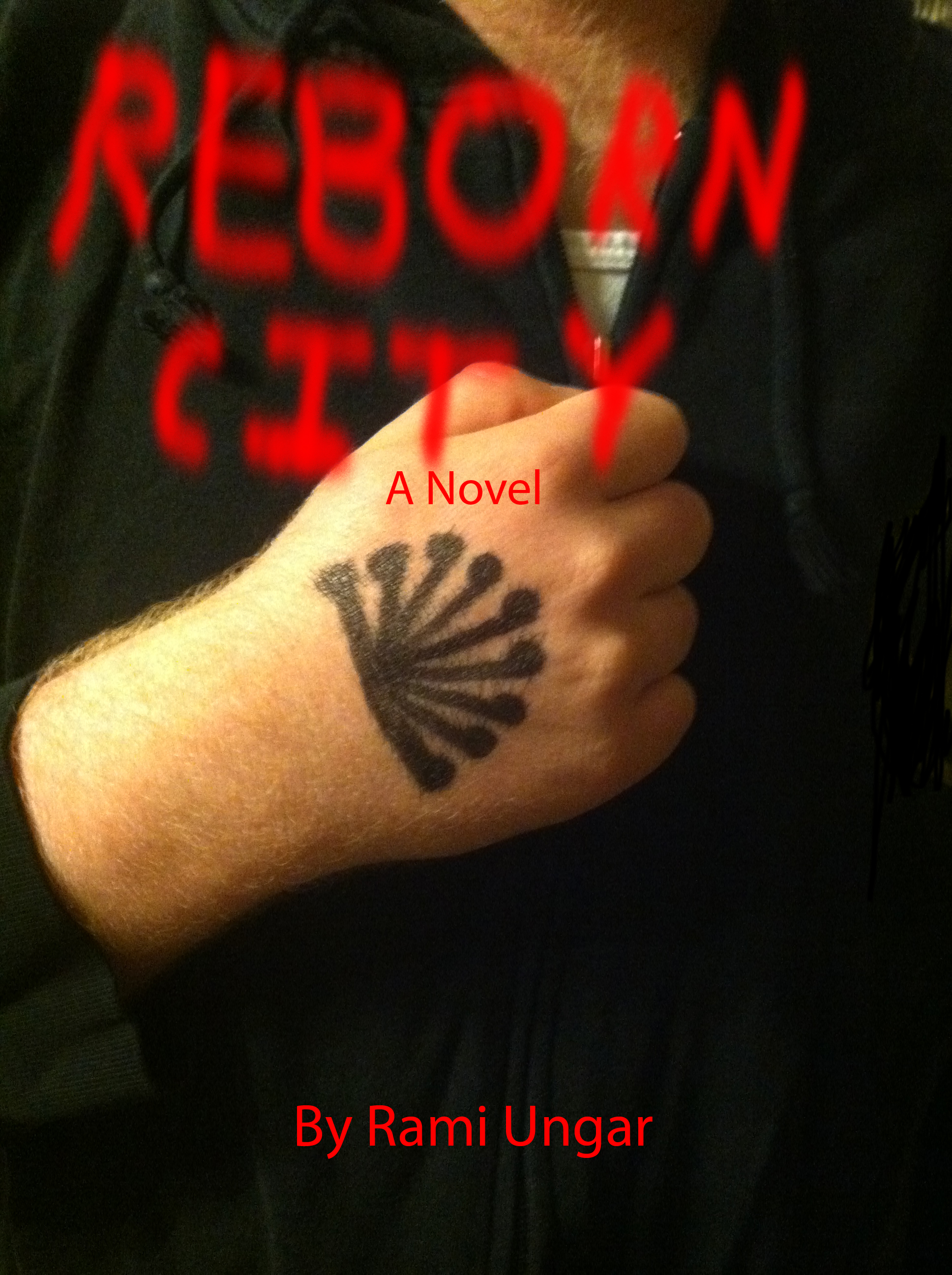
Once again, I’d like to thank everyone for continuing to support me on the road to becoming a novelist and that you continue to support me as I await the copyright for The Quiet Game and for the final draft of Reborn City to be finished. Thanks, and I’ll write more later.

I recently wrote an article for a blog devoted to helping self-published authors. They were asking if there were any authors who wouldn’t mind writing about outlining novels, and I volunteered. You can read the full article by following the link. I’m very happy and grateful to Self-Published Authors Helping Other Authors for accepting my essay and I hope we can do more business in the future.
Oh, and if you happen to be a self-published author, I strongly recommend subscribing to their blog posts. You never know what helpful hints you might pick up here.

I’ve heard fiction writers say they worry that they’re writing the same story over and over, just changing the names, the locations, and the situations. They say they worry they’re becoming one-liners, that their work is unoriginal and that they might as well be using cookie-cutters to write their stories.

I’ve had these worries myself. A lot of ideas for novels I have sound very similar if you look at them from certain angles. I’ve gone on thought trains that go something like this: “Oh, this story’s heroine reminds me of this heroine from another story…and she reminds me of another heroine…and don’t their stories sound a little similar?…and what about their male counterparts?…oh my God, did I repeat myself?!” Luckily I’ve got so many ideas for stories that I’m sure I can space these similar sounding stories enough so that critics and readers can’t accuse me of being unoriginal. But even if I didn’t have so many ideas, who cares? You can tell so many of the same story and still be successful. Look at Shakespeare! Every tragedy ends up with a ton of blood, every comedy ends up with bad guys getting butts kicked and lovers falling into each others’ arms in comical fashion, and every history…well, it’s history.

But if you still worry that your work is repetitive and just looking like the same old story over again, then don’t despair. Treat it like you do writer’s block–in my case putting the story aside for a couple of weeks and then getting it out again to look it over. In the amount of time that break took up, I’ve probably done a lot of fun things, or read several awesome books and graphic novels, or watched some pretty interesting TV shows or movies. I can add all that I’ve experienced to the story as I go over it and try to find some way to improve it. And if that doesn’t work, try using a random word generator and using three nouns from that generator to help mix up your story (it’s something I learned to do in high school. Thanks Mr. Guinan).

But if you still feel that you’re only repeating yourself, look on the bright side. Most people don’t have the energy or the fortitude to write a full story, even if they are born with the talent to do so. The fact that you can write only one story, you can do a lot more than others. Perhaps you can even make the best version of that story ever written. And isn’t that worth all the repeats over the years?

As of this evening, I’m only fifteen chapters away from finishing the third draft of my thriller novel Snake. Boy, it’s been a lot of work. I added two chapters, and I cut out a bunch of words and I added a lot more words than I deleted because it was necessary…and I’m starting to worry that it’ll be so long nobody will want to read it. It’s already kind of scary. If it’s long too, will anyone want to read it?

I hope. And I also hope to get this draft done by the end of this coming Memorial Day Weekend. Because once I’m done, I’d like to work on other projects before I decide if I need another draft or if I should go straight to the presses. I want to edit a couple of short stories that have been waiting for their next drafts. I want to finish “Vile”, the short story about coming back from the dead that I had some writer’s block on when I last looked at it. And I want to write a short story that’ll be a homage to Edgar Allen Poe’s “The Premature Burial” (and yes, I love  The Following despite how crazy its story can get). And yes, I want to put out The Quiet Game and get ready for when it’s time to put out Reborn City.

But I do like how this draft of Snake has turned out. With every draft my story is a bit more polished, what the characters do makes more sense. I added a lot of character development and I fixed some things that I’m pretty sure some fanatic will nitpick to death on the Internet. And I’m sure that if I do another draft, give my story to a beta reader, or just send it to the presses, I can at least say this story turned out much better this draft.

So whether or not you like books up to 400 pages, I hope this book finds its niche and a group of fans…and hopefully not any mentally unstable fans. Until that time though, I’m going to finish this draft and keep working on my writing. Wish me luck.

The digital stands, that is.

Most of you already know, but the short story I published as a promotional piece for The Quiet Game: Five Tales To Chill Your Bones, titled “Daisy: A Short Story”, is on Amazon and other websites, and on most of them it’s free. As of today, about 80 copies have been downloaded. To those who’ve already downloaded the story, thanks for downloading. I really like the idea of people reading my work.

And since I’m always looking to sell a little more, I thought I’d tell you a bit about this story I published, which follows the travails of a girl who’s been kidnapped by a deranged man and then kept in an abandoned building for several days. I wrote it back in high school, after having a very vivid and disturbing dream one night. I dreamed I was reading a comic book and one of the scenes in the story was playing out in the story. I woke up, and I started plotting a short story.

Well, the story I wrote, but it took a few years in storage for me to see what needed to be fixed. So three or four years later, I looked at the story, and started taking out a lot of unnecessary gristle. And as my high school English teacher said, “it’s done.” I couldn’t do anything more with it. And then I went to work creating a cover, sent it over to the copyright office, and about three months and thirty-five dollars later, Daisy was on the net. My uncle alerted me to some strange formatting problems on the copy he downloaded, I fixed the problems, and then he told me that besides the format issues, the story was good.

So now I hope for a few more downloads, I tell everyone I can that it’s available on the Internet, and I hope that it gets people interested in more of my work, such as The Quiet Game, which will be coming out sometime this summer. Perhaps a few people will do reviews on Amazon or on Smashwords or on B&N.com. I can hope.

So if you’re interested, please check out Daisy. You may have trouble sleeping, but at least you’ll have been entertained for a little while.

Lately there have been a lot of modern-day reimaginings of famous franchises. Superhero movies such as the Nolan Batman films or Man of Steel, James Bond for the past three films, the Star Trek franchise’s prequels, the remake of the Hawaii Five-O TV series, and Doctor Who’s revived series. All of them have been rebooted for the modern era in some way or another. And why not, says movie and television producers and executives. These franchises have strong fan followings, they are mainstream, and they’ve enjoyed huge success in the past.

Horror however, has not been as lucky. Horror is not mainstream, the chances of making a success with any horror film is hit-or-miss, especially if you think it’s easy to scare people (it’s not, but that’s a post for another time), and even franchises with strong followings don’t get these sort of reboots because of the image of the horror fan is so negative (creepy teenatgers and adults in basements who like porn and playing the Peeping Tom and are just waiting for an excuse to imitate the killers on screen). Who wants to cater to that sort of audience?

And when there have been modern-day reboots, they’ve either been really bad (check out the remakes for Friday the 13th, Black Christmas, or Prom Night for examples), or they’ve been good but are often compared negatively with the original (Dawn of the Dead, Nightmare on Elm Street) or are ruined by really bad sequels (Rob Zombie’s Halloween II). As a result, there hasn’t been a lot of rebooting for horror.

Until recently that is.

Over the past couple of years, some successful horror franchises, such as Evil Dead and Texas Chainsaw Massacre, have been rebooted with sequel/remakes taking place in modern times, and famous films such as Carrie have even been remade for the modern audience and modern world, with talks about Cujo, Gremlins and Van Helsing also getting the modern-day remake treatment also occurring (though I debate the wisdom of doing that with VH, seeing as the Hugh Jackman original was awesome).

Not only that, but with TV executives finally tapping into the horror fanbase with shows like American Horror Story, The Walking Dead, and The Following, there have been a few reboots for TV as well. During the summers, Teen Wolf acts like a modern-day Buffy the Vampire Slayer with monsters, magic, fighting, romance, and humor, and late season premieres such as Hannibal on NBC and Bates Motel on A&E have been holding steady ratings since their premieres as they bring fresh life to the legends of Hannibal Lecter and Norman Bates respectively. And more is on the way, with NBC doing a Dracula reimagining for the fall and other projects based on Hellraiser and Leprechaun on the way as execs start looking to reel in the horror junkies.

Why so many modern-day reimaginings? In terms of TV shows, I think TV execs are finally becoming more comfortable with horror itself and with taking risks on shows that appeal to horror fans. And as many horror fans are watching these shows and raving or debating or criticizing them on social media websites, these same execs are finding more and more ways to appeal to these horror fans. And if that means they must remake a few famous stories and franchises, why not? As long as it does well.

As for movies, I tend to think those movies are usually remade and rebooted by fans of the original franchises who see where those who came before had gone wrong or could’ve done more to improve the overall story, so they try and fix what has been done before. For example, the TCM franchise’s sequel got bloodier and more ridiculous with each movie, so the filmmakers tried to go back to the roots of the story and start from there with TCM 3D. As for Evil Dead, those movies were unnerving even with the really bad special effects. Imagine what could happen with better SFX, said the filmmakers.

Regardless of the reasons though, I think this is a good time for these sort of remakes, and there’s plenty of material for it. Here are some suggestions I have for modern-day reimaginings:

Frankenstein–With the rate of technology these days and the amount of zombie-based works being released these days, I say it’s high-time we have a Frankenstein remake. This could work either as a movie, or better yet as a TV series that could expand beyond the original novel and go in all sorts of directions in terms of story and character development. And who says the monster has to be ugly? We could have a halfway decent-looking monster to draw in the female viewers (I’d certainly go that route).
The Phantom of the Opera–I’m not talking about the musical, but the original novel. The story itself, which I read in high school, hints at several hidden, magical creatures and beings living with the Phantom underneath the Paris opera house. Imagine a drama set around the Phantom and the other inhabitants of the opera house trying to interact with the opera house. And imagine if it was set in modern times, when we are so sure of science conquering over the mysterious and superstitious. Sounds like fun, right?
Labyrinth–How many of you remember the 80’s Muppet-filled musical-comedy starring David Bowie as the goblin king? Imagine if it was remade as a serious story with CGI and animatronics and no musical numbers. That could work very well, especially if we delved more into Jareth’s history and his motivations and showed the goblin’s darker sides.
Tale of the Body Thief–Anne Rice’s fourth book in the Vampire Chronicles was recently optioned for a movie, but the movie never materialized due to differences between the movie studios involved. I wouldn’t mind seeing that movie made. Would you?
Willard–This famous 1971 film about killer rats spawned quite the legacy, including the sequel Ben and its famous theme song by Michael Jackson, several films about killer animals (including Jaws), and a 2003 remake. Imagine what would happen if that movie could be remade today?

Whatever the future holds, I hope it has some pretty good reimaginings of famous works, and plenty of people willing to make and to watch them.

What would you like to see remade and set in the modern world?

A while back I announced that I was submitting a short story to get a copyright so I could publish it as a promotional piece for my upcoming collection of short stories, The Quiet Game: Five Tales To Chill Your Bones. I’m happy to announce that the short story in question, Daisy, has its copyright and is now available on Amazon, Smashwords, Barnes & Noble, iTunes, and other formats as an e-book under the title Daisy: A Short Story. I’m very excited to share this news with you and I hope you’re just as excited to read my work now that it’s available.

I also regret having to inform you that while on all the other formats I was able to make Daisy free, on Amazon they wouldn’t let me make it free, settling for nothing less than ninety-nine cents. Why, I have no idea, but I tried to make up for it by opting for the lesser royalties option, so I’ll receive less of the money from sales. Once again, sorry Amazon users, but that’s the way it is.

Anyway, I’m very excited to share this news with you and I hope you’ll take a look at Daisy sometime soon in the future, as well as anything else I might publish.

I include the “by Max Brooks” part to distinguish this review I will eventually do on the movie (both will probably get a ton of traffic once the movie comes out, I bet). Also, I know I keep saying that I like to put a week’s distance between reviews and it’s only been a few days since I did the review for The Great Gatsby, but this was such a phenomenal novel, what could I do?

As a History major studying the Holocaust and World War II, I read a lot of memoirs by survivors and soldiers alike. As I read Max Brooks’s zombie apocalypse novel, one of the things I was struck by was that it sounded so much like a Holocaust memoir, it was uncanny. And I don’t mean in terms of content–it’s a zombie apocalypse novel, after all–but in terms of how haunted the voices of the characters are. Each section of the novel is a different person’s experience during “The Great Panic” and the war against the living dead, ranging from Chinese to Russian to Chinese to American to South African to Middle Eastern to English and everything in-between. The horrors and haunted tales of each survivor, which are all assembled by a nameless interviewer (Max Brooks in a world that he created, playing the role of reporter, perhaps?) into a single collection of tales, will keep you reading for hours after you should’ve gone to bed.

That’s kind of what happened to me: I was reading late last night, finished the book, and then went to bed. I had the craziest dream afterwards where I lived through my own zombie apocalypse. Just one problem: I didn’t find out what happened to the woman I met in my dream and the baby we were having together! I felt like Dorothy wanting to get back to Oz! Cursed alarm, waking me up in the thick of the battle.

Anyway, another thing I noticed about World War Z was that Brooks thinks of several things that we don’t. I’m not going into detail, but let’s just say that he considers everything from the disadvantages of conventional warfare on zombies, to survival plans foolish and wise, to how the public would react to zombies, and how other people would react to those reactions. It’s so detailed and so well thought-out, you think you’re reading something that actually happened. I’ve read memoirs and history books that have the same level of detail, and it’s crazy how real it all seems. Like Stephen King’s The Stand trying to pass for nonfiction, it feels that real.

A very engrossing read, 5 out of 5 definitely and deserved. I wonder how the movie, which will probably take more liberties than any other book-to-movie adaptation in the history of moviemaking (with the possible exception of Priest), will compare.

Oh, funny story while I have your attention: on Tuesday night, Jews everywhere started Shavuot, one of our more important holidays. During Shavuot, it’s traditional on the first night to have a long study session that lasts late into the night. The study session I attended was divided into two parts, the first consisting of different classes we could take. I took the one on bikkur cholim, which is the commandment to visit the sick but also implies praying and caring for the sick. Near the end of the session and after some lively discussion about the effects of biblical and modern-day quarantine, I asked about bikkur cholim and zombie plagues. The instructor’s answer: “Throw bikkur cholim out the window, and run for your life!” Sounds sensible, doesn’t it?