Posts Tagged ‘authors’

I was reading a blog post about whether or not it’s essential for an author to have a blog (you can read that here), and the post gave me something to think about. It occurred to me that people like interacting with authors in the digital age. In the age of Twitter, Facebook, and all sorts of social networking facilitated by the Internet, an author has the chance to truly interact with their readers, and those that do can have huge reactions from fans.

As I’ve mentioned before, author Anne Rice is very active on her Facebook page, and every time she posts something, especially an opinion piece or a review of one of her books. And I’ve read the blogs of authors here on WordPress with huge followings. Sometimes I’ll log onto their blogs for the latest post only to find that nearly 250 people have liked the post before me, and at least 20 have left encouraging comments, with the author giving just as many replies. I’m pretty sure that garners loyalty from people and keeps them coming.

For the readers, interacting with their favorite authors makes them feel good. They like talking to the people who create the worlds they love diving into, and to actually send a message or have a discussion or just to get these great writers’ thoughts as they have them makes them feel like they know the author. And for the author, it’s a potential boost to their readership and to their sales. Many authors start blogging just to get  their work to a wider audience, and occasionally it works. So while the blogging and FBing and tweeting can be exhausting, it pays off if an author can get some more readers.

Of course, not all authors do the blogging thing just for readership, even though it may start that way. In fact, I’ve actually come to enjoy blogging, though I started just because I wanted more people than my friends and family to read my work. I like hearing what people have to say when I share my thoughts on writing, review the latest film, or update them on the latest developments for a novel. In addition, I’ve made some valuable friendships with other bloggers and authors, some of whom have been kind enough to help me with my work and whom I try to help when I can. To say that blogging has become important to me has become an understatement.

But to the original point of this post, there’s a mutual benefit to fans interacting with authors. Both parties get something from the relationship, even if it is basically over a computer 99% of the time. I certainly enjoy interacting with the authors I like, and I enjoy interacting with others as an author. To say that it’s enriched me as a writer and as a person would be an understatement.

Do you like interacting with your favorite authors? And if you write, do you like to interact with those who read your work?

Is that the Eiffel Tower in Paris, the one in Vegas, or Tokyo Tower? They all look the same to me.

A milestone has been reached this evening, ladies and gentle-bloggers. And I thought I’d never get here. I think I might cry.

I know every time I reach a milestone–10K views, 250 followers, 500 comments–I remember how hard it was to get one view in a single day on this blog. But now I average 10-35 views a day, and people let me know what they think about my posts at least once a week. It makes me feel happy and appreciated and it lets me know that people are interested in my writing. Or at the very least my blog writing. I hope people are interested in my fiction as well.

Thanks to everyone who has commented on my blog up to this point. I hope you continue to support me as time goes on and I hope we have some great conversations in the future. And a very special “thank you” goes out to Christine Haggerty, whose comments helped me pass this milestone. I couldn’t have done it without you, and good luck with your own writing. I’m sure you’ll do awesome.

I’ll have more to write tomorrow. Good night everybody!

Adaptations are either average, amazing, or really, really bad. Sometimes it’s easy to know which one is which, sometimes it’s not. But when you have Under the Dome, based on the thousand-page novel by Stephen King, it’s difficult to tell what this adaptation will be like. Especially when you consider that there are some big differences to the novel that His Scary Highness himself okayed.

For those of you unfamiliar with the novel, Under the Dome takes place in Chester’s Mill, a small Maine town that is cut off from the world by a giant invisible dome. The novel itself focuses less on where the dome came from and how they get out of it (though that does get its treatment), but on the social ramifications of being cut off from the rest of the world. The TV series, which may have more than one season depending on how well the show does in the ratings, will chronicle how the town does over a period of months (rather than days like in the book). Clashes will occur, people will die, and perhaps we may get a second season.

However at this point it’s too early to tell. There’s the usual weirdness and odd elements that typically define a King story. Two teens have seizures where they see “stars falling in lines” and there’s a cow that’s split in two early on. There’s also hints of something very wrong happening in Chester’s Mill well before the dome fell (I won’t give anything away if you haven’t read the book, but trust me when I say it’s important). And of course, there’s the usual elements of a small town in a King story: the local diner, the townsfolk knowing everybody and everything, and town politics that are bound to get nasty.

The King himself okayed certain changes to the story. What on Earth could that mean for the show?

As for character development though, not much. Dale “Barbie” Barbara (Bates Motel‘s Mike Vogel), our main character, is as mysterious to us as he is to the fellow townspeople. Big Jim Rennie (played by Breaking Bad‘s Dean Norris) isn’t yet the villain he’s supposedly playing (or will that develop later?), while his son Junior (played by Alexander Koch) is disturbed, but a different kind from the one in the novel. Still, very disturbing.

I’m not going to go into all the differences between book and TV show, but I do hope that this story can improve over time and become something I look forward to in the summers should it have a second season. For now, I’m giving it a rating of 3.4 out of 5 for at the very least giving a good attempt at bringing a Stephen King novel to the small screen. Let’s hope they can make it a great attempt as time goes on.

I heard somewhere that around 90% of Americans want to write a novel. I wasn’t sure if that was accurate, so I did a little research. Estimates vary depending on what study you read. One article said 200 million Americans, which is about 64% of the country’s population. Another estimate said about 80% of Americans have a novel in them, which would be around 252 million Americans.

Why don’t they? Here are the common answers as I’ve heard them:

(In the voice of a woman I met at synagogue) “I want to write, but I don’t have the skills.”

(In the gruff voice of a 30-something classmate of mine from a couple semesters ago) “Yeah, I have a novel in my head. Got all the characters, the scenes, and the punctuation marks. Just have to find the time.”

(From someone I met in high school) “I would write, but nobody would read my work.”

(The promise from two friends who said it like they were going to win the lottery someday) “Oh yeah, I’ll write a novel. It’ll be great.”

Rich tomes, all from these daredevils we call writers.

There’s some things I’d like to address here. For starters, writers aren’t born with their abilities. We start out fumbling with pen, typewriters, or computers when we’re young, trying to tell a story. Over time our skills develop, rough like stone but then polished. It may take years to do, but we do it. So what if you don’t have the skills? Neither did Shakespeare till he actually tried and learned his craft. You should try it out.

Second, the time to write won’t just magically come upon you like fairies floating in the air or like a dollar on the sidewalk. Nope, we writers carve out the time. I carve out the time between my part-time job, cooking, chores and errands, eating, jogging, and sleeping to write. It’s an exhaustive process, but writers do it anyway. So don’t wait for the time to find you, but instead find the time yourself. It may seem impossible, but I know you can find the time, even if it’s in-between the moments you finish running errands and the moments you go to pick up the kids. Nothing good on TV between those times anyway, right?

Third, don’t assume that people won’t read your work. Sure, it seems like a majority of people stop reading after high school or college. And there are plenty of people who do. After all, there’s plenty of TV-watching, movie-watching, calling, texting, Skyping, chatting, listening to music, and other such activities to do in your spare time rather than read a book. But a lot of the great movie franchises come from people who read books and write them as well. Jennifer Roth, whose novel Divergent is being made into a movie, probably worried that nobody would want to read her work. And at 24, she’s already a bestseller (so jealous, by the way). And she’s probably not the only one: Suzanne Collins, JK Rowling, Anne Rice, Stephanie Meyer, Bram Stoker, Mary Shelley, Mark Twain, Stephen King, Dean Koontz, Ernest Hemingway, Edgar Rice Burroughs. Say what you want on their work, but these people are famous, their books have been adapted into various formats at least once, and some weren’t famous until after their deaths. Yet they still wrote, because they were willing to face the fears that nobody would want to read their work and put it out there anyway.

And with self-publishing, you can even get directly to the readers without having to please the gatekeepers in New York (I’ve got a post about those guys later). So don’t despair that nobody will read your work. There’s always somebody for every writer. I’m sure there’s someone out there for you. Maybe your parents, your partner, your friends, or somebody in Kabul you’ve never even met or heard of just browsing online. They could become your biggest fan.

This is the magic the writer conjures and creates. If we put our wills to it, we can all do it as well.

And finally, writing a novel is nothing to laugh about or say “I’ll do it” with such a casual air. It’s difficult. It’s writing one word–usually four letters, sometimes less, oftentimes much more–after another after another. And the average novel is a minimum of 40,000 words, woven into a (usually) complex story with characters who are developed and grow over time, a plot that we invest ourselves in, wanting to know what happens next, and a magic that is fiction, for though it may be lies on paper (or screen), it seems so real to us. Having the energy to keep writing those words and weave them into the story in our minds is no mean feat. Kudos go to those who attempt it, but special congratulations to those who can stick with it, and applause to those who do it time and time again, story after story. Who says you can’t be one of those people?

So maybe a lot of the American population say they want to write a novel. But only several of us actually have the dream to withstand our fears that no one will read our work, the passion to develop our skills and carve out the writing time, and the drive to keep going when boredom, distractions, life, or various other things come at us and want us to stop from completing that next four-to-eight letter word. We are the writers.

And if you have any of these qualities, I’m sure you can be one of the writers as well. You just have to give it a try.

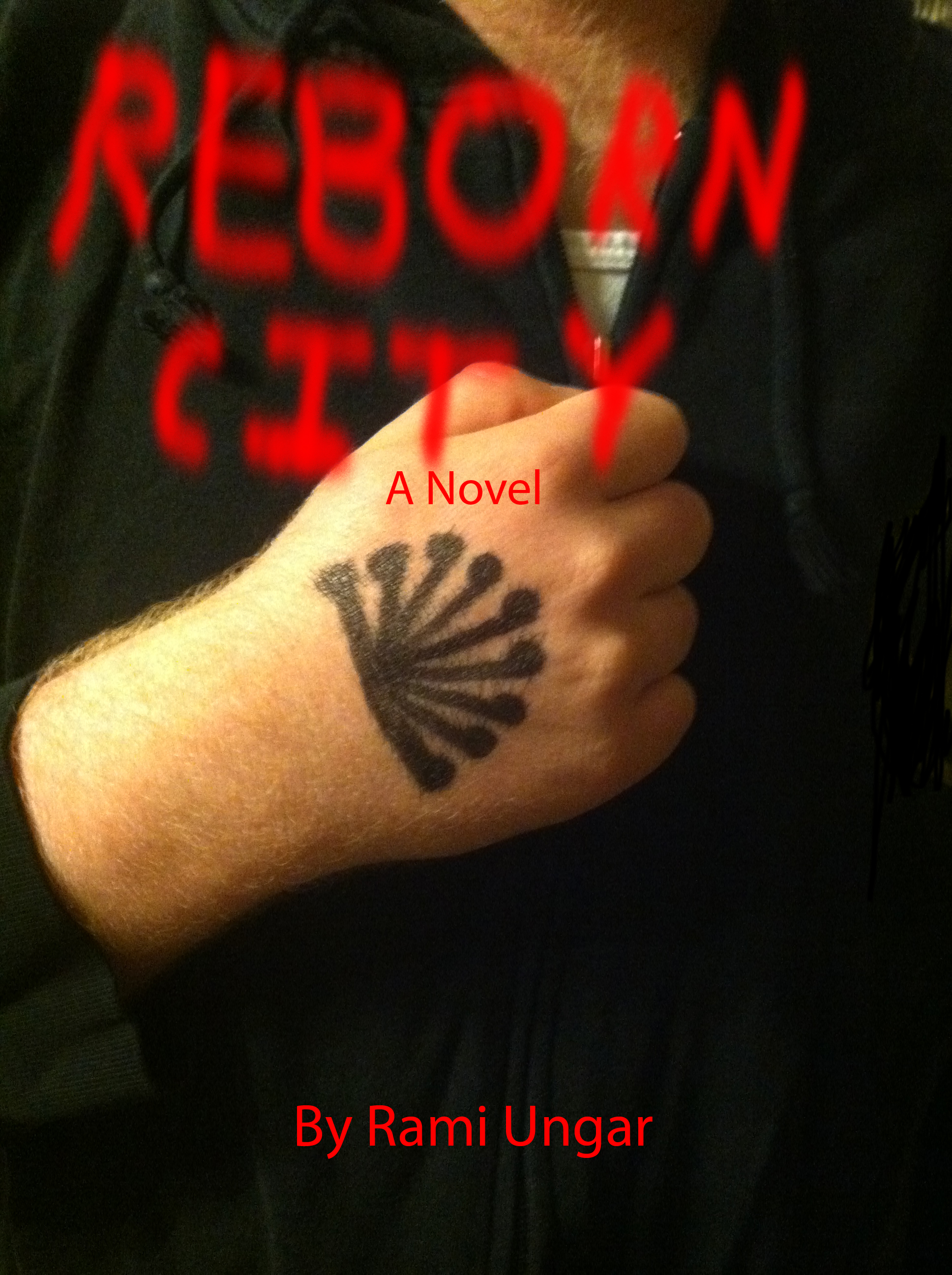
On Wednesday, I created the cover for Reborn City out of a photograph and Photoshop. Problem was, I wasn’t completely satisfied with it. So, after much thought and encouragement from the ever-helpful Matt Williams, I turned to CreateSpace. If you don’t know what CreateSpace is, it’s a program through Amazon that you can use to self-publish ebooks, paperbacks, and all sorts of wonderful things. I’d never considered using CreateSpace because I heard it costs money, but I learned that only some services do, while others are very DIY and free-of-charge. And I like those options.

Now check out the old cover:

RC cover

Now check out the new one:

Reborn City

Same photograph, better picture. Sure, there’s no graffiti-esque writing, but this looks better, more professional. And maybe someday, if God is good to me, I can create the cover of my dreams with a later edition.

And guess what? CreateSpace also does print-on-demand paperbacks for no cost to the author, just a small percentage of royalties. Do you know what that means? It means all my books can be someday turned into ebooks and paperback editions! All you have to do is order them from Amazon!

And of course I’ll try to do this with The Quiet Game, get the cover to be customized so that it stays the cover. That’s one I can be satisfied with, I just hope I can get it onto the editions. I hope you’re as happy as I am! If I can, I’ll get the cover loaded up tomorrow, along with sending RC to the copyright office. It’s going to be fantastic!

Expect Reborn City November 1, people, and The Quiet Game this summer whenever that gosh-darn copyright is processed. Ooh, I’m so excited. Hope you’re excited with me!

From now on when I announce articles for that blog, I’ll be doing some form of abbreviation.

Recently I took a position writing articles for a blog that helps self-published authors. Last night I finished my first article and uploaded it onto the blog. The article, titled “World-Building In Fiction”, talks about the importance of setting in a fiction story and techniques to improve the settings of one’s stories. I listed five points and added a photo of Cloud City from The Empire Strikes Back as an example of a complex and visually stunning setting.

To say the least, I’ve had a pretty good reaction. A couple of comments, pletny of likes. It makes me feel good, because this was my first article and I was really nervous about what sort of feedback I’d get. My thoughts basically were, “Does this sound preachy? If I say this, will someone be offended? Is the ending clear and concise? Does it even wrap up the article with any sort of finality?” To say the least, I’m relieved that nobody’s calling for me to be burned at the stake.

If you wish to read the article, you can follow the link here. Who knows? You might pick up a tip or two for your own writing.

Maybe.

Boy, the good news keeps on rolling! Hunt in the Slaughterhouse, another short story I’ve been struggling to find a home for, has finally been published. It’s the story of an undercover cop investigating a neo-Nazi group. When he gets caught by members of the group, things get crazy!

This was one of my first experiences in writing thriller stories, though near the end it took a slightly slasher-esque twist. Either way, I really liked it, and I wanted to see it published. Unfortunately, a lot of places I submitted to either weren’t interested or never got back to me. But there was some light at the end of the tunnel: I remembered how Horror Zone, the magazine that published Revenge for a Succubus’s Beloved (read here if you haven’t read it yet), had taken a short story that had also struggled to find a home, and published it within a couple of days. I sent them Hunt in the Slaughterhouse two days ago, and they published it this morning. And apparently it’s doing well: sixty-something people have already read it, and four people have given some positive comments on the story.

I’d like to thank Horror Zone for publishing my short story and I wish them success in the future. And if you wish to read Hunt in the Slaughterhouse, follow the link here. I hope you like it and let me know what you think.

Oh, I am feeling good tonight, ladies and gentle-bloggers! After going at it for hours on end with only a few breaks to eat, use the bathroom, and working with my sister to create the base to the cover, Reborn City is done! It’s been a crazy and long process for this novel to reach this stage, begun in 2009 and finished right before I graduated high school, but I’m happy we’ve reached this stage.

I’d like to thank my sister Adi Ungar, who helped me with the cover (I’ll unveil it tomorrow after I’ve worked on it a little, God-willing), Matthew Williams for his tireless editing and tolerance to my semicolons and prodding (you’ll get part of that prize, I assure you Matt), and to all those who have supported me over the years and given me advice and encouragement.

Starting tomorrow, the easy parts of the publication process begins: I’ll write a dedication, a note to the readers, a letter of acknowledgement. Then I’ll format the novel so that it’s easy to read on e-reader. After that I’ll get the cover done and send it all to the copyright office, giving me plenty of time till November, when RC hit’s the digital stands. During the waiting period, I’ll create a book trailer, do interviews, create a Facebook page, spread the word, and get people excited. Oh, and The Quiet Game will be coming out during that time, so I’ll do some work on getting that out as well.

I’ll also decide what I want to write in the meantime (though I have a pretty good idea of what I’ll be writing at the moment). I’m looking forward to moving on and writing something new, I can tell you that much.

Wish me luck. I can promise exciting things from here on out, ladies and gentle-bloggers.

Ladies and gentle-bloggers (I so have to patent that term), I have wonderful news.  My friend and fellow author Matt Williams (you can check out his work here) has sent me the final chapters of Reborn City, my science-fiction novel. He has also sent me his praise and some great feedback, so I can’t wait to get to work.

In fact, I’m going to get to work now. I’ve got 5 or 6 chapters to edit still, and then RC will be done. Then I will be able to write a dedication and an acknowledgements page, create the cover myself (I already have an idea for what I want the cover to look like), format the chapters for e-reader, and send it off to the copyright office. At this rate, I’ll be ready for publication by November, which is my ultimate goal. I can even create a book trailer for RC in that time. It’ll be great.

Thanks to Matthew Williams for looking through each chapter and giving me plenty of great feedback. I hope you’ll consider looking at RC‘s sequel, Video Rage, when I’m ready for beta readers to look at that. And thanks to everyone who’s been supporting me since I first began to write RC back in high school. I cannot wait to finally hand it to you and let you read it.

Just pay me a $2.99 download fee first so that I can afford to buy groceries, okay?

Off to edit now. Wish me luck!

If you haven’t heard, then here’s a news piece that’ll at least raise an eyebrow on your forehead: Amazon has announced their intentions to create a new publishing platform for Kindle called Kindle Worlds. The exact nature of this platform is for authors to publish fan-fiction and make money off of it. Yes, you read that right. People can now make money off of fan-fiction.

Naturally, this has set off a storm in the publishing and literary worlds, and a whole lot of discussion across blogs and Internet boards. Fan fiction is, by definition, fans of franchises making up their own stories based on these franchises and display it online or in writing groups for all to see. For many years, fan-fiction, or fanfics for short, have been hidden in the Internet closet. But with this announcement, fanfic writers can now post their stories–some trying to stay true to the original franchises they are based on, some showing unexplored romantic connections between characters, and some of those downright erotic in nature–on the Internet and make money on them.

Of course, there are a few catches. There’s no exact date as to when this platform will be available, and at this moment only certain franchises–The Vampire Diaries, Pretty Little Liars, etc.–are confirmed as allowing their work to be used by Kindle Worlds. In other words, unless the creators give the okay, you can’t publish a short story or novel based on a franchise unless the franchise owners are okay with it. The ones that are confirmed as allowed are franchises with already-large fan bases who write their work regularly in secret and in the Internet version of public. In addition, the owner of the original franchise gets a cut of the money, so they stand to gain too.

However, many authors are seething. Anne Rice is famous for being against fanfics of her work, and the same goes with George R.R. Martin (sorry GoT fans). I’m of this camp, simply because I feel that my stories and the characters within are like my babies, and I don’t want people taking my baby away and telling it what it should or shouldn’t do like it was theirs.

Yeah, he’s not allowing fanfic of his work. I’m not surprised.

Other authors however, have outwardly allowed fanfics of their work. Sci-fi franchises such as Star Trek and Star Wars have always had fanfics, the former at one point having an official fanfic magazine, and the latter creating a specific set of guidelines for fanfics based on the galaxy far, far away. JK Rowling was quoted as saying she was “flattered” that people wanted to write stories based on Harry Potter, while Stephanie Meyer has set up links from her website to fanfic websites where Twilight-esque works are featured.

There are arguments for both camps that each have valid points. For the sake of this post, I’m going to list a few points from both camps. For the pro-fanfic group, here is why they say fanfics are okay:

1. Fanfics encourage reading and writing and imagination. In this digital age when attention spans are short and people are reading less, fanfics allow people to return to reading and writing by giving them the opportunity to read and write things they already love, be it books, TV shows, or movies. If this is encouraging people to guess at what might happen if so-and-so happens to such-and-such character and they read about it or write it down, why should it be discouraged?
2. Good stories can evolve from fanfics. The famous (or infamous) 50 Shades of Grey started out as a BDSM Twilight fanfic. If such a crazy bestseller can result from fanfic, why can’t a best-selling YA series result from a kid in Omaha doing a Naruto fanfic, or a woman in Cardiff create a new type of espionage novel when she has James Bond take on villains with codenames based on The Wizard of Oz, or a new literary novel that has reviewers crying at the end arise from a teen in Johannesburg imagining himself having conversations with Captain Kirk, Darth Vader, and the Doctor and then writing them down?
3. Fanfics could be good source ideas. It is entirely possible–particularly for TV shows with ever-changing storylines and characters–that fanfics could be a source for new material. Perhaps fanfic writers will one day be commissioned to write scripts for new episodes based on a story they wrote when they were exploring a new possibility for a character in their favorite franchise. It could happen.

And now for the opposing camp:

1. Legally, this could be a crime. Many writers don’t approve of fanfics, and in the United States, you can sue a fanfic writer if they created a fanfic based on your work without permission, and the fanfic writer could pay dearly for it. And since most fanfics don’t constitute as fully original works or parodies, they can find themselves at the mercy of a very angry novelist or screenplay writer, especially if the fanfics were sold for money.
2. Fanfics may discourage writers from doing original work. There may be plenty of talent among fanfic writers, but if they spend too much time creating fanfics, how can they achieve their full potential by creating original stories? We may have the next Faulkner, Paolini, or Sparks on our hands, but they may be too busy writing stories based on Scandal or Harry Potter or Friday the 13th to create an original work. Heck, they may be too scared to do an original work, thinking no one will like a story with original characters or that fanfics are the best they can do.
3. Fanfics may create false expectations. You hear of shippers, those people who are rooting for two characters to get together on a show or in a series and talk about it online and write fanfics about it. What if by reading those fanfics, you come only to expect that somehow, some way or another, those characters will be in the relationship by the end of the show? And what if the creators of those characters have other plans? We’ve heard of how some fans were angry about how Charlaine Harris’s final Sookie Stackhouse novel ended and threatened her for it, and years ago when Books 6 and 7 of Harry Potter came out, Harry-Hermione shippers complained that JK Rowling had willfully ignored them or shot them down, particularly in that one scene with the locket Horcrux and Ron holding the Sword of Gryffindor. It’s entirely possible this could happen if fanfics become mainstream.

To do fanfics, or not to do fanfics? That is my question for you right now.

As the debate rages, we may see more and more authors joining the Kindle Worlds platform. Or we may see a retraction, as certain authors launch campaigns against Kindle Words (could happen, you know). I certainly know that I don’t want people making fanfics out of my work, but I can’t speak for other authors.

How do you feel about fanfics? Would you allow fanfics based on your work?