Posts Tagged ‘ideas’

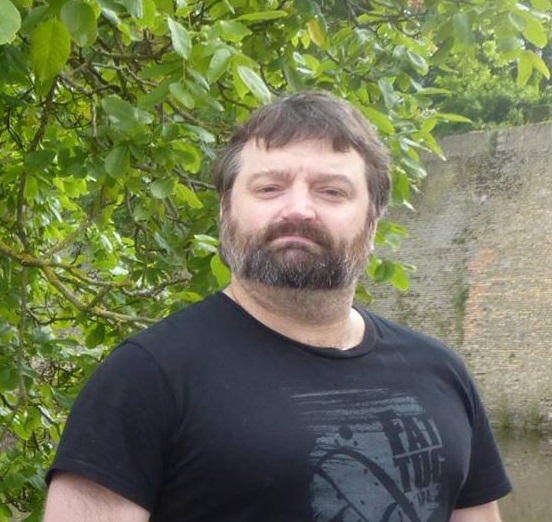
Today, we have a new interview that I’m very excited to share with you, because it features someone very special. Matthew Williams is one of the oldest friends I have in the blogosphere (by length of relationship, not age), as well as something of an inspiration and mentor for me. A science-fiction writer out of British Columbia, Canada, he’s created quite a few stories over the years, as well as written a number of science articles for Universe Today.

And today, I’m bringing him onto this show to discuss a very special book, The Cronian Incident, being published by Castrum Press next month. Let’s get this party started!

Rami Ungar: Welcome to the show, Matt. Tell us a little about yourself, both as a person and a writer.

Matthew Williams: My name is Matt Williams. I was born in Ottawa, moved to the West Coast in 2006, and have lived on Vancouver Island with my wife and family ever since. I studied history and the social sciences in University and was a high school and elementary teacher for about ten years. I quit teaching in 2015 to pursue writing full-time and am now a regular contributor to Universe Today and the Curator of their Guide to Space section. In my spare time, I write science fiction that’s focused on hard science and the human condition.

RU: Why does science and science fiction appeal to you so much?

MW: A good question. On the one hand, I spent my formative years watching some of the best science fiction movies and series’ of all time – Star Wars, Star Trek, Battlestar Galactica, Babylon 5, etc. I was always drawn to SF because as a child, I was always a daydreamer, the kind of kid who would rather be thinking about fictitious universes than paying attention in class! As I grew older, I began to contemplate creating my own SF, the kinds of things I knew fans like me would enjoy.

I was also drawn to science from a very young age. In addition to having a starter chemistry set, I loved circuit boards and broken electronics, which I would take apart and play with for hours on end. As Arthur C. Clarke once said, “Any sufficiently advanced technology is indistinguishable from magic.” To me, these things were magic! That fascination has not diminished by time. The more I’ve come to know about science, technology, and the complex relationship we humans have with them, the more fascinated I have become.

RU: Tell us about your new book, The Cronian Incident, and how you came up with it.

MW: The Cronian Incident takes place in the late 23rd century, where humanity has colonized the Solar System. On every planet, moon, asteroid, and in rotating cylinders at the Sun’s Lagrange Points, human settlements have been established. Whereas people in the Inner Solar System (known as Extros) live lives characterized by post-scarcity, clinical immortality, and endless augmentation, people in the Outer Solar System (Retros) live a simpler life. For generations, this situation has been the norm. But as the story begins, we find that some people have plans which could threaten to upset the delicate balance.

The inspiration came largely from my professional writing. For years, I have been doing articles about the planets of the Solar System for Universe Today. After finishing an article about the planet Mercury, I began talking to a friend about how humans could live there someday. Before long, I felt the seed of an idea being planted in my mind! I then went about planning a story that would realistically address how humans would go about living on all the planets of the Solar System.

For years, I had also been contemplating the idea of how changes here on Earth would drive human colonization of space. I eventually came up with an idea for a Solar System that was divided between people who embraced the development of AI, nanotechnology and biotechnology (and all the revolutionary changes that will follow) and those who chose to stick to a more traditional way of life.

Not long ago, I decided to marry these two sources of inspiration together. And from that, The Cronian Incident was born!

RU: What sort of research and work went into writing the book?

MW: The research was actually pretty incidental. For years, I’ve been studying climate change, technological change, and all the predictions that are constantly being made about the future. And my day job, as a writer for Universe Today, involved a tremendous amount of research into space exploration, planetary science, physics and astronomy. It wasn’t long before the things I was researching and writing about started to give me ideas! After a while, I came up with one I was particularly fond of and began committing it to paper.

RU: How do you approach writing sci-fi? Is there a particular sub-genre or style you prefer?

MW: My preference is towards speculative and hard science fiction. As long as I can remember, I was fascinated by those stories that made predictions about the future that were based on hard science. Granted, most of these predictions do not come true. But it’s the very act of predicting where we are going based on what we are currently experiencing that makes it all worthwhile.

RU: Do you see yourself writing further stories in the universe of The Cronian Incident?
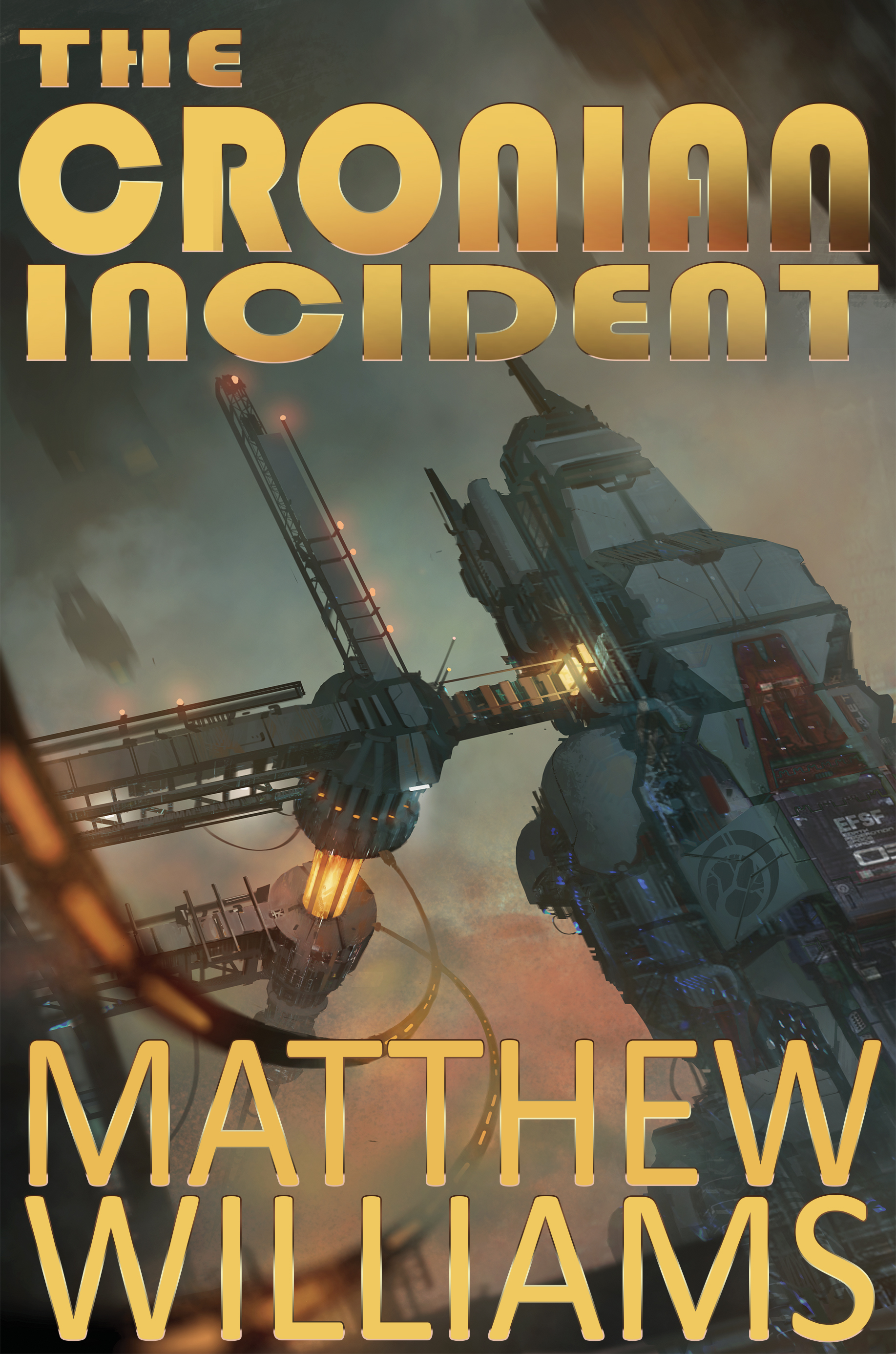
MW: Indeed! In fact, I am currently working on the sequel and the publisher and I hope to have it ready for release in a few months. The book was never meant to be a standalone, and I plan to take this fictional universe (known as the Formist Series) as far as I possibly can.

RU: You used to be exclusively a self-published author, but now you’re working with a publishing house. What made you decide to become what is known as a hybrid author?

MW: In truth, I always wanted to follow the traditional publishing route. However, I had decided that rather than wait to be discovered, I would promote myself. And the interesting thing was that it was precisely the strategies that I was pursuing as an independent that landed me an offer from a publishing house.

In today’s world, a writer needs to promote their writing and their ideas using social media and all other digital means at their disposal. And publishers – the good ones at least! – make sure to peruse these sites in order to find aspiring writers they think have promise.

RU: What’s on the horizon for you at this point?

MW: Well, there’s the work I’m putting in on The Cronian Incident’s sequel. That will certainly eat up plenty of my time for now! And once the two books are out, I hope to attend book signings, science fiction cons, and other events. Basically, I would like to connect with the readers and see what they have to say about the Formist Series.

Beyond that, I hope to expand the Formist Series further. And of course, I have many other ideas I want to work on and eventually bring to light, ranging from near-future stories to a few space opera ideas. And of course, there’s my day job and writing about space news. That’s something I hope to do for many years to come!

RU: If you had to give advice to any writer, regardless of experience or background, what would you tell them?

If ever I find myself in the position to give advice, I like to share the five main lessons I have learned over the years. Many of these were passed on to me by other writers of note, or just people I have come to respect a great deal. And some is stuff I learned on my own

  1. Do what you love, the money will follow – It sounds cliché, but if you love what you’re doing, it won’t feel like work. And in the end, all the hard work and sacrifice you put in are sure to pay off!
  2. In the meantime, keep your day-job – Whatever you’ve been doing to pay the bills, keep doing it until you know for a fact that you can commit to your writing full-time.
  3. Don’t wait to be discovered – You don’t need to limit yourself to shopping out manuscripts to publishers and waiting six months just to hear back. Utilize new media – blog, tweet, post, share, link, reblog, and share – to let the world know you are a writer and what you have to offer.
  4. Find your voice – When committing to writing, make sure you do your homework first and find out who (if anyone) has written something similar. Also, it pays to know the difference between different subgenres and styles of writing, so you can find the one that works best for you.
  5. Be patient – as my father would tell me, “It takes 20 years to become an overnight success”. No matter what you are doing, it will take time for it to get off the ground. Don’t expect instant results or even to succeed on the first try.

RU: Finally, if you were stuck on a desert island for a while and could only take three books with you, which would you take?

MW: Ouch, tough one! But I guess I would have to choose 1984, Neuromancer, The Diamond Age, Accelerando and Finnegan’s Wake. The first four are masterpieces of science fiction that had a profound influence on me. While the last book is not a science fiction novel, it is a classic of western literature. And I think that if I were trapped on a desert island, I might just have the time and mental energy to figure it out!

RU: That actually sounds more like five, but I’ll let it pass this time. Thanks for being on the show, Matt! I hope the book does well.

If you would like to check out The Cronian Incident, due out September 15th, you can pre-order it from Amazon. And if you would like to know more about Matthew Williams, you can check him out on his blog, Stories by Williams, as well as Facebook, Twitter, and Goodreads. He’s a great guy, so give his stuff a look.

And if you are an author and would like to be interviewed, check out my Interviews page and we’ll make some magic happen.

That’s all for now. Until next time, my Followers of Fear!
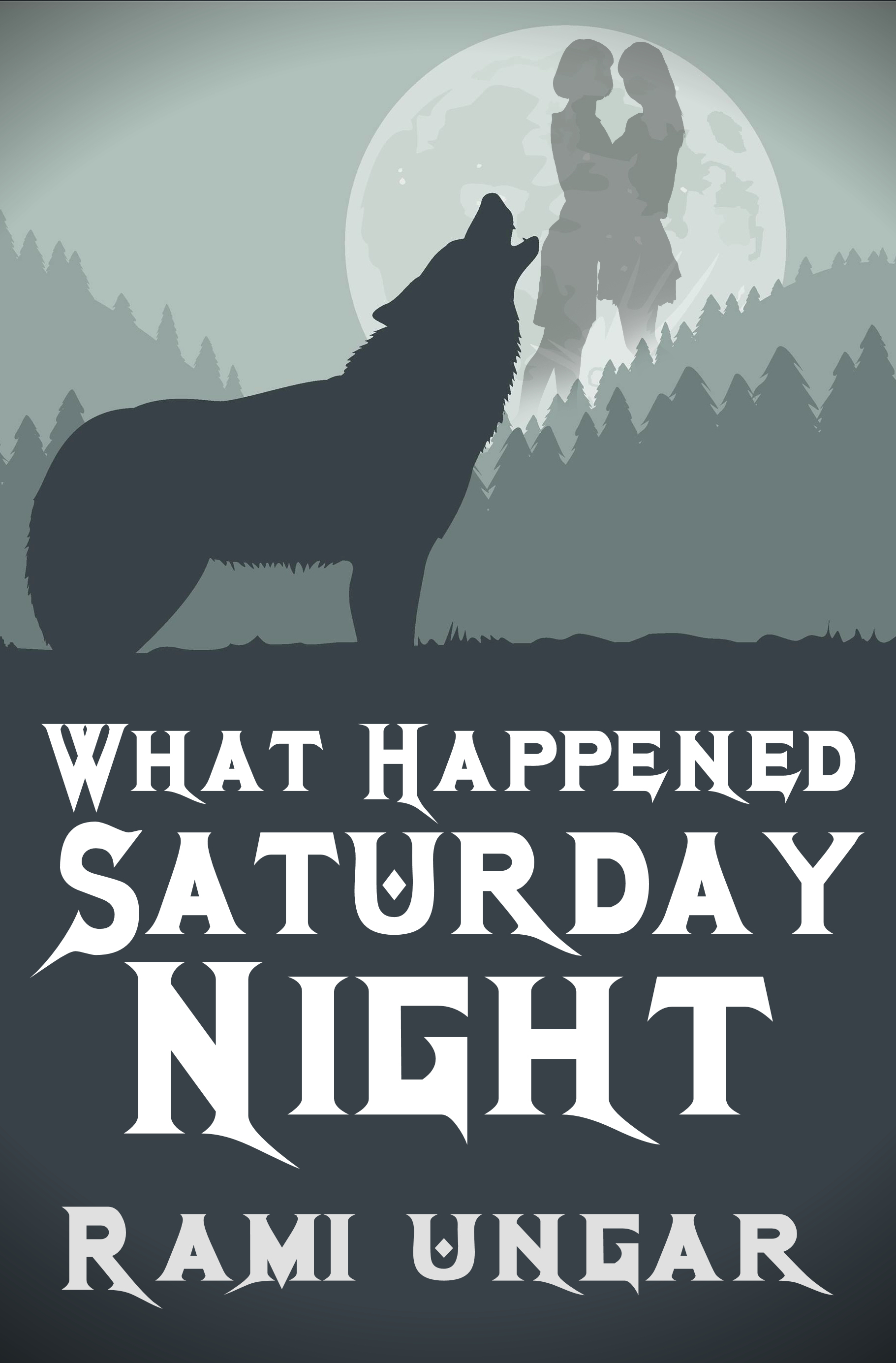
As promised last week, I’m pleased to announce that What Happened Saturday Night has been published on Wattpad. I’ve been working on this story, on and off, since my final year of college, so I’m really glad to finally have it out there for you guys to read. Plus, check out this amazing artwork by friend, author, and ardent Follower of Fear Joleene Naylor (if you haven’t checked her out, why haven’t you yet? What’s wrong with you? CLICK HERE ALREADY!!!)! It gets right to what this story represents. And what does this story represent? Read the description:

High school is hard enough. But Louise is different from other teens her age. For one thing, she has feelings for her best friend Nicola. Feelings she knows she shouldn’t be having.

Another thing: she’s going through changes, but these aren’t the sort of changes teen girls normally go through. Louise is a werewolf. And her biggest fear is what might happen if an episode like what happened on Saturday night happens in front of Nicola.

I’ve been told it’s a touching story about coming to terms with yourself, in more ways than one.

Based on the results of Gynoid (which, if you haven’t read yet, here’s Part 1, Part 2, and Part 3), I’m hoping that even more people will respond to What Happened Saturday Night (or WHSN, as I’m going to call it from now on). I’ve put the same amount of work into both stories, so hopefully all that will pay off like it did with the former story. And they contain similar themes and elements, so that will probably help.

I also think people will be drawn to it because it’s a coming out story. As an out of the closet bisexual man, I know how scary that is. I know what it’s like to feel weird in your own body because of the way you feel, because of whom you’re attracted to. I think there should be more stories that not only explore that issue, but help normalize it to some degree. What I mean is, coming out should not be scary. It might be my delusions of grandeur, but if WHSN can help do that for some readers, then I’ll be glad that I published it.

If you would like to check out WHSN, follow this link for a read. And if you like it (or don’t), let me know what you think. Positive or negative, I love reader feedback, and it helps me in the log run to make me a better writer.

Until next time, my Followers of Fear!
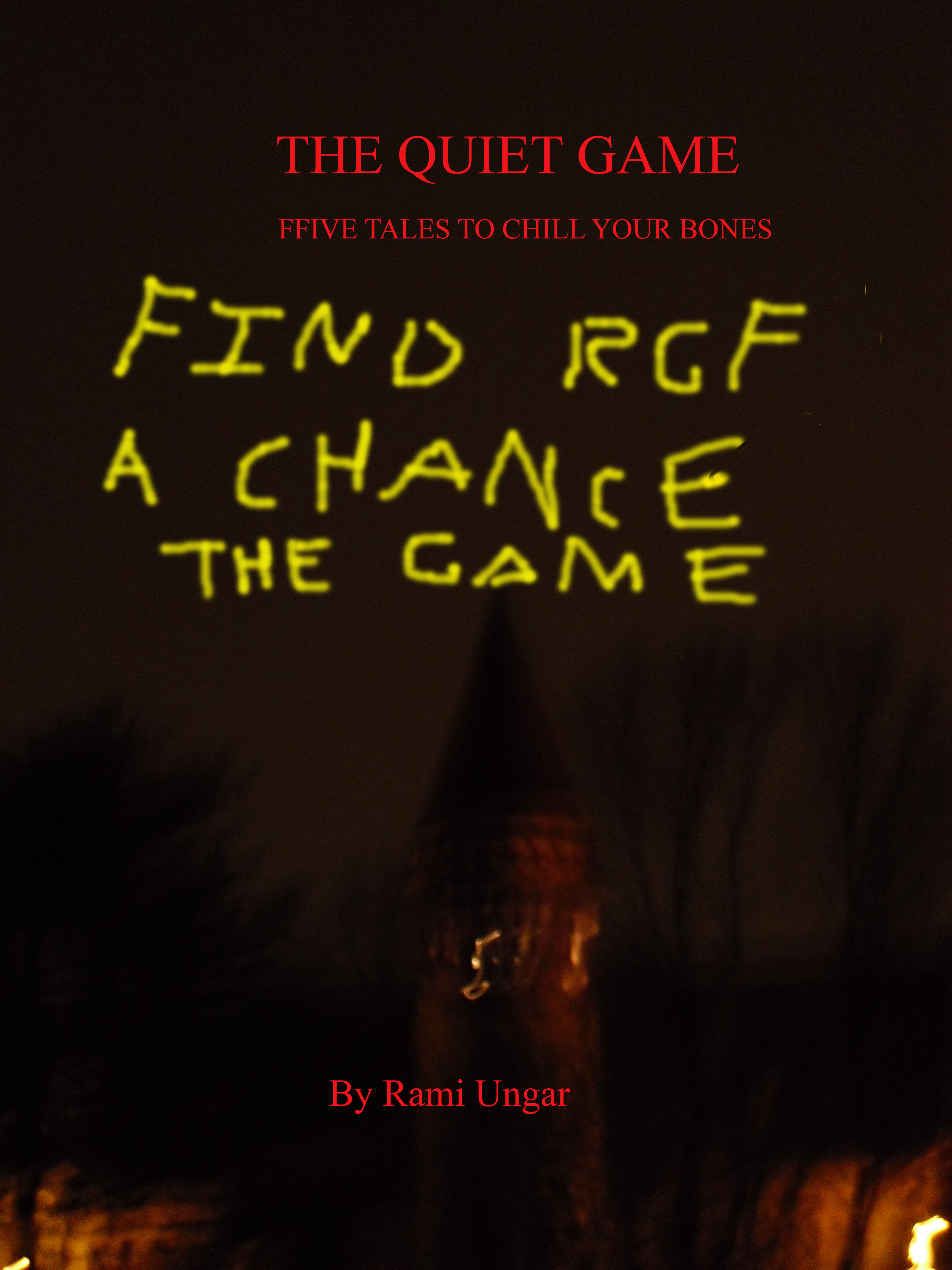
So last night I got a message from my friend and fellow writer Joleene Naylor (check out her blog HERE) messaged me on Facebook to let me know she’d left a review for my first book, the short story collection The Quiet Game: Five Tales to Chill Your Bones, on Amazon. Immediately I thanked her and told her I’d write a post about it as soon as possible. I managed to do the first thing pretty easily, but I wasn’t able to get to the second part because I had a busy evening in front of me.

I’m happy to say that I’m finally getting around to the latter, and I’m very grateful to Joleene for not only taking the time to read my book, but also to review it. Reviews are important to authors, as they provide valuable feedback to them on their work, and help attract new readers. The more reviews an author has on a particular work, the more people are likely to find and read that particular work. And if they review said work, the cycle continues. So in a way, a review is like telling an author you want them to be successful, and then contributing to that success in a small way.

So if you’re unfamiliar with The Quiet Game, it’s a short collection of horror stories I wrote and published back in 2013, being my first published book. It contains five original short stories, with each being about a different subject. Since it was the first book published, it’s also been one of the most popular, and definitely the most widely-reviewed. Here’s what the blurb says on the back of the book:

In his publishing debut, Rami Ungar brings us five terrifying stories of darkness in magic. You can experience the strange visions of a man battling sex addiction in “Addict”. Or feel the wrath of an enraged dybbuk in “Samson Weiss’s Curse”. Face your fears in Gene Adkin’s Murder House in “I’m Going To Be The Next James Bond” and then journey with a young autistic “In The Lady Ogre’s Den”. But most of all, prepare to play the most insidious game of all: The Quiet Game.

Joleene gave The Quiet Game a five-star review, entitled Five fun horror stories (that’s a compliment right there). Here’s what she had to say on it:

A collection of five varied stories that get stronger as the collection builds, with the final being my favorite. Though I fancy myself able to “solve” the stories before the reveals, there were several surprises here, especially the reveal in the Quiet Game and I’m Going to be the Next James Bond. I also liked that Rami pulled no punches with his characters. In one instance, an anti-semite for instances uses words that would be hard for any author to write -though are necessary to his character. There are other examples sprinkled throughout the stories that show Rami’s commitment to telling the story in the way it needs to be told. A good collection for a stormy night!

Joleene’s review matches up with others The Quiet Game has received:

5 wonderfully crafted tales! I purchased this as an eBook originally and put off reading it for quite a while, I really wish I hadn’t waited. Sometimes when one purchases a collection of short stories you expect some of them to be less entertaining or of lower quality than the others, but none of these disappoint. Well worth the money, especially considering after you read each story the author gives you creative insight into what inspired him to write each tale, which is really wonderful.

–Jeff D.

I liked that each story was unusual. I think that the book was appropriately named. I prefer chilled bones rather than scared out of my whits since I am a bit of a chicken.

–ENJ

Imagine if you will a young Stephen King penning dark scenarios inspired by his youth, and what you get is this anthology. Through this collection of short stories, Rami Ungar brings us into the world of dark urges, childhood traumas, ghosts, phantoms, and dark psychological thrillers. An inspired creation, and definitely a good intro to this indie author’s world!

–Matthew Williams, author of The Cronian Incident

If you would like to check out all of The Quiet Game‘s reviews, or if you would like to pick up a copy yourself, I’ll include the links to check it out below. And if you do decide to read the book,, make sure to leave me a review.

And if you haven’t checked out my good friend Joleene Naylor, then what are you doing with yourself? Head over to her blog and check out her stuff, as well as her books!

That’s all till next time, my Followers of Fear. As you saw in my last post, I’ve got something big coming out next week, so make sure to tune back in then. Until that time, happy reading and pleasant nightmares!

The Quiet Game: Available on Amazon, Createspace, Barnes & Noble, iBooksSmashwords, and Kobo.

At the beginning of the year, I said I was going to try publishing more of my shorter works in as many places as possible. This included Wattpad, which for those of you who don’t know is kind of like the YouTube for writers: anyone can upload and share stories. I fulfilled this promise somewhat earlier this year by publishing Gynoid, a science-fiction novelette I’d been trying to publish on and off for quite some time. I published that story’s first part on February 14th, Valentine’s Day, and if you are good at math, you can tell that it’s been six months since the story was first published. With that in mind, I thought it would be a good idea to go over how Gynoid was doing and what plans I have for the site in the future.

Update on Gynoid

When Toby Crimson orders a gynoid, a robot designed to look and act like a human girl, he knows he shouldn’t be doing it in the first place. Gynoids are for perverts and losers, after all. But Toby has told a lie, and he needs the gynoid, named Ariel, to keep that lie up. What he never expects is to actually like Ariel being around. Or that Ariel is going to change his life. Whether he likes it or not.

I published the first part of Gynoid on February 14th, Valentine’s Day, for a very good reason. The story is a romance in a science-fiction setting, but it’s also a kind of anti-romance story. There are dark sides to stories about forbidden love that I don’t always see portrayed in fiction, so I used Gynoid to explore those dark sides a little, in particular to the idea of male fantasies.

And so far, people have responded. In those six months since publication, the number of people reading Gynoid have gradually increased to 132 reads. It’s still not a huge number, but it’s a good-sized number for someone who’s still building an audience and who publishes sporadically on Wattpad to begin with. And there has also been a few votes, which is the equivalent of likes on YouTube for this platform.

What really interests me though is the comments. I’ve received some comments on this work, and not only is just one of them from my mother (a whole new record!), but the other comments have been very telling. One commenter was very happy that the ending was, in their view at least, a good one. Another recent reader finished the third part of the story on or around August 3rd, username LadieFace, published that she hoped there would be more to the story (I assume based on the name it’s a she). A week later on August 10th, she comes back and comments that she hopes there’ll be a sequel.

Now, I do have ideas for a sequel, and I did tell her as much when I saw the comment, but that’s not the point. This story stayed on this person’s mind so much that she felt the need to come back a week after her first comment and ask if I had more. When a story makes someone do that, you know it really resonated with that reader.

This gives me hope that, in time, Gynoid will continue to be read and people will come to enjoy it. Maybe they’ll even come to like it to the point that it’ll push me to write a sequel story. Anything’s possible.

If you’re curious to read Gynoid, I’ll include the links below. And if you do check it out, please tell me, here on the blog or on Wattpad, what you think. As I always say, I love reader feedback.

Gynoid: Part 1, Part 2, Part 3

What Happened Saturday Night is getting published!

What Happened Saturday Night is another story I’ve been trying to get published for quite some time, and now I’m happy to say I’ll be publishing it on Wattpad next week. Like Gynoid, this story has a heavy romantic element, but this time it’s more of a paranormal romance rather than a science-romance. Here’s the blurb I’m using on Wattpad:

High school is hard enough. But Louise is different from other teens her age. For one thing, she has feelings for her best friend Nicola. Feelings she knows she shouldn’t be having.

Another thing: she’s going through changes, but these aren’t the sort of changes teen girls normally go through. Louise is a werewolf. And her biggest fear is what might happen if an episode like what happened on Saturday night happens in front of Nicola.

So as you can tell, the story has a big LGBT element along with the paranormal one. These two genres actually work pretty well together, actually: they both deal with things that are outside the norm, at least to some people, so putting them together is kind of a natural fit.

I’ll probably be publishing this story either on Monday or on Tuesday next week, so keep an eye out for the announcement post. In the meantime, I’d like to thank friend and fellow novelist Joleene Naylor, who also did the cover art for Gynoid, ffor this beautiful artwork for the tory. It is so powerful and expresses everything I want in a cover. I can’t wait for people to see it and want to read the story inside!

Will I publish anything else on Wattpad?

Good question. It depends on a number of factors. I’m still trying to get stories published in magazines and anthologies, as well as trying to put some in a collection of short stories I’m keeping on the back burner for the moment. Depending on the story, as well as whether I feel it ought to be in a collection, a publication, or on Wattpad, anything could happen. If I do publish anything, it’ll probably have less of a romance element than Gynoid or What Happened Saturday Night has.

So if you’ve been reading my stories on Wattpad simply for the elements of love and romance, I’m sorry to disappoint you on that front.


That’s all for now, my Followers of Fear. I might have another post out later this week, but it’ll depend on time and motivation, among other things. Until then, happy reading, and pleasant nightmares.

So yesterday I’m having a conversation with the receptionist at my doctor’s office while I wait for my appointment, and we get onto the subject of the stories I’m working on (because if you know me, after a while that WILL come up). I tell her about my WIP Rose, and what that’s about, as well as some of the themes in the story. When she hears that it deals with some pretty heavy themes like abuse, her response was, “Wow, I didn’t know horror could be so deep.”

And that’s a common response from non-fans, not just of horror but of speculative fiction in general. People who are on the outside of this genre tend to look in and see only a stereotypical surface: swords and wizards and weird humanoid species who make weird oaths with the names of oddly named gods for fantasy; funny costumes, silly effects, and incomprehensible in-universe technical jargon for sci-fi; and of course, people screaming and dying in gross ways for horror. And to be fair, a lot of these stereotypes do have examples in the genres that are just that, especially the slasher genre for horror. Whether they emerged as a result of the stereotypes or they were the influence that created the stereotypes, I’m not sure.

But, as any fan can attest to, any one of these genres can delve deep into very complex ideas and themes. And that includes horror, which is what I’ll be focusing on in this post (sorry sci-fi and fantasy. I love you, but you’re not my normal bailiwick). In fact, horror does this quite a bit, it’s just usually more subtext than overt. The reason behind this, obviously, is because horror’s main purpose is to scare, so having exploration of ideas take the forefront of the story over the actual scares and plot actually takes away from the latter, which causes the story as a whole to suffer. In novels, you can sometimes devote a few paragraphs or even a couple pages to that, but it still cannot be the main component of the story.

And because it’s often more subtext, the heavy bits are often overlooked by non-fans and even some fans, who are more likely to focus on how scary/creepy/unnerving the story was. This happens especially in movies and TV shows, which as visual mediums are very good at conveying the scare with their subtext.

A text full of great subtext.

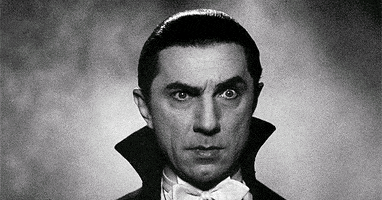
However, even if it’s not obvious, the heavy themes and ideas are still present in the story if you look for them. A good example would be Dracula by Bram Stoker: on the surface, you have a Gothic vampire story. But go a little deeper, you see a commentary and criticism on Victorian ideas and fears. Dracula himself can be seen as a sort of twisted Jesus Christ, offering immortality through the drinking of his blood and the taking of the blood of others; the vampires themselves can be interpreted as corrupting sexuality turning good people, particularly women, into carnal monsters; and the vampires coming to England as a nod to English xenophobia, with Dracula and his kind, who speak and act strangely and must sleep in the soil of their native lands, representing the influx of foreigners to England during the later Victorian era and how they may not be suited to English society, according to some Victorians.

A story that’s more than just scares.

And this can be found throughout horror stories, particularly in novels where there is room to explore these heavy themes. A lot of times, you can see these themes embodied in some way in the supernatural forces that may threaten the character(s). Stephen King does this very well in many of his stories: while explicitly stated that the events of The Shining are supernatural in origin, on another level it’s a great story of a family breaking down due to stress, isolation, alcoholism, and old tensions arising, with the hotel simply being a stage for things to play out rather than a true supernatural entity. Likewise, It is a story about a supernatural force, but that same force is also a representation of childhood fears, what we fear in the dark as well as fear of growing up. And that’s just the tip of the iceberg of this great novel.

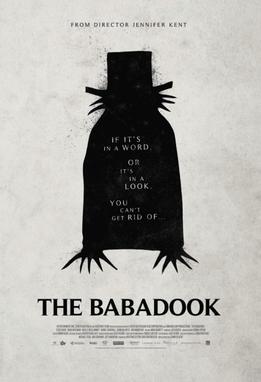
You also see this in movies, with a great example being The Babadook. While the titular monster could be real, it could also be a form of shared delusion between a mother and her son, trying to work through their individual and collective issues. There are a number of articles that look at the film from a psychological perspective, and the arguments they make put the story in a whole new light from first viewing. The Babadook is a story laced with deeper meaning, if you just look beyond the surface.

So as we can see, horror is more than just people screaming and dying in gruesome ways. Like any story, it can have a deeper meaning, going into the psychology of characters, the beliefs of society, philosophies on life, death, love and so much more. You just have to pull back a veil and take a closer look, and you’ll see what’s always been there.

I’m going to start this post by stating for the record that I have not read any of the Dark Tower books, or the audiobooks, or the graphic novels. I’m coming at this as an outside fan, someone who likes Stephen King a lot but has yet to try his fantasy series because, as even King puts it, it’s an acquired taste.* I also realize that this is a movie, so they’re going to have to make many adjustments between getting the story from the page to the screen. I’m okay with that, because I’m pretty sure a straight adaptation would be longer than Titanic (and that’s three hours long!). And I somehow managed to keep away from reviews from other sources, so I went into the theater with a clear mind in order to judge this film on my own terms.

That being said, I liked this film.

The Dark Tower follows Jake Chambers, a teenager from New York who is having dreams about this strange world, a man dressed in black who is trying to destroy a gigantic tower, and a man called the gunslinger who hunts him. While the rest of his family and even some of his friends think he’s crazy, Jake manages to find a gateway to the mythical Mid-World, and becomes an important piece in the battle between Roland the gunslinger and Walter O’Dim the Man in Black, as well as an important piece in the battle to keep all of reality from becoming destroyed.

So like I said, this film worked for me. The visuals were very beautiful, giving us this huge world with strange features and breathtaking views. The actors were all great, especially the main three, Idris Elba as Roland, Matthew McConaughey as Walter, and Tom Taylor as Jake Chambers. My favorite was McConaughey, his take on Walter was terrifying. You could sense the psychopathy in this character, the indifference to death and love of destruction. It’s really creepy. Elba was also commanding as Roland, making you feel this intensity, and Taylor as Jake was a believable character who finds himself in this strange world and is trying to make the best of it.

*shudder* Scary dude.

Also, shout out to Fran Kranz as a bad guy. Did not know he was in the film, so it was so cool to see the guy who played Topher in Dollhouse there.

I also thought the fight scenes were choreographed very well. They didn’t look silly or hard to make out, and the camera work wasn’t shaky or anything. And for a series well-known for being complicated and bizarre, I actually felt like it was easy to follow. Sure, some things didn’t make sense or weren’t explained, but I was able to follow it for the most part.

That being said, there were two things that I didn’t like: one was there was this minor character called Timmy, who is supposed to be a friend of Jake’s, and he’s in the film for maybe three minutes and really doesn’t serve a purpose. If you took him out of the story, the film wouldn’t be missing anything. I also thought that the story was kind of by-the-numbers. There wasn’t any sort of point where I was surprised by what happened, or the filmmakers threw me for a loop. Was I thrilled? Yes. Did I was like, “Oh hey, I didn’t see that coming”? No.

But all in all, I think this is the best adaptation of The Dark Tower series we’re going to get without being overly complicated or bogged down in details. I know it’s not going to please everyone, especially hardcore fans, but it was a good film for me, and I would be interested to see a sequel and/or the television series in development based on the movie.

On a scale of 1 to 5, I’m giving The Dark Tower a 4.4 out of 5. Go see it, and find yourself reciting the Gunslinger’s Creed for the rest of the day.

*And if the books anything like their probable inspiration, HP Lovecraft’s Dream Cycle, particularly The Dream-Quest of Unknown Kadath, I’m willing to wait.

Since we’re still over a month out until the new adaptation of It and the new season of American Horror Story (which apparently will be featuring clowns in its Cult-themed season this year) hit screens, I thought I’d take the time to watch and review a movie I’ve been wanting to see for a while: Eli Roth’s Clown.

This movie actually has something of an interesting history: back in 2010, director Jon Watts and writer Christopher D. Ford uploaded a trailer to YouTube saying that Eli Roth was producing the film, even though he wasn’t involved with the film (I assume this was meant as a joke). Roth was impressed by the concept of the film and their ballsiness, so he offered to help them produce an actual film. However, when this film came out, it did poorly at the box office. Since then, I’ve heard both good things and bad things, making me curious as to its true worth. And when it popped up on my Netflix feed, I knew I had to watch it and see for myself what this film was made of.

Clown follows the McCoy family, real estate agent Kent, wife Meg and son Jack. When the party clown they ordered for Jack’s birthday is double-booked and can’t make it, Kent finds an old clown costume in one of his vacant houses and dresses up as a clown himself. However, he finds himself unable to take off the costume afterwards. In fact, it’s starting to become attached to him, literally. As Kent’s body and mind starts to go through unimaginable changes, Meg must find a way to save her husband from becoming a legendary demon with a hunger for children.

This film was awesome in so many ways.

First off, the costume and Kent’s evolution into the demon. The make-up and costume here is phenomenal, slowly showing Kent turning into this terrifying monster that puts Twisty and Bill Skarsgaard’s version of Pennywise to shame in how scary his look is. The transformation is gradual, but with every change, you see not just how creepy the clown demon is, but also the battle for Kent’s mind playing in his head. From an extra line, a darker color, a colored contact lens, everything in this costume is used to maximum effect.

I also liked how the story at first seems formulaic, but actually takes some routes that keep you guessing about what will happen next and actually surprising you at times. The story also takes some risks in terms of body horror and at some of the stuff that it’s willing to show us, which is a welcome change. It actually makes for a much more terrifying experience. It’s almost like the filmmakers were saying, “We know it’s a movie, but we know real life isn’t nice. Therefore, we’re going to introduce a terrifying concept into the real world and see that concept play out with real world results.”

One interesting thing I noticed was the characters, and how they were written. They’re not that deep or well rounded-out, but the story and the direction allows the characters to feel real. Rather than using dialogue and exposition to explain character traits or relationships between characters, the actors show the audience those aspects. Just from Meg’s interactions with her father and the things he does, you get the sort of feelings he has for his son-in-law. From seeing Herbert Karlsson’s actions during the film, you get an interesting twist on the expert-on-a-monster trope in horror films that doesn’t need to be told to the audience. It’s just there for us to absorb! It’s a brilliant decision to approach characterization like this on the part of the filmmakers, and I kind of wish we’d see that in more horror films.

Not even the scariest image.

The only problems I really had with this film is that it may have dragged at points, and that there’s this one short scene involving Meg and a patient from her dental clinic that I just found slightly contrived. Actually, very contrived, even if it did show how Kent’s transformation is kind of transforming his wife Meg into someone else.

Like I said, this film was awesome. So why didn’t it do well? If I had to guess, I’d say bad marketing. I heard about this film the first time in college with a trailer. I thought it looked cool and I would like to see it when it came out. But that was the last I heard of it, and it dropped off my radar. Occasionally over the next three or four years, I heard whispers, but I somehow got to thinking that Clown was either being delayed or only available outside of the United States. So when it showed up on Netflix, I was honestly very surprised. I was like, “Wait, that’s out now?”

Too many good films are under-advertised.

Well, with any luck this review might get a few more people interested. On a scale of 1 to 5, I give Clown a 4.8 out of 5. It’s creepy, it’s a fun concept, and it’ll leave an impression on you. Sadly, it didn’t get the advertising it deserved, but I can see this becoming a cult hit and a Halloween favorite ten or twenty years down the line. Definitely sit down and watch the film, and prepare for some clown-filled nightmares.


I was tagged again by my friend Kat Impossible from Life and Other Disasters. Well, technically she tagged anyone who’s a writer who read the post, but I’m pretty sure I at least crossed her mind as someone who would do this post. Anyway, let’s get started.

What genres, styles, and topics do you write about?

Well, there’s an easy one. Horror stories, of course (though I do like the occasional dive into science fiction). Usually my stories revolve around teenagers and young adults finding themselves in fantastical and terrible situations, usually ones involving the supernatural. However, they’re often human stories where the characters are growing and sorting through an internal conflict while dealing with an external conflict. At least, in the novels that’s how it is. With the short stories, it may just be me writing a story and trying to leave an impression on the reader.

How long have you been writing?

Probably since I could string two words into a sentence on a page. *laughs* But I don’t think I started writing seriously with the goal of being a great author until I was maybe ten or so. I think it was a conscious decision that I liked to write, so I should make that my life. But it could have easily just been a gradual thing where I found myself entranced by storytelling, doing it often, and then someday knowing that this is what I want to do.

Why do you write?

Besides the fact that I enjoy storytelling? Well, I have a pretty active imagination. I spend a good chunk of each day in stories, whether they be books, movies, TV shows, or daydreams. While they’re up in my head, they can be pretty fluid and volatile, changing and shifting and God only knows what. I’m neuroatypical, so while I love being an eccentric, I do like a little order in my head sometimes. Writing these stories down helps to exorcise them from my brain and make them static. It’s freeing, in its way.

Plus, I just LOVE sharing my stories with people and getting their feedback (it’s an author vanity thing. We all have them, to some degree).

What is the best time to write?

I’d like to say, “Whenever.” However, I find the evening is the best time to write. Since high school, evenings have often been the only time available to me to write. Yeah, sometimes in the afternoons or even the mornings opportunities to write come upon me, but often it’s limited to the evening, especially after so many years of doing this. Perhaps if I ever become able to write full-time, I can work on being more flexible, but for now it’s not until after dinner that I’m able to effectively summon those creative energies.

What parts of writing do you love and hate?

I love:

  • Being able to tell a story and exorcise them from my head.
  • Share my stories with people.
  • Be as creative and dark as I want to be.

I hate:

  • How easily ideas come to me but how hard it is to get even one of them on the paper
  • Not having a large audience

How do you overcome writer’s block?

Usually when that happens there’s a problem somewhere in the story and I need to go back to fix something before I can move forward. That’s usually how it works, anyway.

Are you working on something at the moment?

At the moment I’m editing my college thesis Rose, about a girl who starts turning into a plant. I’m in the middle of the third draft, and I’m nearly a third of the way through. I hope after this draft I can start having it looked at by beta readers, but we’ll see where we are when I’m done.

What are your writing goals this year?

Finish the third draft of Rose and get a few short stories written and published. And if I can manage it, I’d like to reach a thousand followers.

I TAG YOU, BLOGOVERSE!

Do you write? You do! Great, you’re tagged. Have fun, and make sure to link back to me when you do.

Today I wanted to talk about something that is becoming much more common in fiction these days, and that’s the twist villain. If you’re unfamiliar, a twist villain is when one character in a story seems to be the villain, but later on it’s revealed that another character, usually a character we thought was a good guy, is actually the villain. This twist villain is supposed to be a surprise, something you didn’t see coming while reading the story. Hence the name “twist villain.” The problem is, the twist villain is becoming such a common trope these days. In the past couple years, we’ve seen it in Disney films like Zootopia and Frozen; popular novels like Gone Girl and Harry Potter and the Prisoner of Azkaban; a couple of recent superhero films; and more than I can possibly name in this blog post. And when so many works of fiction are using the twist villain, we become used to not only seeing the trope but also the signs that a twist villain is going to be used (and trust me, there are signs), and then when we see the twist villain, we’re not very surprised. Heck, sometimes we even predict who the villain is well before it’s revealed.

Why is this trope becoming so popular? Simple: people want a good story. Good stories produce good memories and good profits. As standard stories of good vs. evil have been done to death, creators need to think of new stories and story elements to keep consumers interested in their work. One way to do that is a third-act twist, which when done right can really enhance a story. And a twist villain can be a very good third-act twist, if you’re careful with it.

Sadly, I find that a lot of creators aren’t careful with their twist villains, making the twist ineffective when it happens. Which is sad, because I love the idea of a twist villain. Heck, it’s one I might use in the future, if I haven’t used it already. A good twist villain can make your mind reel, make you look back trough a story to see if there were any clues and make you marvel at the genius of the creators for setting up that twist so well.

A bad twist villain, on the other hand, just leaves you feeling neutral at best (my reaction during Zootopia) and disappointed at worst (my reaction looking back on Scooby-Doo 2: Monsters Unleashed). Which is why I’ve come up with a few tips for writing an effective twist villain. With any luck, these tips will help other authors (and myself) avoid making a bad twist villain.

1. Does your story really need a twist villain? Any time you want to include something in a story, ask yourself if it’s really needed. I swear, so many stories just add in elements that aren’t needed (*cough* lots of stuff from BvS *cough*). Ask yourself if your story can stand on its own without any of the extra elements. If it doesn’t, DON’T FORCE IT IN! Especially with twist villains.

2. If you’re going to leave clues behind, don’t make them obvious. You can have a twist villain without leaving a trail (Hans from Frozen, for example), but with twist villains, creators often like to leave little hints of who the real villain is. I think this is narcissism on our part; we like to show how clever we are. But that leads to us leaving some rather obvious clues, which our readers/viewers will pick up on and deduce the twist long before the twist occurs. Take Scooby-Doo 2: it was so obvious that the reporter was the villain! Why else would they include a reporter with poor ethical practices unless she was at least in league with the villains?

3. Have a good herring villain. A herring villain is just that: a herring to keep us off the real villain. In Frozen, the herring villain was the Duke of Weselton. He had obvious malicious goals, is willing to kill Elsa, and he was over-the-top, which felt right for a villain in this movie. Imagine our surprise when we find out he’s not the true villain, but Hans, who had no trail leading to him and was such a nice guy up till that reveal! A good herring villain will often lead to a great twist villain reveal.

Compare that to Zootopia or Wonder Woman: the former doesn’t give us a herring villain, which causes us to consider each character and eventually land on Ms. Bellwether, who has said some interesting things and has actually benefited from these events. The latter gives us a herring villain, but it’s a comic book movie, and the General doesn’t do a thing to make us think he’s a famous DC villain we’re very sure will make an appearance.

In short, have a herring villain, and make sure they’re set up in a way where people will actually consider them as the main villain, so the twist will actually be effective. To do that, be aware of what sort of story you’re writing. Often the story will have certain requirements for villains (motive, opportunity, etc), so make it seem like the herring villain has those. You’ll find your herring villain much more effective.

4. Do the reveal earlier than the third act. A lot of twist villains reveal themselves in the third act. Nothing wrong with this, but it’d also work if the reveal was done earlier. For example, Hydra was revealed as the villain in Captain America: Winter Soldier in the second act, and that was a really interesting twist, as we hadn’t expected it. If they’d done it later in the story, we might have actually figured it out by then, or there wouldn’t be enough time for exposition mixed with a great climax. So consider doing the reveal elsewhere.

5. Try a variation on the trope. The twist villain, like most tropes, has a standard formula: something happens, one character seems like the villain, but another character is revealed at the third act to be the villain and why. Oh, and it’s usually not the protagonist.

Variations on common tropes have proven to be very effective in storytelling, so try something a little different with the twist villain, like these examples below:

  • It’s a villain, but which one? In Doctor Who series 8, we’re introduced to a character named Missy, who seems likely to be a villain, but we’re not sure what her deal is if she is. In the second-to-last episode, she explains that Missy is short for Mistress, making her a female regeneration of the Master, a well-known DW villain. A lot of minds were blown that day, believe me. The idea is you can introduce a seemingly new character into a long-running story, and then link them back to a previously-established character. Trust me, it works.
  • Everyone’s the villain! Agatha Christie’s Murder on the Orient Express ends with every suspect actually having some sort of hand in the murder. It made the novel a sensation back in the day, because it was a seemingly impossible idea, but it worked. So try something impossible and make it possible: everyone’s a villain, no ones’ the villain, or even two very good suspects with alibis both committed the murder. It could work.
  • The hero? American Horror Story: Hotel is my favorite season of the series, and this twist is one reason why. The protagonist, a police detective, is on the hunt for a serial killer, only to find out in the second half of the season that he’s the killer! Trust me, I did not see that coming until the reveal episode, and only by a few minutes! So making a hero or a character who nobody thinks of as a possible villain the villain can work very well.

And these are just some examples of variations that have worked in the past.

Twist villains are a trope that won’t go away anytime soon, but as long as we have them, we should write them as well as we write any other type of character or trope. Because if we’re not going to give people our best, then what are we actually giving them?

What are your thoughts on twist villains? What are some good tips for writing them well?

I actually almost missed this milestone. I was going to bed Saturday evening, and I was like, “Wait a minute, that’s Monday! Note to self: write a blog post in the morning after cleaning the bathroom.” And now that the bathroom is squeaky clean (as well as the kitchen, which also needed a touch up), I’m taking the time to talk about this milestone and ask myself, “Has it really been four years? Blimey, it feels longer.”

So if you don’t know what the hell I’m talking about, here goes: about five years ago, during my sophomore year of college, I started putting together a collection of short stories. I was still editing Reborn City at the time, and I wanted to have something to work on while the editing process of that took its time, as well as something to release and test the waters of self-publishing. A short story collection felt like a good idea. So I wrote five scary stories in about a couple of months, edited them and had other writers/horror fans look at them, and designed a cover. On July 17th, 2013, I published The Quiet Game: Five Tales to Chill Your Bones on Amazon and Smashwords, later putting them on Barnes & Noble, iBooks, and Kobo.

The five stories in the book are: Addict, about a man dealing with trying to kick his sex addiction; I’m Going to be the Next James Bond, about a bunch of kids who go to an abandoned hospital to hunt for ghosts; In the Lady Ogre’s Den, about an autistic child’s stay in a hospital; The Quiet Game, about a Catholic school that finds itself cut off from the world and deaf all of a sudden; and Samson Weiss’s Curse, about a senator being stalked by a spirit known as a dybbuk.

This has been by far my most commercially successful book, not only because it’s been out the longest, but because it’s a very quick read, and costs less than my other books do, e-book and paperback. People who might not necessarily want a long read see this little collection of short stories, and that it’s received positive reviews, and they’re like, “Okay, let’s check it out.” For the most part, people love it. So for someone still growing an audience, that’s a pretty good achievement.

Speaking of reviews, this is also my most reviewed work. I think that the reasons for that are the same ones for why this has been my most commercial work to date. And as I said previously, it’s had some pretty good reviews, with a score of 4.1 on Amazon based on 14 reviews. Here’s what people have been saying about the book:

5 wonderfully crafted tales! I purchased this as an eBook originally and put off reading it for quite a while, I really wish I hadn’t waited. Sometimes when one purchases a collection of short stories you expect some of them to be less entertaining or of lower quality than the others, but none of these disappoint. Well worth the money, especially considering after you read each story the author gives you creative insight into what inspired him to write each tale, which is really wonderful.

–Jeff D.

This is not my genre, but since I know the author [:-)], I read the stories. Each one was very unique and created its own atmosphere and mood. My favorite story was the Quiet Game but I found the ending a little confusing since I didn’t really know the literary reference at the end; what I loved was the world created in the story and the message it conveyed. I look forward to the author’s improving his craft, and I will certainly read more.

–Gefilte63

Imagine if you will a young Stephen King penning dark scenarios inspired by his youth, and what you get is this anthology. Through this collection of short stories, Rami Ungar brings us into the world of dark urges, childhood traumas, ghosts, phantoms, and dark psychological thrillers. An inspired creation, and definitely a good intro to this indie author’s world!

–Matt Williams, author of “The Cronian Incident”

I especially like that last one calling me a young Stephen King. Always love being compared to him.

If any of this makes you want to read The Quiet Game or check out more reviews, I’ll include the links for the book below. An if you do end up reading the book, please make sure to leave a review. Positive or negative, I love feedback, and it helps me out in the long run.

That’s all for now, my Followers of Fear. I may have a new review out tonight, so keep an eye out for that. Until then, have a good one.

The Quiet Game: Amazon, Createspace, Barnes & Noble, iBooksSmashwords, and Kobo