Posts Tagged ‘review’

I’ve mentioned plenty of times before on this blog how much I love manga and anime. I’ve even written before how writers should check it out for a boost to their creativity. Well today, I’d like to talk about my favorite manga series, Red River by Chie Shinohara, which ran in Japan from 1995 to 2002. I absolutely love this series, and have since I discovered it prior to entering college seven years ago (and for numerous reasons, it took me nearly that long to get each volume and read it). I’m actually rereading it now, and I’m still in love with the story.

With the awesomeness of this series, it’s one I actually don’t see a lot of people talking about, so I thought I’d do a review to spread the word a bit. I don’t know if this post will get a lot of reads, or if the review will get a lot of people interested in reading the manga, but you never know. So without further ado, let me tell you about Red River:

The manga follows Yuri Suzuki, a Japanese teenager who finds herself pulled through time and space to the Hittite Empire in ancient Anatolia (modern-day Turkey). She’s been brought there because Nakia, the current queen and the emperor’s third wife, needs to make sure her son, who’s rather low in the succession order, attains the throne and a special sacrifice is needed. Yuri is meant to be that sacrifice, and narrowly avoids being killed thanks to the intervention of Prince Kail, the third Hittite prince. Together, they try to find a way to get Yuri home, while also circumnavigating not only Nakia’s schemes for power, but the schemes of others who would do them and the Hittite Empire harm, and at the same time finding something in each other they couldn’t find in anyone else.

This is a story of the same stripe as Game of Thrones: struggles for power in a grand empire, magic, history, battles with swords and chariots, romance, an exotic setting and a rich culture, and some great characters whom you grow to love and root for (and somehow remember a lot more easily despite the Mesopotamian/Biblical names).  And the characters are the best part:

First off, there’s Yuri, our heroine. I love this sort of character. While she starts off as a damsel-in-distress, she grows throughout the story, showing strong nerve, cleverness, and a desire to do what’s right, which allows her to save herself from difficult situations and gain several followers along the way. Prince Kail, based on the historical Mursili II, initially comes off as a playboy prince, but over time reveals a young man with the weight of the empire on his shoulders. He’s a brilliant politician and tactician, occasionally rash and impulsive, but above all loyal to those he loves and will go out of their way to help them if he can. And Queen Nakia is the villain Cersei Lannister aspires to be: while she’s beautiful, she doesn’t rely on her looks. Instead she uses a combination of magic, political power, brains, and manipulation to accomplish her goals. She doesn’t necessarily even need Yuri’s death to accomplish those goals, it’s just Plan A. And believe me, if she sees an opportunity, she’ll develop a Plan B, C and D.
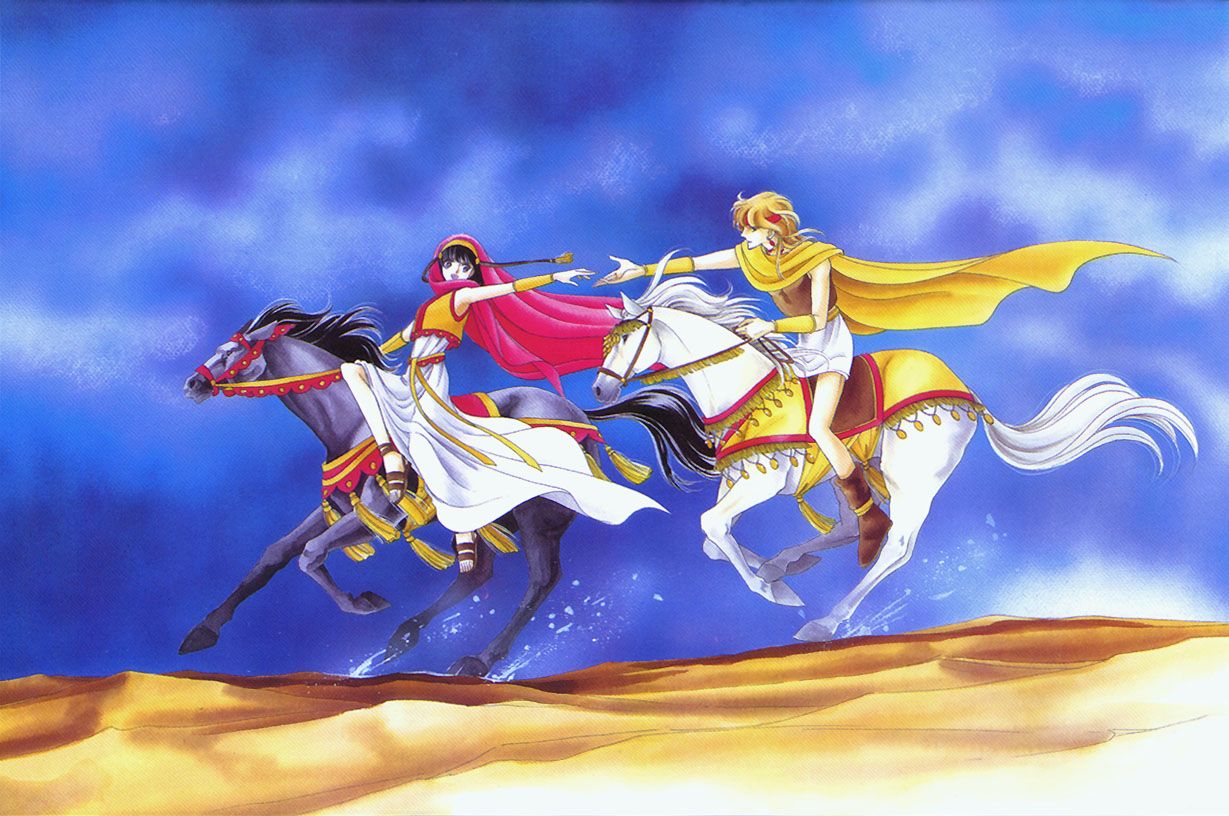
A full-color shot from Red River.

The storytelling is also phenomenal, taking actual historic events and people and weaving them seamlessly into a story that also manages to balance intrigue and romance very well. In addition to Nakia, there are other enemies, usually enemy states and their leaders, who attempt to conquer the Hittite Empire or just to the characters themselves. Throughout the series, suspense is kept high with a variety of plots against the characters, as well as numerous twists that keep readers on their toes. And the romance is never too sappy or idealistic, but often shows how the leads have to struggle not only to make their relationship work, but also to make it legal in the eyes of the Hittite Empire (politics, am I right?).

And finally, there’s the art style. It’s meant to be quite appealing to readers, with characters having proportions similar to what they might have in the real world. There’s also plenty of attention to detail when it comes to locations and attire, which one would expect for a series like this. It all comes together in a visually pleasing package, which is what manga artists go for, so good on that.

Sadly, Red River never had an anime produced, but the manga is available in the United States and Canada (I think, anyway). If you want a story that encompasses ancient Middle Eastern history while filled with intrigue, magic, and romance, this may be the story for you. Check it out, and dive into what could definitely be called a whole new world.
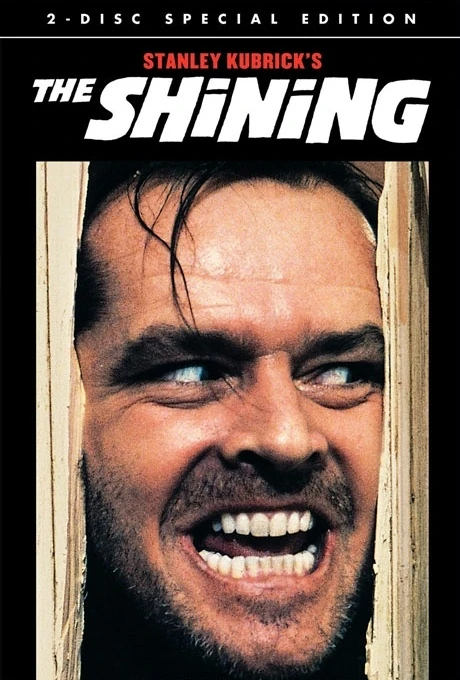
The Shining is considered one of the greatest horror films ever made, based on one Stephen King’s greatest novels. It’s still widely enjoyed today, has been very influential on a number of films and filmmakers, and has led to numerous theories about its deeper meanings, ranging anywhere from the Holocaust or Native American genocides to faking the moon landing. Yet when it was released, audiences and critics didn’t care for the film. Variety actually called it “a disappointment,” and Stephen King himself hates this film with a passion. Director Stanley Kubrick himself has garnered controversy for overworking and even abusing cast and crew during the production of this film.

I disliked this film immensely after I saw it in middle school, which was right after I read the novel. But I’ve since learned a lot about the film’s production and influence. And given the reasons I hated the film (see below), I’m wondering if my opinion needs a change. Let’s find out.

WHAT IT’S ABOUT: The Shining follows the Torrance family, who have come to the historic Overlook Hotel to be its winter caretakers. Isolated and cut off from the world, the Hotel’s supernatural side comes out to play, leading to a horrifying descent into madness and murder.

WHY I DIDN’T LIKE IT: It strayed too far from the source material. Not kidding, I hated the film simply because of how much changed from book to movie, to the point it drove out all my other reactions to the film (I can be a real purist sometimes). I actually preferred the 1997 television miniseries based on the movie because it was more faithful to the book,* and no other reason.

WHY I’M REWATCHING IT: Well, you hear so much about how great the film is, and you learn a bit about its production and legacy, and you realize how much a movie differs from its source material isn’t always a bad thing. Kind of warrants rewatching it.

THOUGHTS: That was a rather unsettling slow-burner, wasn’t it?

I’ll give the film this, it knows how to set up a creepy atmosphere with great visuals and sound. For one thing, the hotel is so distinct that it’s a character all onto itself. But it’s the way that Kubrick films the hotel and the characters in it that’s great. The whole film is shot with a wide-angle lens, which means we always see the characters alone in these vast spaces. On top of that, when close-ups are done, the wide-angle lens distorts the characters’ faces, giving the film a sense of surrealism and unreality. Add in the soundtrack, which sounds more like several clashing soundtracks playing at once. Heartbeats, eerie chanting, electronic music, symphonic pieces, all playing at once. It is creepy as hell.

I also like the reveals of scares. The camera always focus on the characters’ reactions to a scare before they show the scare. We see Wendy’s reaction to what Jack has been writing before we actually see it. We see Danny’s reaction to the little girls before the little girls are actually shown. That’s not something normally done in horror.

And finally, the film takes its time setting up the horror. It doesn’t rush in to showing us the gruesome haunting nature of the Overlook, but gives us time to see how isolated the characters are before introducing elements to show how their insanity is growing/the hotel is alive. It’s pretty effective.

However, I did have some issues with the movie. For one, the actors and the characters they portray. I didn’t care for either, really. Jack Nicholson is pretty good at playing a madman, but in my experience, that’s all his performances, and there’s not much transition between normal Jack Torrance to insane Jack Torrance. Shelley Duvall as Wendy…I don’t know what it was, but I just got annoyed with her every time she was on screen. And Danny Lloyd as Danny (ha!) was passable, but let’s face it, the character in the movie isn’t as fleshed out or as deep as he is in the movie. You could change the actor out, and it wouldn’t make that much difference, because Danny in the movie is very flat.

On top of that, I wasn’t ever that scared by the film. True, seeing Jack go after his wife and son with an ax is pretty threatening, but he doesn’t actually hurt them or get close to doing so. And while the film is good at keeping that creepy atmosphere going, it never truly escalates to the point where I feel myself shift from terror.

And like I said, the novel is phenomenal. Was it really that necessary to make so many changes from the source material? Also, what’s with that photo in the last shot? Was Jack reincarnated from a previous caretaker? Did he travel through time? I don’t get it! Explain movie! Explain!

FINAL JUDGMENT: I have a feeling this opinion is going to rile some people. On a scale of 1 to 5, I’m giving The Shining a 3.5. It’s creepy and visually creative, but the actors/characters aren’t that great, and the lack of terror, unexplained final shot, and important changes from the source material are issues that detract from my viewing.

Sad to say, it’s just not a film for me.


Well, at least I got that film out of the way. And with The Shining watched, I only have two films to go. Though I have a feeling this next one might be painful to watch…

Until next time, Followers of Fear, pleasant nightmares.

*And now I may have to get that miniseries again just to get a fresh opinion (Rewatch series 2?). And I’ll have to rewatch Room 237, the documentary on The Shining movie and people’s interpretations of it. And maybe reread the book? It’s been at least a decade, so I don’t remember it that well. And I should really get to reading Doctor Sleep, the sequel to The Shining. Especially since a movie version’s on the way.

I have a lot of work ahead of me.

A bit of background before I start this review: in case you didn’t know, or you’ve never read my third list of haunted locations I want to visit, the Winchester Mansion, known today as the Winchester Mystery House, is quite real. It was first started in 1884, but was continually worked on and added onto, around the clock, for nearly forty years. Sarah Winchester, the widow of the owner of the Winchester Rifle Company, believed that the spirits of those killed by her husband’s company’s rifles were after her family and had previously killed her husband and infant daughter. On the advice of a medium, she moved out to California and started building a house that doubled as a maze, meant to confuse the spirits who were after her family. She kept adding onto the house until her death, after which work completely ceased. The house is now a national landmark, and is reputedly haunted to the brim. It is this house, its mistress, and its hauntings that this movie is based on.

Everyone got that? Good.

Winchester follows Jason Clarke as a troubled psychiatrist who is sent by the Winchester Rifle Company to evaluate Mrs. Winchester’s mental state to see if she’s still fit to be a majority shareholder. Mrs. Winchester, played by Helen Mirren, allows the psychiatrist into her home at the same time as a powerful and angry spirit arrives. Together, they must confront this spirit before it kills every member of the Winchester family, and then some.

I went with a friend to see this film. I don’t know what my friend was expecting, but I was hoping, based on the trailer and what the film is based on, that it would be decent at least. At the end, we both agreed it wasn’t that.

Winchester suffers from a number of issues. One of the biggest issues is script. The film’s story is underwhelming, bogged down in exposition and with a villain who, while in concept sounds cool, in execution seems kind of boring. The villain actually reminds me of people’s reactions to Helmut Zemo in Captain America: Civil War. This is a character that’s supposed to be powerful and menacing, but for a lot of audience members (not me, though), the character’s film treatment was not intimidating and lacked menace. For me, Winchester’s villain was like that.

Another issue is the scares. There are a few good jumpscares and creepy imagery, but other than that, the movie isn’t that scary. It tries to build atmosphere, but it doesn’t go as far as it could to build an atmosphere. In other films, we’d see ghost children running in the background, shadows threatening to attack a character before someone walks in and interrupts. Stuff in other films that works very effectively. If we had more of that, the film might actually be a little scary.

I also didn’t care for Jason Clarke’s performance. He’s never been my favorite actor, but this time he was just terrible. Half the time he just mumbled his lines. After the film I just looked at my friend and I was like, “Would it have killed him to speak up?”

But the biggest thing going against the film, at least in my opinion, is the house itself. Or rather, the lack of the house. The actual Winchester Mystery House is a gargantuan structure: four stories, 161 rooms, two bathrooms, seventeen chimneys, two basements, three elevators. Stairs going nowhere, doors that open onto sheer drops, skylights and windows, etc. Even fake bathrooms. An entire maze of a house. But we wouldn’t know it, based on how little we see. A few key hallways and rooms, and some stairs for the arthritic, but barely anything else. If you never saw one set of stairs or a few key exterior shots, you would never know that the house was as huge and confusing as it is. I know the film didn’t have a huge budget, but come on! If you’re going to make a film about a giant maze-house, utilize the maze-house! You could probably make for a more exciting climax if you did that!

Did the film have any good points? Well, Helen Mirren as Sarah Winchester was actually kind of badass. She’s portrayed as this strong woman who works through her grief by battling the supernatural every day, and she doesn’t care what you think of that. It’s pretty cool. That, and the costumes and rooms, what rooms we see, anyway, look true to the time and are absolutely beautiful.

But that’s it. It’s not exactly awful, but it’s not very good either. It’s just below average.

On a scale of 1 to 5, I’m giving Winchester a 1.5. There’s a lot of potential in the concept, but this film definitely did not live up to it, producing an unremarkable period piece trying to be a good horror film. So if you’re looking to be scared, I suggest skipping this one entirely. It’s all bark, and absolutely no bite.

So I’m seven films into this series (click here to see the whole series), where I rewatch horror films I previously disliked to see if there was something there I missed the first time. And this time around, I’m going with a classic. By which I mean, it’s probably older than any of my grandparents. Nosferatu, one of the earliest horror films and the first Dracula adaptation, as well as an example of German expressionist film. It’s become something of a cult classic since it’s release over ninety years ago, and its villain, Count Orlok, has become almost a meme, but longer lasting.

And can I just say, my own opinion aside, it’s a freaking miracle we even have this movie? Not kidding, we nearly lost this film to copyright infringement. Prana Films, the studio that made this film, was started and owned by two businessmen who never made a film before, and apparently had no idea you had to ask permission before doing an adaptation of a non-public domain work. Bram Stoker’s widow sued the company when she found out, and the company was forced to destroy all their copies…except or two copies, which have been copied and cobbled together to preserve the film to this day. Which is why if you watch the film today, sometimes the film is pure black-and-white, and at other times it’s sepia-toned.*

Okay, enough of that. Time to talk about the actual film.

WHAT’S IT ABOUT: It’s Dracula, just with everyone’s names changed: Dracula is now Orlok, Harker is Hutter, Mina is Ellen, etc. Do you need more information than that?

WHY I DIDN’T LIKE IT: I was fifteen or sixteen when I saw this film for the first time. And while I enjoyed older films well before then, I just didn’t get into it. I knew the plot, so I was never surprised or scared. It was just…boring. Really poisoned silent films for me.

WHY I REWATCHED IT: I just thought it would be good for this series. And in any case, while I still don’t read it that much, I appreciate classic literature much more than I did then. Maybe that extended to films too.

THOUGHTS: Um…it’s not good, but I find it hard to hate.

Look, you need to have a certain frame of mind to enjoy silent films, and I’ve only enjoyed one of the silent films I’ve seen (which was made in 2005, so…), so it’s safe to say I don’t have that frame of mind.

But I did enjoy it at times…as a comedy. Yeah, I know it’s a horror film, but I just couldn’t help but laugh at the film. There was so much to make fun of! For one thing, the make-up makes every guy look like a serial killer about to take a victim, especially when they laugh or smile, and every girl like a drag queen. I just couldn’t help but giggle. (Also, the character Knock is probably the inspiration for Count Olaf in A Series of Unfortunate Events. Thank the make-up department for that!).

And because it was a silent film, I could just sit in my living room and make goofy voices. I remember during one moment, when Hutter comes home to tell Ellen he’s going abroad, I responded to the dialogue card by saying, “Hi husband, good to see you too. I had a wonderful day, thank you for asking. Now what are you talking about?” And when Hutter runs into another room to start packing, I said, “So this is what Marge and Lois are talking about when their husbands announce they’re about to do something stupid.” It was hysterical.

Unfortunately, the best of on-the-spot comedy couldn’t help the film from dragging. For a 95-minute film, it felt so much longer, and like nothing was happening at all. Characters just took their time, said things, and reacted to things. There was nothing to get your blood pumping at all.

I could go on with the problems I had with this film, but that’d be a veeeery long blog post. I’ll just save time by saying, I had many more issues that kept me from enjoying it.

Still, Count Orlok is cool looking, and the sets are really pretty. I’ll give the film that.

JUDGMENT: I’m sorry, but it’s just not my kind of film. I know it has its fans, but I’m not one of them. 1.5 out of 5. I’m sad to say that, due to its place in film history, but that’s just how I feel.

Well, I think I might enjoy this next film a bit more. And if I don’t, there’s a good chance I’ll be reviled in the comments for it. in fact, people might shout “REDRUM” at me. That’s right, I’m rewatching Stanley Kubrick’s The Shining next.

Until next time, pleasant nightmares!

*Also, the version of the film I watched was restored in Wiesbaden, the city in Germany I lived in for four months back in 2015! That’s really cool, if you ask me. My former home helped to create a beautiful print of a classic movie. I wonder if my supervisors knew about that?

Well, it’s been a year since I last had a Lovecraft binge (see Parts 1, 2, and 3 for my previous binges). And while I didn’t read any actual Lovecraft stories in the year (holy cow, that long?) since my last binge, he was certainly never far from my mind. I read a lot of fiction influenced or modeled after his work, including the Lovecraft/YA novel Awoken* (read my review here), shopped around my own Lovecraft-themed story The Red Bursts (still working on that), and wrote an article about why there’s not more adaptations or even a cinematic universe based on his work. No, surprise, after all that I was ready for another dive into his work. And boy, did I enjoy the eldritch swim.

So if you’re not familiar with HP Lovecraft (and I’d bet good money that you’re not), he was an early 20th-century author whose ideas and stories proved very influential on storytellers like Stephen King, Guillermo del Toro, and Allan Moore, among others. He’s considered the father of cosmic horror, the idea that humans are basically ants in our universe, that there are beings and truths so great and terrible that even glimpsing them can cause madness and death. It’s pretty bleak stuff, if you think about too much about it (which I have).

So this time around, I read “The Case of Charles Dexter Ward,” Lovecraft’s only finished novel, “The Colour Out of Space,” “The Dunwich Horror,” “History of the Neconomicon” and “The Whisperer in Darkness,” as well as several fragments, one letter excerpt, and one parody story, but I won’t go over those. And I got to say, these were definitely some of the most enjoyable of Lovecraft’s stories. They were consistently creepy and kept me engrossed in the story, as well as with the most accessible language (dude liked to pretend he was a contemporary of Poe, rather than a contemporary of Ernest Hemingway). Or am I just used to his style now?

The interesting thing about these highlighted stories is, they also mark Lovecraft’s shift from pure horror to science-horror. Sure, he’s done that before–“Herbert West: Reanimator” is the story of two men trying to discover the key to bringing back the dead using science, a theme also explored in “Charles Dexter Ward,” but more thriller and magical than science-fiction–but here there was definitely a more sci-fi element in his work. “The Colour Out of Space” and “The Whisperer in Darkness” both involved aliens, with the former involving a sort of alien infection and the latter involving aliens that have been visiting Earth for centuries.

Why did Lovecraft make this shift? Well, around the time these stories were written–late 1920’s and early 1930’s–was also the birth of science fiction as a proper genre. Pulp magazines like Amazing Stories and Astounding Stories were huge sellers, and since pulp rags like these were where Lovecraft normally published his work, he would’ve been aware of the young genre and its exploration of humanity’s possibilities through space exploration, technology, and aliens. It’s no surprise that he’d take elements from those stories and give them a freaky twist. And lo and behold, it led to Lovecraft writing some of my favorite works by him (especially “Colour Out of Space.” God, that was freaky, considering that what happened in that story could maybe happen in real life).

Honestly, I’m glad I decided to check out HP Lovecraft two-and-a-half years ago. Sure, his early works can be hit-and-miss, but as time went on, he got better. And by this point in his bibliography, he was very good at writing stories that stayed in your mind. It’s a shame he didn’t achieve more of a following during this time, because maybe then we’d have more works by him (sadly, he died in 1937 at barely forty years of age), and he’d be more well-known today.

And while I’m done with my latest binge, I’m looking forward to my next one, whenever that is. Especially if the stories from this point on are as good as the ones I read this time around. And seeing as At the Mountain of Madness is the next story in my collection, I’d say that’s a definite possibility.

Have you read these stories or others by Lovecraft? What are your thoughts on them?

*Funny story about Awoken: so I follow this woman named Lindsay Ellis on YouTube (check out her channel here) who does a lot of videos on our media and culture. Yesterday she uploaded a video about whether or not the hate over the Twilight franchise was warranted. During said video, she mentions she and friend/frequent collaborator Antonella “Nella” Inserra wrote Awoken as a parody of Twilight, only with Lovecraft characters instead of vampires. My mouth hit the floor. I had no idea that the novel was a parody of Twilight, let alone written by those two women under a pen name. Though now that I think about it, it explains quite a bit.

I reached out to both women on YouTube and Twitter, letting them know that I read the novel, my ignorance of its authorship, how much I actually liked it, and that I reviewed it on this blog. They asked for a link, and I sent it to them. Since then, I’ve gotten hundreds of views from their readers/viewers on that one review, and the number of reads is still growing. Wow. Didn’t expect that. Pretty cool. Probably won’t last a week, but it’s still cool.

Also, I learned about Poe’s Rule: if you write a parody of something, unless you ad a healthy dose of comedy, people will think it’s serious fiction in a particular style. Which is apparently what happened to me, as these readers are telling me. Good to know.

You know, I’ve seen a lot of YouTubers do series where they watch specific kinds of stories–sequels of great hits, weird-ass anime, the Mummy series, etc.–and I appreciate what they do, but I feel like I’m getting an idea of the horrors they have to endure just to entertain me. A lot of what they watch can be really bad or silly or painful, and they endure it just to bring me YouTube commentary and humor.

How do they do it as often as they do? They must have some serious endurance.

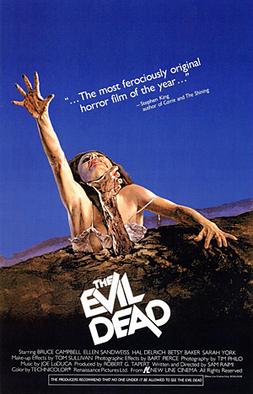
WHAT’S IT ABOUT: A bunch of friends/lovers go to a cabin in the woods for the weekend, and obviously, something horrible happens. It’s the embodiment of the cliche, if not the original that started the cliche.

WHY I DIDN’T LIKE IT: I saw it right before the remake came out, and I thought it was totally stupid. It was dated, the effects were terrible and cheap, and far from scary. I could not see how it became a phenomenon. And after I saw the remake and loved it, I was amazed that the original didn’t just get swept into the dustbin of history.

WHY I REWATCHED IT: You hear enough people talk about the influence of the original, and even do YouTube videos comparing both films (YouTube is a big part of my life, if that’s not obvious), you start to wonder if you missed something. It also started a phenomenon, as well as jump-started the careers of Sam Raimi and Bruce Campbell. Not to mention that the shooting was pretty dangerous: people were actually thrown into and had furniture fall on them. Not only that, but when the characters are fighting demonically-possessed friends with sharp knives, they’re actually fighting other actors with gunk in their eyes, completely blinded, while using actual sharp knives! Kind of makes you want to see if your opinion needs reevaluating.

THOUGHTS: Ummm…it’s better than I remember it. A little better, anyway.

There are some things about this film that are good. The camera work is always interesting, showing things from points of views I don’t normally see in horror films. At times, it feels like a drone is holding the camera: odd angles, fast movements, branches and whatnot hitting the camera. There are some really atmospheric moments, like when the characters arrive and there’s this eerie music and the porch swing is knocking against the wall.

And there are some shocking moments, like the…rape-tree scene. Yeah, if you didn’t know, that’s a thing this movie has. And it’s shocking and disgusting. Which is what the filmmakers were looking for, the most shocking horror film ever put to screen at that time, so I guess they got what they wanted.

But I have a lot of problems with this film. For one thing, the shock and awe only stays shocking as long as the audience isn’t desensitized. And I’ve been desensitized since I was nine and saw my first PG-13 movie. And when that stuff loses it power, what’s left has to hold up the rest of the film, and it doesn’t do that very well. Biggest issue I have is the effects: I know they’re going for memorable and it is, but they’re very silly at the same time, and in a horror film, even when I put aside my distaste for excessive gore, that’s just going to turn me off.

While I don’t expect the characters to be that fleshed out–not that kind of film–but they could’ve done a better job of establishing their relationships early in the film. I could not tell who was dating who, and they waited till nearly two-thirds into the film to reveal that Girl #3 was Bruce Campbell’s sister. Um…could’ve pointed that out earlier. I thought she was just a fifth wheel who went with the other four so she didn’t have to feel bad about not having a boyfriend. Which she was, but the sister part should be mentioned earlier.

And weirdly enough, for the bare-bones story, it actually gave me questions. For one thing, after the sister’s possessed and one of them is badly injured, the other characters are way too calm. Why are you so calm? Your friend’s possessed! Be a bit more freaked out and active! And why are the spirits said to be “sleeping” prior to being summoned by the incantations in the Book of the Dead, but they’re able to possess a hand or cause cars to swerve into the wrong lane? They seem pretty active to me! Are they like Cthulhu, sleeping but still able to affect the world, they’re just not at full power unless under certain circumstances? I’m so confused.

JUDGMENT: It may have caused a phenomenon and started a few careers, and you should see it for those reasons, but I wouldn’t expect to be really scared once you’re past age fourteen. On a scale of 1 to 5, I give the original Evil Dead film a 2 out of 5. That may be the unpopular opinion, but let’s face it: some classics don’t age well with time. We saw that with Texas Chainsaw Massacre, and I’m seeing that with Evil Dead. And I’m not sorry for pointing that out.

At the very least, I’ll check out the next film. I hear that and its sequel are at least a bit more enjoyable. And hopefully they will be.


That’s all for now, Followers of Fear. I’ve already reserved #7 in this series, and I think that, even if I don’t enjoy it as a film, I’ll find it interesting from an academic point of view. I’m talking Nosferatu.

Until next time, pleasant nightmares!

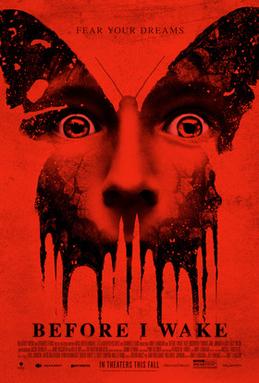
Before I Wake is a film that has been promising to come out since 2015. However the film’s distributor, Relativity Media, kept pushing it back and finally off the release schedule due to the company’s financial troubles and whatever decisions go on in Hollywood boardrooms. With only a promising trailer to go on, plenty of Americans were wondering if we’d ever see this film and if it would be any good if we did. However last year Netflix announced it had acquired the rights to the film, and this month they released it onto their streaming platform.

And as I’m sick today and didn’t feel like doing anything else, I decided to watch it and see if it would live up to my expectations (which was average at best).

*Sigh* I can see why it was taken off the release schedule by its cash-strapped distribution company.

Before I Wake is about Jessie Hobson (played by Kate Bosworth), who becomes a foster parent with her husband to young Cody Morgan (played by Jacob Tremblay) after their own son dies in a tragic accident. They soon learn that Cody’s dreams are able to manifest in the real world, and Jessie predictably starts using his powers so she can see her son again. However, Cody’s nightmares cause horrible things to happen, and Jessie must race to unravel Cody’s subconscious before it destroys everything around him.

And yes, I see the Nightmare on Elm Street influence, but let’s ignore that, shall we?

I’m not going to lie. This film was kind of disappointing. It does have its good points: Bosworth, Tremblay, and Thomas Jane as Jessie’s husband Mark have great chemistry. You really do buy Bosworth as a woman trying to fill the hole in her heart and sees Cody’s ability as a way to do that rather than Cody himself, and you also buy Mark as a man trying to be there for this kid and worried about his wife. And oh my God, is Jacob Tremblay some sort of prodigy? Because he is just amazing in this film. You really think he’s this earnest little boy who’s afraid of his powers.

And until we reach the last thirty minutes of the film, it’s decent.

But other than that, this film has some serious issues. The plot is kind of by-the-numbers despite the heartfelt emotions of the characters. The CGI monsters aren’t that terrifying after you get them into the light, and there’s more of a focus on this emotional connection than creating a scary atmosphere. And while I’m not opposed to focusing on a connection between characters, when you put more emphasis on that than on making a scary movie scary, you know you have a problem. Imagine if Carrie was less about a psychic girl using her powers to fix her life and then get revenge and more about two broken women trying to repair their relationship while psychic stuff happens around them and it’s still billed as a scary movie. You see my problem here.

And finally, that last half hour. That is my biggest problem of the film. Rather than trying to have a climax, it seems more like the film is concerned with wrapping up its story with exposition and trying to make us feel the warm fuzzies inside with a sappy ending. If perhaps they added an extra half-hour and tried to do some things different, maybe go in some darker directions, we could’ve had a better film. Instead we’re left feeling like the filmmakers got bored and just tried to finish up the film with an ending that sounded nice, rather than a good one.

On a scale of 1 to 5, I’m giving Before I Wake a 2. Great emotional storytelling and a good premise, but the execution makes for a terrible horror movie. If you’re looking for something scary to watch on Netflix, I would highly recommend watching another film.

Until next time, my Followers of Fear, I’m taking it easy while I continue to heal. Pleasant nightmares and have a good weekend.

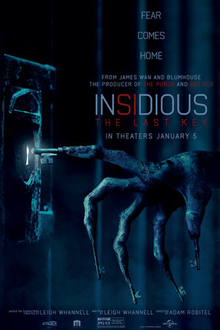
You know, horror sequels get a bad reputation for getting silly or boring over time. Now, there are some that do give this rep some credibility (looking at you, Jason Takes Manhattan). But among horror sequels, there are some truly great gems that have as much punch, or sometimes even more punch, than the originals. And Insidious: The Last Key is one of those sequels, not just for being scary and creepy, but also for keeping things interesting with a character-driven narrative.

In this entry in the Insidious series, Elise Rainier (played by unacknowledged Hollywood treasure Lin Shaye) is called back to her childhood home to defeat the evil spirits that live there and which haunted her childhood. As she and her two stalwart companions Specs and Tucker delve deep into the hauntings in the house, they will not only uncover horrors from the Further, but from this world as well, and from Elise’s own dark memories.

This was a seriously solid horror movie. The best part of it, of course, is Lin Shaye’s performance as Elise Rainier, along with the character’s own arc in this movie. The arc itself is kind of similar to Elise’s arc in the last film–that she’s dealing with trauma and has to overcome it to save a life–but here, the scars are so much deeper, and the raw emotion you feel from Shaye as Elise opens them up makes it seem all so new. You feel her pain, you feel her wanting to make amends, and when you see her triumphs, you share in them.

As always, the atmosphere in these movies is creepy, the right balance between tension and jump scares. The creepiest part, in my opinion, is the antagonist, The Man With the Keys, or Key Face as he’s listed on Wikipedia. This is such a freaky looking demon, and unlike the Man Who Can’t Breathe from the last film, who got scary once you could see him in the light, The Man with the Keys is freaky no matter when you see him. In the light, out of the light, he’s so scary. I think if you put him up next to Bill Skarsgard’s Pennywise and had a contest on just visual terror, it’d be a very close call.

I also like, in addition to the many keys we see in the movie, there is just so many key-shaped imagery in the movie. Pumps, signs, etc. They’re all key-shaped, kind of tying into the theme of the movie of opening up old wounds and opening up the past.

I also thought that new character Imogen (whose name only makes me think of the song “Hide and Seek” by Imogen Heap) was an interesting addition. Not giving anything away, but her presence in the film could be a hint of where the franchise could go from here, given where this film takes place in the series’ timeline. Especially if Lin Shaye wants to finish her time with the series with this film or with the next one.*

Was there anything I didn’t like? A few things. I honestly thought the climax wasn’t as epic as it could’ve been. Not only that, but a few things we saw in the trailers didn’t show up in the film, which is always annoying. And finally, Specs and Tucker, our supposed comic relief, just weren’t that funny.

But all in all, Insidious: The Last Key is well worth plunking down cash for a ticket. On a scale of 1 to 5, I give it a 4.4. Check it out, and open yourself up to some terrifying storytelling.

That’s all for now, Followers of Fear. We’re likely going to have a bunch more reviews this month, so I hope you’re ready for recommendations and opinions. And if the trailers I saw in the theater are any indication, I’m going to have a lot to say in 2018.

Until next time, pleasant nightmares!

*I’m assuming that we’re going to get a sequel, given that already the film has made back its budget and then a bit two days after coming out.

Guillermo del Toro’s films are very much like Tim Burton’s films: there’s a distinctive feel and style to them that sets them apart from other films. A tendency towards the strange and the dark, creatures not oft experienced by man nor treated that much in modern fiction, etc. And such is the case with his latest venture, The Shape of Water, which del Toro says was inspired by when he saw Creature from the Black Lagoon as a kid and was disappointed that it wasn’t a romance between the Creature and Julie Adams.

I have to say, all these decades later, the concept has aged well.

The Shape of Water follows Elisa, a mute custodian at a government facility in Baltimore in 1962. One day, the facility receives an amphibian-man creature from South America, which is kept in a room that Elisa cleans. The two start interacting and romancing, leading to a plot to save the creature from the facility and those who would do him harm.

There’s a lot going for this film. For one thing, it’s beautiful. Everything from the sets to the costumes looks right out of the late 50’s, early 60’s, the lighting is used in different ways to highlight moods and atmosphere, and there are even throwbacks to classic films from that period, including a short musical number that I feel like was inspired by the ones American Horror Story does every couple of seasons. The acting is also pretty stellar: Sally Hawkins as Elisa is wonderfully expressive through facial expressions, body language, and sign language. Octavia Spencer (can that woman do no wrong?) and Richard Jenkins as Zelda and Giles, Elisa’s friends, are full of pathos and charm. And Michael Shannon as the antagonist Strickland, while feeling like a hammy caricature at times, is entertaining to watch on screen.

And oh my God, the make-up on the Amphibian Man (which is his listed name in the movie, I checked). That is award-winning stuff. It looks so real, and as far as I know, mainly CGI-free. That’s really impressive.

All that being said, there were a couple of issues I had with the film. For one, once you kind of understand what sort of film you’re watching, you can kind of guess the plot. It’s been done before, though not with Amphibian Men. So if you can guess the story archetype, you probably will guess where the story is going to go.

There’s also this theme of tolerance and the difficulties of otherness that pervades the film, which you would expect. There’s the Amphibian Man, which isn’t even human. Elisa is mute, Zelda is black, and Giles is gay. Obviously, the filmmakers are going to bring this up. And I’m not opposed to that, I love stories that explore the difficulties of being on the outside for no other reason than being who you are. The problem is, the theme is handled differently from scene to scene. In some scenes, like a scene midway through the movie at a diner, it’s handled very well. But at other times, the handling feels kind of clumsy, which kind of brings down the impact of the theme.

Regardless, this is a wonderful film. If you’re going in for a science-fiction/horror story, you won’t get that. But if you go in for a visually appealing and well-done love story with some sci-fi elements, you’ll end up getting your money’s worth at the theater.

On a scale of 1 to 5, I give The Shape of Water a 3.8. Take a dip into a strange new world, and see for yourself if there’s something to love here.

Now if only del Toro could do an adaptation of At the Mountains of Madness, which he tried to do a few years ago (but only after I’ve read that particular HP Lovecraft story). That would be awesome.

Ever since I stayed overnight and experienced paranormal activity at the Lizzie Borden Bed & Breakfast back in July, I’ve kind of become a bit obsessed with the case and the hauntings that occurred because of the murders. The latest manifestation of that obsession is reading the latest fictional retelling of the events (of which there are several, believe me), See What I Have Done by Sarah Schmidt, who says she was inspired to write it after recurring dreams of Lizzie’s spirit visiting her. I first came across a review of this in Entertainment Weekly, and as soon as I saw it, I knew I had to read it.

See is a fictionalized account of the story of Lizzie Borden, who in 1892 was accused of murdering her stepmother and father with an ax and was acquitted due to lack of evidence and investigator bungling. The story is told from the perspectives of Lizzie herself, her elder sister Emma, their live-in maid Bridget, and a violent drifter named Benjamin, all of whom tell what they were up to on a hot, fateful day in August 1892 in Fall River, Massachusetts.

I have to say, See is not the usual sort of historical fiction I read when I delve into that genre.

Firstly, the four narrators are each given a unique personality and desires, so that it doesn’t entirely sound like just one person narrating four different people. Lizzie is a spoiled youngest child with a hell of a lot of quirks (to say the least); Emma is an older sister who has become constricted by her responsibility as Lizzie’s older sister and as a Borden and wants to run to a new life; Bridget is overworked, and is trying to leave for her homeland of Ireland, despite Mrs. Borden’s attempts to keep her; and Benjamin is a man who sees the whole world as his enemy, and can’t wait to take a swing at the world. Working with one first-person narrator and making them unique is hard enough, so it’s great that for a debut novel, Schmidt distinguishes them so well.

I also liked how flawlessly she manages to weave these four narratives, especially Lizzie, Bridget and Benjamin’s narratives, together on the day preceding and the day of the murders. Telling overlapping storylines, where several characters are in the same place and experiencing things at the same time, has always struck me as a monumental task which requires skills I’m not sure I have yet (if it’s actually easier than I think, let me know in the comments below). Schmidt did it like a pro, to which I applaud her.

But my favorite part is the descriptions Schmidt has her characters use. I’ve never seen descriptions like what she uses. She turns nouns like “termites” or “critters” into verbs (is there a word for that?), and…you know what, let me quote from the first page:

I breathed in kerosene air, licked the thickness from my teeth…My heart beat nightmares, gallop, gallop, as I looked at Father again…Pear skin crisped in my mouth…

How different was that? I have never heard any of these things described this way in fiction, and it’s kind of refreshing to hear. And Schmidt does this throughout the book, particularly with food. She goes all out to describe the food and the sensations of eating in a variety of ways. You really have to read it to believe it.

Now was there anything I disliked? A few things. I was kind of hoping going in that this would be a thriller of sorts that revealed an interesting take on an old theory or even better, a new scenario for the still-unsolved murders. What I got was more of a dissection of the Borden family, showing through several different eyes how grating these people have become on each other, and how it might have been a factor in the murders. And while the portrait painted is beautiful and quite telling of both the author’s vision of and what the family might’ve really been like, I thought the ending where the killer is revealed rang a bit hollow. Like I said, I wanted a new scenario or an interesting take on one of the standard theories for the case, and the way it was eventually portrayed fell a little flat for me.

And as much as I liked the unique descriptions in the book, some of them are used repetitively throughout the novel. I can’t count how many times things, especially fingers, are described as sticky, or how many times heat “itches” at someone. To quote some of my editors, variety in words and phrases throughout a story is important.

And what was up with the dislike for Lizzie and Emma’s uncle John? I get why Abby and Andrew Borden dislike him, he’s probably a bad reminder of Lizzie and Emma’s deceased mother, but why do Emma and Bridget dislike him so much but Lizzie adores him? There’s a lot there that I would’ve liked explained.

But all in all, See What I Have Done is an excellent debut for a new novelist. Putting a score on this book on a scale of 1 to 5 was difficult, but my head kept coming back to a 3.8. Engaging, atmospheric, and full of wonderful prose. Check it out, and ax yourself if you’re ready to dive into Lizzie’s madness.

And yes, I intentionally made that pun. And I stand by it. Goodnight, everybody!