Posts Tagged ‘short story’

There are various phrases and maxims that authors just dread hearing. “Nobody wants to read that sort of thing.” “Where do you get your ideas?” “Adverbs are your enemy.” That sort of thing. Here’s one that’s been espoused by creative writing teachers, how-to books, and maybe even your parents since writers have tried to teach would-be writers how to write:

“Write what you know.”

By this, they typically mean draw on your personal experience in life to write your stories. Anything you learned from steady research or anything you made up in your head, please leave at the door before opening up your notebook/turning on your computer/sitting down in front of the typewriter. Please keep this in the realm of experience and what is possible rather than what you imagine. If it’s not based on your actual knowledge and life, then you should stay away from it.

Most writers hear that and want to barf. A few do.

There are variety of reasons why no one wants to subscribe to this rule. Some see their lives as too boring or unworthy for writing about. Others feel that their own lives are too small and they don’t want to restrict themselves to just their own subjective experiences. And many (myself included) are attracted to things that can’t be personally experienced (usually, anyway), so they find that rule way too restricting to actually be usable.

I remember back in elementary school or junior high, my dad, my sisters and I were driving home from somewhere or other, and somehow the topic of discussion got onto the sort of stories I write. My dad suggested that I try, instead of vampires and cavemen and Frankenstein monsters and pirates I try writing a story about my own personal life. My reply was something along the lines of, “So you’re saying I should write a story about a Jewish kid who has rabbis for parents and has three annoying sisters?”

My dad’s reply was, “Um, yeah. Maybe.”

I think in that car ride I swore that I would never write based on what I know if it meant writing that sort of story. Let’s face it, it’s just not in my DNA. I can’t write those coming-of-age stories about a kid learning to be an adult in a community of religious Jews or about a man working his way up the corporate ladder at the expense of his humanity and marriage. Not unless those stories involve ghosts, demons, monsters, or serial killers. Otherwise it’s just boring for me, and no writer wants to write a boring story, one they personally can’t get into.

I also swore that I wouldn’t take writing advice from my dad again, though I broke that promise when he ended up giving me pretty good advice, such as “don’t be afraid to open yourself to new experiences” and “maybe you should look into writing and publishing short stories.” Now there’s some good advice for writers!

Seriously doubt these books were written with the rule “write what you know.”

I also did end up writing about stuff I know, but not in the way a high-and-mighty literary writing instructor might think. Probably not in the way my dad thought either. I certainly don’t write stories about college seniors living with a roommate and trying to get the grades and make ends meet. But I do include what I know in other ways.

For example, in a recent story that I wrote, the protagonist and narrator, in addition to having to deal with being a werewolf, also has to deal with the fact that she has feelings for her best friend, who is a girl. When I was coming to the realization of my own sexuality, I felt the same sort of fear and anxiety my narrator feels in the story, and I had a number of the same questions, such as “Would people accept me as I am?” “Am I really this way?” “How many things could go wrong if I came out of the closet?” Just because it was an element of a werewolf story did not make it any less meaningful or not based on my life.

Another example is one based on something my dad told me once (this is becoming a dad-centric post, isn’t it? Abba, I hope you appreciate all these mentions). He once told me that a great-aunt of his was well known for having dreams where she encountered the dearly departed. This inspired a novel involving a large family of Jews of many generations and their own dealings with the supernatural. I base this work on that story my dad told me as well as my own experiences with the supernatural (and I’ve had some freaky ones, to be sure).

Yes, I have experience with this.

In short, for me writing what I know is taking things I know about or have experience with and making them part of a larger story, often with fantastic or terrifying elements. It’s what works for me, and it’s what I love doing.

Of course, this is my version of how this works. For others, it may be different. There may be writers who write entirely based on what they know and what they’ve experienced, and there may be others who write absolutely nothing based on their real lives (I have a feeling that many fantasy writers are like this). It’s a bit of a spectrum, if you think about it in a certain way.

But like I said, every author is different, and no rule works for every author. “Writing what you know” is a prime example of that. It works for some people, and it doesn’t work for many. It all depends on the author, what they like working on, and how much they want to put their own lives in their stories, among other things. I’m the kind of guy who will take elements of my life or my own knowledge and put it into the stories as part of a larger whole rather than as the entire basis for a story. And that’s just how I work. For others, it’s quite different, but I think that’s good. Because no two writers are the same, and that means that no writer is going to produce the same kind of story.

To me, that’s really exciting.

Do you use any elements from your own life in your stories?

How do you do it?

Boy, has this short story been something of a saga for me. For this second draft, not only did I have to go back twice to redo it because I didn’t like where it was going, but I also changed the name of the short story about…six times? I settled with “What Happened Saturday Night” after a while as the new title. So maybe this post should be called “What Happened Saturday Night: Finished”.

Anywho, for those who don’t know, for my creative writing class I have to turn in two original short stories and a revised short story for the class to critique. Having previously done a short story about fallen angels and one about a woman who turns into a wolf, I decided to do a revision of the latter story. And just like the first draft, where I went back several times because the plot was going nowhere fast, I had to go back several times on this one. The first time was because I realized the story’s ending would resemble that of a previous story, and I didn’t want to be repeating myself. The second time I added in a cult element, but then things got really complicated and I decided I didn’t need that.

So for this third round, I decided to simplify things, go in a new direction I hadn’t thought of before, and see what I got. I also turned off the Internet so I wouldn’t get distracted (it worked). And finally, four days before it was due, I finished the new draft of “Frauwolf”, which is now called “What Happened Saturday Night”, and I incorporated a lot of the suggestions I got from my peers. So now it’s done, with a little over five-thousand words. A little wordy should I try to get it published, but I’m sure after my next critique in two weeks I’ll get some great suggestions on how to improve it and maybe trim it down if necessary. It still incorporates the main elements though: a girl who turns into a werewolf, and her relationship with her lover, also a woman. Can’t argue about that.

For now though, I’m tired and I want to go to bed. I’ve got a big week starting tomorrow, including midterms on Tuesday and Wednesday, so I’d rather be well-rested for those.

I’ll try and blog later this week, my Followers of Fear. Until then, a terrifying sleep, and a good week to you all.

So last night, it’s very late and I’m exhausted. I’m getting ready for bed when an idea for a short story comes to me all of a sudden. I go to write it down in the notebook I carry around with me, so that in the morning I can write it down in the morning on the list I keep on my flash drive for stories. But just as I’m about to write it down, a thought occurs to me: Haven’t I had this idea before? As I think about it, I recall an idea, very vaguely, of a short story idea that sounds very similar to the one I just came up with, but I can’t remember that well.

I don’t feel like booting up my laptop and logging in just so I can look up something on my flash drive and then shutting down again. So I scribble myself a note reminding me to see if I already had this idea and I go to bed. The next morning (or I guess this morning) I see the note, get on my laptop, and pull up my list of short story ideas (now up to 367 ideas since the last time I added an entry. God help me find the time to write them all). I type in some relevant key words into the “Find” feature, and sure enough, entry number 108 matches the idea I had last night. The only differences were the genders were switched on the characters.

At that point, I felt a little silly. I know it’s common for authors to have similar ideas across all their works (Joss Whedon has powerful organizations whose very purpose allows them to wield strong influence in nearly every sphere of society, HP Lovecraft has those slithery Cthullu creatures, William Shakespeare had more than a few manipulative villains who seemed honest on the surface but were vile beasts underneath it all). Heck, a lot of my ideas involve female protagonists who rise to the occasion after travailing over several obstacles. I just never expected to happen across the same idea like that.

At least I can take comfort in the knowledge that this has probably happened before.

As for the idea that I had last night…well, maybe I’ll keep it, maybe I won’t. I know there’s room for variation, but the question is, do I want to do it if it sounds so similar to my previous idea, and should I do it when it seems so similar?

If you ever find two short stories of mine and they have similar plots behind them, as well as characters, settings, and whatever else, you’ll know the answer I came to.

Have you ever had an idea that was very similar to a previous idea? How did you deal with it?

By the way, there’s only 7 more days to buy Reborn City at discount price or participate in the special giveaway for a free copy. Better get on that while you still have the chance!

Today in my creative writing class it was my turn to get critiqued. And as you may recall, my short story was about a woman who turned into a werewolf. Or as she preferred because of her gender, frauwolf, which became the title of the story.Unlike other stories, I thought this first draft was a piece of crap. And it was, too. But it was the only draft I could finish, so it was the draft I ended up sticking with. And last week I bought sugar cookies to bribe my classmates with, so that when they tore my story into little pieces they would be nice about it.

Well, the bribe didn’t work. Apparently cookies that are about 90% sugar don’t work on college students, because  only half of them got eaten, and mostly by the students with sweet tooths. But they were nice while they tore my story apart, I’ll give them that.

Anyway, the biggest problems with “Frauwolf” seem to be that I throw way too much in and that the readers felt yanked along by all that was happening. Well, that’s not surprising, considering it’s me writing this story. I like to write novels, especially long, expansive novels that may in fact involve into series. So I tried to add a huge amount of stuff into 5,000 words and the result was a story that was rushed along so as to get to everything happening in the story. The result is an overly-complicated and insane story that deviates from what I originally intended (as you read two posts ago, that was the problem I had with Rose).

My classmates also had some trouble with the relationship portrayed in the story. They couldn’t get why my main character’s girlfriend still stuck around with her, among other things. Well, I guess that makes sense. I don’t delve that deep into the foundation of the relationship. For the next draft, I think I will do that thoug.

And speaking of next draft, I’ve got one more story to turn in this semester, and it has to be a revision of a previous story. I’m thinking I’ll work on this one, maybe change the setting and the story line and see what comes of it. Besides, I’m not nearly satisfied with this story as I should be, so I’ll put off editing my other short story, “Evil Began in a Bar”, until another time. Besides, my critique gave me some great ideas of where to go with this story, so I really want to see what I can do with them. I might even write something worth publishing.

I’ll let you know what comes of all this editing, and what my classmates say at my final critique. In the meantime, I’ve got to get dinner ready before my evening class, so that’s all for now. Have a great day, my Followers of Fear.

Before I start, I just want to make sure everyone is aware that I’m not actually showing you how to curse someone. I do know how to do that, but I don’t want to share the method lest someone use it on me. That would suck. No, I’m talking about creating a curse for a story, one that would terrify all who read your work.

The thing about curses is that they are relentless and awful. A curse doesn’t discriminate based on how nice you are, how much money you make, what religion you belong to, or any other factor. No, once a curse locks onto you, it’s like you have a target on your back that you can’t get off, and you won’t get that target off until the curse has run its course (usually this means death). That’s what makes them so scary.

So how do you create a curse? First you need to decide on this:

Person, place, and/or thing. A curse is usually associated with a specific object, location, or person, though sometimes a curse can be associated with more than one of these (such as with an entire family, multiple houses, or a person who lived in a house). In the movie The Conjuring and its spinoff/prequel Annabelle (which I just saw recently), a curse was placed on the doll, allowing a demon to possess it and make havoc for anyone who came into contact with the doll. That’s an example of a cursed object. The house in The Grudge is an example of a cursed location, as well as an example of a cursed person (Kayako, the woman who lived in the house, is the one who carries out the curse). Another example of a cursed person is simply someone who has a curse placed upon them, making interaction with others difficult, if not impossible. Boy, would that suck!

This brings me to my next point, though:
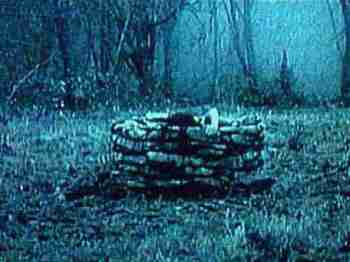
The well is essential to Samara’s curse and origin story.

The origin story. Every curse has its story of how it came to be, and often that the basis of how the curse can be warded off (more on that later). Generally this involves some horrific event happening, causing the curse to manifest or be cast. For example, in the Buffy universe Angel’s curse was caused when he killed the beloved child of a tribe of gypsies, who restored his soul to him through magic. Another example is when Samara/Sadako from the Ring movies was trapped in the well and died, her soul was filled with rage and she infected a blank video cassette. And in The Nightmare on Elm Street franchise, Freddy’s curse came into being when he was killed in a fire by the parents of the children he’d killed/molested (depending on if you’re going with the original movie series or the remake).


The trigger. For a curse to take hold of a target, something specific has to happen. For instance, in the popular Bloody Mary legend (which I’ve tested numerous times, by the way), you have to say Bloody Mary three times in the mirror in order to summon her. In the Stephen King story Bag of Bones, the curse was triggered when a child descended from one of any of the families involved in a gruesome murder, whose name usually began with a K, got to a certain age (in the TV miniseries, this was simplified to just the daughters). And in the popular story The Monkey’s Paw, one had to make a wish on the titular paw in order to start the curse. Which leads to the fun part:

How the curse manifests. A curse manifests after the trigger has been…well, triggered. In Harry Potter and the Half-Blood Prince (yes, I’m pulling Harry Potter out), Katie Bell was put in unimaginable pain when she touched the cursed necklace. Touching the necklace was the trigger, and the pain was the manifestation. Another form of manifestation would be the Tecumseh curse, which was that any President elected in a year divisible by twenty would die in office (though Ronald Reagan and President Bush managed to get away). The election year is the trigger, while the death of the President is the manifestation.

How to ward it off. This is optional for literary curses, but it’s something you want to consider in creating a curse. In Jewish folklore, the demon Lilith tries to take the souls of newborns or eat them. However, if one has a mezuzah, a marker on one’s doorpost  that has the name of three angels on it, Lilith cannot enter the home and attempt to take the child. The angels whose names are on the mezuzah were the same angels who tried to get Lilith to return to Adam when she was still his wife. When she refused, they cursed her to become a demon and made it that she could not enter a home with their names on it (that’s how the origin story relates to warding off the curse).

The hamsa, a symbol prevalent in Judaism and Islam, is also good at warding off evil. It’s no good at warding off taxes though.

In another example, there’s a curse among some actors about saying the name Macbeth in a theater which leads to bad luck. Depending on who you ask, there are different methods to dispelling the curse, a popular one being to leave the theater, walk around the building three times, spit over one’s left shoulder, say an obscenity, and then wait to be invited back into the theater.

Containing/canceling the curse. This is also optional in writing fiction, but it should be considered. Two things one should consider when figuring out how to cancel or seal a curse is that it should be difficult, and that it doesn’t necessarily have to do with the origin story. In the movie The Unborn, the dybbuk couldn’t be stopped until it was exorcised. A similar thing happened in the third movie in the American Grudge movies, in which case an exorcism that sealed Kayako into a little girl was needed before she could be stopped. In Japanese onryo legends, the spirit needs to have whatever is disturbing it resolved or it will continue to seek revenge.And in Bag of Bones, Sarah Tidwell did not end her curse until her bones were dissolved with lye, thereby releasing her from Earth.

That’s how you create a curse. As for creating a terrifying story involving that curse…well, that’s up to you. I’m not going to give you directions on that. Not in this post, anyway.

Oh, and one more thing: I saw Dracula Untold and Annabelle at the movies today with a friend. Both were excellent, getting 4.5 out of 5 from me. But something in the latter film really stuck with me: near the end, the priest character says that evil can only be contained, it’s not created or destroyed (or something like that). I think that when you’re writing a scary story, especially one involving curses, that’s some pretty good stuff to keep in mind. True evil is not something you can easily be rid of. At least, not in my experience.

What advice do you have for creating curses?

Have you written anything with curses recently?

Are there any stories of curses that are your favorite or that I didn’t include? Tell me a bit about them.

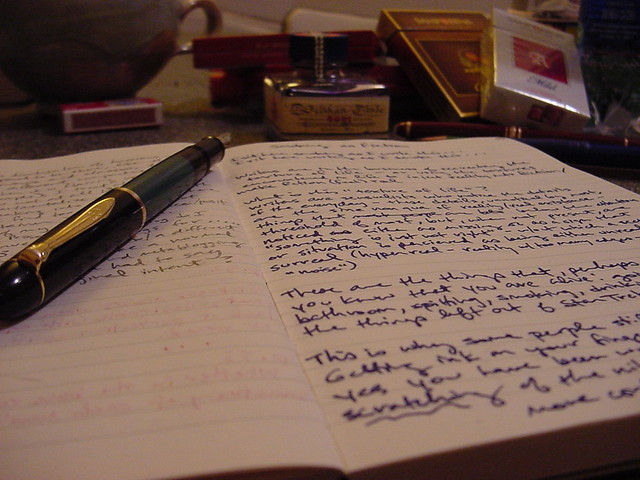
It’s Week 8 of the semester, which means it’s time I update you on how I’ve been doing so far in the semester. So if you haven’t heard the news so far, I’m extremely busy. I’ve got five classes and a thesis I’m working on, and a part-time job on top of that. I’ve got barely any time for blogging, and I’ve completely cut out television. And if I didn’t manage to find time most evenings right before bed, I’d think pleasure reading was some sort of drug the young people are on these days (though from what I hear that’s not the case at all).

Anyway, I’ve somehow managed to keep my grades up, though I’ll definitely try harder for the next exam in my History of War class, I’m not satisfied with the grade I got on the first one. My History of Pre-Modern East Asia course is going well, though the recitation class is a pain in the butt, even if it is somewhat helpful. Shakespeare is pretty interesting. The teacher is a fun character, and I’ve enjoyed reading Taming of the Shrew and The Merchant of Venice (we start Othello tomorrow as well as take our midterm). And remember that Biology course where we mainly watched movies about human anatomy? It’s like what I expected and then it’s not: most of the films we’ve watched deal with a lot of aspects of human health, so we’ve watched documentaries on our healthcare system and vaccines, a biopic on Louis Pasteur, and films on mental conditions like autism, addiction, and schizophrenia, among others. I think this week we watch a film about an English professor with cancer, but I’m not sure.

My creative writing class has been where I’ve learned the most, probably. I think I’ve made it clear that short stories are not my forte, but I’ve gotten some ideas on how to improve my short stories and my work in general. Already I’ve posted on some of the advice I’ve gotten from my classmates for one of my other short stories, and I’m looking forward to what they say about my next short story when I turn it in two weeks from now.

I’m also learning a lot from working on my thesis. My advisor, the other guy who’s also working on a thesis, and I don’t always have a lot of opportunities to meet up due to everyone having busy schedules and just the craziness of life, but I’ve found our sessions so far illuminating. While work on Rose has been slow due to the short story I’ve been working on for class, I’ve gotten some good advice on how to improve it, including making sure that the tone and atmosphere of the novel is consistent throughout. When it’s finished, I feel like it will have already have been edited a little bit due to the feedback I’ve gotten in the sessions we’ve had together.

Well, that’s all for now. I’ve got work to do, so I’m going to do it. I’ll update everyone again on how my semester is going when it’s over, so have a good 8-10 weeks until then. Until then, Followers of Fear. Wish me luck with the rest of the semester!

I just finished the second short story I’ll be submitting to my creative writing class. This one is titled “Frauwolf”, and it’s about a woman who turns into a werewolf–or as she prefers, frauwolf, meaning “woman wolf”. Werewolf mean “man wolf”, so my character thought she’d coin a term for the ladies out there. Anyway, she turns into a werewolf, but at a certain point she can’t tell whether she’s actually changing into a wolf creature or if she’s nuts, and I write it so I make it hard for even the reader to figure it out either.

This story’s also significant because the main character and her partner are both women, and it’s been a long while since I’ve written any characters that were LGBT (I originally intended to make 011 from Reborn City gay, but I didn’t think it fit with the story I was trying to create, so I mase him just creepy and sadistic and possibly asexual). I’m wondering if having two women in love will influence how anyone sees or likes this story. As far as I’m aware, non-hetero couples are still not very prominent in horror fiction, and it’s common for those that are to die pretty early on or be shunted to the side where they won’t make that much impact in the story. Perhaps having them at the forefront will make a difference.

This particular short story was probably one of the hardest I’ve ever had to work with ever. I had to go back three times to the beginning and start over because I didn’t like the way the story was going. Thus, about two or three weeks that could have been devoted to my thesis were devoted to this particular short story. Finally on the fourth try I came out with a version I happened to like.

Still, considering how I’m more suited for writing novels, I doubt “Frauwolf” will come away from critique day without a lot of comments and plenty of edits to make. I say, bring it on. I’m pretty sure there’s plenty of stuff I could do to improve the story, and if I decide to try to publish it in a magazine or something, plenty of the story I could cut out and rewrite to be shorter. And considering how much I love this story’s concept, I’m really hoping to find ways to improve it.

In any case, I’m putting this story away until it’s actually time to deal with it. I’ve still got a thesis to work on and I’ve taken too long of a break from it to get this thing done. If I finish my homework early (and that happens a lot on Tuesdays, for some reason), I’ll get right on the next chapter. Wish me luck, because I’ve got a meeting with my advisor on Wednesday and I don’t want to tell him I have nothing new to send him!

Well, I’m exhausted, so I’m going to rest and relax till bed. You have a good night, my Followers of Fear. Sweet nightmares to you all.

It’s been a while, but I just posted an article on Self-Published Authors Helping Other Authors. This latest article is about following up on submissions to magazines after a lot of time has passed and you haven’t heard anything from them. I thought this would be a good article since my last one was about submitting to magazines in general. I’m hoping for those whose stories are stuck in a wait pile, this will prove very helpful and that they’ll be able to use the advice I give to maybe get their stories read and even published.

If you get the chance, please check out the article. And if you are so inclined, check out the rest of the site. Self-Published Authors Helping Other Authors is a great resource for indie authors and even traditionally-published authors on how to write, edit, publish, and market in a cost efficient manner. I’ve found it very helpful, and I’m sure everyone else can too.

Well, I published my two or three articles. Now I’m going to work on a short story till bed. You all have a good night, my Followers of Fear. And if I get the chance, I’ll post something else tomorrow. Hopefully something spooky.

tqg cover

If you’re a fan of horror and you’re looking for something scary to read this October, then you’re probably looking for something in the vein of the masters: Anne Rice, Stephen King, Edgar Allen Poe, HP Lovecraft. If you’re a fan of horror and you’re looking for something scary to read this October and would like to check out something by a lesser known or independent author, then maybe I could persuade you to check out the first book I ever published, The Quiet Game: Five Tales To Chill Your Bones.

Over the year and three months since The Quiet Game has been published, people have checked out this creepy little tome, and judging by the reviews they’ve come away good and scared. Here are what readers have been saying:

This is the first time I’ve read any of Rami’s stories. I was very impressed with the wide variety of stories and the way he wove the paranormal into each piece. Paranormal is not something I usually read and I enjoyed this collection very much. The collection reminded me of the Twlight Zone. The descriptions were especially well developed. Keep on writing Rami!

–Arthur siegal

Imagine if you will a young Stephen King penning dark scenarios inspired by his youth, and what you get is this anthology. Through this collection of short stories, Rami Ungar brings us into the world of dark urges, childhood traumas, ghosts, phantoms, and dark psychological thrillers. An inspired creation, and definitely a good intro to this indie author’s world!
 –Matthew Williams
5 wonderfully crafted tales! I purchased this as an eBook originally and put off reading it for quite a while, I really wish I hadn’t waited. Sometimes when one purchases a collection of short stories you expect some of them to be less entertaining or of lower quality than the others, but none of these disappoint. Well worth the money, especially considering after you read each story the author gives you creative insight into what inspired him to write each tale, which is really wonderful.
 –Jeff D.

I’ve often mentioned that writing short stories is not my forte in the least, but at least with these stories people seem to really enjoy them. So if you’d like to see if these stories will spice up your October something frightening, check out The Quiet Game: Five Tales To Chill Your Bones, available in paperback and e-book from Amazon, Smashwords, and even Barnes & Noble.

And if you like what you read, or if you hate it, please let me know, either in a comment or in a review. Good or bad, I love feedback on my work. It encourages me to keep writing no matter what.
Hope you’re having a spooky month so far. I know I am, Followers of Fear.

0471a-fallenangels

I would’ve written this post earlier in the day, but…well, you probably can guess.

Anyway, today was my first critique day in my creative writing workshop. There were three others in the class getting their short stories critiqued, and mine was the third. And it was one of the best critiques I’ve ever had, because they pointed out numerous problems with “Evil Began in a Bar” and gave some really good suggestions on how to improve it. Yeah, the best way to judge a critique is not on how much they praise or hate a story, but on what the critics say that will help you better the story.

As I said, my classmates felt there was a lot that could be improved upon with “Evil Began in a Bar”, which is a retelling of the story of the Fall a la Milton (or a la Ungar, I guess) Some of the big ones were:

  • The tone seemed to shift wildly between dark and comical, serious and light.
  • They couldn’t tell whether this was a dystopia story or a religious fantasy.
  • People unfamiliar with the story of the Fall might be confused by this.

I think I’ve mentioned this before, but short stories are not my greatest strength. I’m much better at novels.

Still, there’s a bright side to this. After hearing from my classmates and talking to my teacher after class (in which she agreed with me on my predilection for novels: “You seem to be very expansive in your writing”), I got a better idea of what I can do to modify this story. And like a lot of short stories I seem to be working with lately, this one is going to be rewritten entirely during the second phase. I’m fine with it, really. At this point I’m becoming very used to it, and I like where I could go with this short story on the second draft. I just hope I can keep it under five-thousand words, or it’ll be more difficult to get it published in a magazine.

But before I do any revisions, I’m going to work on the next short story I’m going to write for my creative writing class. That one’s due on the Wednesday before Halloween, so you know I’m going to be bringing the terror. And as the hint I gave a while back indicates, this time it’s going to be a werewolf story. Though if I’m able to pull it off, it’ll be a very unusual werewolf story.

Here’s what’s coming next from creepy ol’ me.

And after the werewolf story…well, I may resubmit “Evil Began in a Bar” for the third time around, when I submit a revision. I guess it’ll depend on how my classmates react to the werewolf story, and how much work I have going on then, among other things. In any case, wish me luck with this and all the other projects I’ve got going on at the moment. It’s because of your support that I’m able to keep working even when stressed out.

Oh, and before I forget, this evening starts Rosh Hashanah, the Jewish New Year. According to the Jewish calendar, the Earth is now 5775 years old. So for everyone out there, I hope you have a happy and healthy new year, and I hope you’re inscribed in the Book of Life for the coming year. Also, if I did anything to upset or offend you this past year, I hope you’ll forgive me, because I’ve already forgiven you.

Have a good night, my Followers of Fear!